 Morocco
Labyrinthine medinas, the Sahara, the Atlas and the Atlantic coast: the closest Africa and one of the most varied countries to visit.
Places not to miss
Marrakech
Jemaa el-Fna square, the souks, the Majorelle Garden.
Fez
The largest medieval medina in the world and the tanneries.
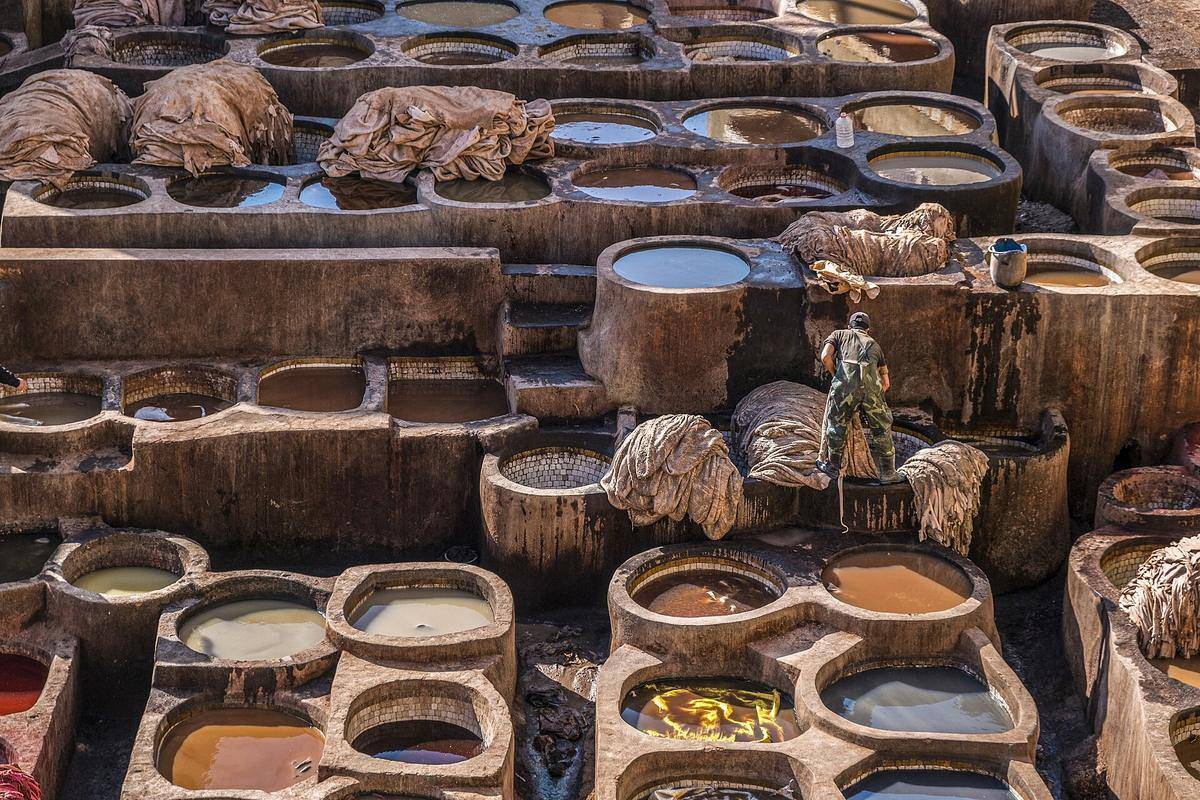
Photo: Wowan1978, CC BY-SA 4.0 Chefchaouen
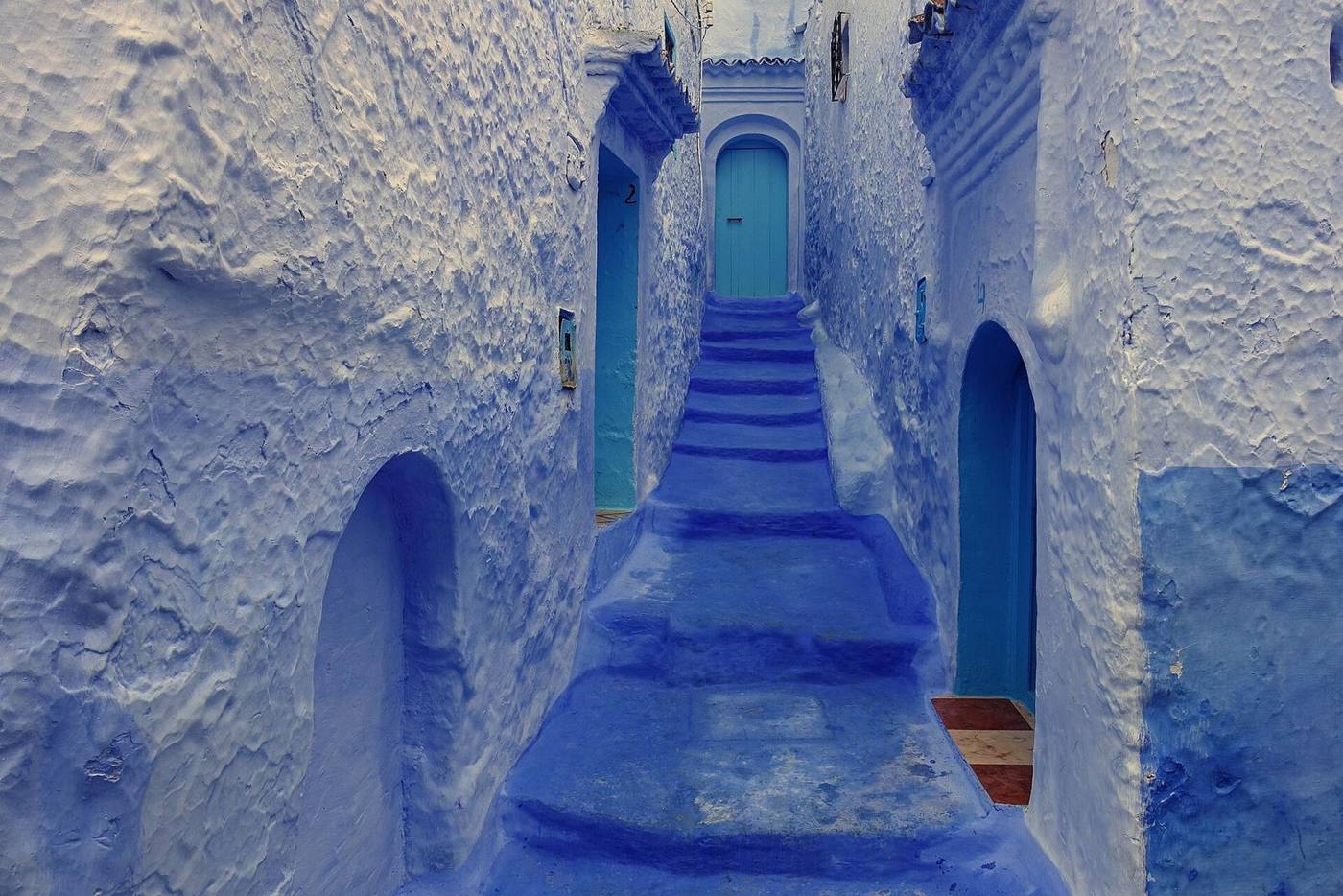
The blue town in the Rif mountains.
Merzouga
The Erg Chebbi dunes, a night in the desert.
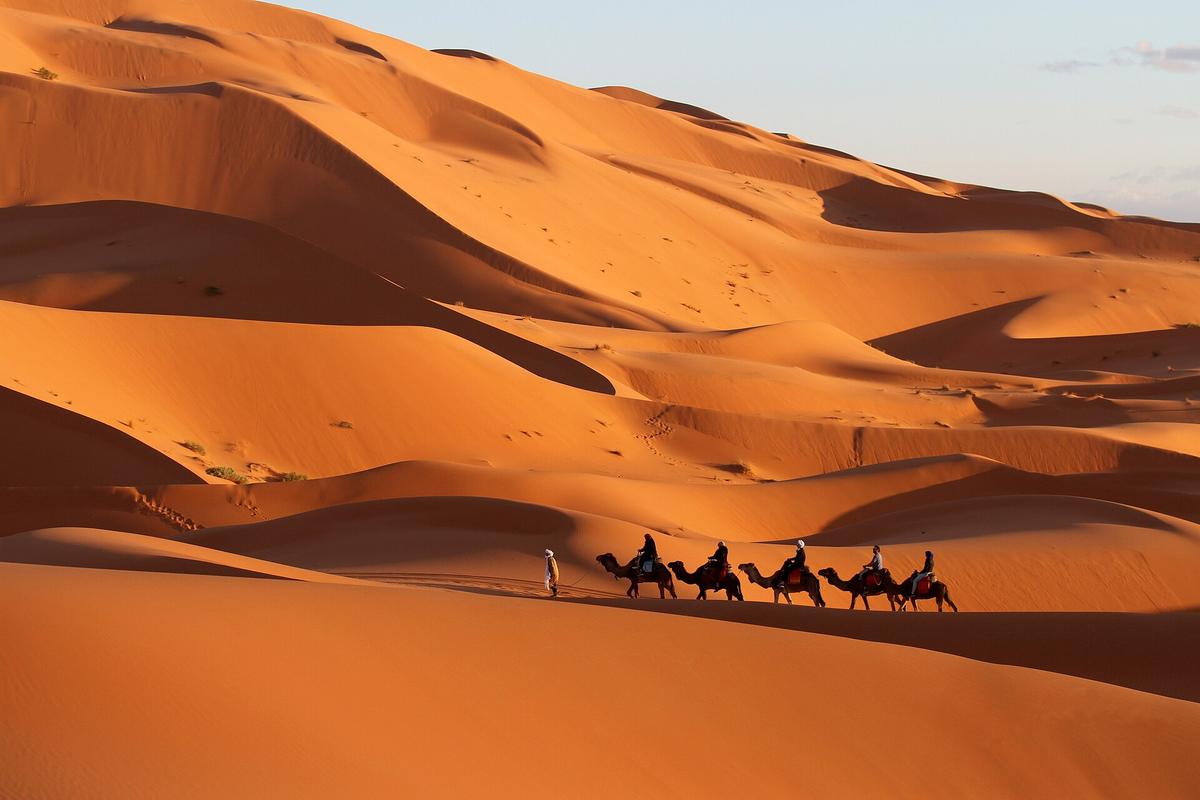
Photo: Merzougaloisirs, CC BY-SA 4.0 Aït Ben Haddou
A UNESCO-listed mud-brick ksar.
Todra and Dades Gorges
Canyons and the valley of roses.
Essaouira
A windswept Atlantic port.
High Atlas
Trekking on Toubkal.
Nature and wildlife
Barbary macaques in the Middle Atlas, storks, dromedaries.
Food and drink
Tagine, couscous, pastilla, mint tea.
When to go
March-May and September-November.
Did you know?
The University of al-Qarawiyyin in Fez is considered the oldest still operating in the world.
Itineraries in Morocco
Marrakech and the Sahara
From Jemaa el-Fna square to the Erg Chebbi dunes, across the Atlas, past kasbahs and gorges.
Imperial cities, Chefchaouen and the desert
The full circuit: Fez and Meknes, the blue town in the Rif, the Sahara, the gorges and a finale between Marrakech and Essaouira.
Marrakech to Fès by way of the Sahara
The classic crossing: the High Atlas, the kasbahs of Ouarzazate, the Dades gorges and a night in the Merzouga dunes, ending in the medina of Fès.
Marrakech and Essaouira
The red city and the white city on the Atlantic: souks, gardens, a fishing port and wind for kitesurfing. Morocco at its most relaxed.
High Atlas: trekking and the Toubkal ascent
A week on foot among Berber villages and passes above 3,000 metres, up to the 4,167-metre summit of North Africa's highest peak.
Jbel Saghro: trekking in the Anti-Atlas
Volcanic rock pinnacles, empty plateaus and Aït Atta nomads: a mule-supported trek between mountains and the Sahara, in the season when the Atlas is under snow.
Chefchaouen and the Rif mountains on foot
The green north: the blue city, trails through cedars and villages in Talassemtane park, God's Bridge and the white medina of Asilah on the Atlantic.
By 4x4 to Erg Chegaga
Morocco's wildest dunes, reached on desert tracks through the Anti-Atlas and the dry Iriki lake, with nights in tented camps far from everything.
Agadir, Souss-Massa and the southern coast
Winter sun, Souss-Massa park with its bald ibises, the painted rocks of Tafraoute and the Legzira arches on the ocean.
The Dades, Todra and Draa valleys on foot
The great south on foot: red canyons, palm groves, kasbahs and two days walking among the Erg Chebbi dunes.
Fez in depth, Sefrou and Bhalil
The largest medieval medina in the Maghreb, at an easy pace: the Bou Inania and Al-Attarine madrasas, the Chouara tanneries, the artisans' quarters, the Mellah of Fès el-Jdid, the view from the Marinid tombs, then Sefrou with its old Jewish quarter and the cave houses of Bhalil.
Rabat, Casablanca, El Jadida and Oualidia
Atlantic, modern Morocco: Rabat, a UNESCO-listed capital, with the Hassan Tower, the Kasbah of the Udayas and the Chellah, the great Hassan II Mosque in Casablanca, the Portuguese cistern in El Jadida, Azemmour on its river and the Oualidia lagoon.
Tangier, Tetouan and the Mediterranean coast
Morocco's Andalusian north: Tangier with its kasbah, Cape Spartel and the Caves of Hercules, the medina of Tetouan (UNESCO) with its white houses and craftsmen, the beaches of Martil and Oued Laou and the coast road towards Al Hoceima National Park.
Ouzoud Falls and the Aït Bouguemez valley
The green Central Atlas: the Ouzoud Falls, over a hundred metres high among olive trees and Barbary macaques, then the Aït Bouguemez valley, known as the happy valley, with earthen villages, terraced fields, the fortified granary of Sidi Moussa, dinosaur footprints and walks with muleteers.
Marrakech in depth and the Agafay desert
The red city without rushing: the Bahia Palace, the Ben Youssef madrasa, the Saadian tombs, the Mellah, the Majorelle garden and the Yves Saint Laurent museum, Le Jardin Secret, the souks and Jemaa el-Fna square in the evening, then a night under canvas in the stony Agafay desert.
Surfing in Taghazout and Imsouane
The wave coast north of Agadir: the villages of Taghazout and Tamraght with spots for every level, the long wave in the bay at Imsouane, ideal for learning and longboarding, Paradise Valley among the palms and sunsets over the Atlantic.
Asilah, Larache, Lixus and Moulay Bousselham
The northern Atlantic coast: Asilah with its ramparts and murals, Larache with its Spanish past, the Phoenician and Roman ruins of Lixus on the hill above the river and the Merja Zerga lagoon at Moulay Bousselham, with flamingos and birds seen by boat.
The Middle Atlas: Ifrane, Azrou and the lakes
Morocco's forests: Ifrane, an alpine-style town with steep roofs, the cedar forests of Ifrane National Park and their Barbary macaques, the lakes of Dayet Aoua and Aguelmam Azigza, the springs of the Oum Er-Rbia and walks across the shepherds' pastures.
The Ounila valley: Telouet and Aït Ben Haddou on foot
The old caravan route over the Tizi n'Tichka pass: the Glaoui kasbah at Telouet with its decorated halls, the Ounila valley between earthen villages, palm groves and coloured rocks, walking to the ksar of Aït Ben Haddou, a UNESCO site.
Meknes in depth and Moulay Idriss
Moulay Ismail's imperial city, a UNESCO site: the Bab Mansour gate, the granaries and stables of Heri es-Souani, the sultan's mausoleum, the medina and its souks, then the holy town of Moulay Idriss Zerhoun on its hill and the ruins of Volubilis at sunset.
Practical guide to Morocco
- Documents
- EU visitors need a passport valid for the whole stay; identity cards are not accepted, apart from some special cases of organised groups to be checked with the agency. Many airlines and agencies recommend at least six months' remaining validity. No visa is needed for tourist stays of up to 90 days.
- Safety
- Morocco is a popular and generally calm destination. The risk all governments name is terrorism: the United States rates the country level 2, exercise increased caution (advisory of 4 September 2026). Canada advises against all travel within 20 km of the closed border with Algeria and near the sand berm in Western Sahara, where there are landmines. In medinas the most common problems are fake guides and small scams. Official advice: GOV.UK.
- Getting around
- Trains link Tangier, Rabat, Casablanca, Fès, Meknès and Marrakech; the Al Boraq high-speed train runs between Tangier and Kénitra (times and tickets on oncf-voyages.ma). National bus companies also cover Essaouira, Agadir and the south, with numbered seats. For the desert and the Atlas you use a private driver, a tour or a rental car. In cities take the small metered taxis; large shared taxis run between towns.
- Verified costs
- We do not give a single daily figure. A certain cost in 2026: the guided visit of the Hassan II Mosque in Casablanca costs 140 dirhams for foreign adults, 70 for foreign students and 30 for children aged 6 and over, no-cost under 6, with tours at fixed times and fewer slots on Fridays (source fmh2.ma). Accommodation adds a tourist tax per person per night, whose amount depends on the city and the category. Tickets for museums and sites such as Volubilis or the Majorelle Garden change often: check the official websites before you go.
Climate month by month
Average minimum and maximum temperatures in Marrakech and Fès (inland) and Essaouira (Atlantic coast), with sea temperature at Essaouira. The interior is very hot in summer and cool in winter; the coast is mild all year and windy.
- January
- Marrakech 6 / 19 °C · Fès 4 / 16 °C · Essaouira 11 / 18 °C · sea at Essaouira 18 °C
- February
- Marrakech 8 / 21 °C · Fès 5 / 17 °C · Essaouira 12 / 19 °C · sea at Essaouira 17 °C
- March
- Marrakech 10 / 24 °C · Fès 7 / 20 °C · Essaouira 14 / 20 °C · sea at Essaouira 17 °C
- April
- Marrakech 12 / 26 °C · Fès 8 / 22 °C · Essaouira 14 / 19 °C · sea at Essaouira 18 °C
- May
- Marrakech 15 / 30 °C · Fès 11 / 27 °C · Essaouira 16 / 20 °C · sea at Essaouira 18 °C
- June
- Marrakech 18 / 34 °C · Fès 15 / 31 °C · Essaouira 17 / 21 °C · sea at Essaouira 20 °C
- July
- Marrakech 21 / 38 °C · Fès 18 / 35 °C · Essaouira 18 / 22 °C · sea at Essaouira 21 °C
- August
- Marrakech 21 / 37 °C · Fès 18 / 35 °C · Essaouira 18 / 22 °C · sea at Essaouira 22 °C
- September
- Marrakech 18 / 32 °C · Fès 16 / 30 °C · Essaouira 18 / 22 °C · sea at Essaouira 22 °C
- October
- Marrakech 15 / 28 °C · Fès 13 / 26 °C · Essaouira 17 / 22 °C · sea at Essaouira 21 °C
- November
- Marrakech 11 / 23 °C · Fès 8 / 20 °C · Essaouira 14 / 21 °C · sea at Essaouira 20 °C
- December
- Marrakech 7 / 20 °C · Fès 5 / 17 °C · Essaouira 12 / 20 °C · sea at Essaouira 18 °C
Source: Climats et Voyages (Marrakech and Essaouira 1991-2020; for Fès and the sea the period is not stated). Data and prices checked in November 2026.
Where to go and where not to
There are no particular warnings beyond normal precautions; before booking, always check up-to-date official travel advice, because the situation can change.