Marrakech in depth and the Agafay desert
The red city without rushing: the Bahia Palace, the Ben Youssef madrasa, the Saadian tombs, the Mellah, the Majorelle garden and the Yves Saint Laurent museum, Le Jardin Secret, the souks and Jemaa el-Fna square in the evening, then a night under canvas in the stony Agafay desert.
- Marrakech
- Agafay
Day by day
- Day 1
The medina: the Ben Youssef madrasa, the souks and Jemaa el-Fna
Marrakech is Morocco's red city, named for the colour of its walls and its earthen houses. Founded in the eleventh century by the Almoravid dynasty, it gave the country its very name. It is noisy, full of colours, smells and people, but it also hides quiet gardens, palaces and courtyards. In four days you see it at an easy pace and finish with a night in the stony desert of Agafay, less than an hour away.
In the morning, enter the medina, the old town and a UNESCO World Heritage Site, and walk north to the Ben Youssef madrasa, a sixteenth-century Koranic school that housed hundreds of students. The courtyard with its pool is one of the most beautiful places in the city: walls of carved stucco, carved cedar wood and coloured ceramic tiles, the zellige. Upstairs you can see the students' small cells.
Then lose yourself in the souks, the covered markets that wind north of the great square. Each area has its own craft: the dyers with skeins of coloured wool hung up to dry, the blacksmiths, the leather workers and the sellers of spices, lanterns and carpets. Bargaining is normal: offer a lower price and reach an agreement calmly and with a smile.
In the late afternoon, arrive in Jemaa el-Fna square, part of the Intangible Cultural Heritage of Humanity. At sunset it fills with storytellers, musicians, acrobats and food stalls, with smoke from the grills rising towards the minaret of the Koutoubia.
Practical tip: in the medina many people offer to guide you or say that a street is closed. Decline politely and use a map on your phone. Avoid photographing people and snake charmers without permission.
- Day 2
The Bahia Palace, the Saadian Tombs and the Mellah
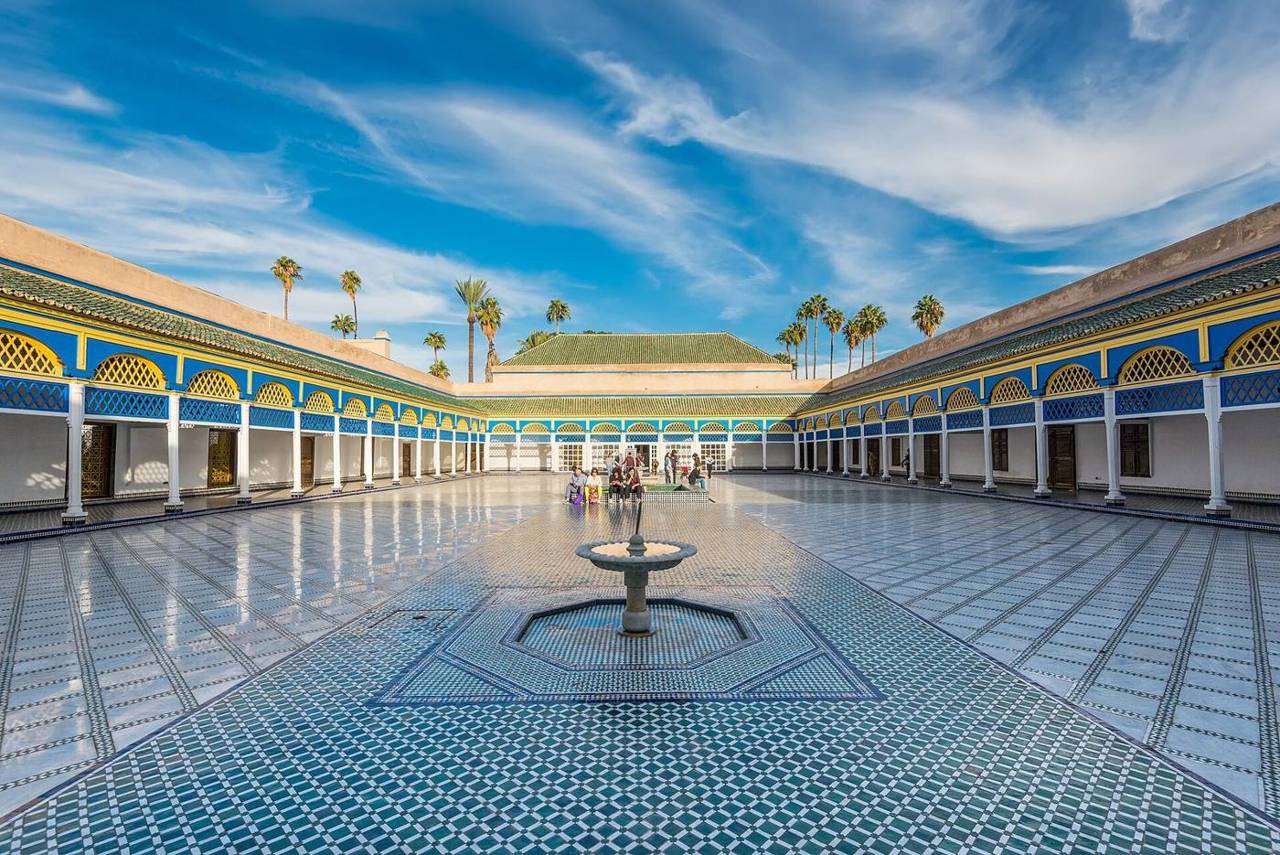
Today you visit the southern part of the medina, the richest in palaces. Start early at the Bahia Palace, built in the nineteenth century by a grand vizier of the sultan who wanted the most beautiful residence of his time. The name means the brilliant one. You pass through courtyards with fountains and orange trees, halls with painted cedar ceilings, carved doors and floors of marble and zellige. The large court of honour, with its white marble floor, is spectacular.
Not far away are the Saadian Tombs, the mausoleum of the dynasty that ruled Morocco in the sixteenth century. They remained walled up and forgotten for centuries and were rediscovered only in 1917. The Hall of the Twelve Columns, with its Carrara marble columns, gilded cedar ceiling and the tombs of the sultans, is one of the most refined interiors in the country. There is often a queue, so arrive at opening time.
Next to them are the ruins of the El Badi Palace, once enormous and covered in gold, then stripped of its materials in the seventeenth century. Today there remain very high walls, large pools and terraces from which you see the city and, on the towers, the storks' nests.
In the afternoon, walk through the Mellah, the old Jewish quarter, with its spice market, the still active Lazama synagogue and the large Jewish cemetery, with thousands of white tombs. For centuries a large Jewish community and a Muslim one lived side by side here.
Practical tip: during the hottest hours, rest in a riad, the traditional houses built around an inner courtyard, which stay cool even in summer.
- Day 3
The Majorelle Garden and the transfer to Agafay
Early in the morning, go to the modern district of Guéliz, outside the walls, to visit the Majorelle Garden. It was created in the 1920s and 1930s by the French painter Jacques Majorelle, who painted his house and studio an intense blue, now called Majorelle blue. In 1980 the garden was bought by the designer Yves Saint Laurent and his partner Pierre Bergé, who saved it from destruction. Among cacti, bamboo, palms, water-lily pools and colourful pots there is also a small museum devoted to Amazigh cultures, the Berber peoples of Morocco, with jewellery, textiles and objects from every region.
Next door is the Yves Saint Laurent museum, opened in 2017, with the story of the designer, his drawings and some of his most famous garments, in a modern building of earth-coloured brick.
Before lunch, return to town or stop in one of the public gardens, such as the Menara garden, with its large pool and pavilion in front of the Atlas mountains.
In the afternoon, set off for Agafay, about forty minutes south-west. It is not a desert of sand dunes, but an expanse of pale hills of stone and earth, almost treeless, with the snow-capped peaks of the High Atlas on the horizon in winter and spring. Here you sleep in tented camps, walk, ride a camel or go out by four-wheel drive. At sunset the landscape turns pink and gold, and in the evening you have dinner under the stars.
Practical tip: the Majorelle Garden and the museum are booked online with an entry time. Without a booking you may not get in.
- Day 4
Dawn in the stony desert and departure
Wake up before dawn: in the Agafay desert the morning silence and the light rising behind the hills are the best moment of your stay. Wrapped in a blanket, watch the sun light up first the peaks of the Atlas and then the hills around the camp. In winter it can be cold, even close to freezing, so keep a sweatshirt and a jacket close at hand.
After breakfast you can take a short walk among the hills, or a camel or bike ride. There are a few Berber villages and small olive groves in the area; if the camp offers it, join a demonstration of bread baked in an earth oven or of mint tea made the traditional way. The tea is poured from high up to make it foam, and it is always offered to guests as a sign of welcome.
In the late morning, return to Marrakech. If you still have a few hours before your flight, take a last walk in the medina for some shopping, or visit the Marrakech Museum in the Dar Menebhi palace or the Almoravid Koubba, a small eleventh-century dome, one of the few buildings left by the city's founders.
Marrakech airport is about a quarter of an hour from the medina by taxi: always agree the fare before getting in if the taxi does not use the meter.
Practical tip: Italian citizens can enter Morocco without a visa for up to 90 days with a passport. In summer Marrakech often goes above 40 degrees: the best months are from October to April. The border with Algeria is closed, but it is far from this itinerary.
Agafay is under an hour from Marrakech: it has no sand dunes, but stony hills with views of the Atlas. The Majorelle garden must be booked online. In summer Marrakech often exceeds 40 °C. EU citizens enter without a visa for up to 90 days with a passport. The border with Algeria is closed: keep away from the border strip.
Before you go
- Documents and visa
- EU visitors need a passport valid for the whole stay; identity cards are not accepted. No visa is needed for tourist stays of up to 90 days.
- Health and vaccines
- No vaccines required. Drink bottled water and take out travel health insurance: public healthcare is limited and private clinics charge. Emergencies: 19 police, 15 ambulance.
- Money and payments
- Moroccan dirham, which cannot be exported beyond a small sum: change a little at a time and keep the receipts. Cash is needed everywhere in medinas and villages.
- Power sockets
- Types C and E, 220 volts.
- Time zone
- UTC+1 for most of the year; Morocco changes its clocks during Ramadan, so check before travelling.
- Safety
- The main risk named by governments is terrorism; avoid the 20 km strip along the closed Algerian border and the frontier areas of Western Sahara. Official advice: GOV.UK.
Information checked in November 2026 for Italian and EU citizens. Rules change: always check before you travel.
Variations
In 3 days: Marrakech only, with the medina, the palaces and the Majorelle Garden, without the night in Agafay.
In 7 days: after Agafay, cross the High Atlas over the Tizi n'Tichka pass to Aït Benhaddou and Ouarzazate, or go down to the coast at Essaouira.
Frequently asked questions
When is the best time to go?
From October to April, with mild days. Summer is very hot. In winter the nights in Agafay are cold.
Is Agafay a real desert?
It is a stony desert, not a sandy one: no dunes, but arid hills and a wide view of the Atlas. For sand dunes you have to go much further south, to Merzouga or M'hamid.
What documents do I need?
Italian citizens only need a valid passport, without a visa, for up to 90 days. The United States keeps Morocco at level 2 for caution.
Indicative itinerary written by World Atlas. Before booking, check timetables, seasonal openings, documents and safety.
 7 daysModerate
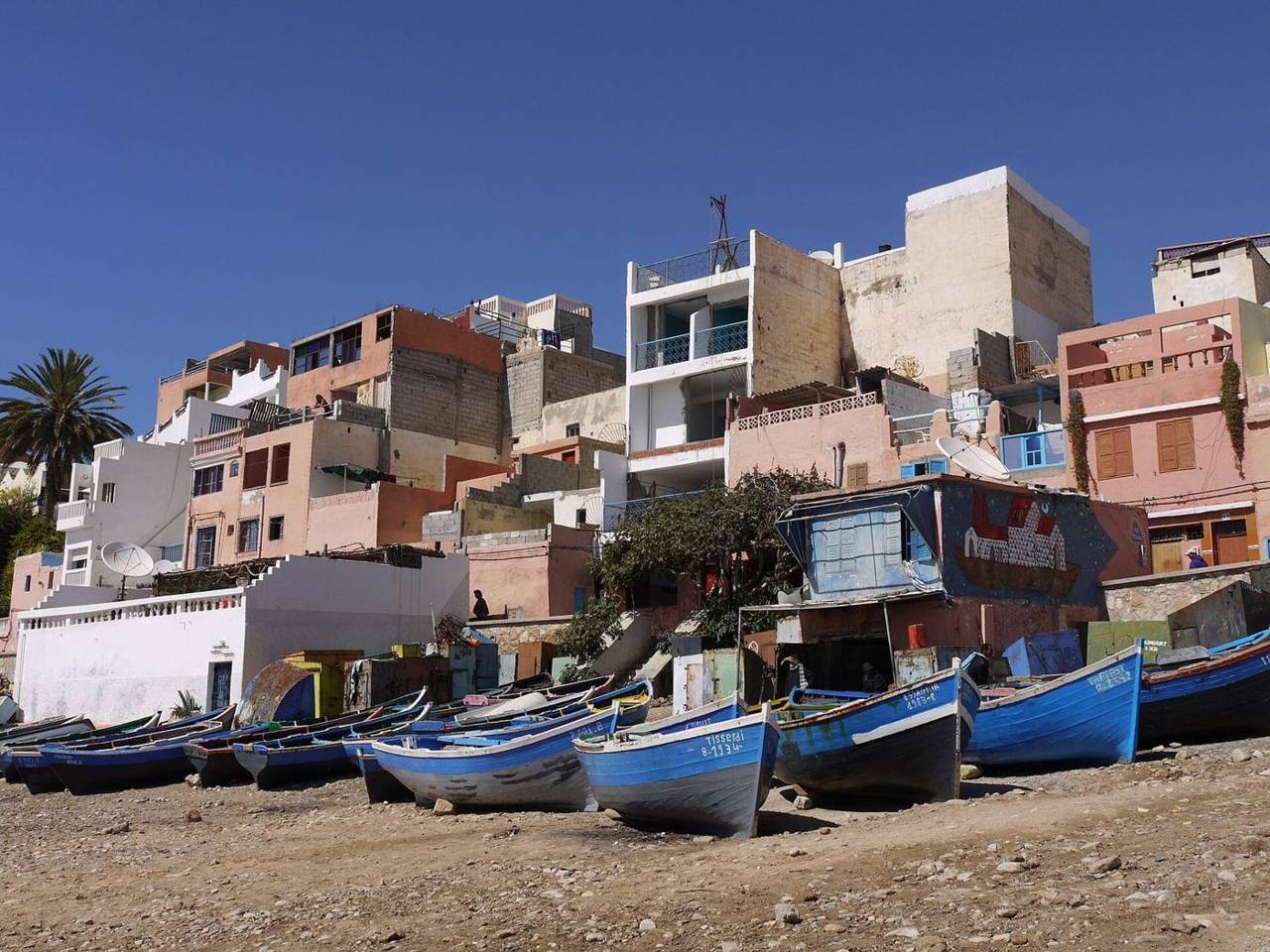
Surfing in Taghazout and Imsouane
The wave coast north of Agadir: the villages of Taghazout and Tamraght with spots for every level, the long wave in the bay at Imsouane, ideal for learning and longboarding, Paradise Valley among the palms and sunsets over the Atlantic.
 4 daysEasy
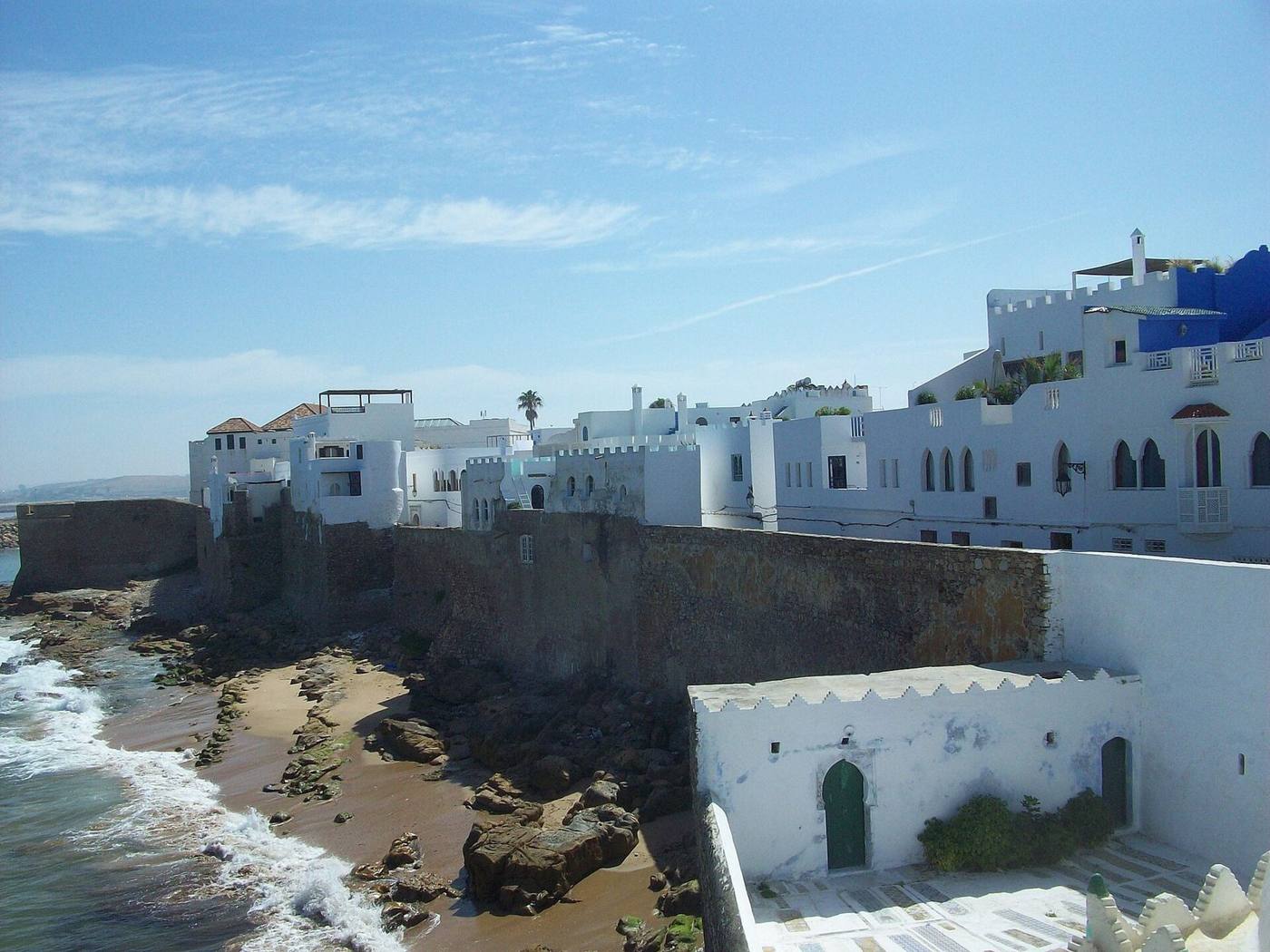
Asilah, Larache, Lixus and Moulay Bousselham
The northern Atlantic coast: Asilah with its ramparts and murals, Larache with its Spanish past, the Phoenician and Roman ruins of Lixus on the hill above the river and the Merja Zerga lagoon at Moulay Bousselham, with flamingos and birds seen by boat.
 4 daysEasy
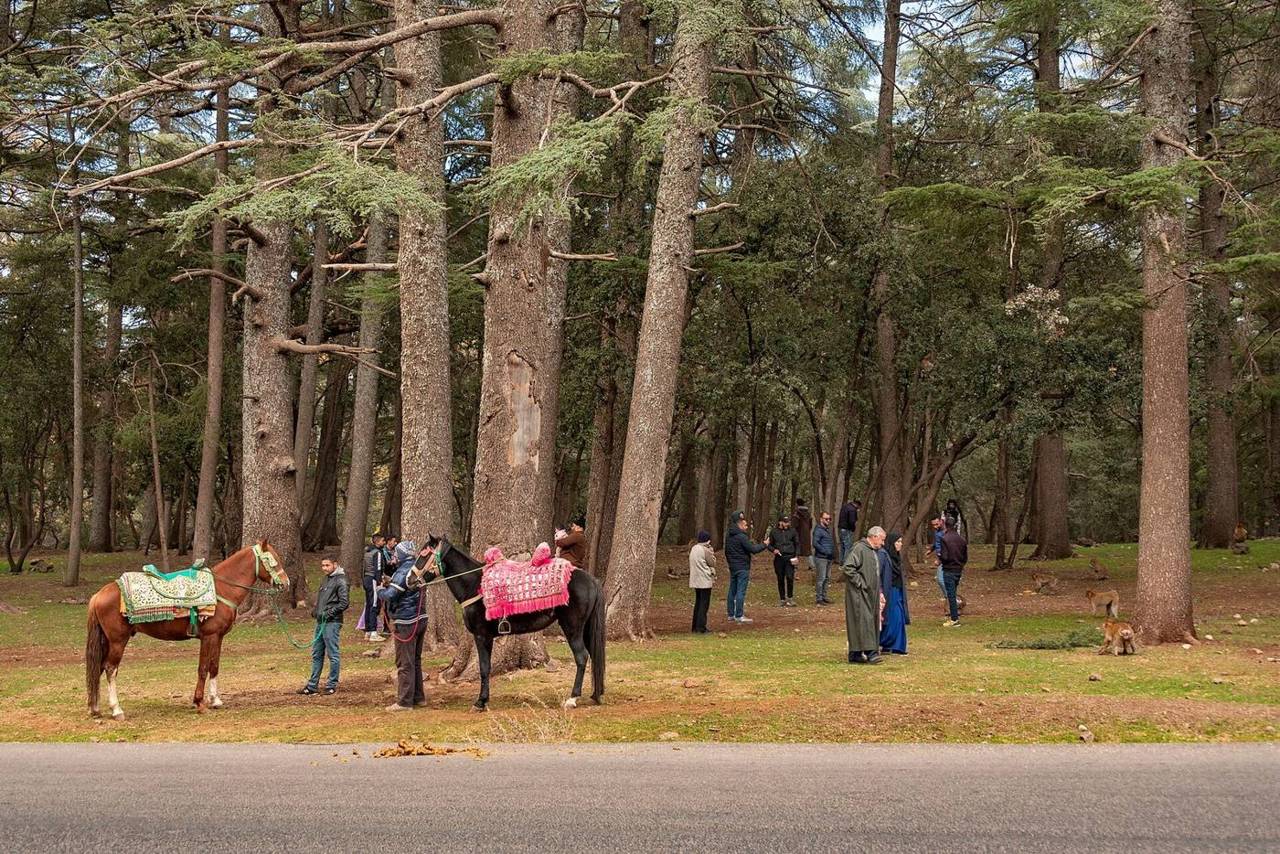
The Middle Atlas: Ifrane, Azrou and the lakes
Morocco's forests: Ifrane, an alpine-style town with steep roofs, the cedar forests of Ifrane National Park and their Barbary macaques, the lakes of Dayet Aoua and Aguelmam Azigza, the springs of the Oum Er-Rbia and walks across the shepherds' pastures.