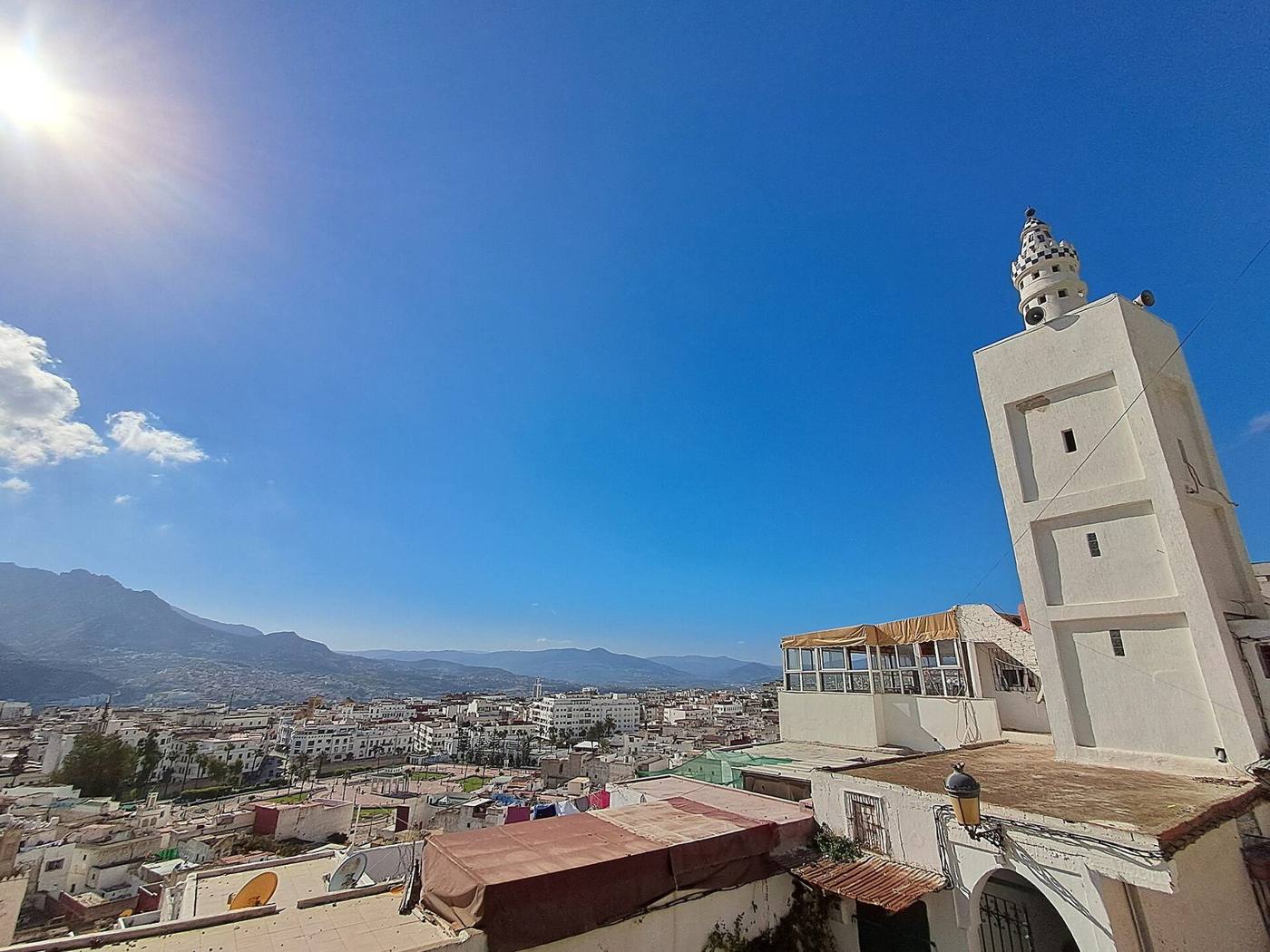
Tangier, Tetouan and the Mediterranean coast
Morocco's Andalusian north: Tangier with its kasbah, Cape Spartel and the Caves of Hercules, the medina of Tetouan (UNESCO) with its white houses and craftsmen, the beaches of Martil and Oued Laou and the coast road towards Al Hoceima National Park.
- Tangier
- Cape Spartel
- Tetouan
- Martil
- Oued Laou
- Al Hoceima
Day by day
- Day 1
Tangier: the kasbah and the medina
Northern Morocco is different from the rest of the country. Here the Mediterranean meets the Atlantic, Africa is only fourteen kilometres from Europe, and the cities have an Andalusian and Spanish stamp, with white houses and blue doors. The Rif mountains run down to a coast of bays and beaches still little known to foreign tourists. In five days you see Tangier, Tétouan and the Mediterranean coast as far as Al Hoceima.
Tangier can be reached by air or by ferry from Spain, from Tarifa or Algeciras, in about an hour. For centuries it was a contested city, and between 1923 and 1956 it was an international zone governed by several European powers. In those years it attracted writers, artists, spies and adventurers: Paul Bowles, Matisse, Delacroix and the Beat writers lived here or passed through.
In the morning, climb to the kasbah, the upper part of the medina, with the old sultan's palace, now a museum, and the square from which you see the Strait of Gibraltar and, on clear days, the Spanish coast.
Then go down into the medina, through narrow lanes, stairways and white houses, to the Petit Socco, the small square with the cafés where the writers used to sit. Visit the American Legation, the first building owned by the United States abroad, now a museum, and the Grand Socco, the large square at the gate of the medina.
In the afternoon, walk along the corniche, the seafront, and through the modern city, with its buildings from the international era.
Practical tip: in the Tangier medina there are pushy fake guides. Decline politely and firmly, or hire an official guide.
- Day 2
Cape Spartel and the Caves of Hercules
In the morning, head west by taxi or car along the road through the villas and pine woods of the Montagne, Tangier's residential hill, with the palaces of kings and wealthy families. In about half an hour you reach Cape Spartel, the north-western tip of Africa, where the Mediterranean meets the Atlantic. A nineteenth-century lighthouse stands on a pine-covered headland, with views of the ocean and the strait.
Then go down the Atlantic coast to the Caves of Hercules. According to legend, Hercules rested here after his labours. The caves, partly natural and partly dug by people to quarry millstones, have an opening to the sea shaped like a map of Africa when seen from inside. At sunset the light comes through the opening and lights up the cave.
Nearby is Achakar beach, a long sandy beach on the Atlantic, with waves and strolling dromedaries. You can swim, but beware of currents. Close by are also the remains of the ancient Roman town of Cotta, where garum, the Romans' fish sauce, was produced.
In the afternoon, return to Tangier. At sunset, go to one of the historic cafés on the terraces above the sea, where you drink mint tea looking out over the strait.
In the evening, try northern cooking: fried fish, bissara, a soup of dried broad beans, and almond pastries.
Practical tip: on the Atlantic coast the currents are strong. Only swim in supervised areas.
- Day 3
Tétouan: the medina and the crafts school
In the morning, head east to Tétouan, about an hour's drive, at the foot of the Rif mountains. Tétouan was the capital of the Spanish protectorate in northern Morocco between 1913 and 1956, and was rebuilt at the end of the fifteenth century by Muslims and Jews expelled from Andalusia after the fall of Granada. That is why it is called the daughter of Granada.
Its medina, with walls and seven gates, has been a UNESCO World Heritage Site since 1997. It is one of the most authentic medinas in the country, with few tourists, where residents live and work as they always have. You walk through the craftsmen's quarters: tanners, weavers, coppersmiths, carpenters and spice sellers, among white houses with Andalusian wrought-iron windows.
Visit the School of Arts and Crafts, founded during the protectorate and still active, where students learn traditional techniques: zellige tile mosaic, painted and carved wood, carved stucco, embroidery and metalwork. You see craftsmen and pupils at work.
In the afternoon, stroll through the new Spanish town, the Ensanche, with its white early-twentieth-century buildings, balconies and the main square in front of the royal palace. Also visit the archaeological museum, with Roman mosaics found in the region.
In the evening, sleep in Tétouan or on the nearby coast at Martil.
Practical tip: it is easy to get lost in the Tétouan medina. An official guide for a few hours helps you find the craftsmen's workshops.
- Day 4
The coast road to Oued Laou
In the morning, leave Tétouan and take the coast road south-east, one of the most beautiful in Morocco, running between the Rif mountains and the Mediterranean. The road has been improved in recent years and passes above bays, cliffs and small fishing villages.
Along the way, stop at the beaches and bays, with clear Mediterranean water. In many places the mountains drop straight into the sea, covered in pines, olive trees and scrub.
At midday you reach Oued Laou, a village at the mouth of a river, with a long sandy beach and a small fishing harbour. It is a quiet place, visited mainly by Moroccans in summer. At the harbour you eat freshly caught fish, grilled or fried.
In the afternoon, if you have time, take a trip inland along the Laou river valley, with its gorges and mountain villages. Or continue along the coast to El Jebha, a more isolated village with houses clinging to the mountain above the sea.
In the evening, sleep on the coast, at Oued Laou or in one of the nearby villages, or continue to Al Hoceima, about three and a half hours away.
Practical tip: cannabis is grown in the Rif. It is illegal in Morocco too, and pushy sellers should be ignored. Do not accept lifts or offers from strangers.
- Day 5
Al Hoceima and its park, then departure
The last day is devoted to Al Hoceima, a town on the Rif coast built on a headland above a large bay, with white and blue houses running down to the sea. It was founded by the Spanish in the early twentieth century. Off the coast you see the small Spanish islets, still part of Spain today.
In the morning, go down to Quemado beach, in the centre of town, a small sandy bay with turquoise water, or to the nearby beaches of Sfiha and Cala Bonita.
Then visit Al Hoceima National Park, west of town, one of the wildest parks in Morocco, protecting a stretch of coast with towering cliffs, sea caves, isolated bays and a very rich sea, frequented by dolphins and ospreys. There are paths between the Berber villages of the Rif and viewpoints over the cliffs. Some bays can only be reached on foot or by boat.
In the afternoon, depending on your plans, take a flight from Al Hoceima airport or head back towards Tangier or to Chefchaouen, the blue town in the Rif mountains.
This trip combines well with other parts of the north: Chefchaouen, Fès and Meknès, or Asilah and the Atlantic coast south of Tangier.
Practical tip: Italian citizens can enter Morocco without a visa for up to 90 days with a passport. The border with Algeria is closed: stay away from the border strip. The United States keeps Morocco at level 2 for caution.
Tangier can also be reached by ferry from Spain. In July and August the beaches fill with Moroccan families on holiday. Cannabis is grown in the Rif: it is illegal, and pushy sellers should be ignored. EU citizens enter without a visa for up to 90 days with a passport. The border with Algeria is closed: keep away from the border strip.
Before you go
- Documents and visa
- EU visitors need a passport valid for the whole stay; identity cards are not accepted. No visa is needed for tourist stays of up to 90 days.
- Health and vaccines
- No vaccines required. Drink bottled water and take out travel health insurance: public healthcare is limited and private clinics charge. Emergencies: 19 police, 15 ambulance.
- Money and payments
- Moroccan dirham, which cannot be exported beyond a small sum: change a little at a time and keep the receipts. Cash is needed everywhere in medinas and villages.
- Power sockets
- Types C and E, 220 volts.
- Time zone
- UTC+1 for most of the year; Morocco changes its clocks during Ramadan, so check before travelling.
- Safety
- The main risk named by governments is terrorism; avoid the 20 km strip along the closed Algerian border and the frontier areas of Western Sahara. Official advice: GOV.UK.
Information checked in November 2026 for Italian and EU citizens. Rules change: always check before you travel.
Variations
In 3 days: Tangier, Cape Spartel and Tétouan.
In 8 days: after Al Hoceima, continue to Chefchaouen and Fès.
Frequently asked questions
When is the best time to go?
From May to October for the sea, with June and September quieter. In July and August the beaches fill with Moroccan families. Spring is lovely for the cities and mountains.
Can I arrive from Spain?
Yes: ferries run from Tarifa and Algeciras to Tangier in about an hour. Border checks take place at the port.
What documents do I need?
Italian citizens only need a valid passport, without a visa, for up to 90 days. The United States keeps Morocco at level 2 for caution.
Indicative itinerary written by World Atlas. Before booking, check timetables, seasonal openings, documents and safety.
 5 daysModerate
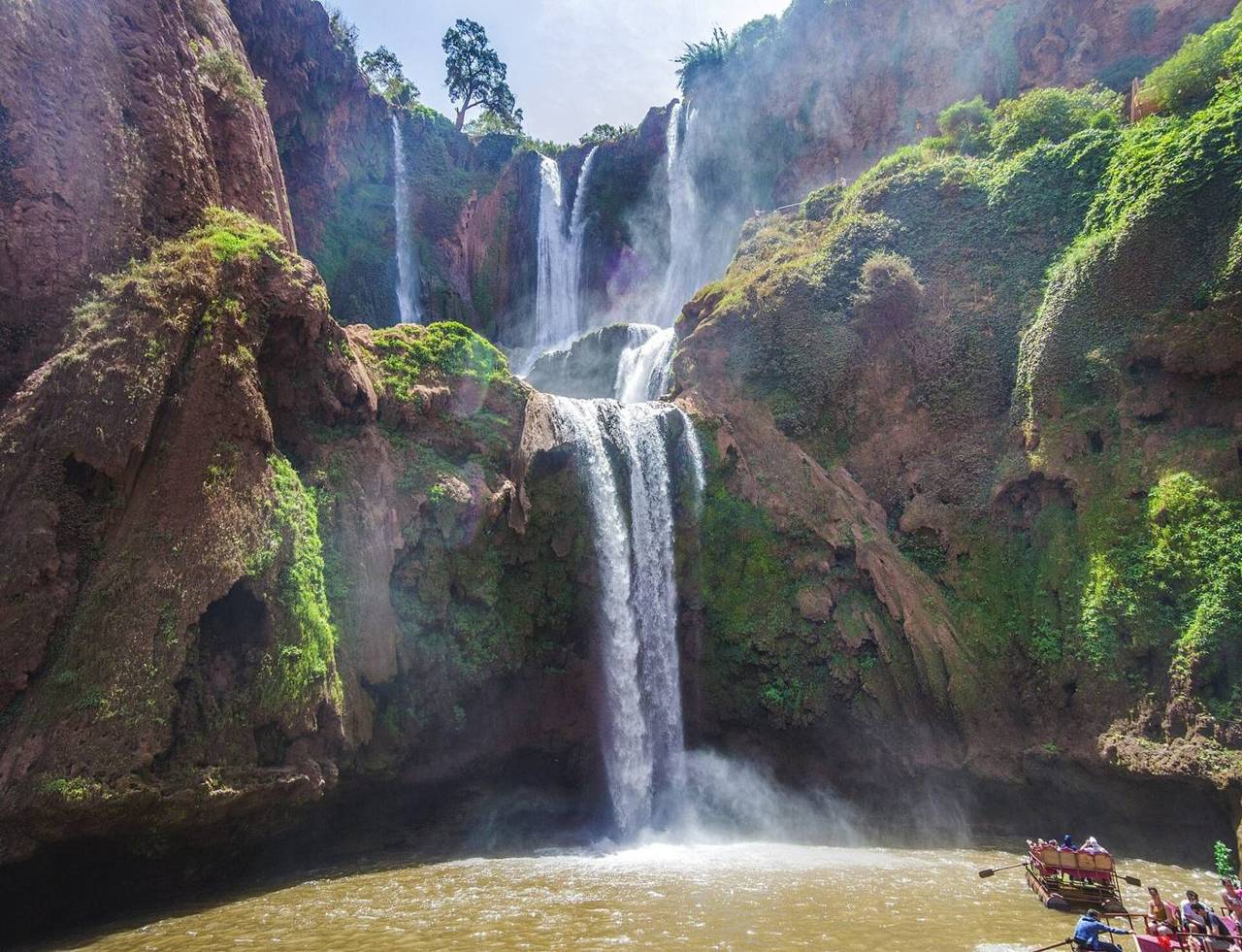
Ouzoud Falls and the Aït Bouguemez valley
The green Central Atlas: the Ouzoud Falls, over a hundred metres high among olive trees and Barbary macaques, then the Aït Bouguemez valley, known as the happy valley, with earthen villages, terraced fields, the fortified granary of Sidi Moussa, dinosaur footprints and walks with muleteers.
 4 daysEasy
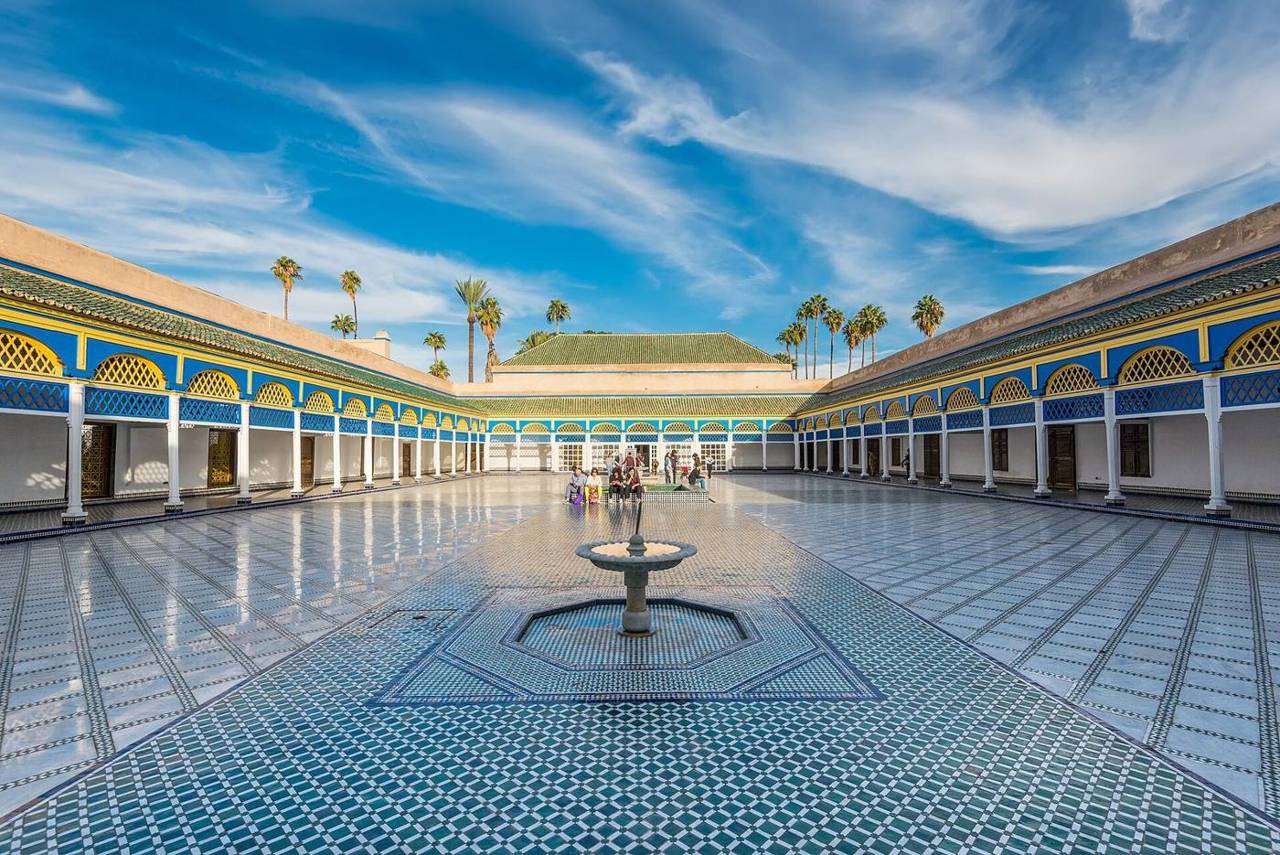
Marrakech in depth and the Agafay desert
The red city without rushing: the Bahia Palace, the Ben Youssef madrasa, the Saadian tombs, the Mellah, the Majorelle garden and the Yves Saint Laurent museum, Le Jardin Secret, the souks and Jemaa el-Fna square in the evening, then a night under canvas in the stony Agafay desert.
 7 daysModerate
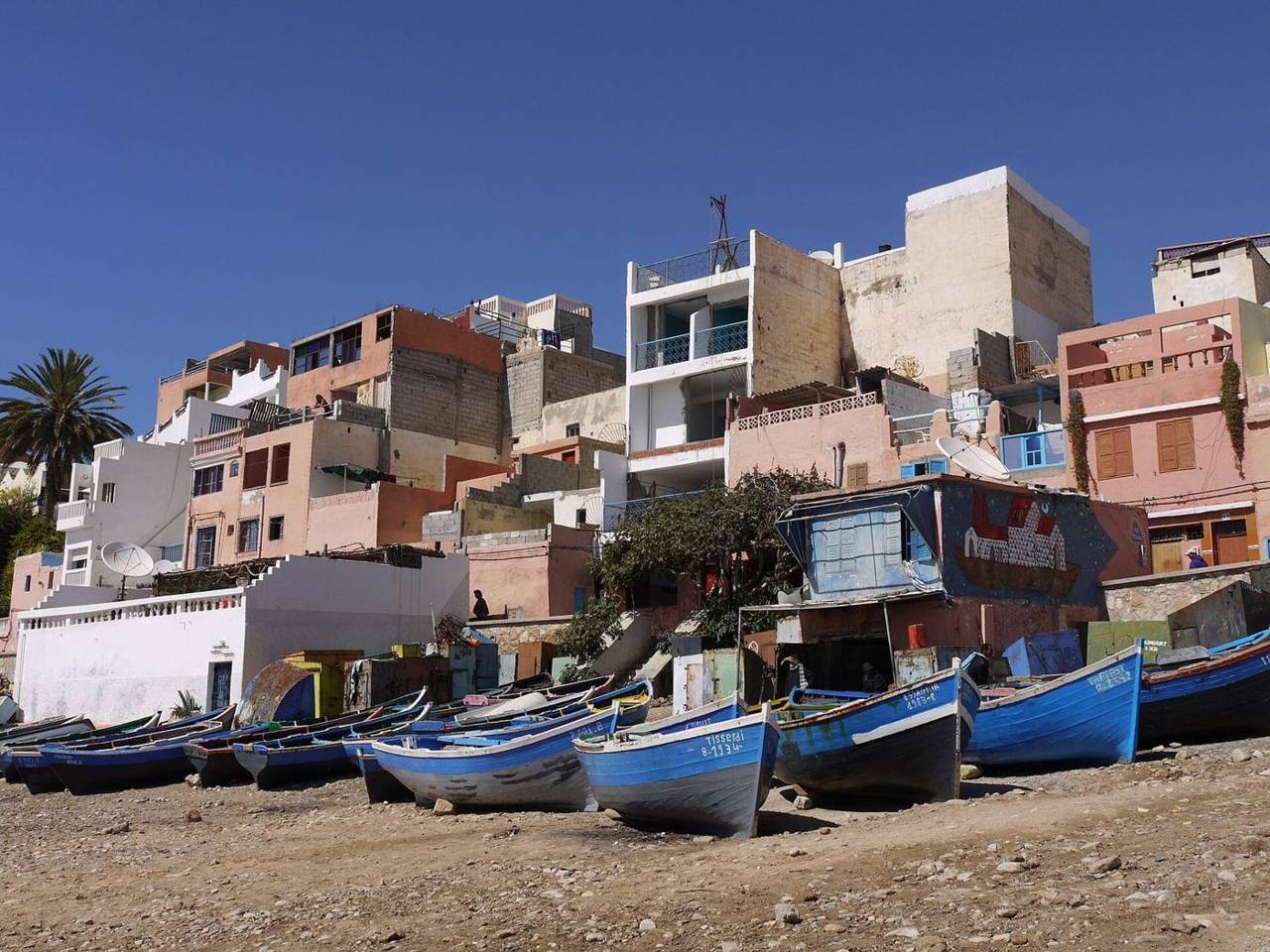
Surfing in Taghazout and Imsouane
The wave coast north of Agadir: the villages of Taghazout and Tamraght with spots for every level, the long wave in the bay at Imsouane, ideal for learning and longboarding, Paradise Valley among the palms and sunsets over the Atlantic.