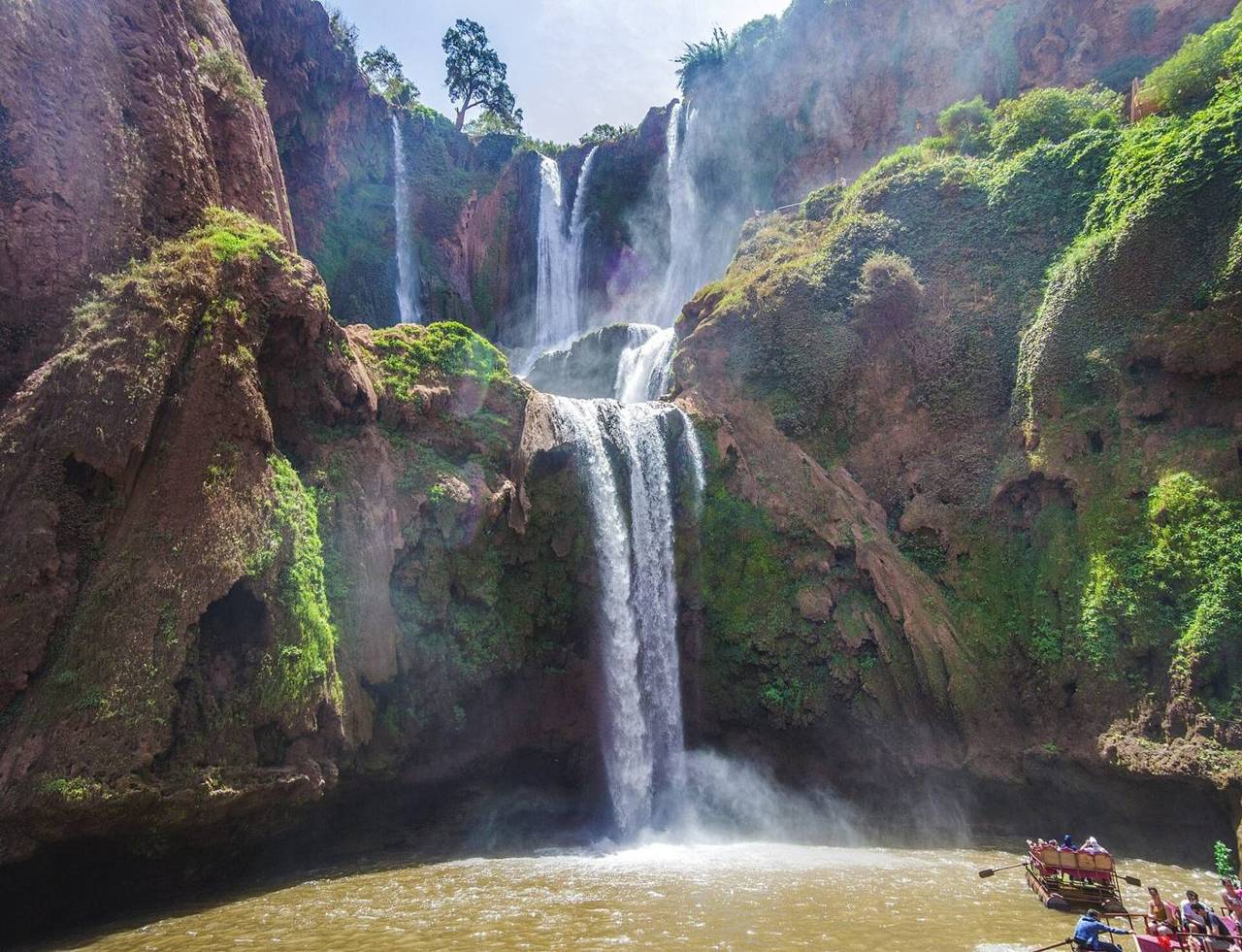
Ouzoud Falls and the Aït Bouguemez valley
The green Central Atlas: the Ouzoud Falls, over a hundred metres high among olive trees and Barbary macaques, then the Aït Bouguemez valley, known as the happy valley, with earthen villages, terraced fields, the fortified granary of Sidi Moussa, dinosaur footprints and walks with muleteers.
- Marrakech
- Ouzoud
- Azilal
- Aït Bouguemez
- Sidi Moussa
Day by day
- Day 1
From Marrakech to the Ouzoud falls
This trip takes you into the Middle and High Atlas north-east of Marrakech, away from the busiest roads. The Ouzoud falls are the highest in Morocco, and the Aït Bouguemez valley, known as the happy valley, is a Berber valley at almost two thousand metres, with earth villages, fields of wheat and apple trees, and trails climbing towards the M'Goun mountains. In five days you walk a lot, sleep in mountain houses and see a rural life that is still very traditional.
In the morning, leave Marrakech by car with a driver or by shared taxi and head north-east, in about three hours, across the plain and then the first hills planted with olive and almond trees.
You reach Ouzoud, a village above the gorge of the El Abid river. The falls drop about a hundred and ten metres in several leaps, among red rocks and green vegetation, and in the afternoon sun rainbows often form in the spray. The name comes from the Berber word for olives: along the river there are still old watermills used to grind olives and grain.
In the afternoon, walk along the top edge of the gorge to the viewpoints, where you see the whole fall.
In the evening, sleep in one of the houses near the falls, and have a tajine of vegetables and meat slow-cooked over charcoal, followed by mint tea.
Practical tip: Barbary macaques, the Atlas monkeys, live around the falls. Do not feed them: tourists' food makes them ill and aggressive.
- Day 2
Down to the foot of the falls and the road to Aït Bouguemez
Early in the morning, before the groups from Marrakech arrive, take the trail down to the foot of the falls. The path winds among olive trees and mills, with steps cut into the rock, to the large pool where the water crashes down. Small painted boats take visitors close to the fall, under the spray.
If you want to walk more, follow the riverside trail downstream to the El Abid gorges, with red rock walls and green water. The walk takes about an hour and a half there and back.
Around midday, set off south-east via Azilal, the main town of the area, and then on a mountain road climbing over passes and through valleys to Aït Bouguemez, in about three hours. The road crosses landscapes of red and grey rock, juniper woods and small shepherds' villages.
In the late afternoon you reach the valley. The valley floor is a green strip of irrigated fields, walnut, apple and poplar trees, enclosed by bare mountains, with villages built of earth and stone on the slopes to leave the farmland no-cost.
In the evening, sleep in a gîte, a mountain house run by a Berber family, with simple rooms and shared meals.
Practical tip: nights in the valley are cold even in summer, and in winter it can snow. Bring a warm jumper and a light sleeping bag.
- Day 3
The Sidi Moussa granary and the villages on foot
In the morning, walk through the valley with a local guide, from village to village, on paths between the fields and along the irrigation channels, called seguias, which carry stream water to all the fields according to turns decided by the community.
The walk leads to Sidi Moussa hill, a small cone-shaped hill in the middle of the valley, topped by an old communal granary, an agadir, shaped like a round tower. Valley families once stored their grain, documents and valuables here, in small rooms closed by wooden doors, under the protection of a guardian. From the top the view takes in the whole valley, with its villages, fields and mountains.
In the afternoon, continue through the villages of Agouti, Tabant and Ifrane, where women work in the fields and men build houses of rammed earth. You can step into a house to see bread baked in the clay oven, or visit a women's cooperative making carpets or oil. Children often walk part of the way with you on their way home from school.
In the evening, at the gîte, have couscous for dinner, steamed over a broth of vegetables and meat.
Practical tip: always ask before photographing people, especially women. In the villages, dress with shoulders and legs covered, out of respect.
- Day 4
Mule tracks to the high valleys and the dinosaur footprints
Today is the longest walking day. With the guide and, if you like, a mule to carry water and lunch, climb from the last houses of the valley to the high valleys and summer pastures, on shepherds' paths and mule tracks. The landscape grows harsher: rocks, juniper bushes, herds of goats and sheep, and a few stone huts used by shepherds in summer.
If you are fit, you can climb one of the passes facing the M'Goun massif, one of Morocco's highest mountains, over four thousand metres, snow-covered for much of the year.
In the afternoon, on the way down, pass the dinosaur footprint site near the village of Ibaqalliwn. On some tilted rock slabs you can clearly see tracks left by large dinosaurs about a hundred and seventy million years ago, when there was a muddy plain near the sea here. The footprints are as large as a table, and some form a trail of steps.
In the evening, return to the gîte and rest. If the sky is clear, the night is full of stars.
Practical tip: in the mountains, carry at least two litres of water each, sunscreen and a hat. The sun is strong even when the air is cool.
- Day 5
Back to Marrakech
On your last morning, before leaving, take a short walk in the valley fields at dawn, when women go out to gather grass for the animals and smoke rises from the bread ovens.
Then head back to Marrakech, in about four and a half to five hours, via Azilal and Demnate. At Demnate you can stop to see Imi n'Ifri, a natural rock bridge over a gorge, with caves and limestone formations. The town is also known for its pottery and its weekly market.
Once in Marrakech in the afternoon, walk through the medina and onto Jemaa el-Fna square, which fills in the evening with food stalls, musicians and storytellers.
This trip combines well with the rest of Morocco: the Merzouga desert, the Dadès valley and the Todra gorges south of the Atlas, or the coast at Essaouira to the west. Keen walkers can return to the valley for a several-day trek towards the M'Goun.
Practical tip: Italian citizens can enter Morocco without a visa for up to 90 days with a passport. The US government rates Morocco level 2 of 4, exercise increased caution, because of the risk of terrorism. In the valley and the mountains it is best always to walk with a local guide.
The road to the valley is paved but long and winding. Nights are spent in simple village guesthouses. In winter it can snow. Do not feed the macaques at Ouzoud. EU citizens enter without a visa for up to 90 days with a passport. The border with Algeria is closed: keep away from the border strip.
Before you go
- Documents and visa
- EU visitors need a passport valid for the whole stay; identity cards are not accepted. No visa is needed for tourist stays of up to 90 days.
- Health and vaccines
- No vaccines required. Drink bottled water and take out travel health insurance: public healthcare is limited and private clinics charge. Emergencies: 19 police, 15 ambulance.
- Money and payments
- Moroccan dirham, which cannot be exported beyond a small sum: change a little at a time and keep the receipts. Cash is needed everywhere in medinas and villages.
- Power sockets
- Types C and E, 220 volts.
- Time zone
- UTC+1 for most of the year; Morocco changes its clocks during Ramadan, so check before travelling.
- Safety
- The main risk named by governments is terrorism; avoid the 20 km strip along the closed Algerian border and the frontier areas of Western Sahara. Official advice: GOV.UK.
Information checked in November 2026 for Italian and EU citizens. Rules change: always check before you travel.
Variations
In 3 days: the Ouzoud falls only, with two nights near the gorge.
In 8 days: after Aït Bouguemez, trek for several days towards the M'Goun massif.
Frequently asked questions
When is the best time to go?
From April to June and from September to October. In summer Ouzoud is hot and crowded; in winter it snows and is cold in the valley.
Do I need a guide?
Not for the falls. In the Aït Bouguemez valley and the mountains a local guide is strongly recommended, also to meet the families and villages.
What documents do I need?
A passport. Italian citizens can enter without a visa for up to 90 days.
Indicative itinerary written by World Atlas. Before booking, check timetables, seasonal openings, documents and safety.
 4 daysEasy
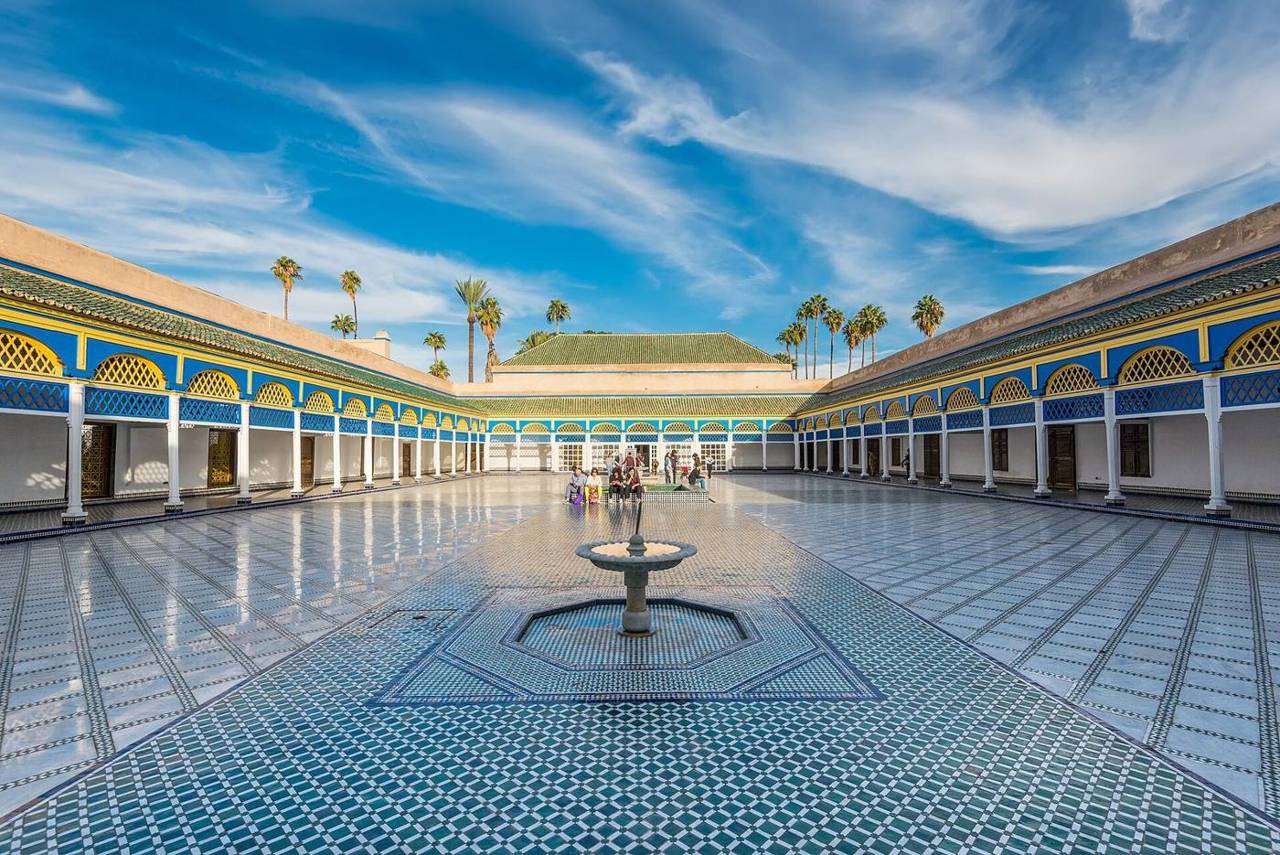
Marrakech in depth and the Agafay desert
The red city without rushing: the Bahia Palace, the Ben Youssef madrasa, the Saadian tombs, the Mellah, the Majorelle garden and the Yves Saint Laurent museum, Le Jardin Secret, the souks and Jemaa el-Fna square in the evening, then a night under canvas in the stony Agafay desert.
 7 daysModerate
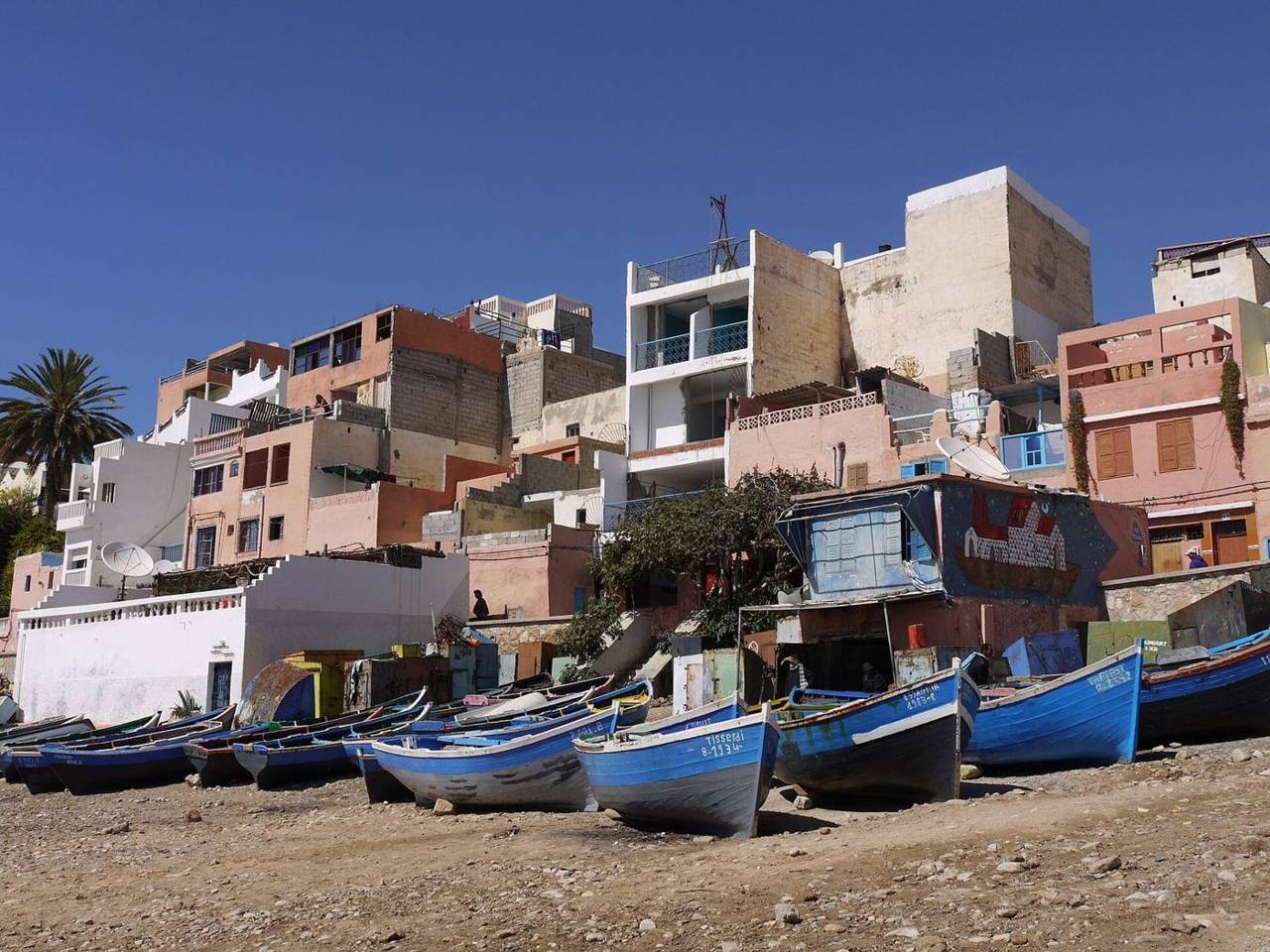
Surfing in Taghazout and Imsouane
The wave coast north of Agadir: the villages of Taghazout and Tamraght with spots for every level, the long wave in the bay at Imsouane, ideal for learning and longboarding, Paradise Valley among the palms and sunsets over the Atlantic.
 4 daysEasy
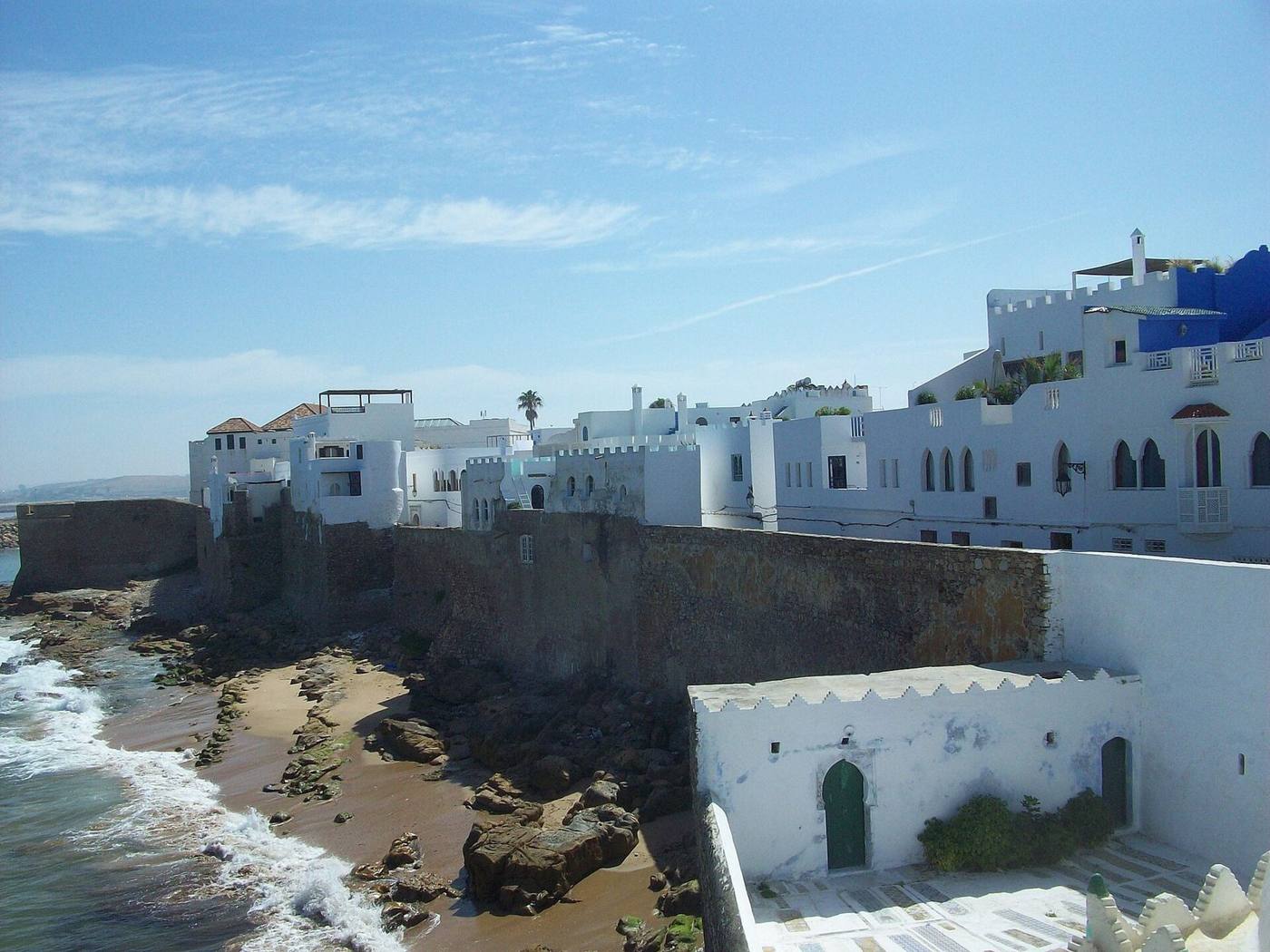
Asilah, Larache, Lixus and Moulay Bousselham
The northern Atlantic coast: Asilah with its ramparts and murals, Larache with its Spanish past, the Phoenician and Roman ruins of Lixus on the hill above the river and the Merja Zerga lagoon at Moulay Bousselham, with flamingos and birds seen by boat.