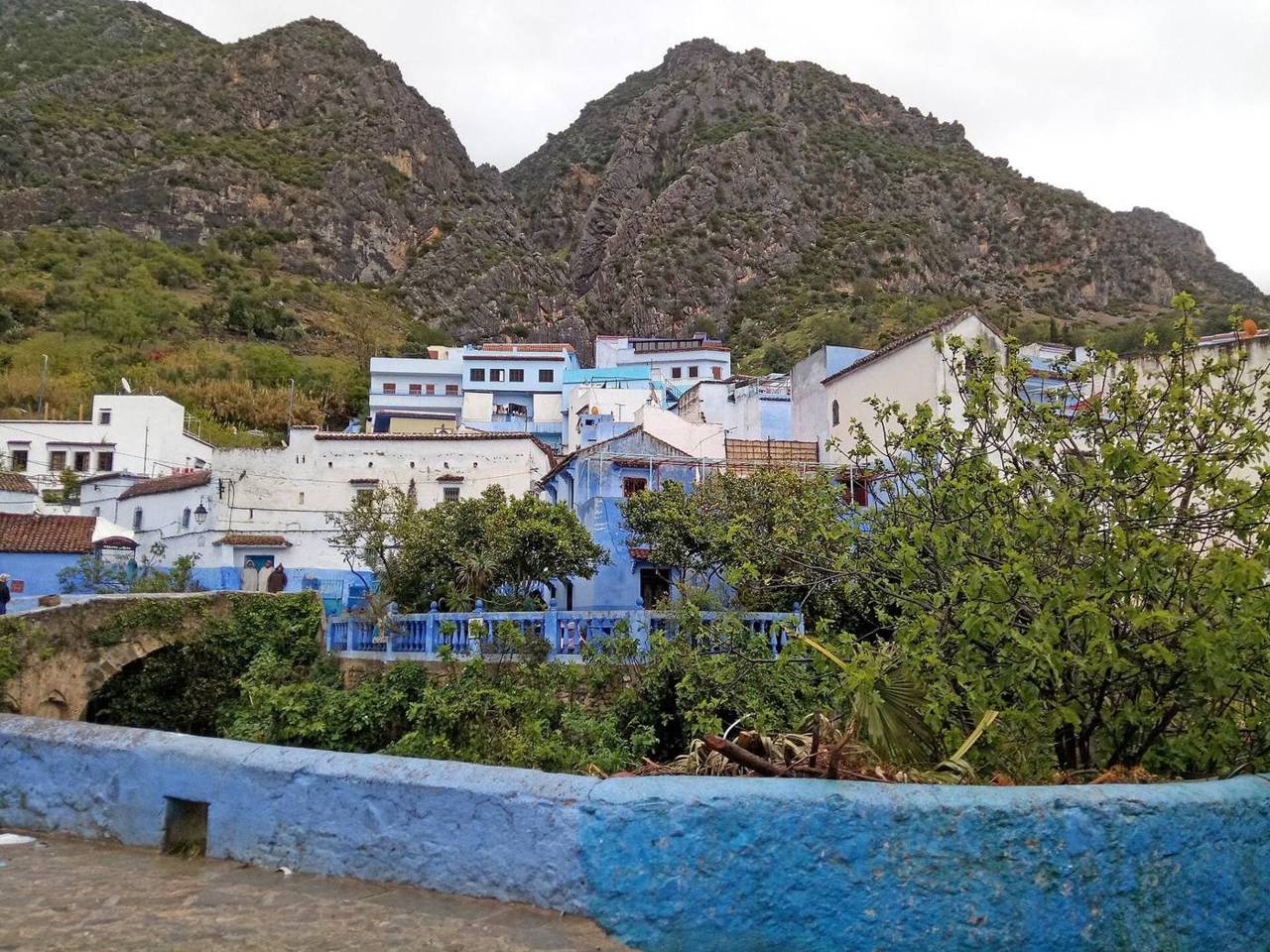
Chefchaouen and the Rif mountains on foot
The green north: the blue city, trails through cedars and villages in Talassemtane park, God's Bridge and the white medina of Asilah on the Atlantic.
- Tangier
- Chefchaouen
- Akchour
- Talassemtane
- Asilah
Day by day
- Day 1
Arrival in Tangier: the kasbah and the Strait
This trip goes to northern Morocco, into the Rif mountains, a few kilometres from Europe but far from the busiest routes: Tangier on the Strait of Gibraltar, the blue town of Chefchaouen, the Akchour waterfalls, three days on foot in Talassemtane National Park, with cedar and fir forests and mountain villages, and finally Asilah on the Atlantic.
Before you leave: you need a passport to enter Morocco. European Union citizens can stay up to 90 days without a visa. The United States government rates Morocco at level 2 of 4. Check the current requirements.
You arrive in Tangier by plane or by ferry from Spain, from Tarifa or Algeciras, in a crossing of about an hour.
In the afternoon climb up to the kasbah, the upper part of the medina, with its walls, the square where justice was once administered and the old sultan's palace, now a museum. From the terraces you see the Strait and, on clear days, the Spanish coast. Then walk down through the lanes of the medina to the Grand Socco, the large market square.
For decades Tangier was an international city, administered by several countries, and it attracted writers and artists from all over the world. The old American Legation, the first public building of the United States abroad, is now a museum.
In the evening drink a mint tea on one of the terraces overlooking the sea.
Sleep in Tangier.
Practical tip: in the medina politely refuse unofficial guides offering help. If you want a guide, ask your accommodation.
- Day 2
Chefchaouen: the blue lanes
In the morning leave for Chefchaouen, about two and a half hours south east, by scheduled bus, shared taxi or car with driver. The road climbs through green hills and the first mountains of the Rif.
Chefchaouen was founded in 1471 as a fortress against the Portuguese, at the foot of two mountains that look like two horns from a distance: in Arabic the name means look at the horns. For centuries it was closed to foreigners. Today it is famous for its houses painted pale and deep blue, which make the medina one of the most photographed places in Morocco.
In the afternoon walk through the lanes of the medina, among stairs, blue doors, flowerpots and small fountains. Visit the main square, with the red walled kasbah and its garden, and the great mosque with its octagonal minaret. Go down to Ras el Ma, the spring at the end of the medina, where women still wash clothes in the stream.
At sunset walk up to the Spanish mosque, built in the 1920s on a hill above the town: in about half an hour you reach it and watch the whole of Chefchaouen turn golden and then blue.
In the evening taste the local goat's cheese and a tagine.
Sleep in Chefchaouen.
Practical tip: families live in the lanes. Do not walk through open doors and ask before photographing people.
- Day 3
The Akchour waterfalls and God's Bridge
Today you take a day trip to the Akchour waterfalls, about an hour by road from Chefchaouen, inside Talassemtane National Park. You go by shared taxi or car to the small village of Akchour, where a river comes out of a gorge between the mountains.
Two trails start here. The first follows the river for about an hour and a half to the big waterfall, past natural pools of cold green water and smaller falls. The trail is easy but in some places you cross the river on stones or climb over slippery rocks.
The second trail climbs the other side of the gorge to God's Bridge, a huge natural rock arch over the river, several dozen metres high. You walk for about an hour, with steep climbs, and see the bridge from above and below. If you have good legs, you can do both trails on the same day.
Along the river there are small refreshment stops with tables in the shade, where you can eat a tagine or bread with olive oil and eggs.
At weekends and in summer Akchour is very popular with Moroccan families: go on a weekday and start early.
In the late afternoon return to Chefchaouen.
Sleep in Chefchaouen.
Practical tip: wear shoes that can get wet and bring a swimsuit. The water is cold even in summer.
- Day 4
First day on foot: towards the Rif villages
Today the three day trek in Talassemtane National Park begins. It is best to walk with a licensed mountain guide, who knows the trails, talks with the villagers and arranges nights in gîtes, the small guesthouses in the villages, and luggage transport by mule. Book the guide before you arrive or through your accommodation in Chefchaouen.
A classic route starts from Chefchaouen, climbs above the town through pines and oaks and crosses the pass below the mountains that overlook it. On the first day you walk five or six hours, with a good climb at the start, and reach a village such as Azilane, on the mountainside.
Along the way you pass terraced fields, almond and fig trees and small springs. You meet shepherds with goats and women carrying firewood. Rif women often wear straw hats with colourful wool tassels and red and white striped skirts.
In the Rif you will also see cannabis fields. In Morocco cultivation for medical and industrial use has been regulated by a 2021 law, but buying or consuming it remains illegal: refuse any offer.
In the evening you have dinner in the gîte with the family, often a tagine, homemade bread, olives and mint tea.
Sleep in a gîte.
Practical tip: the best time for walking is from April to June and from September to October. In summer it is hot, in winter it can snow.
- Day 5
Second day: the cedar and fir forests
Today is the finest day of the trek. You climb into the heart of Talassemtane park, between roughly fifteen hundred and two thousand metres, through forests of Atlas cedar and Moroccan fir. The Moroccan fir grows only in a few mountains of the Rif: the park was created partly to protect it.
The trail crosses clearings, limestone rocks and pastures, with views over the valleys and, on clear days, as far as the Mediterranean. You walk six or seven hours, with climbs and descents. The guide chooses the route according to the weather and the condition of the trails.
Barbary macaques live in the forest, the same monkeys as in Gibraltar. You often see them among the trees or on the rocks: do not feed them and do not go close, they can bite. There are also many birds of prey, such as eagles.
At midday you stop for a packed lunch near a spring, with bread, cheese, dried fruit and vegetables.
In the afternoon you descend to another village, where you sleep in a gîte or in a family home. Facilities are simple: hot water is not always available, there are squat toilets and wool blankets.
Sleep in a gîte in a village in the park.
Practical tip: bring a light sleeping bag or a sleeping bag liner, a torch and cash to pay for the gîte and leave a tip.
- Day 6
Third day: down to the river
On the third day you descend from the mountains to the river gorges, usually towards Akchour, where transport waits to take you back to Chefchaouen. The descent is long and steep in places: you walk five or six hours.
In the morning you leave the forest and pass through villages scattered over the slopes, with houses of stone and earth, flat or tiled roofs, bread ovens and small mosques. In many villages people speak Tarifit, the Berber language of the Rif, or a local form of Arabic. The guide helps you greet people and understand.
As you get closer to the river the landscape changes: oleanders appear, the rock walls rise and the trail enters the gorge. If you arrive from above, you can pass over God's Bridge and see it from a different angle than on the third day's outing.
At the end of the day cool off in the natural pools of the river and rest in the shade before getting into the vehicle.
In the evening, in Chefchaouen, treat yourself to a hammam, the traditional steam bath, to loosen your legs after three days of walking. There are public hammams, with separate hours for men and women, and others in guesthouses.
Sleep in Chefchaouen.
Practical tip: at the end of the trek leave a tip for the guide and the muleteer. In Morocco it is customary and an important part of their pay.
- Day 7
A quiet day in Chefchaouen
Today is a rest day in Chefchaouen, after the three days of walking.
Early in the morning, before the groups arrive, walk through the medina again: in the low light the blues are deeper and the lanes are empty. It is the best time for photos.
Then visit the kasbah, the red walled fortress in the middle of the main square. Inside there is an Andalusian garden, a small ethnographic museum with clothes, weapons and tools from the Rif and a tower with a view over the town. Prisoners were once held in the underground cells.
In the afternoon watch the craftsmen of the medina at work: weavers of wool blankets, woodcarvers, sellers of baskets and Rif straw hats. Shop calmly and bargain with a smile: it is part of the game.
Chefchaouen has a strong Andalusian influence, because in the sixteenth century it was settled by Muslims and Jews expelled from Spain. You see it in the houses with courtyards, in the fountains and in the food, and also in the language: many people here speak Spanish, because northern Morocco was a Spanish protectorate until 1956.
In the evening have bissara, a soup of dried broad beans with olive oil and cumin, typical of the north.
Sleep in Chefchaouen.
Practical tip: not every lane in the medina has a name. Save the location of your accommodation on your phone.
- Day 8
Asilah: murals and Portuguese ramparts
In the morning leave for Asilah, on the Atlantic coast, about three hours by road. You go by car with a driver, or by bus to Tangier and then by train or taxi.
Asilah is a quiet little town with a white and blue medina enclosed by ramparts built by the Portuguese between the fifteenth and sixteenth centuries, when the town was one of their ports on the African coast. You walk on the walls, with the sea crashing on the rocks, to the bastion where you watch the sunset over the ocean.
Asilah is famous for its murals. Every summer, during a cultural festival that began at the end of the 1970s, artists paint the white walls of the medina with large colourful designs, which stay for a while and are then painted over. Every year the town changes its face.
Also visit the Raissouni palace, built at the start of the twentieth century by a local chief famous for kidnapping a few foreigners, now used for exhibitions and events when it is open.
In the evening have fish for dinner. Asilah is a fishing port and here you eat grilled sardines, squid, prawns and the catch of the day, often in small places near the harbour.
Sleep in Asilah.
Practical tip: Asilah's beach is lovely, but the Atlantic has strong currents. Swim only where there are other people and the sea is calm.
- Day 9
Departure from Tangier
On the last day you return to Tangier, about forty five minutes by road from Asilah, for your flight or the ferry to Spain.
If you have a few no-cost hours before leaving, stop at Cape Spartel, the headland west of Tangier where the Atlantic meets the Mediterranean, with its lighthouse and a vast view over the ocean. Not far away are the Caves of Hercules, sea caves on the coast: one of the openings to the sea has the shape of the African continent seen in reverse. According to legend, Hercules rested here before separating Europe from Africa.
Tangier has two ferry ports: the city port, near the medina, with ships to Tarifa, and the large port of Tanger Med, about an hour to the east, with ships to Algeciras and other cities. Check which port your ferry leaves from and arrive at least an hour and a half early for police and customs checks.
Tangier airport is about half an hour from the centre.
This trip shows a different Morocco from that of Marrakech and the desert: green, mountainous, linked to the Mediterranean and to Spain, with villages where life still goes on as it used to and a simple, sincere welcome.
Practical tip: keep some dirhams for last purchases and taxis. Outside the cities credit cards are rarely used.
A different Morocco, cool and green, ideal in spring (April-June) and in September-October. Tangier has cheap direct flights from Europe. The trek is moderate, with forest climbs but no extreme altitude. Chefchaouen is crowded by day: sleeping inside the medina is the only way to see it empty early in the morning.
Before you go
- Documents and visa
- EU visitors need a passport valid for the whole stay; identity cards are not accepted. No visa is needed for tourist stays of up to 90 days.
- Health and vaccines
- No vaccines required. Drink bottled water and take out travel health insurance: public healthcare is limited and private clinics charge. Emergencies: 19 police, 15 ambulance.
- Money and payments
- Moroccan dirham, which cannot be exported beyond a small sum: change a little at a time and keep the receipts. Cash is needed everywhere in medinas and villages.
- Power sockets
- Types C and E, 220 volts.
- Time zone
- UTC+1 for most of the year; Morocco changes its clocks during Ramadan, so check before travelling.
- Safety
- The main risk named by governments is terrorism; avoid the 20 km strip along the closed Algerian border and the frontier areas of Western Sahara. Official advice: GOV.UK.
Information checked in November 2026 for Italian and EU citizens. Rules change: always check before you travel.
Variations
In 5 days: Tangier, Chefchaouen and Akchour, without the three day trek.
In 12 days: add Tetouan and the Mediterranean coast, with a day in Fes at the end.
Frequently asked questions
What documents do I need?
You need a passport. European Union citizens can stay up to 90 days without a visa. Check the current requirements.
Is it safe to walk in the Rif?
The United States rates Morocco at level 2 of 4. In Talassemtane park walk with a licensed mountain guide and refuse any offer of cannabis.
When is the best time to go?
From April to June and from September to October. In summer it is hot and the waterfalls are crowded, in winter it can snow in the mountains.
Indicative itinerary written by World Atlas. Before booking, check timetables, seasonal openings, documents and safety.
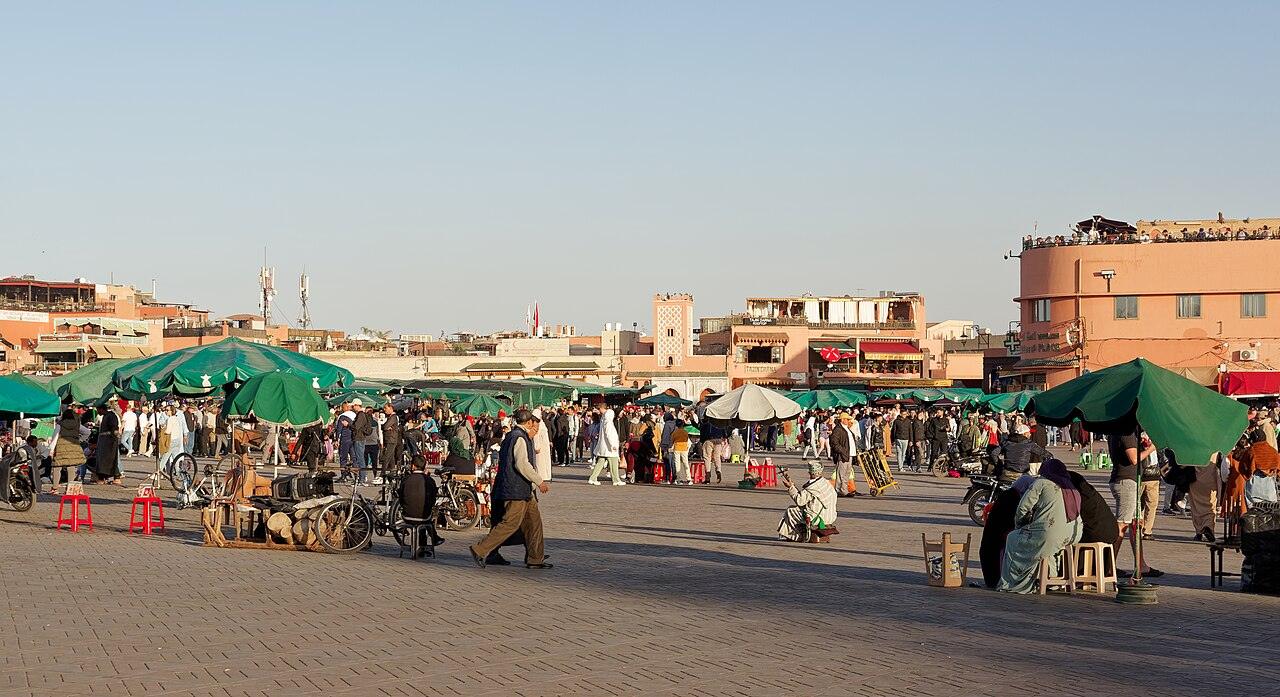 7 daysEasy
Marrakech and the Sahara
From Jemaa el-Fna square to the Erg Chebbi dunes, across the Atlas, past kasbahs and gorges.
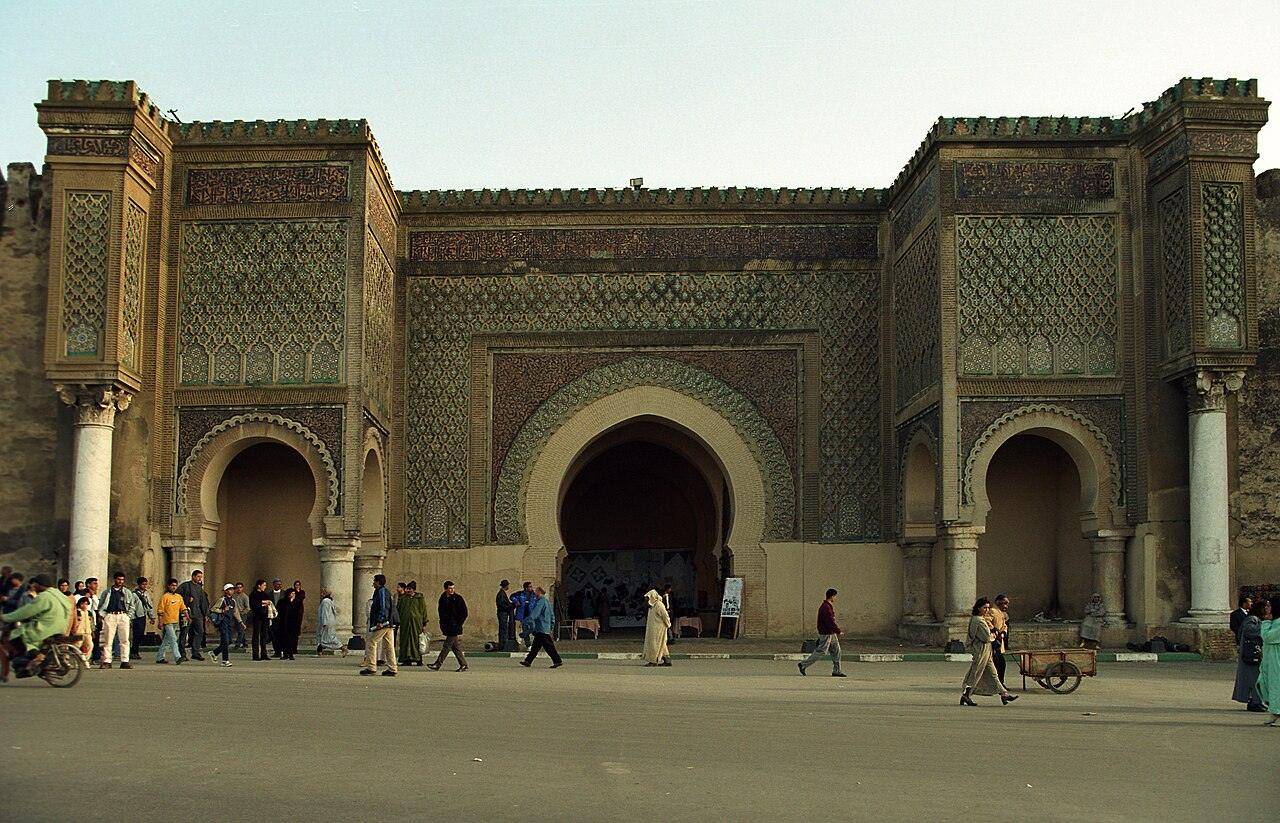 15 daysModerate
Imperial cities, Chefchaouen and the desert
The full circuit: Fez and Meknes, the blue town in the Rif, the Sahara, the gorges and a finale between Marrakech and Essaouira.
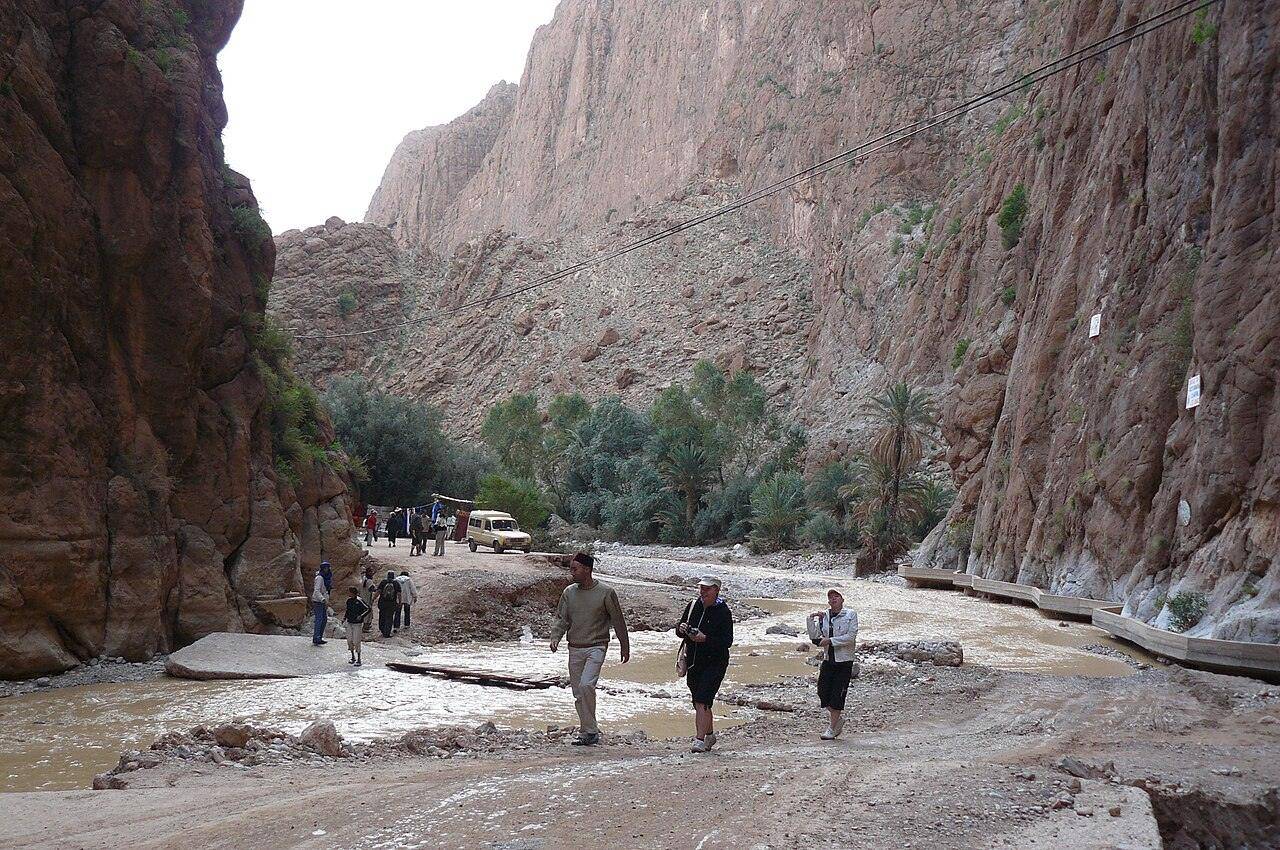 8 daysEasy
Marrakech to Fès by way of the Sahara
The classic crossing: the High Atlas, the kasbahs of Ouarzazate, the Dades gorges and a night in the Merzouga dunes, ending in the medina of Fès.