Marrakech and the Sahara
From Jemaa el-Fna square to the Erg Chebbi dunes, across the Atlas, past kasbahs and gorges.
- Marrakech
- Aït Ben Haddou
- Dades Valley
- Todra Gorge
- Merzouga
Day by day
- Day 1
Marrakech: the souks and the evening on Jemaa el-Fna
This trip combines the red city of Marrakech with the great Sahara desert, crossing the High Atlas mountains, mud brick kasbahs, palm oases and the deep gorges of the south. It is one of Morocco's classic journeys, with long scenic drives and a night in the desert under the stars.
You arrive at Marrakech airport, with direct flights from many European cities. Italian and most European citizens do not need a visa for tourist stays of up to 90 days.
On the first day enter the medina, the old city ringed by red walls, a UNESCO World Heritage Site. Walk through the souks, the covered markets divided by trade: dyers with skeins of coloured wool hung in the sun, blacksmiths, leather workers, and sellers of spices, lanterns, slippers and carpets. The lanes are narrow and busy with people, mopeds and donkeys.
The medina is dominated by the minaret of the Koutoubia mosque, about 77 metres high, from the twelfth century, a model for other famous minarets. Non Muslims may not enter the mosque, but the garden around it is open.
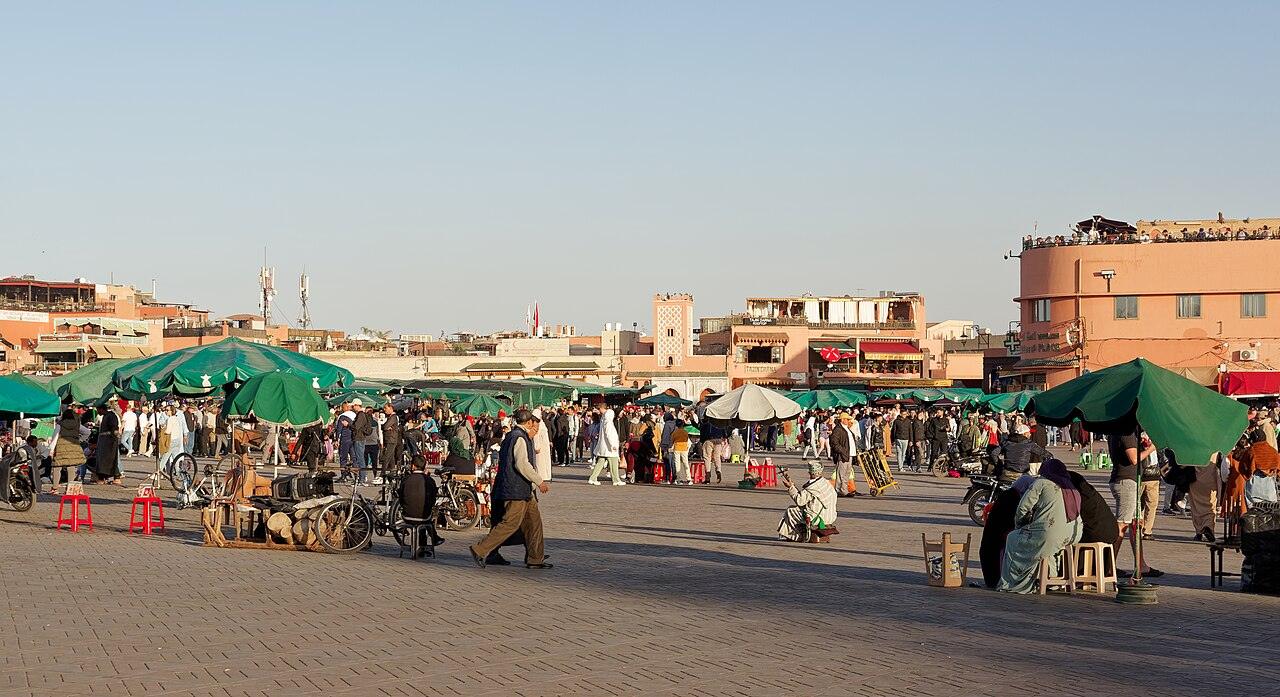
At sunset go to Jemaa el-Fna square, the heart of Marrakech. The square, whose cultural space is listed by UNESCO as intangible heritage, fills with storytellers, musicians, acrobats, orange juice sellers and food stalls with smoke and lights. Climb to a terrace around the square to see it from above.
Spend the night in Marrakech, in a riad, a traditional house with an inner courtyard.
Practical tip: the United States has Morocco at level 2 for terrorism. In the medina politely refuse unofficial guides and people offering to show you the way. In the square ask the price before taking photos with performers.
- Day 2
Majorelle Garden, Bahia Palace and the Ben Youssef medersa
Early in the morning go to the Majorelle Garden, outside the walls in the new town. The garden was created in the 1920s and 1930s by a French painter, Jacques Majorelle, with plants from all over the world, cacti, bamboo, palms, fountains and a villa painted an intense blue, now known as Majorelle blue. Later the designer Yves Saint Laurent and his partner bought and saved it. Next door are a small Berber museum and a museum devoted to the designer.
In the afternoon return to the medina and visit the Bahia Palace, built at the end of the nineteenth century for a grand vizier, the sultan's chief minister. The palace has courtyards, orange tree gardens, rooms with painted wooden ceilings, colourful tiles, carved stucco and decorated doors.
Then visit the Ben Youssef medersa, an old Koranic school, one of the largest in North Africa, rebuilt in the sixteenth century. The central courtyard, with a pool of water, is decorated with tile mosaics, very fine stucco and carved cedar wood. Upstairs are the small rooms where students lived.
In the evening have dinner in a riad or on a medina rooftop, with tagine, couscous and pastilla, a sweet and savoury pie of chicken or pigeon.
Spend the night in Marrakech.
Practical tip: for the Majorelle Garden check whether you need to book a timed entry online. Go as soon as it opens to avoid queues. Check museum closing days.
- Day 3
The Tizi n'Tichka pass and the kasbah of Aït Ben Haddou
Today you leave Marrakech and cross the High Atlas to the south. From here on the trip is usually made by car with a driver or on an organised tour.
The road climbs with many bends through Berber villages, terraced fields, walnut trees and red mountains to the Tizi n'Tichka pass, at about 2,260 metres, one of Morocco's highest. In winter the surrounding peaks are snow covered. On the other side the landscape changes: the mountains turn dry and the earth shifts from red to ochre.
In the afternoon you reach Aït Ben Haddou, a ksar, a fortified village, built of mud brick on a hill above a river, a UNESCO World Heritage Site. Red earth houses, granaries and towers crowd together, climbing to a granary at the top with a view over the valley and the desert. The ksar was a stop for caravans crossing the Sahara to Marrakech. It has been used as a set for many famous films.
You cross the river by a bridge or on stepping stones, depending on the water, and climb the lanes. A few families still live in the ksar.
In the evening continue to Ouarzazate, the gateway to the desert, which also has large film studios.
Spend the night in Aït Ben Haddou or Ouarzazate.
Practical tip: the Tizi n'Tichka road is slow, with many bends and lorries. If you get car sick, take precautions. In winter snow can close the pass for a few hours.
- Day 4
The Valley of Roses and the Dadès gorges
Today you follow the road of a thousand kasbahs eastwards, through arid mountains and green palm oases along the rivers.
The first stop is the Valley of Roses, around the town of Kelaat M'Gouna. Here Damask roses are grown to make rose water, oils and perfumes. Rose hedges line the fields and gardens. In May, during the harvest, there is a rose festival with music and dancing. In the town's shops you can buy rose products.
In the afternoon you enter the Dadès gorges, a narrow, deep valley carved by the river between red walls. The road climbs the valley past kasbahs, villages, green fields and unusual rock formations nicknamed monkey fingers for their shape.
Higher up the road climbs a series of tight, spectacular hairpins, seen from above at a viewpoint. It is one of the most photographed spots in southern Morocco.
In the evening stay in a guesthouse in the valley by the river, and have tagine and bread baked in an earth oven.
Spend the night in the Dadès gorges.
Practical tip: in the south the difference between day and night temperatures is large, especially in spring and autumn. Bring a sweater and a jacket even if it is hot by day. Fill up with fuel and get cash in larger towns: cash machines are rare in the villages.
- Day 5
The Todra gorges and a camel ride at sunset in Merzouga
In the morning go to the Todra gorges, about an hour's drive from the Dadès. Here the Todra river has carved a narrow canyon between rock walls up to three hundred metres high. At its narrowest the gorge is only about twenty metres wide, and you walk beside the stream in the shade, with the walls rising almost vertically. Climbers are often seen on the rocks.
Then continue east through an ever more desert landscape, flat and stony, via Erfoud and Rissani, an old caravan town, to Merzouga, on the edge of Erg Chebbi. Erg Chebbi is a great sea of orange sand dunes up to about a hundred and fifty metres high, one of the most famous landscapes of the Moroccan Sahara.
In the late afternoon you mount a camel and, with a guide, ride into the dunes. The animal's slow pace, the silence and the colours of the sand shifting with the light make a very powerful experience. At sunset you stop on top of a dune to watch the sun sink over the desert.
In the evening you reach the tented camp among the dunes, eat tagine and listen to drumming around the fire. Then look up at the starry sky, one of the most beautiful you can see.
Spend the night in a desert camp.
Practical tip: choose a camp that respects the desert and treats the animals well. Bring a scarf against the sand, a torch and warm clothes for the night.
- Day 6
Sunrise over the dunes and the long road to Marrakech
Wake before dawn and climb a dune near the camp to watch the sun rise over Erg Chebbi. The morning light turns the dunes orange, pink and gold, and the shadows draw perfect curves. It is one of the finest moments of the trip.
After breakfast at the camp you return to Merzouga by camel or four wheel drive.
Then begins the long drive back to Marrakech, about nine to ten hours with stops. You cross southern Morocco again, past oases, villages and mountains. One route passes Alnif and the Draa valley with its large palm groves, or you return via Ouarzazate and the Tizi n'Tichka pass.
Along the way stop in an oasis for mint tea, the drink of Moroccan hospitality, or to buy dates and fossils, very common in this part of the desert.
In the evening you arrive in Marrakech, tired but full of images. The noise of the city feels strange after the silence of the dunes. Have a light dinner at the riad.
Spend the night in Marrakech.
Practical tip: the return day is long. If you have time, split it in two, staying overnight in Ouarzazate or the Draa valley. Driving mountain roads at night is not recommended. Drink plenty of water throughout the desert trip.
- Day 7
Last morning in Marrakech and departure
On the last day enjoy your final hours in Marrakech before your flight.
In the morning visit somewhere you have not yet seen. The sixteenth century Saadian Tombs are a mausoleum with rooms decorated in stucco, marble and cedar wood, where sultans and their families are buried. El Badi Palace, now in ruins, was a great palace of the same period, with gardens and pools; from its walls you can see storks' nests.
Alternatively, relax in a hammam, the traditional steam bath, with a scrub using black soap and a rough glove.
If you have time, walk through the mellah, the old Jewish quarter, with its synagogue and cemetery, or the Menara garden, with a large pool and a pavilion against the backdrop of the Atlas mountains.
Before you leave, buy some souvenirs in the souks: spices, argan oil, ceramics, lanterns, slippers or a small carpet. Bargain calmly and with a smile: it is part of the tradition.
Marrakech airport is a few kilometres from the medina, about fifteen or twenty minutes by taxi.
Practical tip: always agree the taxi fare before getting in, or ask your riad to book one. Arrive at the airport well in advance, as checks can take a long time.
Morocco's most popular trip, and rightly so: in one week you go from the city to the desert across the Atlas. The drives to Merzouga are long, and a single night in the desert is short. Take Marrakech slowly, the first two days can be tiring.
Before you go
- Documents and visa
- EU visitors need a passport valid for the whole stay; identity cards are not accepted. No visa is needed for tourist stays of up to 90 days.
- Health and vaccines
- No vaccines required. Drink bottled water and take out travel health insurance: public healthcare is limited and private clinics charge. Emergencies: 19 police, 15 ambulance.
- Money and payments
- Moroccan dirham, which cannot be exported beyond a small sum: change a little at a time and keep the receipts. Cash is needed everywhere in medinas and villages.
- Power sockets
- Types C and E, 220 volts.
- Time zone
- UTC+1 for most of the year; Morocco changes its clocks during Ramadan, so check before travelling.
- Safety
- The main risk named by governments is terrorism; avoid the 20 km strip along the closed Algerian border and the frontier areas of Western Sahara. Official advice: GOV.UK.
Information checked in November 2026 for Italian and EU citizens. Rules change: always check before you travel.
Variations
In 4 days: just Marrakech, with a day trip to Aït Ben Haddou.
In 10 days: add Essaouira on the ocean and two nights in the Ourika valley or the Atlas.
Frequently asked questions
When is the best time to go?
March to May and October to November. In summer the desert is very hot, and in winter the nights are very cold.
Do I need a visa?
Italian and most European citizens do not, for tourist stays of up to 90 days. You need a valid passport.
Can I drive myself?
Yes, but mountain roads are slow and long. Many people prefer a driver or an organised tour for the desert.
Indicative itinerary written by World Atlas. Before booking, check timetables, seasonal openings, documents and safety.
 15 daysModerate
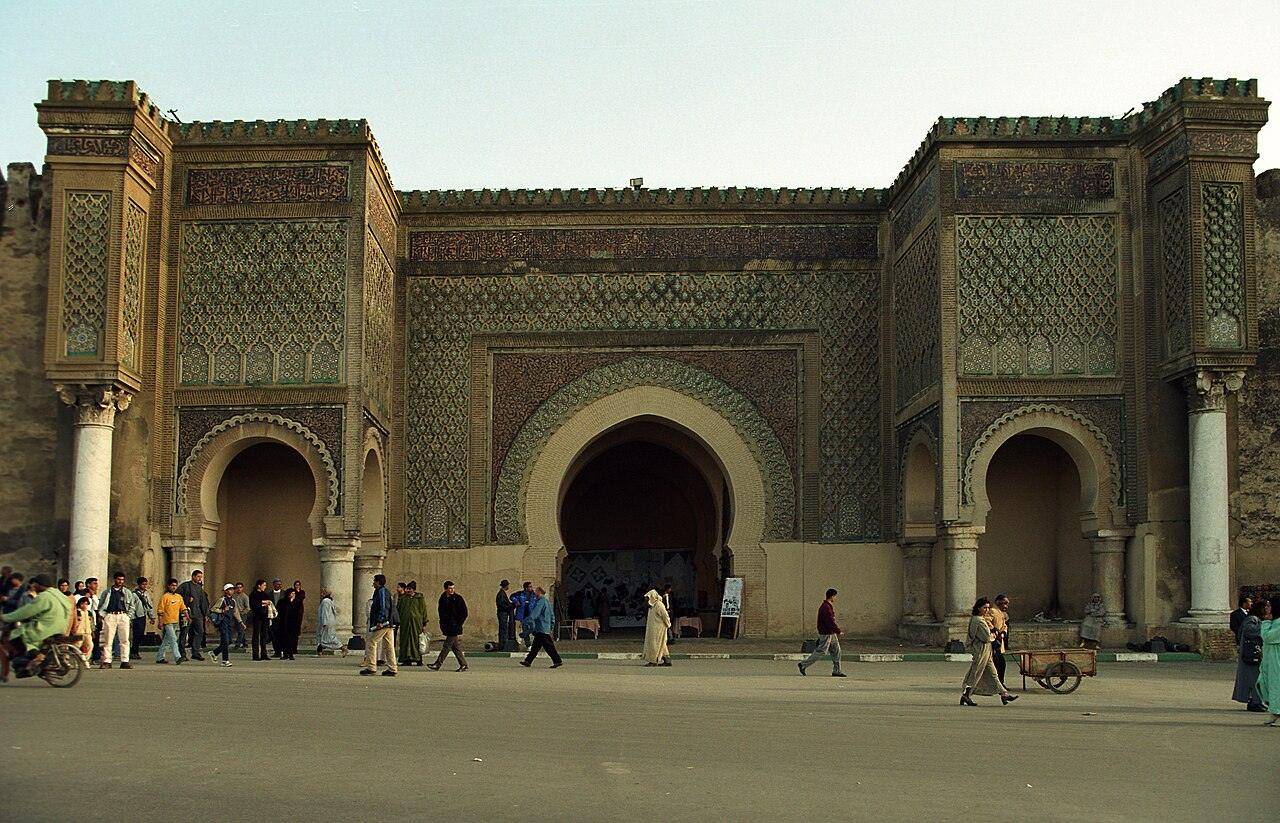
Imperial cities, Chefchaouen and the desert
The full circuit: Fez and Meknes, the blue town in the Rif, the Sahara, the gorges and a finale between Marrakech and Essaouira.
 8 daysEasy
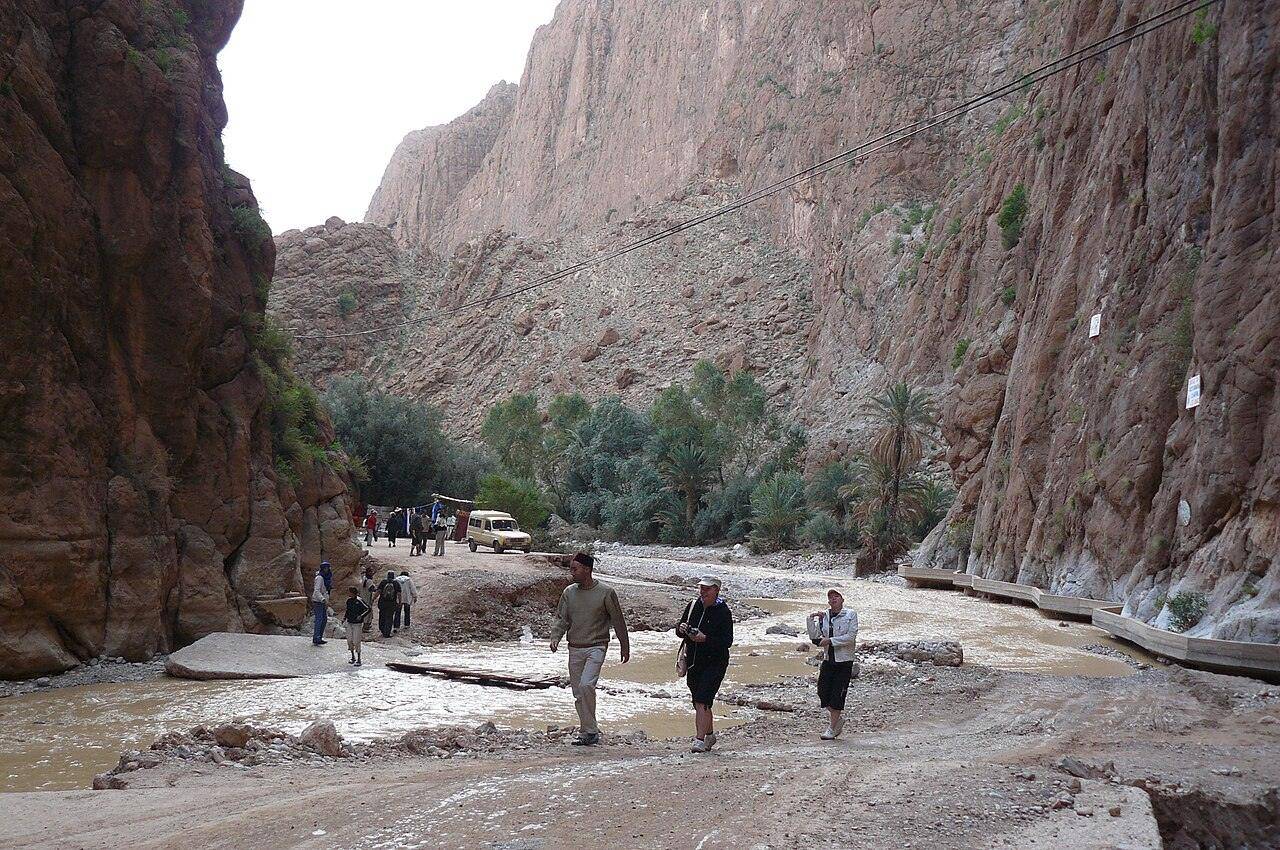
Marrakech to Fès by way of the Sahara
The classic crossing: the High Atlas, the kasbahs of Ouarzazate, the Dades gorges and a night in the Merzouga dunes, ending in the medina of Fès.
 8 daysEasy
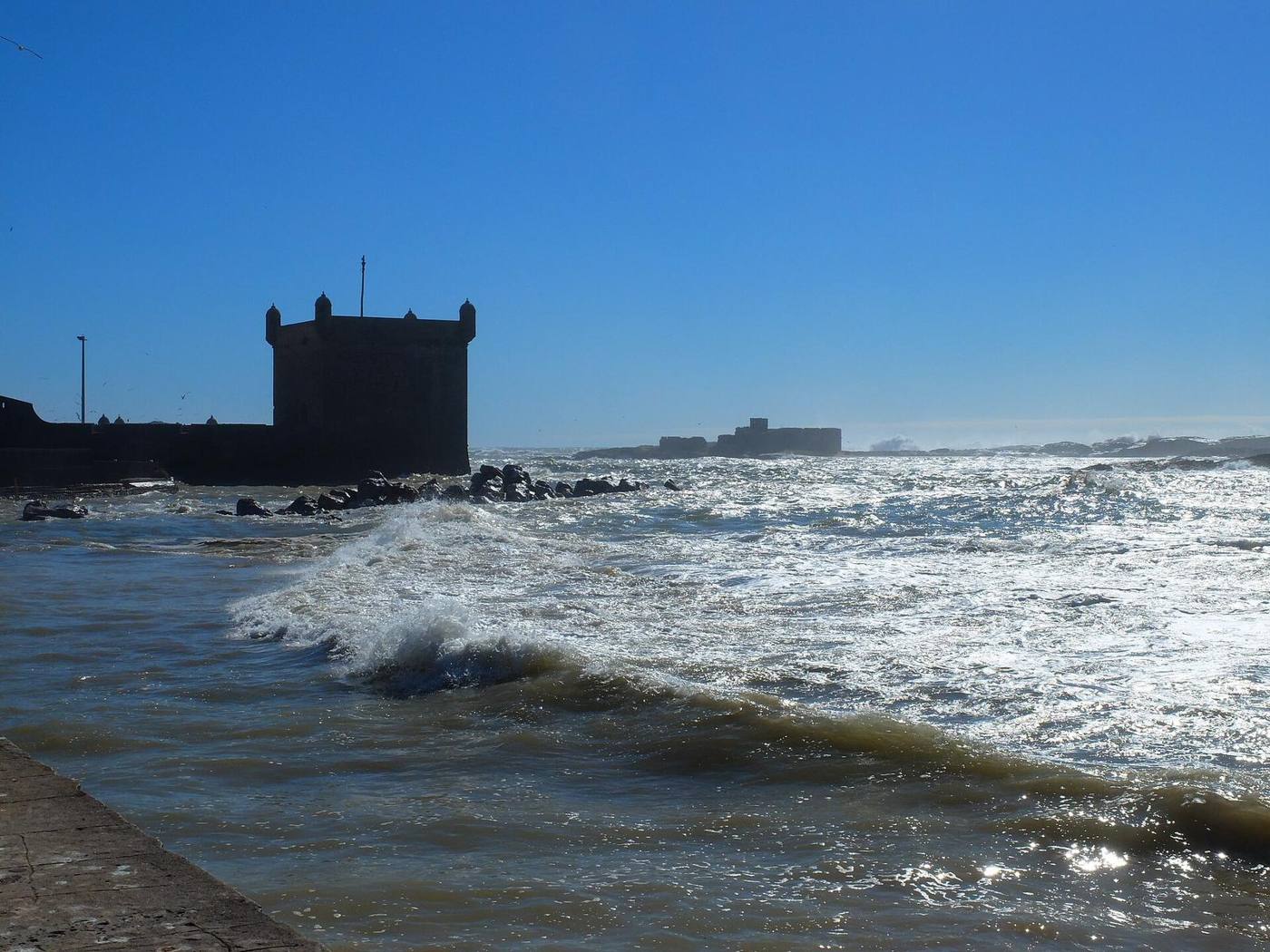
Marrakech and Essaouira
The red city and the white city on the Atlantic: souks, gardens, a fishing port and wind for kitesurfing. Morocco at its most relaxed.