Marrakech and Essaouira
The red city and the white city on the Atlantic: souks, gardens, a fishing port and wind for kitesurfing. Morocco at its most relaxed.
- Marrakech
- Ourika Valley
- Essaouira
- Casablanca
Day by day
- Day 1
Arrival in Marrakech and a house in the medina
EU visitors need a passport valid for the whole stay; no visa is needed for up to 90 days. From Marrakech Menara airport the medina is about twenty minutes away: agree the taxi fare before getting in or ask your accommodation to send someone. Cars stop at the gates in the walls, and from there you continue on foot with your bags on a handcart.
For the first three nights stay in the medina, in a traditional house with an inner courtyard, often with a small pool or an orange-tree garden. Outside the alleys are noisy and full of mopeds; inside it is quiet: the best way to experience the city.
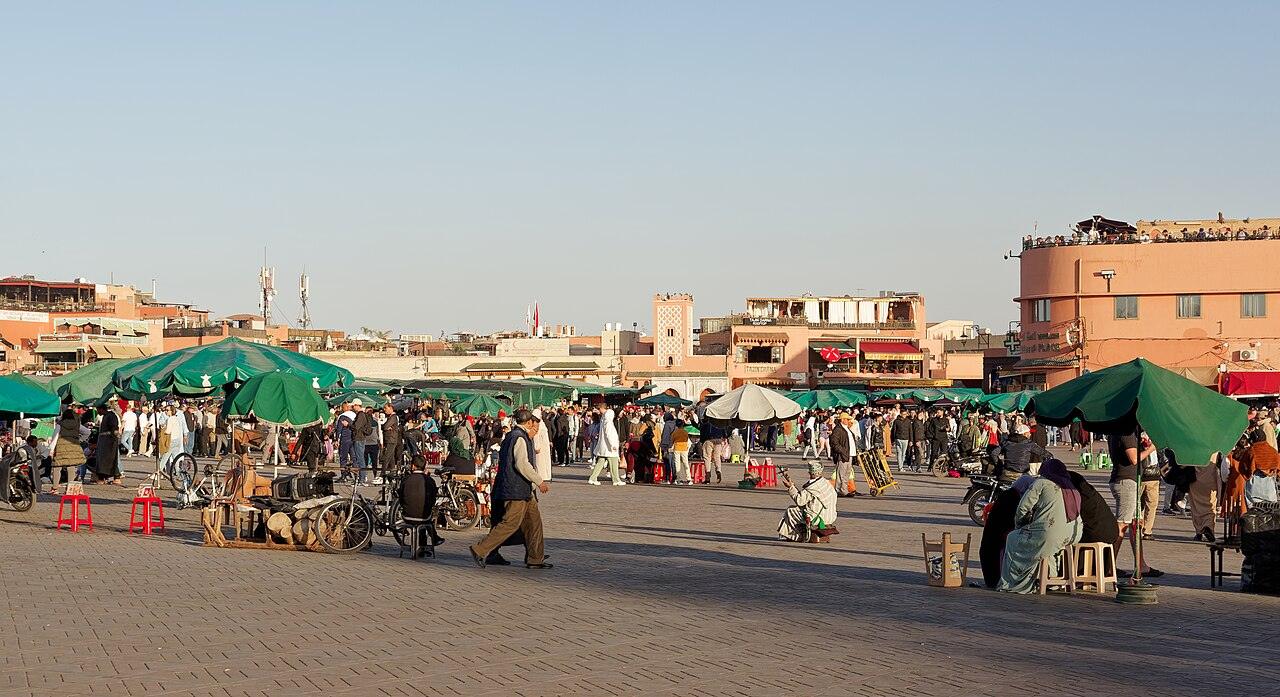
In the afternoon get your bearings: the Koutoubia, the mosque with its twelfth-century minaret, can be seen from almost everywhere and serves as a landmark. Next to it is Jemaa el-Fna square, which at sunset fills with musicians, storytellers and food stalls. Sit at one of the numbered stalls: try harira, the pulse soup, snails in spiced broth or skewers, and always ask the price first.
Before dinner wander into the souks north of the square: the streets are divided by trade, blacksmiths, dyers, slipper sellers, spices. Practical tip: in the alleys someone will tell you the road is closed or the square is the other way, so as to guide you and then ask for a tip or take you to a shop. Say thank you and carry on with a map downloaded on your phone beforehand.
- Day 2
Majorelle Garden, the Bahia Palace and the Saadian Tombs
Early in the morning go to the Majorelle Garden in the modern Guéliz district: created by the painter Jacques Majorelle in the 1920s and 1930s and later saved by Yves Saint Laurent and Pierre Bergé, it is a garden of cacti, bamboo and palms around a villa painted an intense blue. Tickets are sold online on the official website with an entry time: be punctual, as latecomers beyond a set limit are refused. Next door is the Yves Saint Laurent museum, with a separate or combined ticket.
Return to the medina for the Bahia Palace, built in the late nineteenth century for a grand vizier: marble courtyards, gardens with fruit trees, painted cedar ceilings and carved stucco. Nearby are the Saadian Tombs, sixteenth-century mausoleums walled up for centuries and rediscovered in 1917; the hall of twelve columns is the finest. A queue often forms outside: go at opening time or late in the afternoon.
In the afternoon visit the Ben Youssef madrasa, the great Koranic school with its courtyard and central pool, decorated with carved wood, stucco and tiles, where students lived in small rooms upstairs. Then rest on a terrace or in a hammam, the traditional steam bath.
In the evening return to the square or dine in the medina. Practical tip: for a calmer visit to museums and palaces, the best times are opening hour and late afternoon.
- Day 3
The Ourika valley and Berber villages
Today you leave the city for the Ourika valley, about an hour to the south at the foot of the High Atlas: the road follows the river through walnut trees, orchards and earthen villages built on the slopes. You go with a driver for the day or on a group excursion. Along the road many cooperatives show how argan oil and aromatic herbs are processed.
At the head of the valley is Setti Fatma, the village where the path to the waterfalls begins: you climb along the stream, over boulders and a few steep sections. The first waterfall takes about half an hour; the next ones need more time and proper shoes. Guides offer their services at the start of the path: they are not compulsory, but help on the less obvious stretches. In spring, with the snowmelt, the river is fast; in summer people from Marrakech come here to escape the heat and the small eateries set their tables right in the water.
In the afternoon stop in a Berber village for mint tea in a family home, if your driver or guide knows someone who welcomes visitors. Remember that in September 2023 a strong earthquake struck the High Atlas, mainly west of this valley: many villages are still rebuilding, and respectful tourism helps families.
In the evening you return to Marrakech. Practical tip: during thunderstorms the Ourika river can flood suddenly; in summer do not linger on the riverbed when the sky over the mountains turns dark.
- Day 4
From Marrakech to Essaouira through the argan trees
In the morning head west to Essaouira on the Atlantic coast: about three hours by car, or by the scheduled buses that link the two cities several times a day. The landscape changes gradually: from Marrakech's red plain to hills covered in argan trees, a species that grows almost only in this part of Morocco and is protected by UNESCO as a biosphere reserve.
Along the road you will see goats perched in the argan branches. Sometimes they are there naturally, but at some roadside spots they are placed in the trees on purpose for tourist photos, in exchange for money: if you do not want to encourage this, do not stop at those spots.
Stop instead at one of the women's cooperatives producing argan oil: you will see how the nuts are cracked by hand to extract the kernels, which are then roasted for culinary oil or left raw for cosmetic oil. The best cooperatives explain the work without pushing you to buy.
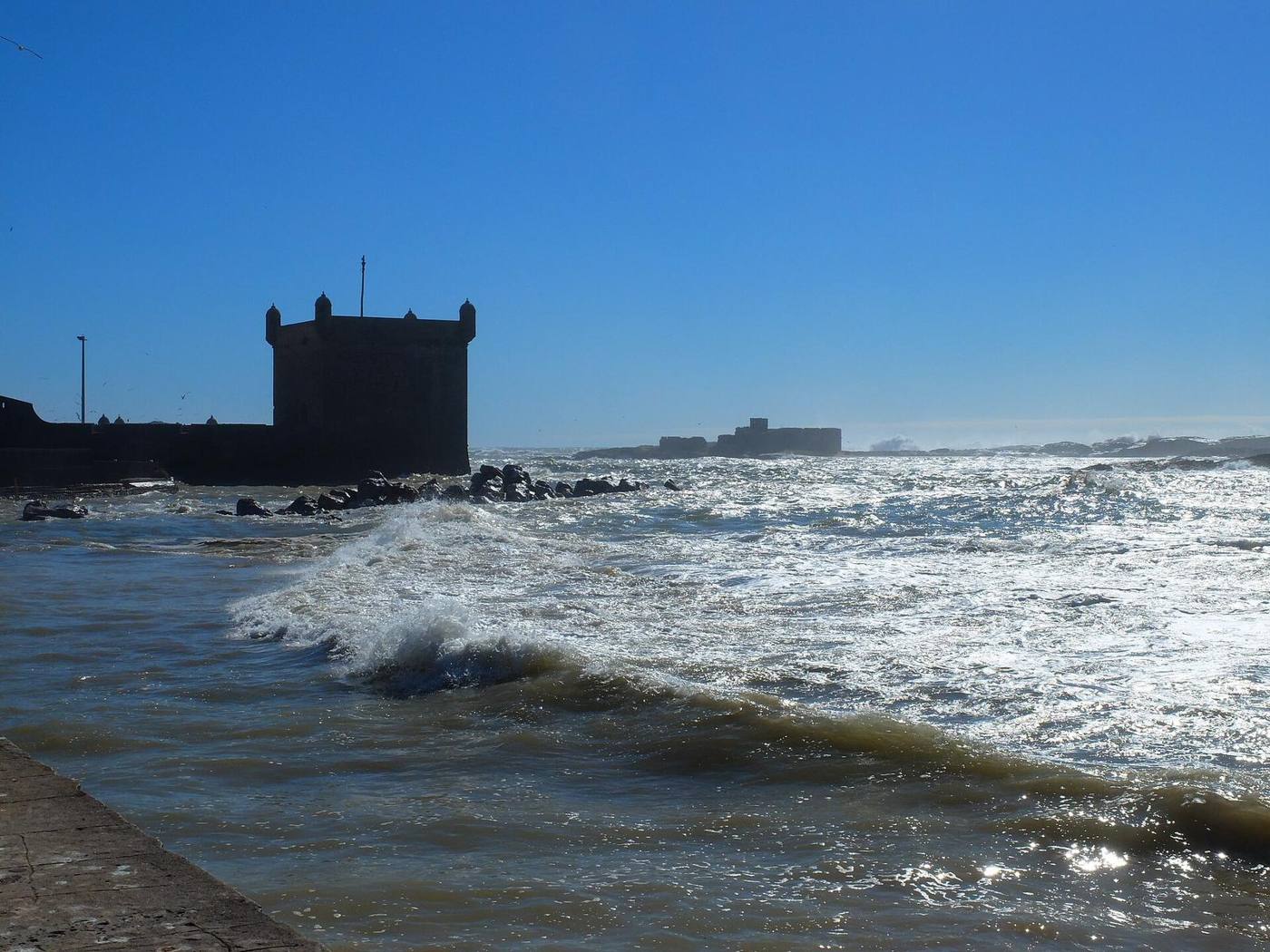
In the afternoon you reach Essaouira and stay three nights in the medina, a UNESCO World Heritage site, an eighteenth-century fortified town designed by a French engineer for the sultan, with straight streets, white houses and blue doors. At sunset walk along the ramparts of the Skala de la Ville, with bronze cannons aimed at the sea. Practical tip: a strong wind blows in Essaouira almost constantly, especially in summer; bring a sweater even when Marrakech is hot.
- Day 5
Essaouira: the harbour, the ramparts and the medina
In the morning go to the fishing harbour, the heart of the town. Blue-painted wooden boats come in with the catch, gulls wheel in their hundreds, and in the boatyards boats are still built by hand. Climb the Skala du Port, the bastion over the harbour, for the view of the medina and the Purpuraires islands offshore, where ancient Rome produced purple dye and where Eleonora's falcons now nest in a protected reserve.
For lunch eat fish at the stalls near the harbour: choose your fresh fish, it is weighed and grilled on the spot. Always agree the price per kilo before ordering.
In the afternoon lose yourself in the medina: it is small and easy to explore on foot without fear of getting lost. Visit the old Jewish quarter of the Mellah, a reminder of a community that was once an important part of the town, and the workshops beneath the ramparts where carpenters work fragrant, finely grained thuya wood. The town museum explains the region's music, jewellery and costumes.
Essaouira is also the city of Gnawa music, born among the descendants of enslaved people from sub-Saharan Africa: a big festival is usually held in June, but concerts can be heard in evening venues all year round. Practical tip: the town beach is long and beautiful, but the wind makes it better for walks and sports than for sunbathing.
- Day 6
Sidi Kaouki: surfing, kitesurfing and horses on the beach
Today is a no-cost day by the ocean. The steady wind that can be a nuisance in town makes Essaouira and its surroundings one of Morocco's best places for kitesurfing and windsurfing. The town beach has schools for every level, with group and private lessons and equipment rental.
About half an hour south is Sidi Kaouki, a village with a very long wild beach and a small white shrine by the sea. The waves here are better for surfing, especially in autumn and winter, and the wind is gentler than in town. Lessons for beginners are available too.
If you are not sporty, take a horse or dromedary ride along the shore with village guides: you cross dunes and small rivers to the ruins of an old fort and to fishing villages. Agree the length and price before setting off and check that the animals are in good condition.
In the afternoon return to Essaouira. On your last evening dine in the medina and look for a Gnawa concert. Practical tip: the ocean here is cold, around 18-22 °C depending on the season, and the currents are strong; swim only in supervised areas and ask the schools which beaches are safe.
- Day 7
Casablanca and the Hassan II Mosque
In the morning set off for Casablanca: about four and a half hours by road, or by bus. Alternatively, go back to Marrakech and take the train from there. Casablanca is Morocco's largest city and the heart of its economy, modern and chaotic.
The main reason to stop is the Hassan II Mosque, built over the sea and inaugurated in 1993: its minaret, about 210 metres tall, is among the tallest in the world, and the prayer hall holds thousands of worshippers. It is one of the very few mosques in Morocco open to non-Muslims, on guided tours only. According to the foundation's official website, tickets cost 140 dirhams for foreign adults, 70 for foreign students and 30 for children aged 6 and over; under-6s go no-cost. Tours start at fixed times, in the morning and at 2 pm, with fewer slots on Fridays. Shoulders and legs must be covered, and shoes are removed.
In the afternoon walk along the Corniche, the seafront, or explore the centre with its art deco buildings from the 1920s and 1930s, witnesses of the French protectorate, and the Habous quarter, a new medina built by the French with shops selling books, pastries and crafts.
Stay in Casablanca. Practical tip: traffic in Casablanca is heavy; to get around the city use the tram, simple and cheap, or the red taxis with meters.
- Day 8
Departure from Casablanca
Mohammed V airport is about 30 kilometres from central Casablanca. The easiest way there is the train from Casa Voyageurs station, which arrives right under the terminal in about 40 minutes; otherwise a taxi, which can take much longer at rush hour.
If your flight is in the afternoon, in the morning you can visit the Museum of Contemporary Art or the museum devoted to Moroccan Judaism, the only Jewish museum in an Arab country, or have breakfast facing the ocean in the Aïn Diab district. The central market, downtown, is the place to see the fish, fruit and olives the city's residents buy every day.
Before leaving, remember the customs rules: dirhams cannot be exported beyond a small sum, so change any leftovers at the airport exchange office, keeping the receipts from the exchanges you made on arrival. Wrap ceramics and argan oil well; the oil goes in checked luggage if it exceeds the liquids limit.
Things to take home: argan oil bought from a cooperative, thuya wood objects from Essaouira, spices, mint tea, a carpet if you have time to choose calmly. Practical tip: reach the airport at least three hours before an international flight; security and passport control can have long queues, and your passport is checked several times before boarding.
Perfect for a first, easy-going trip or for couples. Essaouira is cool and windy in summer: great for escaping the heat, less so for sunbathing. No desert: if the Sahara is your dream, pick another itinerary.
Before you go
- Documents and visa
- EU visitors need a passport valid for the whole stay; identity cards are not accepted. No visa is needed for tourist stays of up to 90 days.
- Health and vaccines
- No vaccines required. Drink bottled water and take out travel health insurance: public healthcare is limited and private clinics charge. Emergencies: 19 police, 15 ambulance.
- Money and payments
- Moroccan dirham, which cannot be exported beyond a small sum: change a little at a time and keep the receipts. Cash is needed everywhere in medinas and villages.
- Power sockets
- Types C and E, 220 volts.
- Time zone
- UTC+1 for most of the year; Morocco changes its clocks during Ramadan, so check before travelling.
- Safety
- The main risk named by governments is terrorism; avoid the 20 km strip along the closed Algerian border and the frontier areas of Western Sahara. Official advice: GOV.UK.
Information checked in November 2026 for Italian and EU citizens. Rules change: always check before you travel.
Variations
In 5 days: two full days in Marrakech and two in Essaouira, flying home from Essaouira if there are direct flights to your city, or from Marrakech.
In 11 days: from Marrakech add the Tizi n'Tichka pass, Aït Ben Haddou and a night in the Agafay desert, or continue south from Essaouira along the coast to Agadir and Taghazout.
Frequently asked questions
Is Essaouira good for a beach holiday?
Not for sunbathing and swimming: the wind blows almost constantly and the ocean is cold with strong currents. It is perfect for surfing, kitesurfing, walks and the charm of the town. For calm seas, the coast further south towards Agadir is better.
How much does the Hassan II Mosque cost?
According to the foundation's official website, the guided tour costs 140 dirhams for foreign adults, 70 for foreign students and 30 for children aged 6 and over; under-6s go no-cost. Tours start at fixed times, with fewer slots on Fridays.
How do I travel between Marrakech, Essaouira and Casablanca?
By scheduled bus, comfortable and with numbered seats, with a private driver or by rental car. The train links Marrakech and Casablanca but does not reach Essaouira.
Indicative itinerary written by World Atlas. Before booking, check timetables, seasonal openings, documents and safety.
 7 daysEasy
Marrakech and the Sahara
From Jemaa el-Fna square to the Erg Chebbi dunes, across the Atlas, past kasbahs and gorges.
 15 daysModerate
Imperial cities, Chefchaouen and the desert
The full circuit: Fez and Meknes, the blue town in the Rif, the Sahara, the gorges and a finale between Marrakech and Essaouira.
 8 daysEasy
Marrakech to Fès by way of the Sahara
The classic crossing: the High Atlas, the kasbahs of Ouarzazate, the Dades gorges and a night in the Merzouga dunes, ending in the medina of Fès.