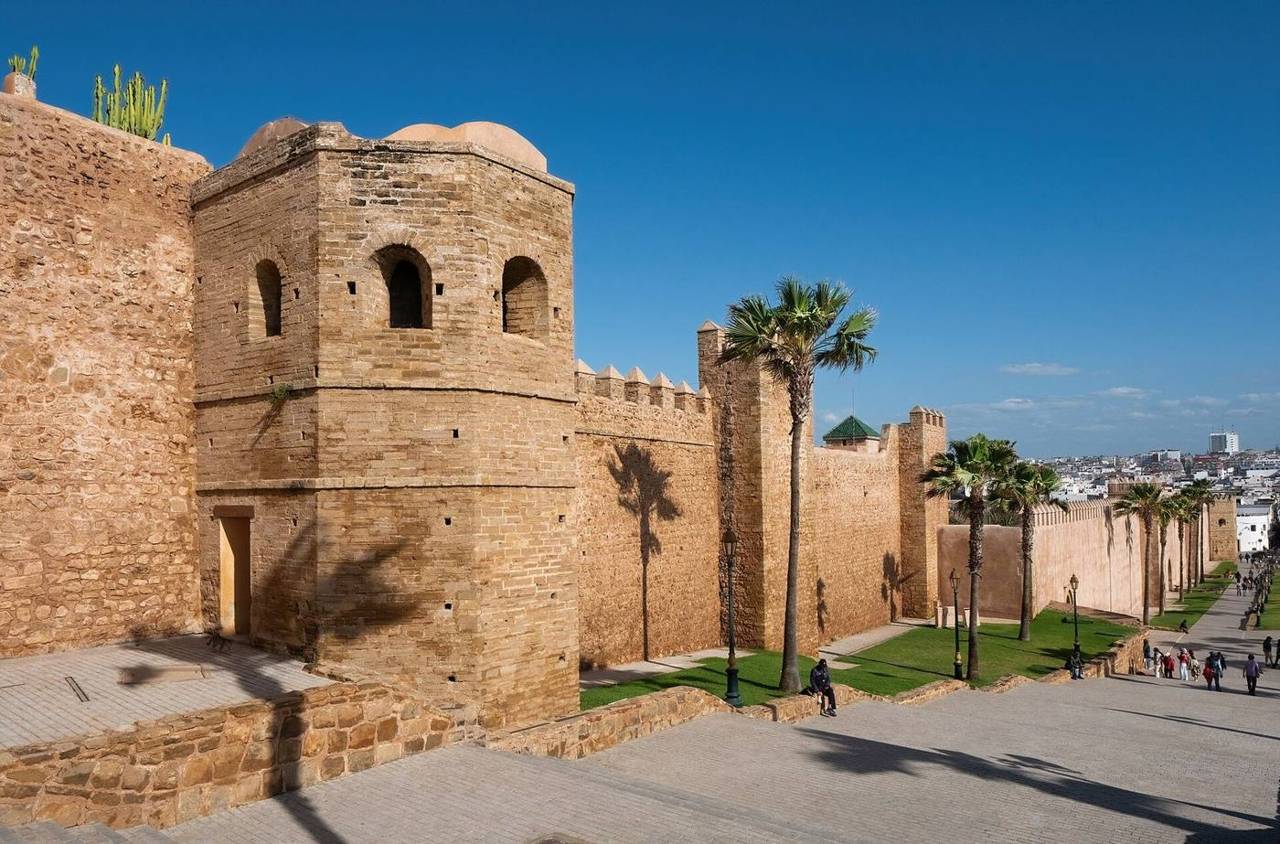
Rabat, Casablanca, El Jadida and Oualidia
Atlantic, modern Morocco: Rabat, a UNESCO-listed capital, with the Hassan Tower, the Kasbah of the Udayas and the Chellah, the great Hassan II Mosque in Casablanca, the Portuguese cistern in El Jadida, Azemmour on its river and the Oualidia lagoon.
- Rabat
- Casablanca
- Azemmour
- El Jadida
- Oualidia
Day by day
- Day 1
Rabat: the Hassan tower, the mausoleum and the Kasbah of the Udayas
Morocco's Atlantic coast, between Rabat and Oualidia, shows a different side of the country from the desert and the mountains: imperial cities by the sea, the modern metropolis of Casablanca, Portuguese fortresses, lagoons with birds and flamingos, and long beaches beaten by ocean waves. The climate is mild all year, cooled by the sea breeze. In five days you see Rabat, Casablanca, Azemmour, El Jadida and Oualidia.
You arrive by plane in Rabat or Casablanca, with direct flights from many European cities.
Rabat, the capital of Morocco, is an elegant, quiet city with tree-lined avenues, gardens and a well-kept old centre, a UNESCO World Heritage Site since 2012.
In the afternoon, visit the Hassan tower, the unfinished minaret of a mosque begun by the Almohad sultan Yacoub el-Mansour at the end of the twelfth century, which was meant to be one of the largest in the world. After his death the work stopped: the red stone tower, about forty-four metres high, remains, along with hundreds of columns on the esplanade. Opposite stands the mausoleum of Mohammed V, of white marble with a green-tiled roof, watched over by royal guards on horseback.
Then walk to the Kasbah of the Udayas, a fortress at the mouth of the Bouregreg river, with its great carved gate, lanes painted white and blue, Andalusian garden and terrace above the sea, with views of the ocean and of Salé on the opposite bank.
In the evening, sleep in Rabat.
Practical tip: Italian citizens enter Morocco without a visa for up to 90 days. The United States has Morocco at level 2, because of the risk of terrorism: take normal precautions.
- Day 2
The Chellah, the medina and the train to Casablanca
In the morning, visit the Chellah, a place full of history outside the walls of Rabat. Here stood the Roman city of Sala Colonia, of which the forum, baths, triumphal arch and stone streets remain. In the fourteenth century the Marinid sultans built a royal necropolis on the ruins, with a mosque, tombs and a minaret decorated with coloured tiles. Today the ruins are wrapped in wild gardens with figs, bananas and bougainvillea, and dozens of storks nest on the minarets and walls. On summer evenings the site sometimes hosts jazz concerts.
Then walk through the medina of Rabat, smaller and calmer than those of Fès or Marrakech, with markets of spices, fabrics, leather slippers and everyday goods. Rue des Consuls, once home to the European consulates, is full of carpet and craft workshops.
In the afternoon, take the train to Casablanca, in about an hour. Trains are frequent and comfortable.
Casablanca is Morocco's largest city and its economic centre, a modern metropolis of more than three million people. In the afternoon, take a walk along the Corniche, the Aïn Diab seafront, with beaches, cafés and the El Hank lighthouse.
In the evening, sleep in Casablanca.
Practical tip: in the medinas, if a young man offers to guide you without being asked, decline politely. If you want a guide, ask for an official guide with a badge.
- Day 3
The Hassan II mosque and the architecture of the 1930s
In the morning, visit the Hassan II mosque, built by the sea between 1986 and 1993, one of the largest mosques in the world. The minaret, about two hundred metres high, is the tallest in the world, and at night a laser beam points towards Mecca. The prayer hall can hold about twenty-five thousand worshippers, and the esplanade around it another eighty thousand. Part of the floor is built over the ocean, and the roof can open.
It is one of the very few mosques in Morocco open to non-Muslims, only on guided tours, in several languages. Inside you see the work of thousands of Moroccan craftsmen: carved cedar wood, sculpted plaster, zellige mosaics, marble and chandeliers of Murano glass. You also go down to the ablutions hall, with fountains shaped like lotus flowers.
In the afternoon, explore central Casablanca, with the architecture of the 1920s and 1930s built during the French protectorate: Art Deco and neo-Moorish buildings with white facades, wrought-iron balconies and geometric decoration, along Boulevard Mohammed V and around Place Mohammed V, with the law courts and the post office.
Then visit the Habous quarter, the new medina built by the French in the 1930s in traditional style, with arches, olive stalls, pastry shops and the royal palace.
In the evening, sleep in Casablanca.
Practical tip: the guided tour of the Hassan II mosque costs 140 dirhams for adults, 70 for students and 30 for children. Times change on Fridays and during Ramadan: check beforehand.
- Day 4
Azemmour and El Jadida, the Portuguese cistern
In the morning, drive south along the coast to Azemmour, about an hour from Casablanca, a small white town on the banks of the Oum Er-Rbia river, the mother of spring, one of the longest rivers in Morocco. In the sixteenth century the town was occupied by the Portuguese, who built its walls. Walk through the quiet medina, with houses overlooking the river, painted doors and murals by the artists who live here.
Then continue to El Jadida, about half an hour away. Here at the start of the sixteenth century the Portuguese built the fortress of Mazagan, one of the first fortified towns built according to Renaissance military ideas, a UNESCO World Heritage Site since 2004. The Portuguese held it until 1769.
Enter the Portuguese city, with its bastioned walls on the sea, narrow streets and the church of the Assumption. The most famous place is the Portuguese cistern, a large underground hall with columns and vaults in Manueline Gothic style, originally perhaps a storehouse or armoury, later turned into a cistern. A thin layer of water on the floor reflects the columns and the light entering through an opening in the middle of the ceiling. The director Orson Welles shot some scenes of his film Othello here.
Then climb the walls to see the harbour and the sea.
In the evening, sleep in El Jadida or continue to Oualidia.
Practical tip: the cistern is small and in summer fills with visitors in the middle of the day. Visit in the morning or late afternoon.
- Day 5
Oualidia and the lagoon, then back to Casablanca
In the morning, drive south to Oualidia, about an hour and a half from El Jadida, a small village facing a calm lagoon separated from the ocean by a strip of sand and rocks with two openings. The lagoon water is still and turquoise, ideal for swimming, kayaking or paddleboarding, while outside, on the ocean, people surf.
Oualidia is famous throughout Morocco for its oysters, farmed in the lagoon. Visit one of the farms on the shore, where you can taste freshly opened oysters with lemon. Try also grilled fish and seafood from the harbour.
Take a boat trip on the lagoon with the fishermen, among islets and dunes. The lagoon is an important wetland for migratory birds: in winter and spring you see herons, egrets, cormorants and sometimes flamingos.
In the early afternoon, walk on the beach or on the hills above the lagoon, with views of vegetable fields running down to the sea.
Then head back to Casablanca, about two and a half to three hours away, for your flight home or to continue your trip.
This trip combines well with Essaouira and Marrakech further south, or with Fès and Meknès, reachable by train from Rabat.
Practical tip: on the Atlantic coast the ocean currents are strong. Swim in the lagoon or on beaches with lifeguards, not in areas exposed to the waves.
A calm, little-visited Morocco, easy by train between Rabat and Casablanca (the high-speed line runs on to Tangier). The Hassan II Mosque is one of the few open to non-Muslims, by guided tour only. The Atlantic is cool even in summer. EU citizens enter without a visa for up to 90 days with a passport. The border with Algeria is closed: keep away from the border strip.
Before you go
- Documents and visa
- EU visitors need a passport valid for the whole stay; identity cards are not accepted. No visa is needed for tourist stays of up to 90 days.
- Health and vaccines
- No vaccines required. Drink bottled water and take out travel health insurance: public healthcare is limited and private clinics charge. Emergencies: 19 police, 15 ambulance.
- Money and payments
- Moroccan dirham, which cannot be exported beyond a small sum: change a little at a time and keep the receipts. Cash is needed everywhere in medinas and villages.
- Power sockets
- Types C and E, 220 volts.
- Time zone
- UTC+1 for most of the year; Morocco changes its clocks during Ramadan, so check before travelling.
- Safety
- The main risk named by governments is terrorism; avoid the 20 km strip along the closed Algerian border and the frontier areas of Western Sahara. Official advice: GOV.UK.
Information checked in November 2026 for Italian and EU citizens. Rules change: always check before you travel.
Variations
In 3 days: Rabat and Casablanca with the Hassan II mosque.
In 8 days: add Essaouira and Marrakech.
Frequently asked questions
When is the best time to go?
All year, thanks to the mild coastal climate. Spring and autumn are the most pleasant; in summer the coast is cooler than the interior.
Can I visit the Hassan II mosque?
Yes, non-Muslims too, only on guided tours. The ticket costs 140 dirhams for adults, 70 for students and 30 for children. Wear clothes covering shoulders and legs.
How do I get around?
Between Rabat and Casablanca by train; for Azemmour, El Jadida and Oualidia a hire car or a car with driver is best.
Indicative itinerary written by World Atlas. Before booking, check timetables, seasonal openings, documents and safety.
 5 daysEasy
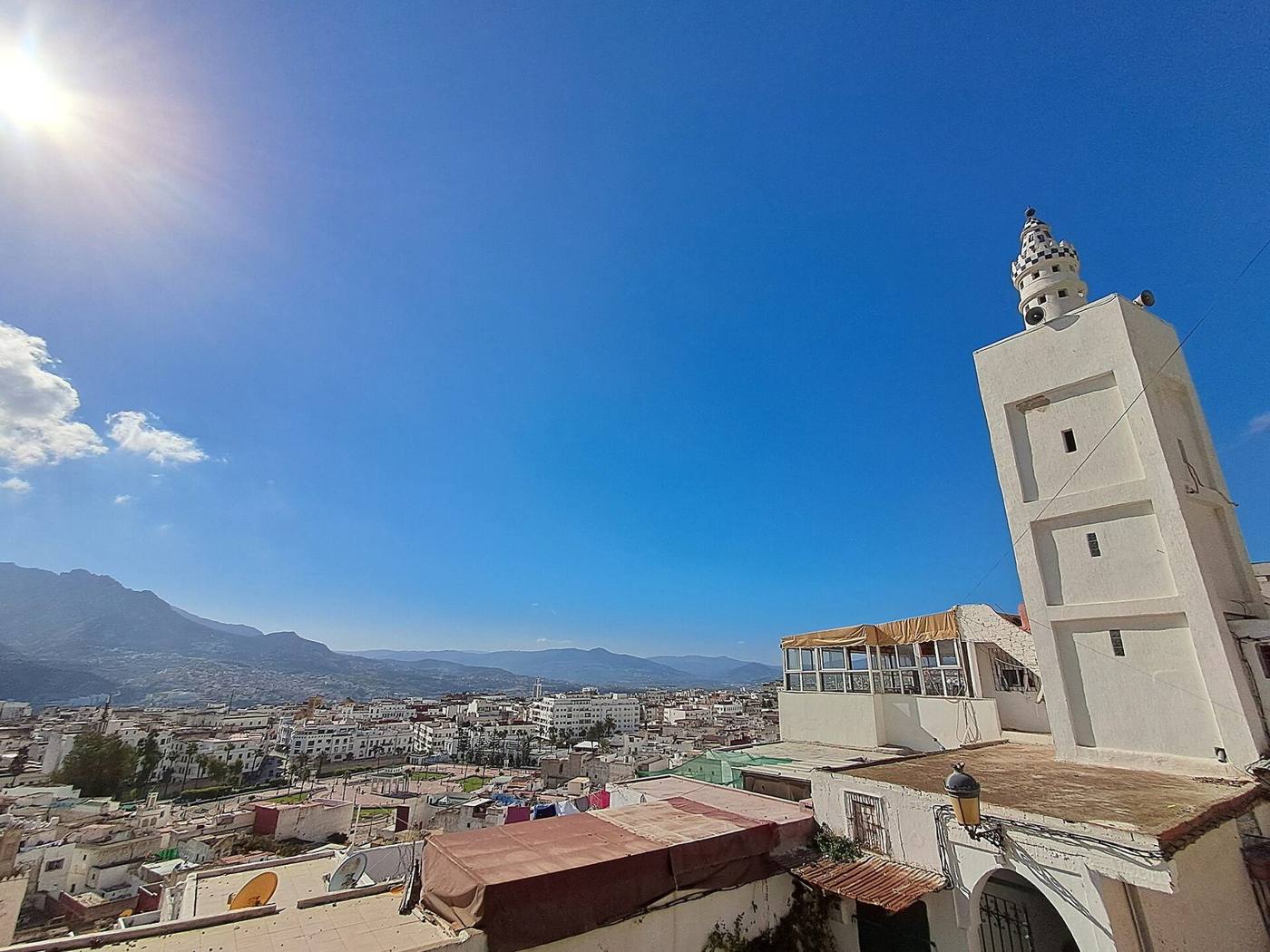
Tangier, Tetouan and the Mediterranean coast
Morocco's Andalusian north: Tangier with its kasbah, Cape Spartel and the Caves of Hercules, the medina of Tetouan (UNESCO) with its white houses and craftsmen, the beaches of Martil and Oued Laou and the coast road towards Al Hoceima National Park.
 5 daysModerate
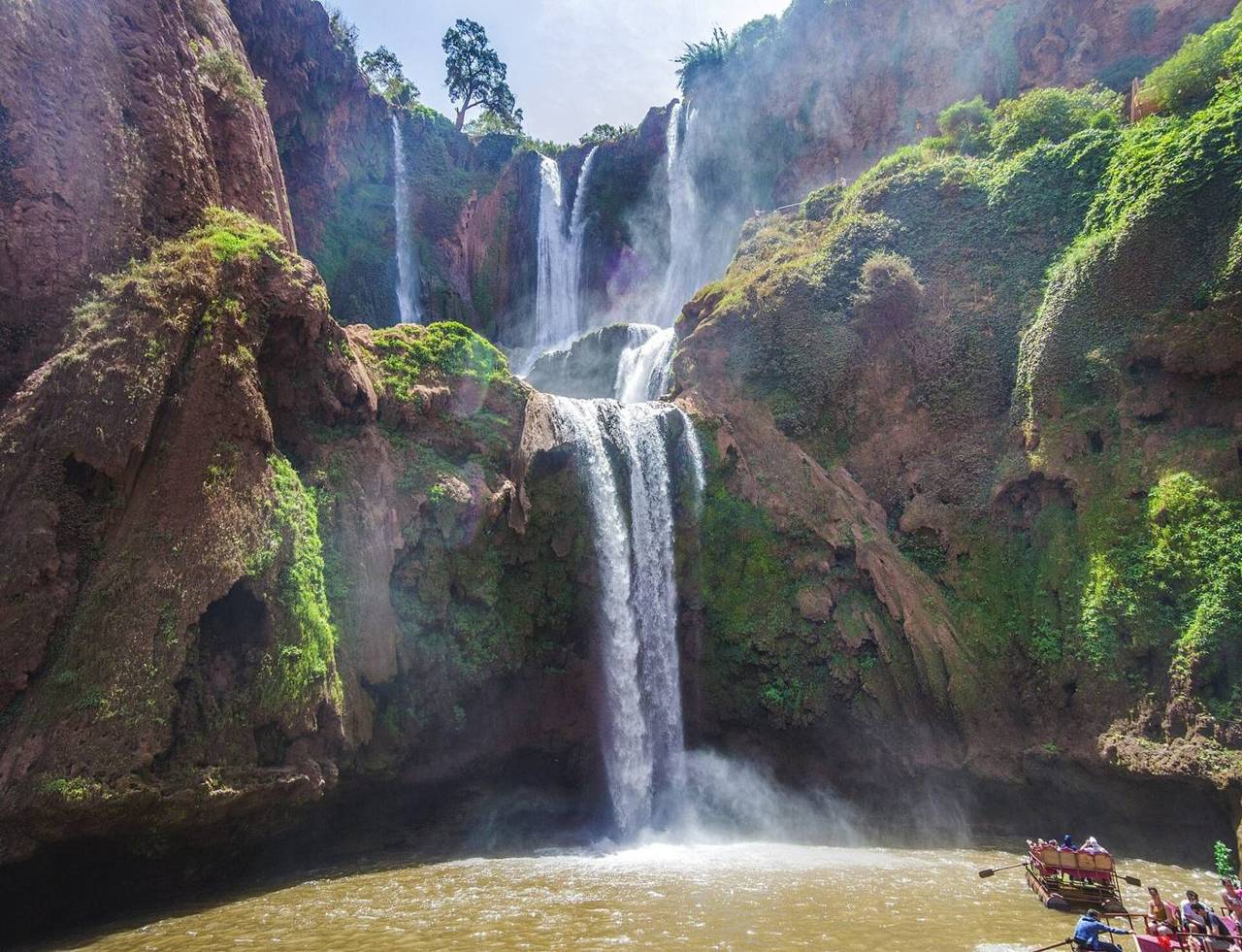
Ouzoud Falls and the Aït Bouguemez valley
The green Central Atlas: the Ouzoud Falls, over a hundred metres high among olive trees and Barbary macaques, then the Aït Bouguemez valley, known as the happy valley, with earthen villages, terraced fields, the fortified granary of Sidi Moussa, dinosaur footprints and walks with muleteers.
 4 daysEasy
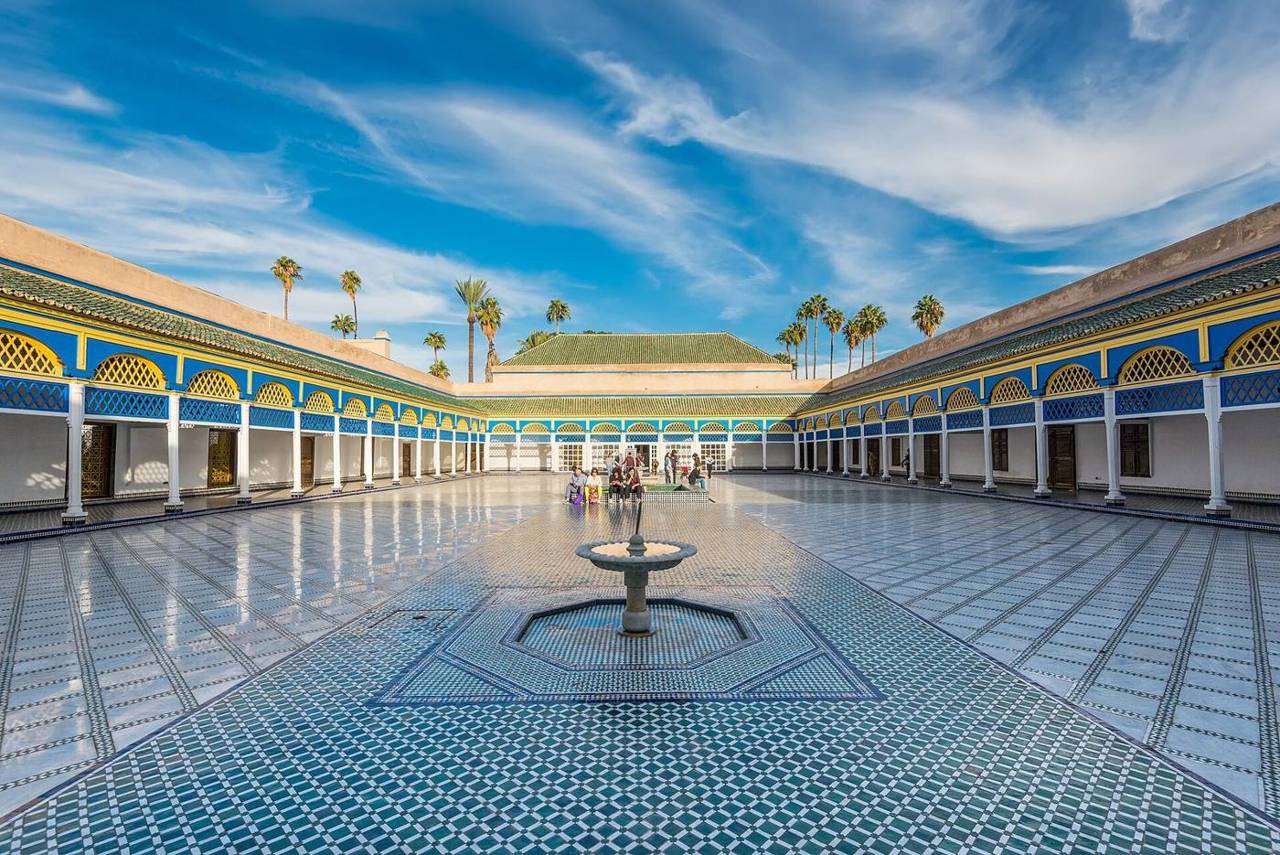
Marrakech in depth and the Agafay desert
The red city without rushing: the Bahia Palace, the Ben Youssef madrasa, the Saadian tombs, the Mellah, the Majorelle garden and the Yves Saint Laurent museum, Le Jardin Secret, the souks and Jemaa el-Fna square in the evening, then a night under canvas in the stony Agafay desert.