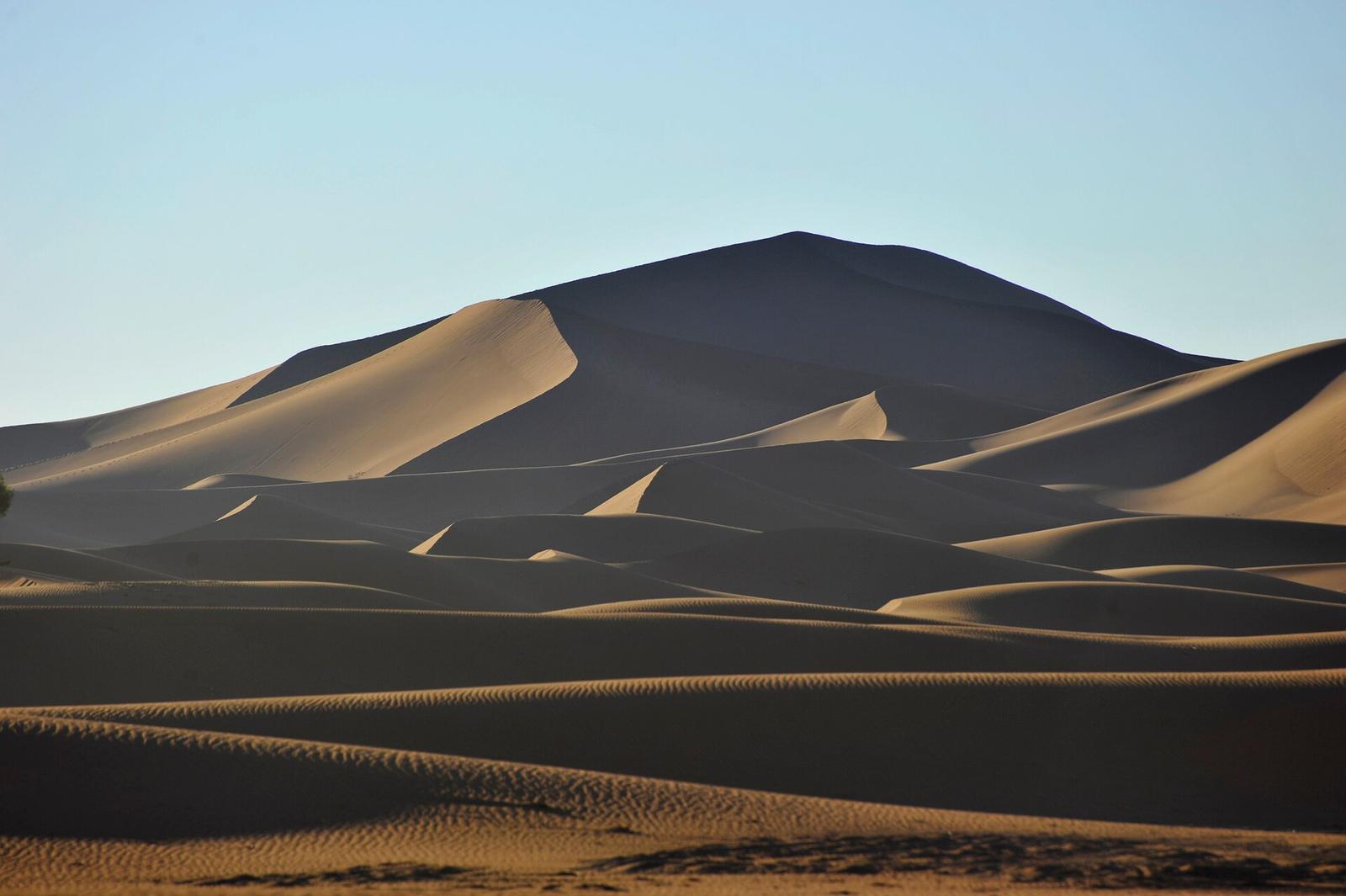
By 4x4 to Erg Chegaga
Morocco's wildest dunes, reached on desert tracks through the Anti-Atlas and the dry Iriki lake, with nights in tented camps far from everything.
- Marrakech
- Ouarzazate
- Draa Valley
- Zagora
- M'Hamid
- Erg Chegaga
- Lake Iriki
- Foum Zguid
- Taroudant
Day by day
- Day 1
Arrival in Marrakech
This trip goes from Marrakech to the desert of southern Morocco by four wheel drive, as far as Erg Chegaga, the wildest and least visited great sea of dunes in the country. You cross the High Atlas, follow the Draa valley with its palm groves and mud brick kasbahs, sleep under the stars among the dunes and return along the tracks of the dry lake of Iriki and through the Anti Atlas mountains.
Before you leave: you need a passport to enter Morocco. European Union citizens can stay up to 90 days without a visa. The United States government rates Morocco at level 2 of 4. Canada advises against the 20 kilometre strip along the border with Algeria: ask your organiser to confirm that the tracks stay outside this strip and check the latest advice.
For the desert tracks you need a four wheel drive with an experienced driver. Do not go alone: the tracks shift with wind and sand, and if you break down you are far from everything.
You fly into Marrakech. In the afternoon go to Jemaa el Fna square, the heart of the old city, with orange juice sellers, musicians, storytellers and, at sunset, food stalls lighting up in smoke and lights. Then walk through the souks around it, among spices, leather, lanterns and carpets.
Sleep in a riad in the medina, a traditional house with an inner courtyard.
Practical tip: the best time is October to April. In summer the desert is too hot; in winter the nights are freezing.
- Day 2
The High Atlas and Ouarzazate
In the morning set off south by four wheel drive and cross the High Atlas over the Tizi n'Tichka pass, at about 2,260 metres, on a winding road between Berber villages, terraced fields and mountains that are snow capped in winter. Stop at the viewpoints and, if you like, at a women's cooperative producing argan oil.
After the pass the landscape changes: the mountains turn red and dry and you descend towards the south. Make a detour to Aït Ben Haddou, a ksar, a fortified mud brick village, a UNESCO site, built on a hill above a river. Houses and towers of red earth rise one above the other up to a granary at the top. You cross the river on a bridge or on sandbags and climb through the lanes. Many famous films have been shot here.
In the afternoon you reach Ouarzazate, the gateway to the desert. The town is famous for its film studios, where films and series from all over the world have been made. Visit the kasbah of Taourirt, the old residence of the Glaoui family, who ruled southern Morocco, with courtyards, decorated rooms and lanes.
In the evening have a tagine or couscous.
Sleep in Ouarzazate.
Practical tip: the Tizi n'Tichka pass can be closed by snow in winter. Check conditions before you set off.
- Day 3
The Draa valley: palm groves, kasbahs and Zagora
Today you head south east into the Draa valley, along Morocco's longest river. After the Tizi n'Tinififft pass, with its dark rock mountains, the road enters the valley, which for about a hundred kilometres is a long green ribbon of date palms in the middle of a stony desert.
Along the road you see dozens of kasbahs and ksour, mud brick fortified villages and houses, some still inhabited, others in ruins, built by the families who controlled water and caravans. Stop at Tamnougalt, a large partly abandoned ksar, where a village guide takes you through covered passages, towers and the houses of the old chiefs. Then walk in the palm grove, among irrigation channels and gardens of mint, barley and henna in the shade of the palms.
In the afternoon you reach Zagora, a small town on the edge of the desert. A famous sign, now almost a monument, says that Timbuktu is fifty two days away by camel: this was the caravan route carrying salt, gold and slaves across the Sahara.
If you have time, visit Tamegroute, about twenty kilometres away, with an old Koranic library and workshops making pottery with its typical green glaze.
In the evening taste the valley's dates, considered among the best in the country.
Sleep in Zagora.
Practical tip: in the palm groves walk on the paths, not on the channels. The fields are private.
- Day 4
M'Hamid, the last village, and the first track
In the morning continue south to M'Hamid El Ghizlane, about two hours from Zagora, the last village before the dunes, where the tarmac ends. The name means the plain of the gazelles. This was also where the caravan route ended before entering the true Sahara.
M'Hamid is a small town of low sand coloured houses, with an old ksar on the other bank of the Draa, often dry. Nomad families who have settled live here, and many men now work as guides and camel drivers. Stop for a tea and to stock up on water.
In the afternoon you leave the tarmac and take the track west. The four wheel drive crosses plains of black stones, dry riverbeds, small dunes and patches of soft sand where the driver must drive skilfully. You pass lone acacias, nomad tents with goats and camels and sometimes small oases with a well.
Halfway you stop at an oasis for a break in the shade. Towards evening the first big dunes appear on the horizon.
Sleep in a tented camp near the edge of the dunes, or continue to Erg Chegaga if there is light.
Practical tip: in the desert wear a turban or scarf to protect your face and mouth from sand and sun. The nomads will show you how to tie it.
- Day 5
Erg Chegaga: the dunes and the sunset
Today you reach the heart of Erg Chegaga, a sea of sand about forty kilometres long, with dunes up to sixty metres high. Compared with Erg Chebbi, near Merzouga, it is further from the roads and much less visited: you feel the silence of the desert.
You settle into a tented camp among the dunes. Camps range from the simplest, with Berber goat hair tents and shared bathrooms, to more comfortable ones with real beds and private bathrooms. Ask first what is included and how water and waste are managed.
In the morning walk on the dunes, climb the highest crest and look at the sea of sand stretching in every direction. The dunes change colour with the light: yellow at midday, orange and red at sunset, pink and violet at dawn.
Rest in the shade of the tent during the hot hours. In the afternoon you can ride a camel with a camel driver, at walking pace, among the dunes, or try sandboarding, sliding down the sand on a board.
At sunset climb a high dune and stay until the sun disappears. Back at camp, dinner is often a tagine cooked on embers, with bread baked under the hot sand. After dinner the nomads play drums around the fire.
Sleep in the tented camp at Erg Chegaga.
Practical tip: at night the desert temperature drops sharply, especially in winter. Bring a down jacket and a woolly hat.
- Day 6
Erg Chegaga: dawn, silence and starry skies
Today you spend another day at Erg Chegaga, to experience the desert calmly.
Get up before dawn and climb a nearby dune. The air is cold and the silence complete. As the sun rises, the shadows of the crests stretch across the sand and the desert slowly takes on colour. On the sand you will see tracks left in the night by beetles, lizards, desert foxes and birds.
After breakfast take a long walk among the dunes with a guide, who shows you desert plants such as colocynth, the bitter fruit used as medicine, the places where water can be found and how nomads find their way by the sun and stars. You may also visit a nomad family living in the area with their goats and camels, if the guide knows them and they agree.
In the afternoon rest, read and watch the wind moving sand along the crests.
Night is the finest moment. Far from cities, without lights, the sky over Erg Chegaga is one of the starriest you can see: the Milky Way crosses the whole sky and you see shooting stars. If you like, you can sleep outside the tent, on a mattress on the sand, under blankets.
Sleep in the tented camp at Erg Chegaga.
Practical tip: take all your rubbish away, including plastic bottles. There is no collection in the desert and plastic lasts for centuries.
- Day 7
The track across the dry lake of Iriki to Foum Zguid
Today you leave the dunes and continue west by four wheel drive, crossing the dry lake of Iriki, inside a national park. It was once a real lake, fed by the Draa river; today it is a huge flat plain of white, cracked clay, where the vehicle speeds along and mirages make it look as if there is water on the horizon.
In some years, after heavy rain, the lake fills for a few weeks and water birds arrive, even flamingos. The rest of the time it is one of the emptiest and strangest landscapes in Morocco. You stop for a photo in the middle of nowhere and walk on the clay crust.
Along the track you see acacias, small dunes, dark rocks and sometimes gazelles or fennecs, the little desert fox with big ears. At midday you stop at an oasis or in the shade of an acacia for lunch.
In the afternoon the track reaches Foum Zguid, a town at the foot of the mountains, where you find tarmac again. It is a strange moment: after days in the desert, the noise of cars and shops seems very loud.
Sleep in Foum Zguid or continue towards Tazenakht.
Practical tip: phones often have no signal on the tracks. Leave your itinerary and expected return date with someone.
- Day 8
The Anti Atlas road and Taroudant
Today you cross the Anti Atlas, a range of ancient, arid mountains, with colours from red to green to black, villages of stone and earth perched on hills and fortified granaries, called agadirs, where families stored their harvest.
The first stop is Tazenakht, a town famous for its carpets. Here women from the surrounding villages weave wool carpets with natural dyes and Berber designs. In a cooperative you can watch the work on the looms and, if you like, buy directly from the weavers.
Then the road passes through Taliouine, Morocco's saffron capital: in autumn, in the surrounding fields, the purple flowers are picked by hand to extract the red stigmas. In town there are cooperatives where you can buy genuine saffron.
In the afternoon you reach Taroudant, called little Marrakech. It is a town enclosed by red earth walls about seven kilometres long, among the finest and best preserved in Morocco, with bastions and gates. Inside the walls the medina is quiet and authentic, with souks of spices, silver jewellery and leather and fewer tourists than Marrakech. At sunset go round the walls by horse carriage or on foot.
Sleep in Taroudant.
Practical tip: real saffron is expensive. If the price is very low, it is almost always fake or mixed.
- Day 9
Back to Marrakech or flight from Agadir
On the last day there are two options.
The first is to fly from Agadir, about an hour and a half from Taroudant, on the Atlantic coast. Agadir has flights to many European cities. If you have a few hours, walk along the seafront or climb the hill of the old kasbah, destroyed by the 1960 earthquake, from where you see the whole bay.
The second is to return to Marrakech, about four hours by road, across the High Atlas over the Tizi n'Test pass, a narrow and spectacular mountain road, or by the faster motorway. On the Tizi n'Test you pass near the twelfth century Tinmel mosque, one of the few mosques in Morocco open to non Muslims, damaged by the 2023 earthquake and under restoration: check whether it can be visited. The Tizi n'Test road was also hit by the earthquake: check that it is open before setting off.
In Marrakech, if you have time, visit the Majorelle garden, with the blue villa and desert plants, or the Bahia palace, booking ahead.
This trip shows southern Morocco: mountains, palm groves, earthen towns and above all the silence of the desert, with nights under the stars that stay in your memory for a long time.
Practical tip: leave a tip for the four wheel drive driver, the camel drivers and the camp staff. It is part of their pay.
If you fear the crowds at Merzouga, this is the answer: no paved road reaches Chegaga and there are few camps. You spend many hours in a 4x4 on rough tracks, so it is not for anyone prone to car sickness. The best months are October to April; summer heat is prohibitive.
Before you go
- Documents and visa
- EU visitors need a passport valid for the whole stay; identity cards are not accepted. No visa is needed for tourist stays of up to 90 days.
- Health and vaccines
- No vaccines required. Drink bottled water and take out travel health insurance: public healthcare is limited and private clinics charge. Emergencies: 19 police, 15 ambulance.
- Money and payments
- Moroccan dirham, which cannot be exported beyond a small sum: change a little at a time and keep the receipts. Cash is needed everywhere in medinas and villages.
- Power sockets
- Types C and E, 220 volts.
- Time zone
- UTC+1 for most of the year; Morocco changes its clocks during Ramadan, so check before travelling.
- Safety
- The main risk named by governments is terrorism; avoid the 20 km strip along the closed Algerian border and the frontier areas of Western Sahara. Official advice: GOV.UK.
Information checked in November 2026 for Italian and EU citizens. Rules change: always check before you travel.
Variations
In 6 days: Marrakech, Ouarzazate, the Draa valley and one night at Erg Chegaga, returning the same way.
In 12 days: add the Todra and Dades gorges and a night at Erg Chebbi.
Frequently asked questions
What documents do I need?
You need a passport. European Union citizens can stay up to 90 days without a visa. Check the current requirements.
Can I go to Erg Chegaga on my own?
It is not advisable. The tracks change with sand and wind and you are far from everything. You need a four wheel drive with an experienced driver.
When is the best time to go?
October to April. Summer is too hot; in winter desert nights are freezing and the Tizi n'Tichka pass can be closed by snow.
Indicative itinerary written by World Atlas. Before booking, check timetables, seasonal openings, documents and safety.
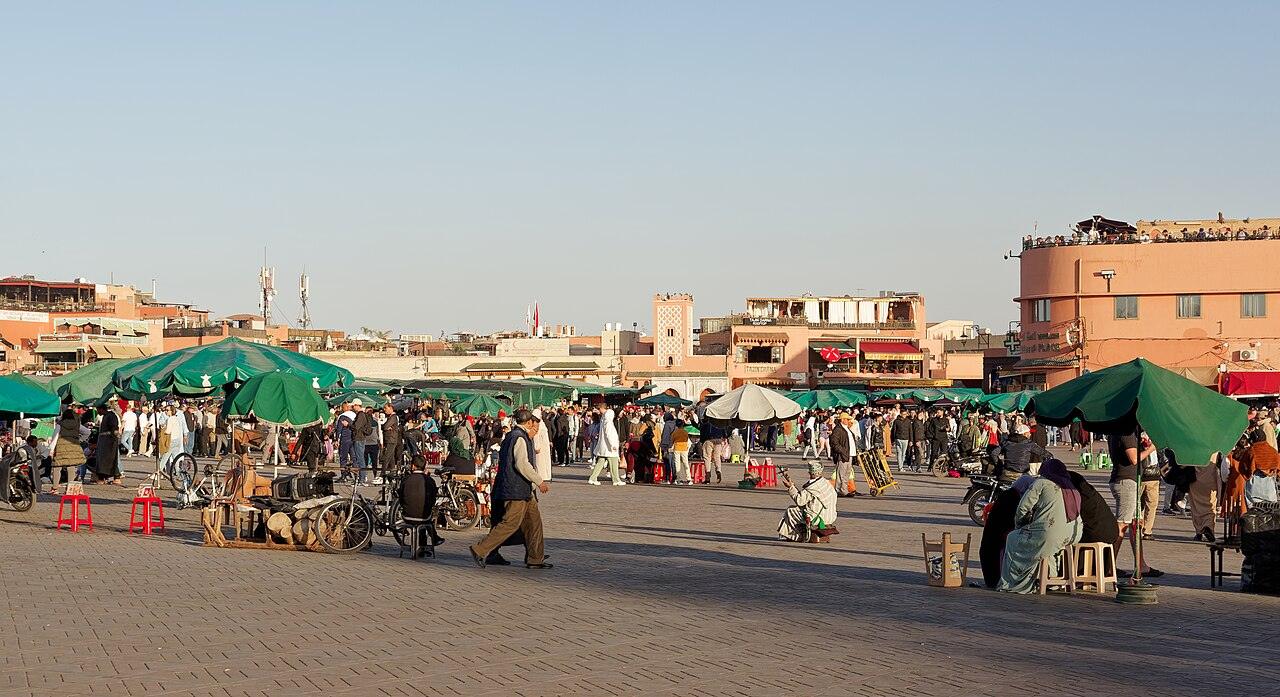 7 daysEasy
Marrakech and the Sahara
From Jemaa el-Fna square to the Erg Chebbi dunes, across the Atlas, past kasbahs and gorges.
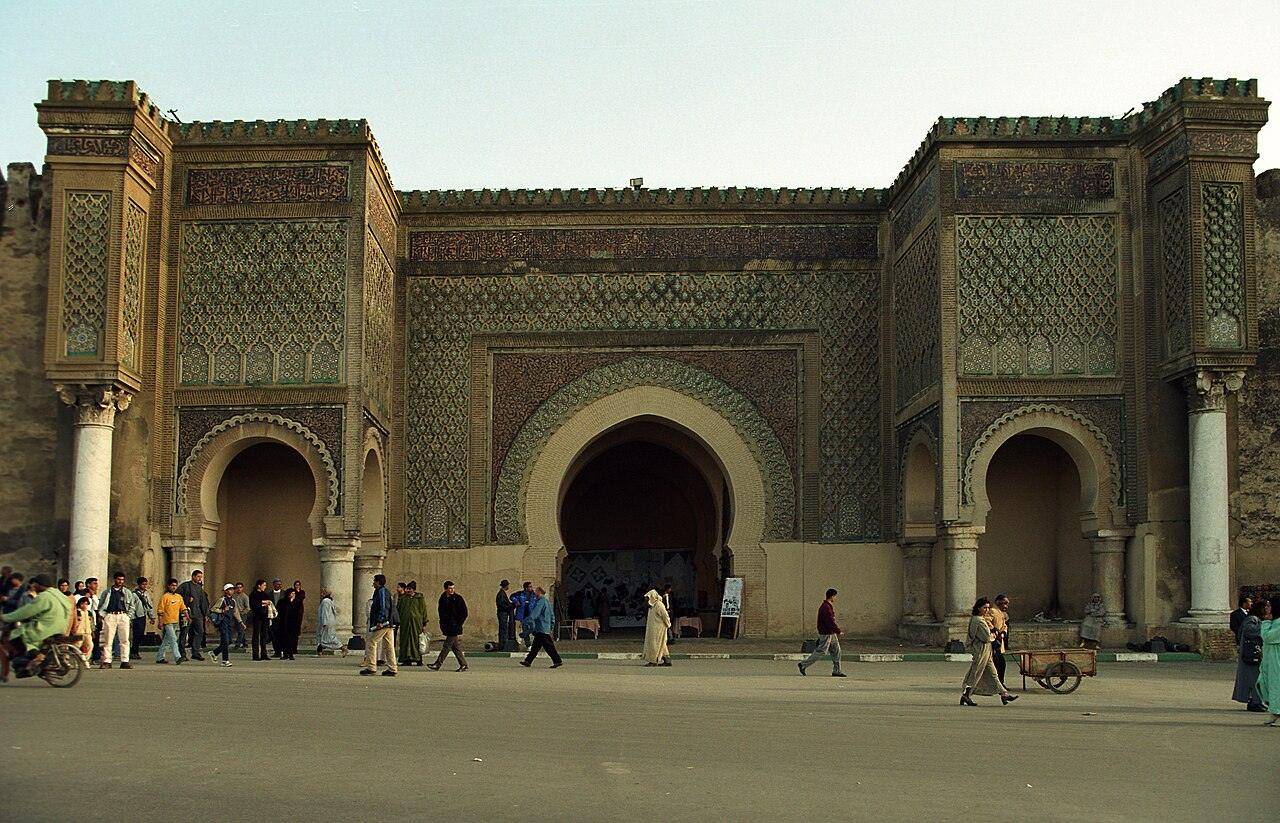 15 daysModerate
Imperial cities, Chefchaouen and the desert
The full circuit: Fez and Meknes, the blue town in the Rif, the Sahara, the gorges and a finale between Marrakech and Essaouira.
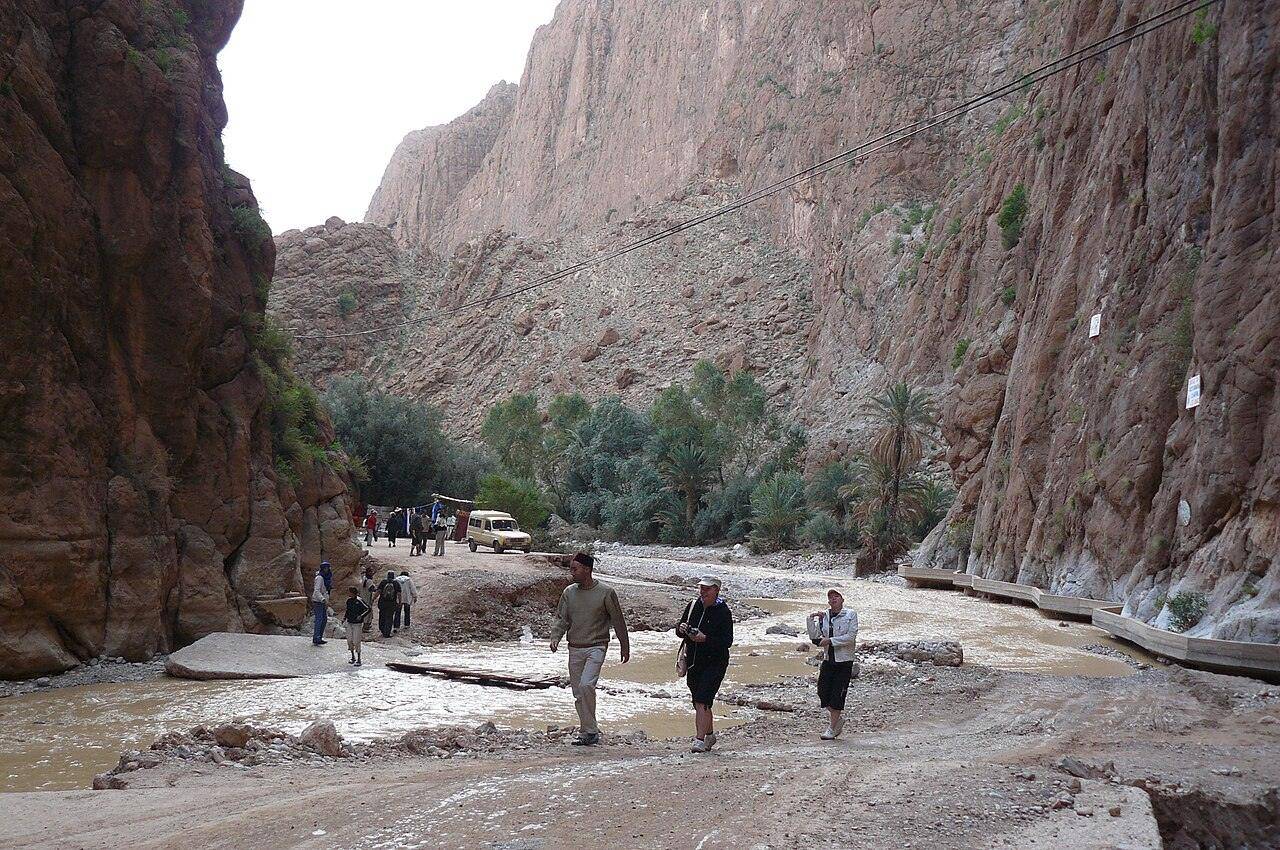 8 daysEasy
Marrakech to Fès by way of the Sahara
The classic crossing: the High Atlas, the kasbahs of Ouarzazate, the Dades gorges and a night in the Merzouga dunes, ending in the medina of Fès.