 China
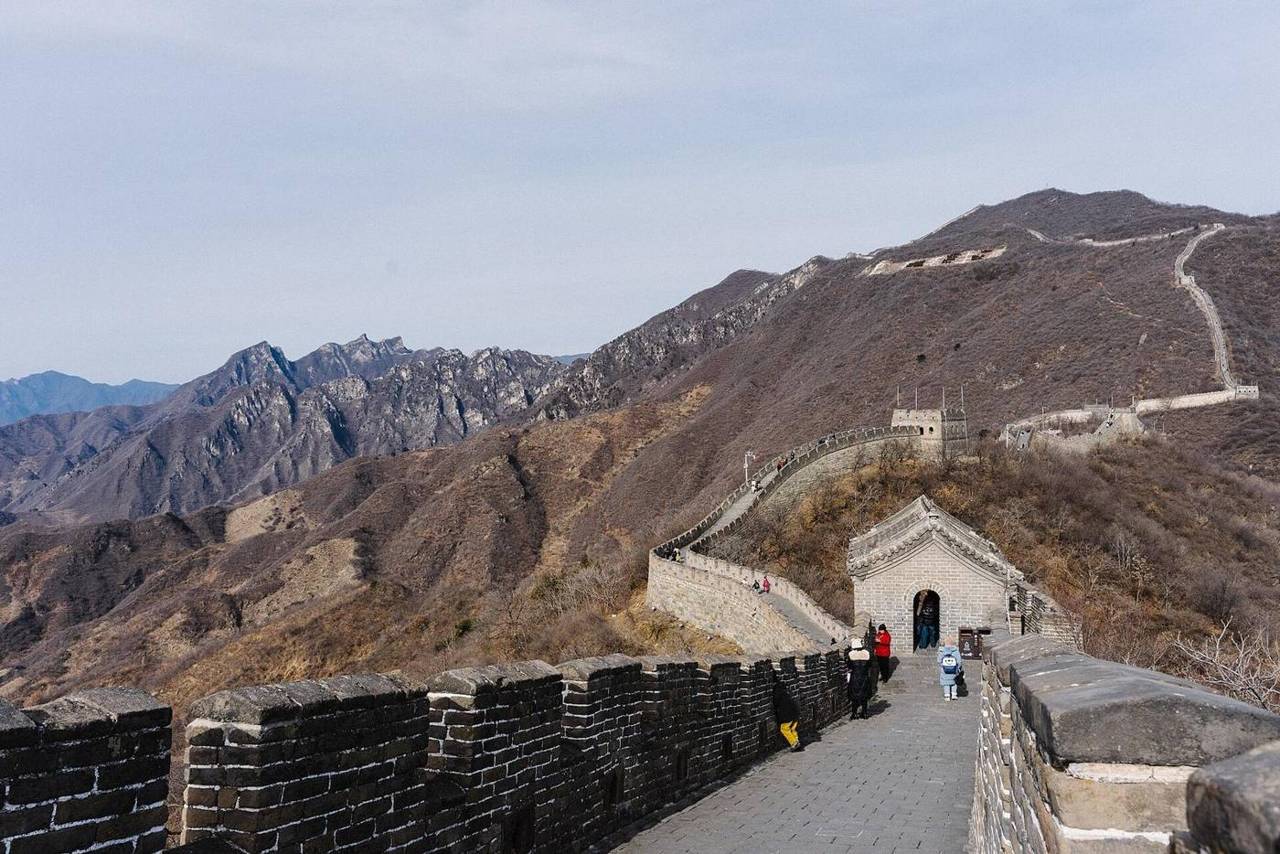
Five thousand years of civilisation, the Great Wall, painterly mountains and futuristic megacities.
Places not to miss
Beijing
The Forbidden City, the Great Wall.
Xi'an
The Terracotta Army.
Guilin and Yangshuo
The Li River.
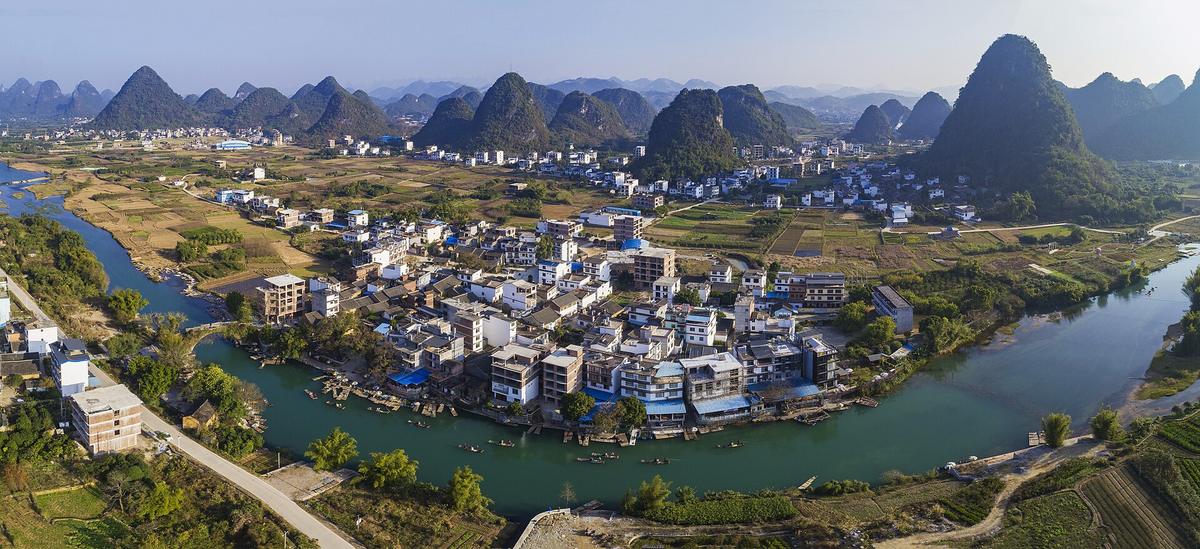
Photo: Chensiyuan, CC BY-SA 4.0 Zhangjiajie
Pillars of rock.
Shanghai
The Bund.
Chengdu
Giant pandas.
Nature and wildlife
Giant pandas, golden snub-nosed monkeys.
Food and drink
Peking duck, dim sum, hot pot.
When to go
April-May and September-October.
Did you know?
The Great Wall stretches over more than 20,000 km in total.
Itineraries in China
Beijing, Xi'an and Shanghai
A first trip to China: the Forbidden City and the Great Wall, the Terracotta Army of Xi'an, the gardens of Suzhou and the Shanghai skyline, linked by high-speed train.
The Great Wall on foot
Away from the restored sections: walks between Jiankou and Mutianyu and east from Jinshanling, with a night in a village below the towers.
Guilin, Yangshuo and the Longji rice terraces
Karst peaks along the Li River by boat, Yangshuo by bike along the Yulong River and the rice terraces of the Zhuang and Yao villages.
Yunnan from Dali to Shangri-La
Yunnan's minorities, Lake Erhai at Dali, the old town of Lijiang, the Tiger Leaping Gorge trek and the Tibetan monastery of Shangri-La.
Zhangjiajie and Fenghuang
The sandstone pillars that inspired Avatar, Heaven's Gate on Tianmen Mountain and the ancient stilt town of Fenghuang.
Sichuan: pandas and Jiuzhaigou
The giant pandas of Chengdu, the Leshan Giant Buddha, sacred Mount Emei and the turquoise lakes of the Jiuzhaigou valley.
Tibet: from Lhasa to Everest
The Potala and Jokhang in Lhasa, Lake Yamdrok, the monasteries of Gyantse and Shigatse and the north face of Everest from Rongbuk.
Gansu and the Silk Road
From Xi'an along the Hexi Corridor: the rainbow mountains of Zhangye, Jiayuguan fort at the end of the Great Wall, the Mogao Caves and the dunes of Dunhuang.
Shanghai, Hangzhou and the Yellow Mountains
Shanghai, the water town of Wuzhen, West Lake and Longjing tea in Hangzhou, the Hui villages and the peaks of Huangshan.
Chongqing and the Three Gorges
The vertical city of Chongqing, then three nights cruising the Yangtze through the Three Gorges to the great dam.
Hong Kong and Macau
The skyscrapers and hills of Hong Kong, the Star Ferry, the Kowloon markets, the Lantau Buddha and coastal trails, then Macau with its Portuguese historic centre (UNESCO World Heritage) and Macanese cooking.
Fujian: Xiamen, the tulou and Wuyishan
The south-east coast: Xiamen and the island closed to cars of Gulangyu, the great round earthen houses of the Hakka (tulou), a UNESCO World Heritage site, and the Wuyi mountains, home of oolong tea, where you float down the Nine-Bend River on bamboo rafts.
Shanxi: Pingyao, Datong and Wutaishan
Ancient northern China: the walled city of Pingyao, intact since Ming times, the Buddhist grottoes of Yungang in Datong, the Hanging Temple clinging to the cliff and the sacred mountain of Wutaishan with its monasteries, all UNESCO World Heritage sites.
Henan: Luoyang, Shaolin and Kaifeng
The cradle of Chinese civilisation along the Yellow River: the Longmen grottoes with thousands of Buddhas carved in the rock, the Shaolin monastery where kung fu was born, and Kaifeng, an old capital with its night market.
Shandong: Taishan, Qufu and Qingdao
The land of Confucius: the temple, mansion and cemetery of the Kong family in Qufu, the climb up the 6,000 steps of Mount Tai, sacred mountain of the emperors, the springs of Jinan and Qingdao, a seaside city with German architecture and its beer.
Qinghai: the blue lake and the Tibetan plateau
Tibetan culture outside Tibet, without special permits: Kumbum monastery, the great Qinghai Lake at 3,200 metres with its flowering rapeseed fields, the Chaka salt lake that mirrors the sky and herders' villages on the plateau.
Guizhou: Miao and Dong villages
The China of the minorities: the great Miao village of Xijiang with its wooden houses on the hill, the wind-and-rain bridges and drum towers of the Dong at Zhaoxing, the Huangguoshu waterfall and the karst forests of Libo.
Harbin, the ice festival
China's coldest city at its most spectacular: the lit-up ice castles of Ice and Snow World, the snow sculptures of Sun Island, the central street with Russian architecture and St Sophia Cathedral, the Siberian tiger park.
Southern Yunnan: Yuanyang and Xishuangbanna
The other Yunnan: the Hani rice terraces of Yuanyang, a UNESCO World Heritage site, mirroring the sky at dawn, the old town of Jianshui and tropical Xishuangbanna, with Dai villages, Theravada Buddhist temples and forests.
Inner Mongolia: the Hulunbuir grasslands
China's largest grasslands: Hailar, rivers winding through the green, Mongolian herders' tents, Hulun lake, the birch forests of the Greater Khingan and the Russian village of Shiwei on the Argun river.
Practical guide to China
- Documents
- Until 31 December 2026 Italian and many other European citizens can enter without a visa for stays of up to 30 days for tourism, business, visits and transit; check before you go whether the scheme has been extended and covers your nationality. Your passport must have at least six months' validity and must always be carried: you need it for trains, museums and hotels.
- Safety
- A safe country for travellers, with very little street crime. The United States rates it level 2 because of arbitrary enforcement of local laws. Tibet can only be visited on a tour with special permits; Xinjiang has heavy security controls. In tourist areas watch out for tea-house and art-exhibition scams. Official advice: GOV.UK.
- Getting around
- High-speed trains link all the big cities and are the best way to travel; tickets are bought with your passport on the official railway app or travel apps. City metros are modern and signposted in English. Taxis are called through apps, which show the address in Chinese.
- Verified costs
- We do not give a single daily figure. Certain costs in 2026: Forbidden City 60 yuan from April to October and 40 from November to March, online only with your passport, closed on Mondays (source Palace Museum); Terracotta Army 120 yuan, with a named booking (source bmy.com.cn). Many national museums are at no cost with a booking.
Climate month by month
Average minimum and maximum temperatures in Beijing and Shanghai. The north has freezing, dry winters and hot summers; the centre and south are more humid, with heavy rain from June to August. We found no data for Guilin and Xi'an from the same source.
- January
- Beijing -9 / 2 °C · Shanghai 2 / 8 °C
- February
- Beijing -6 / 6 °C · Shanghai 3 / 10 °C
- March
- Beijing 0 / 13 °C · Shanghai 7 / 14 °C
- April
- Beijing 8 / 21 °C · Shanghai 13 / 20 °C
- May
- Beijing 14 / 27 °C · Shanghai 18 / 26 °C
- June
- Beijing 19 / 31 °C · Shanghai 22 / 28 °C
- July
- Beijing 22 / 32 °C · Shanghai 26 / 33 °C
- August
- Beijing 21 / 31 °C · Shanghai 26 / 32 °C
- September
- Beijing 15 / 27 °C · Shanghai 22 / 28 °C
- October
- Beijing 7 / 19 °C · Shanghai 16 / 23 °C
- November
- Beijing -1 / 10 °C · Shanghai 10 / 17 °C
- December
- Beijing -7 / 4 °C · Shanghai 4 / 11 °C
Source: Climats et Voyages (1991-2020). Data and prices checked in November 2026.
Where to go and where not to
There are no particular warnings beyond normal precautions; before booking, always check up-to-date official travel advice, because the situation can change.