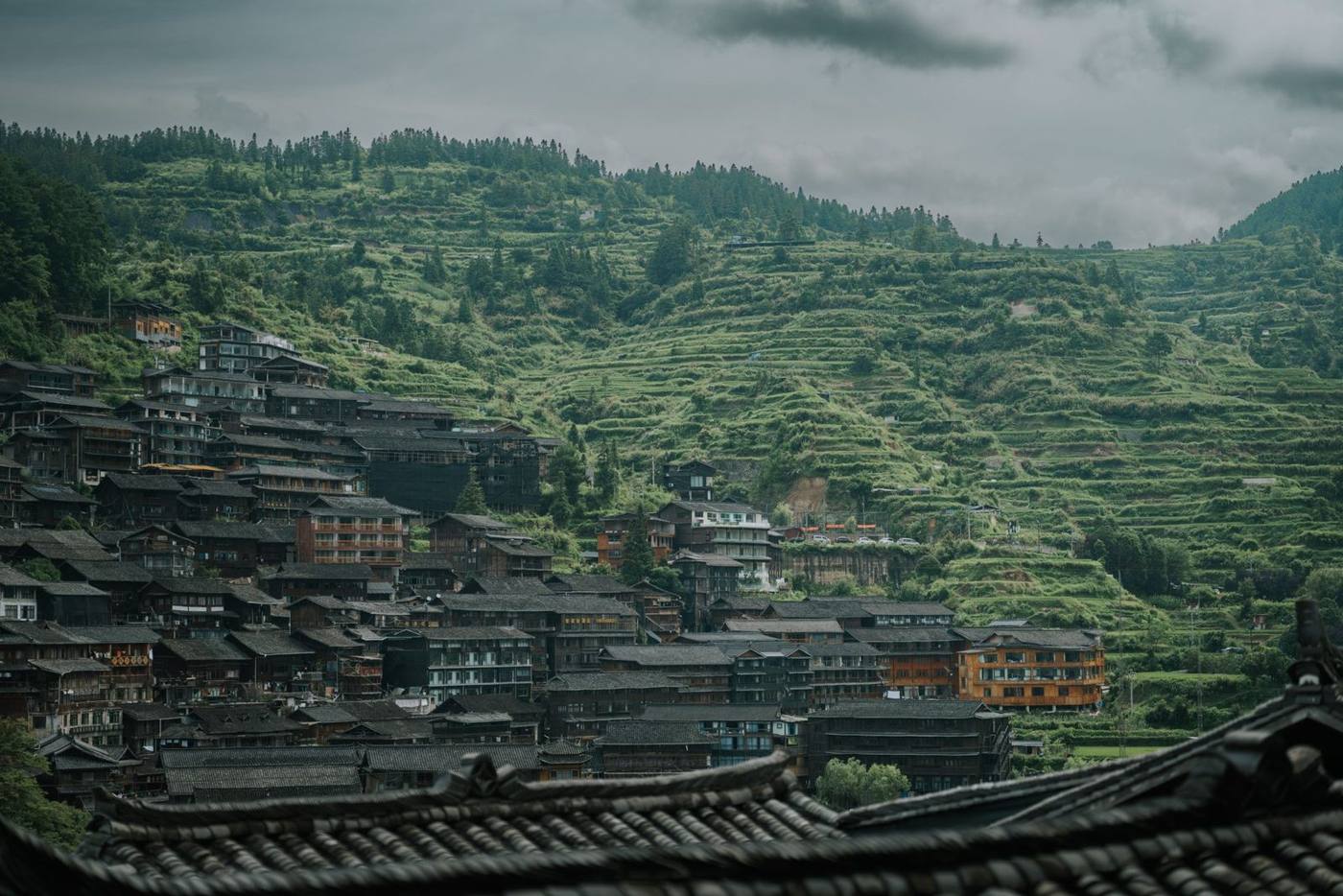
Guizhou: Miao and Dong villages
The China of the minorities: the great Miao village of Xijiang with its wooden houses on the hill, the wind-and-rain bridges and drum towers of the Dong at Zhaoxing, the Huangguoshu waterfall and the karst forests of Libo.
- Guiyang
- Huangguoshu
- Kaili
- Xijiang
- Zhaoxing
- Libo
Day by day
- Day 1
Guiyang and Huangguoshu Falls
Guizhou is a mountainous province in south west China, little visited by foreigners, with green hills, karst mountains, rice terraces and many minority peoples, especially the Miao and Dong, who keep their own languages, dress, wooden houses and festivals. In seven days you see one of China's biggest waterfalls, the finest minority villages and the karst forests of Libo.
You arrive in Guiyang, the capital, by air from Beijing, Shanghai, Guangzhou and other cities, or by high speed train. Italian citizens can enter China without a visa for short stays until 31 December 2026: check whether the rule is extended for 2027. Other nationalities should check their own rules.
On the first day go to Huangguoshu Falls, about two hours by road from Guiyang. It is China's most famous waterfall: the Baishui river drops about seventy metres down a face more than a hundred metres wide into a pool surrounded by thick vegetation. A path runs behind the falls, through a long, damp cave, the Water Curtain Cave, where you watch the water fall from behind.
The park also has other smaller falls, such as Doupotang, wide and low, and a garden of bonsai and rocks.
In the evening return to Guiyang or stay near the falls.
Practical tip: the rainy season, May to September, is when the falls are most powerful, but paths are slippery and crowded. At weekends and on Chinese national holidays the park is packed: go on a weekday and early in the morning.
- Day 2
Kaili, the minorities museum and village markets
Today you go to Kaili, about two hours by road or an hour by high speed train from Guiyang. Kaili is the capital of south east Guizhou prefecture, the land of the Miao and Dong, and the starting point for the villages.
In the morning visit the prefecture museum, which presents the cultures of the area's minorities: embroidered traditional dress, silver jewellery, musical instruments, indigo dyed and batik decorated textiles, models of houses and granaries. It helps you understand what you will see in the villages over the following days.
In the afternoon, if it is market day, go to one of the towns around Kaili. In many villages markets follow a rotating calendar, every five or six days, and on those days women and men come down from the mountains with their produce: vegetables, rice, pigs, tools, fabrics, silver. Some older women still wear traditional dress.
If it is not market day, visit one of the small Miao villages around Kaili, less touristy than Xijiang, with wooden houses, covered bridges and granaries.
In the evening have dinner in Kaili with Guizhou cooking, sour and spicy, such as sour fish soup, one of the region's signature dishes.
Spend the night in Kaili.
Practical tip: ask at your hotel for the week's market calendar. Before photographing people, especially the elderly, always ask permission with a gesture and a smile.
- Day 3
Xijiang, the great Miao village
Today you go to Xijiang, about an hour by road from Kaili. It is the largest Miao village in China, also called the village of a thousand households, with more than a thousand wooden houses built on the slopes of two hills on either side of a river, surrounded by rice terraces.
Miao houses stand on stilts because the slopes are steep: the ground floor is open and used for animals and tools, and families live above. Many have a balcony with a curved bench, called the beauty bench, where women sit to embroider and look out over the valley.
In the morning walk through the village lanes, among houses, steps and small shops. Visit the village museum, which tells the story of the Miao, their migrations, music and festivals. Then climb to the viewpoints above the village to see all the houses together.
In the afternoon, in the central square, there are often traditional song and dance performances, with women wearing large silver headdresses.
In the evening Xijiang lights up: thousands of lights come on across the hillside houses, and the view from the lookout is very beautiful.
Spend the night in Xijiang.
Practical tip: Xijiang is very touristy and crowded, especially on Chinese holidays. Staying in the village lets you see it early in the morning, when it is quiet. Entry is paid at the gate: check the price and the times of the internal shuttles.
- Day 4
Zhaoxing, the Dong village of drum towers
Today you go to Zhaoxing, in Dong country to the south. The journey is long, several hours by road through the mountains, or you take the high speed train to Congjiang station and then a car.
Zhaoxing is one of the largest and most beautiful Dong villages. It lies in a narrow valley along a stream, surrounded by rice terraces and hills. The village is divided into five quarters, each home to a different clan, and each quarter has its own drum tower.
Drum towers are the symbol of the Dong: multi storey wooden towers with stacked, decorated roofs, built without nails using joinery. Beneath the tower is a space with a hearth where villagers gather to talk, decide, sing and rest. In the past the drum at the top was used to summon the village in case of danger.
The other Dong symbol is the wind and rain bridge, a covered wooden bridge with a roof and benches, offering shelter from sun and rain.
In the afternoon walk among the towers and bridges and watch women dyeing cloth with indigo, which turns shiny and almost purple.
In the evening, if it is on, listen to the Dong grand song, a polyphonic chant without instruments, inscribed by UNESCO as intangible heritage.
Spend the night in Zhaoxing.
Practical tip: check the times of the song performances, which do not take place every day.
- Day 5
Tang'an and the Jiabang rice terraces
In the morning walk up from Zhaoxing to the village of Tang'an, on the hill above the valley, about an hour and a half on foot among rice fields and bamboo groves. Tang'an is a quieter small Dong village, with wooden houses, a drum tower and an open air eco museum, created through a cooperation project to protect the community's life and traditions. The view from above over the rice terraces and the Zhaoxing valley is lovely.
In the afternoon drive to the Jiabang rice terraces, about two hours away near Congjiang. Here terraces cover whole mountainsides, with hundreds of steps rising from the valley floor almost to the summits. They were built over centuries by the Miao, who still farm them by hand.
The landscape changes with the seasons: in spring, when the fields are flooded, they reflect the sky like mirrors; in summer they are green; in late September and October, before the harvest, they turn golden.
Walk the paths between the terraces and stop at the viewpoints. At sunset the light on the terraces is superb.
Spend the night in Jiabang or Congjiang.
Practical tip: Guizhou's mountain roads are narrow and winding, and public transport between villages is rare. A local driver or a car with driver is the best choice for these days. Ask at your hotel.
- Day 6
Libo and the Xiaoqikong karst forests
Today you go to Libo, in the south of the province, a few hours by road from Congjiang. Libo is famous for its karst forests, part of the South China Karst, a UNESCO World Heritage Site.
The most beautiful area is Xiaoqikong, meaning small seven holes, named after an old stone bridge with seven arches. The park is a long, narrow valley with emerald green water flowing among dense woods, waterfalls, pools and rocks.
A path and boardwalks follow the river. You walk above the Lagan falls, a series of cascades one after another, then into the water forest, where trees grow directly in the river and water flows among the roots. Further on are Wolong Lake, deep and green, and the large Lashou waterfall.
Inside the park electric shuttles link the different areas. A full visit takes almost the whole day. Bring water and something to eat, and stop often: the finest spots reveal themselves slowly, as the colour of the water changes with the light through the trees.
In the evening stay in Libo, a quiet town on the river.
Spend the night in Libo.
Practical tip: here too there are big crowds on Chinese holidays. The boardwalks are slippery: wear shoes with good soles. Check the price of entry and shuttles at the gate.
- Day 7
Daqikong and the high speed train to Guiyang or Guilin
In the morning visit Daqikong, the wildest part of the Libo park, next to Xiaoqikong. Here the gorges are deeper, with huge rock walls, caves and natural bridges. The most famous is the Bridge of Heaven, a very high rock arch over the river. Part of the visit is by boat inside a gorge.
In the afternoon leave Libo and go to the nearest high speed rail station. From here you have two options.
The first is to return to Guiyang, in about an hour, and fly to Beijing, Shanghai or another city.
The second is to continue to Guilin, in the Guangxi autonomous region, a few hours away by high speed train. From Guilin you can visit the Li river and the Yangshuo mountains, one of China's most famous landscapes, and the Longji rice terraces, home to Zhuang and Yao peoples. Your Guizhou trip then becomes the start of a loop through south west China.
Practical tip: in China high speed train tickets are bought with your passport, online through an app or at the station. Arrive at the station at least an hour early for security and passport checks. In the villages you need cash or Chinese mobile payment apps, which now accept foreign cards: set them up before you leave.
For those seeking villages and living traditions, with a driver or small tour because local buses are slow. Xijiang has become very touristy; the Dong villages around Zhaoxing are more authentic. Traditional festivals follow the lunar calendar and change date every year. It combines well with Guilin. For Italian and many other European citizens, entry without a visa for up to 30 days applies until 31 December 2026: for trips after that date, check whether it has been extended.
Before you go
- Documents and visa
- Passport with at least six months' validity. Until 31 December 2026 Italian and many other European citizens need no visa for tourism up to 30 days; check whether the scheme has been extended and covers you.
- Health and vaccines
- No compulsory vaccines arriving from Europe. In big cities check air quality. Emergencies: 110 police, 120 ambulance, 119 fire.
- Money and payments
- Renminbi yuan. Almost everything is paid with Alipay and WeChat QR codes, which can be linked to foreign cards; carry some cash.
- Power sockets
- Types A, C and I, 220 volts: a universal adapter is useful.
- Time zone
- UTC+8 all year: all of China uses Beijing time.
- Safety
- The United States rates China level 2 because of arbitrary enforcement of local laws. Always carry your passport. Many Western websites and apps are blocked. Official advice: GOV.UK.
Information checked in November 2026 for Italian and EU citizens. Rules change: always check before you travel.
Variations
In 4 days: Guiyang, Huangguoshu Falls, Kaili and Xijiang.
In 10 days: add Guilin, the Li river and Yangshuo, by high speed train from Congjiang.
Frequently asked questions
When is the best time to go?
April to June and September to November. In late September and October the rice terraces are golden.
Do I need a visa?
Italian citizens do not until 31 December 2026 for short stays. Check the rules for 2027 and for your nationality before you leave.
Is English spoken?
Very little, especially in the villages. A translation app on your phone is very useful.
Indicative itinerary written by World Atlas. Before booking, check timetables, seasonal openings, documents and safety.
 4 daysEasy
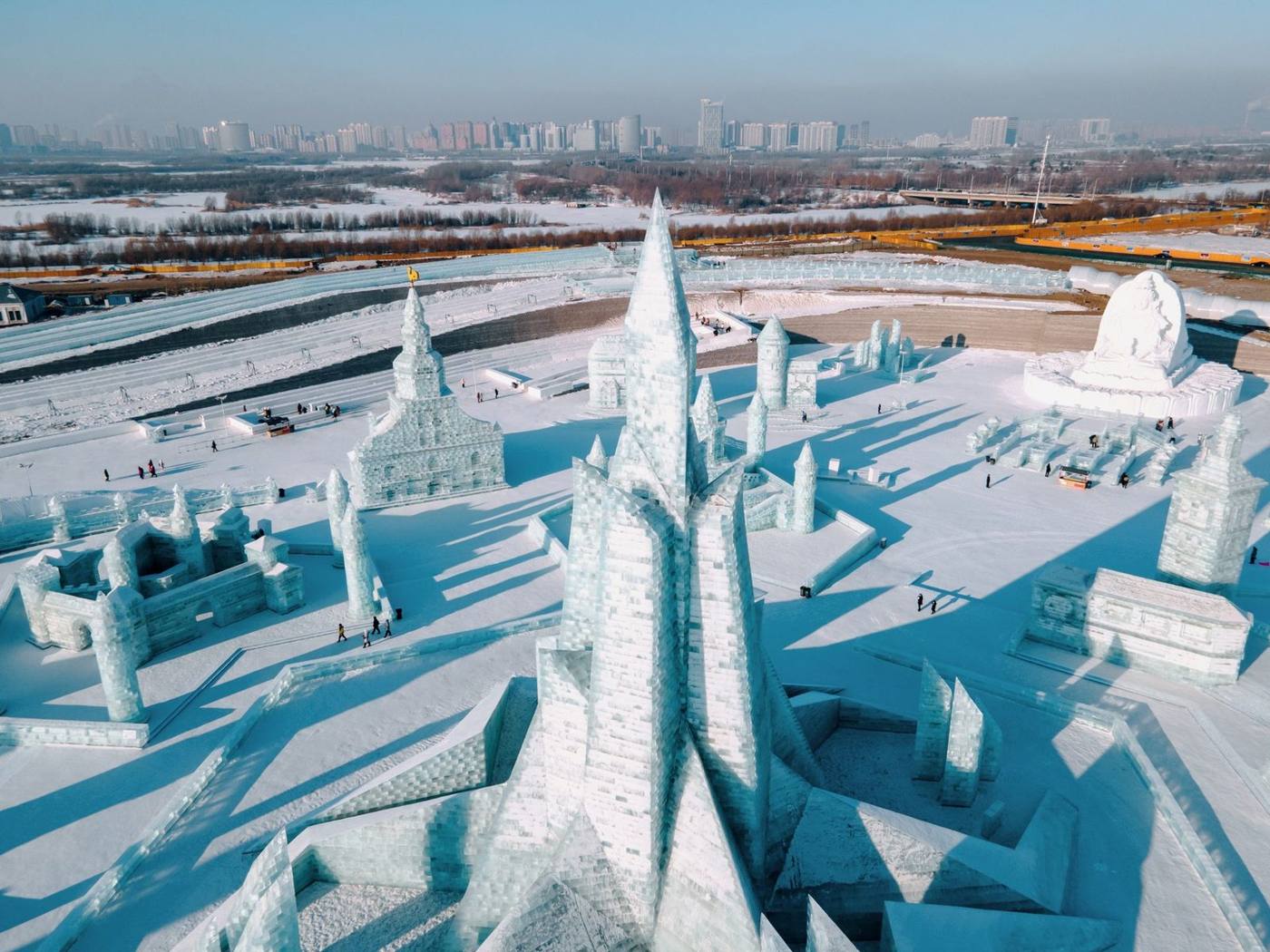
Harbin, the ice festival
China's coldest city at its most spectacular: the lit-up ice castles of Ice and Snow World, the snow sculptures of Sun Island, the central street with Russian architecture and St Sophia Cathedral, the Siberian tiger park.
 8 daysEasy
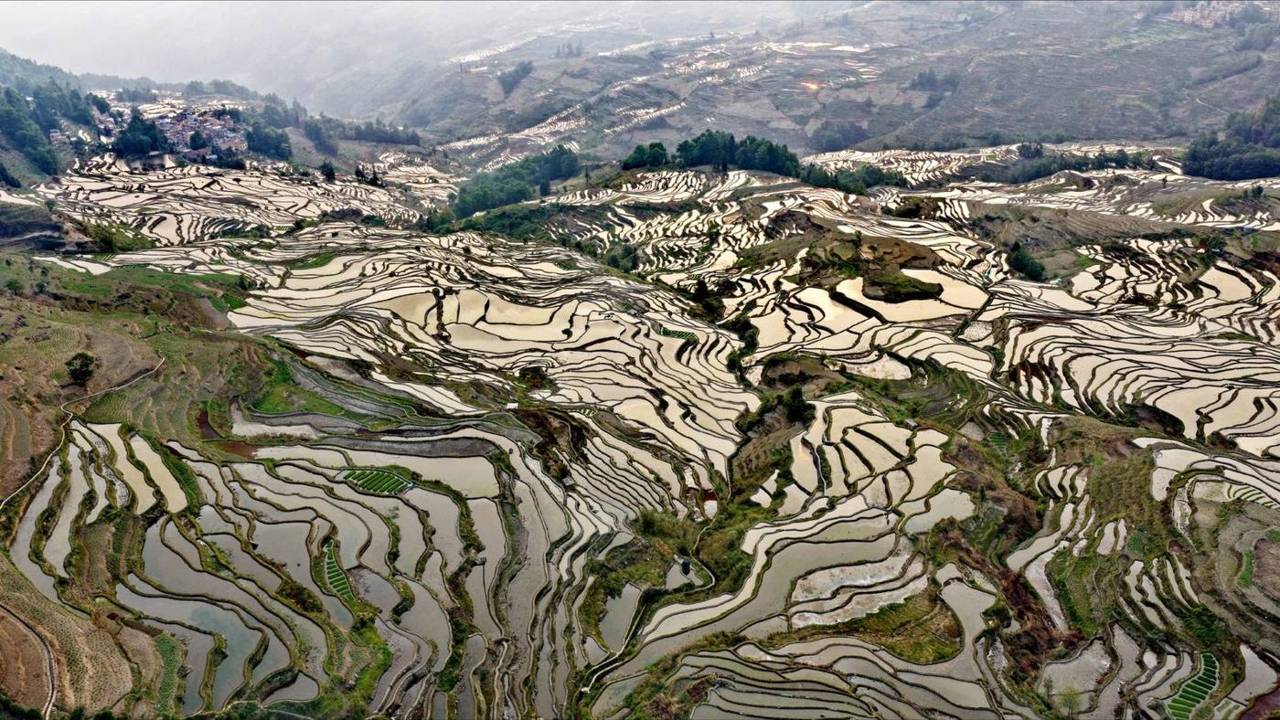
Southern Yunnan: Yuanyang and Xishuangbanna
The other Yunnan: the Hani rice terraces of Yuanyang, a UNESCO World Heritage site, mirroring the sky at dawn, the old town of Jianshui and tropical Xishuangbanna, with Dai villages, Theravada Buddhist temples and forests.
 6 daysEasy
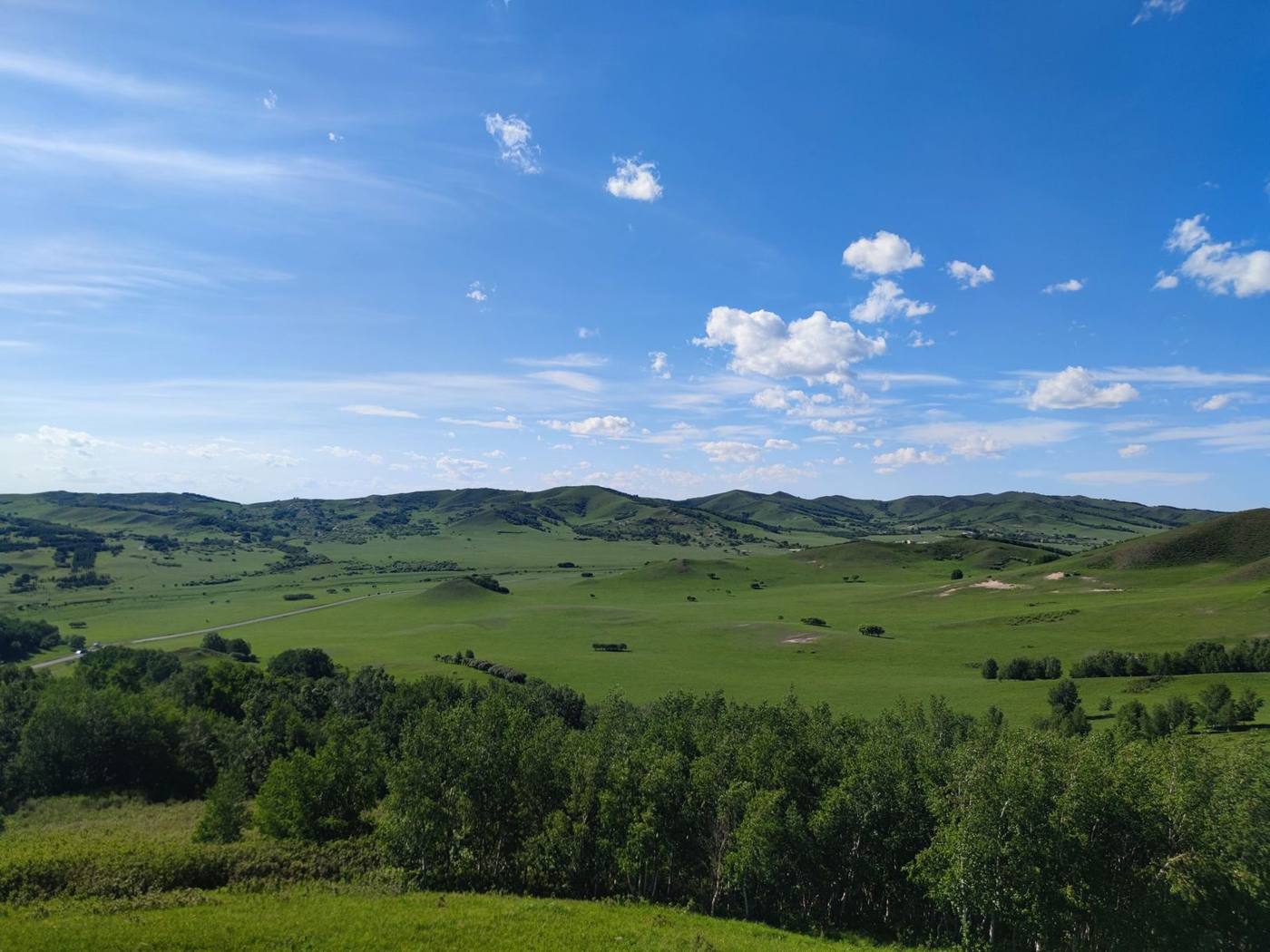
Inner Mongolia: the Hulunbuir grasslands
China's largest grasslands: Hailar, rivers winding through the green, Mongolian herders' tents, Hulun lake, the birch forests of the Greater Khingan and the Russian village of Shiwei on the Argun river.