Zhangjiajie and Fenghuang
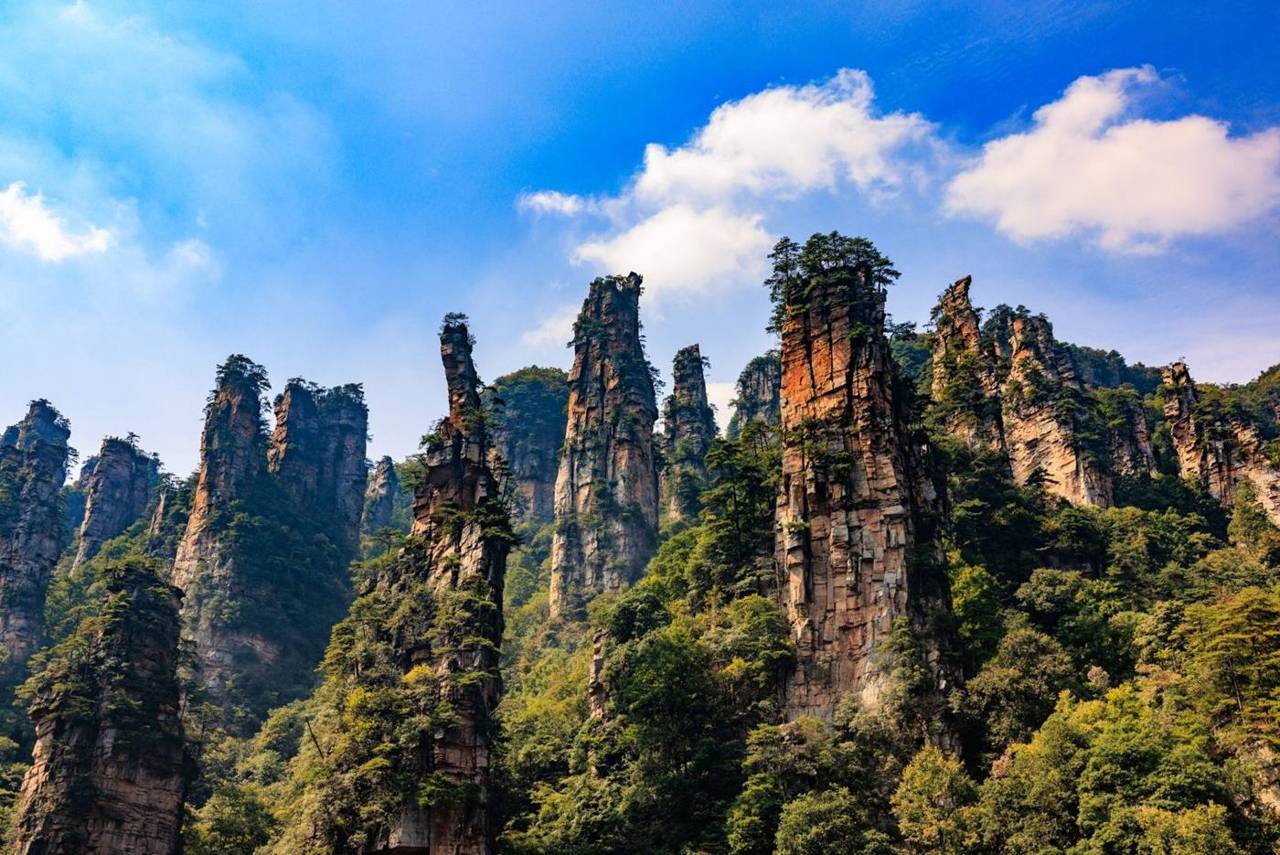
The sandstone pillars that inspired Avatar, Heaven's Gate on Tianmen Mountain and the ancient stilt town of Fenghuang.
- Zhangjiajie
- Wulingyuan
- Tianzi
- Tianmen
- Fenghuang
Day by day
- Day 1
Arriving in Zhangjiajie
Zhangjiajie, in Hunan province in south-central China, is famous for one of the strangest landscapes in the world: thousands of sandstone pillars up to two hundred metres high, covered in pines and often wrapped in mist, rising from narrow wooded valleys. The Wulingyuan scenic area that contains them has been a UNESCO World Heritage Site since 1992, and its pillars inspired the floating mountains of a famous science fiction film. In six days you see Wulingyuan, Tianmen Mountain and the ancient town of Fenghuang.
You arrive by plane at Zhangjiajie airport, with flights from Beijing, Shanghai, Guangzhou and other cities, or by high-speed train at Zhangjiajie West station, linked to Changsha and the high-speed network.
Zhangjiajie city is modern and of little interest, but it is the base for Tianmen Mountain, which you reach on foot from the centre. Wulingyuan park is about an hour away by road, and it is best to sleep near one of its entrances, such as the one at Wulingyuan village or the national forest entrance.
In the afternoon, settle in and walk along the Suoxi river, or visit the museum of the Tujia people, one of the area's minorities, with costumes, wooden houses and traditional songs.
In the evening, sleep near the park entrance.
Practical tip: Italian citizens can enter China without a visa for stays of up to 30 days until 31 December 2026. If you travel in 2027, check whether the exemption has been extended.
- Day 2
Wulingyuan: Yuanjiajie and the Bailong lift
Early in the morning, enter Wulingyuan park. The ticket is valid for several days and inside the park you get around on no-cost shuttle buses linking the different areas, the cable cars and the trails. It pays to arrive at opening time to avoid the crowds, especially at weekends and during Chinese holidays.
Start with the Bailong lift, the hundred dragons lift, built along a rock face, which in little more than a minute rises over three hundred metres, partly inside the mountain and partly in a glass tower outside, with views over the valley.
At the top you reach Yuanjiajie, the park's most famous area, with trails along the edge of the pillars. Here stands the pillar called Hallelujah Mountain, which recalls the film's floating mountains, and the First Bridge under Heaven, a natural rock arch suspended hundreds of metres up between two pillars. Along the trails you see macaque monkeys, which steal food from tourists.
In the afternoon, take the shuttle to Yangjiajie, a quieter area with a trail climbing a narrow ridge between the pillars, or to the Huangshi viewing terrace, the Yellow Stone, reached by cable car or on foot.
In the evening, sleep near the park entrance.
Practical tip: mist is frequent in the park, especially in spring. Sometimes the pillars vanish completely, sometimes the parting mist creates the finest views: keep a spare day.
- Day 3
Wulingyuan: Tianzi Mountain and Golden Whip Stream
In the morning, go up Tianzi Mountain, the mountain of the Son of Heaven, in the north of the park, by cable car or shuttle. From here you see a sea of rock pillars stretching as far as the eye can see, especially at dawn, when mist fills the valleys and only the summits poke through. The mountain takes its name from a medieval Tujia rebel leader who, according to legend, proclaimed himself emperor on these mountains.
Then walk down the stepped trail to the valley floor, or take the cable car, and reach the Golden Whip Stream, Jinbian Xi, in the heart of the forest.
In the afternoon, walk along the stream on an easy, almost flat trail of about seven kilometres, between rock walls, pines, maples and clear water, in about two and a half hours. It is one of the most beautiful and peaceful trails in the park, with the Golden Whip pillar, about three hundred and fifty metres high, and monkeys moving through the trees and over the rocks along the stream.
The trail ends near the entrance of Zhangjiajie National Forest, the oldest in the country, where you leave the park.
In the evening, return to Zhangjiajie city, about forty minutes away, to be close to Tianmen Mountain.
Practical tip: on national holidays, especially the first week of October and in May, the park is extremely crowded, with long queues for shuttles and cable cars. If you can, avoid those periods.
- Day 4
Tianmen Mountain: the cable car, Heaven's Gate and the glass walkway
Tianmen Mountain, the Heaven's Gate Mountain, rises right above Zhangjiajie city. In the morning, go up by the cable car that starts from the city centre, one of the longest gondola lifts in the world, about seven and a half kilometres, flying over rooftops and countryside and then climbing steeply to the summit, in about half an hour, with views of the vertical walls.
At the top, at about 1,500 metres, there are forests, a Buddhist temple and suspended paths built along sheer cliffs. The most famous is the glass walkway, a footpath with a transparent floor fixed to the rock face, with the void beneath your feet. In other sections the walkway winds around cliffs with views over the valleys.
From here, go down towards Heaven's Gate, Tianmen Dong, a huge natural arch in the mountain over one hundred metres high, reached by a long stairway of 999 steps. The gate can also be seen from below, from the city.
To go down, you can take the escalators cut into the mountain and then the bus along the road of 99 bends, a spectacular mountain road descending in extremely tight curves to the cable car's mid station.
In the evening, sleep in Zhangjiajie city.
Practical tip: anyone who suffers from vertigo can skip the glass walkway and stay on the normal paths. For the cable car ascent and the buses, check the different routes before buying your ticket.
- Day 5
Fenghuang: the ancient town on the Tuo river
In the morning, take the high-speed train or the bus south to Fenghuang, the Phoenix town, in the Xiangxi Tujia and Miao autonomous prefecture. By high-speed train it takes about an hour or a little more to Fenghuang station, from where a bus takes you to the centre.
Fenghuang is one of the most beautiful ancient towns in China, on the banks of the Tuo river, with wooden houses on stilts, the diaojiaolou, leaning over the water, walls of red stone with gates, paved lanes and bridges. It was founded as a military outpost and for centuries was home to Han Chinese, Miao and Tujia people.
In the afternoon, walk along the walls and the north gate, cross the river on the stepping stones set in the water, and on the covered Hong Qiao bridge. Visit the birthplace of Shen Congwen, one of the great Chinese writers of the twentieth century, who described this region in his novels.
Take a boat ride on the river, with rowers pushing the wooden boats past the stilt houses.
In the evening the ancient town lights up: the houses along the river have red and yellow lights reflected in the water, and the alleys fill with people.
In the evening, sleep in a house along the river.
Practical tip: in the evening there are many venues with loud music along the river. If you want quiet, choose a room a little away from the central banks.
- Day 6
The high-speed train and departure
On your last morning, get up at dawn, when the ancient town of Fenghuang is still silent. Mist rises from the Tuo river, women wash clothes on the stones of the bank and the shops are still closed: it is the best time to photograph the stilt houses without crowds.
Then walk up the hill above the ancient town or to the Wanming pagoda on the riverbank for the view over the roofs.
If you have time, about twenty kilometres away is the Southern Great Wall, a wall built during the Ming dynasty to separate the lands controlled by the empire from those of the Miao. A rebuilt section remains, with watchtowers on the hills. Alternatively, you can visit a nearby Miao village, with stone houses and women in traditional costume.
At the end of the morning, take the high-speed train from Fenghuang station to Changsha, capital of Hunan, in about two and a half to three hours, or to Huaihua, linked to the high-speed network for Guangzhou, Guilin and the south.
This trip combines well with Guilin and Yangshuo, with the Longji rice terraces, or with Changsha and the Hunan museum, with the finds from the Mawangdui tombs.
Practical tip: in China many Western websites and apps do not work. Before leaving, download the Chinese payment apps and link a card, as cash is accepted less and less.
Incredible scenery, but mass tourism with queues, escalators and loudspeakers. Arrive at opening time for a few quiet hours. Mist is frequent and can hide the pillars or make them magical. Fenghuang is beautiful but very commercial in the evening.
Before you go
- Documents and visa
- Passport with at least six months' validity. Until 31 December 2026 Italian and many other European citizens need no visa for tourism up to 30 days; check whether the scheme has been extended and covers you.
- Health and vaccines
- No compulsory vaccines arriving from Europe. In big cities check air quality. Emergencies: 110 police, 120 ambulance, 119 fire.
- Money and payments
- Renminbi yuan. Almost everything is paid with Alipay and WeChat QR codes, which can be linked to foreign cards; carry some cash.
- Power sockets
- Types A, C and I, 220 volts: a universal adapter is useful.
- Time zone
- UTC+8 all year: all of China uses Beijing time.
- Safety
- The United States rates China level 2 because of arbitrary enforcement of local laws. Always carry your passport. Many Western websites and apps are blocked. Official advice: GOV.UK.
Information checked in November 2026 for Italian and EU citizens. Rules change: always check before you travel.
Variations
In 4 days: two days in Wulingyuan and one on Tianmen Mountain.
In 10 days: add Guilin, Yangshuo and the Longji rice terraces.
Frequently asked questions
When is the best time to go?
April, May, September and October, with mild temperatures; October has autumn colours. Avoid the first week of October and the May holidays because of crowds. Summer is hot and rainy.
Do I need a visa?
Italian citizens can enter without a visa for up to 30 days until 31 December 2026. For 2027, check whether the exemption has been extended.
How many days do I need in Wulingyuan?
At least two full days. The ticket is valid for several days and the park is large, with areas far apart linked by shuttle buses.
Indicative itinerary written by World Atlas. Before booking, check timetables, seasonal openings, documents and safety.
 9 daysEasy
Sichuan: pandas and Jiuzhaigou
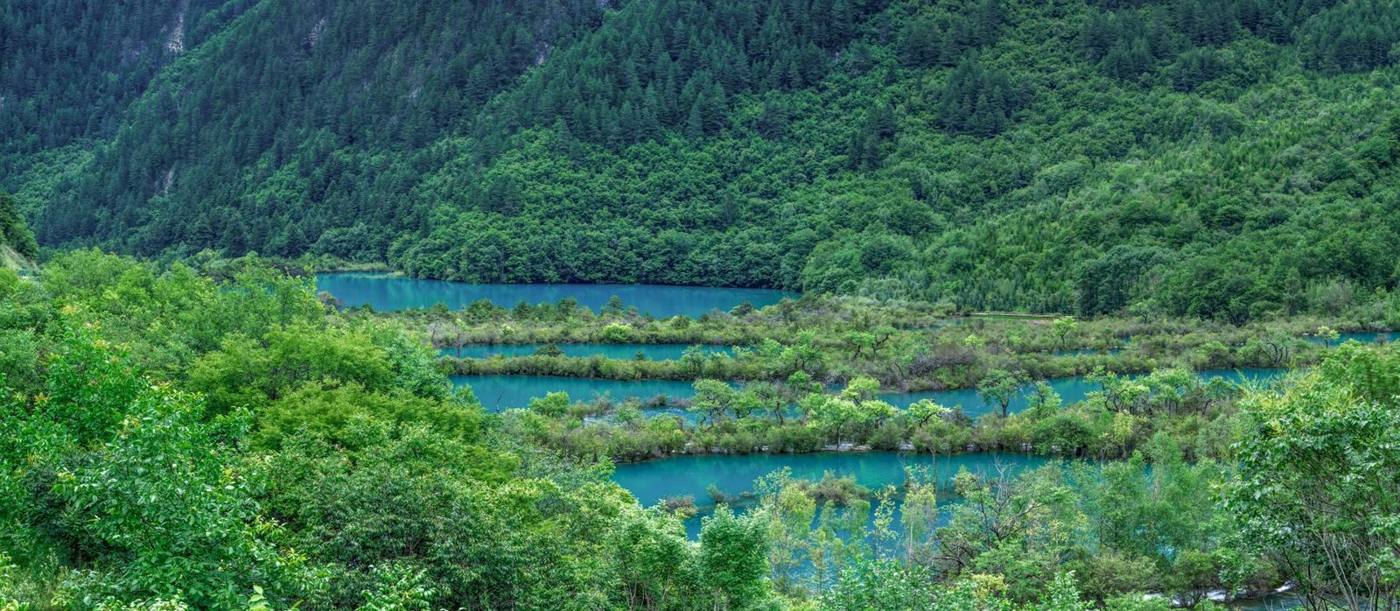
The giant pandas of Chengdu, the Leshan Giant Buddha, sacred Mount Emei and the turquoise lakes of the Jiuzhaigou valley.
 10 daysChallenging
Tibet: from Lhasa to Everest
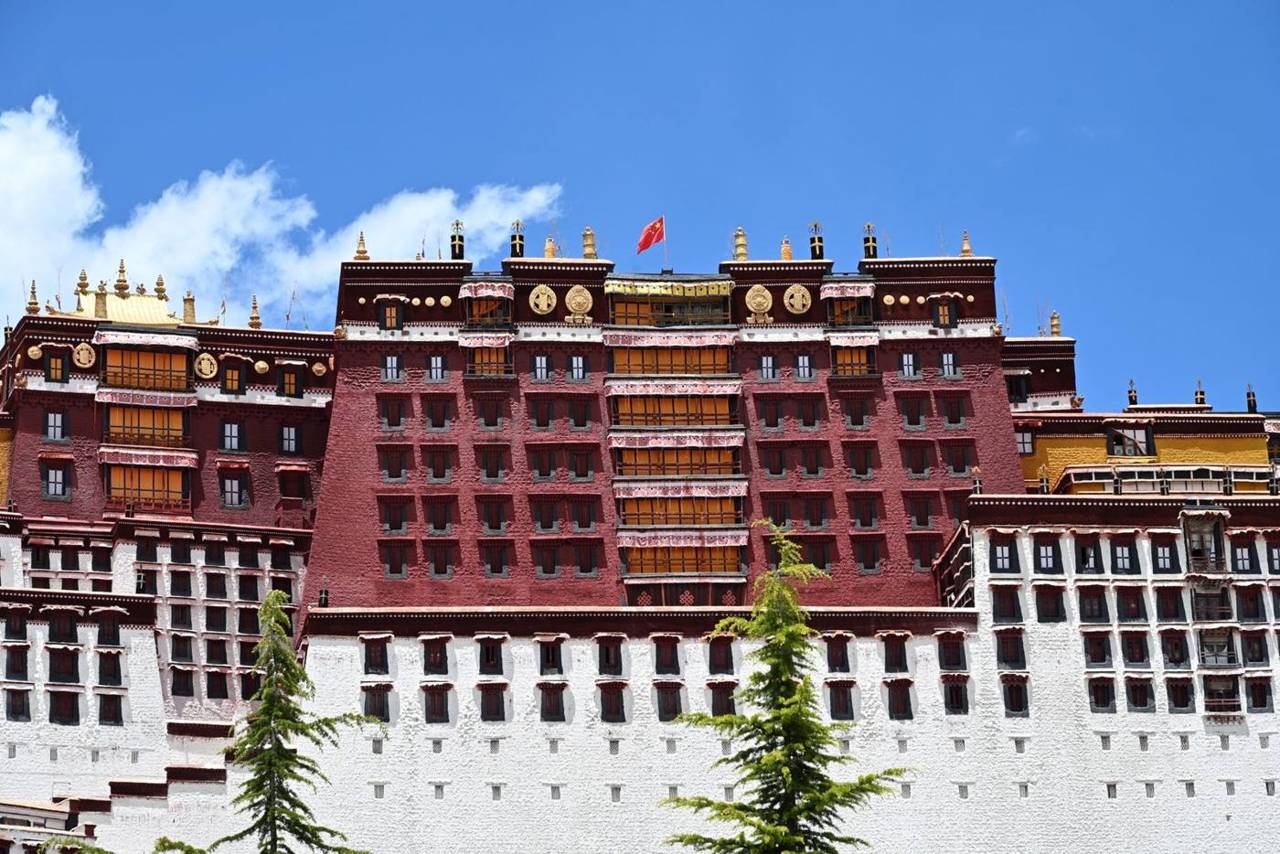
The Potala and Jokhang in Lhasa, Lake Yamdrok, the monasteries of Gyantse and Shigatse and the north face of Everest from Rongbuk.
 10 daysModerate
Gansu and the Silk Road
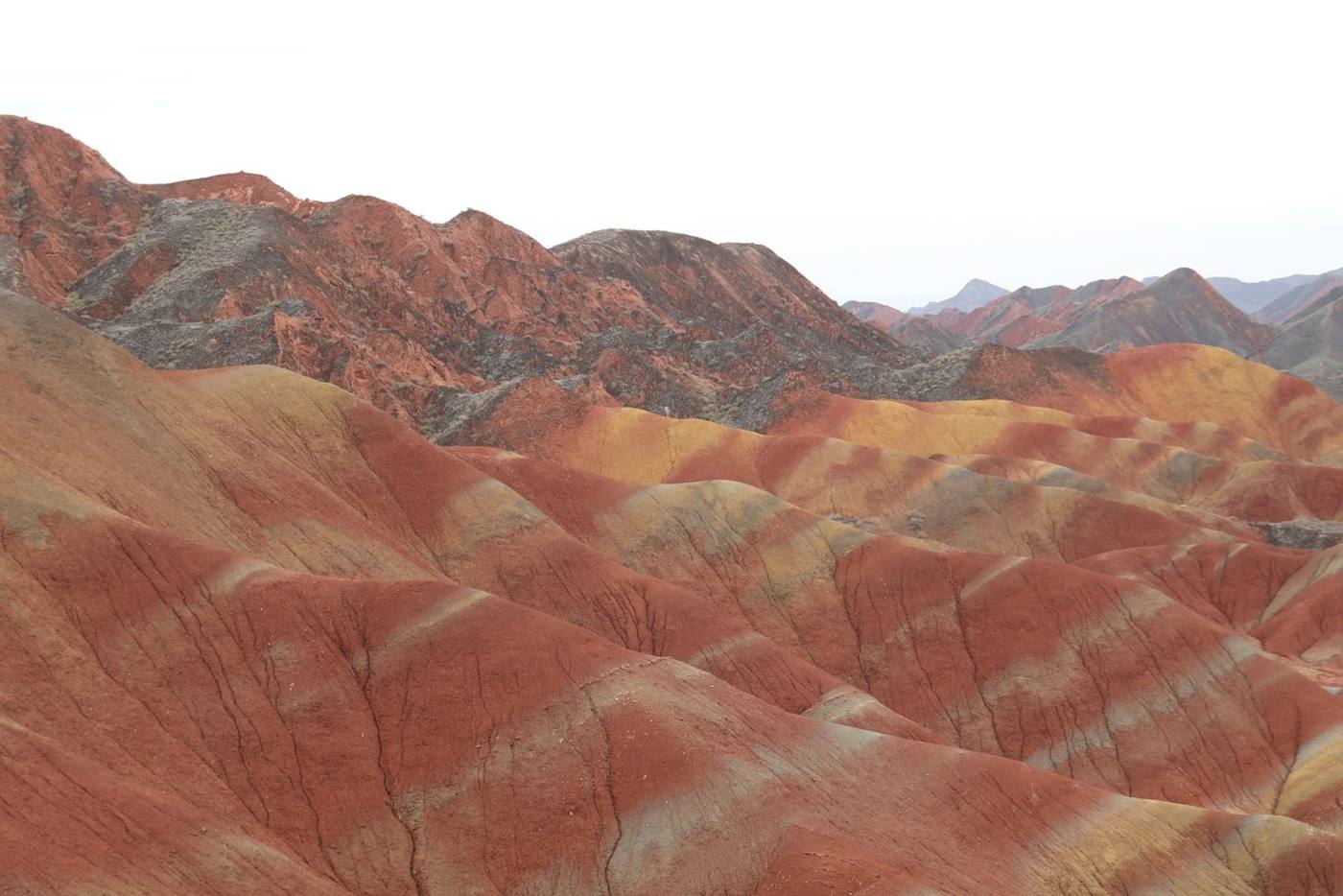
From Xi'an along the Hexi Corridor: the rainbow mountains of Zhangye, Jiayuguan fort at the end of the Great Wall, the Mogao Caves and the dunes of Dunhuang.