Henan: Luoyang, Shaolin and Kaifeng
The cradle of Chinese civilisation along the Yellow River: the Longmen grottoes with thousands of Buddhas carved in the rock, the Shaolin monastery where kung fu was born, and Kaifeng, an old capital with its night market.
- Zhengzhou
- Dengfeng
- Shaolin
- Luoyang
- Kaifeng
Day by day
- Day 1
Zhengzhou and the Henan Museum
Henan, in central China along the Yellow River, is considered the cradle of Chinese civilisation. Some of the first dynasties were born here, four of the ancient imperial capitals stood here, and the first Buddhist monks arrived here. Today it is a province little visited by foreigners, but full of history: the Shaolin monastery, the birthplace of kung fu, the Longmen grottoes with thousands of Buddha statues carved into the rock, and Kaifeng, the capital of the Song. In five days, with high-speed trains, you see the main sights.
The trip begins in Zhengzhou, the provincial capital, a large modern city and one of China's main railway hubs. You get there by high-speed train from Beijing in about two and a half hours, or from Xi'an in about two hours.
The day is devoted to the Henan Museum, considered one of the best museums in China. Its collections tell seven thousand years of history: the Jiahu bone flutes, among the oldest musical instruments in the world, the ritual bronzes of the Shang and Zhou dynasties, jades, Tang ceramics, objects of court life and Buddhist statues. They are carefully displayed, with explanations in English too. The museum often holds small concerts using replicas of ancient instruments.
In the afternoon, if you have time, walk along the Yellow River, north of the city, where a scenic park lets you see the wide, muddy river that gave its name to Chinese civilisation.
Practical tip: for the Henan Museum it is best to book online in advance with your passport. It is usually closed on Mondays.
- Day 2
Shaolin, the Pagoda Forest and Mount Song
Early in the morning, set off for the Shaolin monastery, about an hour and a half from Zhengzhou by car or bus, at the foot of Mount Song, one of China's five sacred mountains. The monastery was founded in 495 and is considered the birthplace of Chan Buddhism, known in Japan as Zen, and of the monks' kung fu. It has been a UNESCO World Heritage Site, along with other historic monuments of Mount Song, since 2010.
Arriving early, you see monks and students from the area's martial arts schools training in the courtyards and squares: thousands of young people come here from all over China to learn kung fu.
Visit the monastery's courtyards and halls, with their Buddha statues, ancient trees and, in the Thousand Buddha Hall, the floor worn by the monks' exercises over the centuries. Not far away is the Pagoda Forest, the monks' cemetery, with more than two hundred brick and stone pagodas built over more than a thousand years, one for each abbot or important monk.
In mid-morning, watch the kung fu show, with monks demonstrating their techniques.
In the afternoon, take the cable car or walk up part of Mount Song, with paths of stone steps among the rocks and views over the valleys. Alternatively, visit the Songyang Academy, one of the oldest Confucian schools in China, or the Songyue Pagoda, the oldest brick pagoda in the country, from 523.
In the evening, continue to Luoyang, about an hour and a half away.
Practical tip: Shaolin is very touristy. Arrive at opening time and avoid weekends and Chinese holidays.
- Day 3
The Longmen grottoes
Luoyang was the capital of China under thirteen dynasties, for about 1,500 years in all. Today it is a modern city, but it keeps extraordinary treasures, starting with the Longmen grottoes, a UNESCO World Heritage Site since 2000.
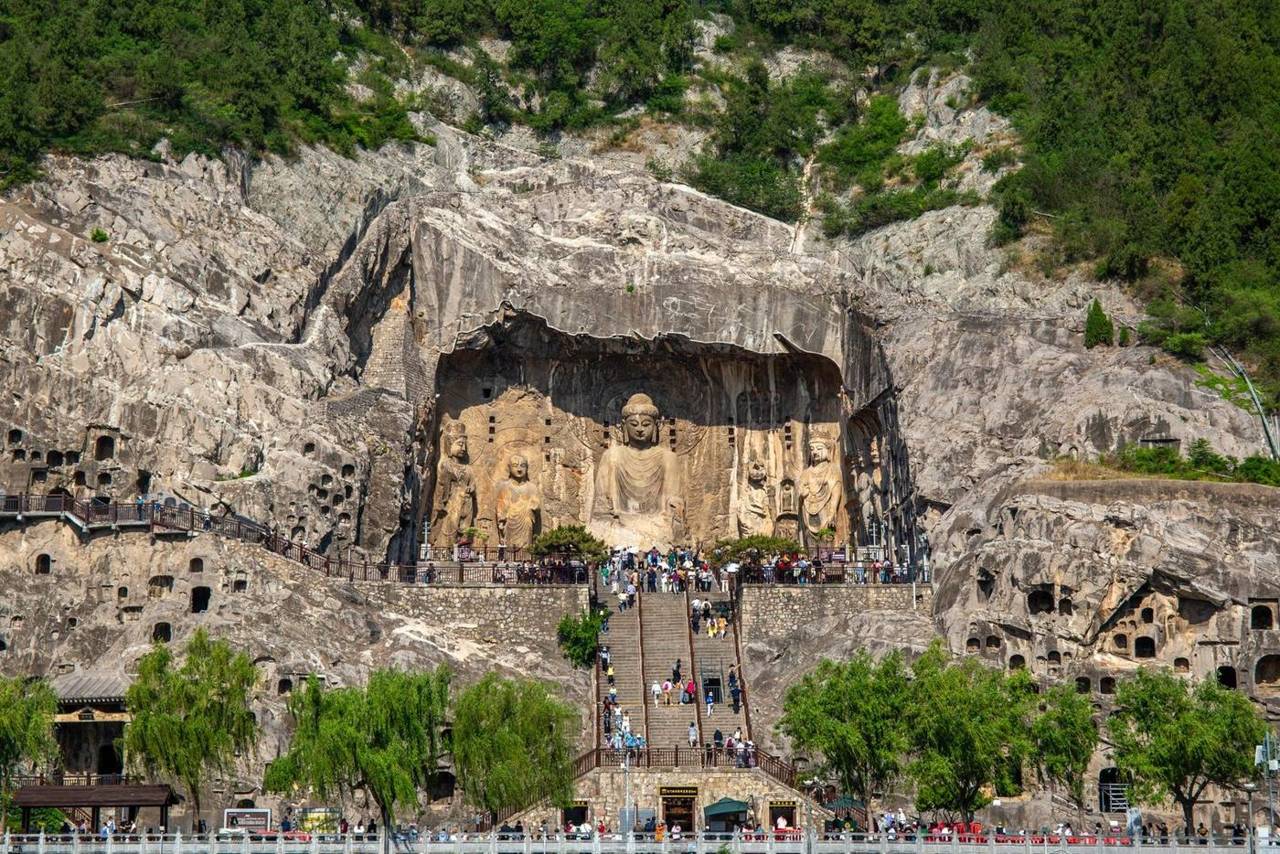
In the morning, go to the grottoes, south of the city, along the Yi river. On the limestone cliffs of both banks, for about a kilometre, more than two thousand niches and caves have been carved, with about a hundred thousand statues of Buddhas and bodhisattvas, from tiny ones a few centimetres high to giants. They were carved mainly between the late fifth and mid-ninth centuries AD, that is between the Northern Wei and Tang dynasties, with the support of the emperors.
The most famous spot is the Fengxian temple, a large open niche with the Vairocana Buddha, about 17 metres high, with a serene, smiling face, accompanied by disciples, bodhisattvas and guardians. According to tradition, the face was inspired by Empress Wu Zetian, the only woman to rule China as emperor.
Walk along the west bank, with most of the caves, then cross the bridge and visit the east bank, with more caves, the Xiangshan temple and the tomb of the poet Bai Juyi on the hill.
In the afternoon, rest in town. In the evening, go back to the grottoes: they are open after sunset too, and the illuminated statues reflected in the river are very striking.
Practical tip: the grottoes are visited on foot over several hours, with many steps. Bring water, a hat and comfortable shoes.
- Day 4
The White Horse Temple and Luoyang's old town
In the morning, go to the White Horse Temple, east of Luoyang, considered the first Buddhist temple in China, founded according to tradition in 68 AD. Legend says that two monks from India brought the sacred texts on a white horse, and the emperor had the temple built to welcome them. Inside you visit the halls, the courtyards, the tombs of the two monks and an ancient pagoda.
The temple also has an unusual section: an area with temples built in Indian, Thai and Burmese style, donated by other Buddhist countries, showing the different forms of this religion in Asia.
In the afternoon, return to town and stroll through Luoyang's old town, around the Lijing gate, a large gate rebuilt on the ancient walls. The streets around it have been restored with traditional houses, courtyards, small shops and food stalls. Also visit the site of the Dingding gate, where you see the excavations of the ancient gate of the Sui and Tang capital, with cart tracks and hoofprints in the earth.
If you still have time, visit the Luoyang Museum, with objects from the thirteen dynasties, or the Museum of Ancient Tombs, with frescoed underground tombs.
In the evening, try Luoyang cooking, famous for its water banquet, a series of soups and dishes in broth served one after the other, a tradition dating back to the Tang.
Practical tip: in April Luoyang hosts the peony festival, celebrating the city's symbolic flower. The parks are beautiful, but the city is very crowded and accommodation costs more.
- Day 5
Kaifeng, the capital of the Song
On your last morning, take the high-speed train to Kaifeng, via Zhengzhou, in about an hour and a half. Kaifeng was the capital of the Northern Song dynasty, between 960 and 1127. At the time it was perhaps the largest city in the world, with about a million inhabitants, markets open day and night, canals and bridges. Today it is a smaller, quieter city, with ancient walls, lakes and a slow pace.
In the morning, visit the Iron Pagoda, from 1049, about 55 metres high. It is not actually made of iron: it is covered in brown glazed tiles that look like metal from afar, decorated with Buddhas, animals and flowers. It has survived earthquakes and floods of the Yellow River.
Then visit the Daxiangguo temple, one of the most important Buddhist temples of Song China, with a large wooden statue of the thousand-armed bodhisattva.
In the afternoon, enter Qingming Park, a reconstruction of the Song city inspired by a famous twelfth-century scroll painting showing life along the river on the day of the Qingming festival. There are bridges, small shops, costumed shows and period games.
In the evening, go to the night market, where stalls sell soup dumplings, sweets and skewers.
Then return to Zhengzhou for your train.
Practical tip: for Italian citizens, entry without a visa for up to 30 days is valid until 31 December 2026: for later trips, check whether it has been extended.
It combines well with Beijing or Xi'an, a few hours away by high-speed train. Shaolin is also very touristy today: to see the monks training, arrive early in the morning. In April Luoyang hosts its peony festival, lovely but crowded. For Italian and many other European citizens, entry without a visa for up to 30 days applies until 31 December 2026: for trips after that date, check whether it has been extended.
Before you go
- Documents and visa
- Passport with at least six months' validity. Until 31 December 2026 Italian and many other European citizens need no visa for tourism up to 30 days; check whether the scheme has been extended and covers you.
- Health and vaccines
- No compulsory vaccines arriving from Europe. In big cities check air quality. Emergencies: 110 police, 120 ambulance, 119 fire.
- Money and payments
- Renminbi yuan. Almost everything is paid with Alipay and WeChat QR codes, which can be linked to foreign cards; carry some cash.
- Power sockets
- Types A, C and I, 220 volts: a universal adapter is useful.
- Time zone
- UTC+8 all year: all of China uses Beijing time.
- Safety
- The United States rates China level 2 because of arbitrary enforcement of local laws. Always carry your passport. Many Western websites and apps are blocked. Official advice: GOV.UK.
Information checked in November 2026 for Italian and EU citizens. Rules change: always check before you travel.
Variations
In 3 days: Shaolin and the Longmen grottoes, based in Luoyang.
In 9 days: after Henan, continue by high-speed train to Xi'an and the terracotta army, then Beijing.
Frequently asked questions
When is the best time to go?
Spring, from April to May, with the peony festival in Luoyang, and autumn, from September to October. Summer is very hot and winter cold and dry.
How do I get around?
By high-speed train: Zhengzhou, Luoyang and Kaifeng are linked in under an hour. For Shaolin you need a car or bus.
What documents do I need?
A passport. For Italian citizens, entry without a visa for up to 30 days is valid until 31 December 2026: for trips after that date, check whether it has been extended.
Indicative itinerary written by World Atlas. Before booking, check timetables, seasonal openings, documents and safety.
 6 daysModerate
Shandong: Taishan, Qufu and Qingdao
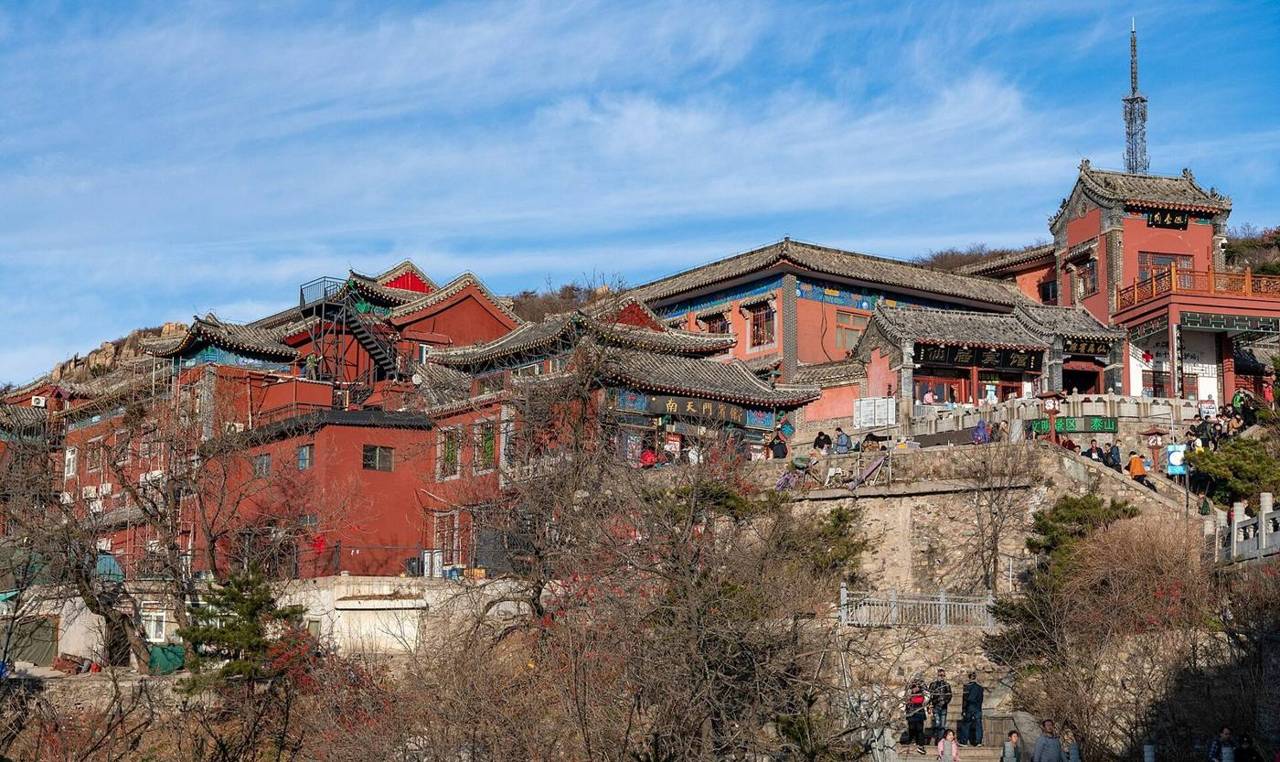
The land of Confucius: the temple, mansion and cemetery of the Kong family in Qufu, the climb up the 6,000 steps of Mount Tai, sacred mountain of the emperors, the springs of Jinan and Qingdao, a seaside city with German architecture and its beer.
 6 daysModerate
Qinghai: the blue lake and the Tibetan plateau
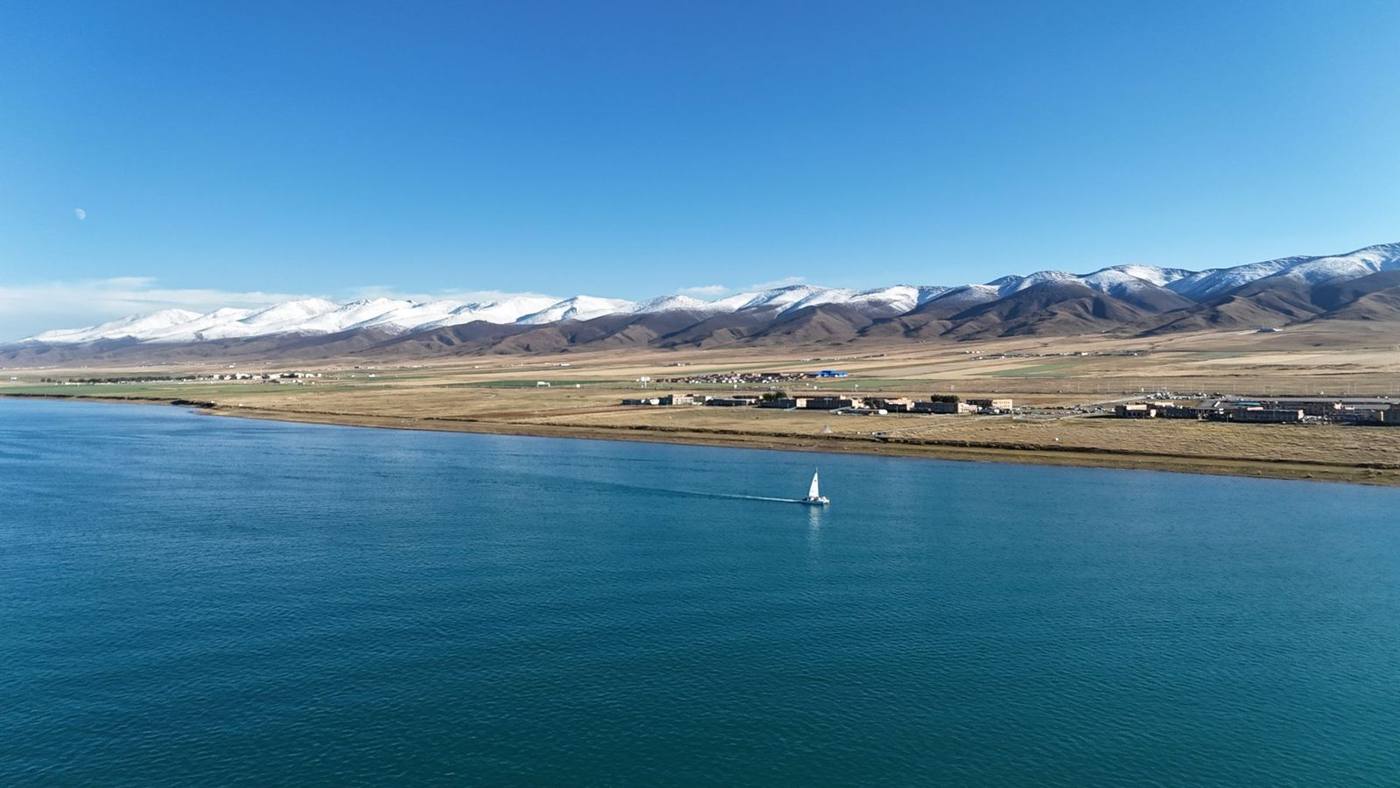
Tibetan culture outside Tibet, without special permits: Kumbum monastery, the great Qinghai Lake at 3,200 metres with its flowering rapeseed fields, the Chaka salt lake that mirrors the sky and herders' villages on the plateau.
 7 daysEasy
Guizhou: Miao and Dong villages
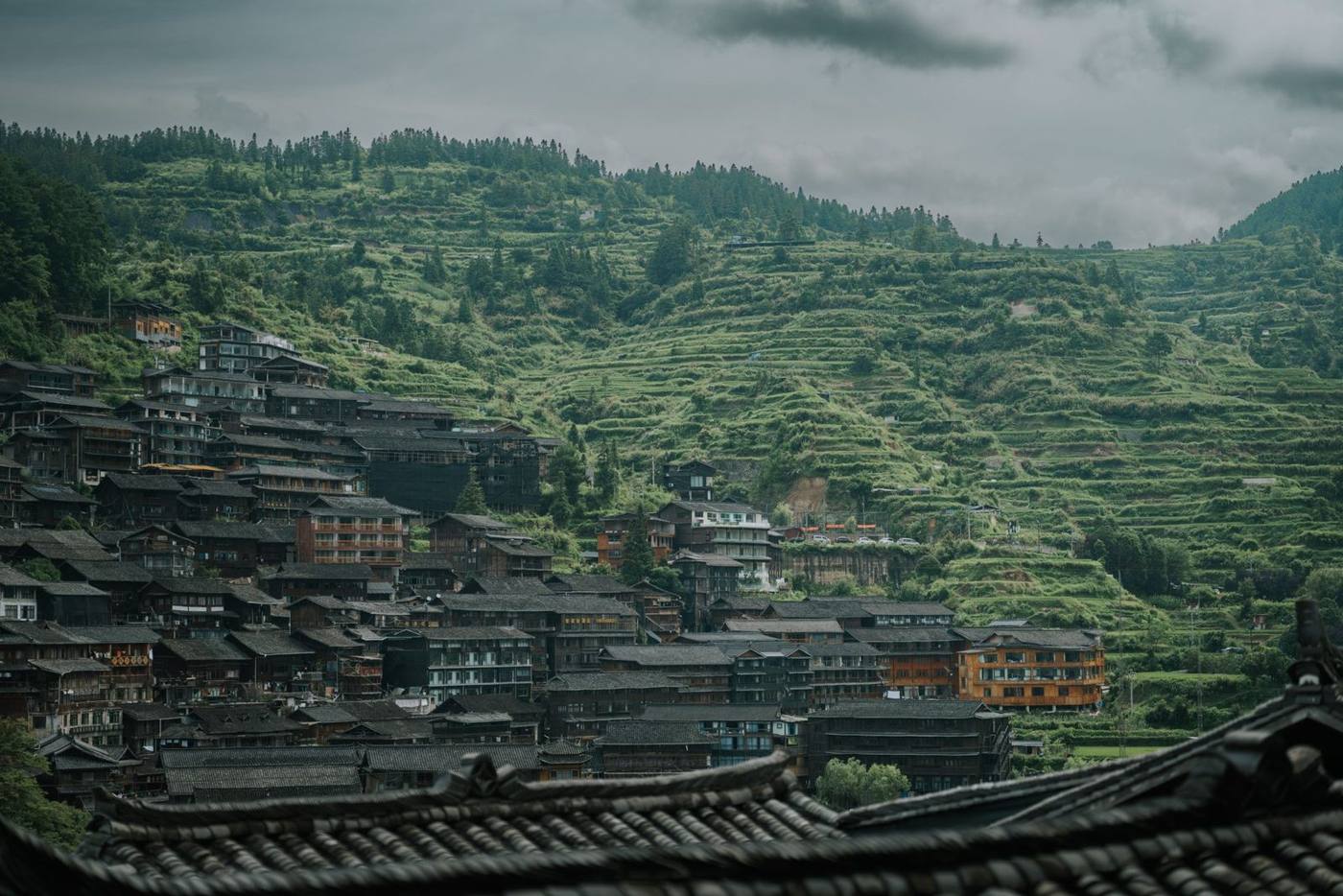
The China of the minorities: the great Miao village of Xijiang with its wooden houses on the hill, the wind-and-rain bridges and drum towers of the Dong at Zhaoxing, the Huangguoshu waterfall and the karst forests of Libo.