Yunnan from Dali to Shangri-La
Yunnan's minorities, Lake Erhai at Dali, the old town of Lijiang, the Tiger Leaping Gorge trek and the Tibetan monastery of Shangri-La.
- Kunming
- Dali
- Shaxi
- Lijiang
- Tiger Leaping Gorge
- Shangri-La
Day by day
- Day 1
Arrival in Kunming
This trip crosses Yunnan, the province in south west China at the foot of the Himalaya, one of the most varied regions of the country in landscapes and peoples: Kunming, the city of eternal spring, the Stone Forest, Dali and Erhai lake, the village of Shaxi on the Tea Horse Road, Lijiang and Naxi culture, Tiger Leaping Gorge and Shangri-La on the Tibetan plateau.
Before you leave: Italian citizens can enter China visa no-cost for short stays until 31 December 2026. For trips after that date, check whether the exemption has been extended or whether you need a visa. Also check your passport's validity. Other nationalities should check their own rules.
You fly into Kunming airport, usually via a large Chinese city, about half an hour to three quarters of an hour from the centre.
In the afternoon, after the long journey, walk around Green Lake, Cuihu, a park in the city centre with bridges, pavilions and, in winter, thousands of gulls from Siberia that people feed from the banks.
In the evening try Yunnan food: guoqiao mixian, crossing the bridge noodles, a scalding soup in which you cook raw meat, vegetables and rice noodles at the table.
Sleep in Kunming.
Practical tip: in China many foreign websites and some apps do not work. Before leaving install Chinese apps for payment, translation and transport, and download maps.
- Day 2
The Stone Forest
Today you visit the Stone Forest, Shilin, about an hour and a half from Kunming by high speed train or car, a World Heritage Site as part of the South China Karst.
It is a maze of grey limestone pinnacles up to about thirty metres high, formed over millions of years by water eroding an ancient seabed. Paths wind between narrow rocks, under natural arches and beside small lakes, with viewpoints over the sea of spires. The rocks have poetic names linked to the legends of the Sani people, a group of the Yi who live here. The park is very large and busy: the ticket usually includes an internal electric shuttle. Check opening hours and prices.
Also walk in the Small Stone Forest and the areas furthest from the entrance, where there are fewer groups.
In the afternoon return to Kunming and visit Yuantong temple, a large Buddhist temple with a pond and pavilions, or the flower and bird market, one of the liveliest in the city.
In the evening take the high speed train or a flight to Dali, about two hours, or sleep in Kunming and leave in the morning.
Sleep in Kunming or Dali.
Practical tip: you need your passport for all high speed trains. Book online and arrive at the station early for the security checks.
- Day 3
Dali: the old town and the Three Pagodas
Today you are in Dali, a city between Erhai lake and the Cangshan mountains, the ancient capital of the Nanzhao and then the Dali kingdoms, inhabited mainly by the Bai people.
In the morning visit the Three Pagodas of Chongsheng temple, the symbol of Dali: a ninth century pagoda more than sixty metres tall and two smaller ones beside it, with the mountains behind. Behind them stretches a large rebuilt temple complex climbing the hill. The reflection of the pagodas in the pond in front is one of the most photographed views in Yunnan. Check opening hours and prices.
In the afternoon walk around Dali old town, enclosed by walls with stone gates, with paved streets, water channels running down from the mountains and Bai houses with decorated white walls and grey roofs. The main street is full of shops and tourists; the side streets are quieter.
At sunset climb the walls near the south gate to see the old town, the mountains and the lake.
In the evening try Bai food: fish from Erhai lake, rushan goat's cheese, fried or grilled, and three course tea, one bitter, one sweet and one spiced.
Sleep in Dali.
Practical tip: Dali is at about two thousand metres. The days are sunny but the evenings are cool: bring layers.
- Day 4
Erhai lake by bike
Today you explore Erhai lake, a large highland lake about forty kilometres long at the foot of the Cangshan mountains.
In the morning rent a bike, electric if you like, and ride the cycle path along the west shore of the lake, among fields, villages and small harbours, with views over the water and the mountains. Many stretches of the shore have been cleaned up and protected in recent years.
Stop at Xizhou, a Bai village with old merchants' houses, decorated courtyards and a morning market. Try Xizhou baba, a crisp savoury or sweet flatbread cooked over a fire. Then visit Zhoucheng, the village where cloth is dyed with tie dye, tying the fabric and dipping it in indigo: you see the workshops and the blue and white cloths hung to dry.
In the afternoon, if you have time, take the cable car up the Cangshan mountains to a high panoramic path among woods and streams, with views of Dali and the lake. Check times, prices and closures.
At sunset watch the sun go down behind the mountains from the lake shore.
Sleep in Dali or Xizhou.
Practical tip: the highland sun is strong even when the air is cool. Bring a hat, sunglasses and sunscreen.
- Day 5
Shaxi, on the Tea Horse Road
In the morning leave Dali and drive north west, about two and a half hours, to Shaxi, a small village in a mountain valley and one of the few almost intact stops on the ancient Tea Horse Road, the network of trails along which for centuries caravans carried tea from Yunnan to Tibet and came back with horses and other goods.
The heart of the village is Sideng market square, with an ancient opera stage, a temple and caravan inns, stone streets, village gates and houses of wood and earth. The village was carefully restored in the 2000s in an international project.
In the afternoon walk along the Heihui river, among rice paddies and fields, to Yujin bridge, an old humpbacked stone bridge. If it is Friday, visit the weekly market, where Bai and Yi farmers come from nearby villages to sell vegetables, animals, tools and textiles.
If you have time, go up Shibaoshan mountain, with Buddhist grottoes carved in the rock, among the oldest in Yunnan. Check opening hours and prices.
In the evening Shaxi is very quiet.
Sleep in Shaxi.
Practical tip: there are few cash machines in Shaxi. Bring cash or make sure mobile payments work before you arrive.
- Day 6
Lijiang, city of the Naxi
In the morning drive north to Lijiang, about two and a half hours, a city at about two thousand four hundred metres at the foot of Jade Dragon Snow Mountain, a World Heritage Site for its old town.
Dayan old town is a maze of paved lanes, clear water channels running beside the houses, stone bridges and two storey wooden houses with grey tiled roofs, built by the Naxi people. Today it is very touristy, full of shops, bars and groups: to see it quietly, go early in the morning or to the outer streets. To enter the old town you pay a maintenance fee, sometimes checked only at the main sites: check.
In the afternoon climb Lion Hill, with the Wangu tower, a wooden pagoda overlooking the roofs of the old town and Jade Dragon Snow Mountain. Then visit Black Dragon Pool park, with a marble bridge and a pavilion reflected in the pond and the snowy mountain behind.
In the evening listen to ancient Naxi music, played by an orchestra on traditional instruments. Check times and prices.
Sleep in Lijiang.
Practical tip: some people feel the altitude in Lijiang. Drink plenty of water and take it easy on the first day.
- Day 7
Baisha village and Jade Dragon Snow Mountain
Today you explore the area around Lijiang.
In the morning go to Baisha village, about ten kilometres north, the old Naxi capital before Lijiang, quieter and less restored. Here are the Baisha murals, painted between the fourteenth and seventeenth centuries in small temples, mixing Tibetan Buddhist, Chinese and Taoist styles. Walk through the village lanes, past workshops where cloth is embroidered in the traditional way.
Then visit Yuhu village at the foot of the mountain, with houses built from river stones, where an Austrian American explorer and botanist who studied Naxi culture in the twentieth century lived for many years.
In the afternoon, if the weather is clear, go up Jade Dragon Snow Mountain, a snowy range over five thousand five hundred metres high, with a cable car to over four thousand metres near the glacier. There are visitor caps, timed tickets and often queues: check times, prices and bookings. Alternatively, take a lower cable car to the Yunshanping meadows or Blue Moon Valley, with turquoise pools.
Above four thousand metres walk slowly.
Sleep in Lijiang.
Practical tip: at that altitude the air is thin. If you have a headache or nausea, go down at once. Walk slowly, drink and do not stay too long at the top.
- Day 8
Tiger Leaping Gorge: the high trail
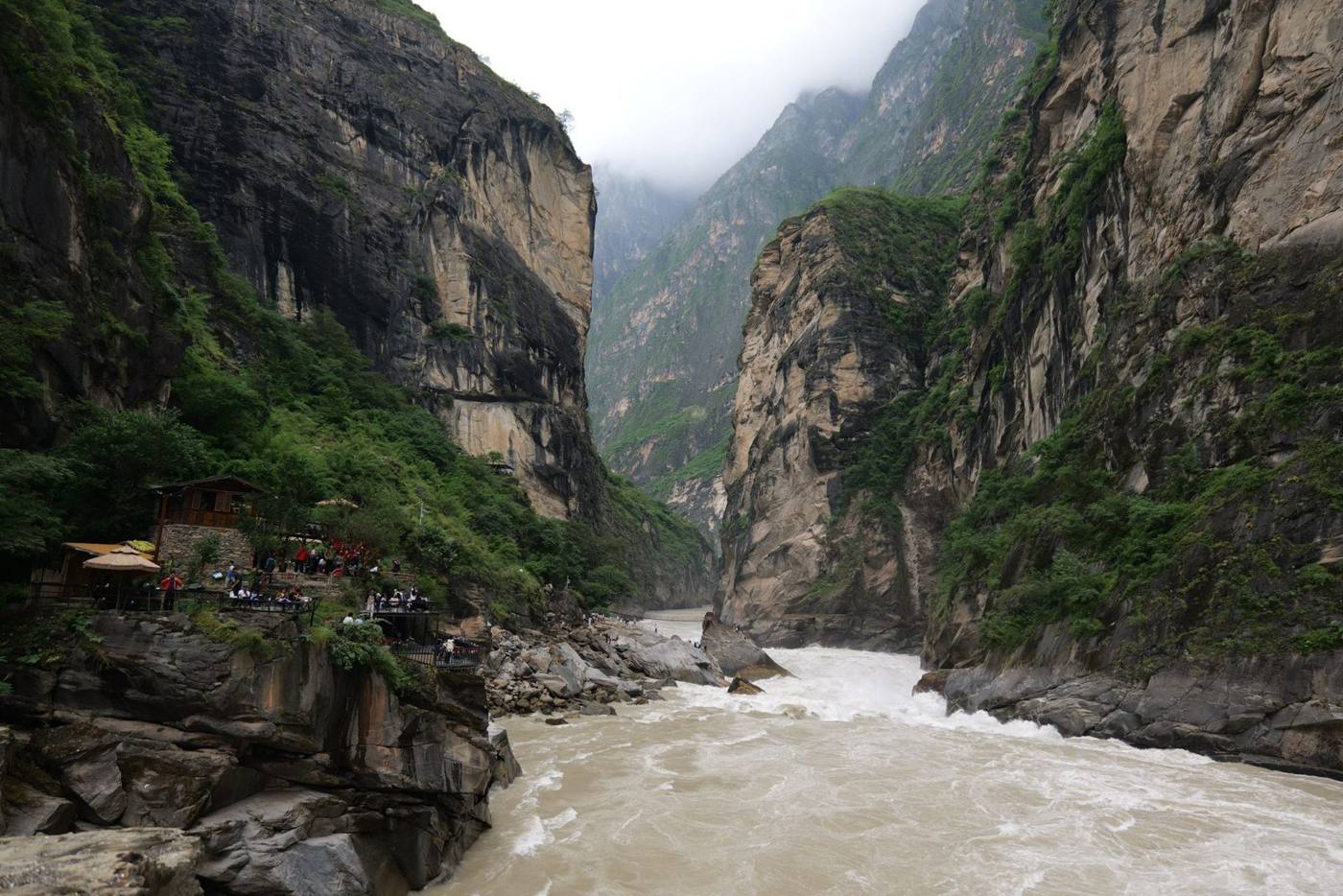
Today the walk in Tiger Leaping Gorge begins, one of the deepest gorges in the world, where the Jinsha river, the upper Yangtze, rushes between Jade Dragon Snow Mountain and Haba mountain, with walls rising almost four thousand metres above the water.
In the morning drive from Lijiang to Qiaotou at the entrance to the gorge, about two hours. Here you buy your entry ticket and start the High Trail, which runs along the north side of the gorge hundreds of metres above the river. Check the price and the condition of the trail.
The first section climbs the twenty eight bends, the hardest part, through pines and maize fields, to a viewpoint over the gorge and the peaks of Jade Dragon opposite. Then the path continues high up, passing Naxi villages, waterfalls and drops.
In the afternoon you reach one of the guesthouses along the trail, in a village above the gorge, with terraces facing the snowy mountains.
In the evening have dinner at the guesthouse and watch the peaks turn colour at sunset.
Sleep in a guesthouse on the high trail.
Practical tip: in the rainy season, from June to September, there may be landslides on the path. Ask about conditions before you set off.
- Day 9
Tiger Leaping Gorge: down to the river
Today you finish the high trail and go down into the gorge.
In the morning continue along the high path, with constant views of the gorge and the rock walls, passing a waterfall that crosses the trail, where your feet get a little wet. Then the path drops to Tina, in the middle of the gorge, where it meets the road.
From here walk down towards the river on steep paths with ladders and exposed sections, to Tiger Leaping Stone, a large boulder in the middle of the river from which, according to legend, a tiger leapt across the gorge, giving it its name. The river here is extremely powerful, with waves and rapids, and the roar of the water fills the gorge. Some sections are run by villagers and charge a small toll.
In the afternoon climb back to the road and take a car or minibus to Shangri-La, about two and a half hours, rising onto the Tibetan plateau. The landscape changes: meadows, Tibetan houses of wood and stone, yaks and prayer flags.
You arrive in Shangri-La, Gyalthang in Tibetan, at about three thousand two hundred metres.
Sleep in Shangri-La.
Practical tip: on the way down to the river keep away from the water's edge. The current is deadly.
- Day 10
Shangri-La: Songzanlin monastery
Today you are in Shangri-La, on the Tibetan plateau, in the Diqing Tibetan Autonomous Prefecture.
In the morning visit Songzanlin monastery, also called Ganden Sumtseling, the largest Tibetan Buddhist monastery in Yunnan, founded in the seventeenth century, with golden roofed buildings climbing a hill above a pond like a small version of the Potala in Lhasa. Inside are prayer halls with statues, paintings and butter lamps, and monks studying and chanting. Walk clockwise around the temples as the faithful do. Check opening hours and prices.
In the afternoon walk through Dukezong old town, largely rebuilt after a fire in 2014, with wooden Tibetan houses, and climb to the temple on Turtle Hill, which has one of the largest prayer wheels in the world, turned by groups together.
In the evening, in the old town square, local people often dance Tibetan circle dances, and anyone can join in.
Try Tibetan food: yak butter tea, tsampa, roasted barley flour, and momos, Tibetan dumplings.
Sleep in Shangri-La.
Practical tip: in Shangri-La the nights are cold even in summer. Bring a warm jacket and a hat. In the first days at this altitude walk slowly and drink plenty. Many people have trouble sleeping on the first night: this is normal and usually passes.
- Day 11
Pudacuo park and the plateau meadows
Today you explore the area around Shangri-La.
In the morning visit Pudacuo National Park, about half an hour from town, with highland lakes, fir and larch forests, flowering meadows and yak pastures. Wooden boardwalks run along Shudu and Bita lakes, with internal shuttles between the areas of the park. In autumn the colours of the woods are very beautiful. The park has had periods of closure for works and environmental protection: check before you go, together with times and prices.
Alternatively, visit Napa lake, a large seasonal lake surrounded by meadows, where black necked cranes arrive in winter, or the Tibetan villages around.
In the afternoon visit a traditional Tibetan house in a village, with the large central room heated by the stove, the sacred wooden pillar and the prayer rooms, and try butter tea with a family.
At sunset return to town for a last walk in the old town.
Sleep in Shangri-La.
Practical tip: in Tibetan homes and temples do not touch people's heads or point your feet towards altars. Always ask before photographing monks and people. If a family offers you butter tea, it is polite to accept at least a sip. Remove your hat inside prayer halls and do not walk across a prayer mat.
- Day 12
Flight from Shangri-La or Lijiang and departure
On the last day take the flight from Shangri-La, or drive down to Lijiang and leave from there, to Kunming or a large Chinese city, and then your connection to Europe. Check times carefully: flights from Shangri-La are few and can be cancelled in bad weather.
If your flight leaves in the afternoon, in the morning you can take a last walk at Songzanlin monastery at dawn, when the monks come out for prayers, or climb the hill above the town to see the plateau.
Before leaving buy something to take home: Yunnan pu'er tea pressed into cakes, indigo dyed cloth from Zhoucheng, worked silver from the villages, Naxi and Tibetan crafts, and dried Yunnan mushrooms.
This trip shows Yunnan in all its variety: a city of parks and flowers, a forest of stone pinnacles, the Bai villages around Erhai lake, an intact village on the Tea Horse Road, the city of the Naxi, one of the deepest gorges in the world and the Tibetan plateau with its monasteries.
Practical tip: between the domestic flight and your intercontinental flight leave at least three or four hours. If you change airports, check transfer times, as Chinese cities can have two airports far apart.
China's most varied province, for those who want mountains, villages and different cultures. Lijiang and Dali are very touristy and partly rebuilt; Shaxi and the surrounding villages are more authentic. Shangri-La lies at 3,200 metres with cold nights. The high trail through Tiger Leaping Gorge is easy but exposed in places.
Before you go
- Documents and visa
- Passport with at least six months' validity. Until 31 December 2026 Italian and many other European citizens need no visa for tourism up to 30 days; check whether the scheme has been extended and covers you.
- Health and vaccines
- No compulsory vaccines arriving from Europe. In big cities check air quality. Emergencies: 110 police, 120 ambulance, 119 fire.
- Money and payments
- Renminbi yuan. Almost everything is paid with Alipay and WeChat QR codes, which can be linked to foreign cards; carry some cash.
- Power sockets
- Types A, C and I, 220 volts: a universal adapter is useful.
- Time zone
- UTC+8 all year: all of China uses Beijing time.
- Safety
- The United States rates China level 2 because of arbitrary enforcement of local laws. Always carry your passport. Many Western websites and apps are blocked. Official advice: GOV.UK.
Information checked in November 2026 for Italian and EU citizens. Rules change: always check before you travel.
Variations
In 7 days: Kunming, Dali and Lijiang, with Erhai lake and Jade Dragon Snow Mountain, without the gorge and Shangri-La.
In 15 days: add the Yuanyang rice terraces or the Xishuangbanna region in Yunnan's tropical south.
Frequently asked questions
Do I need a visa for China?
Italian citizens can enter visa no-cost for short stays until 31 December 2026. For trips after that date check whether the exemption has been extended. Other nationalities should check their own rules.
Do I need a permit for Shangri-La?
No, Shangri-La is part of Yunnan province and does not require the special Tibet permit. The permit is needed only to enter the Tibet Autonomous Region.
Is the gorge trail difficult?
The high trail is long and in places steep and exposed, but not technical. You need good fitness and should watch out for landslides in the rainy season.
Indicative itinerary written by World Atlas. Before booking, check timetables, seasonal openings, documents and safety.
 6 daysEasy
Zhangjiajie and Fenghuang
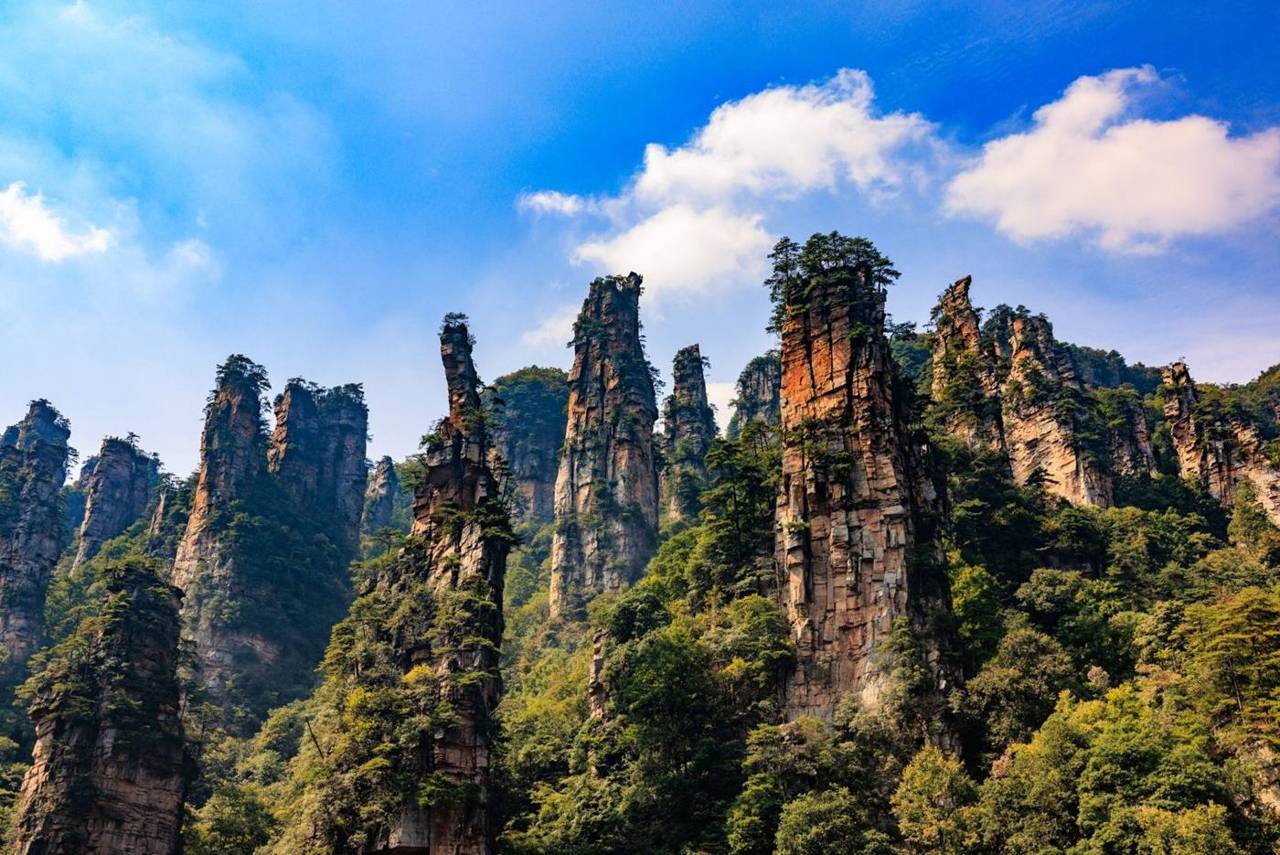
The sandstone pillars that inspired Avatar, Heaven's Gate on Tianmen Mountain and the ancient stilt town of Fenghuang.
 9 daysEasy
Sichuan: pandas and Jiuzhaigou
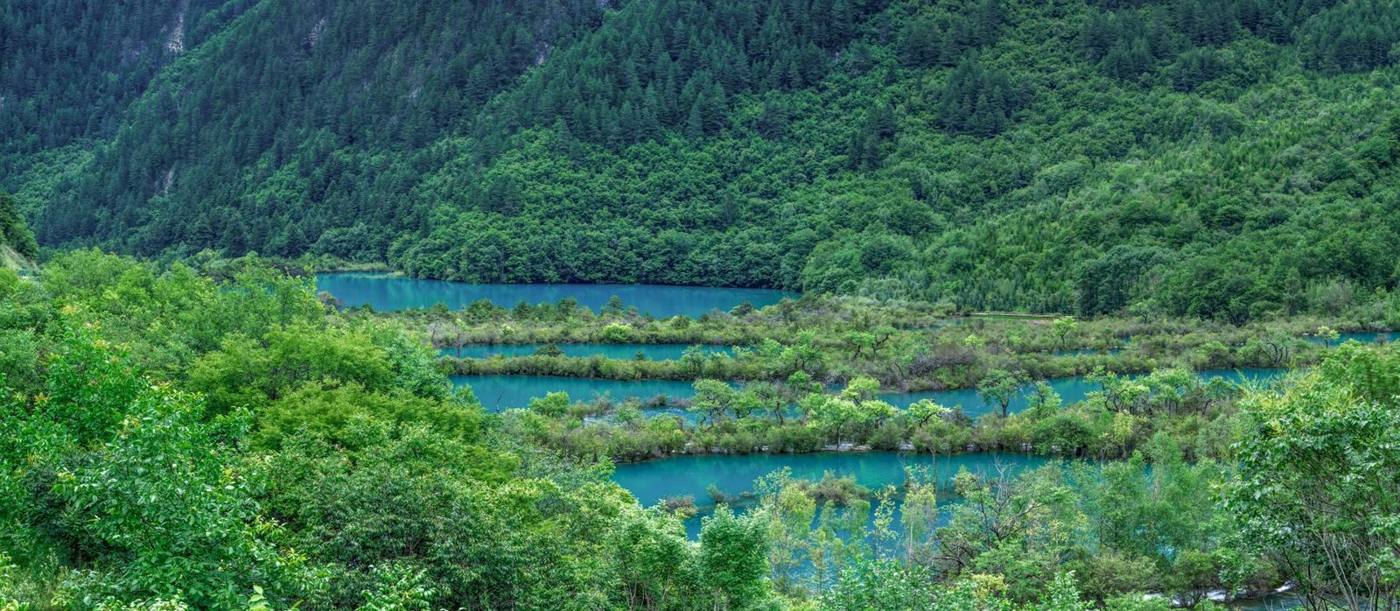
The giant pandas of Chengdu, the Leshan Giant Buddha, sacred Mount Emei and the turquoise lakes of the Jiuzhaigou valley.
 10 daysChallenging
Tibet: from Lhasa to Everest
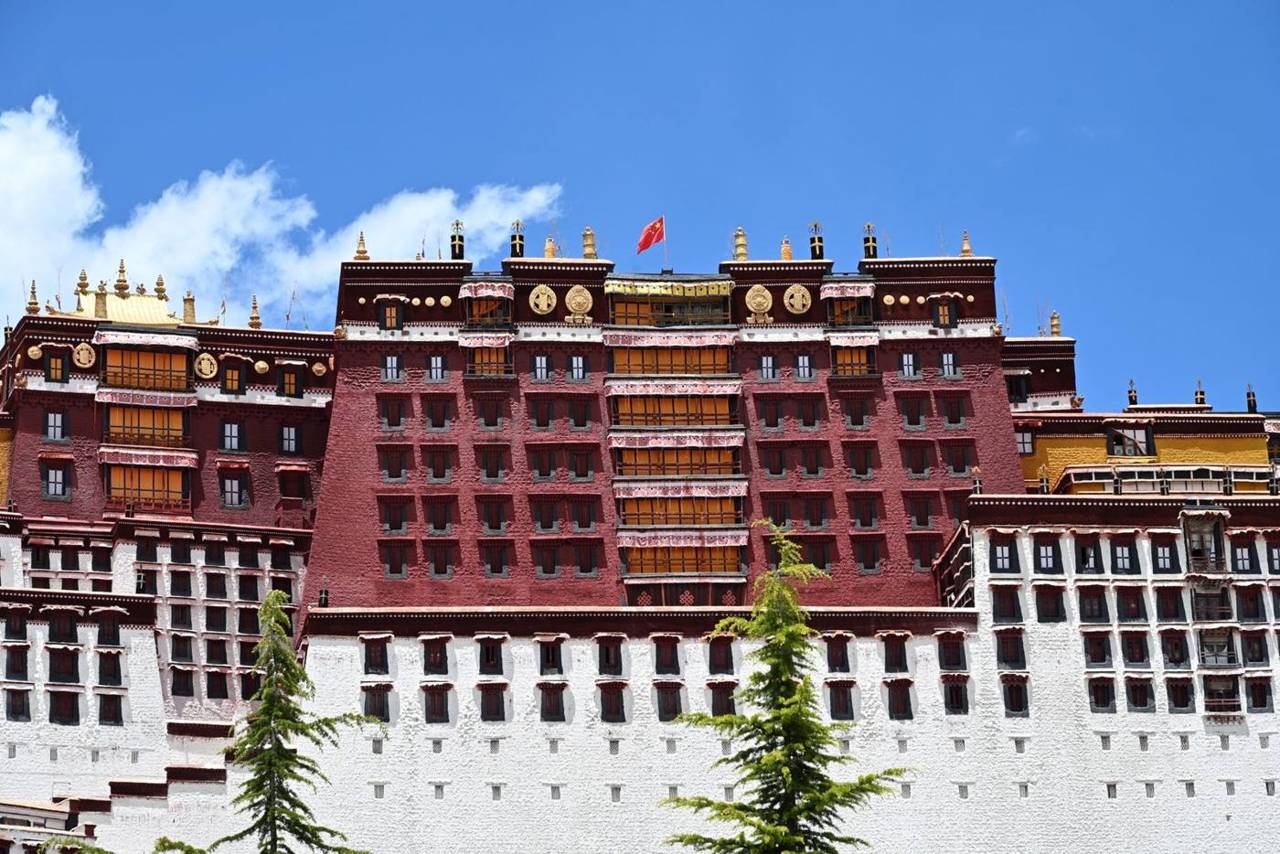
The Potala and Jokhang in Lhasa, Lake Yamdrok, the monasteries of Gyantse and Shigatse and the north face of Everest from Rongbuk.