 Indonesia
More than 17,000 islands: volcanoes, temples, Komodo dragons and the richest seas in the world.
Places not to miss
Bali
Rice terraces, temples and Ubud.
Borobudur
The largest Buddhist temple.
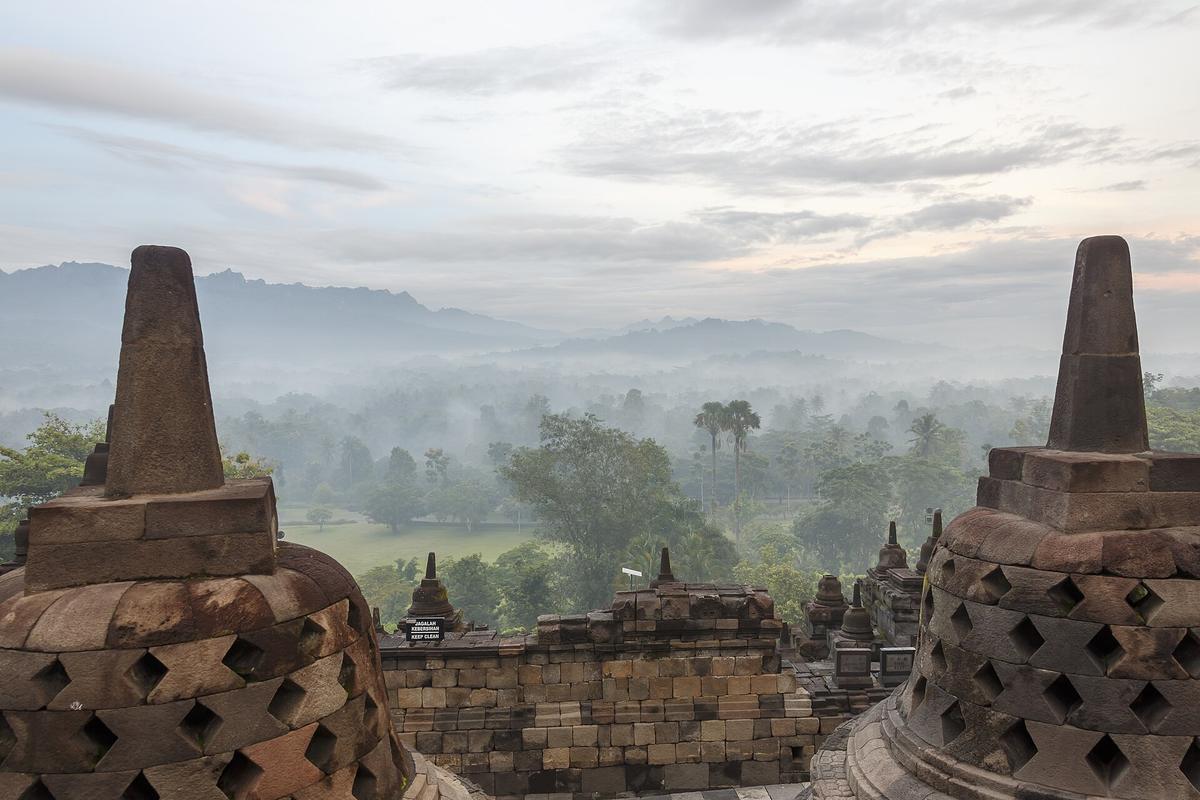
Photo: CEphoto, Uwe Aranas, CC BY-SA 3.0 Komodo
Dragons and Pink Beach.
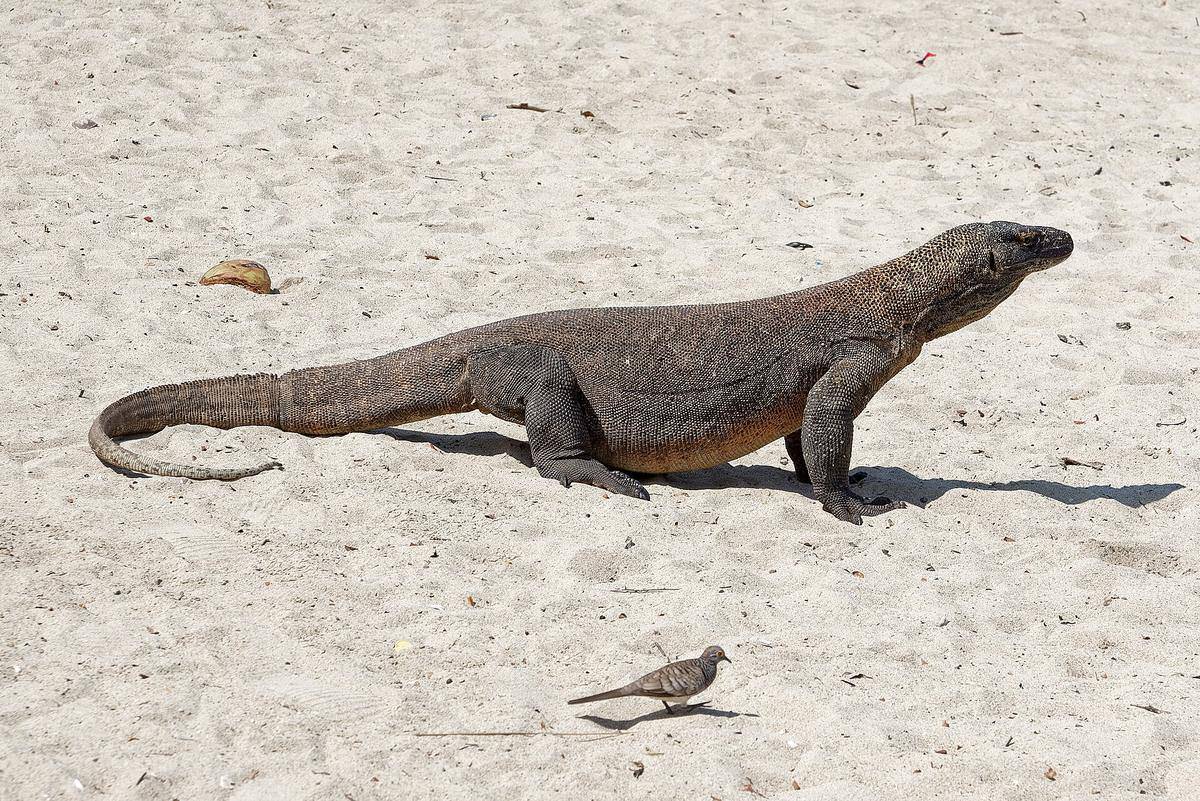
Photo: Jakub Hałun, CC BY 4.0 Raja Ampat
A diver's paradise.
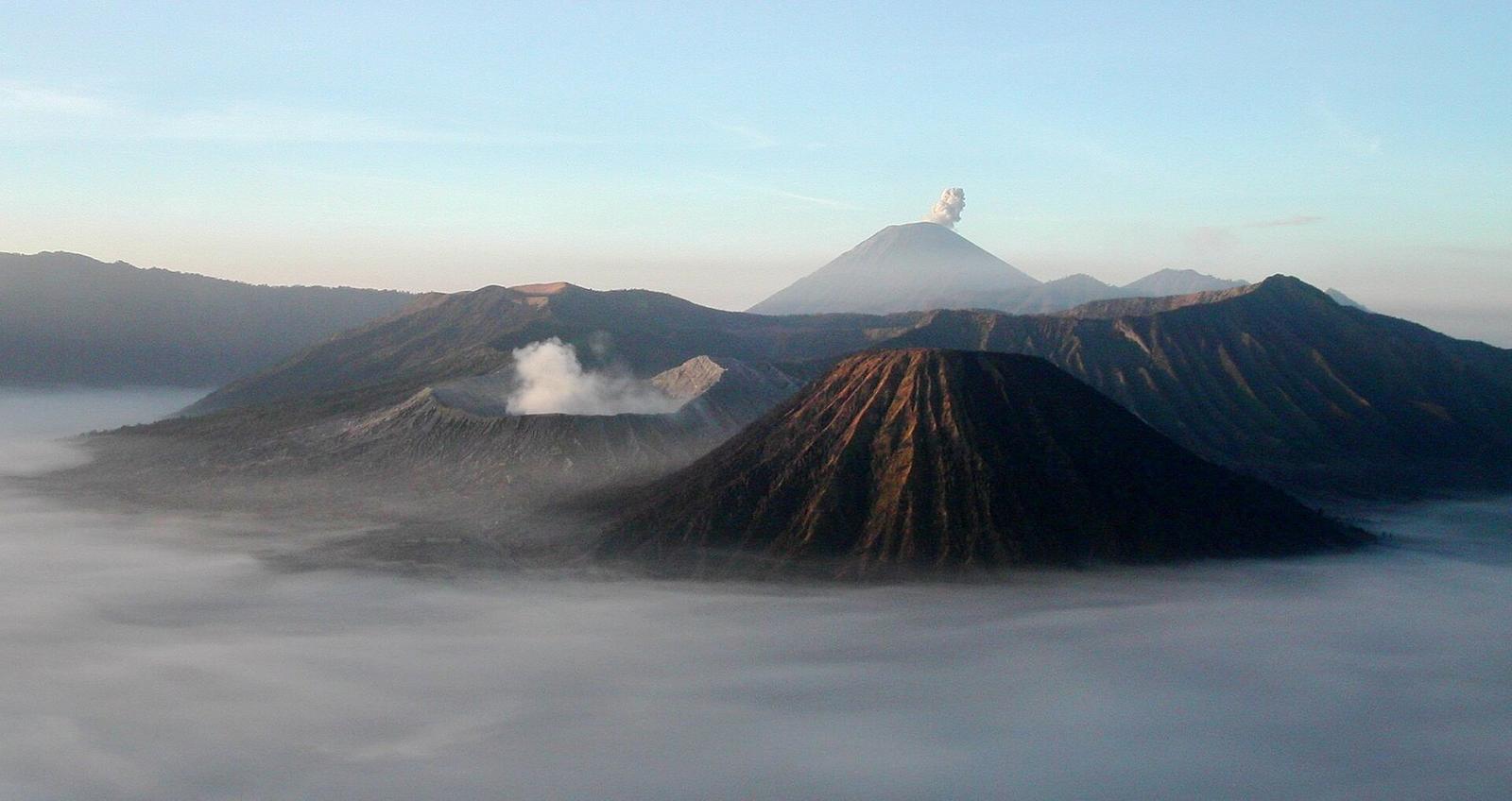
Bromo
A volcano at dawn.
Gili and Lombok
Quiet islands.
Nature and wildlife
Komodo dragons, orangutans, mantas.
Food and drink
Nasi goreng, rendang, satay.
When to go
April-October.
Did you know?
Indonesia has around 130 active volcanoes.
Itineraries in Indonesia
Bali beyond the beaches
The rice terraces of Ubud and Sidemen, water temples, the lakes of Munduk and the quiet coast of Amed.
Bali, Nusa Penida and the Gili Islands
A few days in Ubud, the cliffs of Nusa Penida with its manta rays, and the Gili closed to cars Islands with turtles close to shore.
Java: Borobudur, Bromo and Ijen
The temples of Borobudur and Prambanan, sunrise over Mount Bromo and the acid lake of Ijen, ending with the ferry to Bali.
Komodo and Flores by boat
Two nights aboard among the Komodo dragons, the view from Padar and the manta rays, then the coloured lakes of Kelimutu.
Raja Ampat, the richest sea on earth
Karst islands, the reef with the greatest variety of species on the planet and birds of paradise at dawn.
Sumatra: orangutans and Lake Toba
Two days on foot in the Bukit Lawang jungle with orangutans, the Berastagi highlands and the great volcanic lake of the Batak people.
Sulawesi: Tana Toraja and the Togian Islands
The boat-shaped houses and cliff tombs of the Toraja, then the Togian Islands, among the most remote and unspoilt in Indonesia.
Borneo by klotok in Tanjung Puting
Three days on a wooden boat along the Sekonyer River, sleeping on deck, among orangutans, proboscis monkeys and fireflies.
Lombok: trekking on Rinjani
Three days on Indonesia's second-highest volcano: the crater rim, Segara Anak lake and the 3,726-metre summit at dawn.
Great Indonesia: Java, Bali and Flores
The complete trip for a first visit: Borobudur and Bromo, Bali's rice terraces and the Komodo dragons.
The Banda Islands
The Spice Islands of the Moluccas, over which the Dutch and English went to war: nutmeg plantations beneath giant canarium trees, the Dutch forts of Banda Neira, the Gunung Api volcano and pristine reefs with coral walls dropping sharply a few metres from shore.
Flores overland: Wae Rebo and Bajawa
Inland Flores away from the Komodo boats: the spiderweb rice fields of Cancar, the village of Wae Rebo with its conical houses reached on foot through the forest, the megalithic Ngada villages of Bena around Bajawa, hot springs and the three coloured lakes of Kelimutu.
Sumba: megalithic villages and the Pasola
An island outside time, where the Marapu religion is still practised: villages with tall pointed roofs and stone tombs, ikat weavers, wild beaches such as Weekuri and Mandorak and, between February and March, the Pasola, a ritual battle on horseback with wooden spears.
North Sulawesi: Bunaken and Lembeh
Two different kinds of diving in a week: the vertical walls of Bunaken marine park, full of turtles and fish, and the Lembeh Strait, the world capital of muck diving, with strange creatures on black sand; on land, the tarsiers and black macaques of Tangkoko reserve.
Wakatobi
An archipelago in south-east Sulawesi, a national marine park and UNESCO biosphere reserve: some of Indonesia's most pristine coral reefs, clear water, Bajau villages built over the sea and almost empty beaches.
Derawan and Kakaban
The islands off eastern Borneo: green turtles grazing seagrass a few metres from the Derawan jetties, the inland lake of Kakaban with stingless jellyfish you can swim among, the manta rays of Sangalaki and the Maratua lagoon.
North and west Bali: Menjangan and Pemuteran
Quiet Bali, far from the crowded south: the village of Pemuteran with its Biorock artificial reef project, snorkelling and diving on the walls of Menjangan island in West Bali National Park, temples by the sea and the Munduk waterfalls in the hills.
Central Java: Yogyakarta, Solo and Dieng
Java's cultural heart beyond Borobudur: the sultan's palace and batik of Yogyakarta, the two royal palaces and markets of Solo, the temples of Sukuh and Cetho on the slopes of Mount Lawu, and the Dieng plateau with the island's oldest Hindu temples, coloured lakes and fumaroles.
West Sumatra: Bukittinggi and Harau
The land of the Minangkabau, a matrilineal society with buffalo-horn roofed houses: Bukittinggi above the Sianok canyon, the Harau valley between rock walls and rice fields, the volcanic lake of Maninjau, Pagaruyung palace and Padang cooking, with rendang.
Belitung
An island between Sumatra and Borneo, an hour's flight from Jakarta, famous for white beaches with huge polished granite boulders, calm clear water, islets reached by boat and the Dutch lighthouse of Lengkuas.
Practical guide to Indonesia
- Documents
- EU citizens need a visa: on arrival it costs 500,000 rupiah and lasts 30 days, extendable once, or apply online before departure on the official immigration website (evisa.imigrasi.go.id). Your passport must have at least six months' validity. Visitors to Bali also pay the island's tourist levy, 150,000 rupiah per person, on the official website or app (Love Bali).
- Safety
- The tourist areas of Bali, Java and Lombok are busy and generally calm. The main risks are natural: active volcanoes such as Bromo, Ijen, Merapi and Agung, which may close on alert; earthquakes and tsunamis; strong currents at sea. Several governments advise against the Papua regions. Drug penalties are extremely severe, up to the death penalty. Official advice: GOV.UK.
- Getting around
- Between islands you fly or take the ferry. In Java trains are comfortable and punctual, with tickets on the official railways app. In Bali most travellers use a private driver by the day or ride-hailing apps, because public transport is scarce and traffic in the south is heavy. For volcano trips you need jeeps and local guides.
- Verified costs
- We do not give a single daily figure. Certain costs: visa on arrival 500,000 rupiah (evisa.imigrasi.go.id); Bali tourist levy 150,000 rupiah (Love Bali). Tickets for Borobudur and Prambanan, and the limited climb on Borobudur, are sold on the official temples website; prices for foreigners change often, so check before you travel.
Climate month by month
Average minimum and maximum temperatures in Bali and Jakarta, plus average rainfall in Bali. The heat is constant all year; rain makes the difference, with the dry season from April to October. We found no reliable data for Yogyakarta.
- January
- Bali 25 / 31 °C · Jakarta 24 / 31 °C · Bali rain 350 mm
- February
- Bali 25 / 31 °C · Jakarta 24 / 30 °C · Bali rain 280 mm
- March
- Bali 25 / 31 °C · Jakarta 24 / 32 °C · Bali rain 215 mm
- April
- Bali 25 / 31 °C · Jakarta 24 / 32 °C · Bali rain 90 mm
- May
- Bali 24 / 31 °C · Jakarta 24 / 33 °C · Bali rain 75 mm
- June
- Bali 24 / 30 °C · Jakarta 24 / 32 °C · Bali rain 70 mm
- July
- Bali 24 / 29 °C · Jakarta 23 / 32 °C · Bali rain 50 mm
- August
- Bali 23 / 29 °C · Jakarta 23 / 33 °C · Bali rain 15 mm
- September
- Bali 24 / 30 °C · Jakarta 24 / 33 °C · Bali rain 40 mm
- October
- Bali 24 / 31 °C · Jakarta 24 / 33 °C · Bali rain 90 mm
- November
- Bali 25 / 32 °C · Jakarta 24 / 32 °C · Bali rain 150 mm
- December
- Bali 25 / 31 °C · Jakarta 24 / 32 °C · Bali rain 290 mm
Source: Climats et Voyages (Bali 1991-2020, Jakarta 1991-2006; for rainfall the period is not stated). Data and prices checked in November 2026.
Where to go and where not to
There are no particular warnings beyond normal precautions; before booking, always check up-to-date official travel advice, because the situation can change.