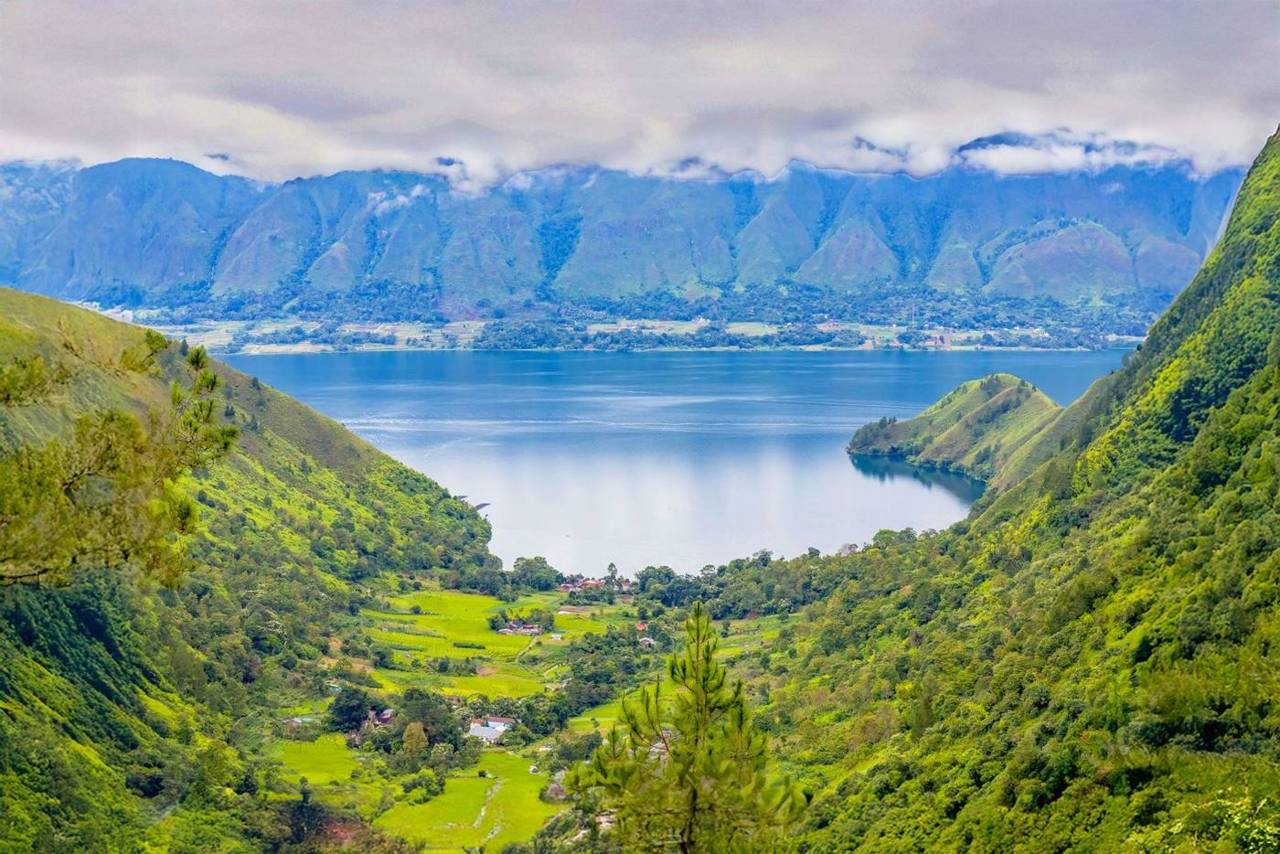
Sumatra: orangutans and Lake Toba
Two days on foot in the Bukit Lawang jungle with orangutans, the Berastagi highlands and the great volcanic lake of the Batak people.
- Medan
- Bukit Lawang
- Berastagi
- Sibayak
- Lake Toba
- Samosir
Day by day
- Day 1
Arrival in Medan and the road to Bukit Lawang
This trip takes you to northern Sumatra, the large Indonesian island covered in rainforest and volcanoes: orangutans in the jungle of Gunung Leuser park, the markets and volcano of Berastagi, and Lake Toba, the largest volcanic lake in the world, with Samosir island and the villages of the Batak people.
Before you leave: to enter Indonesia, Italian citizens can get a visa on arrival, which costs 500,000 rupiah; other nationalities should check their own rules. Talk to your doctor about vaccinations and malaria prophylaxis for forest areas.
You fly into Kualanamu airport near Medan, usually via Jakarta, Kuala Lumpur or Singapore. Medan is a big, busy city: it is best to move on straight away.
A car with driver, booked in advance, takes you to Bukit Lawang, about three or four hours by road, through oil palm and rubber plantations. Bukit Lawang is a village on the banks of the Bahorok river, on the edge of the Gunung Leuser National Park forest, with wooden houses and simple lodgings between jungle and water.
In the evening listen to the sounds of the forest: cicadas, birds and sometimes the call of gibbons.
Sleep in Bukit Lawang.
Practical tip: the driest period is June to September, but in Sumatra it can rain all year. Bring a light waterproof jacket and water sandals.
- Day 2
Jungle trekking in Gunung Leuser
Today you enter Gunung Leuser National Park, part of the tropical rainforests of Sumatra, a UNESCO site. It is one of the last places where orangutans, tigers, elephants and Sumatran rhinos live together, although tigers, elephants and rhinos are extremely rare to see.
You may enter the park only with an authorised guide and a park permit. Arrange your trek with a registered village guide and check what is included and the price.
The path climbs and drops through the forest on steep, muddy, slippery ground, among huge trees, lianas and roots. The guide looks for Sumatran orangutans, a critically endangered species. Many orangutans around Bukit Lawang are semi wild, born from animals released by an old rehabilitation centre, and come close to people; others are fully wild. You see mothers with young moving through the trees, eating fruit and building nests of branches.
Important rules: stay at least ten metres away, never feed the orangutans, do not touch them, do not use flash. Human food and human diseases can kill them. If a guide offers food to the animals to bring them closer, refuse.
You also see macaques, Thomas's leaf monkeys, hornbills and monitor lizards.
In the evening sleep in a forest camp under a tarpaulin near the river, with dinner cooked by the guide.
Sleep in the jungle camp.
Practical tip: wear long socks against leeches and shoes with a good grip. The trail is tiring.
- Day 3
The jungle and tubing back down the river
When you wake, the forest is full of sounds: gibbons singing, birds, insects. After breakfast at camp, swim in a natural pool in the river near the camp, or walk with the guide to a small waterfall.
With a little luck, in the early hours you see other animals passing along the river or in the trees: otters, monitor lizards, monkeys. The guide explains the forest plants, the medicinal and poisonous ones, rubber and durian trees.
In mid morning the return to the village begins in a fun way: on a raft made of lorry inner tubes tied together, you float down the Bahorok river through rapids and calm stretches, between walls of jungle, to Bukit Lawang. Keep important things in a dry bag: you will get wet.
In the afternoon rest in the village. Walk along the river, cross the suspension bridge and watch women washing clothes and children playing in the water.
If you want to help the community, ask which local projects support the protection of the forest and orangutans.
In the evening have dinner in the village with Sumatran dishes: nasi goreng, fried rice, rendang, beef slow cooked in coconut milk and spices, and tropical fruit.
Sleep in Bukit Lawang.
Practical tip: on the tubing wear shoes that can get wet and keep your phone in a waterproof pouch.
- Day 4
Berastagi and the fruit markets
In the morning leave Bukit Lawang and drive south, about five hours, via Medan and up into the mountains to Berastagi, a town at about one thousand three hundred metres on the Karo Batak highlands, with a cool climate, between two active volcanoes, Sibayak and Sinabung.
Berastagi is the garden of northern Sumatra: around the town are vegetable fields, orchards and flower greenhouses. Visit the fruit market, full of tropical and mountain fruit: passion fruit, mangosteens, salak, the snake skin fruit, mandarins, avocados, rambutans and durian, with its overpowering smell.
In the afternoon visit one of the traditional Karo villages, such as Lingga or Dokan, with large multi family wooden houses on stilts, with very high roofs shaped like buffalo horns and thatched with palm fibre. Some are more than a hundred years old. Ask a local guide to accompany you and explain life in the longhouses.
From Berastagi, on a clear day, you see Sinabung, a volcano that woke in 2010 and has erupted many times since: villages around it have been evacuated and the area near the crater is closed. Check the latest advice.
In the evening try Karo food at the evening market stalls.
Sleep in Berastagi.
Practical tip: Berastagi is cool in the evening. Bring a sweatshirt.
- Day 5
Sunrise on the Sibayak volcano
Wake very early, around four, to climb the Sibayak volcano, about two thousand two hundred metres, and watch the sunrise from the crater rim.
With a local guide, drive to the start of the trail, then walk for about an hour and a half or two, first on a broken concrete road, then on a path of rocks and steps, in the dark with a torch. The volcano's flank is full of whistling fumaroles releasing sulphur steam, with yellow and white rocks.
From the crater rim, as the sun rises, you see the surrounding mountains, the Berastagi valley and, if the sky is clear, Sinabung smoking on the horizon. Do not go down into the crater and do not approach the fumaroles: the gases are toxic.
Check the volcano's alert level beforehand and whether the trail is open. Do not climb alone: there have been accidents with hikers lost in fog.
After the descent, bathe in the Semangat Gunung hot springs at the foot of the volcano, with pools of hot sulphurous water, very pleasant after the walk.
In the afternoon rest in Berastagi or visit the Sipiso piso waterfall on the road to Lake Toba, which drops more than a hundred metres into a gorge.
Sleep in Berastagi.
Practical tip: on the crater rim at dawn it is cold and windy. Bring a fleece and a jacket.
- Day 6
To Lake Toba and Samosir island
In the morning leave Berastagi and descend to Lake Toba, about four hours, passing the Sipiso piso waterfall if you did not see it yesterday.
Lake Toba is the largest volcanic lake in the world, about a hundred kilometres long, born from the enormous eruption of a supervolcano about seventy four thousand years ago, one of the largest in the Earth's history. In the middle of the lake is Samosir island, almost as large as Singapore, formed by the uplift of the caldera floor.
You reach Parapat on the east shore and take the ferry to Samosir, about an hour, to Tuk Tuk, a peninsula on the island full of simple lodgings facing the lake, with gardens and jetties for swimming.
In the afternoon relax on the shore and swim in the lake: the water is clean and cool, at about nine hundred metres altitude.
Samosir is the land of the Toba Batak, a people with their own culture, today largely Christian, with churches in every village, but with ancient traditions still alive, such as music, dance and large family tombs.
In the evening, in many places, you hear Batak songs with guitars, very melodic, on festive nights.
Sleep in Tuk Tuk on Samosir island.
Practical tip: there are not ATMs everywhere on Samosir. Bring enough cash in rupiah for your days on the island.
- Day 7
The Batak villages of Samosir
Today you explore the Batak villages around Tuk Tuk by scooter or bicycle, the best way to get around the island.
The first stop is Ambarita, with an ancient Batak council site: stone chairs and tables under a large tree, where village chiefs met to judge those who had broken the law. A local guide tells the story, including its grimmer parts.
Then go to Tomok, with the stone tomb of King Sidabutar, a large sarcophagus carved with the head of a chief and guardian figures, under a sacred tree. The street leading to the tombs is lined with craft stalls and ulos, traditional Batak textiles given at weddings, births and funerals.
In the afternoon visit Simanindo, at the island's northern tip, with a Batak king's house turned into a museum and a space where traditional dances are sometimes held with the sigale gale, a life size wooden puppet that dances in honour of the dead. Check times and prices.
Along the island's roads you see traditional Batak houses, with high boat shaped roofs and façades decorated in red, white and black, and large colourful concrete family tombs in the fields.
Sleep in Tuk Tuk.
Practical tip: ride the scooter carefully. The roads have potholes, dogs and buffalo.
- Day 8
Cycling the Samosir plateau
Today you climb onto the plateau in the centre of Samosir, an area of hills, grassland, small lakes and farming villages, very different from the coast.
If you are fit, you can cycle or walk up from Tuk Tuk or Pangururan on the west coast. The climb is steep; alternatively, take a motorbike taxi or a car. On the plateau there are rice fields, coffee and onion fields, pines and buffalo, and a wide view of the lake and surrounding mountains.
Stop at Lake Sidihoni, a small lake on the island, itself in the middle of the great lake: a lake on an island in a lake.
In the afternoon descend to Pangururan, the island's main town, linked to the mainland by a bridge, and bathe in the hot springs on the slope of Mount Pusuk Buhit, the sacred mountain from which, by tradition, all Batak descend. The hot pools look out over the lake.
In the evening return to Tuk Tuk.
Try Batak food: grilled lake fish with arsik, a yellow spice sauce, and andaliman, a local pepper that makes your tongue tingle. Many traditional Batak dishes contain pork or dog meat: always ask what is in the dish if you have preferences.
Sleep in Tuk Tuk.
Practical tip: on the plateau the sun is strong and the cool air is deceptive. Use sunscreen.
- Day 9
A day on the lake
Today is a quiet day on Lake Toba, to rest before the journey home.
In the morning swim in the lake, or take a kayak and paddle along the Tuk Tuk shore, looking at the wooden houses, fishermen in canoes and the mountains plunging steeply into the water.
If you want to move, walk the trails above Tuk Tuk, among fields and villages, to a viewpoint overlooking the whole peninsula and the lake, or visit the village of Huta Bolon, with some royal Batak houses.
In the afternoon look for a cooking class or a family that teaches Batak and Indonesian dishes, or a workshop where ulos are woven on hand looms. Buying directly from craftspeople helps families.
At sunset watch the sun go down behind the mountains of the west shore, as the lake turns silver.
In the evening, if it is a festive day, listen to Batak music, with guitars and harmonised singing, very moving.
Pack for tomorrow.
Sleep in Tuk Tuk.
Practical tip: check tomorrow's ferry and flight times. From Silangit airport, near the lake, there are flights to Jakarta. The morning ferry is the safest choice, and in the high season it is worth asking your lodging to confirm the times the evening before.
- Day 10
Return and departure
On the last day you leave Samosir. There are two ways back.
The most convenient is Silangit airport, on the south shore of the lake, about an hour and a half from Parapat, with direct flights to Jakarta, from where intercontinental flights leave. Take the ferry from Tuk Tuk to Parapat, then a car to the airport. Check the timetable: there are few flights.
Alternatively, take the ferry to Parapat and then a car or minibus to Kualanamu airport near Medan, about five or six hours by road, with more international flights.
Plan your timing carefully and keep a margin: Sumatran roads are slow and traffic near Medan is heavy.
Before leaving buy something to take home: a hand woven ulos, Sumatran coffee, among the most prized in the world, cinnamon, spices, or a small carved Batak wooden object.
This trip shows a wild and welcoming Sumatra: the jungle with its orangutans, the volcanoes and markets of the highlands, the great lake and Batak culture, with its houses, music and tombs.
Practical tip: if your intercontinental flight leaves from Jakarta, arrive the day before. Indonesian domestic flights can be delayed, and a missed connection is expensive to change. A night near the airport is cheap insurance.
The easiest place in the world to see wild orangutans, together with one of the largest lakes in Asia. Roads are slow and lodging is simple. Choose a licensed guide who does not feed the animals: it is forbidden and harmful to them.
Before you go
- Documents and visa
- Passport with at least six months' validity. Visa on arrival 500,000 rupiah for 30 days, extendable once, or online on the official immigration website. In Bali you also pay the 150,000 rupiah tourist levy.
- Health and vaccines
- No compulsory vaccines arriving from Europe. Protect yourself against mosquitoes because of dengue; Bali has rabies, so keep away from dogs and monkeys. The eastern regions carry malaria risk: ask your doctor. Emergencies: 110 police, 112 general number.
- Money and payments
- Indonesian rupiah. Cards work in hotels and shops in tourist areas; QR payments are widespread; markets and villages need cash.
- Power sockets
- Types C and F, 230 volts: the same round-pin sockets as much of Europe.
- Time zone
- The country has three time zones. Java is UTC+7, Bali UTC+8, with no daylight saving time.
- Safety
- Tourist areas are generally calm. The United States rates Indonesia level 2 and the Papua regions level 4. Active volcanoes may close on alert. Very severe drug penalties. Official advice: GOV.UK.
Information checked in November 2026 for Italian and EU citizens. Rules change: always check before you travel.
Variations
In 7 days: Bukit Lawang with one day of trekking, Berastagi and two nights at Lake Toba.
In 14 days: add Tangkahan park with its elephants and a few days in Bukittinggi, in West Sumatra.
Frequently asked questions
Do I need a visa?
Italian citizens can get a visa on arrival in Indonesia, which costs 500,000 rupiah. Other nationalities should check their own rules. Ask your doctor about vaccinations and malaria in forest areas.
Will I definitely see orangutans?
At Bukit Lawang the chances are good, but not guaranteed. You enter the park only with an authorised guide. Never feed orangutans and stay at least ten metres away.
When is the best time to go?
June to September, the driest period. But in Sumatra it can rain all year, especially in the forest.
Indicative itinerary written by World Atlas. Before booking, check timetables, seasonal openings, documents and safety.
 15 daysChallenging
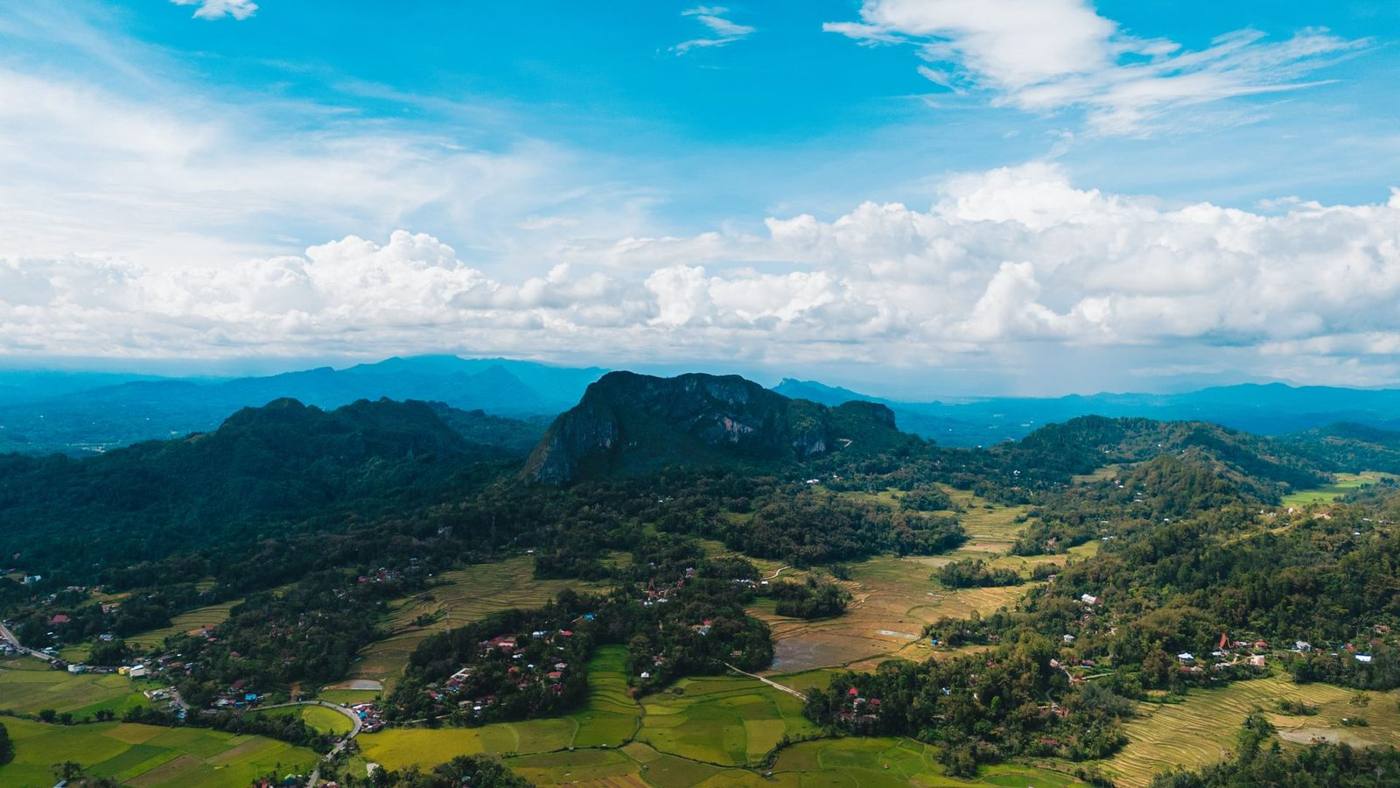
Sulawesi: Tana Toraja and the Togian Islands
The boat-shaped houses and cliff tombs of the Toraja, then the Togian Islands, among the most remote and unspoilt in Indonesia.
 6 daysEasy
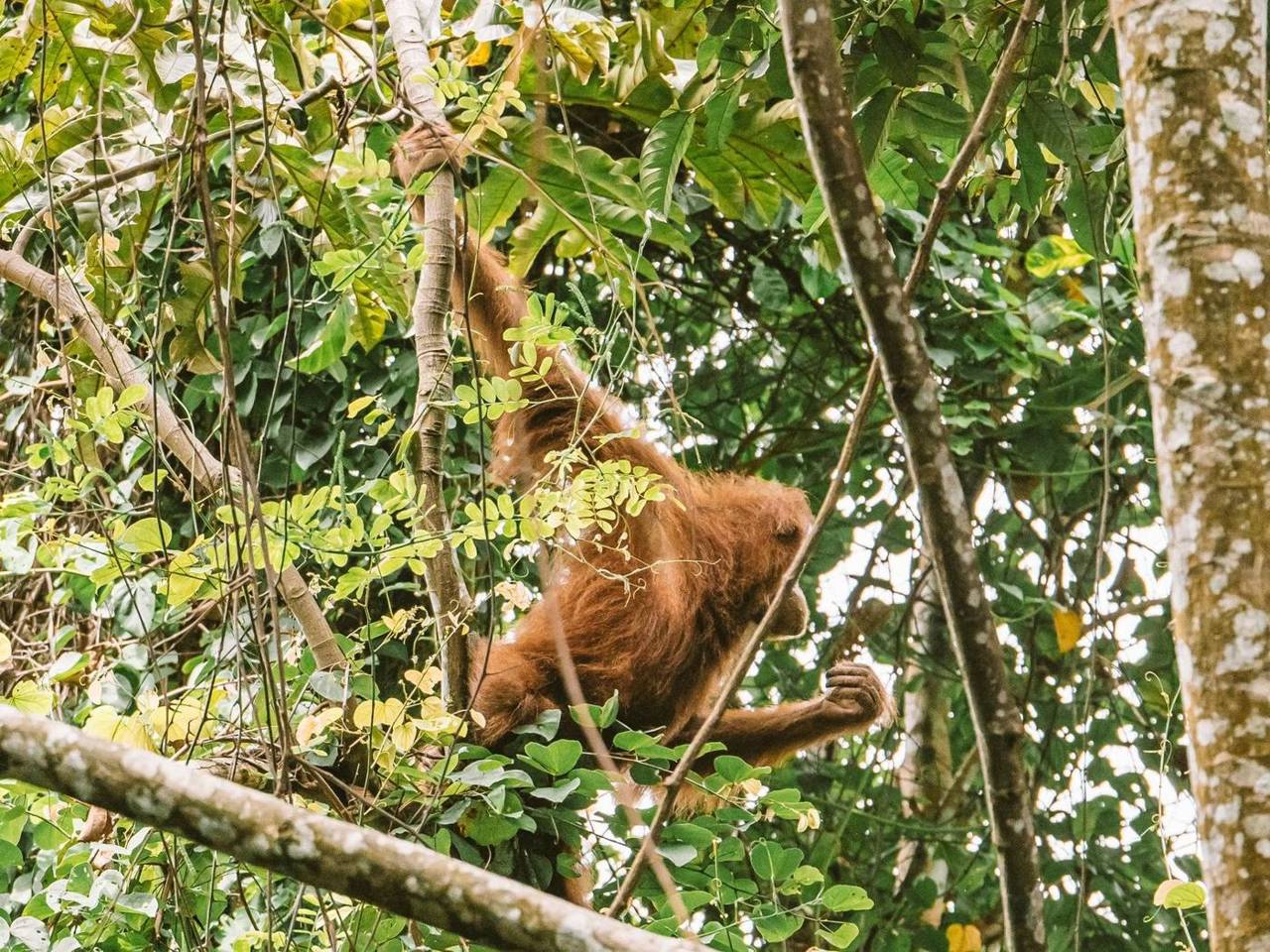
Borneo by klotok in Tanjung Puting
Three days on a wooden boat along the Sekonyer River, sleeping on deck, among orangutans, proboscis monkeys and fireflies.
 7 daysChallenging
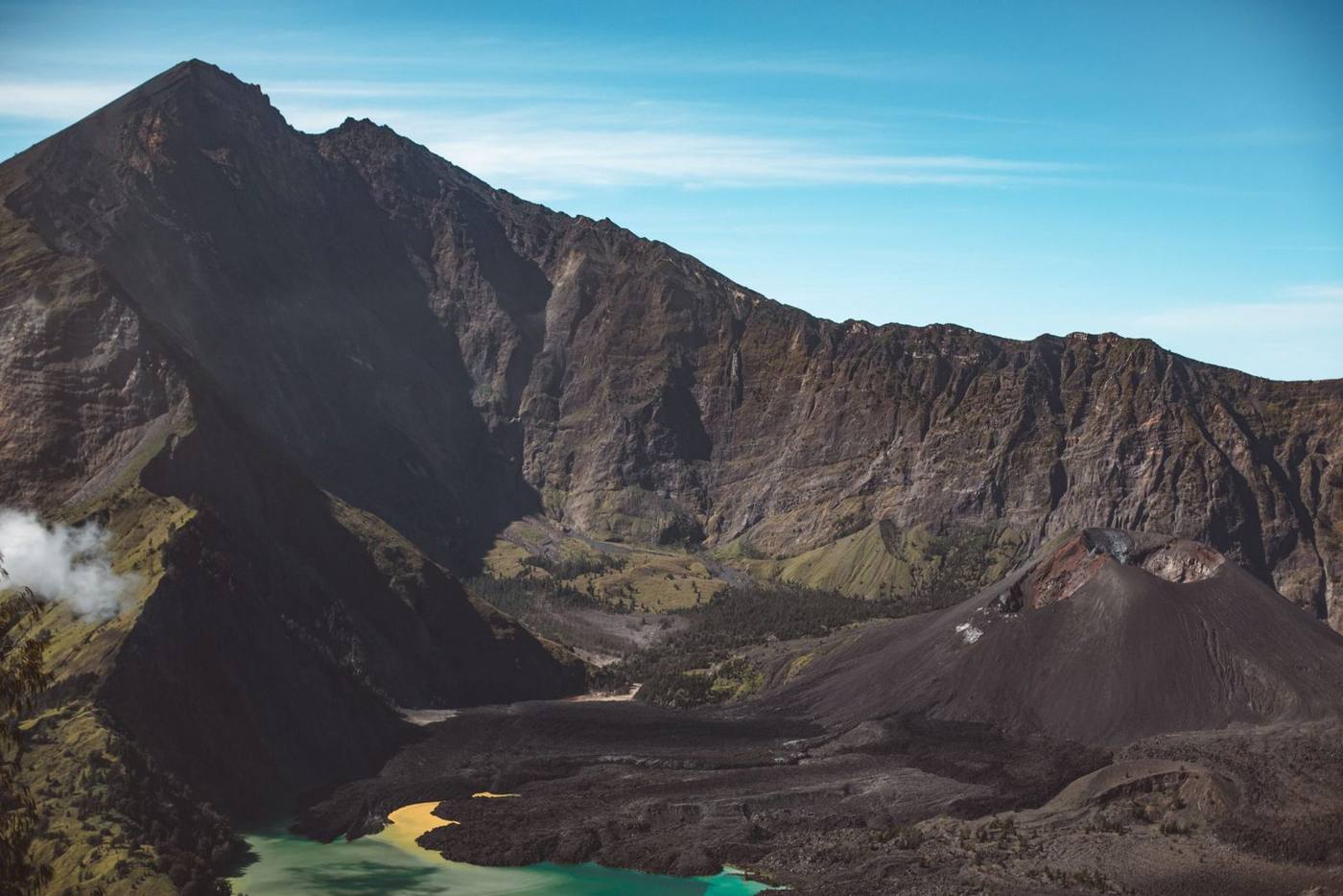
Lombok: trekking on Rinjani
Three days on Indonesia's second-highest volcano: the crater rim, Segara Anak lake and the 3,726-metre summit at dawn.