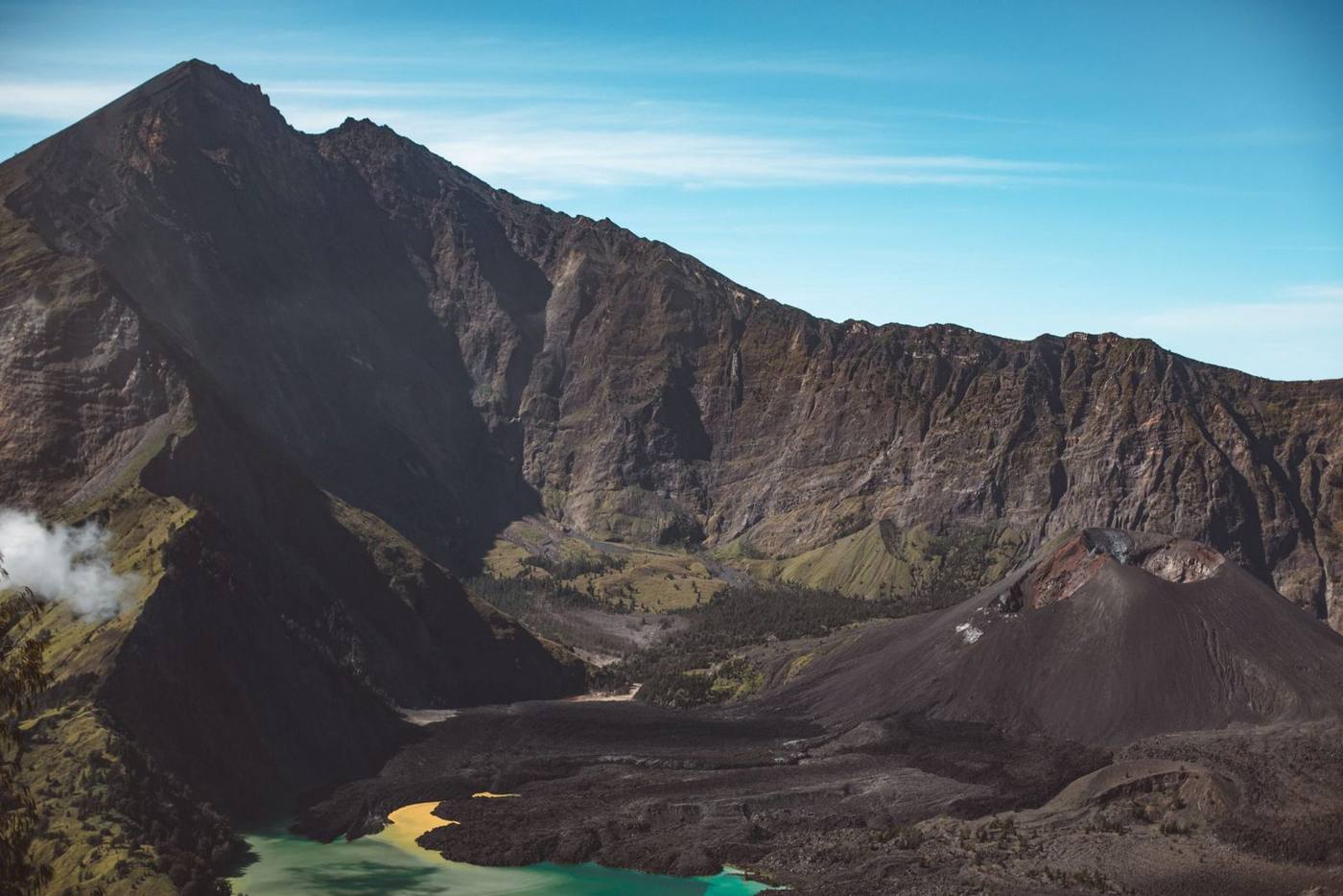
Lombok: trekking on Rinjani
Three days on Indonesia's second-highest volcano: the crater rim, Segara Anak lake and the 3,726-metre summit at dawn.
- Mataram
- Senaru
- Sembalun
- Crater rim
- Segara Anak
- Rinjani summit
- Gili Air
Day by day
- Day 1
Arrival in Lombok, Senaru and the Sendang Gile and Tiu Kelep falls
This trip is devoted to one of the finest and toughest treks in South East Asia: the climb of Rinjani, the great volcano of Lombok, about 3,700 metres high, the second highest volcano in Indonesia. Inside its huge crater lies a green and blue lake, Segara Anak, with a small active volcano rising from the water. After the trek you rest on the Gili islands, with white sand and clear sea.
You fly into Lombok airport from Jakarta, Bali and other cities. You can also come by fast boat from Bali. Italian citizens need a visa, available on arrival at the airport for 500,000 rupiah, or online before departure. Other nationalities should check their own rules.
On the first day go to Senaru, a village on the volcano's northern slope, about two and a half hours by road from the airport. It is one of the start and end points of the trek.
In the afternoon walk to two nearby waterfalls. The first, Sendang Gile, falls from a rock wall in the forest. A slightly longer path, crossing an irrigation channel and a stream, leads to Tiu Kelep, larger, with water pouring from many points into a pool where you can swim.
In the evening, in Senaru, pack your bag for the trek and meet your guide.
Spend the night in Senaru.
Practical tip: the Rinjani trek can only be done with a licensed agency, with a guide and porters, and must be booked. Check the opening period: the park usually closes for some months during the rainy season.
- Day 2
From Sembalun to the crater rim
Early in the morning drive to Sembalun, a village on the volcano's eastern slope, about an hour and a half from Senaru. Here the trek is registered at the park office and you set off.
The first part of the walk crosses a savannah of tall grass, with the volcano ahead, on an almost flat path. Then the climb begins: the path grows steeper and steeper, among sparse trees and dusty earth. The last section, known as the hills of regret, is a series of hard climbs one after another that really test your legs.
During the day the porters, who carry tents, food and cooking gear in baskets hung from a bamboo pole across their shoulders, walk ahead and prepare meals at the stops.
In the late afternoon you reach the camp on the Sembalun crater rim, at about 2,600 metres. The view is extraordinary: below, Segara Anak lake and the small smoking Barujari volcano; ahead, the summit of Rinjani; behind, the sea and, on clear days, Bali's Mount Agung.
At sunset the clouds turn pink beneath you. In the evening it is cold: you eat early and go to bed in the tents.
Spend the night in a tent on the crater rim.
Practical tip: on the crater rim night temperatures drop close to freezing. You need a warm sleeping bag, a padded jacket, a hat, gloves and a head torch. Drink plenty of water on the climb.
- Day 3
Night climb to the summit, sunrise and Segara Anak lake
This is the hardest and most beautiful day. You wake around two in the morning and set off by head torch for the summit of Rinjani, about a thousand metres higher.
The climb follows a narrow ridge on volcanic sand and gravel, where you slide back a little with every step. It is cold and windy. The last part is the most tiring, and you walk slowly, breathing calmly.
You reach the top for sunrise. From the summit, at about 3,700 metres, the view takes in the whole of Lombok, the crater lake, the sea, the Gili islands and Bali, with the sun rising above the clouds. It is one of the finest panoramas in Indonesia.
You go back down to the rim camp for breakfast, then continue down into the crater on a steep, rocky path to the shore of Segara Anak lake, at about two thousand metres. The lake is sacred to the people of Lombok, both Muslim Sasak and Balinese Hindus, who come here on pilgrimage.
Near the lake there are hot springs, where boiling water flows from the rock into natural pools. A soak in the hot pools after the descent is the best rest for your muscles.
Spend the night in a tent near the lake.
Practical tip: the summit climb is the most dangerous part. In 2025 a tourist died after falling from a section near the top. Always follow your guide, do not leave the path and turn back if the weather worsens or you are too tired.
- Day 4
Up to the opposite rim and down through the forest to Senaru
Early in the morning, after breakfast by the lake, you climb the other side of the crater towards the Senaru rim, at about 2,600 metres. The climb is steep, with rocky sections where you also use your hands, but shorter than the previous day's. From the rim you take a last look at the lake and the Barujari volcano.
Then begins the long descent to Senaru, about two thousand metres lower. The path first passes through pines and meadows, then enters tropical forest, ever denser and more humid, with huge moss covered trees, lianas and ferns. You hear birds and sometimes see black langur monkeys and macaques in the branches.
The descent takes several hours and is very hard on the knees. Guides make regular stops, and the porters prepare the trek's last lunch.
In the afternoon you reach the park gate at Senaru, tired but happy. You say goodbye to the team of guides and porters.
In the evening, in Senaru, a hot shower and a real bed feel like luxury.
Spend the night in Senaru.
Practical tip: at the end of the trek it is customary to tip the guide and porters, who do very hard work. Ask your agency how this is organised and bring cash in rupiah. Trekking poles are very useful for the descent.
- Day 5
By boat to Gili Air: rest and sea
Today you leave the mountain for the sea. From Senaru drive down to the port of Bangsal, on Lombok's north west coast, about an hour and a half away. Public boats and fast boats leave from here for the Gili islands, three small coral islands off the coast: Gili Trawangan, Gili Meno and Gili Air.
Gili Air, the closest to Lombok, is a good balance between lively Trawangan and quiet Meno. There are no cars or motorbikes on the islands: you get around on foot, by bike or in small horse drawn carts. The streets are sand, with palm trees, low houses and beach bars.
Once on the island, rest. Your legs will be tired after the trek: this is the day to do nothing. Lie in the shade, swim in the clear sea, eat a plate of grilled fish.
At sunset go to the island's west coast to watch the sun go down behind Bali's Mount Agung.
In the evening have dinner on the beach with your feet in the sand.
Spend the night on Gili Air.
Practical tip: the Gili islands charge a small visitor fee and have some environmental rules: ask on arrival. Lombok is mainly Muslim: in villages and away from the beaches dress respectfully, with shoulders and knees covered.
- Day 6
Snorkelling with turtles around the Gilis
Today spend the day at sea. The Gili islands are surrounded by coral reefs, and sea turtles are very common.
In the morning take a boat trip with snorkelling stops around the three islands. In some spots, especially near Gili Meno and Gili Trawangan, you swim with green and hawksbill turtles, which graze on the seabed and surface to breathe. You also see colourful fish, corals and sometimes small reef sharks. Near Gili Meno there is an installation of underwater statues, now covered in coral.
For certified divers, the dives around the Gilis suit all levels, with walls, pinnacles and wrecks.
In the afternoon walk or cycle around the island in about an hour, among beaches, palms and small villages. Stop at a beach bar for a fresh fruit juice. The north coast is the quietest, with small coves and fishing boats pulled up on the sand.
In the evening, after sunset, look up at the starry sky: with little artificial light, you see many stars on the Gilis.
Spend the night on Gili Air.
Practical tip: there are strong currents between the Gili islands. Snorkel only close to the boat or with a guide, and do not swim from one island to another. Do not touch the turtles or get too close.
- Day 7
Departure from Lombok or Bali
On the last day you leave the Gilis. You have two options.
The first is to return to Lombok by boat to Bangsal or Teluk Nare, then drive to the airport, about two hours away. On the way, if you have time, pass through Senggigi on the west coast, with beaches and Hindu temples by the sea, or a traditional Sasak village in the south of the island, with bamboo and thatch houses and weaving workshops.
The second option is to take a fast boat from the Gilis directly to Bali, arriving in a few hours at Padang Bai or Serangan. From there you reach Bali airport, with many international flights.
Before leaving, take a last walk on the Gili Air beach early in the morning, when fishermen return with their boats and the island is silent. Look for Rinjani on the horizon, if the clouds allow: it is hard to believe you stood on its summit only a few days before.
Practical tip: fast boats between the Gilis, Lombok and Bali are cancelled or delayed in rough seas, especially from June to August. Keep at least one night of margin before your international flight. Choose reputable companies with life jackets for everyone, and do not board if the boat is overcrowded.
One of the finest volcanic treks in Asia, but a hard one: the final climb on loose scree is exhausting and the summit is cold. Licensed guides and porters are needed and now compulsory. The Gilis at the end are the right reward.
Before you go
- Documents and visa
- Passport with at least six months' validity. Visa on arrival 500,000 rupiah for 30 days, extendable once, or online on the official immigration website. In Bali you also pay the 150,000 rupiah tourist levy.
- Health and vaccines
- No compulsory vaccines arriving from Europe. Protect yourself against mosquitoes because of dengue; Bali has rabies, so keep away from dogs and monkeys. The eastern regions carry malaria risk: ask your doctor. Emergencies: 110 police, 112 general number.
- Money and payments
- Indonesian rupiah. Cards work in hotels and shops in tourist areas; QR payments are widespread; markets and villages need cash.
- Power sockets
- Types C and F, 230 volts: the same round-pin sockets as much of Europe.
- Time zone
- The country has three time zones. Java is UTC+7, Bali UTC+8, with no daylight saving time.
- Safety
- Tourist areas are generally calm. The United States rates Indonesia level 2 and the Papua regions level 4. Active volcanoes may close on alert. Very severe drug penalties. Official advice: GOV.UK.
Information checked in November 2026 for Italian and EU citizens. Rules change: always check before you travel.
Variations
Short 2 day trek: only to the Senaru crater rim, with a view of the lake, without climbing to the summit.
In 10 days: add three days in southern Lombok, with the beaches of Kuta and Selong Belanak.
Frequently asked questions
How hard is the trek?
Hard. There are very steep climbs, slippery ground, cold nights and a night climb to the summit. You need good fitness.
When is the best time to go?
April to November, in the dry season. In the rainy season the park usually closes: check the dates.
Can I do it without a guide?
No. The trek can only be done with a licensed agency, with a guide and porters.
Indicative itinerary written by World Atlas. Before booking, check timetables, seasonal openings, documents and safety.
 16 daysModerate
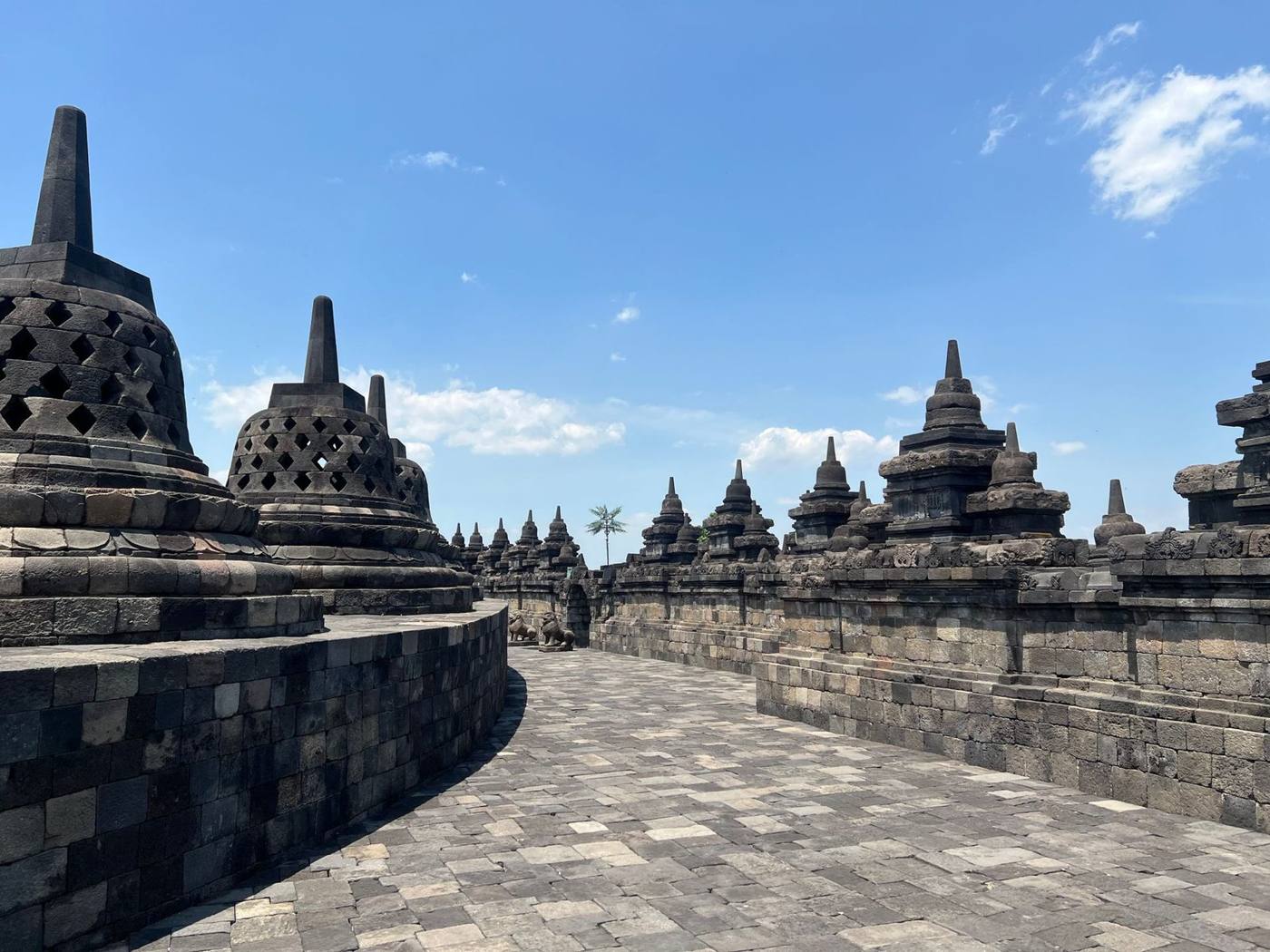
Great Indonesia: Java, Bali and Flores
The complete trip for a first visit: Borobudur and Bromo, Bali's rice terraces and the Komodo dragons.
 7 daysModerate
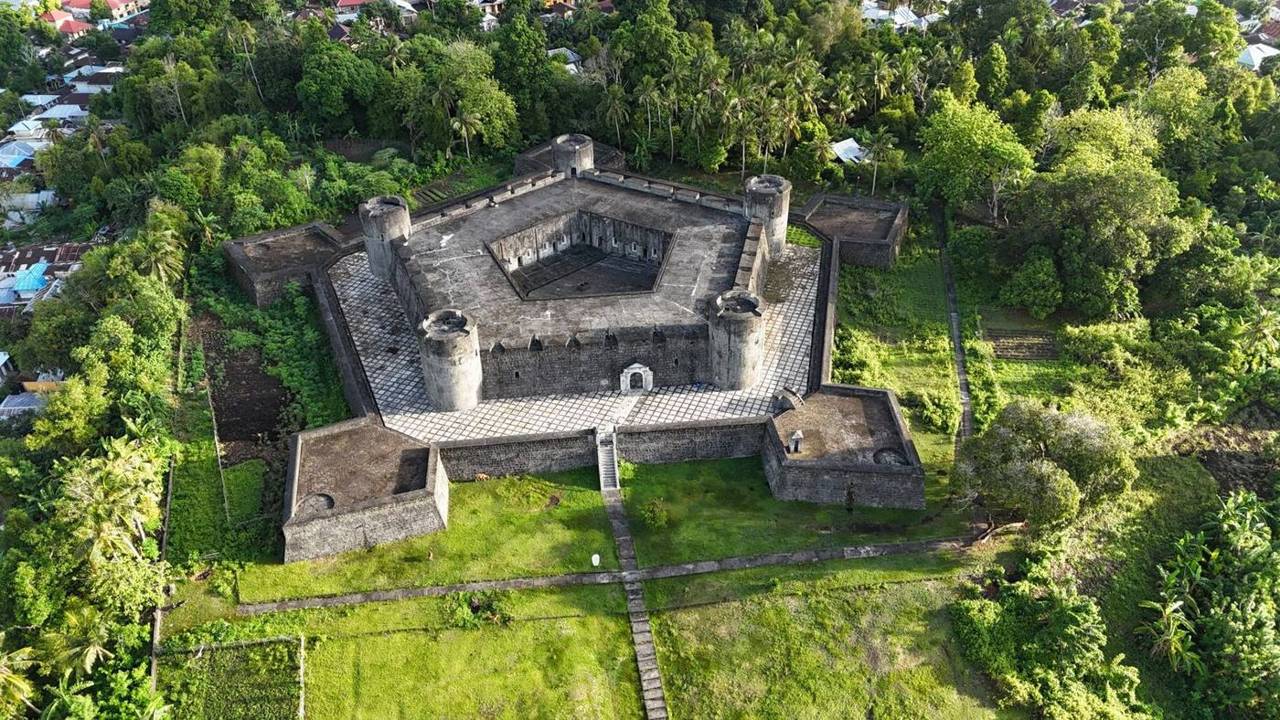
The Banda Islands
The Spice Islands of the Moluccas, over which the Dutch and English went to war: nutmeg plantations beneath giant canarium trees, the Dutch forts of Banda Neira, the Gunung Api volcano and pristine reefs with coral walls dropping sharply a few metres from shore.
 7 daysModerate
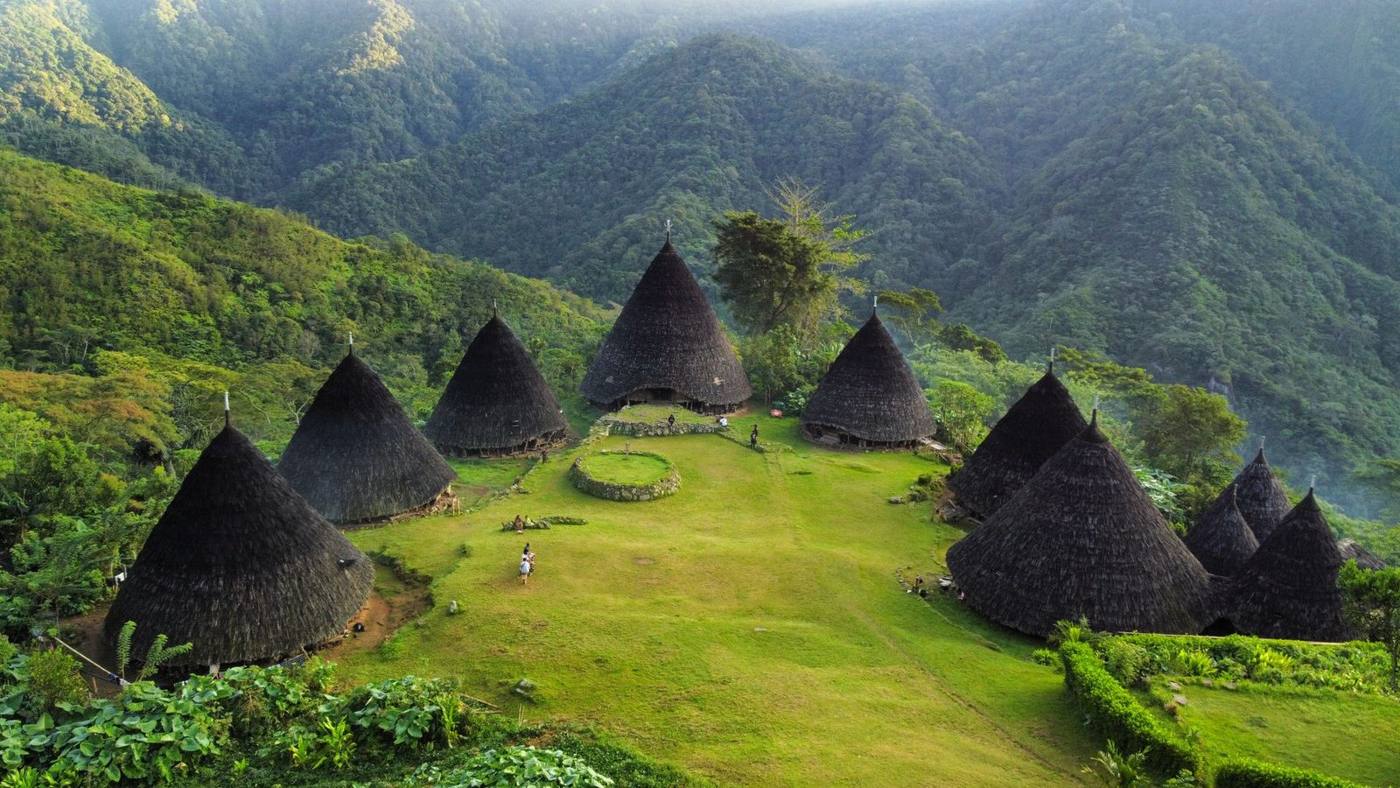
Flores overland: Wae Rebo and Bajawa
Inland Flores away from the Komodo boats: the spiderweb rice fields of Cancar, the village of Wae Rebo with its conical houses reached on foot through the forest, the megalithic Ngada villages of Bena around Bajawa, hot springs and the three coloured lakes of Kelimutu.