Wakatobi
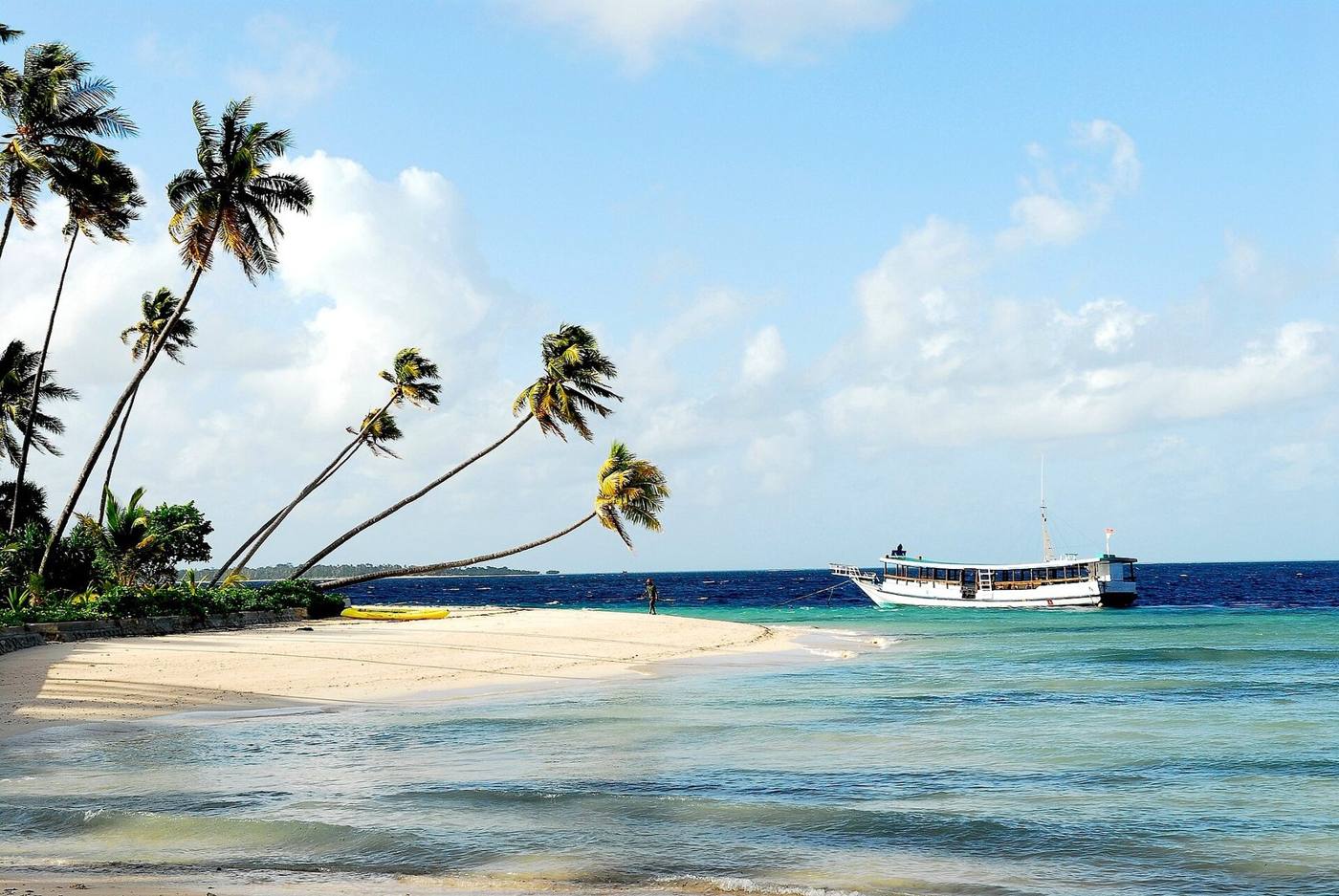
An archipelago in south-east Sulawesi, a national marine park and UNESCO biosphere reserve: some of Indonesia's most pristine coral reefs, clear water, Bajau villages built over the sea and almost empty beaches.
- Makassar
- Wangi-Wangi
- Hoga
- Kaledupa
- Tomia
Day by day
- Day 1
The flight from Makassar or Kendari to Wangi-Wangi
Wakatobi is an archipelago off the south-east coast of Sulawesi in Indonesia, whose name combines the first letters of its four main islands: Wangi-Wangi, Kaledupa, Tomia and Binongko. It lies at the heart of the Coral Triangle, the marine area with the greatest variety of corals and fish on the planet. The marine national park, established in 1996, protects hundreds of species of corals and fish and is a UNESCO biosphere reserve. The islands are also home to the Bajau, the sea nomads, who live in stilt villages. In six days you see Wangi-Wangi, Hoga, Kaledupa and Tomia.
You reach Wangi-Wangi on a domestic flight from Makassar or Kendari, the two Sulawesi capitals, which in turn are reached from Jakarta or Bali. Matahora airport is on the east coast of Wangi-Wangi, the main island and seat of local government.
In the afternoon, tour the island by motorbike or by car with a driver, stopping at white sand beaches such as Sombu, where you snorkel straight from the shore on the reef, and at the Bajau village of Mola, one of the largest in the archipelago, with wooden houses over the water and colourful boats.
At sunset, climb to the viewpoint above Wanci town, with views of the coast and nearby islands.
In the evening, sleep on Wangi-Wangi.
Practical tip: Italian citizens can get a visa on arrival in Indonesia, which costs 500,000 rupiah. Domestic flights to Wakatobi are few and change often: book ahead and allow a day's margin.
- Day 2
Hoga and the coral reef
In the morning, take a local boat from Wangi-Wangi to Kaledupa, the archipelago's second island, in about two hours, or arrange a private transfer. Then continue by small boat to Hoga, an islet opposite Kaledupa, with white beaches, palms and a marine research station where scientists and students have studied the reef for years.
Hoga is one of the best places in the archipelago for snorkelling: from the beach you swim over a reef that drops as a wall into the blue, with soft and hard corals of every shape, sea fans, sponges, clownfish, butterflyfish, parrotfish, turtles and sometimes blacktip sharks. The water is clear and warm.
If you dive, go out with one of the island's dive centres to the walls around Hoga and Kaledupa, where you also see small bottom-dwelling creatures such as colourful nudibranchs, pygmy seahorses on sea fans and scorpionfish.
In the afternoon, go snorkelling again or rest in the shade of the palms. On Hoga accommodation is simple, often wooden huts on the beach, with electricity only at certain hours.
In the evening, look at the starry sky, with no lights around.
In the evening, sleep on Hoga or Kaledupa.
Practical tip: in the marine park it is forbidden to touch corals, collect shells or feed the fish. Use reef-friendly sunscreen.
- Day 3
Kaledupa and the Bajau village of Sampela
In the morning, visit the Bajau village of Sampela, built entirely on the water, on a shoal in the lagoon between Kaledupa and Hoga. The wooden stilt houses are linked by walkways and little bridges, and life takes place almost entirely on the sea: children swim and paddle from a very young age, men spearfish on a single breath with wooden goggles, women prepare fish and seaweed.
The Bajau are sea nomads who for centuries lived on boats among the islands of South-East Asia. Some can hold their breath for long periods and at great depths, and researchers have found that they have larger spleens, an adaptation to life at sea.
Visit the village with a local guide or someone from the community, respecting the homes and the families' lives.
In the afternoon, explore Kaledupa by motorbike or on foot, with fishing villages, mangrove woods, cassava and cashew plantations and old coral-stone fortifications, the benteng, built centuries ago by local kingdoms to defend against pirates.
In the evening, taste kasuami, a cone-shaped cassava cake typical of the islands, with grilled fish and spicy sauces.
In the evening, sleep on Kaledupa or Hoga.
Practical tip: in Bajau villages always ask permission before taking photographs, and if you want to give something, buy local products rather than giving money to children.
- Day 4
Tomia: diving the walls
In the morning, take the boat from Kaledupa to Tomia, the archipelago's third island, in about two hours. Tomia is considered the best diving area in all of Wakatobi, with coral walls plunging tens of metres, currents bringing nutrients and large schools of fish.
The most famous site is Roma, a coral pinnacle rising from the bottom with sea fans, giant barrel sponges, schools of snapper, trevally and barracuda, and sometimes turtles and reef sharks. Other sites are vertical walls covered in soft corals of every colour, from red to violet to yellow, with caves and crevices.
For non-divers, many walls can also be seen while snorkelling, as the reef starts a few metres below the surface and the water is very clear.
In the afternoon, make another dive or snorkelling trip, or rest on Huntete beach on the Tomia coast, with white sand and turquoise water.
At sunset, walk through the village of Waha, with wooden houses and views of the sea and islands. In the evening, families sit outside their homes and children play on the shore while the fishing boats head out for the night.
In the evening, sleep on Tomia.
Practical tip: currents around Tomia can be strong. Dive with an experienced centre and always follow your guide's instructions.
- Day 5
Tomia: Mari Mabuk and the Kahianga viewpoint
In the morning, make your last trip out to sea in the Mari Mabuk area, one of Tomia's best-known sites, where the current brings large schools of fish, such as fusiliers, Napoleon wrasse and hawksbill turtles. The name means let's get drunk, perhaps because of the effect of the currents and the beauty of the reef. Dives here suit experienced divers.
For snorkellers there are more sheltered coral gardens near the coast, with table, staghorn and brain corals and fish of every colour.
In the afternoon, explore Tomia's interior by motorbike, with limestone hills, caves and villages. Climb to the Kahianga hill viewpoint, the highest point on the island, with views of the reefs encircling the island and the blue sea stretching towards the other islands. At sunset the light turns the sea orange.
If you have time, visit one of the island's freshwater caves, where residents draw water and sometimes bathe. Ask locally before entering, as some caves are considered private or sacred.
In the evening, taste grilled fish with sambal, the spicy sauce, and coconut rice.
In the evening, sleep on Tomia.
Practical tip: do not dive in the twenty-four hours before your flight home. Plan your last trip so that you have a day without diving before flying.
- Day 6
The return
On your last morning, head back to Wangi-Wangi by boat, in about four hours from Tomia, or take a flight from Tomia, which has a small airport used mainly by resorts for private and charter flights. During the crossing, watch the sea and the islands, and sometimes dolphins following the boat.
If you pass through Wangi-Wangi with a few hours to spare, visit Wanci market, with fish, seaweed, cassava and the islands' hand-woven traditional fabrics with coloured stripes. Or stop at the Liya fortress, an old village on a hill, with coral-stone walls, a mosque and traditional houses.
In the afternoon, take the flight to Makassar or Kendari, and from there the connection to Jakarta or Bali.
If you have a few more days, Binongko, the archipelago's most distant island, is famous for its blacksmiths, who forge knives and tools by hand, and is even more isolated and rarely visited.
This trip combines well with Toraja in South Sulawesi, with its funerals and traditional houses, or with Bunaken and the Lembeh Strait in North Sulawesi, other diving paradises.
Practical tip: inter-island boats and domestic flights can change times or be cancelled because of rough seas. Check up-to-date timetables and do not plan an international flight for the same day.
For divers and lovers of quiet seas, far from everything: getting there takes several flights and connections change often. You can choose a private resort with its own plane, very expensive, or simple lodging on the islands. July and August bring wind and rough seas. Italian citizens need a visa on arrival (500,000 rupiah, best requested online beforehand as an e-VOA); an increase has been proposed: check the amount before leaving.
Before you go
- Documents and visa
- Passport with at least six months' validity. Visa on arrival 500,000 rupiah for 30 days, extendable once, or online on the official immigration website. In Bali you also pay the 150,000 rupiah tourist levy.
- Health and vaccines
- No compulsory vaccines arriving from Europe. Protect yourself against mosquitoes because of dengue; Bali has rabies, so keep away from dogs and monkeys. The eastern regions carry malaria risk: ask your doctor. Emergencies: 110 police, 112 general number.
- Money and payments
- Indonesian rupiah. Cards work in hotels and shops in tourist areas; QR payments are widespread; markets and villages need cash.
- Power sockets
- Types C and F, 230 volts: the same round-pin sockets as much of Europe.
- Time zone
- The country has three time zones. Java is UTC+7, Bali UTC+8, with no daylight saving time.
- Safety
- Tourist areas are generally calm. The United States rates Indonesia level 2 and the Papua regions level 4. Active volcanoes may close on alert. Very severe drug penalties. Official advice: GOV.UK.
Information checked in November 2026 for Italian and EU citizens. Rules change: always check before you travel.
Variations
In 4 days: Wangi-Wangi and Hoga, with snorkelling and Sampela.
In 10 days: add Binongko or Toraja in Sulawesi.
Frequently asked questions
When is the best time to go?
From April to June and from October to December, with calmer seas. In July and August the wind can make crossings harder; from January to March there is more rain.
What documents do I need?
A passport valid for at least six months and a visa, which Italian citizens can get on arrival for 500,000 rupiah.
Do I need to be a diver?
No: many reefs can be seen well while snorkelling. Diving lets you see the deep walls of Tomia and the current sites.
Indicative itinerary written by World Atlas. Before booking, check timetables, seasonal openings, documents and safety.
 6 daysEasy
Derawan and Kakaban
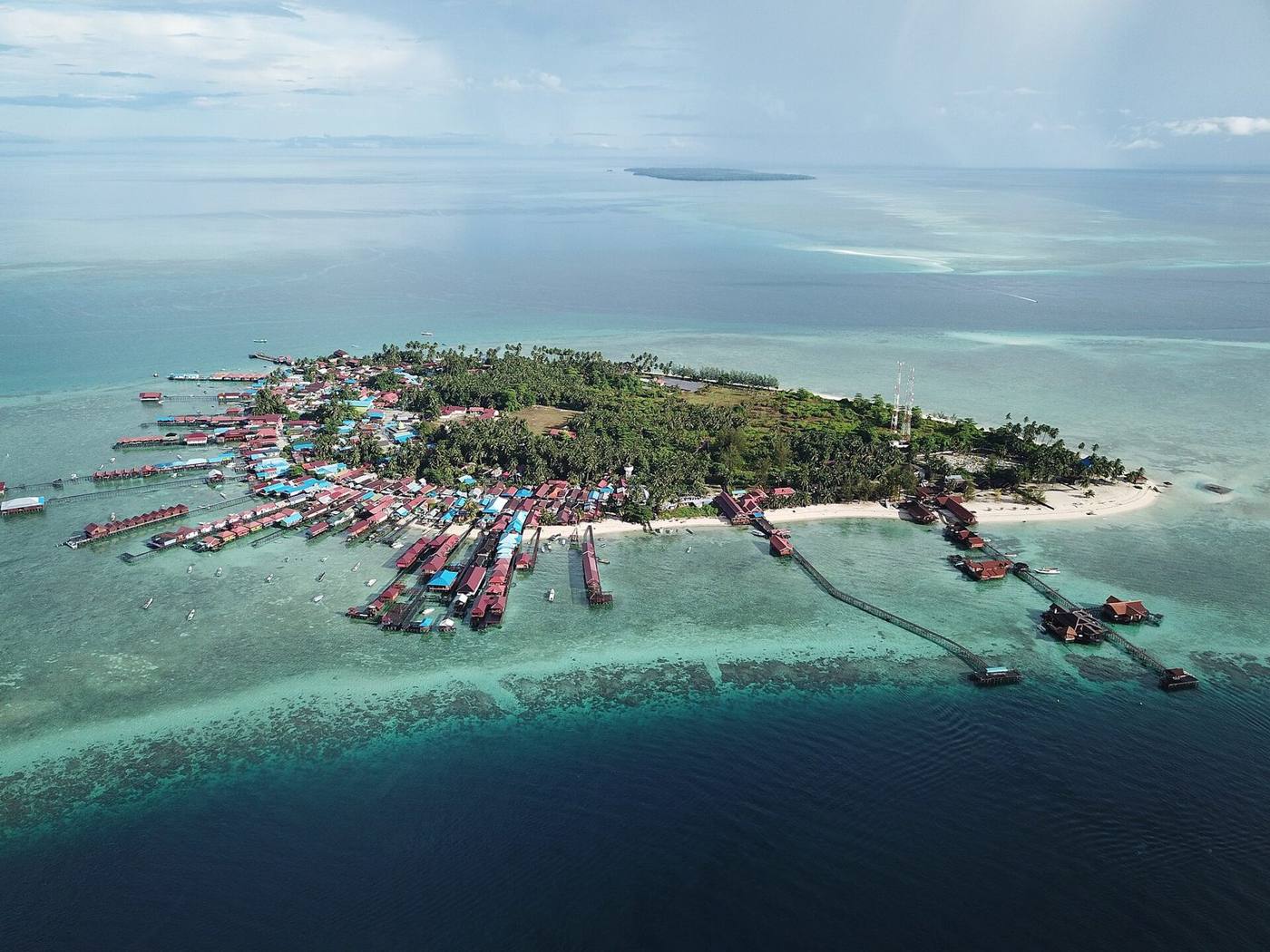
The islands off eastern Borneo: green turtles grazing seagrass a few metres from the Derawan jetties, the inland lake of Kakaban with stingless jellyfish you can swim among, the manta rays of Sangalaki and the Maratua lagoon.
 5 daysEasy
North and west Bali: Menjangan and Pemuteran
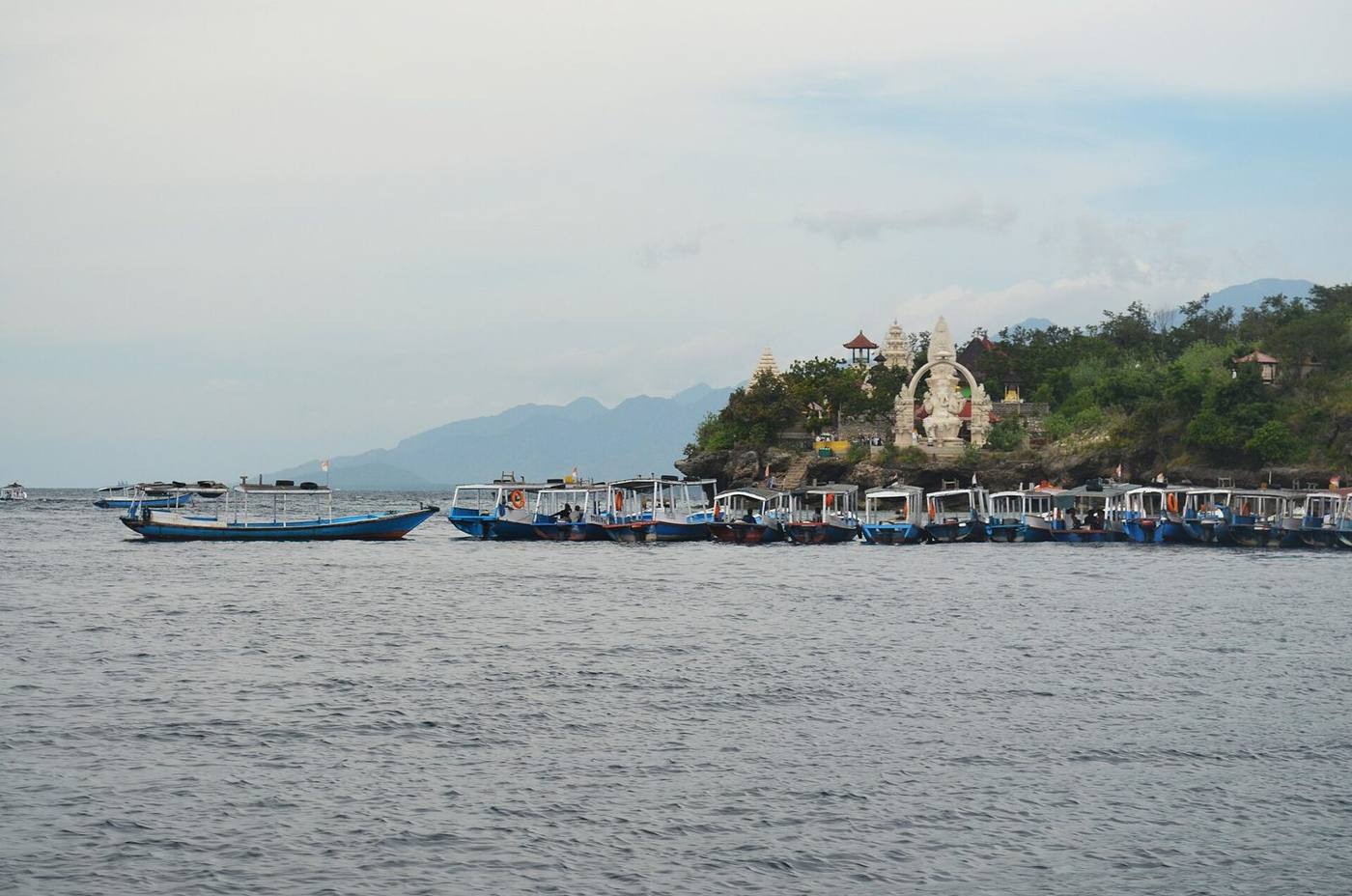
Quiet Bali, far from the crowded south: the village of Pemuteran with its Biorock artificial reef project, snorkelling and diving on the walls of Menjangan island in West Bali National Park, temples by the sea and the Munduk waterfalls in the hills.
 6 daysEasy
Central Java: Yogyakarta, Solo and Dieng
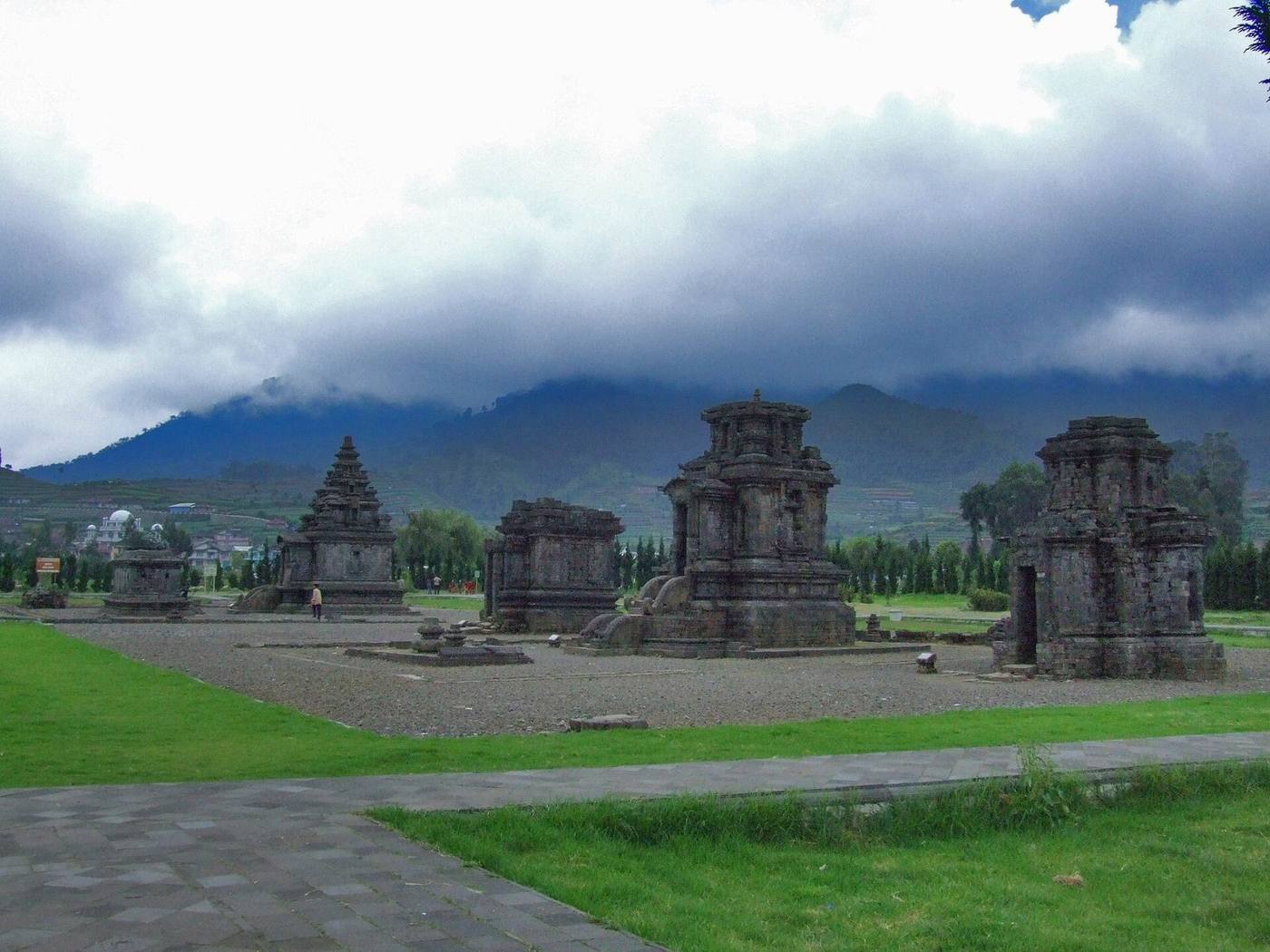
Java's cultural heart beyond Borobudur: the sultan's palace and batik of Yogyakarta, the two royal palaces and markets of Solo, the temples of Sukuh and Cetho on the slopes of Mount Lawu, and the Dieng plateau with the island's oldest Hindu temples, coloured lakes and fumaroles.