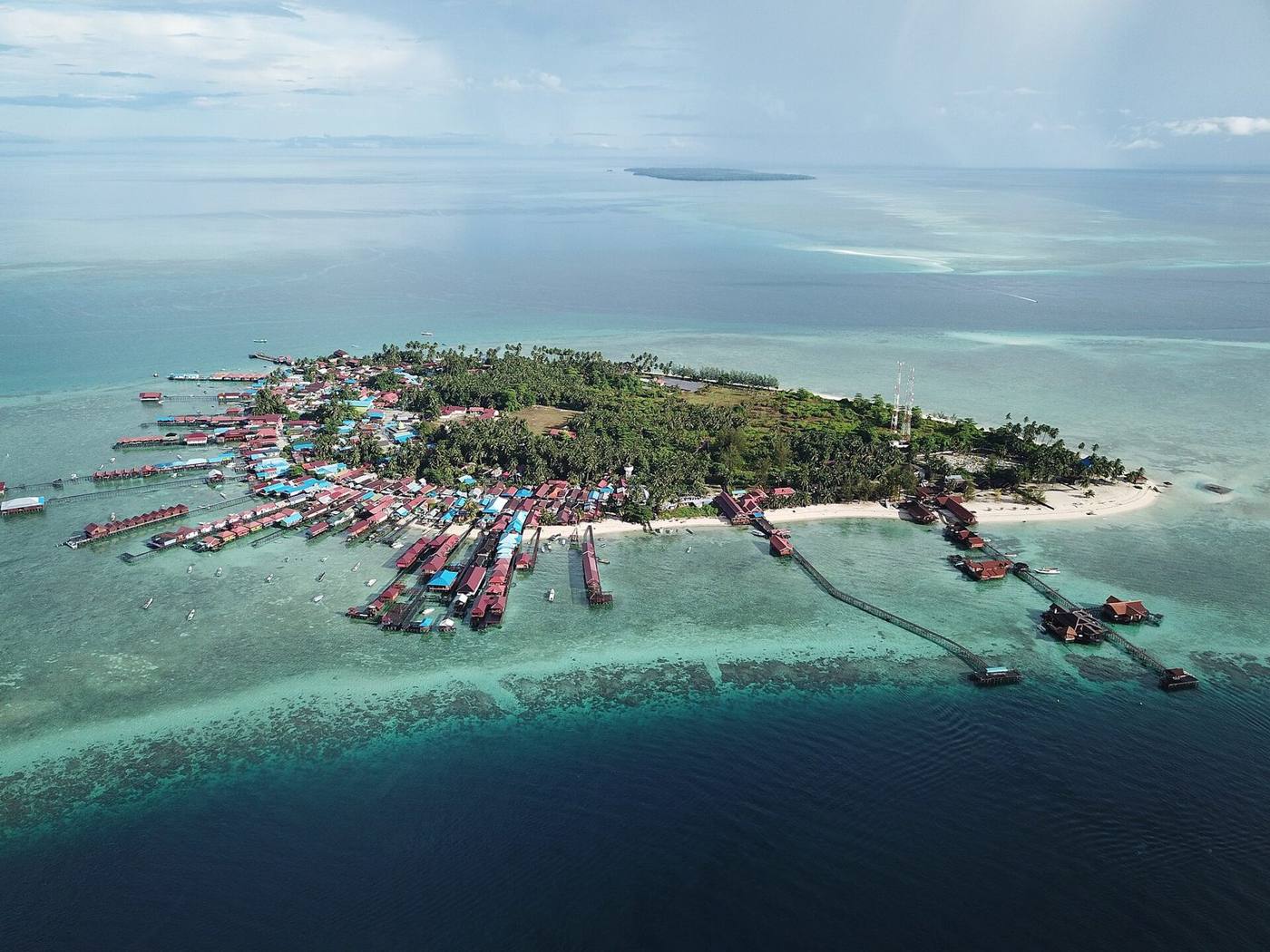
Derawan and Kakaban
The islands off eastern Borneo: green turtles grazing seagrass a few metres from the Derawan jetties, the inland lake of Kakaban with stingless jellyfish you can swim among, the manta rays of Sangalaki and the Maratua lagoon.
- Berau
- Derawan
- Kakaban
- Sangalaki
- Maratua
Day by day
- Day 1
Flight to Berau and boat to Derawan
The Derawan archipelago lies off the east coast of Borneo, in the Indonesian province of East Kalimantan, in the Celebes Sea. It is a group of low coral islands with turquoise water, reefs full of life, green turtles swimming near the jetties, manta rays and a lake full of stingless jellyfish. It is one of the richest places for marine life in Indonesia, still far from mass tourism. In six days you see Derawan, Kakaban, Sangalaki and Maratua.
You arrive in Berau, the nearest town, on a domestic flight, usually from Balikpapan, Jakarta or Surabaya. From Berau, take a car to the port of Tanjung Batu, in about two and a half hours, along a road through oil palm plantations and forest. Alternatively, you can take a speedboat directly from Berau along the river and then out to sea.
From Tanjung Batu, a boat takes you to Derawan Island in about half an hour.
Derawan is a small island with a fishing village, wooden houses on stilts over the water, jetties and a white beach. You can walk around it in less than an hour.
In the afternoon, walk through the village and along the jetties, looking at the clear water beneath your feet.
In the evening, taste grilled fish with sambal, the spicy Indonesian sauce, and rice.
In the evening, sleep on Derawan.
Practical tip: Italian citizens can get a visa on arrival in Indonesia, costing 500,000 rupiah. Check that it is valid at the airport where you enter the country.
- Day 2
Derawan: turtles from the jetty and snorkelling
Early in the morning, walk along the jetties of Derawan: it is the best time to see green turtles, which come to feed on algae and seagrass near the shore, a few metres from the houses. You see them swimming slowly under the jetties and rising to breathe at the surface. Some are large, with shells more than a metre long.
Derawan is one of the most important nesting places for green turtles in Indonesia. At night, at certain times of year, the females come out of the sea to lay their eggs on the beaches of the island and nearby islands.
After breakfast, snorkel straight from the beach or the jetties. Near the shore you see turtles underwater, colourful fish, starfish and corals. Swim calmly and do not touch the turtles: it is forbidden and dangerous for them.
In the afternoon, rest in the shade or walk around the island, with beaches on the less inhabited side and fishing boats.
At sunset, sit at the end of a jetty and watch the sun sink into the sea, with the village lit by the last light.
In the evening, sleep on Derawan.
Practical tip: if you see turtles laying eggs at night, keep your distance, do not use bright lights or flash and do not touch the eggs. Follow only local guides who respect these rules.
- Day 3
Kakaban: the jellyfish lake, then Sangalaki and the mantas
Today is the most special day of the trip. In the morning, set off by boat for Kakaban, about an hour from Derawan, an island of raised coral rock covered in forest, with a large brackish lagoon inside.
Step onto the jetty and walk along the wooden boardwalk through the forest, in a few minutes, to the lake. The lake has been cut off from the sea for thousands of years, and the jellyfish living there have almost entirely lost their ability to sting, because they had no predators. There are four species, and millions of them.
Enter the water with a mask and swim slowly among the jellyfish, pulsing around you, transparent, orange and blue, some as small as a finger, others as big as a hand. It is a rare sensation, like swimming in an aquarium.
In the afternoon, continue to Sangalaki, a small round island surrounded by a coral reef, famous for its manta rays. Mantas come to feed on plankton and be cleaned by small fish at certain points on the reef. With luck, you see them swimming with their great wings spread, a few metres away, while snorkelling from the boat.
In the evening, return to Derawan or sleep on Maratua.
Practical tip: fins are forbidden in Kakaban lake, as they stir up the bottom and injure the jellyfish, and sun cream is not good for the lake water. Swim calmly and do not touch the jellyfish.
- Day 4
Maratua: the lagoon
In the morning, take a boat to Maratua, the largest island in the archipelago, about an hour and a half from Derawan. Maratua is ring-shaped and encloses a large lagoon of calm turquoise water, with small islands, corals and sandbanks.
Along the island there are a few villages of Bajau fishermen, the sea people, who have lived on the water for centuries and know the sea like no one else, and some lodgings built on stilts over the lagoon.
In the afternoon, explore the lagoon by boat or kayak, in the shallow, clear water, stopping on the white sandbanks that emerge at low tide. Snorkel among the lagoon's corals, with clownfish, rays and small blacktip sharks.
At some points in the lagoon there are caves with fresh and brackish water, where you can swim in the cool water inside the rock, with light coming in through an opening.
At sunset, watch the sky change colour over the lagoon, with the fishermen's boats returning.
In the evening, taste fresh Bajau fish, grilled or in a spiced soup.
In the evening, sleep on Maratua.
Practical tip: on Maratua, fresh water and electricity are limited. Use little water in the shower and bring a power bank.
- Day 5
Maratua: diving or snorkelling with barracuda and turtles
Today is devoted to the open sea. Maratua is famous among divers for the coral walls that drop sheer into the ocean outside the lagoon, where currents bring food and attract large fish.
In the morning, if you dive, join a trip to one of the best-known sites, where you see great schools of barracuda circling, forming a tornado of silver fish, and shoals of jacks. Along the walls you see turtles sleeping on the corals, reef sharks, moray eels and, with luck, eagle rays.
If you do not dive, snorkel on the walls closest to the surface, where the reef begins, or along the shore of the lagoon: here too you see turtles and colourful fish.
In the afternoon, relax on a terrace over the water, watching turtles pass beneath. On Maratua there are so many that you often see them at every hour of the day.
In the evening, on moonless nights, look at the stars far from any lights and, at certain times, the luminous plankton that glows in the water when you move it with your hand.
In the evening, sleep on Maratua.
Practical tip: currents outside the lagoon are strong. Dive only with an experienced centre and a suitable certification, and never snorkel alone in open water.
- Day 6
Return via Berau
In the morning, take a last swim or snorkel in the lagoon, when the water is calmest.
Then head for Berau. There are two ways back: by boat to Tanjung Batu and then by car to Berau, about four or five hours in all, or, on some days, on a small flight from Maratua to Berau, much quicker.
If you have time in Berau, visit the sultan's palace at Gunung Tabur or the one at Sambaliung, two small kingdoms that ruled the region before independence, with museums of royal objects, costumes and traditional weapons. Walk along the Segah river, with fishing boats and the market.
Then take the flight to Balikpapan, Jakarta or Surabaya.
This trip combines well with the Borneo forest and the orangutans of Tanjung Puting, in Central Kalimantan, or with Sulawesi, with the Togian Islands and Toraja country, or with Bali.
If you still have time, in the same region are the Sangkulirang caves, with ancient rock paintings among the oldest in the world, reachable only on an organised expedition.
Practical tip: domestic flights in Indonesia often change times and are sometimes cancelled. Keep a day's margin before your international flight and check the boat and flight times the day before.
A very rich sea, still little visited by Europeans. In Kakaban lake sunscreen is banned, you swim without fins and must not touch the jellyfish. Simple over-water lodging; resorts on Maratua. It combines well with Borneo's orangutans. Italian citizens need a visa on arrival (500,000 rupiah, best requested online beforehand as an e-VOA); an increase has been proposed: check the amount before leaving.
Before you go
- Documents and visa
- Passport with at least six months' validity. Visa on arrival 500,000 rupiah for 30 days, extendable once, or online on the official immigration website. In Bali you also pay the 150,000 rupiah tourist levy.
- Health and vaccines
- No compulsory vaccines arriving from Europe. Protect yourself against mosquitoes because of dengue; Bali has rabies, so keep away from dogs and monkeys. The eastern regions carry malaria risk: ask your doctor. Emergencies: 110 police, 112 general number.
- Money and payments
- Indonesian rupiah. Cards work in hotels and shops in tourist areas; QR payments are widespread; markets and villages need cash.
- Power sockets
- Types C and F, 230 volts: the same round-pin sockets as much of Europe.
- Time zone
- The country has three time zones. Java is UTC+7, Bali UTC+8, with no daylight saving time.
- Safety
- Tourist areas are generally calm. The United States rates Indonesia level 2 and the Papua regions level 4. Active volcanoes may close on alert. Very severe drug penalties. Official advice: GOV.UK.
Information checked in November 2026 for Italian and EU citizens. Rules change: always check before you travel.
Variations
In 4 days: Derawan, Kakaban and Sangalaki, without Maratua.
In 10 days: add the orangutans of Tanjung Puting in Borneo.
Frequently asked questions
When is the best time to go?
From March to October, with calmer seas. Mantas at Sangalaki are seen all year, but more easily in some months: ask the local centres.
Do the Kakaban jellyfish sting?
Hardly at all. Sensitive people may feel a slight tingle. Do not touch them and do not use fins.
Do I need to dive?
No, almost everything can be seen while snorkelling. For the Maratua walls and the barracuda, diving is the best way.
Indicative itinerary written by World Atlas. Before booking, check timetables, seasonal openings, documents and safety.
 5 daysEasy
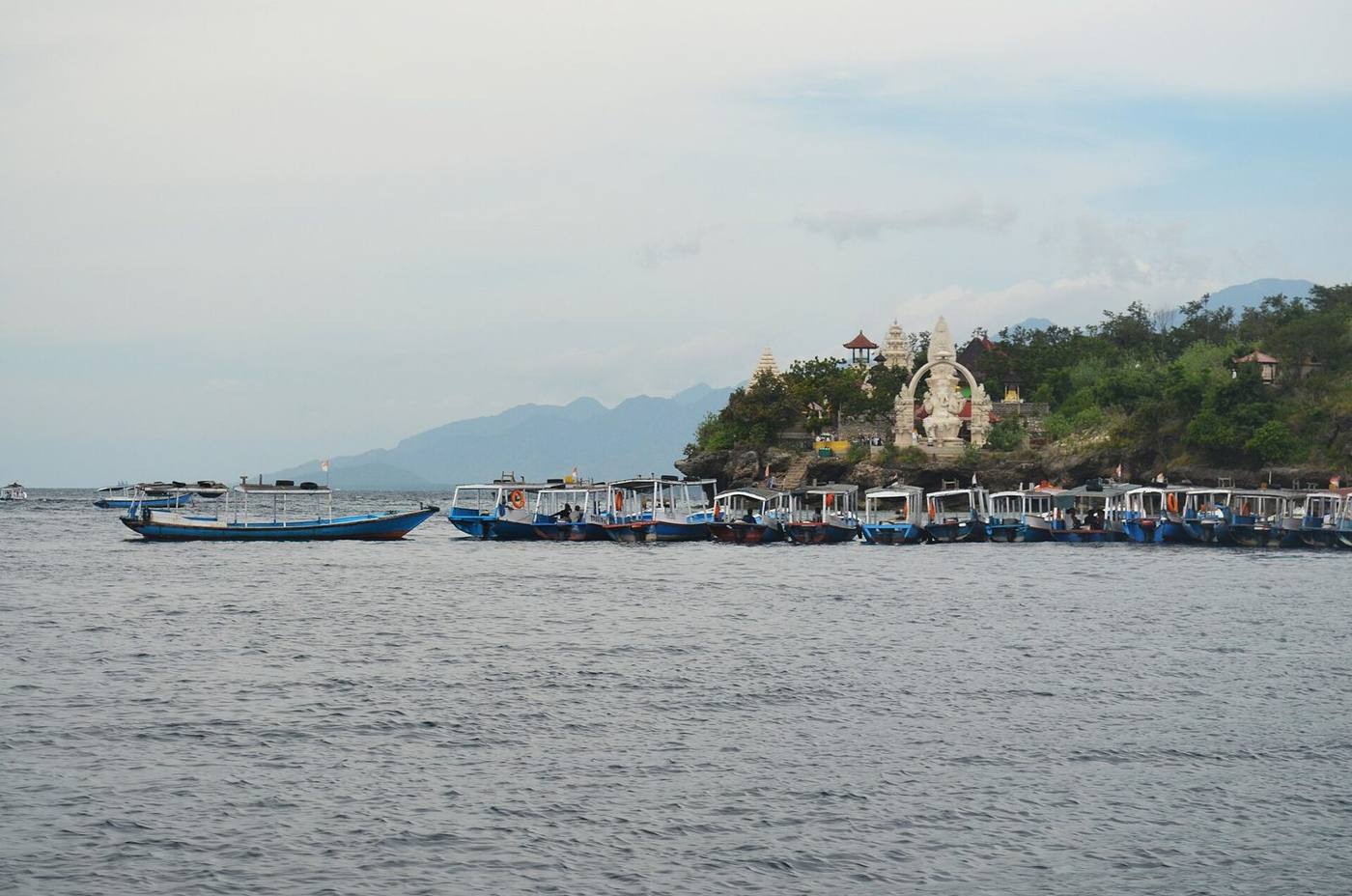
North and west Bali: Menjangan and Pemuteran
Quiet Bali, far from the crowded south: the village of Pemuteran with its Biorock artificial reef project, snorkelling and diving on the walls of Menjangan island in West Bali National Park, temples by the sea and the Munduk waterfalls in the hills.
 6 daysEasy
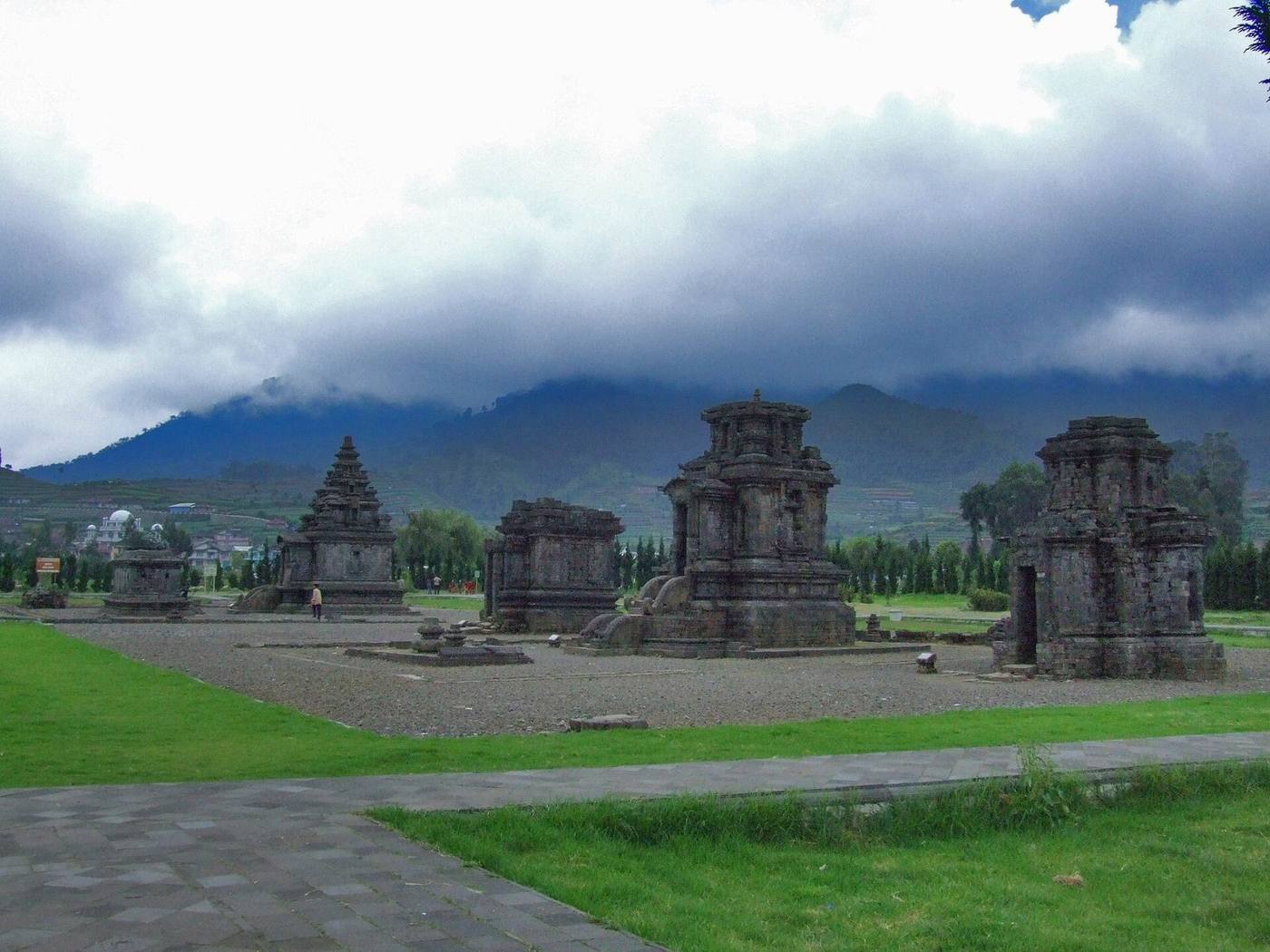
Central Java: Yogyakarta, Solo and Dieng
Java's cultural heart beyond Borobudur: the sultan's palace and batik of Yogyakarta, the two royal palaces and markets of Solo, the temples of Sukuh and Cetho on the slopes of Mount Lawu, and the Dieng plateau with the island's oldest Hindu temples, coloured lakes and fumaroles.
 7 daysEasy
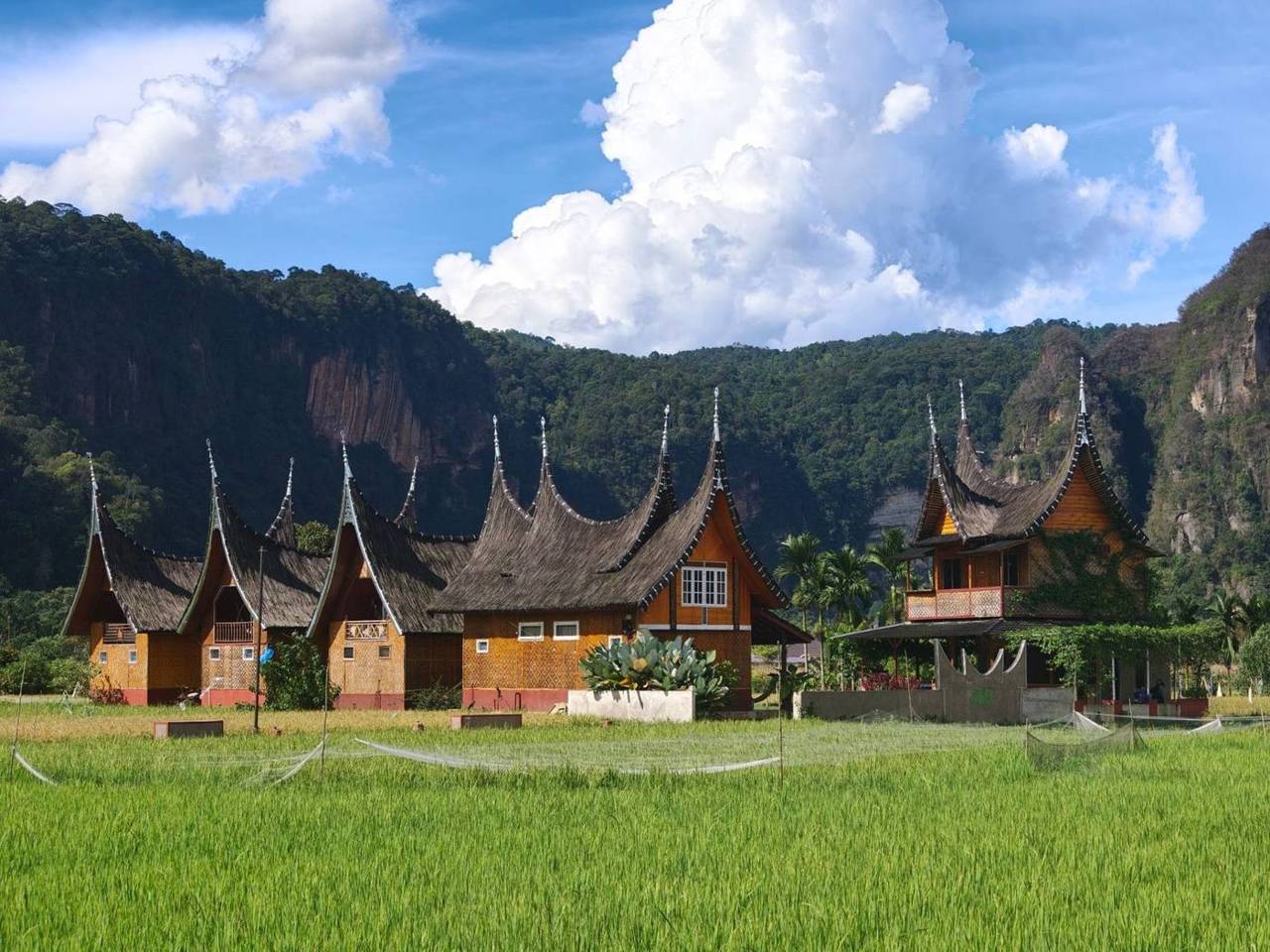
West Sumatra: Bukittinggi and Harau
The land of the Minangkabau, a matrilineal society with buffalo-horn roofed houses: Bukittinggi above the Sianok canyon, the Harau valley between rock walls and rice fields, the volcanic lake of Maninjau, Pagaruyung palace and Padang cooking, with rendang.