Bali beyond the beaches
The rice terraces of Ubud and Sidemen, water temples, the lakes of Munduk and the quiet coast of Amed.
- Denpasar
- Ubud
- Sidemen
- Amed
- Munduk
- Tanah Lot
- Uluwatu
Day by day
- Day 1
Arrival in Bali and transfer to Ubud
To enter Indonesia EU citizens can get a visa on arrival, which costs 500,000 rupiah and lasts 30 days, extendable once; it can also be applied for online before departure on the official Indonesian immigration website, which is the quickest way. In addition, visitors to Bali must pay the island's tourist levy, 150,000 rupiah per person, on the official Love Bali website or app. Your passport must have at least six months' validity.
From Denpasar airport in the south of the island, Ubud is about an hour and a half by car, depending on traffic. A pre-booked driver or a ride-hailing app is best. In Bali most travellers get around with a private driver by the day, convenient and not expensive, because public transport is scarce.
Ubud is the island's cultural heart, among rice paddies, forests and temples. To stay, choose the centre, convenient for getting around on foot, or the quieter surroundings among the paddies. In the afternoon walk along the Campuhan Ridge, an easy path on a hill covered in tall grass between two rivers, perfect at sunset.
Practical tip: in Bali Balinese Hinduism is part of daily life; everywhere you will see small offerings of flowers and incense on the pavements. Do not step on them, and walk around them respectfully.
- Day 2
The Tegallalang rice terraces and Tirta Empul temple
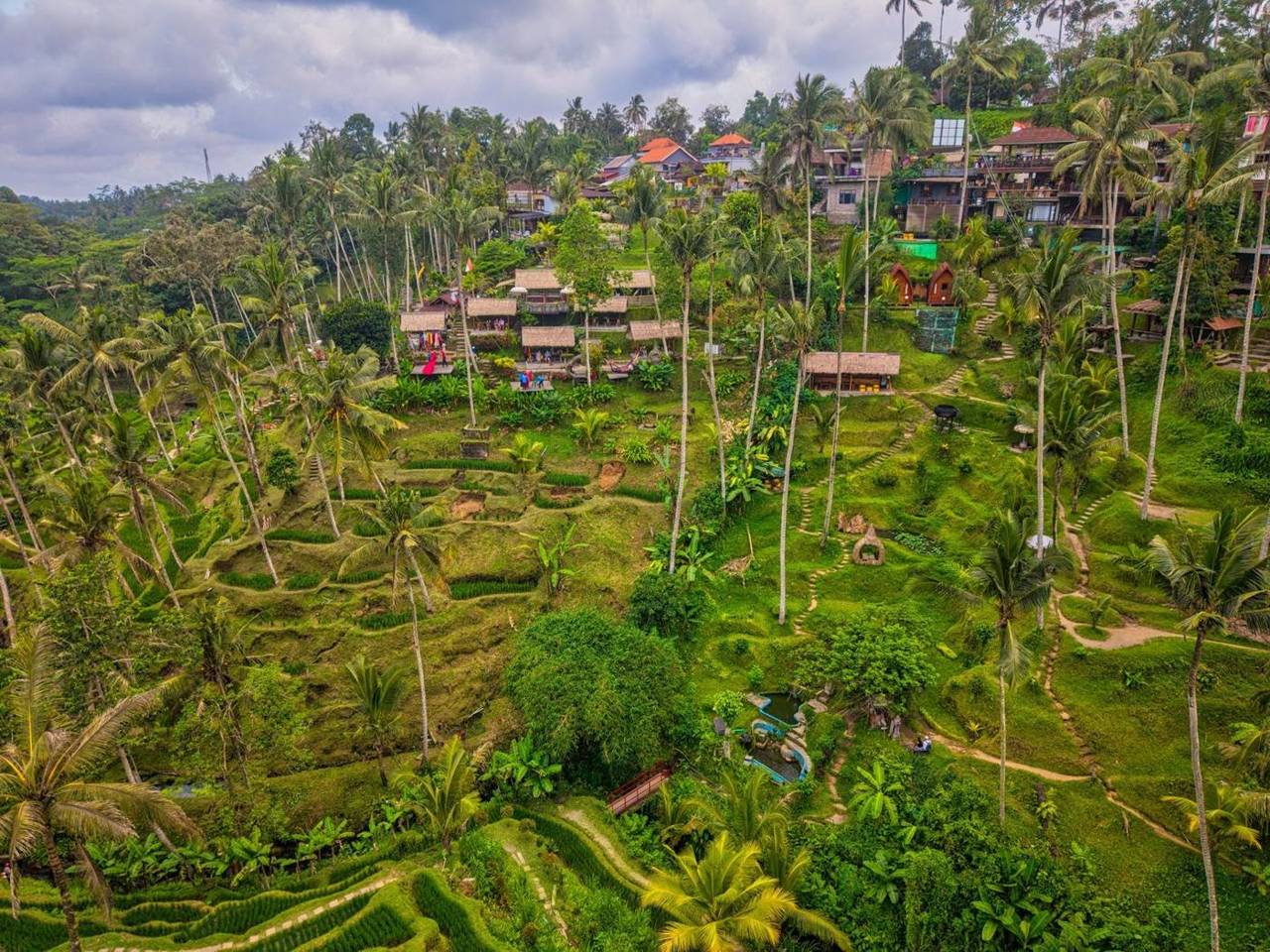
Early in the morning go to the Tegallalang rice terraces north of Ubud, before the tour buses arrive. The stepped paddies descend a valley with coconut palms and are irrigated by subak, the traditional canal system managed collectively by farmers, a UNESCO World Heritage site. You walk among the terraces on narrow paths; some farmers ask for a small donation to cross their fields.
Continue to Tirta Empul temple, one of the island's holiest, built around a spring in the tenth century. Balinese worshippers immerse themselves in the stone pools and pass under the fountains in a set order to purify themselves. Visitors can take part too, respectfully, wearing the sarong rented at the entrance. By local tradition, menstruating women do not enter the pools.
In the afternoon visit Gunung Kawi, a few kilometres away, with eleventh-century funerary monuments carved directly into the rock face along a river, reached by a long staircase through the paddies.
In the evening return to Ubud. Practical tip: in temples always wear a sarong and sash, with shoulders covered; many temples lend or rent them at the entrance, but bringing your own saves time and money over a week of temple visits. Carry small notes for donations.
- Day 3
Ubud, the Monkey Forest and the kecak dance
In the morning visit Ubud's royal palace and the market opposite, with crafts, fabrics and tropical fruit; always bargain politely. Nearby is the water temple of Taman Saraswati, dedicated to the goddess of knowledge, with a lotus pond.
Late in the morning enter the Sacred Monkey Forest, a reserve with three temples among huge trees, home to hundreds of macaques. The monkeys are used to people but steal glasses, hats and food: keep everything in a closed bag and do not stare them in the eyes. If a monkey bites you, see a doctor at once.
In the afternoon take a Balinese cooking class, often with a market visit, or walk round the art workshops of the surrounding villages: Mas for wood carving, Celuk for silver, Batuan for traditional painting.
In the evening watch the kecak dance, one of Bali's most spectacular: dozens of men seated in a circle chant the rhythm cak cak cak, without instruments, while dancers tell a story from the Ramayana. In Ubud there are performances almost every evening, some by firelight. Practical tip: the most famous version is held at sunset at Uluwatu temple, which you will see at the end of the trip; here you could choose another dance, such as the legong.
- Day 4
Sidemen and Lempuyang temple
Today you leave Ubud and head east to the Sidemen valley, one of the island's most beautiful and least crowded areas: terraced paddies, fruit plantations and Mount Agung, the Balinese sacred mountain, always in the background. The village is also known for traditional songket weaving, with gold and silver threads.
On the way stop at Klungkung, the old capital of a Balinese kingdom, with the Kerta Gosa hall of justice, its ceilings painted with scenes of the afterlife and judgement.
In the afternoon, or at dawn the next day, visit Lempuyang temple, one of the island's six holiest sanctuaries, on the slopes of Mount Lempuyang. It is famous for the Gates of Heaven, stone split gates that frame Mount Agung. The photo with a reflection on water seen everywhere is made with a mirror held under the lens by local photographers: there is no lake. The wait for the photo can last hours; arrive early. The real temple extends higher up, with a long staircase to the upper shrines.
Sleep in Sidemen. Practical tip: Mount Agung is an active volcano; before going into the area, check any restrictions issued by the authorities, and follow local guidance on exclusion zones around the crater.
- Day 5
Amed and the Tulamben wreck
In the morning drive to the north-east coast to Amed, a string of small fishing villages along a coast of black volcanic sand, with colourful traditional boats called jukung on the beaches. It is a quiet area, perfect for snorkelling and diving: corals and fish are a few metres from the shore.
At Tulamben, about half an hour north, lies the wreck of the American ship USAT Liberty, torpedoed in 1942 during the Second World War and beached; in 1963 the eruption of Mount Agung pushed it into the sea, where it now lies a few metres from the shore, between five and thirty metres deep. It is one of the world's most famous dives and can also be seen with mask and snorkel in the shallower part. Corals, sponges and large schools of fish have colonised the hull.
In the afternoon relax in Amed or take a freediving or diving course with a licensed centre. At sunset, from the hills above the village, you see Mount Agung on one side and, on clear days, the island of Lombok on the other.
Sleep in Amed. Practical tip: bring reef shoes, because the pebble and coral beaches are uncomfortable, and a reef-safe sunscreen.
- Day 6
Munduk and the lake temple of Ulun Danu Bratan
Today is a long stage to the mountains of the centre and north. You cross the island on mountain roads, through forests and farmland, to the region of volcanic lakes. The journey takes about four or five hours with stops; a driver is best.
Ulun Danu Bratan temple on Lake Bratan, at about 1,200 metres, is one of Bali's most photographed: the multi-roofed pagodas, called meru, seem to float on the water, with the mountains behind. The temple is dedicated to the goddess of the lake's waters, essential for irrigating paddies across the island. Arrive early, when mist rises from the lake.
In the afternoon reach Munduk, a mountain village surrounded by coffee, clove and cocoa plantations. Here the air is cool and you can walk to the area's waterfalls, hidden in the forest, and to the twin lakes of Buyan and Tamblingan, with viewpoints over the forest.
Sleep in Munduk, in a mountain house overlooking the valley. Practical tip: in the mountains evenings are cool and it rains often, even in the dry season; bring a sweater and a waterproof jacket. On the narrow, winding mountain roads, travel by day. Refuel before heading up into the hills, as stations are few.
- Day 7
Tanah Lot and sunset at Uluwatu
In the morning descend to the south-west coast to Tanah Lot temple, built on a rock in the sea, reachable on foot only at low tide. Founded in the sixteenth century, it is one of the sea temples that protect the island. Non-worshippers do not enter the temple, but you can reach the base of the rock and visit the caves with the sacred spring. It is extremely crowded at sunset; mornings are quieter.
In the afternoon continue to the Bukit peninsula at the island's southern tip, with high cliffs above the Indian Ocean and beaches hidden among the rocks, such as Padang Padang and Bingin, loved by surfers. The water is clear, but currents can be strong.
At sunset visit Uluwatu temple, built on the edge of a cliff seventy metres above the ocean, one of Bali's six main sanctuaries. At sunset, in the amphitheatre next to the temple, the kecak dance is performed, with dozens of men chanting as the sun sinks into the sea. It is one of the finest moments of the trip. Arrive early for a good seat.
Sleep on the Bukit peninsula or in Jimbaran. Practical tip: at Uluwatu the monkeys skilfully steal glasses and phones; hold everything tightly and keep it in your bag.
- Day 8
A last morning and departure
The last day depends on your flight time. Denpasar airport is close to the Bukit peninsula, about half an hour, but traffic in the south of the island can be very heavy; always allow more time than expected.
In the morning relax on the beach at Jimbaran, a long bay of golden sand with colourful fishing boats. At dawn the Jimbaran fish market is very lively, with boats unloading the catch. Alternatively visit Sanur on the east coast, with a long seafront path suitable for cycling and calm waters protected by the reef.
If you have time, enjoy a last Balinese massage, an island tradition with local oils and techniques, or buy the last souvenirs. Things to take home: coffee from the Kintamani highlands, songket and batik fabrics, wood carvings, Celuk silver, spices and coconut oil.
Practical tip: in Indonesia penalties for drug possession are very severe, up to the death penalty for trafficking; never agree to carry anyone else's package. Also check the dates of Nyepi, the Balinese day of silence, in March: for twenty-four hours the island stops and even the airport closes. Reach the airport at least three hours before international flights. Keep some rupiah in cash for the departure hall.
The finest Bali lies inland and in the east, far from Kuta and Seminyak. Traffic is slow, so keep the stops few and hire one driver for the whole trip. Temples require a sarong, usually rented at the entrance.
Before you go
- Documents and visa
- Passport with at least six months' validity. Visa on arrival 500,000 rupiah for 30 days, extendable once, or online on the official immigration website. In Bali you also pay the 150,000 rupiah tourist levy.
- Health and vaccines
- No compulsory vaccines arriving from Europe. Protect yourself against mosquitoes because of dengue; Bali has rabies, so keep away from dogs and monkeys. The eastern regions carry malaria risk: ask your doctor. Emergencies: 110 police, 112 general number.
- Money and payments
- Indonesian rupiah. Cards work in hotels and shops in tourist areas; QR payments are widespread; markets and villages need cash.
- Power sockets
- Types C and F, 230 volts: the same round-pin sockets as much of Europe.
- Time zone
- The country has three time zones. Java is UTC+7, Bali UTC+8, with no daylight saving time.
- Safety
- Tourist areas are generally calm. The United States rates Indonesia level 2 and the Papua regions level 4. Active volcanoes may close on alert. Very severe drug penalties. Official advice: GOV.UK.
Information checked in November 2026 for Italian and EU citizens. Rules change: always check before you travel.
Variations
In 6 days: three days in Ubud with Tegallalang and Tirta Empul, a day in Sidemen and Lempuyang, then Uluwatu and departure, skipping Amed and Munduk.
In 12 days: add the Gili Islands or Nusa Penida for the sea, and a sunrise on Mount Batur with a guided night hike.
Frequently asked questions
Do I need a visa for Bali?
Yes: the visa on arrival costs 500,000 rupiah and lasts 30 days, extendable once, and can also be obtained online on the official immigration website. On top of that there is Bali's tourist levy, 150,000 rupiah, paid on the Love Bali website or app.
How do I get around Bali?
Usually with a private driver by the day, convenient and not expensive, or with ride-hailing apps in the areas where they operate. Public transport is scarce and traffic in the south is heavy.
When is the best time to visit Bali?
April to October, in the dry season; July and August are the busiest months. From November to March it rains a lot, with heavy afternoon downpours, but the heat stays constant all year.
Indicative itinerary written by World Atlas. Before booking, check timetables, seasonal openings, documents and safety.
 12 daysEasy
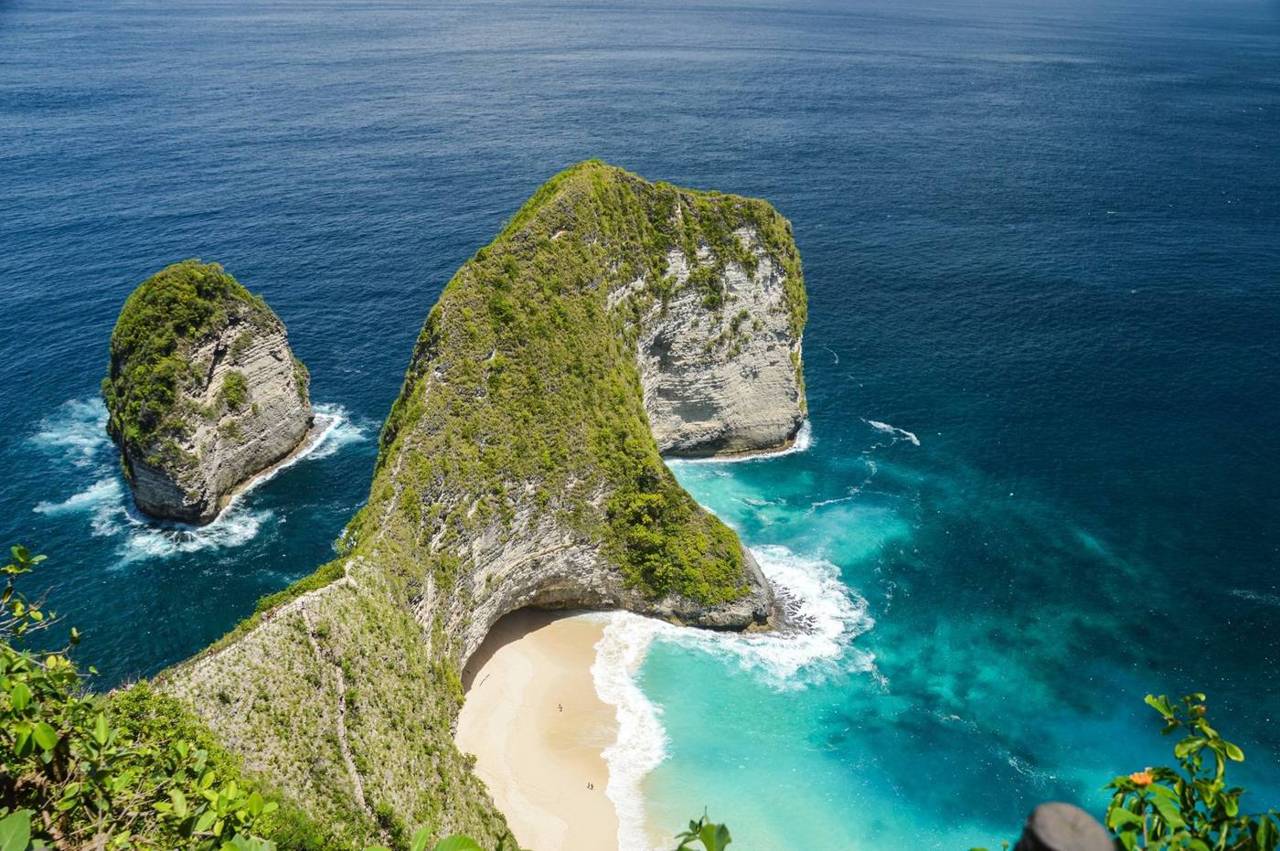
Bali, Nusa Penida and the Gili Islands
A few days in Ubud, the cliffs of Nusa Penida with its manta rays, and the Gili closed to cars Islands with turtles close to shore.
 10 daysModerate
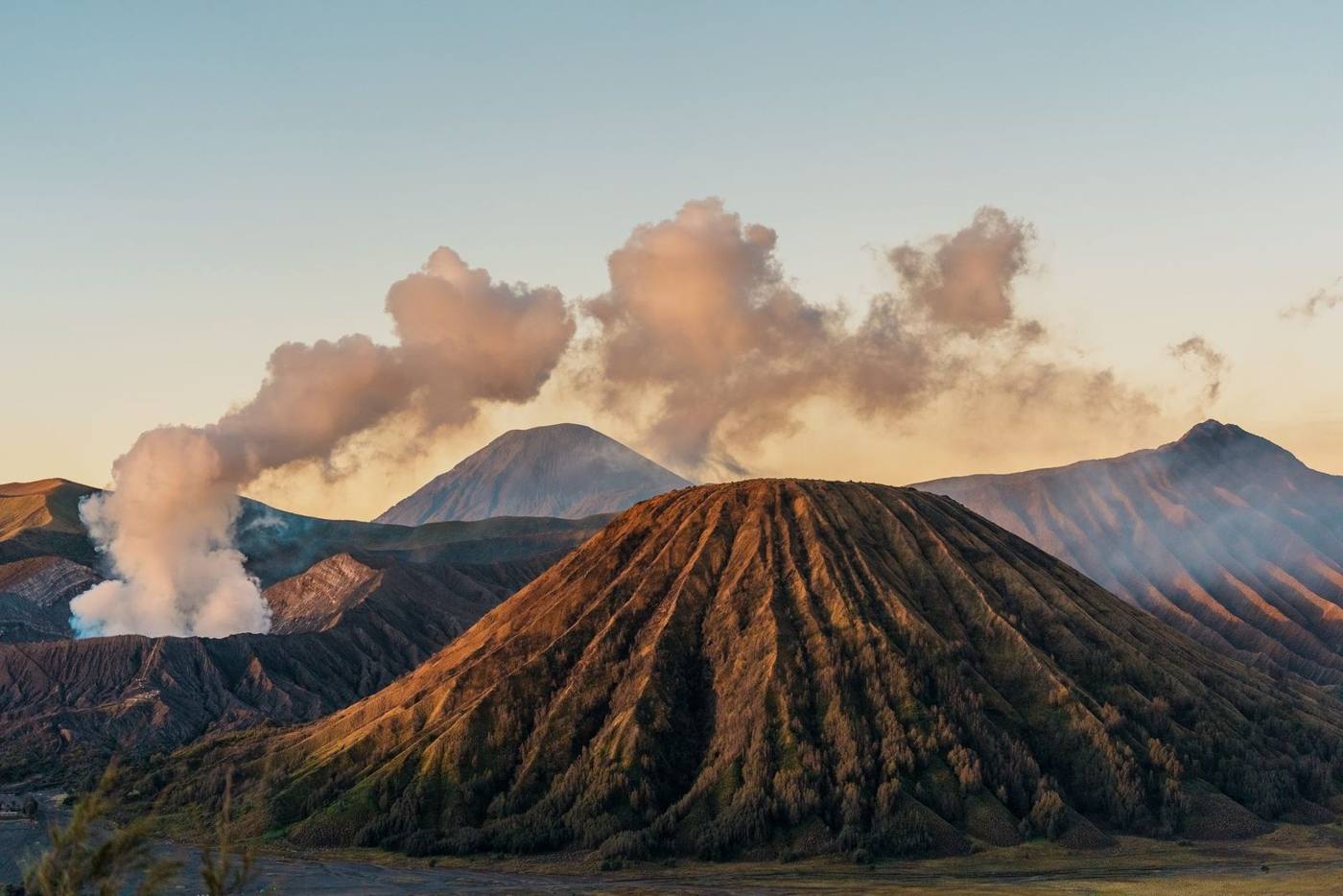
Java: Borobudur, Bromo and Ijen
The temples of Borobudur and Prambanan, sunrise over Mount Bromo and the acid lake of Ijen, ending with the ferry to Bali.
 8 daysModerate
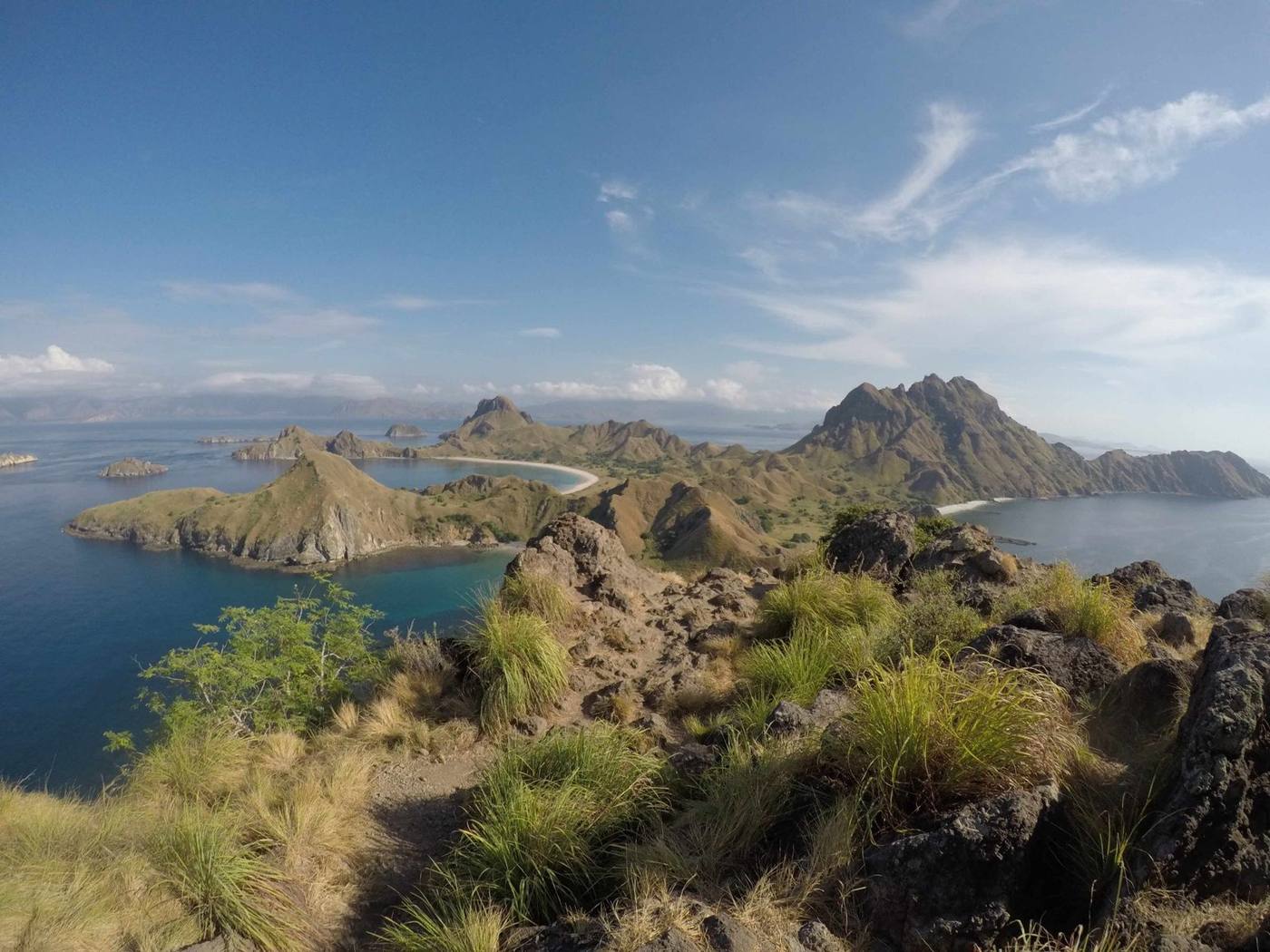
Komodo and Flores by boat
Two nights aboard among the Komodo dragons, the view from Padar and the manta rays, then the coloured lakes of Kelimutu.