 Germany
Fairytale castles, cities with powerful stories, forests, the Bavarian Alps and one of the best rail networks in Europe.
Places not to miss
Berlin
The Brandenburg Gate, the Wall, Museum Island, the Reichstag.
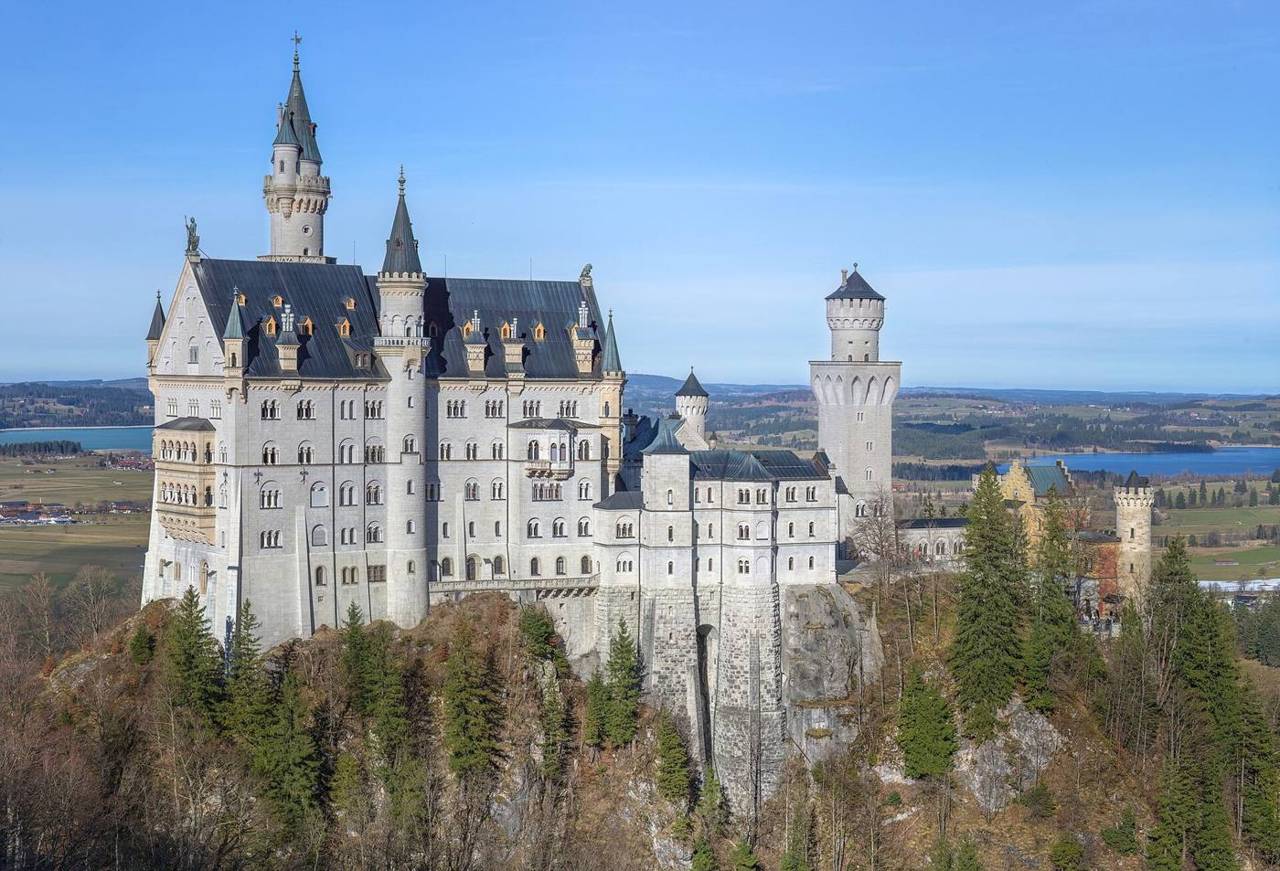
Neuschwanstein
Ludwig II's castle that inspired Sleeping Beauty.
Munich
Marienplatz, beer halls, Oktoberfest; the Alps very close.
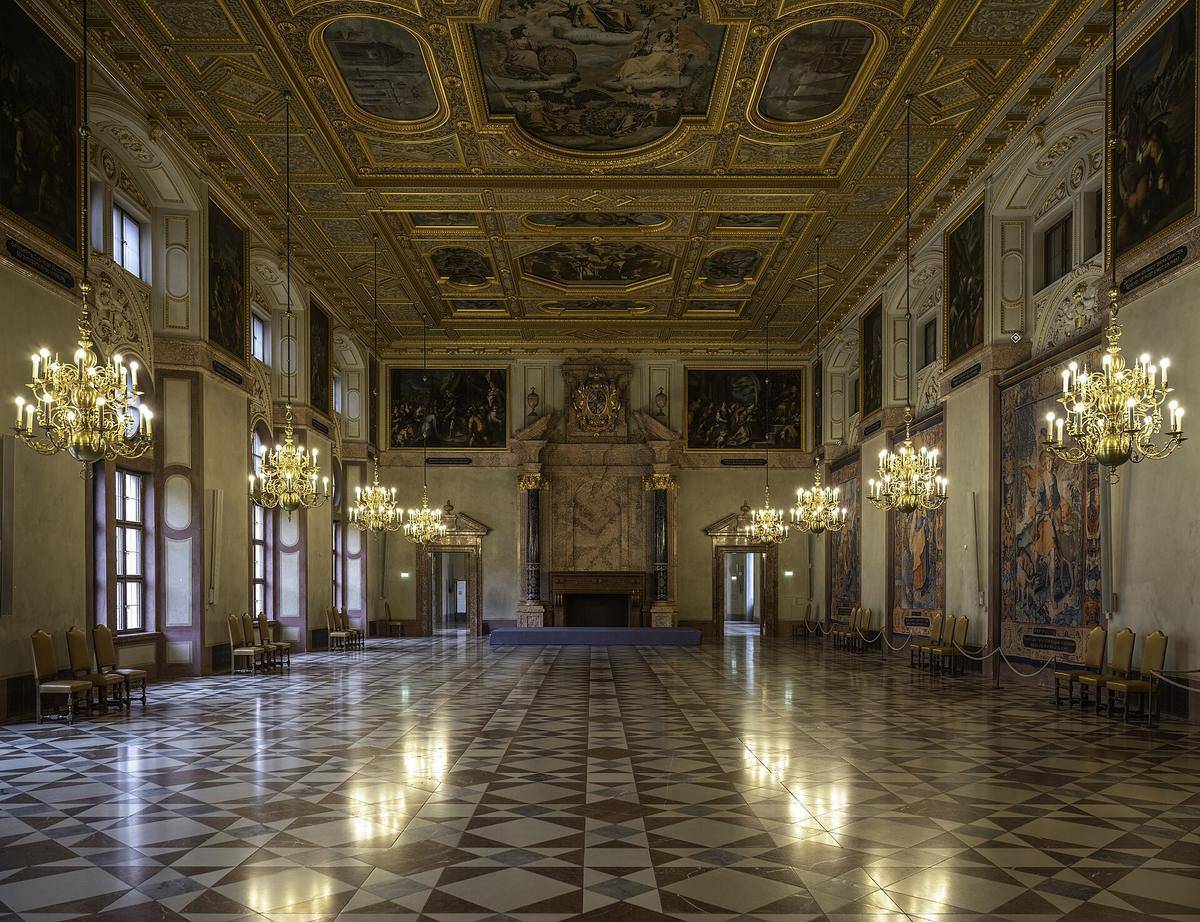
Photo: Wilfredor, CC0 Rhine Valley
Castles on the crags and the Lorelei.
Rothenburg ob der Tauber
An intact medieval town.
Dresden
Florence on the Elbe, with the rebuilt Frauenkirche.
Saxon Switzerland
Sandstone towers and the Bastei bridge.
Cologne
The UNESCO-listed Gothic cathedral.
Black Forest
Woods, the Triberg waterfalls, cuckoo clocks.
Nature and wildlife
Deer, wild boar, ibex in the Bavarian Alps, birds in the Wadden Sea.
Food and drink
Wurst, pretzels, schnitzel, Black Forest gateau, beer brewed under the 1516 Purity Law.
When to go
May-September; December for the Christmas markets.
Did you know?
Germany produces around 1,500 kinds of sausage.
Itineraries in Germany
Berlin in five days
The Brandenburg Gate and the Reichstag, Museum Island, the Wall and the East Side Gallery, the Kreuzberg and Prenzlauer Berg districts and Potsdam.
The Romantic Road and Bavaria
Würzburg, Rothenburg ob der Tauber, Dinkelsbühl, Augsburg, the castles of Neuschwanstein and Linderhof and Munich with its beer halls.
The Rhine and the Moselle
The Middle Rhine valley among castles and the Loreley rock, Koblenz, the steep vineyards of the Moselle, Eltz Castle and Roman Trier.
The Black Forest
Freiburg, the Triberg waterfalls, Lake Titisee, the Feldberg, the spa town of Baden-Baden and the villages of cuckoo clocks.
Hamburg and the Baltic Sea
Hamburg's port and the Speicherstadt, Hanseatic Lübeck, the brick towns of Wismar and Stralsund and the white cliffs of Rügen island.
Saxony: Dresden, Leipzig and Saxon Switzerland
Rebuilt Dresden with the Frauenkirche and the Zwinger, the sandstone towers of the Bastei above the Elbe, Meissen and Bach's Leipzig.
The Bavarian Alps and Berchtesgaden
Lake Königssee by electric boat, the Eagle's Nest, Garmisch-Partenkirchen, the Zugspitze and the Partnach gorge.
The Christmas markets
Nuremberg's Christkindlesmarkt, Rothenburg under snow, Bamberg and the markets of Munich, with mulled wine, gingerbread and lights.
Cologne and the industrial Ruhr
Cologne Cathedral and its Kölsch beer, Düsseldorf on the Rhine and the Ruhr's mines and steelworks turned into museums and parks.
Germany by train
A grand tour without a car: Berlin, Dresden, Nuremberg, Munich with Neuschwanstein, the Rhine valley and Hamburg.
Munich and its lakes
The Bavarian capital at an easy pace: Marienplatz and the Viktualienmarkt, the Residenz, the Pinakothek galleries, the English Garden with the Eisbach surfers, Nymphenburg Palace, the Dachau memorial and the Starnberg and Ammersee lakes with Andechs Abbey.
Lake Constance
Three countries on one lake: the island of Lindau with its harbour and lion, Meersburg Castle, the flower island of Mainau, the monastic island of Reichenau (UNESCO), the pile dwellings at Unteruhldingen, Konstanz and the Rhine Falls at Schaffhausen.
Sylt, Amrum and the Wadden Sea
The North Sea islands: Sylt, reached by train across the causeway, with the dunes of List, the Red Cliff at Kampen and endless beaches, Amrum and its kilometre-wide sandy beach, the Halligen and guided mudflat walks on the floor of the Wadden Sea, a UNESCO World Heritage site.
Thuringia: Weimar, Erfurt and the Wartburg
Germany's green heart: the Weimar of Goethe, Schiller and the first Bauhaus, the Anna Amalia library, the Buchenwald memorial, Erfurt with its inhabited Krämerbrücke bridge and cathedral, and Eisenach with Wartburg Castle, a UNESCO site where Luther translated the New Testament.
Heidelberg, Stuttgart and Tübingen
Baden-Württemberg along the Neckar: Heidelberg Castle and the Philosophers' Walk, Maulbronn Monastery (UNESCO), the Mercedes-Benz and Porsche museums and Stuttgart's Weissenhof estate, Tübingen with its punts on the river and Hohenzollern Castle.
Franconia: Nuremberg, Bamberg and Franconian Switzerland
Northern Bavaria: Nuremberg with its imperial castle, the Germanic National Museum and the documentation centre on the Nazi rally grounds, Bamberg (UNESCO) and its smoked beer, the caves and rocks of Franconian Switzerland and the Margravial Opera House in Bayreuth.
The Harz: Quedlinburg, Goslar and the Brocken
The witches' mountains: Quedlinburg with over a thousand half-timbered houses (UNESCO), Goslar and the Rammelsberg mine, Wernigerode and its castle, the steam train up the Brocken and the Bode gorge between Thale and Treseburg.
The Spreewald and the Mecklenburg lakes
Water country north and south of Berlin: the Spreewald canals explored by punt, a UNESCO biosphere reserve, then Müritz National Park with hundreds of lakes to paddle and Schwerin Castle on its island.
Bauhaus and Luther: Dessau, Wittenberg and Wörlitz
Three UNESCO sites close together: the Bauhaus building and the Masters' Houses in Dessau, the Luther sites in Wittenberg with the Castle Church and the reformer's house, and the Dessau-Wörlitz Garden Realm, the first great English-style landscape park on the Continent.
The Danube by bike from Regensburg to Passau
The Bavarian Danube cycle path: the Danube gorge by boat to Weltenburg Abbey, Regensburg (UNESCO) with its stone bridge, the Walhalla temple, Straubing, the river plain and Passau, the city of three rivers.
Practical guide to Germany
- Documents
- Germany is part of the Schengen area: EU citizens need only a valid identity card or passport. German land border checks have been extended until March 2027: always carry your document, even on trains.
- Safety
- The United States rates Germany level 2 for terrorism. In stations, on public transport and at crowded Christmas markets watch out for pickpockets. Official advice: GOV.UK.
- Getting around
- The rail network links every city, with fast trains between big cities and regional trains for smaller towns; delays are frequent, so allow a margin for connections. In cities metros and trams work well; tickets must be validated before boarding. For the Romantic Road and the Bavarian Alps a car is more convenient.
- Verified costs
- Neuschwanstein, official 2026 ticket: 21 euros for an adult, with a small online fee; no-cost under 18, with a timed ticket (neuschwanstein.de). The Reichstag dome is at no cost with advance booking. Berlin's Pergamon Museum reopens on 4 June 2027 (smb.museum).
Climate month by month
Average minimum and maximum temperatures in Berlin, Munich and Hamburg. Winters are cold, with short days and sometimes snow, especially in Bavaria; summers are mild to warm. The best period is May to September, plus December for the Christmas markets.
- January
- Berlin -2 / 3 °C · Munich -3 / 3 °C · Hamburg 0 / 4 °C
- February
- Berlin -2 / 5 °C · Munich -3 / 5 °C · Hamburg 0 / 5 °C
- March
- Berlin 0 / 9 °C · Munich 0 / 9 °C · Hamburg 1 / 9 °C
- April
- Berlin 4 / 15 °C · Munich 3 / 14 °C · Hamburg 4 / 14 °C
- May
- Berlin 8 / 20 °C · Munich 8 / 19 °C · Hamburg 8 / 18 °C
- June
- Berlin 12 / 23 °C · Munich 11 / 22 °C · Hamburg 11 / 21 °C
- July
- Berlin 14 / 25 °C · Munich 13 / 24 °C · Hamburg 14 / 23 °C
- August
- Berlin 14 / 25 °C · Munich 13 / 24 °C · Hamburg 13 / 23 °C
- September
- Berlin 10 / 20 °C · Munich 8 / 19 °C · Hamburg 10 / 19 °C
- October
- Berlin 6 / 14 °C · Munich 5 / 14 °C · Hamburg 6 / 14 °C
- November
- Berlin 2 / 8 °C · Munich 1 / 7 °C · Hamburg 3 / 8 °C
- December
- Berlin -1 / 4 °C · Munich -2 / 4 °C · Hamburg 0 / 5 °C
Source: Climats et Voyages (1991-2020). Data and prices checked in November 2026.
Where to go and where not to
There are no particular warnings beyond normal precautions; before booking, always check up-to-date official travel advice, because the situation can change.