The Harz: Quedlinburg, Goslar and the Brocken
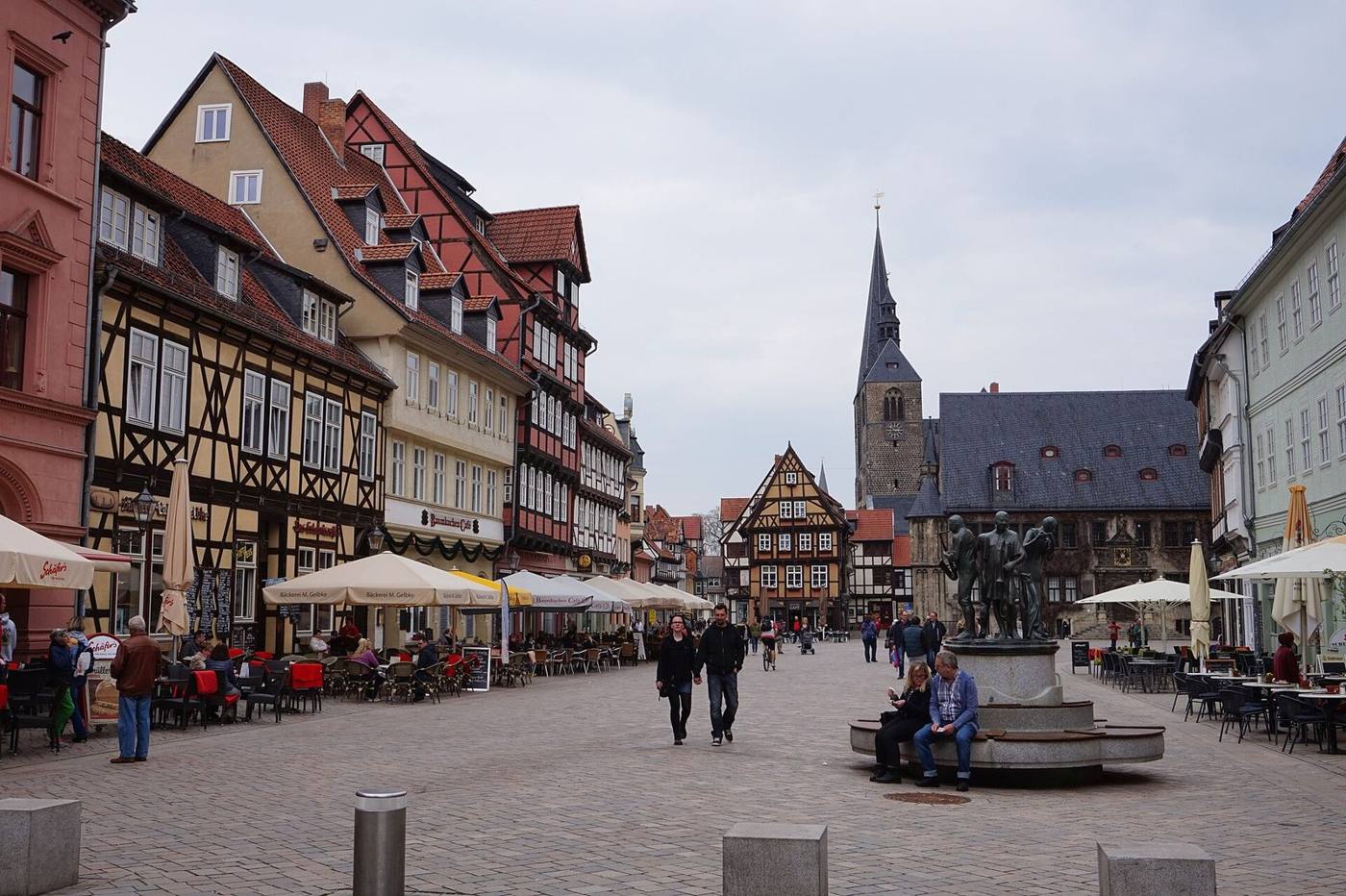
The witches' mountains: Quedlinburg with over a thousand half-timbered houses (UNESCO), Goslar and the Rammelsberg mine, Wernigerode and its castle, the steam train up the Brocken and the Bode gorge between Thale and Treseburg.
- Goslar
- Wernigerode
- Brocken
- Thale
- Quedlinburg
Day by day
- Day 1
Goslar and the Rammelsberg mine
The Harz is Germany's northernmost mountain range, between Lower Saxony, Saxony-Anhalt and Thuringia. It is a region of fir forests, gorges, lakes, ancient mines and medieval towns with half-timbered houses. It is also the land of witches: legend says that on Walpurgis Night, between 30 April and 1 May, witches gather on top of the Brocken, the region's highest mountain. Goethe set a scene of Faust here. In four days you see three UNESCO-listed towns, the Brocken steam train and the Bode gorge.
You start in Goslar, on the north-western side of the Harz, about an hour from Hanover by train. The old town, with more than a thousand half-timbered houses, the market square with its fountain and the Gothic town hall, has been a UNESCO World Heritage Site since 1992 together with the Rammelsberg mine. Goslar was one of the favourite towns of the Holy Roman Emperors, who built the imperial palace here, the Kaiserpfalz, one of the largest Romanesque secular buildings in Germany, with its great painted hall.
In the afternoon, visit the Rammelsberg mine, just outside town, where silver, copper and lead were mined for more than a thousand years, until 1988. Today it is a museum: on guided tours you enter the galleries and see the underground water wheels and the miners' tools.
In the evening, stroll through Goslar's lanes, along the canals and old mills.
Practical tip: in the mine it is cool all year round. Bring a jacket even in summer, and closed shoes.
- Day 2
Wernigerode and the steam train to the Brocken
In the morning, go to Wernigerode, about half an hour from Goslar, called the colourful town of the Harz. The town hall, with its two pointed towers and carved wooden façade, is one of the most photographed in Germany. Above the town, on a hill, stands the castle, rebuilt in the nineteenth century in Romantic style, with furnished rooms and a panoramic terrace.
Then go to the Harz railway station and board the narrow-gauge steam train that climbs to the top of the Brocken, at 1,141 metres. It is one of the last regular steam railways in Europe and runs all year round. The journey takes about an hour and forty minutes: the train climbs slowly through the forests of the Harz National Park, puffing smoke, with bends and views over the valleys.
During the Cold War the Brocken stood right on the border between the two Germanys and was a closed military zone, with Soviet and East German listening stations. Today there is a small museum at the top telling the story of the mountain, its nature and its witch legends. Around the summit a circular path lets you see the alpine botanical garden and the landscape.
If the weather is good, you can walk down to Schierke in about two hours, through the forest and bogs, and catch the train from there.
In the evening, return to Wernigerode.
Practical tip: on top of the Brocken the weather changes quickly and is often foggy and windy, even in summer. Bring a jacket and warm clothes.
- Day 3
The Bode gorge on foot from Thale
In the morning, go to Thale, about half an hour from Wernigerode, at the entrance to the Bode gorge, the most spectacular canyon in northern Germany. The River Bode has carved a narrow, deep valley between granite walls up to two hundred metres high, covered in forest.
Before entering the gorge, go up to one of the two plateaus above it. By cable car or chairlift you reach the Hexentanzplatz, the witches' dancing place, and the Rosstrappe, a rock that according to legend bears the hoofprint of the horse of a princess who leapt the ravine to escape a giant. From the two viewpoints you see the gorge from above.
Then go down and walk the gorge path from Thale to Treseburg, about ten kilometres, in about three and a half hours. The path follows the river among rocks, wooden bridges and woods, beneath the granite walls. It is one of the finest walks in Germany. At Treseburg you take the bus back to Thale, or walk back the same way.
In the afternoon, if you still have energy, visit one of the Harz caves, such as those at Rübeland, with stalactites and stalagmites, not far away.
In the evening, sleep in Thale or in Quedlinburg, about twenty minutes away.
Practical tip: the Bode gorge path has narrow stretches, steps and roots. Wear hiking shoes and bring water, and check the path's condition beforehand, since it sometimes closes after rockfalls.
- Day 4
Quedlinburg and departure
On your last morning, visit Quedlinburg, one of the best-preserved medieval towns in Germany, a UNESCO World Heritage Site since 1994. It has more than two thousand half-timbered houses, built over eight centuries, side by side along the cobbled lanes. It is like walking through a museum of architecture: you see the oldest houses, from the fourteenth century, with simple beams, and later ones with carved and painted decoration.
Start with the market square, with the town hall and the statue of Roland, symbol of the town's rights. Then climb the castle hill, home to the collegiate church of Saint Servatius, one of the most important Romanesque churches in Germany. The first German king, Henry I, and his wife Matilda were buried here in the tenth century. The church treasury holds medieval manuscripts, reliquaries and precious objects: some were stolen by an American soldier at the end of the Second World War and found again in Texas in the 1990s.
Then go down into the lower town and up to the Münzenberg district on the hill opposite, with tiny houses built among the ruins of a convent, where craftsmen and travelling musicians once lived.
In the afternoon, leave by train for Magdeburg, Hanover or Berlin, in about two and a half hours.
The Harz combines well with other parts of central Germany: Thuringia with Weimar and Erfurt, Berlin, or Saxony with Dresden and Leipzig.
Practical tip: Italian citizens only need an identity card valid for travel. Until March 2027 Germany is keeping spot checks at its land borders: keep your document to hand.
The narrow-gauge train to the Brocken leaves from Wernigerode and runs all year. On the summit the weather changes fast and it is often foggy: bring a jacket. The path through the Bode gorge is about 10 km. A valid identity card is enough for EU citizens. Germany has reintroduced spot checks at all its land borders, extended until March 2027: keep your document to hand on trains and in the car too.
Before you go
- Documents and visa
- A valid identity card or passport is enough for EU citizens. German land border checks have been extended until March 2027: always carry your document.
- Health and vaccines
- No vaccines required. EU citizens should carry the European Health Insurance Card. Emergencies: 112, police 110.
- Money and payments
- Euro. Cards are increasingly accepted, but many bars, bakeries and beer halls still take cash only.
- Power sockets
- Types C and F, 230 volts.
- Time zone
- UTC+1, UTC+2 in summer.
- Safety
- The United States rates Germany level 2 for terrorism. In stations and crowded markets watch out for pickpockets. Official advice: GOV.UK.
Information checked in November 2026 for Italian and EU citizens. Rules change: always check before you travel.
Variations
In 2 days: Wernigerode with the Brocken train, and Quedlinburg.
In 7 days: after the Harz, continue to Thuringia, with Weimar, Erfurt and the Wartburg.
Frequently asked questions
When is the best time to go?
From May to October for hiking, with colourful forests in autumn. In winter the Brocken is often snowy and some people go skiing. On Walpurgis Night, 30 April, many villages hold festivals.
Do I need a car?
Not necessarily: Goslar, Wernigerode, Thale and Quedlinburg are linked by train and bus. A car is handy for getting around more freely.
How hard is the Bode gorge?
The path from Thale to Treseburg is about ten kilometres, with narrow stretches and steps but no big climbs. You need some fitness and good shoes.
Indicative itinerary written by World Atlas. Before booking, check timetables, seasonal openings, documents and safety.
 5 daysEasy
The Spreewald and the Mecklenburg lakes
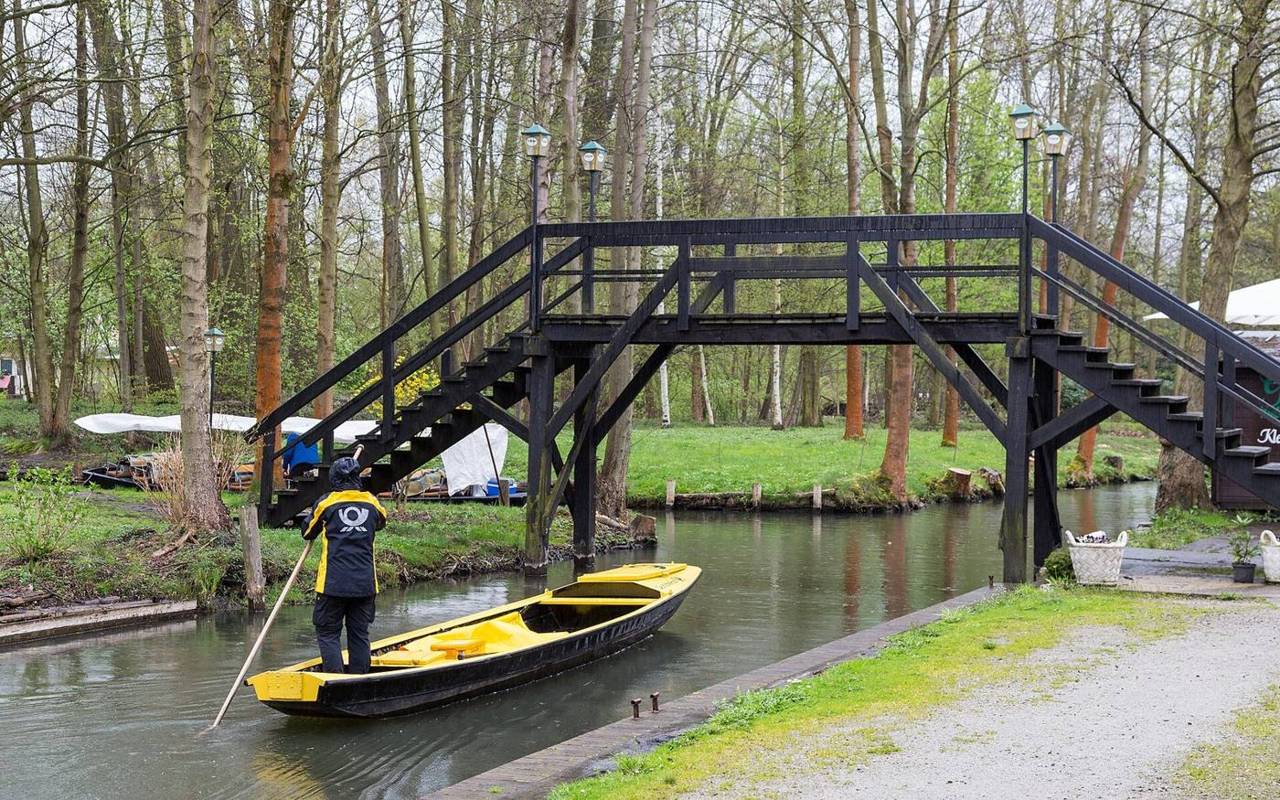
Water country north and south of Berlin: the Spreewald canals explored by punt, a UNESCO biosphere reserve, then Müritz National Park with hundreds of lakes to paddle and Schwerin Castle on its island.
 3 daysEasy
Bauhaus and Luther: Dessau, Wittenberg and Wörlitz
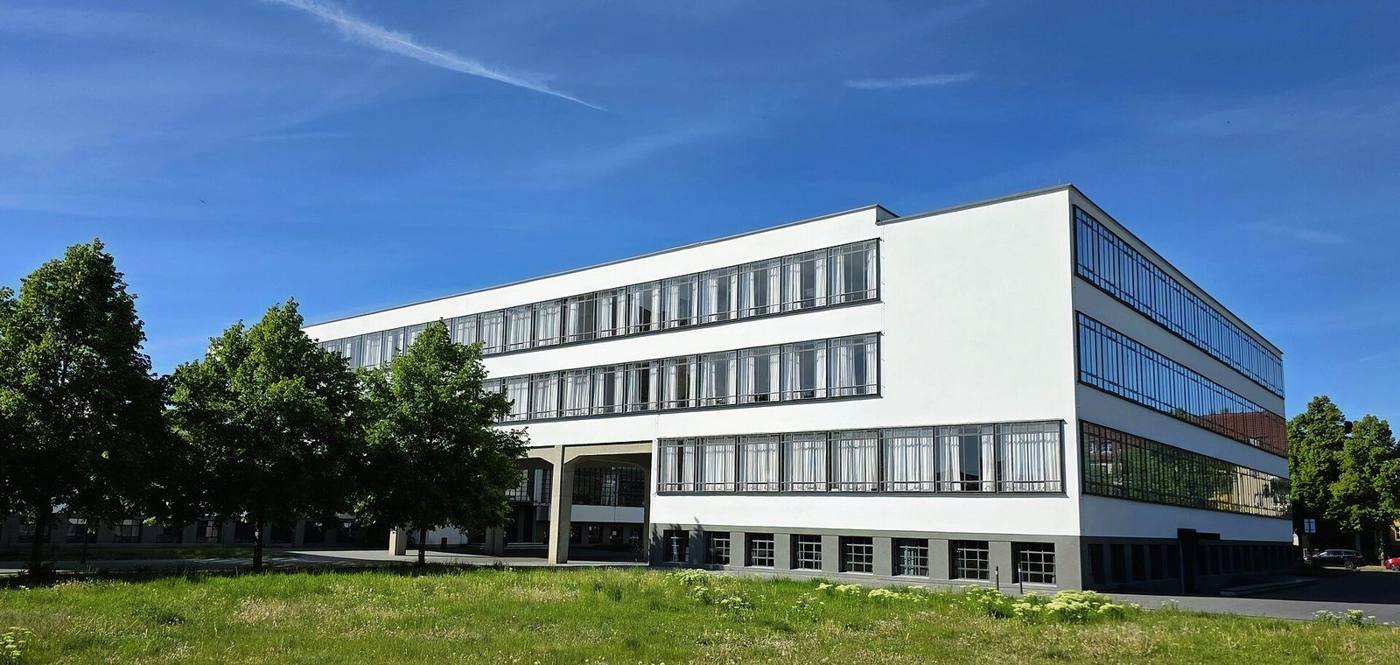
Three UNESCO sites close together: the Bauhaus building and the Masters' Houses in Dessau, the Luther sites in Wittenberg with the Castle Church and the reformer's house, and the Dessau-Wörlitz Garden Realm, the first great English-style landscape park on the Continent.
 5 daysModerate
The Danube by bike from Regensburg to Passau
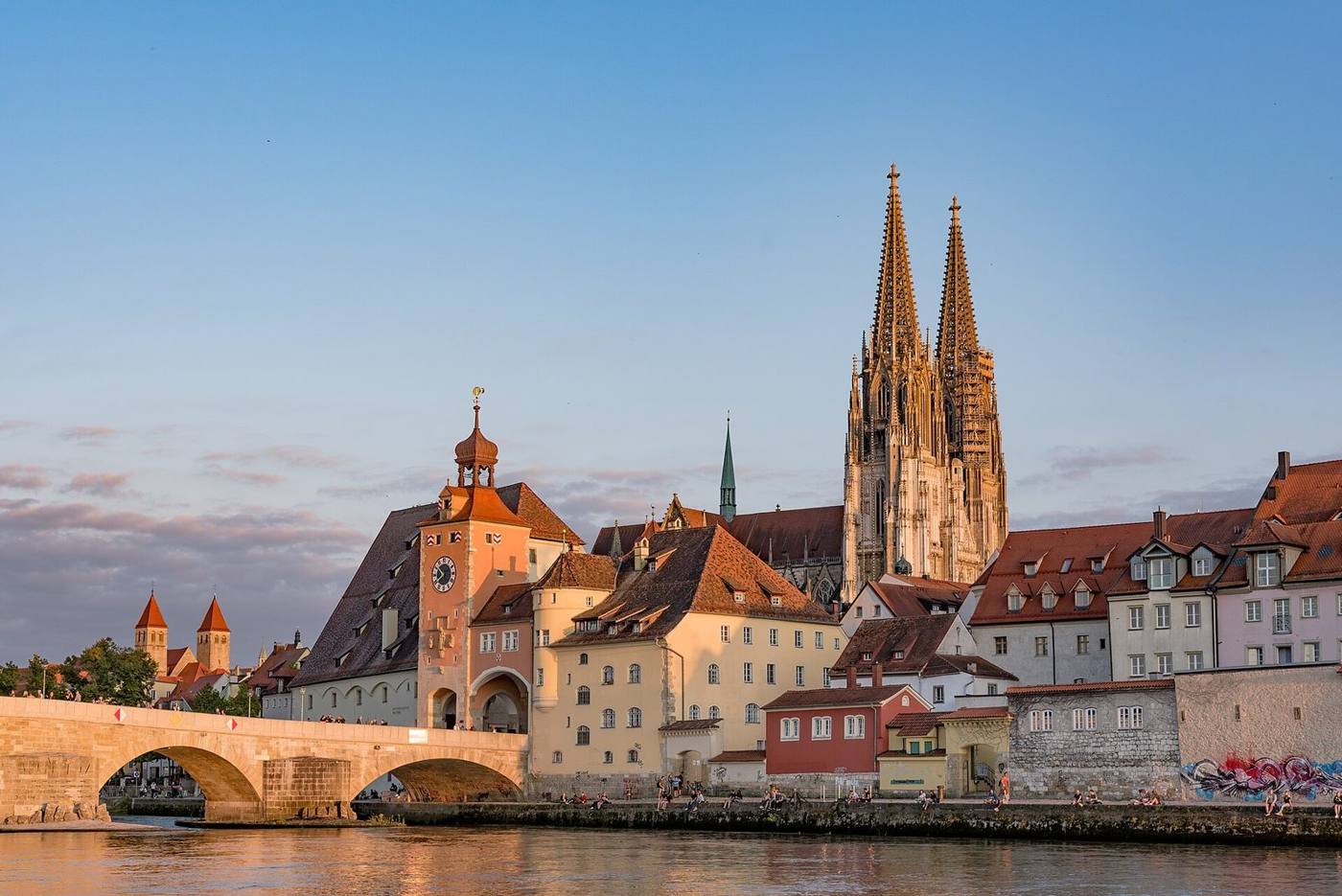
The Bavarian Danube cycle path: the Danube gorge by boat to Weltenburg Abbey, Regensburg (UNESCO) with its stone bridge, the Walhalla temple, Straubing, the river plain and Passau, the city of three rivers.