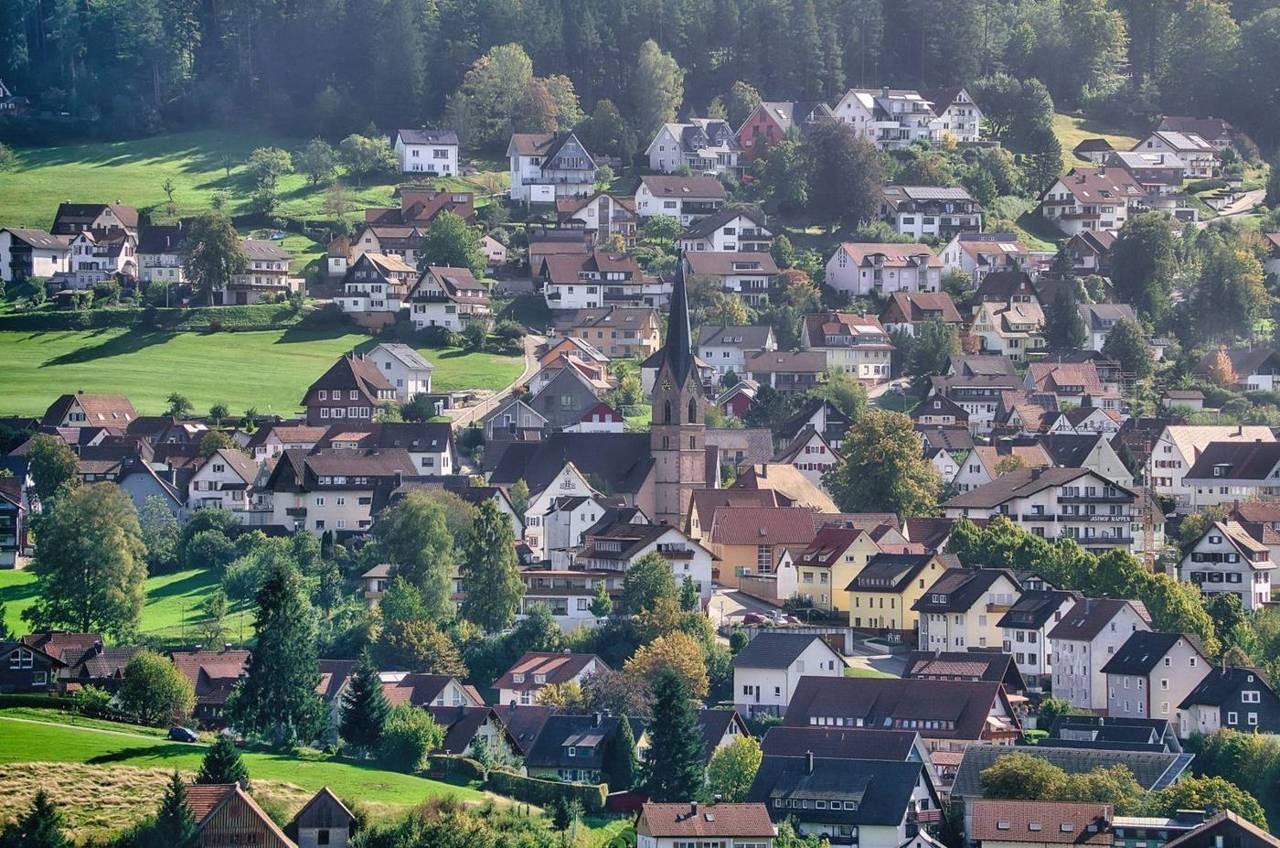
The Black Forest
Freiburg, the Triberg waterfalls, Lake Titisee, the Feldberg, the spa town of Baden-Baden and the villages of cuckoo clocks.
- Freiburg
- Titisee
- Feldberg
- Triberg
- Gengenbach
- Baden-Baden
Day by day
- Day 1
Freiburg: the cathedral, the Bächle and the market
The Black Forest is a range of low mountains covered in fir forests in south-west Germany, in Baden-Württemberg, between the Rhine and the Danube, on the borders of France and Switzerland. It is the land of cuckoo clocks, wooden houses with great sloping roofs, lakes, waterfalls, spas and the cherry cake that bears its name. In six days you see Freiburg, the Titisee, the Feldberg, Triberg, Gengenbach and Baden-Baden.
You arrive at Basel-Mulhouse airport, the nearest, about an hour from Freiburg, or at Frankfurt or Stuttgart, then by train.
Freiburg im Breisgau is a lively, sunny university city at the foot of the forest. Visit the Gothic cathedral, the Münster, with its openwork tower of red stone more than a hundred metres high, completed in the fourteenth century. Climb the tower for the view over the rooftops and hills.
Around the cathedral, every morning except Sunday, there is a market on the square, with stalls of fruit, vegetables, flowers, cheeses and grilled sausages, eaten in a bread roll.
Walk around the old town following the Bächle, the small water channels running along the streets, used in the Middle Ages for water and against fires. A tradition says that anyone who steps in one by mistake will marry someone from Freiburg.
In the evening, sleep in Freiburg.
Practical tip: Italian citizens need only an identity card. Germany is keeping border controls until March 2027: keep your document to hand, on trains too.
- Day 2
Freiburg: the old town and the Schauinsland cable car
In the morning, continue your visit to central Freiburg. Pass under the city's two medieval gates, the Martinstor and the Schwabentor, and walk through the old fishermen's and tanners' quarter, with colourful houses along the canal, small shops and little bridges.
Visit the Augustinermuseum, in the former Augustinian monastery, with medieval sculpture, paintings and the cathedral's original statues, displayed in a large, softly lit hall.
In the afternoon, take the tram and then the bus to the valley station of the Schauinsland cable car, Freiburg's own mountain, about half an hour away. The cable car, one of the longest circulating gondola lifts in Germany, climbs in about twenty minutes to almost twelve hundred metres.
At the top, climb the observation tower for views over the Black Forest, the Rhine plain, the Vosges in France and, on clear days, the Swiss Alps. Take a walk on the trails through meadows and woods, or visit the old Schauinsland silver mine, open to the public with guides.
In the evening, return to Freiburg and taste Baden cooking, with the region's white wines, such as Grauburgunder, grown on the hills between the forest and the Rhine.
In the evening, sleep in Freiburg.
Practical tip: if you stay in the Black Forest, ask for the guest card. In many towns it lets you use the region's trains and buses at no cost: check the conditions when you book.
- Day 3
The Titisee and the climb to the Feldberg
In the morning, take the Höllentalbahn, the Hell Valley railway, which climbs from Freiburg into the forest through a narrow gorge, with tunnels and bridges, to the Titisee, in about forty minutes.
The Titisee is a glacial lake surrounded by fir forests, with dark, clear water. Walk along the shore, hire a rowing boat or pedalo, or take a cruise around the lake. The village is full of shops selling cuckoo clocks and forest products, such as smoked ham, Schwarzwälder Schinken.
In the afternoon, take the bus to the Feldberg, the highest mountain in the Black Forest, at almost fifteen hundred metres. Go up by chairlift and walk to the summit, on a plateau of meadows and heath, with the Feldberg tower.
From the top, the view stretches over the forested hills and, on clear days, to the Alps. In winter the Feldberg is the region's main ski area.
Walk down to the Feldsee, a small round glacial lake at the foot of the mountain, surrounded by rock walls and woods, reached by a steep path.
In the evening, sleep at the Titisee or in a nearby village.
Practical tip: the weather on the Feldberg changes quickly and a cold wind often blows at the top, even in summer. Bring a jacket and walking shoes.
- Day 4
The Triberg waterfalls and the Black Forest Railway
In the morning, go to Triberg, in the heart of the forest, a small town famous for its waterfalls and cuckoo clocks.
The Triberg falls are among the highest in Germany: the Gutach stream drops about one hundred and sixty metres in seven steps between rocks and fir trees. A path climbs beside the falls, with bridges and viewing terraces. Red squirrels live in the wood, used to people.
Visit the Black Forest Museum in town, with the history of clocks, mechanical musical instruments, traditional costumes and the Bollenhut, the straw hat with large red wool pompoms that unmarried girls wore in some villages.
In the afternoon, take the Schwarzwaldbahn, the Black Forest Railway, one of the most beautiful mountain lines in Germany, built in the nineteenth century. Between Triberg and Hornberg the train descends through a series of curves and thirty-nine tunnels, with views over valleys and villages.
On the way, at Gutach, is the Black Forest open-air museum, the Vogtsbauernhof, with historic wooden farmhouses with thatched roofs, mills and sawmills, and craftspeople at work.
In the evening, sleep in Triberg or in a village in the valley.
Practical tip: there is a charge to enter the falls, and the path has many steps, slippery in the rain. Check opening times, as some sections may be closed in winter.
- Day 5
Gengenbach and the Black Forest High Road
In the morning, go to Gengenbach, in the Kinzig valley, a small medieval town among vineyard-covered hills, with walls, gates, colourful half-timbered houses and balconies full of flowers. Walk along the Engelgasse, a narrow, steep lane, and through the town hall square, with its baroque building.
In December the town hall becomes the largest Advent calendar in the world: its twenty-four windows light up one each evening with images by an artist.
In the afternoon, drive north along the Schwarzwaldhochstraße, the Black Forest High Road, the oldest scenic road in Germany, which runs along the mountain ridge between Freudenstadt and Baden-Baden, at about a thousand metres, with views over the Rhine plain and the Vosges.
Stop at the Mummelsee, a small lake surrounded by firs at the foot of the Hornisgrinde, the highest mountain in the northern forest. A legend says water nymphs live in the lake. Take a short walk to the summit of the Hornisgrinde, with its tower and heathland.
Along the road, the area is part of the Black Forest National Park, with woods left to nature.
In the evening, taste Schwarzwälder Kirschtorte, Black Forest gateau, with chocolate, cream, cherries and Kirsch, the cherry spirit.
In the evening, sleep in Baden-Baden.
Practical tip: without a car, the High Road can be covered by scheduled buses, which run less often. Check timetables in advance, especially out of season.
- Day 6
Baden-Baden and the spas, then departure
Baden-Baden is an elegant spa town on the edge of the Black Forest, with hot springs already used by the Romans. In the nineteenth century it became the meeting place of European aristocracy, kings, writers and musicians, who came for the cures, the casino and the horse races.
In the morning, walk along the Lichtentaler Allee, a tree-lined avenue beside the river Oos, with parks, villas and rose gardens. Visit the Kurhaus, the neoclassical building with columns, and the casino, with rooms decorated in French style, which can be visited with guides in the morning.
Then go to the baths. You can choose between the Caracalla Therme, modern, with indoor and outdoor pools, and the Friedrichsbad, built at the end of the nineteenth century, with a traditional Roman-Irish bathing circuit in domed marble halls, without swimwear, in silence.
In the afternoon, if you have time, visit the Museum Frieder Burda, of modern and contemporary art, in a white building by Richard Meier near the park.
Then take the train to Karlsruhe or Frankfurt for your flight home, or to Strasbourg, in France, less than an hour away.
This trip combines well with Lake Constance, Alsace and Strasbourg, or with Heidelberg and the Rhine valley.
Practical tip: at the Friedrichsbad and in the saunas of German spas you go without swimwear. Check the rules and opening times, which may differ on some days.
Easy nature and good food, ideal for families or for a road trip from Luxembourg or northern Italy. Overnight guests often receive the KONUS guest card, which makes local buses and trains no-cost. Titisee and Triberg are very touristy; the lesser-known villages are more authentic.
Before you go
- Documents and visa
- A valid identity card or passport is enough for EU citizens. German land border checks have been extended until March 2027: always carry your document.
- Health and vaccines
- No vaccines required. EU citizens should carry the European Health Insurance Card. Emergencies: 112, police 110.
- Money and payments
- Euro. Cards are increasingly accepted, but many bars, bakeries and beer halls still take cash only.
- Power sockets
- Types C and F, 230 volts.
- Time zone
- UTC+1, UTC+2 in summer.
- Safety
- The United States rates Germany level 2 for terrorism. In stations and crowded markets watch out for pickpockets. Official advice: GOV.UK.
Information checked in November 2026 for Italian and EU citizens. Rules change: always check before you travel.
Variations
In 4 days: Freiburg, the Titisee and Feldberg, Triberg.
In 9 days: add Lake Constance and Strasbourg.
Frequently asked questions
When is the best time to go?
From May to October for walking, with colourful autumns. In December there are Christmas markets, and in winter there is skiing on the Feldberg.
Do I need a car?
It is not essential: trains and buses link the main towns. A car is handy for the High Road and smaller villages.
What should I take home?
A cuckoo clock, smoked ham and Kirsch. Certified clocks carry a regional quality mark.
Indicative itinerary written by World Atlas. Before booking, check timetables, seasonal openings, documents and safety.
 7 daysEasy
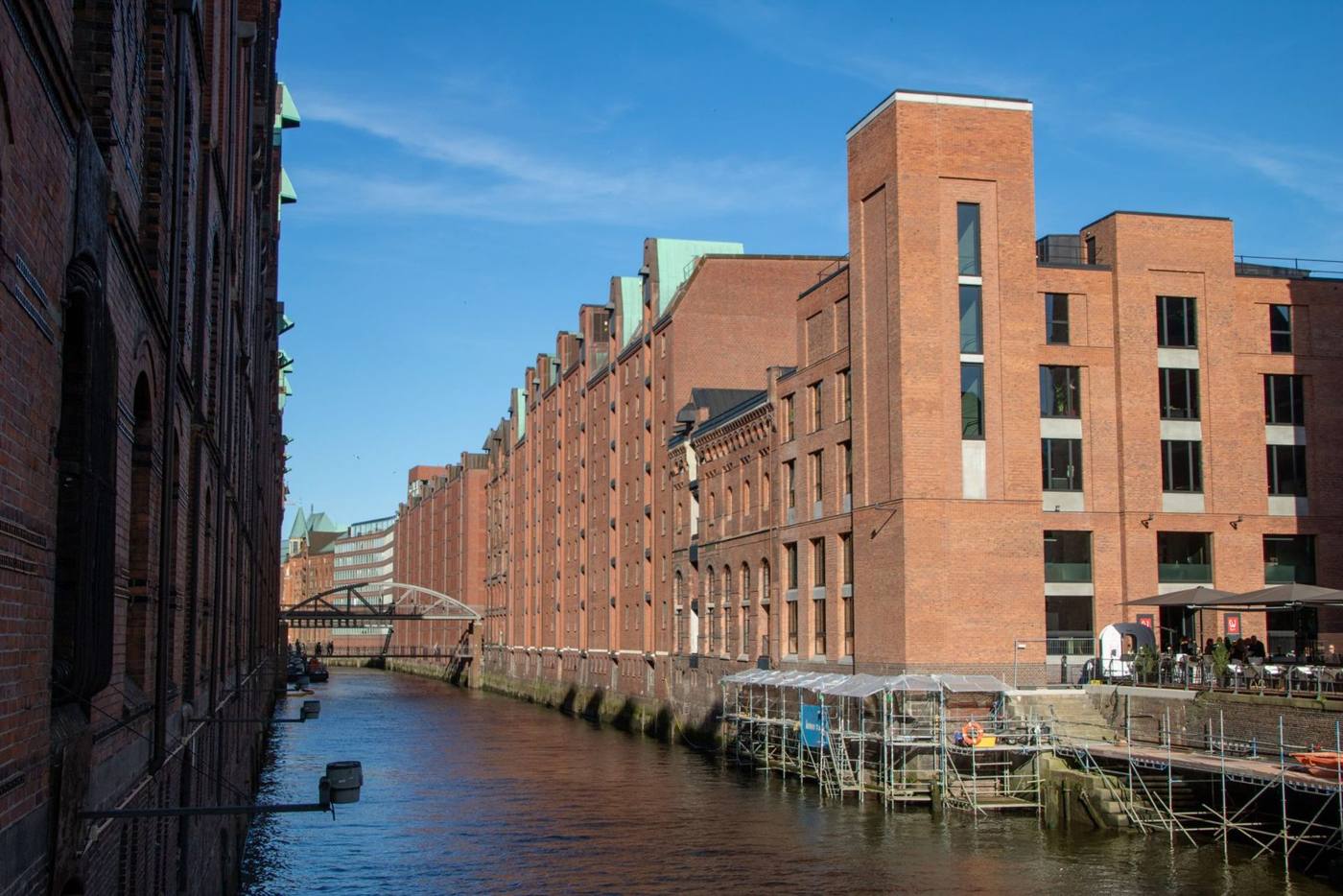
Hamburg and the Baltic Sea
Hamburg's port and the Speicherstadt, Hanseatic Lübeck, the brick towns of Wismar and Stralsund and the white cliffs of Rügen island.
 6 daysEasy
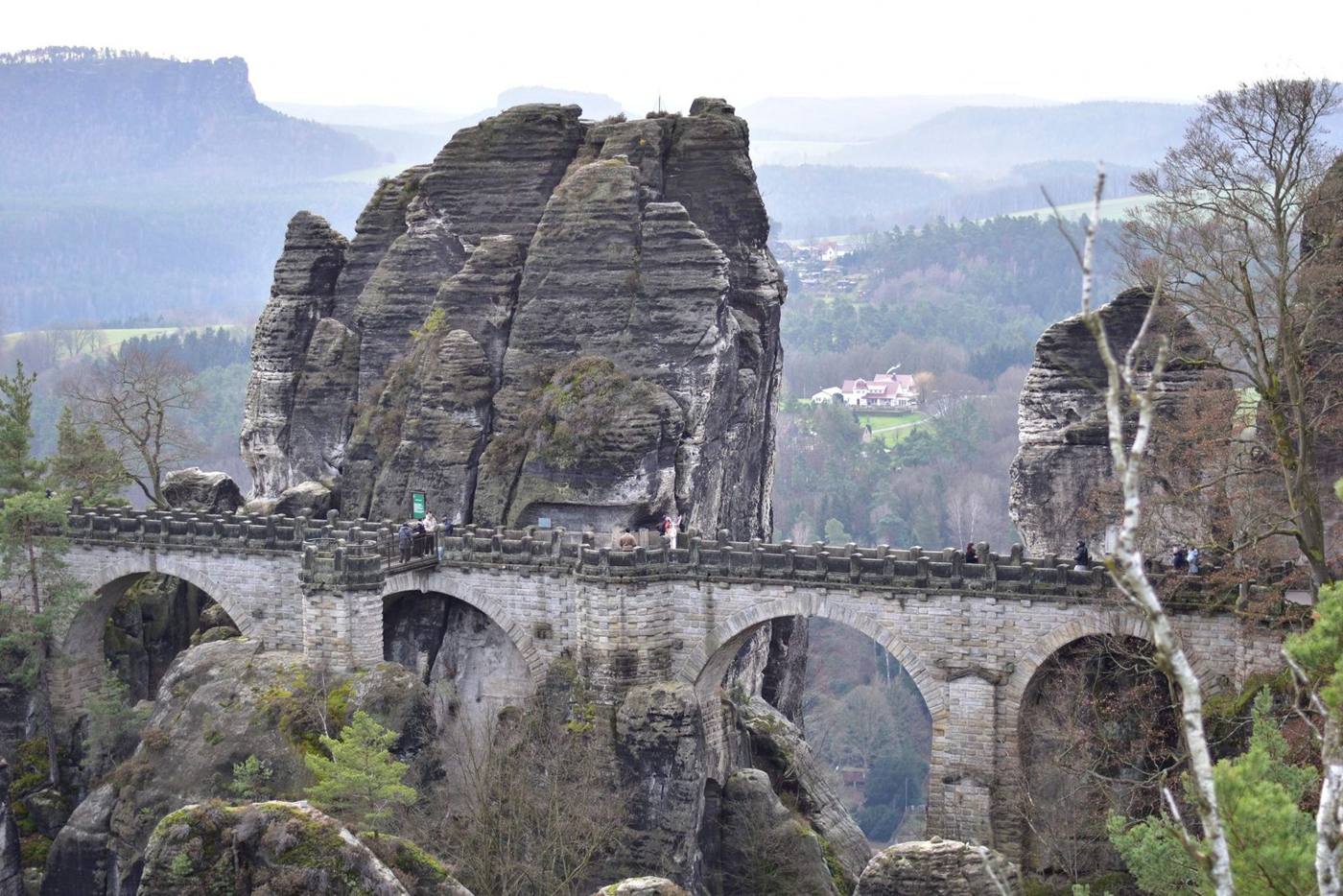
Saxony: Dresden, Leipzig and Saxon Switzerland
Rebuilt Dresden with the Frauenkirche and the Zwinger, the sandstone towers of the Bastei above the Elbe, Meissen and Bach's Leipzig.
 6 daysModerate
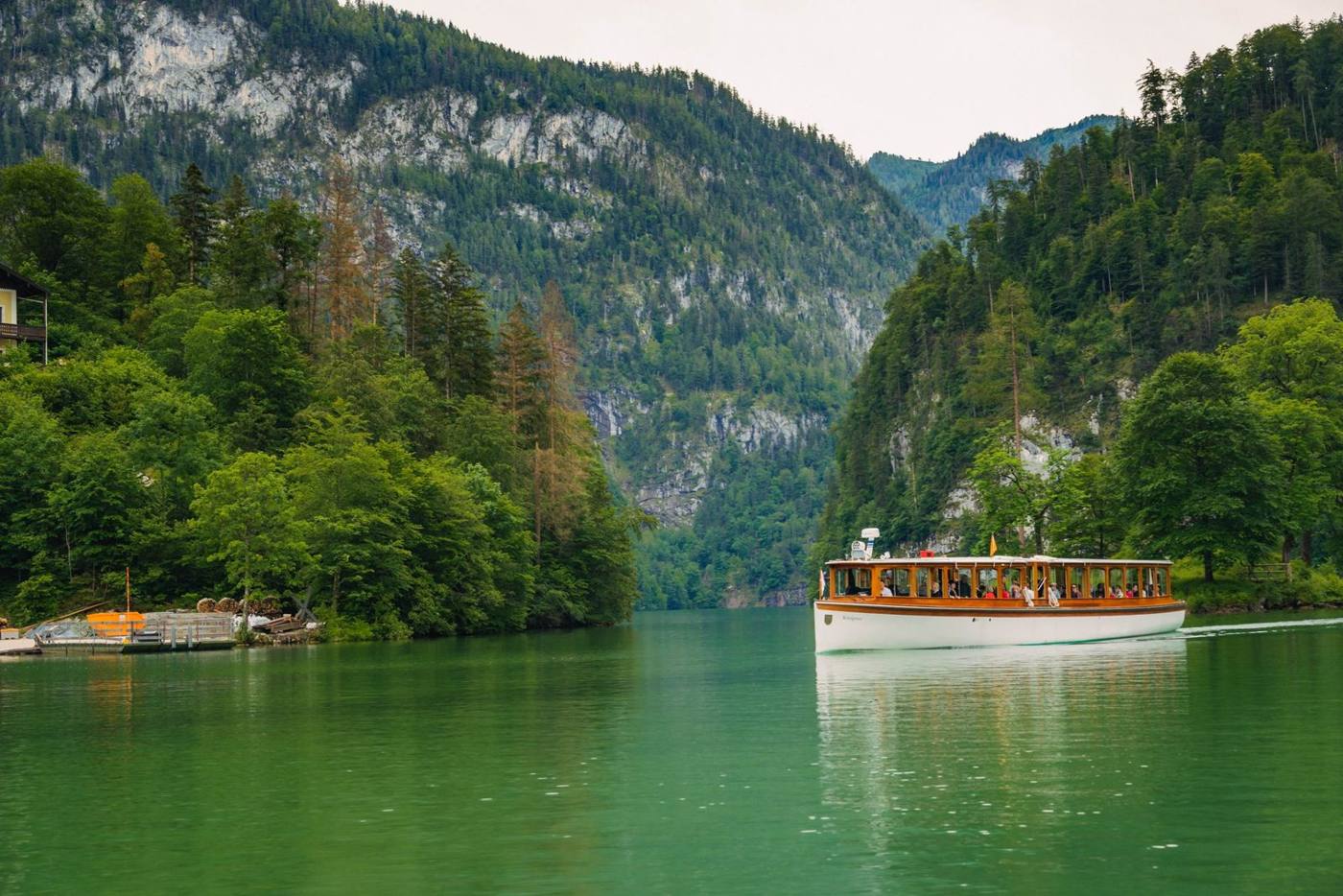
The Bavarian Alps and Berchtesgaden
Lake Königssee by electric boat, the Eagle's Nest, Garmisch-Partenkirchen, the Zugspitze and the Partnach gorge.