Saxony: Dresden, Leipzig and Saxon Switzerland
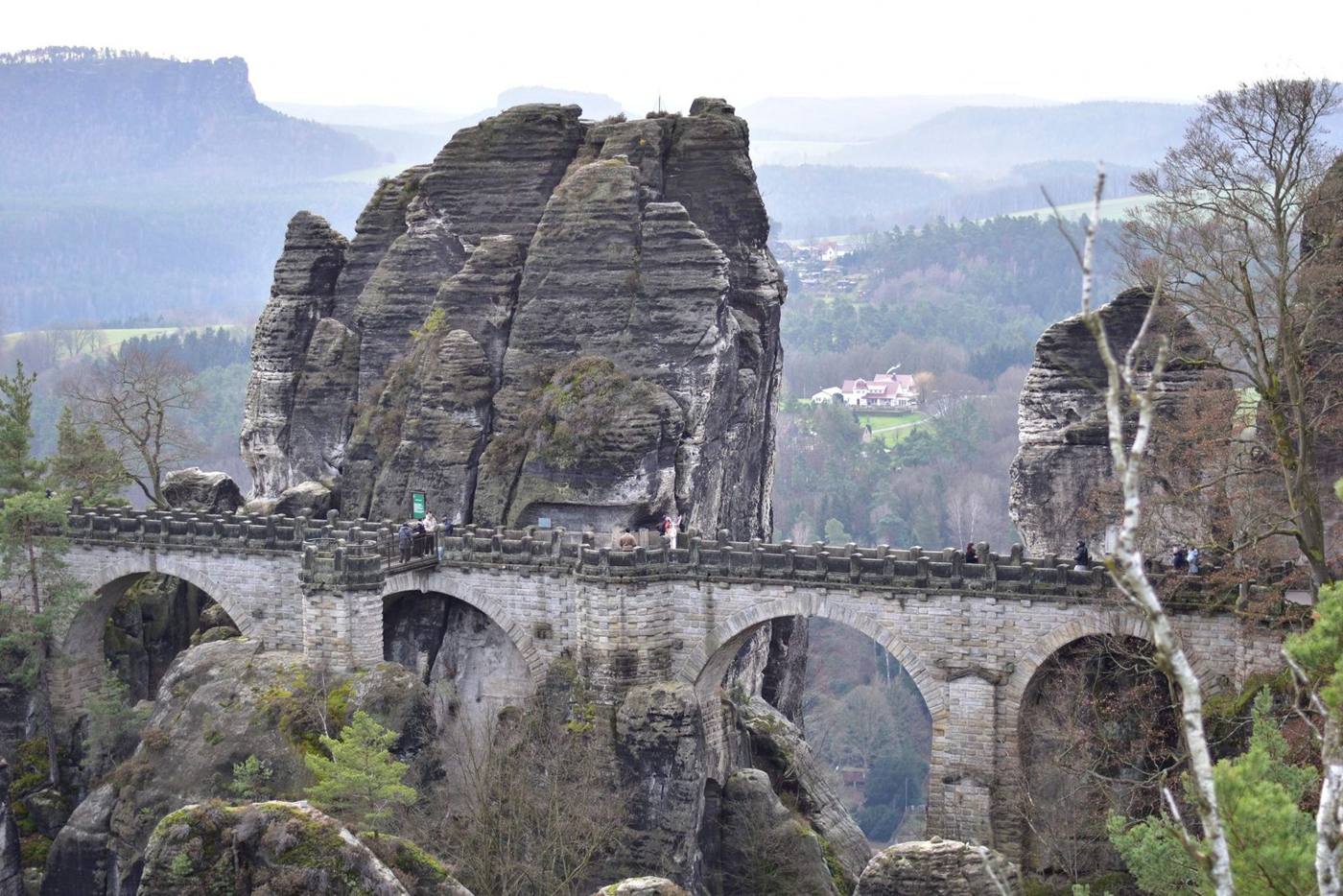
Rebuilt Dresden with the Frauenkirche and the Zwinger, the sandstone towers of the Bastei above the Elbe, Meissen and Bach's Leipzig.
- Dresden
- Bastei
- Königstein
- Meissen
- Leipzig
Day by day
- Day 1
Dresden: the Frauenkirche and the Zwinger
Saxony, in eastern Germany, is a region of art cities, castles and rock landscapes. Dresden, called Florence on the Elbe for its baroque palaces and art collections, was almost completely destroyed by the bombing of February 1945 and then rebuilt piece by piece. To the south-east, along the Elbe, Saxon Switzerland is a park of sandstone towers and walls among the woods. Leipzig is the city of Bach and of the peaceful revolution of 1989. In six days you see Dresden, Saxon Switzerland, Meissen and Leipzig.
You reach Dresden by plane, or by train from Berlin in about two hours, or from Prague in about two and a half hours.
In the afternoon, visit the Frauenkirche, the Church of Our Lady, with its great bell-shaped stone dome. It collapsed two days after the 1945 bombing and remained a heap of rubble for almost fifty years, as a memorial against war. It was rebuilt between 1994 and 2005 using original stones where possible: you recognise them because they are darker. Inside, the church is bright, with white and gold balconies. If you can, climb the dome for the view over the city.
Then walk to the Zwinger, a large early-eighteenth-century baroque complex built for court festivities, with pavilions, galleries and fountains around a courtyard. Inside are the Old Masters picture gallery, with Raphael's Sistine Madonna, and the porcelain collection.
In the evening, stroll along the Brühl Terrace, the balcony of Europe, above the Elbe.
In the evening, sleep in Dresden.
Practical tip: Germany has extended land border controls until March 2027. Always carry a valid identity document.
- Day 2
Dresden: the Green Vault and the Neustadt
In the morning, visit Dresden Castle, the residence of the electors of Saxony, rebuilt after the war. Here is the Green Vault, the Grünes Gewölbe, one of Europe's richest treasuries, created by Augustus the Strong in the early eighteenth century. In the Historic Green Vault on the ground floor, precious objects are displayed in the original rooms with mirrored and gilded walls, without glass cases. In the New Green Vault upstairs you see masterpieces of the goldsmith's art: the Dresden Green Diamond, one of the largest green diamonds in the world, the Court of the Grand Mogul, a golden table with hundreds of enamelled figures, and the cherry stone carved with 185 faces.
On the way out, look at the Fürstenzug, the Procession of Princes, a huge mural about a hundred metres long made of about 23,000 Meissen porcelain tiles, showing the rulers of Saxony on horseback.
In the afternoon, cross the Elbe on the Augustus Bridge and explore the Neustadt, the new town, on the north bank. Unlike the centre, many buildings here were not destroyed, and the outer part is now the city's alternative district, with murals, courtyards and bars. Visit the Kunsthofpassage, a series of courtyards decorated by artists, with the facade where rainwater runs down musically through pipes and gutters.
In the evening, sleep in Dresden.
Practical tip: visitor numbers for the Historic Green Vault are limited and entry is by timed ticket. Book online in advance.
- Day 3
Saxon Switzerland: the Bastei bridge
In the morning, take the suburban train from Dresden along the Elbe to Kurort Rathen, in about forty minutes. The name Saxon Switzerland was given in the eighteenth century by two Swiss painters working in Dresden, who found here the mountain landscapes of their homeland. It is a national park of sandstone pillars, towers and walls carved by water, up to a hundred metres high, among wooded gorges and narrow valleys, and one of the birthplaces of no-cost climbing.
From Rathen, cross the Elbe on the small ferry and walk up to the Bastei, in about forty minutes along a stepped path among the rocks. The Bastei bridge, built of stone in 1851 to replace a wooden one, links several rock towers above a deep gorge, about 190 metres above the river. From the viewpoints you see the Elbe flowing below between the cliffs, with woods and rocks stretching to the horizon.
Next to the bridge are the remains of Neurathen rock castle, a medieval fortress built among the towers, with walkways and stairs.
In the afternoon, go down to the Felsenbühne open-air theatre, carved among the rocks, and walk to the Amselsee, a small lake in a gorge, where you can hire a rowing boat.
In the evening, sleep in Rathen or Bad Schandau.
Practical tip: the Bastei is very crowded at midday and at weekends. Arrive early in the morning or late in the afternoon for better light and fewer people.
- Day 4
Königstein fortress and the Malerweg on foot
In the morning, visit Königstein fortress, one of the largest mountain fortresses in Europe, built on a sandstone plateau about 240 metres above the Elbe. Over the centuries it was used as a refuge for the princes of Saxony, as a prison and as a place to hide Dresden's art treasures in wartime. Never conquered, it keeps walls, barracks, churches and a well more than 150 metres deep cut into the rock. The view from the ramparts over the Elbe valley and the table mountains is among the finest in the region.
In the afternoon, walk a section of the Malerweg, the Painters' Way, a staged route of about 116 kilometres following the paths used by nineteenth-century Romantic painters such as Caspar David Friedrich to reach the most beautiful places in Saxon Switzerland. A good stage starts from Bad Schandau and climbs towards the Schrammsteine rocks, with iron ladders and passages between the walls, to a spectacular viewpoint over the towers and the Elbe, in about three or four hours.
Alternatively, from the Kirnitzsch valley take the little historic tram to the Lichtenhain waterfall, and from there walk to the Kuhstall, a great natural rock arch.
In the evening, return to Dresden by train.
Practical tip: some Schrammsteine paths have steep ladders and exposed passages. Wear hiking boots and choose the route that suits your level.
- Day 5
Meissen and its porcelain
In the morning, take the train or a boat on the Elbe to Meissen, about forty minutes north-west of Dresden. Meissen is a small medieval town on the banks of the Elbe, with a centre of colourful houses, steep cobbled streets and a hill crowned by the castle and the cathedral.
Here in 1710 the first hard-paste porcelain manufactory in Europe was founded. For centuries Europeans had tried to discover the secret of Chinese porcelain, and it was found in Dresden by the alchemist Johann Friedrich Böttger, whom Augustus the Strong kept almost prisoner to make gold. The manufactory was moved to Meissen castle to keep the secret. Today, visit the manufactory's museum and demonstration workshops, where you see how craftsmen shape, decorate and hand-paint the porcelain, with its mark of two crossed blue swords.
In the afternoon, climb the castle hill to visit the Albrechtsburg, considered the first castle in Germany built as a residence rather than a fortress, with its spiral staircase and painted halls, and the Gothic cathedral next door, with its spires.
If you have time, taste wine from the Elbe valley, one of the northernmost wine areas in Europe, with terraced vineyards on the hills.
In the evening, return to Dresden or continue to Leipzig.
Practical tip: in summer the paddle steamer between Dresden and Meissen is a lovely way to arrive. Check the timetables, which change with the seasons and the river level.
- Day 6
Leipzig: Saint Thomas, the Stasi museum and the Spinnerei, then departure
In the morning, go to Leipzig, about an hour and a quarter from Dresden by train. Leipzig is a city of trade, fairs and music. Visit Saint Thomas church, where Johann Sebastian Bach was cantor, director of the choir and music, for twenty-seven years until his death in 1750. He is buried here, in front of the altar, and the Thomanerchor, founded in 1212, still sings his cantatas. Opposite is the Bach museum.
Then go to Saint Nicholas church, where in the autumn of 1989 the Monday prayers for peace became the great demonstrations that led to the fall of the Berlin Wall. A few steps away, in the old building of the East German secret police, the Stasi museum in the building called the Runde Ecke shows how the state spied on its citizens, with microphones, disguises and files.
In the afternoon, if you have time, visit the Spinnerei, a large nineteenth-century cotton mill turned into an art space, with galleries and artists' studios, including painters of the New Leipzig School.
In the late afternoon, take the train or a plane from Leipzig/Halle airport home.
This trip combines well with Berlin, about an hour and a quarter from Leipzig by train, with Prague, south of Dresden, or with Thuringia, Weimar and Erfurt.
Practical tip: many museums in Germany close on Mondays. Check opening days beforehand.
Eastern Germany, with art, music and one of central Europe's finest rock landscapes. Dresden and Leipzig are cheaper than Munich or Hamburg. The Historic Green Vault requires a timed ticket. The Bastei is crowded at weekends, so go early.
Before you go
- Documents and visa
- A valid identity card or passport is enough for EU citizens. German land border checks have been extended until March 2027: always carry your document.
- Health and vaccines
- No vaccines required. EU citizens should carry the European Health Insurance Card. Emergencies: 112, police 110.
- Money and payments
- Euro. Cards are increasingly accepted, but many bars, bakeries and beer halls still take cash only.
- Power sockets
- Types C and F, 230 volts.
- Time zone
- UTC+1, UTC+2 in summer.
- Safety
- The United States rates Germany level 2 for terrorism. In stations and crowded markets watch out for pickpockets. Official advice: GOV.UK.
Information checked in November 2026 for Italian and EU citizens. Rules change: always check before you travel.
Variations
In 3 days: Dresden and the Bastei.
In 10 days: add Prague or Berlin.
Frequently asked questions
When is the best time to go?
From May to October for Saxon Switzerland; December for Dresden's Christmas markets, among the oldest in Germany.
Do I need a car?
No: Dresden, Rathen, Bad Schandau, Meissen and Leipzig are linked by frequent trains, and in Saxon Switzerland there are ferries and buses.
What documents do I need?
Italian citizens only need an identity card valid for travel abroad or a passport. Germany has extended land border controls until March 2027.
Indicative itinerary written by World Atlas. Before booking, check timetables, seasonal openings, documents and safety.
 6 daysModerate
The Bavarian Alps and Berchtesgaden
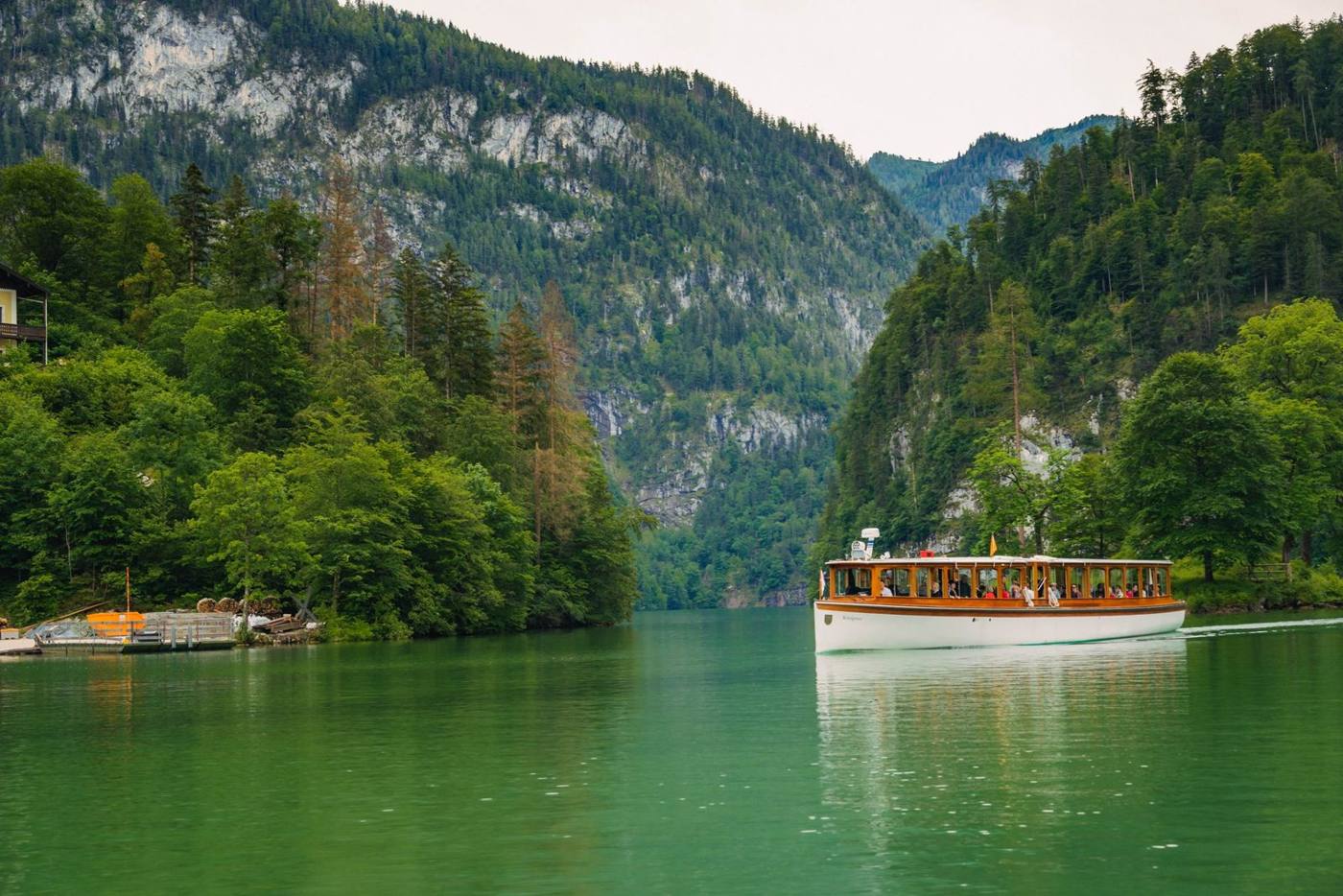
Lake Königssee by electric boat, the Eagle's Nest, Garmisch-Partenkirchen, the Zugspitze and the Partnach gorge.
 5 daysEasy
The Christmas markets
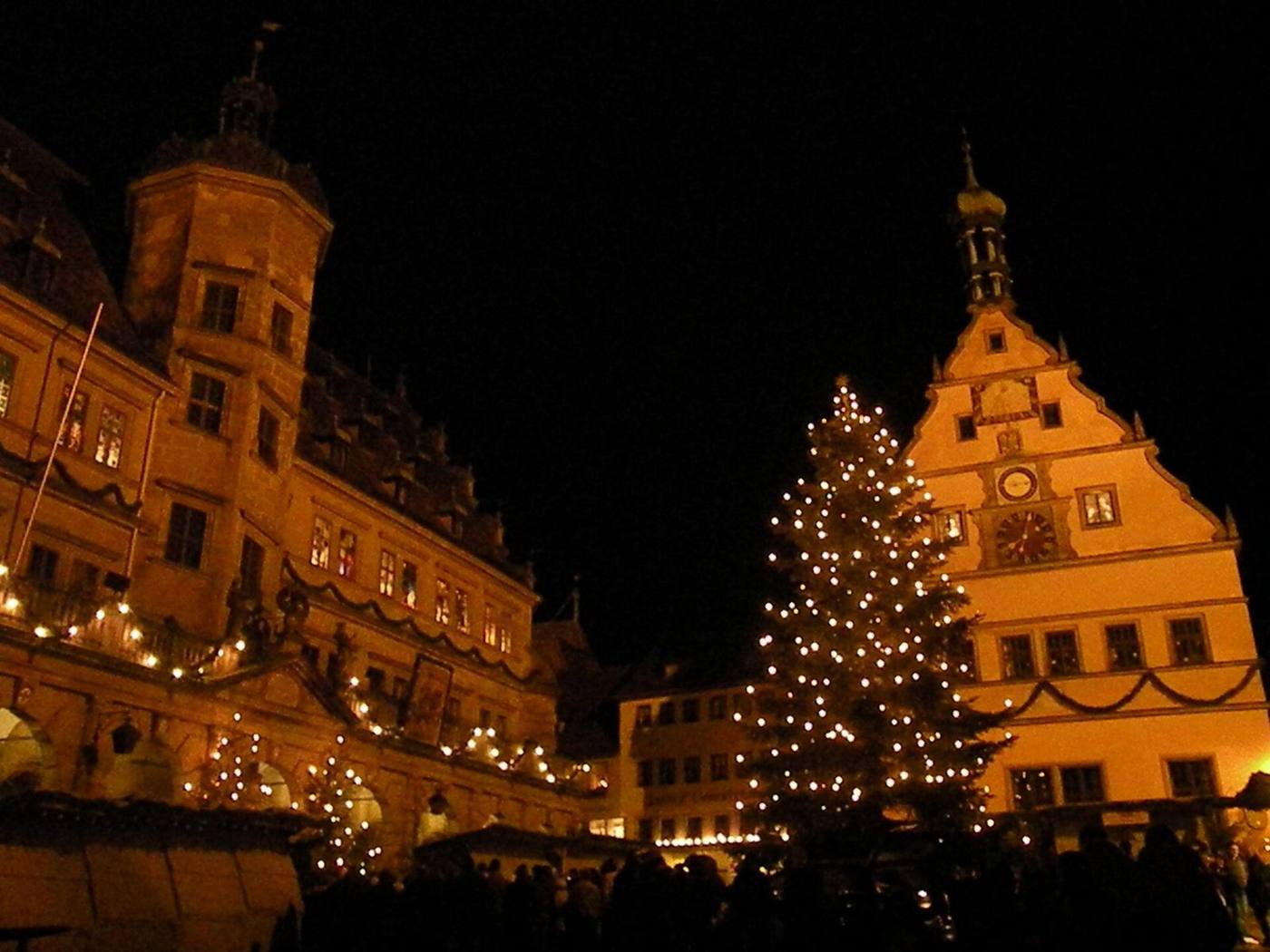
Nuremberg's Christkindlesmarkt, Rothenburg under snow, Bamberg and the markets of Munich, with mulled wine, gingerbread and lights.
 4 daysEasy
Cologne and the industrial Ruhr
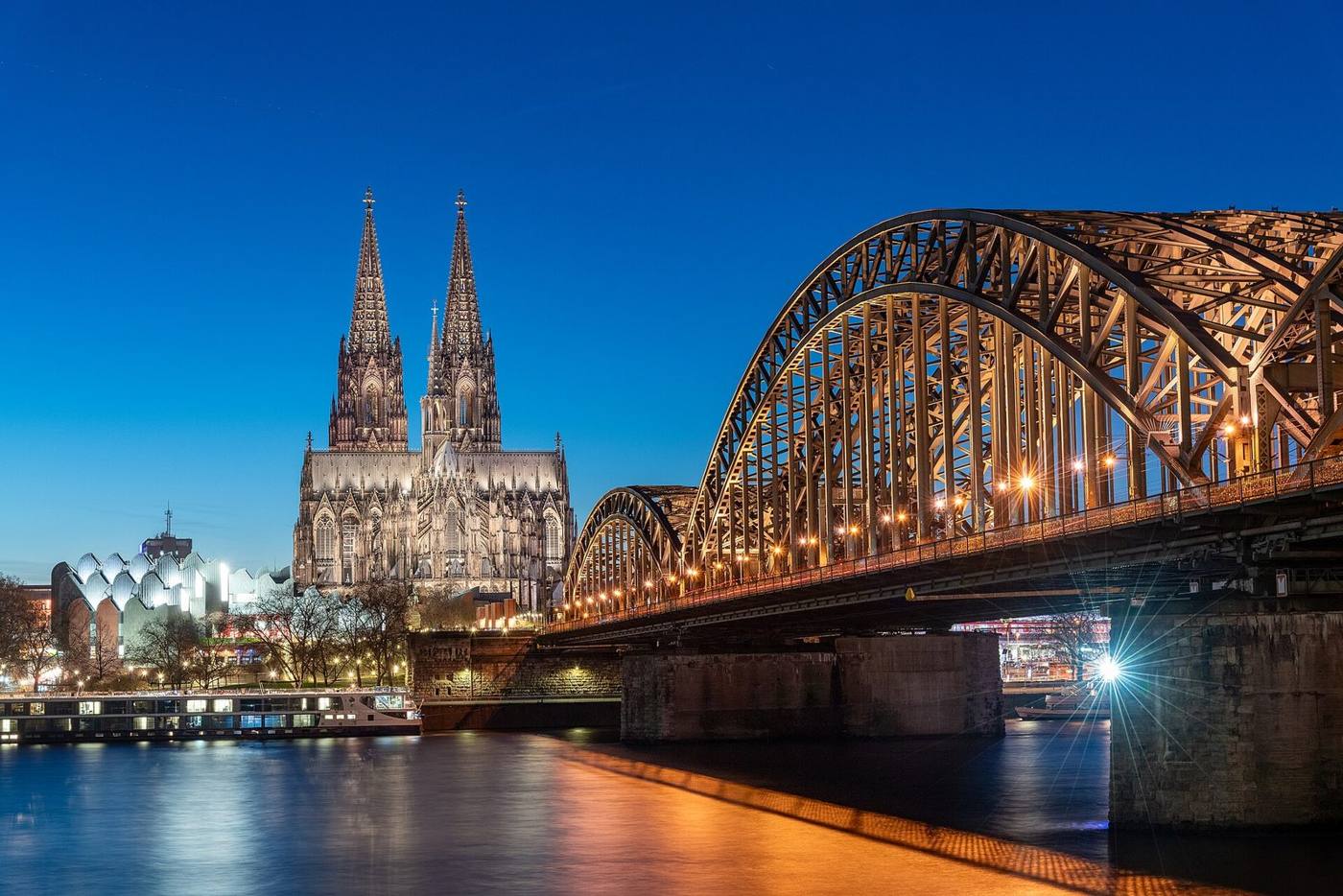
Cologne Cathedral and its Kölsch beer, Düsseldorf on the Rhine and the Ruhr's mines and steelworks turned into museums and parks.