Cologne and the industrial Ruhr
Cologne Cathedral and its Kölsch beer, Düsseldorf on the Rhine and the Ruhr's mines and steelworks turned into museums and parks.
- Köln
- Düsseldorf
- Essen
- Zollverein
- Duisburg
Day by day
- Day 1
Cologne: the cathedral, the tower climb and the Museum Ludwig
The Rhineland and the Ruhr, in western Germany, are among the most populous areas in Europe: along the Rhine lie old cities such as Cologne and Düsseldorf, and a little further north the Ruhr, once the country's great industrial heartland, with coal mines and steelworks now turned into museums, parks and cultural centres. It is a different kind of trip, between Gothic cathedrals, contemporary art and industrial heritage. Germany is in the Schengen area but has extended land border checks until March 2027: always carry a valid identity card or passport.
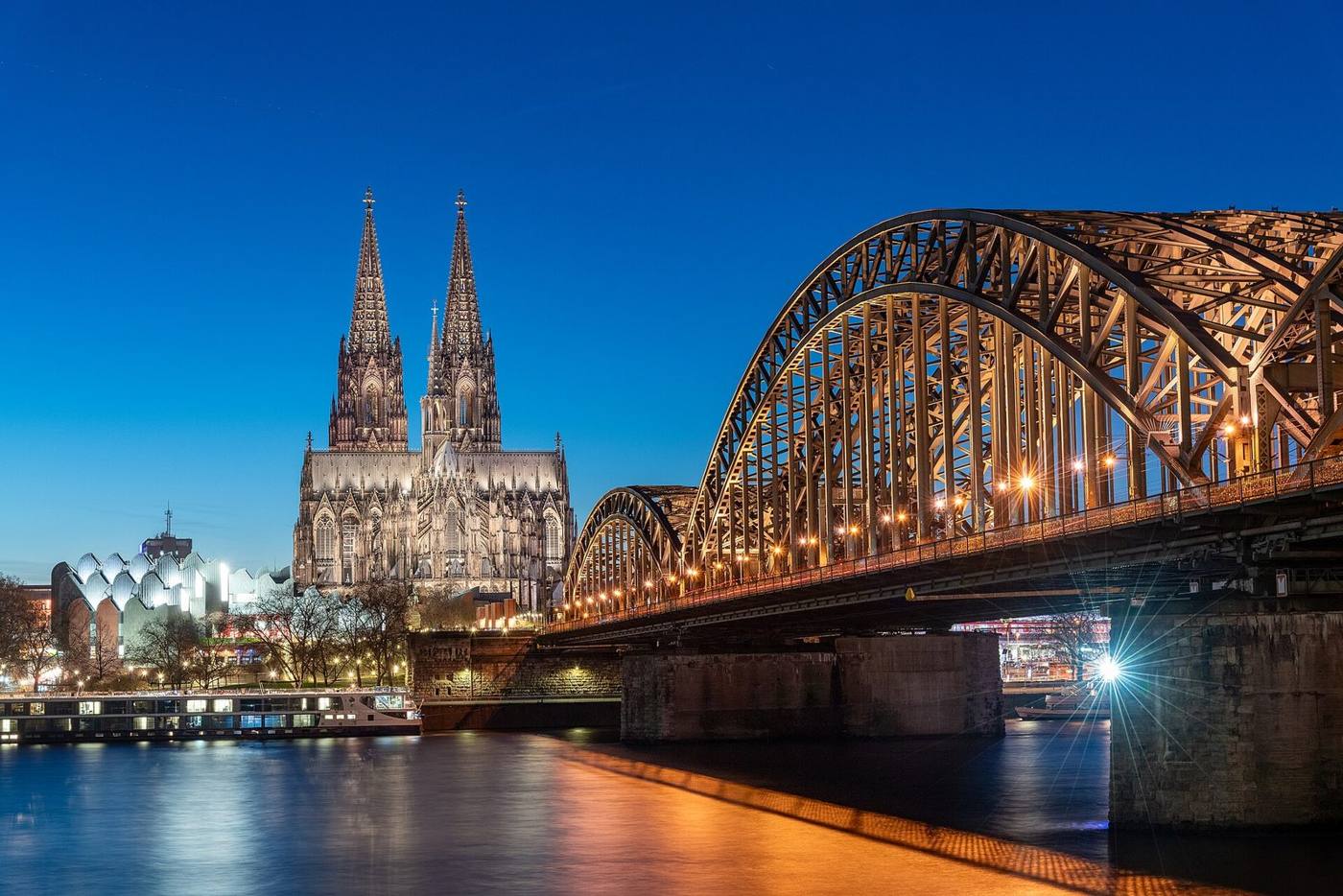
In the morning, as soon as you leave Cologne's central station, you face the cathedral, one of the largest Gothic cathedrals in the world and a UNESCO World Heritage site. Begun in 1248 and completed only in 1880, it has two spires about 157 metres tall. Inside, beneath the soaring vaults, is the Shrine of the Three Kings, a great twelfth-century golden reliquary, and stained glass from different eras, including Gerhard Richter's modern window of coloured squares. Then climb the south tower, with more than five hundred steps, to a terrace overlooking the whole city and the Rhine.
In the afternoon visit the Museum Ludwig next to the cathedral, with a large collection of twentieth-century art: German Expressionists, the Russian avant-garde, one of Europe's richest Picasso collections and many works of American pop art, such as Warhol and Lichtenstein.
In the evening cross the Hohenzollern bridge, covered in lovers' padlocks, and return to the old town for a Kölsch beer, served in small narrow glasses that waiters keep replacing until you cover your glass with a beer mat.
Practical tip: the cathedral is a working church; visits are limited during services.
- Day 2
Düsseldorf: the old town, the Media Harbour and the Kö
In the morning take the train to Düsseldorf, about half an hour from Cologne, the capital of North Rhine-Westphalia, an elegant city on the Rhine famous for fashion, art and its historic rivalry with Cologne.
Start in the old town, the Altstadt, with narrow lanes and hundreds of bars and breweries, known as the longest bar in the world. Here people drink Altbier, a dark top-fermented beer, different from Cologne's Kölsch. Then stroll along the long Rhine promenade, with views of the river, barges and bridges.
Following the river south you reach the Medienhafen, the Media Harbour, an old commercial port turned into a district of contemporary architecture: the most famous buildings are the three crooked, wavy towers of the Neuer Zollhof, designed by Frank Gehry, one white, one brick and one of polished steel reflecting the others. Next to them rises the Rhine Tower, the TV tower, with a revolving restaurant and a viewing platform.
In the afternoon walk the Königsallee, the Kö, a grand boulevard divided by a tree-lined canal with little bridges, with luxury shops and galleries. If you like art, visit the K20 collection, with works by Klee, Picasso, Kandinsky and Düsseldorf artists.
In the evening return to Cologne or stay in Düsseldorf.
Practical tip: regional trains between Cologne, Düsseldorf and Essen are frequent; a regional day ticket pays off if you travel a lot.
- Day 3
Essen and the Zollverein mine, then Duisburg's landscape park lit up
In the morning take the train to Essen, about an hour from Cologne, and the tram to the Zollverein mining complex, a UNESCO World Heritage site since 2001. It was one of the largest coal mines in Europe, working until 1986, and its Shaft XII winding tower, built in 1932 in Bauhaus style with its red two-legged frame, has become the symbol of the Ruhr. The brick and steel buildings, with simple, elegant lines, were called at the time the most beautiful mine in the world.
In the great coal-washing building is the Ruhr Museum, reached by a very long orange escalator: it tells the natural and human history of the region, from the formation of coal millions of years ago to the life of miners and their families, from industry to today's transformation. You can also take guided tours along the coal's route, among machines, conveyors and silos, and go up on the roof to see the whole area.
In the afternoon continue by train to Duisburg and reach Landschaftspark Duisburg-Nord, an old steelworks closed in 1985 and turned into a park: trees and gardens grow among the rusty blast furnaces, people climb in the old ore bunkers and dive in the flooded gasometer. You can climb to the top of Blast Furnace 5, about seventy metres up, for a view over the Ruhr.
In the evening stay for the lighting: on weekend evenings the plant lights up in red, blue and green, an extraordinary sight.
Practical tip: check the days and times of the park's illumination, which change with the seasons.
- Day 4
Back to Cologne, a last walk and departure
In the morning return to Cologne and see what you missed on the first day. The city has twelve Romanesque churches, among the finest in Germany, such as St Maria im Kapitol, with carved eleventh-century wooden doors, and St Gereon, with a great ten-sided dome. Or stroll through the old town around the Alter Markt and Heumarkt, with tall, narrow, colourful houses, and go down to the riverside.
If you are interested, visit the Chocolate Museum on a peninsula in the Rheinau harbour, with a small tropical greenhouse of cacao plants, a production line and a chocolate fountain. Or the Wallraf-Richartz Museum, with paintings from the Middle Ages to the nineteenth century, from the Cologne school to Dutch masters and the Impressionists.
In the afternoon head off: Cologne-Bonn and Düsseldorf airports have flights all over Europe, and from Cologne's central station fast trains link Frankfurt, Brussels, Amsterdam and Paris.
Things to take home: eau de Cologne, the original born here in the eighteenth century, Kölsch and Altbier, Düsseldorf mustard and chocolate.
Practical tip: Cologne celebrates carnival between February and March with days of parties and parades; check the dates whether you want to avoid it or join in. Enjoy the trip.
A short, unusual trip between one of the great Gothic cathedrals and Europe's best-restored industrial heritage. It is a few hours by train from Luxembourg. Cologne Carnival in February is a huge party but makes everything full and expensive.
Before you go
- Documents and visa
- A valid identity card or passport is enough for EU citizens. German land border checks have been extended until March 2027: always carry your document.
- Health and vaccines
- No vaccines required. EU citizens should carry the European Health Insurance Card. Emergencies: 112, police 110.
- Money and payments
- Euro. Cards are increasingly accepted, but many bars, bakeries and beer halls still take cash only.
- Power sockets
- Types C and F, 230 volts.
- Time zone
- UTC+1, UTC+2 in summer.
- Safety
- The United States rates Germany level 2 for terrorism. In stations and crowded markets watch out for pickpockets. Official advice: GOV.UK.
Information checked in November 2026 for Italian and EU citizens. Rules change: always check before you travel.
Variations
In 2 days: Cologne on day one, Zollverein and Duisburg on day two.
In 7 days: add the Romantic Rhine valley between Koblenz and Mainz, with its castles and vineyards.
Frequently asked questions
Do I need a car?
No: Cologne, Düsseldorf, Essen and Duisburg are linked by frequent regional trains, and cities have trams and underground lines.
What documents do I need?
A valid identity card or passport: Germany has extended land border checks until March 2027.
When is the best time to go?
All year; April to October for walks and parks, December for Cologne's Christmas markets.
Indicative itinerary written by World Atlas. Before booking, check timetables, seasonal openings, documents and safety.
 12 daysEasy
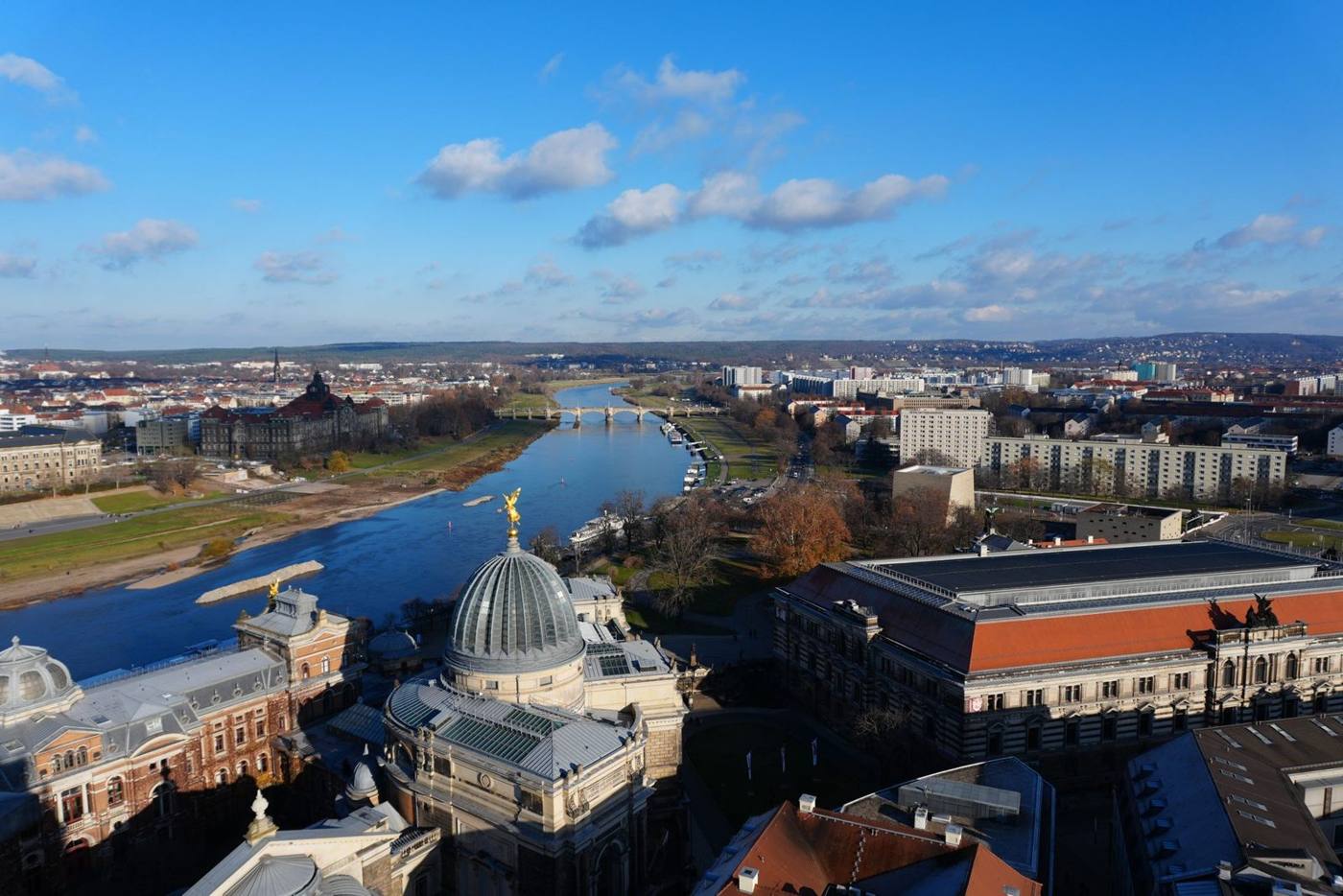
Germany by train
A grand tour without a car: Berlin, Dresden, Nuremberg, Munich with Neuschwanstein, the Rhine valley and Hamburg.
 4 daysEasy
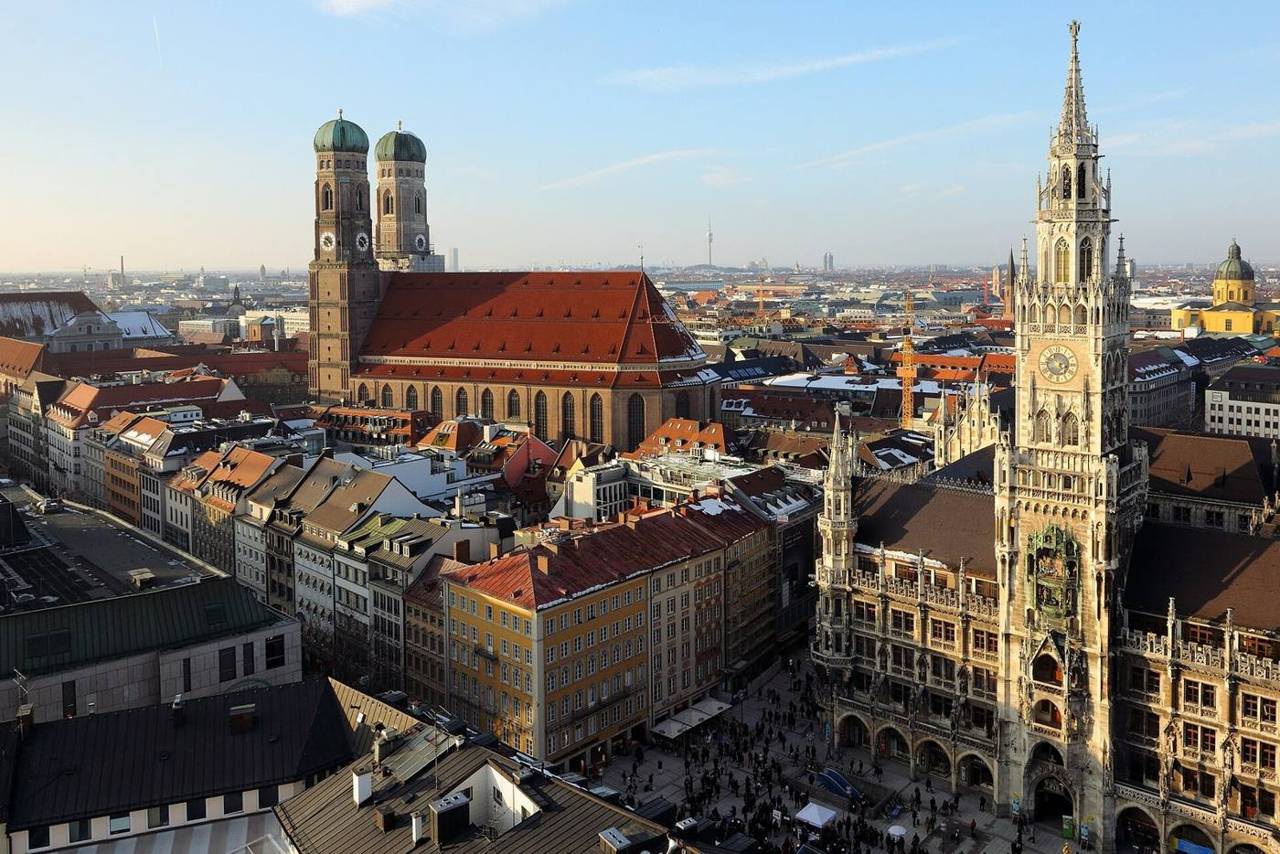
Munich and its lakes
The Bavarian capital at an easy pace: Marienplatz and the Viktualienmarkt, the Residenz, the Pinakothek galleries, the English Garden with the Eisbach surfers, Nymphenburg Palace, the Dachau memorial and the Starnberg and Ammersee lakes with Andechs Abbey.
 4 daysEasy
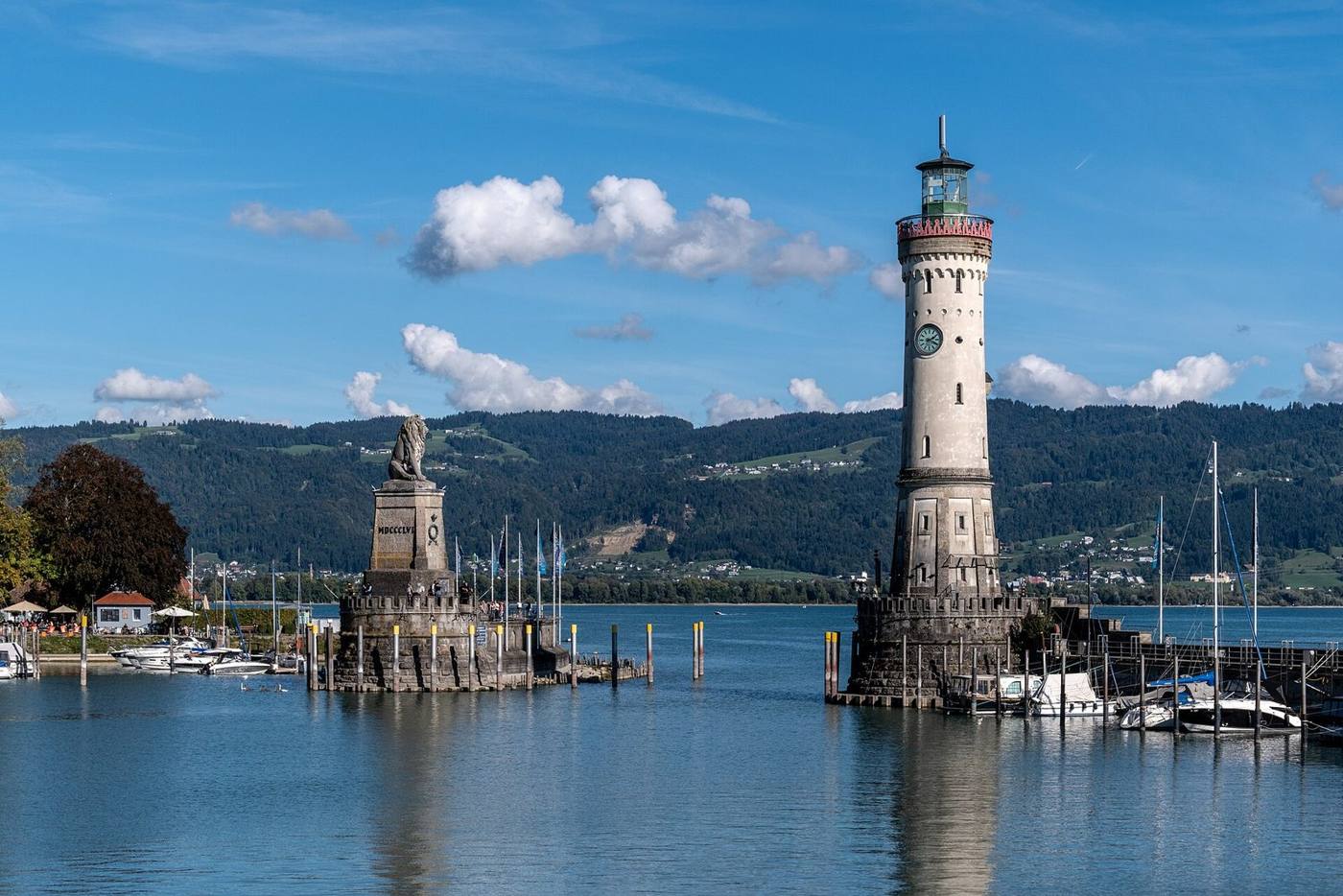
Lake Constance
Three countries on one lake: the island of Lindau with its harbour and lion, Meersburg Castle, the flower island of Mainau, the monastic island of Reichenau (UNESCO), the pile dwellings at Unteruhldingen, Konstanz and the Rhine Falls at Schaffhausen.