The Bavarian Alps and Berchtesgaden
Lake Königssee by electric boat, the Eagle's Nest, Garmisch-Partenkirchen, the Zugspitze and the Partnach gorge.
- Berchtesgaden
- Königssee
- Kehlsteinhaus
- Garmisch-Partenkirchen
- Partnachklamm
- Zugspitze
Day by day
- Day 1
Berchtesgaden and the Obersalzberg Documentation Centre
The Bavarian Alps are the small part of the Alps that lies in Germany, along the Austrian border in southern Bavaria. They have cold green lakes, limestone walls, meadows with cows, villages with painted houses and the country's highest peak, the Zugspitze. In six days you see Berchtesgaden, Lake Königssee, the Eagle's Nest, Garmisch-Partenkirchen, the Partnach Gorge and the Zugspitze.
You arrive at Munich airport, or at Salzburg in Austria, about half an hour from Berchtesgaden. From Munich, you get there by train, changing at Freilassing, in about two and a half hours.
Berchtesgaden is a mountain town in a basin ringed by peaks, with the princes' palace, the market and houses with wooden balconies full of flowers.
In the afternoon, go up to the Obersalzberg, a hill above the town where in the 1930s Hitler had his mountain residence built and where Nazi leaders met. The buildings were destroyed after the war. Today there is a documentation centre, a serious, well-made museum that tells the story of the place and the regime's crimes, with underground bunkers you can visit.
In the evening, taste Bavarian cooking, with roast pork, dumplings and beer.
In the evening, sleep in Berchtesgaden.
Practical tip: Italian citizens need only an identity card. Germany is keeping border controls until March 2027: if you arrive from Salzburg, keep your document to hand.
- Day 2
Lake Königssee by boat to St. Bartholomä and the Obersee
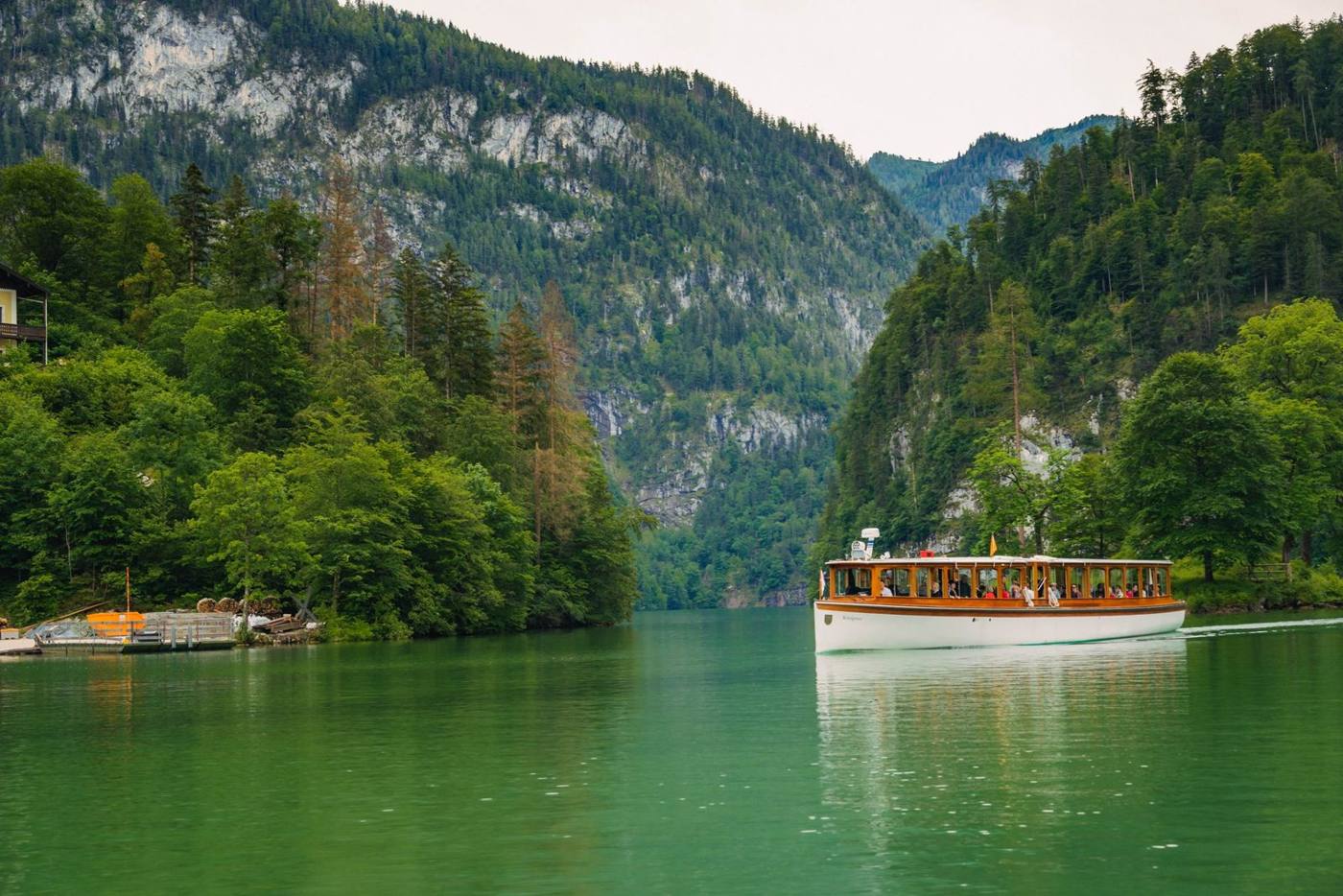
Today you visit the Königssee, the king's lake, one of the most beautiful and cleanest lakes in Germany, long and narrow like a fjord between rock walls hundreds of metres high, in Berchtesgaden National Park.
In the morning, take the boat from the village of Schönau. The boats have been electric for more than a hundred years so as not to pollute the water, and they glide silently across the emerald lake. Halfway along, the boat stops in front of a rock wall and the boatman plays a trumpet: the echo bounces several times off the mountains.
Get off at St. Bartholomä, a small pilgrimage church with red onion domes on a green peninsula at the foot of the east face of the Watzmann, Germany's second-highest mountain. It is one of the most famous images of Bavaria.
Then take the boat on to Salet, at the southern end of the lake, and walk for about fifteen minutes to the Obersee, a smaller, very peaceful lake with water reflecting the mountains, wooden huts and meadows. Continue on the path to the Röthbach waterfall, which falls from a very high cliff.
In the afternoon, take the boat back to Schönau.
In the evening, sleep in Berchtesgaden.
Practical tip: in summer there are long queues for the boats. Take the first boat of the morning and check the timetable, as some routes do not run in winter.
- Day 3
The Eagle's Nest and a walk in the national park
In the morning, go up to the Kehlsteinhaus, known as the Eagle's Nest, a stone house built on a mountain top at over one thousand eight hundred metres, given to Hitler for his fiftieth birthday. Today it is a restaurant and viewpoint.
The road up is closed to private cars: you take special buses from the Obersalzberg documentation centre along a narrow road carved into the rock. From the end, you walk through a tunnel into the mountain and ride a brass-lined lift, which takes you to the top in seconds, inside the rock.
From the summit, the view stretches over the Alps, the Königssee, Berchtesgaden and, to the north, the Salzburg plain. Walk the paths around the house along the ridges.
In the afternoon, take a walk in Berchtesgaden National Park, Germany's only Alpine national park. An easy path is the Wimbachklamm, a narrow gorge with walkways above the stream, which then continues into the Wimbach valley, between white scree slopes and woods.
Alternatively, go to the Berchtesgaden salt mine, where you go underground on a wooden slide and cross an underground lake.
In the evening, sleep in Berchtesgaden.
Practical tip: the Eagle's Nest usually opens only from May to October, when the road is at no cost of snow. Check the dates and bus times before you go.
- Day 4
Transfer to Garmisch and the Partnach Gorge
In the morning, leave Berchtesgaden and travel west to Garmisch-Partenkirchen, about three hours by car along mountain roads and across the plain, or by train via Munich.
Garmisch-Partenkirchen are two towns joined together, at the foot of the Wetterstein massif and the Zugspitze. They hosted the 1936 Winter Olympics. The houses are decorated with painted facades, called Lüftlmalerei, with religious, hunting and rural scenes. Walk along the Ludwigstraße in Partenkirchen, the loveliest street.
In the afternoon, go to the Partnach Gorge, a few minutes from the Olympic ski-jump stadium. The gorge is up to eighty metres deep, narrow and dark, carved into the rock by the Partnach stream. The path runs along the walls, partly in tunnels cut into the stone, above the fast, noisy water. In winter the walls are covered with icicles and frozen waterfalls.
At the far end of the gorge you can walk up to the alpine pastures, with views of the mountains.
In the evening, taste Kaiserschmarrn, a sweet pancake torn into pieces, served with plum jam.
In the evening, sleep in Garmisch-Partenkirchen.
Practical tip: in the Partnach Gorge water drips from the walls and the path is wet. Bring a waterproof jacket and shoes with good grip.
- Day 5
The Zugspitze, Germany's highest peak
Today you climb the Zugspitze, Germany's highest mountain, at almost three thousand metres, on the border with Austria.
In the morning, take the cogwheel train from Garmisch station. The train climbs the valley, passes Lake Eibsee, then enters a long tunnel inside the mountain and arrives at the Zugspitzplatt, a plateau with a small glacier and ski slopes. From here a short cable car takes you to the summit.
At the top there are viewing terraces, a small chapel and a golden cross on the very tip of the peak. On clear days the view takes in hundreds of peaks in four countries: Germany, Austria, Switzerland and Italy. On the terraces you cross from one side of the German-Austrian border to the other.
To come down, take the Eibsee cable car, one of the most spectacular in the Alps, with a drop of almost two thousand metres and a single very long span over the void. You arrive at Lake Eibsee, with clear green water surrounded by woods. Walk around the lake, in about two hours, or relax on the shore.
In the evening, return to Garmisch.
In the evening, sleep in Garmisch-Partenkirchen.
Practical tip: at the top of the Zugspitze it is cold even in summer and the altitude can be felt. Bring a warm jacket and check the webcam and forecast before going up, so you do not end up in fog.
- Day 6
Return to Munich and departure
In the morning, if you have time, take a last excursion near Garmisch. You can visit Ettal Abbey, about twenty minutes away, a large Baroque Benedictine monastery with a domed church decorated with frescoes, where the monks make beer and herbal liqueurs. A little further on is Oberammergau, famous for its painted houses and the Passion Play staged every ten years.
Alternatively, take the cable car up the Alpspitze, the mountain opposite Garmisch, to the X-shaped viewing platform suspended over a thousand-metre drop.
In the afternoon, take the train to Munich, in about an hour and a half, along the Loisach valley and the lakes.
If you have time in Munich before your flight, walk around Marienplatz, with the neo-Gothic town hall and its glockenspiel, and the Viktualienmarkt, the open-air food market, where you can taste white sausages with sweet mustard and a pretzel, a classic Bavarian breakfast.
This trip combines well with Munich and the castles of Ludwig II, such as Neuschwanstein and Linderhof, or with Salzburg and the Salzkammergut in Austria, a short distance from Berchtesgaden.
Practical tip: Bavaria has regional train tickets valid for a day on all local trains, good value for group excursions. Check the conditions before buying.
The German Alps, tidy and spectacular, two hours from Munich. The Eagle's Nest opens only from May to October and carries a heavy history, well explained in the documentation centre. The Zugspitze is expensive and crowded: in low cloud it is not worth going up. It combines with Salzburg, half an hour from Berchtesgaden.
Before you go
- Documents and visa
- A valid identity card or passport is enough for EU citizens. German land border checks have been extended until March 2027: always carry your document.
- Health and vaccines
- No vaccines required. EU citizens should carry the European Health Insurance Card. Emergencies: 112, police 110.
- Money and payments
- Euro. Cards are increasingly accepted, but many bars, bakeries and beer halls still take cash only.
- Power sockets
- Types C and F, 230 volts.
- Time zone
- UTC+1, UTC+2 in summer.
- Safety
- The United States rates Germany level 2 for terrorism. In stations and crowded markets watch out for pickpockets. Official advice: GOV.UK.
Information checked in November 2026 for Italian and EU citizens. Rules change: always check before you travel.
Variations
In 4 days: Berchtesgaden, the Königssee and the Eagle's Nest, then Munich.
In 9 days: add Neuschwanstein, Linderhof and Salzburg.
Frequently asked questions
When is the best time to go?
From June to September for walking and going up high. The Eagle's Nest usually opens from May to October; in winter there is skiing at Garmisch.
Do I need a car?
It is not essential: trains and buses link the towns well. A car is handy between Berchtesgaden and Garmisch.
Is it good for families?
Yes, the Königssee boat, the Partnach Gorge and the Zugspitze appeal to children too.
Indicative itinerary written by World Atlas. Before booking, check timetables, seasonal openings, documents and safety.
 5 daysEasy
The Christmas markets
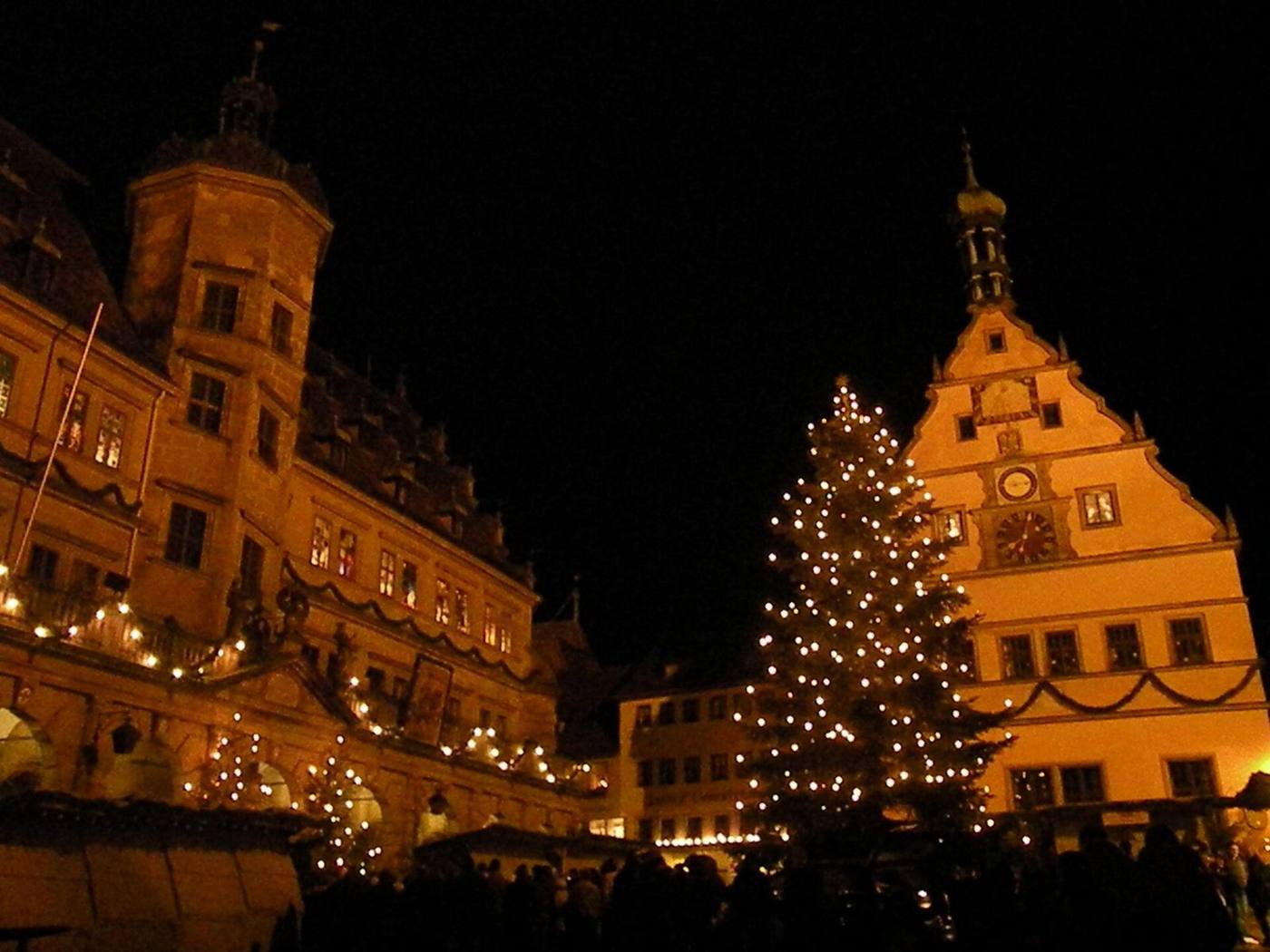
Nuremberg's Christkindlesmarkt, Rothenburg under snow, Bamberg and the markets of Munich, with mulled wine, gingerbread and lights.
 4 daysEasy
Cologne and the industrial Ruhr
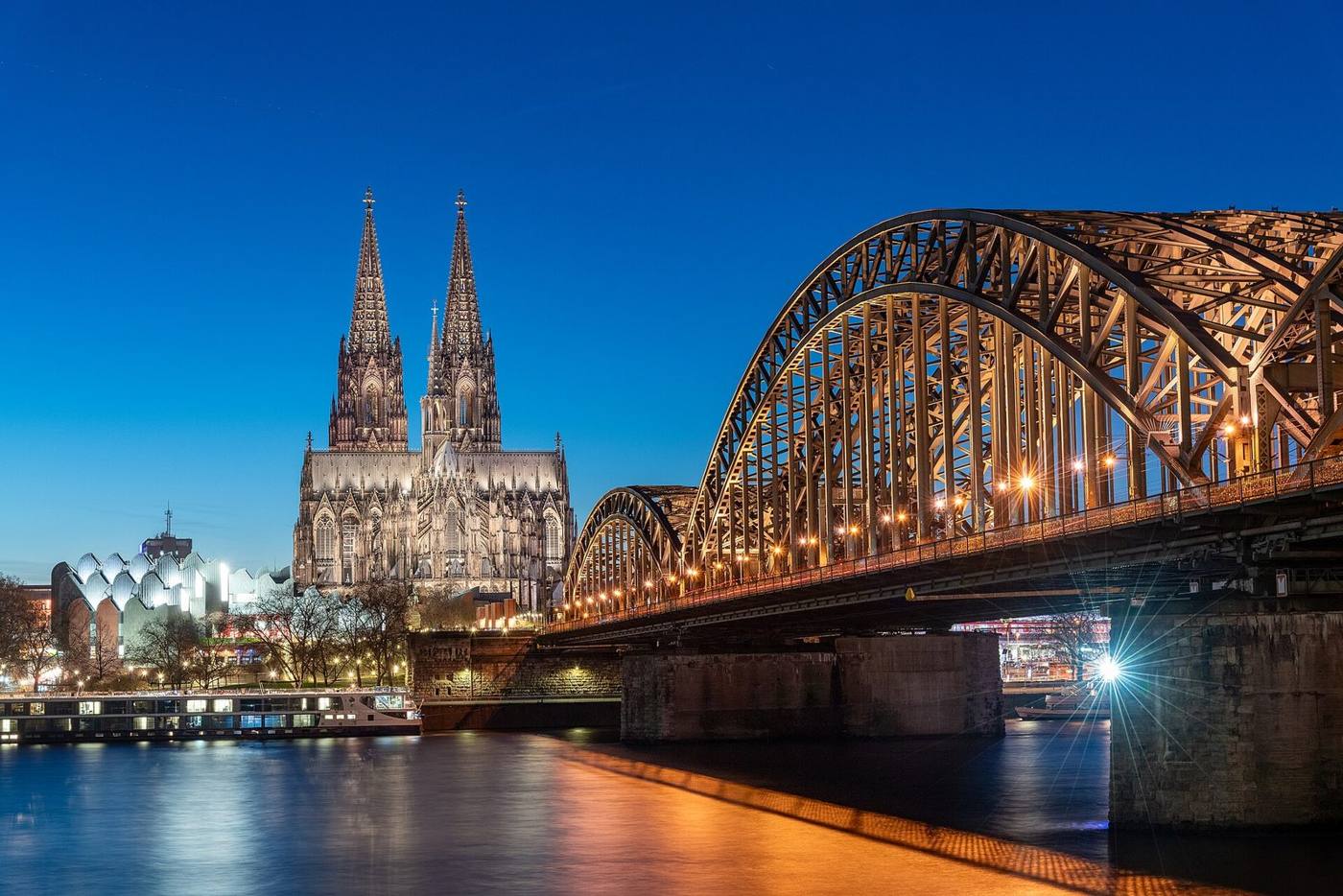
Cologne Cathedral and its Kölsch beer, Düsseldorf on the Rhine and the Ruhr's mines and steelworks turned into museums and parks.
 12 daysEasy
Germany by train
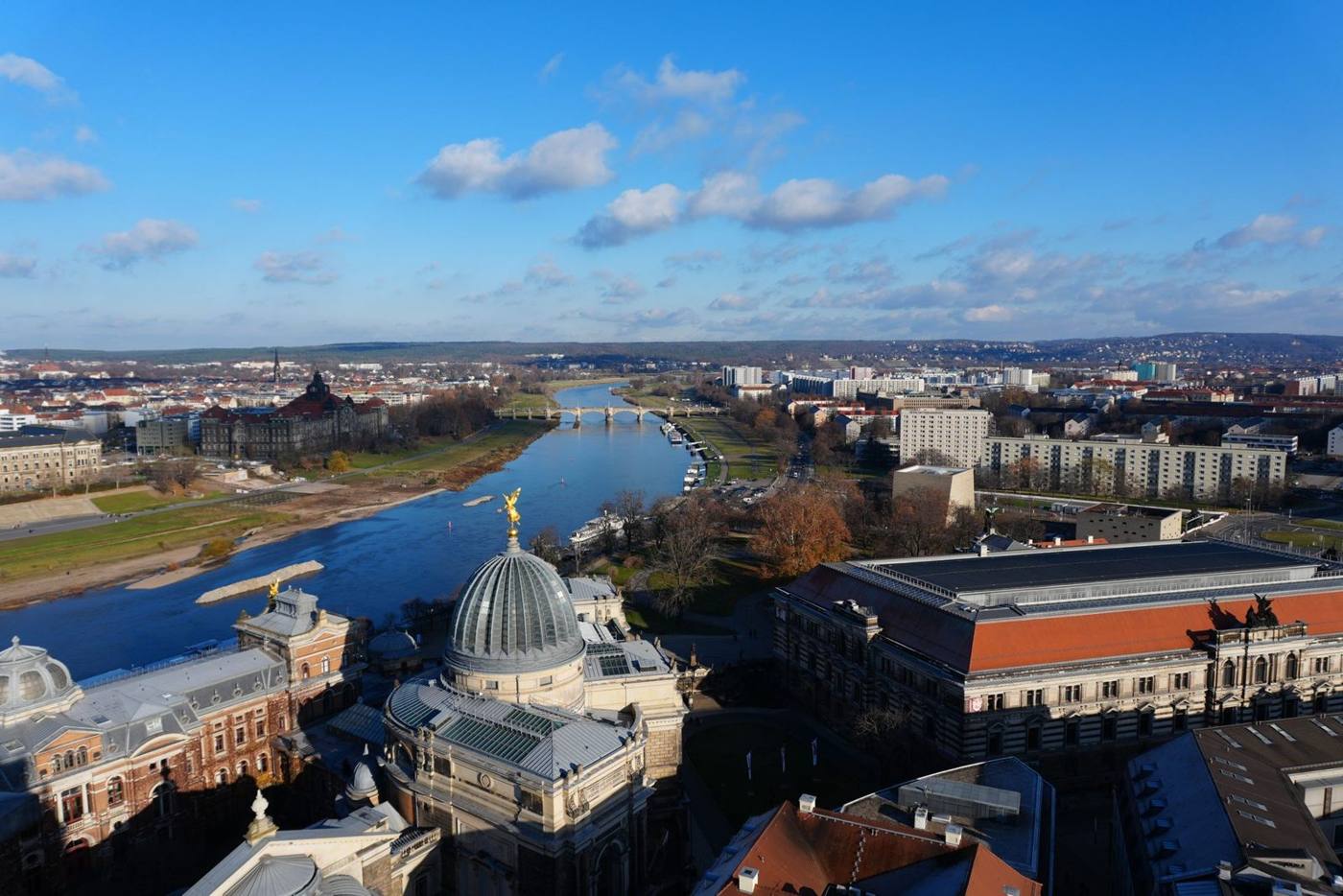
A grand tour without a car: Berlin, Dresden, Nuremberg, Munich with Neuschwanstein, the Rhine valley and Hamburg.