Heidelberg, Stuttgart and Tübingen
Baden-Württemberg along the Neckar: Heidelberg Castle and the Philosophers' Walk, Maulbronn Monastery (UNESCO), the Mercedes-Benz and Porsche museums and Stuttgart's Weissenhof estate, Tübingen with its punts on the river and Hohenzollern Castle.
- Heidelberg
- Maulbronn
- Stuttgart
- Tübingen
- Hohenzollern
Day by day
- Day 1
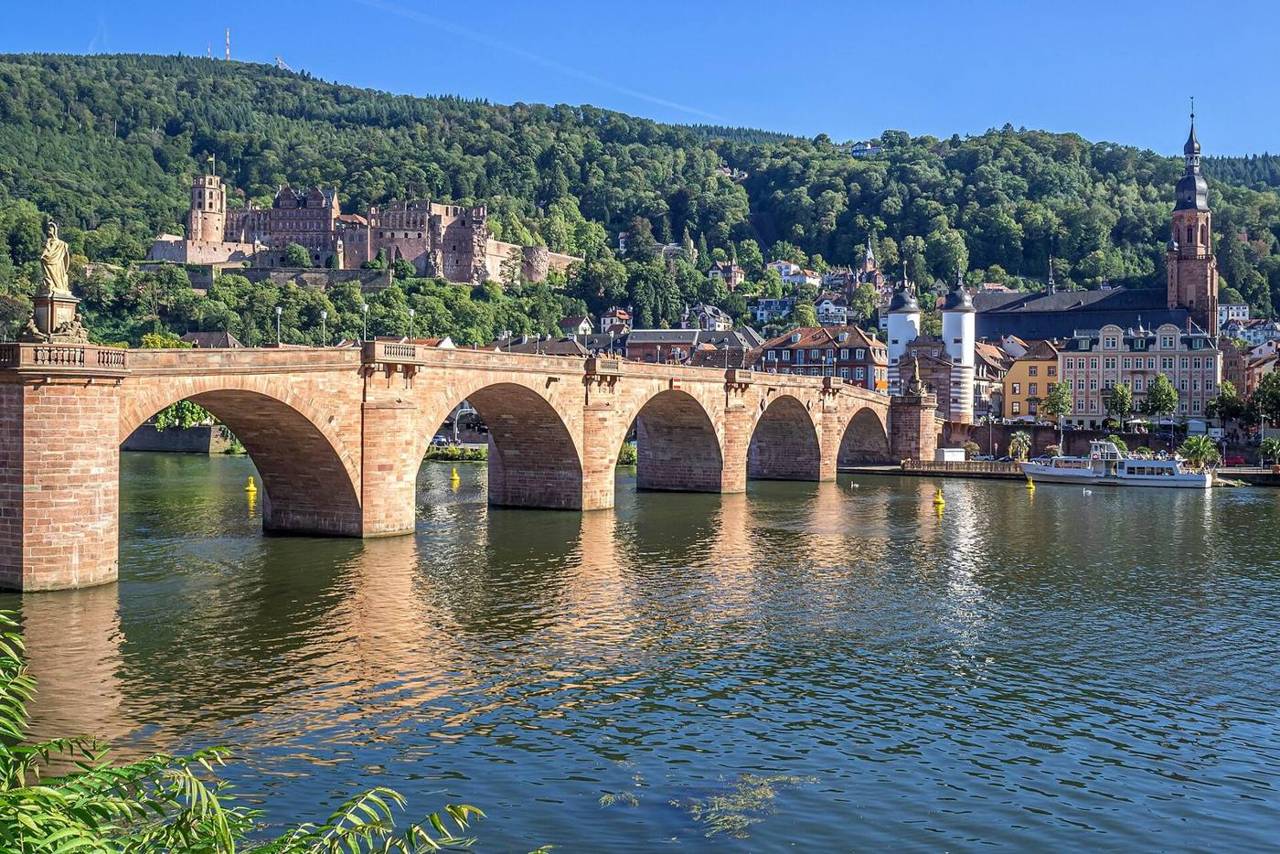
Heidelberg, the castle and the old bridge
Baden-Württemberg, in south-west Germany, is one of the richest and greenest regions in the country, between the Neckar valley, the Black Forest and the Swabian hills. This five-day trip combines three very different cities: Heidelberg, the romantic university town, Stuttgart, the city of the car and modern architecture, and Tübingen, a small student town on the river. In between are a medieval monastery listed by UNESCO and a castle on a hill.
Heidelberg is about an hour from Frankfurt by train. The old town stretches along the Neckar river at the foot of a wooded hill, with the ruined castle above it. The university, founded in 1386, is the oldest in today's Germany.
In the morning, go up to the castle on foot or by funicular. It is a large group of Renaissance and Gothic palaces in red stone, partly destroyed by the wars of the seventeenth century and by lightning, and never fully rebuilt. The ivy-covered ruins inspired the Romantic poets. Inside you visit the giant wine barrel, one of the largest in the world, and the pharmacy museum. From the terrace you see the whole town and the river.
In the afternoon, go down into town and walk along the main street, one of the longest pedestrian streets in Europe, to the market square, with the Church of the Holy Spirit. Visit the old student prison, with walls covered in drawings and writing left by students who were punished there until 1914.
At sunset, cross the old bridge over the Neckar, with its white gate and towers, and look at the illuminated castle.
Practical tip: there is a single ticket for the funicular and the castle. In summer arrive early: by midday it is very crowded.
- Day 2
The Philosophers' Walk and Maulbronn monastery
Early in the morning, cross the old bridge and climb the Philosophers' Walk, the Philosophenweg, a path on the side of the hill opposite the town, among gardens, vineyards and Mediterranean plants that grow thanks to the mild climate. It is called this because it was the favourite route of professors and students, who came here to think and discuss. From above you have the finest view of Heidelberg: the river, the bridge, the roofs of the old town and the red castle on the hill.
Then go back down into town and leave Heidelberg heading south. In about an hour by car you reach Maulbronn monastery, a UNESCO World Heritage Site since 1993. Founded in 1147 by Cistercian monks, it is the best-preserved medieval monastery north of the Alps, with its church, cloister, three-tiered fountain, refectory, cellars, walls and farm buildings. You see the whole organisation of the monks' life, as they drained the land and built fish ponds and water channels.
After the Reformation the monastery became a Protestant school, which still exists. Among its students were the poet Hölderlin and the writer Hermann Hesse, who described it in one of his novels.
In the afternoon, continue to Stuttgart, about forty minutes away.
In the evening, in Stuttgart, stroll through the palace square, the heart of the city, with the baroque New Palace and its gardens.
Practical tip: Maulbronn monastery takes about two hours to visit. Check the opening times, which are reduced in winter.
- Day 3
Stuttgart, the car museum and the Weissenhof
Stuttgart is the capital of Baden-Württemberg, a city surrounded by hills and vineyards, where the modern car was born. Today it is home to major car makers and many industries.
In the morning, visit the Mercedes-Benz Museum, a modern double-spiral building where you go down floor by floor through the history of the car, from the first vehicles of Benz and Daimler in the late nineteenth century to today's cars, with racing cars, lorries and famous vehicles. It is interesting even if you are not a car enthusiast. Those who prefer sports cars can visit the Porsche Museum instead, in the Zuffenhausen district.
In the afternoon, go up to the Weissenhof hill, where in 1927 the greatest modern architects, led by Mies van der Rohe, built a model estate of white houses with flat roofs and large windows. Two houses are by Le Corbusier and are part of the UNESCO World Heritage listing, together with other works of his around the world. One of them now houses a small museum, where you visit the interiors with their original colours and furniture.
On the way down, visit the city's new library, a white glass cube with a large bright central hall, and the market square, with the town hall and the collegiate church.
In the evening, try Swabian cooking: maultaschen, large ravioli filled with meat and spinach, spätzle, small egg-pasta dumplings, and the red trollinger wine from the hills around the city.
Practical tip: in Stuttgart the day ticket for public transport is good value. The museums are well connected by light rail and suburban train.
- Day 4
Tübingen, the river and the students' boats
In the morning, leave Stuttgart heading south. In about an hour by train you reach Tübingen, a small university town on the Neckar river, with one of the oldest universities in Germany, founded in 1477. Almost one inhabitant in three is a student, and the town is young and lively.
The old town is one of the finest examples of a medieval German town, with colourful half-timbered houses, steep streets, stairways and squares. Start at the market square, with its decorated town hall and Neptune fountain, then visit the collegiate church, a Gothic church where the dukes of Württemberg are buried. Climb up to Hohentübingen castle above the town, which houses a university museum with archaeological collections, including some of the oldest mammoth-ivory sculptures in the world, found in the caves of the Swabian Jura, a UNESCO site.
In the afternoon, go down to the river. On the bank stands Hölderlin's tower, a yellow tower where the poet lived for almost forty years, until his death, as the guest of a carpenter's family. Today it is a small museum.
Then take a trip on the river in a stocherkahn, a long wooden boat pushed with a pole, as in Cambridge, often steered by students. You pass the colourful houses, Hölderlin's tower and the long plane-tree island, with its tree-lined avenue.
In the evening, in the lanes of the old town, you feel the student atmosphere.
Practical tip: stocherkahn trips run mainly from May to September. There are departures near the bridge over the Neckar.
- Day 5
Hohenzollern Castle and the return
On your last morning, leave Tübingen heading south. In about half an hour by car, or by train and bus, you reach the foot of Hohenzollern Castle, which rises on an isolated hill at 855 metres, on the edge of the Swabian Jura hills. From afar, with its towers and walls, it looks like a fairy-tale castle.
The castle is the cradle of the Hohenzollern family, the dynasty of the kings of Prussia and the German emperors. The present castle was rebuilt in the nineteenth century in neo-Gothic style, on the remains of the medieval ones. Inside you visit the richly decorated rooms, the hall of ancestors, the library and the treasury, with the crown of the kings of Prussia, and two chapels.
From the walls the view is huge: the hills of the Swabian Jura, the forests, the villages and, on clear days, the distant Alps.
Then walk down to the car park in about twenty minutes, or take the shuttle.
In the afternoon, return to Stuttgart, where trains and flights leave for Italy, or continue to the Black Forest, Lake Constance or the Romantic Road.
This region combines well with other parts of southern Germany: the Black Forest and Freiburg, Lake Constance or Bavaria, with Munich and the castles.
Practical tip: Italian citizens only need an identity card valid for travel. Until March 2027 Germany is keeping checks at its land borders: always carry your document with you.
Everything can be reached by train except Maulbronn and Hohenzollern, which are easier by car. Le Corbusier's houses at Weissenhof are a UNESCO site. In Heidelberg the castle can also be reached by funicular. A valid identity card is enough for EU citizens. Germany has reintroduced spot checks at all its land borders, extended until March 2027: keep your document to hand on trains and in the car too.
Before you go
- Documents and visa
- A valid identity card or passport is enough for EU citizens. German land border checks have been extended until March 2027: always carry your document.
- Health and vaccines
- No vaccines required. EU citizens should carry the European Health Insurance Card. Emergencies: 112, police 110.
- Money and payments
- Euro. Cards are increasingly accepted, but many bars, bakeries and beer halls still take cash only.
- Power sockets
- Types C and F, 230 volts.
- Time zone
- UTC+1, UTC+2 in summer.
- Safety
- The United States rates Germany level 2 for terrorism. In stations and crowded markets watch out for pickpockets. Official advice: GOV.UK.
Information checked in November 2026 for Italian and EU citizens. Rules change: always check before you travel.
Variations
In 3 days: Heidelberg with the Philosophers' Walk, then Tübingen, without Stuttgart.
In 8 days: after Hohenzollern, continue to the Black Forest, Freiburg and Lake Constance.
Frequently asked questions
Do I need a car?
No: Heidelberg, Stuttgart and Tübingen are well connected by train. A car is handy for Maulbronn and Hohenzollern, which can also be reached by train and bus, but it takes longer.
When is the best time to go?
From May to October. In December the Christmas markets of Stuttgart and Tübingen are very beautiful, but it is cold and the days are short.
What documents do I need?
Italian citizens only need an identity card valid for travel. Until March 2027 there are checks at land borders, so always keep it with you.
Indicative itinerary written by World Atlas. Before booking, check timetables, seasonal openings, documents and safety.
 5 daysEasy
Franconia: Nuremberg, Bamberg and Franconian Switzerland
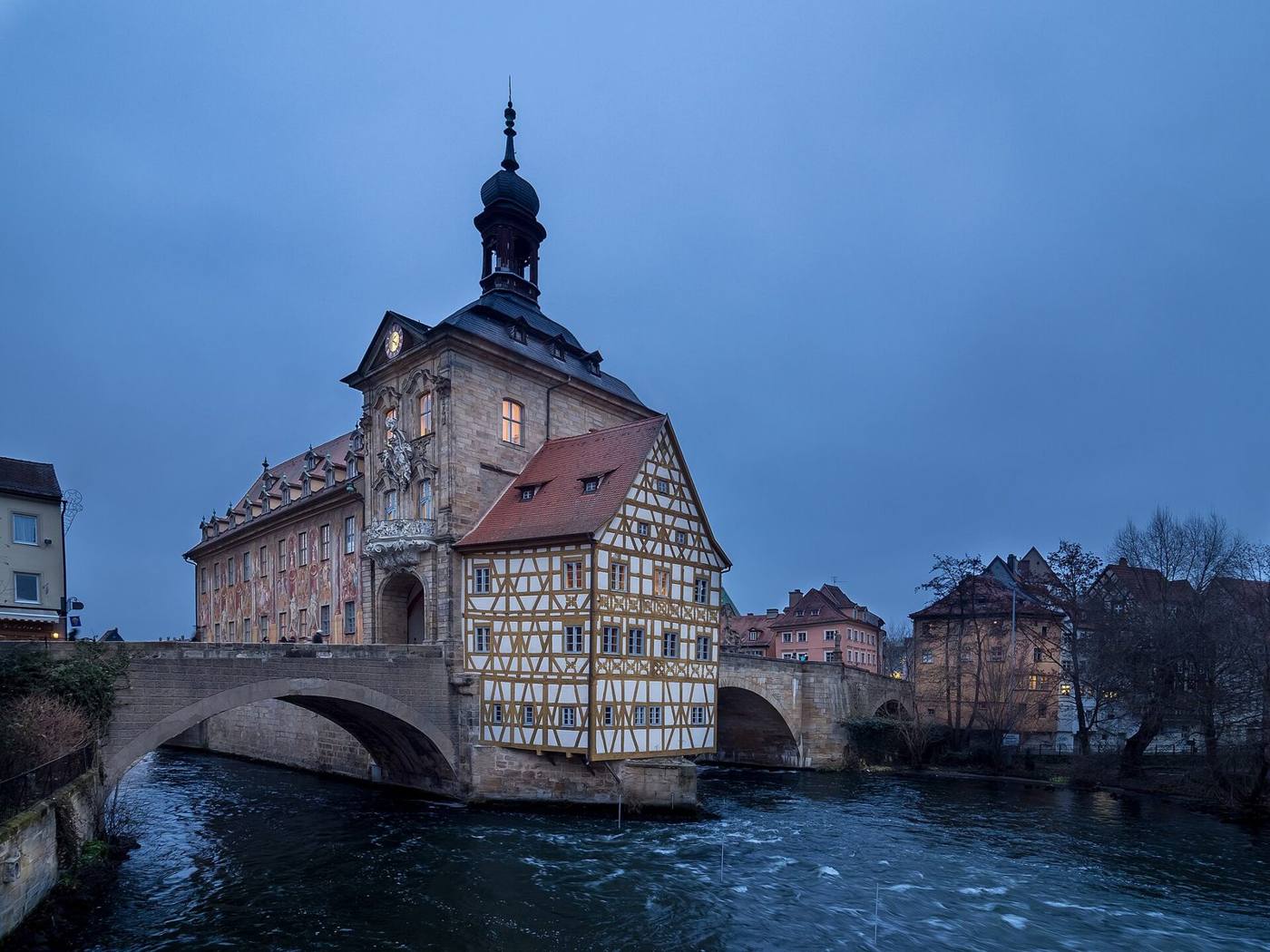
Northern Bavaria: Nuremberg with its imperial castle, the Germanic National Museum and the documentation centre on the Nazi rally grounds, Bamberg (UNESCO) and its smoked beer, the caves and rocks of Franconian Switzerland and the Margravial Opera House in Bayreuth.
 4 daysEasy
The Harz: Quedlinburg, Goslar and the Brocken
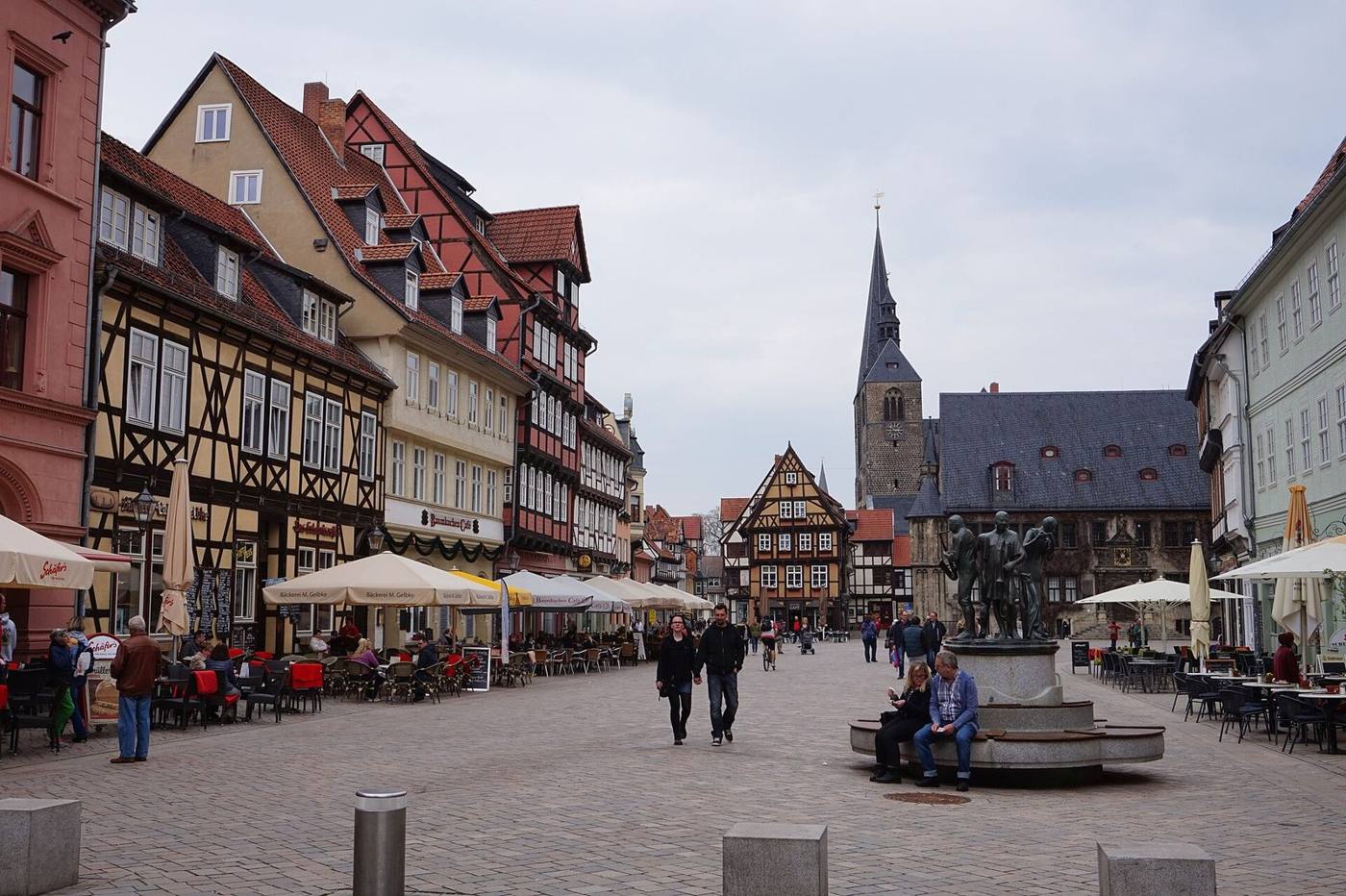
The witches' mountains: Quedlinburg with over a thousand half-timbered houses (UNESCO), Goslar and the Rammelsberg mine, Wernigerode and its castle, the steam train up the Brocken and the Bode gorge between Thale and Treseburg.
 5 daysEasy
The Spreewald and the Mecklenburg lakes
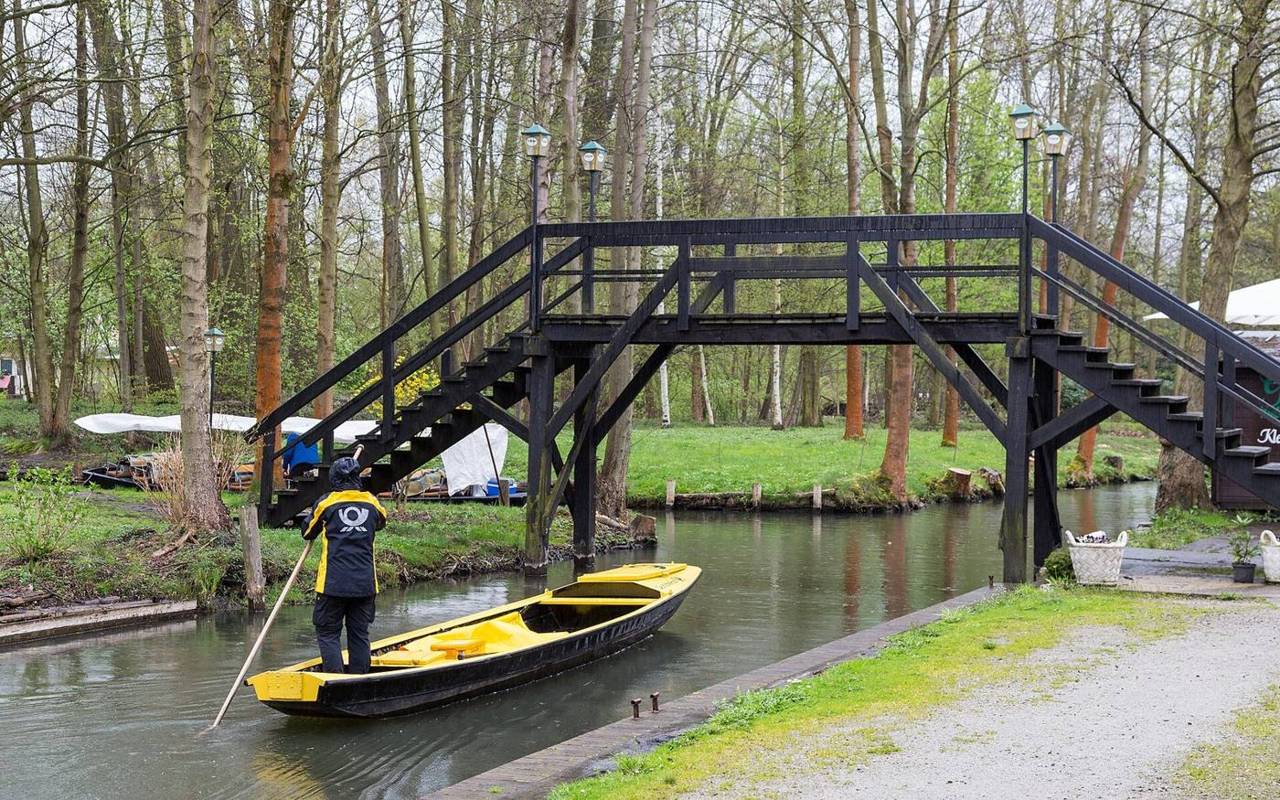
Water country north and south of Berlin: the Spreewald canals explored by punt, a UNESCO biosphere reserve, then Müritz National Park with hundreds of lakes to paddle and Schwerin Castle on its island.