 Italy
The country with the most UNESCO World Heritage Sites on Earth: three thousand years of history from the Etruscans to the Renaissance, landscapes that change every hundred kilometres and a cuisine every region defends as part of its identity.
Places not to miss
Rome
The Colosseum, the Imperial Forums, the Pantheon, the Vatican Museums and Sistine Chapel, Trastevere at sunset.
Florence
The cradle of the Renaissance: Brunelleschi's Duomo, the Uffizi, Michelangelo's David, Ponte Vecchio.
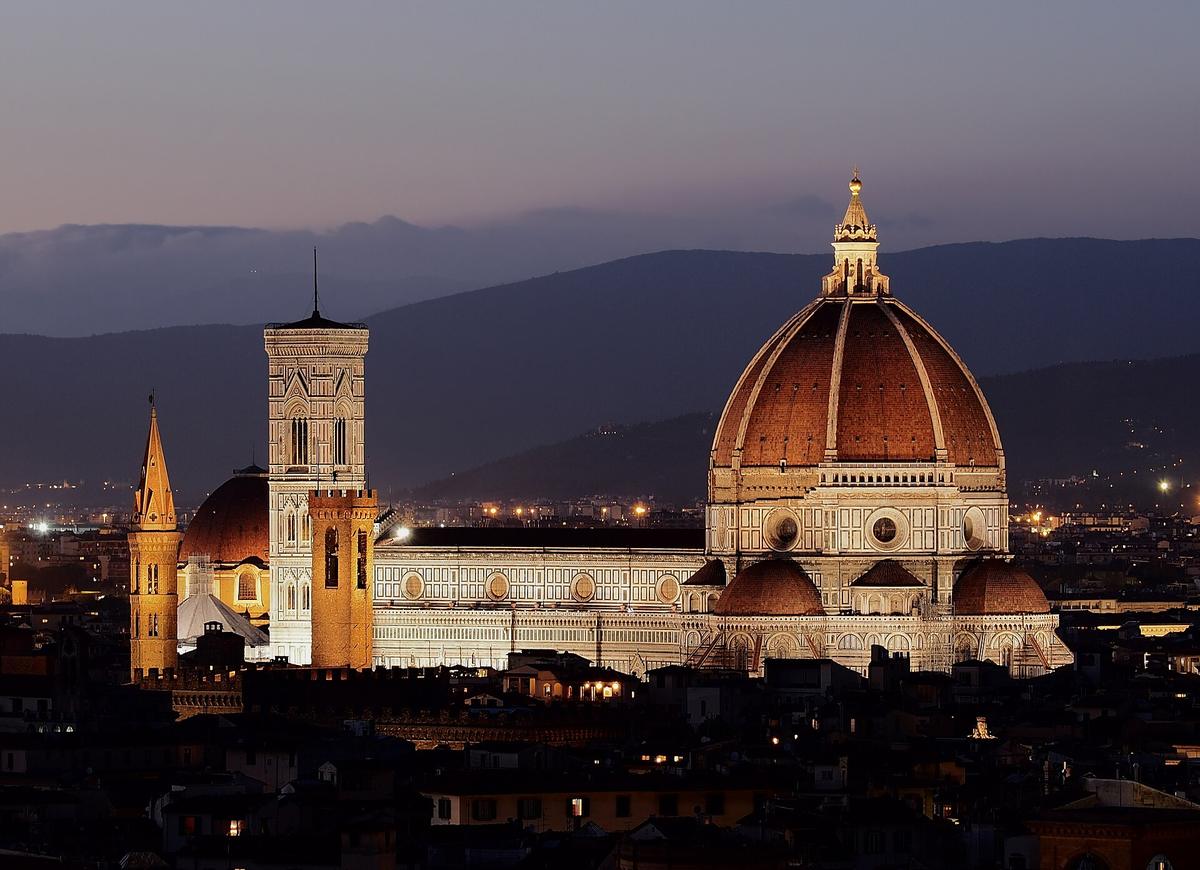
Photo: Petar Milošević, CC BY-SA 4.0 Venice
A city built on water: St Mark's Square, the Doge's Palace, the canals, Burano and Murano.
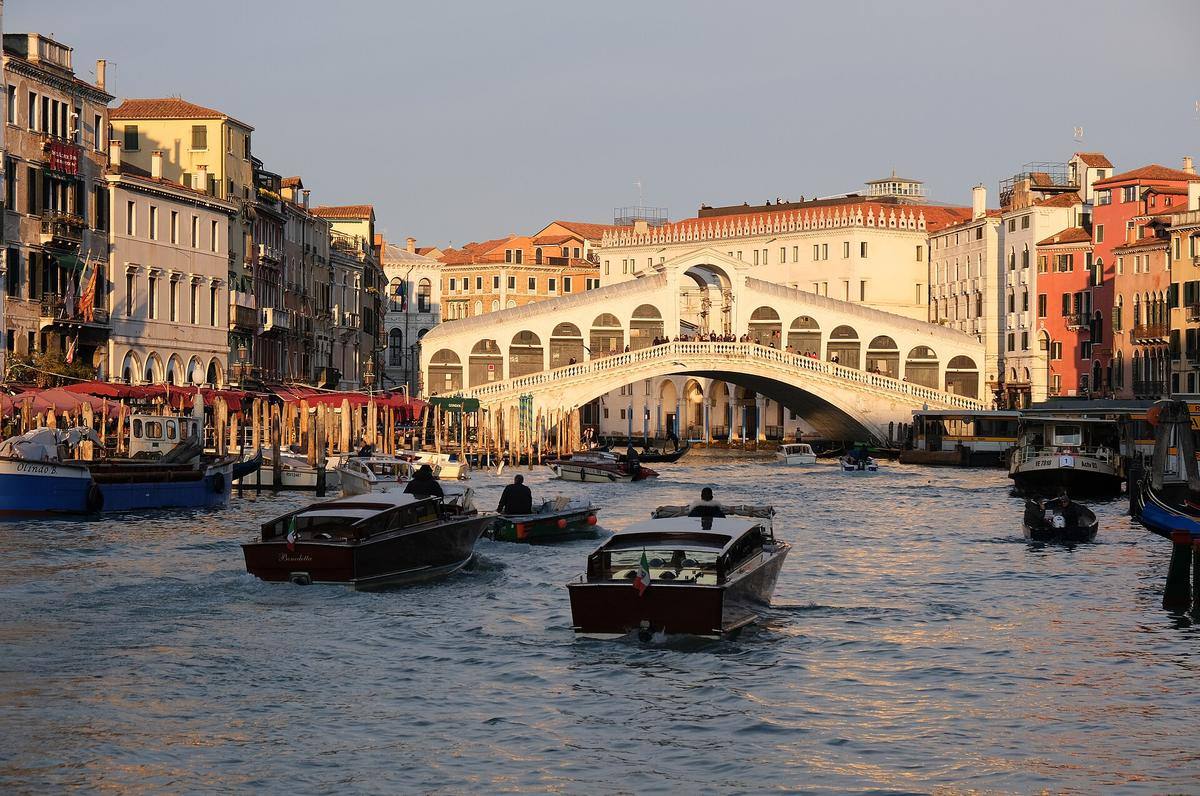
Photo: kallerna, CC BY-SA 4.0 Amalfi Coast
Positano, Amalfi and Ravello clinging to the cliffs; the Path of the Gods from above.
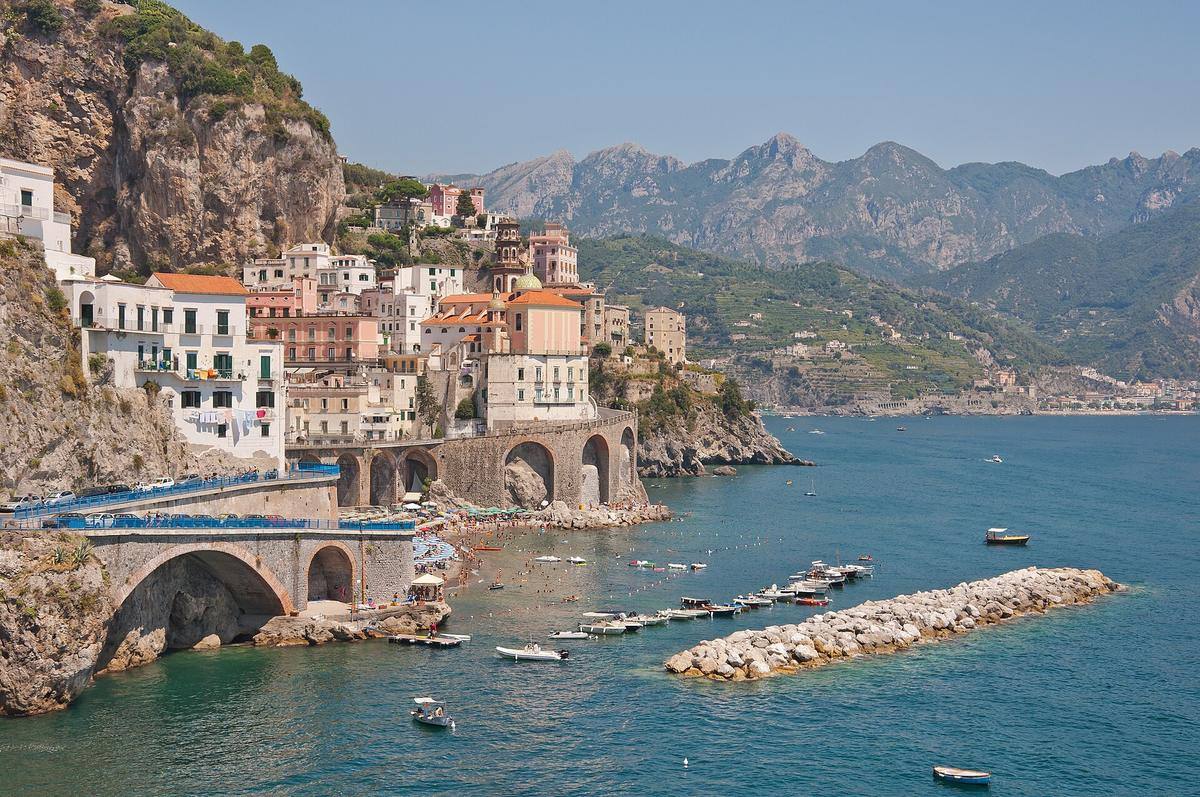
Photo: Paolo Costa Baldi, CC BY 3.0 Pompeii
The Roman city buried by Vesuvius in AD 79, with houses, frescoes and streets intact.
Dolomites
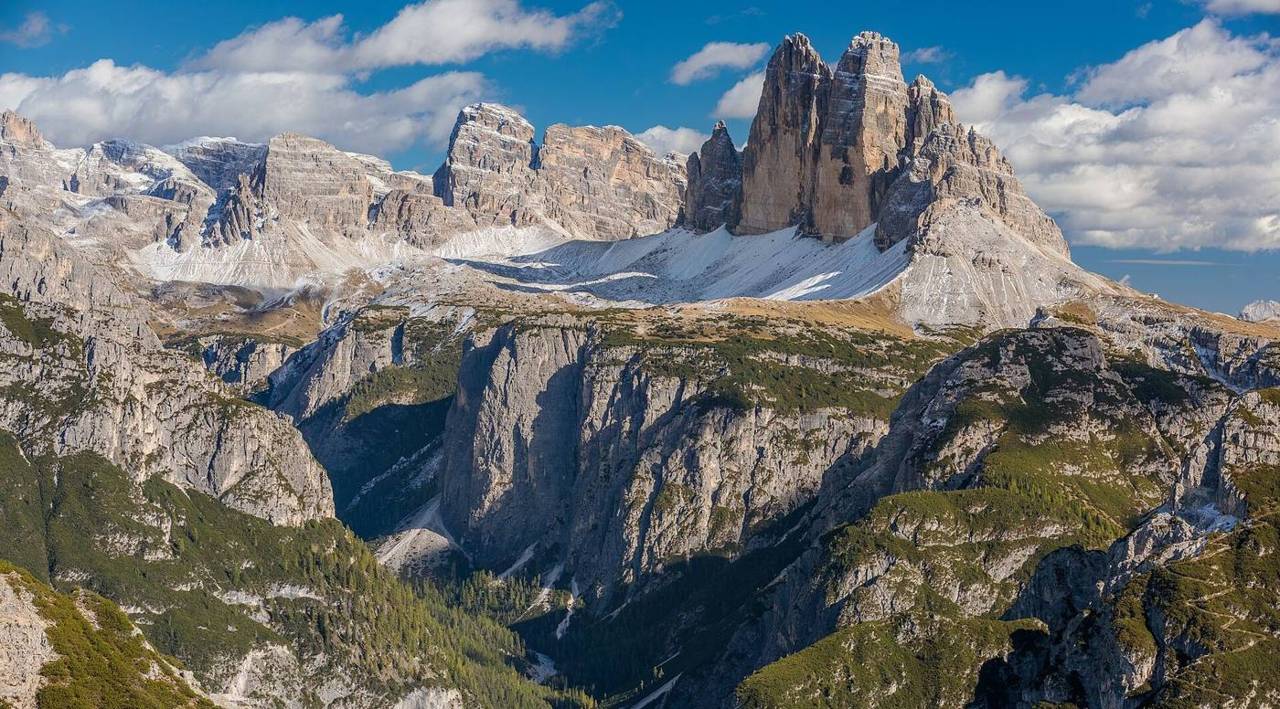
UNESCO-listed mountains: Tre Cime di Lavaredo, Seceda, Lake Braies, Alpe di Siusi.
Cinque Terre
Five colourful seaside villages linked by footpaths and a little train.
Matera
The Sassi, houses and churches carved into the rock and inhabited for millennia.
Valley of the Temples
Agrigento: the best-preserved Greek temples outside Greece.
Etna
Europe's highest active volcano; guided hikes to the summit craters.
Val d'Orcia
Tuscan hills of cypresses, Pienza, Montalcino and Bagno Vignoni.
Turin
Italy's first capital: the Egyptian Museum, the Mole Antonelliana, the Royal Palace, historic cafés.
Nature and wildlife
Ibex and chamois in the Alps, wolves and Marsican bears in the Apennines, flamingos in the salt pans, dolphins and fin whales in the Pelagos Sanctuary of the Ligurian Sea.
Food and drink
Neapolitan pizza, carbonara and cacio e pepe in Rome, tortellini in Bologna, arancini in Sicily, Alba truffles, wine in every region.
When to go
April-June and September-October for cities and countryside; July-August for the sea and the Dolomites; December-March for skiing.
Did you know?
Italy has around 60 UNESCO World Heritage Sites, more than any other country.
Itineraries in Italy
Rome, Florence and Venice
A first trip to Italy by high-speed train: ancient Rome and the Vatican, the Renaissance in Florence and the canals of Venice.
Tuscany: Val d'Orcia and Chianti
Siena and the Palio, San Gimignano, the Chianti vineyards, the cypresses of the Val d'Orcia, Pienza and Montepulciano.
The Dolomites
Val Gardena and the Alpe di Siusi, Seceda, the Tre Cime di Lavaredo, Lake Braies and Cortina, among mountain huts and Dolomite passes.
Naples, Pompeii and the Amalfi Coast
Naples and its pizza, the excavations of Pompeii and Herculaneum, Vesuvius, Positano and Amalfi, the Path of the Gods and the island of Capri.
Eastern Sicily
Catania and Etna, Taormina, Syracuse and Ortigia, the baroque of Noto, Modica and Ragusa, the Vendicari reserve.
Puglia and Matera
Old Bari, the trulli of Alberobello, the Itria Valley, the Sassi of Matera, the baroque of Lecce and the sea of Salento.
Sardinia: the Gulf of Orosei
Coves reachable only on foot or by boat, Cala Goloritzé and Cala Luna, the Gorropu gorge, the nuraghi and the villages of the Barbagia.
Cinque Terre and Portofino
Five cliff-top villages linked by train and footpaths, Portovenere, the Gulf of Poets and Portofino with San Fruttuoso.
The great lakes: Como, Maggiore and Garda
The villas of Lake Como with Bellagio and Varenna, the Borromean Islands on Lake Maggiore, Sirmione and the Trentino shore of Lake Garda.
Piedmont: Turin and the Langhe
Turin with the Egyptian Museum and its historic cafés, then the UNESCO-listed hills of the Langhe and Roero among Barolo, Barbaresco, Alba and white truffles.
Western Sicily: Palermo, Trapani and Agrigento
From the Arab-Norman mosaics of Palermo and Monreale to the temple of Segesta, from the medieval village of Erice to the salt pans of Trapani and Marsala, ending at Selinunte and the Valley of the Temples in Agrigento.
Umbria and Marche: Assisi, Perugia, Gubbio and Urbino
The green heart of Italy: the Basilica of Saint Francis in Assisi, the villages of Spello and Spoleto, Perugia and its lanes, medieval Gubbio and the ducal palace of Urbino, a Renaissance city.
Aosta Valley: Mont Blanc and Gran Paradiso
Italy's smallest region and its highest mountains: the Skyway cable car on Mont Blanc, the Cogne and Valsavarenche valleys in Gran Paradiso National Park with ibex and chamois, Roman Aosta and the castles along the Dora.
Veneto: Venice lagoon, Padua, Vicenza and Verona
Venice at a slow pace, with the islands of Murano, Burano and Torcello, then the art cities on the mainland: Giotto's frescoes in the Scrovegni Chapel in Padua, Palladio's villas and Teatro Olimpico in Vicenza, and the Verona Arena.
Emilia-Romagna: Bologna, Modena, Parma and Ravenna
The land of Parmigiano Reggiano, prosciutto and balsamic vinegar: Bologna and its porticoes, Modena with its Romanesque cathedral, Parma and the cheese dairies, Ferrara of the Este family and the Byzantine mosaics of Ravenna.
Calabria: Tropea, Scilla and the Sila
The Coast of the Gods with Tropea and Capo Vaticano, the fishing quarter of Chianalea in Scilla, the Riace Bronzes in Reggio Calabria and the wooded plateaus of the Sila with their lakes and larch pines.
Aeolian Islands: Lipari, Salina and Stromboli
Seven volcanic islands in the Tyrrhenian Sea, a UNESCO World Heritage site: the pumice quarries of Lipari, the mud baths and crater of Vulcano, the Malvasia vineyards of Salina, Panarea and the eruptions of Stromboli seen at sunset.
Northern Sardinia: Alghero, Stintino and La Maddalena
The Catalan town of Alghero and Capo Caccia with Neptune's Grotto, La Pelosa beach at Stintino, the granite of Gallura and the La Maddalena archipelago by boat, with the coves of Caprera.
Abruzzo: Gran Sasso and the national park
Wild Abruzzo two hours from Rome: the Campo Imperatore plateau beneath Corno Grande, Rocca Calascio, the villages of Santo Stefano di Sessanio and Scanno, Sulmona and Abruzzo National Park with the Marsican bear and the Apennine chamois.
Friuli Venezia Giulia: Trieste, Aquileia and Collio
Italy's borderland: Habsburg Trieste with its historic cafés and Miramare Castle, the basilica of Aquileia with its mosaic floor, Grado on the lagoon, Lombard Cividale and the white wines of Collio.
Practical guide to Italy
- Documents
- EU citizens enter with an identity card or passport; other nationalities should check the Schengen rules. Hotels, B&Bs and short-term rentals must register every guest's document on arrival.
- Safety
- A safe country. In big cities, on crowded transport and in stations watch out for pickpockets. In the mountains and on the volcanoes (Etna, Stromboli, Vesuvius) respect the bans and altitude limits set by the authorities. Emergencies: 112. Official advice: GOV.UK.
- Getting around
- Between the big cities the train is the best choice: Trenitalia's Frecciarossa and Italo trains link Turin, Milan, Venice, Bologna, Florence, Rome and Naples, and it pays to book early. For the countryside, hills and mountains you need a car, but almost every historic centre is a limited traffic zone with cameras: park outside. Motorways are tolled. Ferries and hydrofoils serve the islands, more often in summer.
- Verified costs
- We do not give a single daily figure, because it varies too much between cities and seasons. Some certain costs in 2026: in Rome the tourist tax ranges from 4 to 10 euros per person per night in hotels, depending on stars, for up to 10 nights; the Colosseum with the arena (Full Experience) costs 24 euros on the official website colosseo.it, with no-cost entry on the first Sunday of the month; the Trevi Fountain costs 2 euros and the Pantheon 5; in Venice, on days set by the city, day visitors pay 5 or 10 euros.
Climate month by month
Average minimum and maximum temperatures in Milan (north), Rome (centre) and Palermo (south), and the sea temperature at Palermo. The Alps and the Apennines are much colder.
- January
- Milan 0 / 7 °C · Rome 4 / 12 °C · Palermo 10 / 15 °C · sea at Palermo 15 °C
- February
- Milan 1 / 10 °C · Rome 4 / 13 °C · Palermo 9 / 15 °C · sea at Palermo 14 °C
- March
- Milan 4 / 16 °C · Rome 6 / 16 °C · Palermo 10 / 17 °C · sea at Palermo 14 °C
- April
- Milan 8 / 19 °C · Rome 9 / 19 °C · Palermo 12 / 19 °C · sea at Palermo 16 °C
- May
- Milan 13 / 24 °C · Rome 13 / 23 °C · Palermo 16 / 23 °C · sea at Palermo 18 °C
- June
- Milan 17 / 28 °C · Rome 17 / 28 °C · Palermo 20 / 27 °C · sea at Palermo 22 °C
- July
- Milan 19 / 31 °C · Rome 19 / 31 °C · Palermo 22 / 30 °C · sea at Palermo 26 °C
- August
- Milan 19 / 30 °C · Rome 20 / 31 °C · Palermo 23 / 30 °C · sea at Palermo 26 °C
- September
- Milan 15 / 25 °C · Rome 16 / 26 °C · Palermo 21 / 27 °C · sea at Palermo 25 °C
- October
- Milan 10 / 19 °C · Rome 13 / 22 °C · Palermo 18 / 24 °C · sea at Palermo 22 °C
- November
- Milan 5 / 12 °C · Rome 9 / 17 °C · Palermo 14 / 20 °C · sea at Palermo 20 °C
- December
- Milan 1 / 8 °C · Rome 5 / 13 °C · Palermo 11 / 17 °C · sea at Palermo 16 °C
Source: Climates to Travel (Milan Linate, Rome Ciampino, Palermo; 1991-2020 averages). Data and prices checked in November 2026.
Where to go and where not to
There are no particular warnings beyond normal precautions; before booking, always check up-to-date official travel advice, because the situation can change.