Western Sicily: Palermo, Trapani and Agrigento
From the Arab-Norman mosaics of Palermo and Monreale to the temple of Segesta, from the medieval village of Erice to the salt pans of Trapani and Marsala, ending at Selinunte and the Valley of the Temples in Agrigento.
- Palermo
- Monreale
- Cefalù
- Segesta
- Erice
- Trapani
- Marsala
- Selinunte
- Agrigento
Day by day
- Day 1
Palermo: the Palatine Chapel and the cathedral
This trip crosses western Sicily, from Palermo to Agrigento, via Cefalù, Segesta, Erice, the Trapani and Marsala salt pans and Selinunte. It is the Sicily of Normans and Arabs, Greek temples, Baroque, fish couscous, Marsala wine and markets. In eight days you see three UNESCO World Heritage Sites and some of the best preserved Greek temples in the world.
You fly into Palermo, with flights from many European cities. You do not need a car in Palermo; hire one from the third day.
On the first day discover Norman Palermo, a UNESCO World Heritage Site together with the Arab Norman route. In the morning visit the Norman Palace, seat of the Sicilian parliament, and inside it the twelfth century Palatine Chapel, entirely covered in golden Byzantine mosaics, with a wooden muqarnas ceiling painted by Arab artists: one of the most beautiful places in Italy.
Then walk to the cathedral, a building mixing Norman, Gothic, Arab and neoclassical styles, with the tombs of the Norman kings and of the emperor Frederick II. You can climb onto the roofs for a view over the city.
In the afternoon stroll to the Quattro Canti, the Baroque crossroads at the centre of the city, and the Pretoria fountain with its marble statues.
In the evening have dinner with Palermo food: pasta with sardines, caponata, swordfish rolls and cannoli.
Spend the night in Palermo.
Practical tip: the best time is April to June and September to October. For the Palatine Chapel and the cathedral check opening times and tickets: the chapel may close during services.
- Day 2
Palermo: Ballarò, street food and Monreale
Today discover the Palermo of markets and street food, and in the afternoon Monreale cathedral.
In the morning go to Ballarò market, the city's oldest, dating from Arab times, in the Albergheria district: stalls of fish, fruit, vegetables, spices and olives, with vendors shouting their offers, the abbanniata. Here you taste Palermo street food: arancine, fried rice balls filled with ragù or butter; panelle, chickpea flour fritters; potato croquettes; sfincione, a thick pizza with onion and anchovies; and, for the curious, pane con la milza, a spleen sandwich.
Then walk through the Kalsa district, with the church of the Martorana and its Byzantine mosaics, and the church of San Cataldo with its red domes.
In the afternoon go to Monreale, about half an hour by bus or taxi, on a hill above the Conca d'Oro, the Palermo plain. Monreale cathedral, built by the Norman king William II in the twelfth century, has an interior entirely covered in gold mosaics, with a huge Christ Pantocrator in the apse, one of the largest mosaic cycles in the world. Next door, the Benedictine cloister has more than two hundred columns decorated with mosaics and carved capitals.
In the evening return to Palermo and have dinner in the Vucciria district.
Spend the night in Palermo.
Practical tip: keep an eye on your wallet and phone in the markets. At Monreale the cathedral, cloister and terraces have separate tickets: check.
- Day 3
A trip to Cefalù: the Norman cathedral and the beach
Today take a trip to Cefalù, about an hour by train or car east of Palermo along the Tyrrhenian coast. From the third day it is worth hiring a car.
Cefalù is a seaside town built at the foot of a great rocky headland, La Rocca, with a medieval centre of cobbled lanes and a long golden sand beach.
In the morning visit the cathedral, built by the Norman king Roger II in the twelfth century, according to tradition in fulfilment of a vow after surviving a storm. The facade has two massive towers, and inside, in the apse, is one of the finest Byzantine mosaics in Sicily, with a great, stern faced Christ Pantocrator. The cathedral is part of the Arab Norman UNESCO World Heritage route.
Then walk through the lanes to the medieval wash house, carved into the rock, where spring water flows into stone basins, and to the little harbour with its fishing boats.
In the afternoon relax on Cefalù beach, or climb La Rocca on foot in about an hour, to the remains of the temple of Diana and the castle, with views over the sea and coast.
At sunset watch the old town from the beach as the houses turn orange.
In the evening return to Palermo or stay in Cefalù.
Spend the night in Cefalù or Palermo.
Practical tip: the climb to La Rocca charges a fee and closes in the hottest hours in summer: check. Parking in central Cefalù is difficult: use the car parks outside the centre.
- Day 4
The temple of Segesta and Erice by cable car
Today leave Palermo and head west. The first stop is Segesta, about an hour away, with one of the best preserved Doric temples in the world.
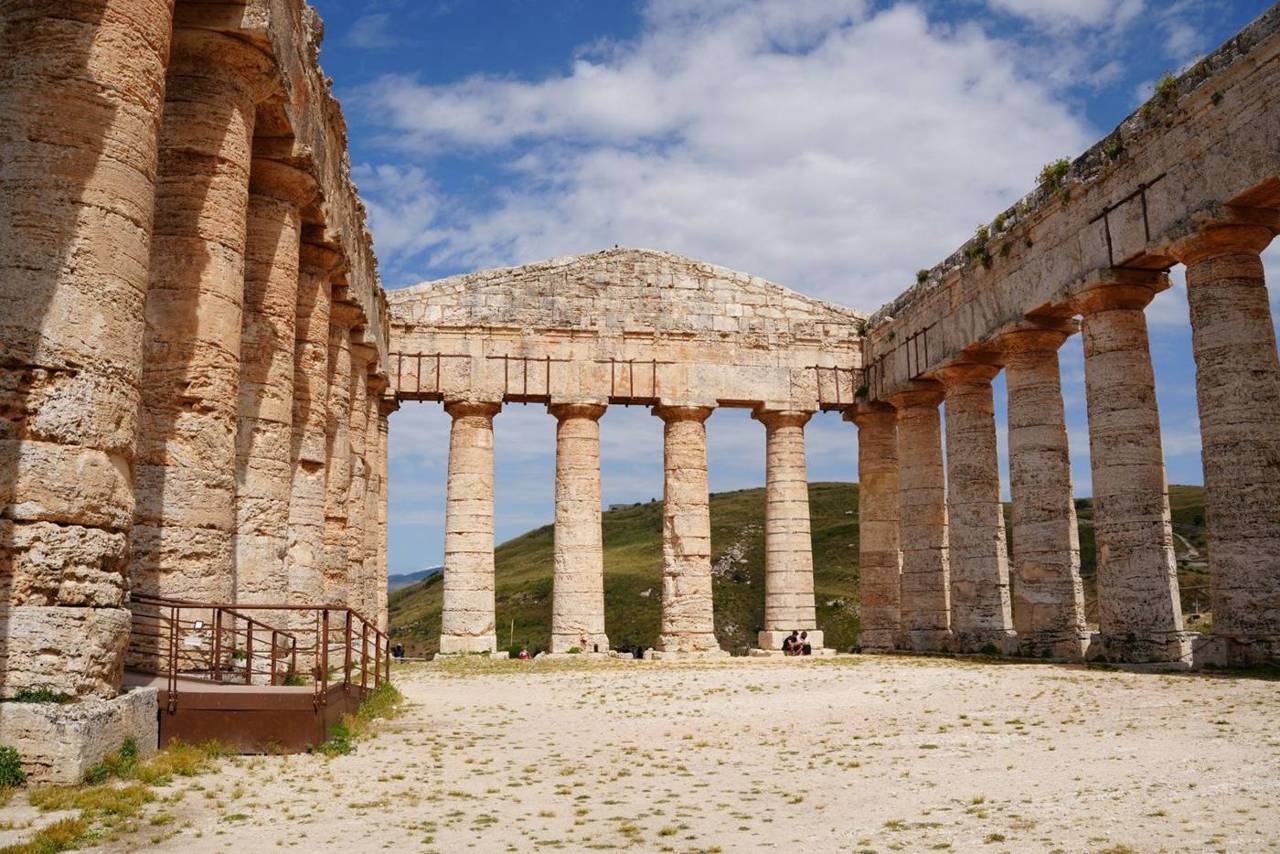
Segesta was a city of the Elymians, an ancient people of western Sicily, both allies and rivals of the Greek cities. The fifth century BC temple stands alone on a hill in open countryside, with thirty six columns of golden stone still standing. It was never finished: the columns are not fluted and there was never a roof. On the hill opposite, reached on foot or by shuttle, is the ancient theatre, cut into the rock, with a view over the valley and the Gulf of Castellammare.
In the afternoon continue to Trapani, about forty minutes away, and take the cable car up to Erice, a medieval village at about 750 metres on an isolated mountain above the sea, a ride of about ten minutes with ever wider views over the salt pans and the Egadi Islands.
Erice is a village of grey stone, with paved lanes, flowered courtyards, churches and two castles, the Castle of Venus, built on the site of an ancient temple to the goddess of love, and the Pepoli castle. It is often wrapped in mist.
Try the sweets of Erice, such as genovesi filled with warm custard, and almond paste sweets.
Spend the night in Trapani or Erice.
Practical tip: Segesta park charges entry and in summer it is very hot: go early in the morning. The Erice cable car may stop in strong wind: check first.
- Day 5
The salt pans between Trapani and Marsala at sunset and the Marsala wineries
Today discover the coast between Trapani and Marsala, with the salt pans nature reserve.
In the morning walk around central Trapani, a sickle shaped city on the sea, with Baroque churches, the seafront and the Ligny tower at the tip. Trapani is famous for fish couscous, an Arab legacy, cooked with fish broth and served in many of the city's restaurants.
Then follow the salt road along the coast south of Trapani, through the Trapani and Paceco salt pans reserve and on to the Stagnone lagoon at Marsala. Sea salt has been produced here for centuries by evaporating sea water in large pans of different colours, from green to pink. You see the windmills once used to pump water and grind salt, and the mounds of salt covered with tiles. In winter and spring flamingos stop at the salt pans.
In the Stagnone is the island of Mozia, reached by boat, with the remains of a Phoenician city and a museum with a Greek marble statue, the Youth of Mozia.
In the afternoon go to Marsala, an elegant town with a Baroque centre, famous for Marsala fortified wine, born at the end of the eighteenth century thanks to an English merchant. Visit a historic winery with its wooden barrels and have a tasting.
At sunset return to the salt pans: the sun sinking into the sea turns the pans and windmills pink and gold.
Spend the night in Marsala.
Practical tip: winery visits and the boat to Mozia must be booked and charge fees: check. Sunset at the salt pans is the best time for photos.
- Day 6
Selinunte archaeological park and a swim at Marinella
Today go to Selinunte, about an hour south east of Marsala, on Sicily's southern coast.
Selinunte was one of the largest Greek cities in the West, founded in the seventh century BC and destroyed by the Carthaginians in 409 BC. The Selinunte archaeological park is the largest in Europe: it covers a vast area by the sea, with the remains of temples, the acropolis, walls and streets of the ancient city, among fields of wild celery, called selinon in Greek, which gave the city its name.
In the morning visit the eastern hill, with three great temples: Temple E, rebuilt in the twentieth century, with its golden stone columns standing, and Temples F and G, collapsed, of which enormous piles of blocks and column drums remain, giving an idea of their size. Then walk or take the shuttle to the acropolis on the headland above the sea, with more temples, streets and walls.
The park is very large: allow at least three or four hours. The temple sculptures, the metopes, are in the archaeological museum in Palermo.
In the afternoon swim at the beach of Marinella di Selinunte, a small fishing village below the temples, with golden sand and clear water.
In the evening have dinner with fish on the Marinella seafront, looking at the floodlit temples.
Spend the night in Marinella di Selinunte.
Practical tip: the park charges entry and has little shade: bring a hat, water and comfortable shoes. In summer visit early in the morning or late in the afternoon.
- Day 7
The Valley of the Temples at Agrigento
Today go to Agrigento, about an hour and a half along the coast from Selinunte.
The Valley of the Temples, a UNESCO World Heritage Site, is one of the most important places of ancient Greece: it was Akragas, one of the richest Greek cities in the Mediterranean, founded in the sixth century BC. The temples stand on a long rocky ridge between the modern city and the sea, among almond and olive trees.
In the afternoon walk the Via Sacra, the road of temples, from the temple of Juno to the temple of Concordia, one of the best preserved Doric temples in the world, almost intact because it was turned into a church in the sixth century AD. Then the temple of Heracles, the oldest, and the enormous remains of the temple of Olympian Zeus, with the telamon, a gigantic statue of a man that supported the roof. Lower down is the Kolymbethra garden, a citrus garden in an ancient valley.
The finest moment is sunset, when the temples turn gold and pink. At certain times of year the park also opens in the evening, with the temples floodlit.
If you have time, visit the regional archaeological museum, with the reconstructed telamon and finds from the ancient city.
Spend the night in Agrigento.
Practical tip: the Valley of the Temples charges entry, with separate tickets for the Kolymbethra and the museum: check. Evening openings are not available all year.
- Day 8
The Scala dei Turchi from above and the drive back to Palermo
On the last morning go to the Scala dei Turchi, about twenty minutes west of Agrigento near Realmonte. It is a cliff of white marl, a limestone rock, shaped by wind and waves into steps and curves descending to the turquoise sea. The name comes from the pirates, called Turks, who according to tradition used it as a landing place.
In recent years the cliff has been damaged by erosion and by crowds of visitors walking on it and taking pieces away. To protect it, access onto the rock has been restricted or banned, and the best way to see it is from above, from the viewpoints, or from the nearby beach.
Then head back to Palermo, about two hours across inland Sicily, among wheat covered hills, fields and hilltop towns. On the way, if you have time, stop at the Villa Romana del Casale at Piazza Armerina, a UNESCO World Heritage Site with the largest and best preserved Roman mosaics in the world, including the famous bikini girls; the detour takes about an hour and a half extra.
Before leaving buy some Sicilian produce: Marsala wine, Trapani salt, pistachios, capers, almond paste, olive oil and ceramics.
From Palermo airport there are flights to many European cities.
Practical tip: at the Scala dei Turchi respect the bans: do not climb onto the rock if forbidden and do not take fragments. Return the car at the airport with plenty of time.
Ideal for lovers of history and food, with a hire car from day three. In Palermo a car is useless, even a nuisance. Walking on the Scala dei Turchi is not allowed: you view it from the beach or from above. In July and August it is very hot inland: visit early in the morning.
Before you go
- Documents and visa
- EU citizens only need a valid identity card or passport; hotels and guesthouses must register it on arrival. Other nationalities should check the visa rules for the Schengen area.
- Health and vaccines
- No vaccines required. EU citizens should bring their European Health Insurance Card (EHIC). Emergency number: 112.
- Money and payments
- Euro. Cards are accepted almost everywhere; many cities charge a tourist tax per night, paid directly at your accommodation.
- Power sockets
- Types C, F and L, 230 volts.
- Time zone
- Central European Time (UTC+1), summer time (UTC+2) from the last Sunday of March to the last Sunday of October.
- Safety
- A safe country. In big cities and on crowded public transport watch out for pickpockets. Emergencies: 112. Official advice: GOV.UK.
Information checked in November 2026 for Italian and EU citizens. Rules change: always check before you travel.
Variations
In 5 days: Palermo, Monreale, Segesta, Erice and Trapani.
In 11 days: add the Egadi Islands by ferry from Trapani, or Syracuse and Noto in eastern Sicily.
Frequently asked questions
Do I need a car?
Not in Palermo, but yes for the rest of the trip: the temples, salt pans and villages are far apart.
When is the best time to go?
April to June and September to October. Summer is very hot, especially in the archaeological parks.
Can I walk on the Scala dei Turchi?
Access onto the rock has been restricted or banned to protect it. Check the current rules and view it from the viewpoints.
Indicative itinerary written by World Atlas. Before booking, check timetables, seasonal openings, documents and safety.
 6 daysEasy
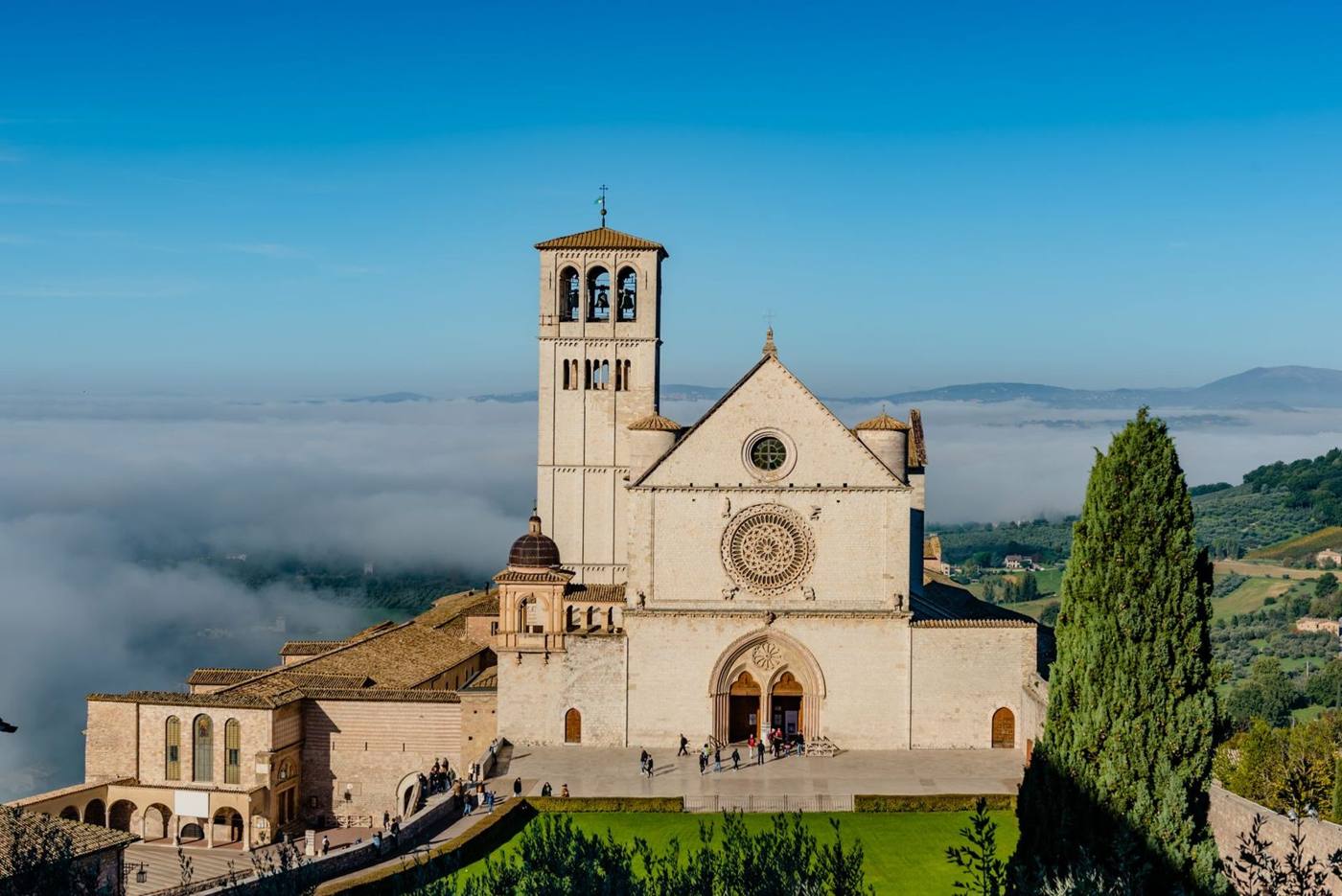
Umbria and Marche: Assisi, Perugia, Gubbio and Urbino
The green heart of Italy: the Basilica of Saint Francis in Assisi, the villages of Spello and Spoleto, Perugia and its lanes, medieval Gubbio and the ducal palace of Urbino, a Renaissance city.
 5 daysModerate
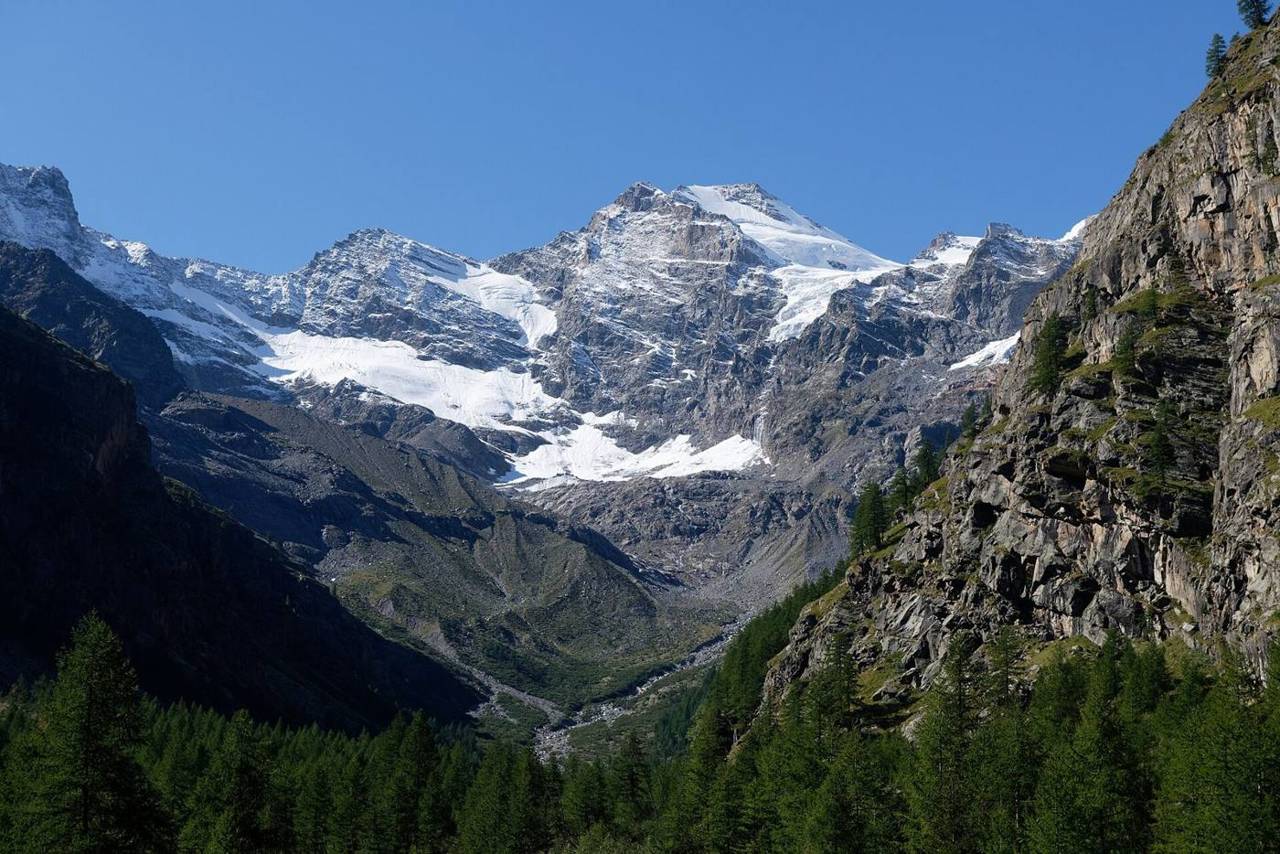
Aosta Valley: Mont Blanc and Gran Paradiso
Italy's smallest region and its highest mountains: the Skyway cable car on Mont Blanc, the Cogne and Valsavarenche valleys in Gran Paradiso National Park with ibex and chamois, Roman Aosta and the castles along the Dora.
 7 daysEasy
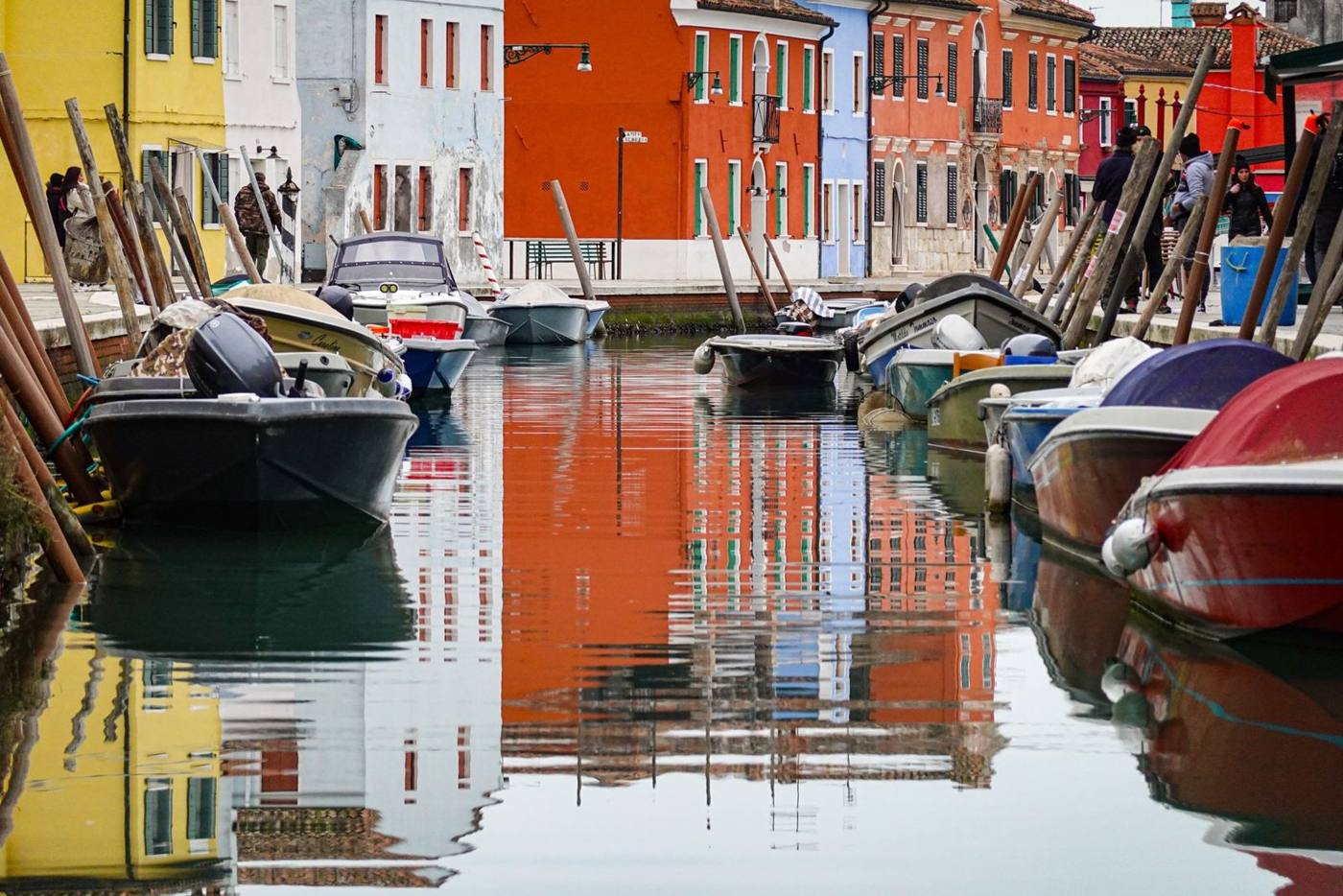
Veneto: Venice lagoon, Padua, Vicenza and Verona
Venice at a slow pace, with the islands of Murano, Burano and Torcello, then the art cities on the mainland: Giotto's frescoes in the Scrovegni Chapel in Padua, Palladio's villas and Teatro Olimpico in Vicenza, and the Verona Arena.