Veneto: Venice lagoon, Padua, Vicenza and Verona
Venice at a slow pace, with the islands of Murano, Burano and Torcello, then the art cities on the mainland: Giotto's frescoes in the Scrovegni Chapel in Padua, Palladio's villas and Teatro Olimpico in Vicenza, and the Verona Arena.
- Venice
- Murano
- Burano
- Torcello
- Padua
- Vicenza
- Verona
Day by day
- Day 1
Venice: Cannaregio, Rialto and San Marco
This trip crosses the Veneto from east to west, following the art cities linked by a single railway line: Venice and its lagoon, Padua with Giotto, Vicenza with Palladio and Verona with its Arena. Everything is done by train, without a car: between one city and the next takes from fifteen minutes to an hour.
You arrive in Venice by train at Santa Lucia station, or by air at Marco Polo airport, connected to the city by bus and boat. Italy is in the Schengen area and uses the euro.
The first day starts in Cannaregio, the most authentic district, where many Venetians still live. Walk along the Misericordia and Ormesini canals, then visit the Ghetto, the first in the world to bear this name, established in 1516, with its tall houses and synagogues.
Then head down to the Rialto bridge, the oldest across the Grand Canal, and the fish and fruit market, busy in the morning.
In the late afternoon you reach Piazza San Marco. Visit the basilica, with its golden mosaics, and look at the Doge's Palace from outside. At sunset the square empties and becomes more beautiful.
In the evening go round the bacari, Venetian wine bars, with a small glass of wine and cicchetti, little bites of creamed salt cod, sardines in saor and meatballs.
Spend the night in Venice.
Practical tip: on certain spring and summer days, day visitors to Venice who do not stay overnight pay an access fee. For 2027, 72 days have been announced: check the official dates. Overnight guests pay the tourist tax instead.
- Day 2
Venice: San Marco at dawn, Dorsoduro and the Zattere
On the second day return to Piazza San Marco very early, before eight, when the square is almost empty and morning light falls on the basilica's facade. It is the best time to really see it.
Then visit the Doge's Palace, seat of the doges and government of the Republic of Venice, with great halls decorated by Tintoretto and Veronese, the prisons and the Bridge of Sighs, which prisoners crossed on their way to the cells.
In mid morning take the traghetto, the gondola ferry across the Grand Canal for a few euros, or walk to the Accademia bridge, and enter Dorsoduro, the district of artists and students.
Visit the Gallerie dell'Accademia, with the largest collection of Venetian painting, from Bellini to Titian, or Peggy Guggenheim's collection of modern art in a palazzo on the Grand Canal. At the tip of Dorsoduro stands the Salute basilica, with its great white dome, built after the plague of the seventeenth century.
In the afternoon walk along the Zattere, the long sunny quayside on the Giudecca canal, and stop in Campo Santa Margherita, a lively square popular with students.
At sunset watch the light on the water from the Zattere, with the island of Giudecca opposite.
Spend the night in Venice.
Practical tip: for the Doge's Palace and the Accademia it is best to buy tickets online in advance: check prices and opening times. In Venice it is forbidden to sit and eat on steps and bridges and to swim in the canals.
- Day 3
Murano, Burano and Torcello by vaporetto
Today explore the lagoon islands by vaporetto, Venice's water bus. It is worth buying a ticket valid for one or more days, covering all vaporetti.
The first island is Murano, a few minutes away, famous for glass for centuries. In the thirteenth century the furnaces were moved here from Venice to avoid fires in the city. In furnaces open to the public you watch master glassmakers blowing and shaping molten glass. Visit also the glass museum and the basilica of Santi Maria e Donato, with a twelfth century mosaic floor.
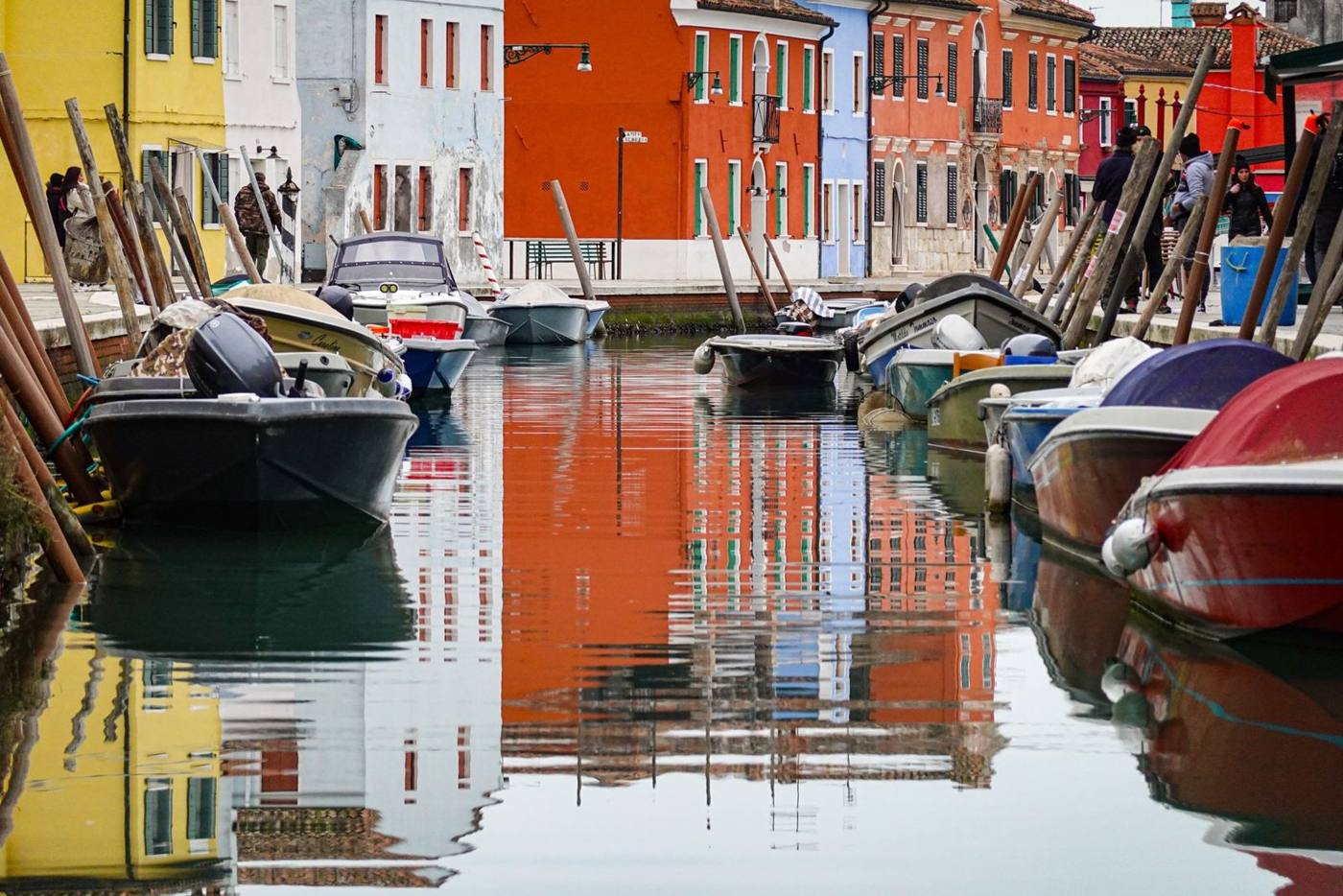
Then continue to Burano, the island of colourful houses, each painted a different colour, pink, blue, yellow and green, along small canals. Burano is also famous for its lace, made by hand with a needle, and has a small museum devoted to it.
From Burano a few minutes by boat bring you to Torcello, where the history of the lagoon began. In the Middle Ages thousands of people lived here; today there are very few inhabitants. What remains is the basilica of Santa Maria Assunta, the oldest church in the lagoon, founded in the seventh century, with great Byzantine mosaics including a huge Last Judgement. From the bell tower you see the whole lagoon.
In the evening return to Venice.
Spend the night in Venice.
Practical tip: buy Murano glass in shops displaying the mark of origin, to avoid imitations. Check vaporetto times for Torcello, less frequent in the evening.
- Day 4
Padua: the Scrovegni Chapel and the Santo
Today take the train to Padua, about half an hour from Venice. It is a lively university city, with one of the oldest universities in the world, founded in 1222, where Galileo Galilei taught.
The city's masterpiece is the Scrovegni Chapel, a small church entirely frescoed by Giotto in the early fourteenth century, with the stories of the lives of the Virgin and Christ and a great Last Judgement. It is considered one of the most important works in the history of European painting, because Giotto for the first time painted real human figures, with emotion and volume. The chapel is part of Padua's fourteenth century fresco cycles, a UNESCO World Heritage Site.
Visits are in small groups and last a few minutes, after a pause in a room that stabilises the air, to protect the frescoes.
Then walk through the centre, between Piazza delle Erbe and Piazza della Frutta, with the market beneath the Palazzo della Ragione, a huge medieval hall. Visit also Palazzo del Bo, the university's historic seat, with the world's first permanent anatomical theatre.
In the afternoon go to the basilica of Saint Anthony, known as the Santo, a pilgrimage site with oriental style domes and the saint's tomb. In front stands Donatello's equestrian statue of Gattamelata.
Finish in Prato della Valle, one of the largest squares in Europe, with a green island surrounded by a canal and 78 statues.
In the evening return to Venice or stay in Padua.
Practical tip: the Scrovegni Chapel can only be visited with a timed booking. Book well ahead and check price and opening times.
- Day 5
Vicenza: the Teatro Olimpico and Palladio
Today take the train to Vicenza, about an hour from Venice or half an hour from Padua. If you stayed in Venice, bring your luggage and continue to Verona afterwards.
Vicenza is the city of Andrea Palladio, the sixteenth century architect who reinvented classical Roman architecture and influenced building in Europe and America for centuries. The city and the Palladian villas of the Veneto are a UNESCO World Heritage Site.
Start with the Teatro Olimpico, Palladio's last project, completed by his pupil Scamozzi. It is the oldest surviving indoor theatre in the world, opened in 1585. The stage set is fixed and represents the streets of Thebes, built in wood and stucco with a perspective that makes them seem very long.
Then walk along Corso Palladio, the main street, past palazzi designed by the architect, to Piazza dei Signori, home of the Basilica Palladiana, the old town hall that Palladio wrapped in white marble loggias. From the terrace you see the whole city.
In the afternoon walk or take a bus up to Villa Almerico Capra, known as La Rotonda, just outside town on a hill. It is Palladio's most famous villa, perfectly symmetrical, with four identical facades and a dome in the centre. Nearby is Villa Valmarana ai Nani, with frescoes by Tiepolo.
In the evening continue by train to Verona, about half an hour away.
Spend the night in Verona.
Practical tip: La Rotonda has limited opening hours and the interior can be visited only on certain days. Check beforehand.
- Day 6
Verona: the Arena, Piazza delle Erbe and Castelvecchio
Today discover Verona, a city of Roman origin on the river Adige, a UNESCO World Heritage Site, known around the world as the city of Romeo and Juliet.
Start with the Arena, the Roman amphitheatre built in the first century AD, one of the best preserved in the world. It could hold tens of thousands of spectators. In summer it hosts the open air opera season, with grand productions under the stars.
Then walk along Via Mazzini, the shopping street, to Piazza delle Erbe, the old Roman forum, surrounded by palazzi with frescoed facades and towers, with a market in the middle. Next to it is the more intimate Piazza dei Signori, with the statue of Dante, who was a guest in Verona after his exile from Florence.
Nearby are the Arche Scaligere, the Gothic tombs of the city's lords, the della Scala family, and Juliet's house, with the famous balcony, always very crowded.
In the afternoon visit Castelvecchio, the medieval castle of the della Scala family, with its battlemented bridge over the Adige. Today it houses an art museum, rearranged in the 1960s by the architect Carlo Scarpa, with Veronese sculpture and painting.
At sunset cross the Ponte Pietra, the Roman bridge, and climb on foot or by funicular to Castel San Pietro on the hill, with a view over the whole city, its red roofs and the bend of the river.
Spend the night in Verona.
Practical tip: for opera at the Arena book in advance and bring a cushion if you are on the stone steps. Check the season calendar.
- Day 7
San Zeno and the wines of Valpolicella
On the last morning visit the basilica of San Zeno, one of the masterpieces of Italian Romanesque architecture, a little outside the centre, about twenty minutes' walk from Castelvecchio. The facade has a great rose window called the wheel of fortune and a portal with twelfth century bronze panels telling Bible stories. Inside, on the high altar, is an altarpiece by Andrea Mantegna. Beneath the church lies a crypt with many columns.
In the afternoon leave Verona northwards for Valpolicella, an area of hills covered with vineyards and olive groves, about half an hour away. This is where the region's most famous wine is made, Amarone, a powerful red produced from grapes left to dry for months on racks before pressing. Valpolicella, Ripasso and Recioto, a sweet wine, are also made here.
Many wineries in the area offer visits and tastings by appointment. You can reach them on an organised tour or by taxi, so as not to drive after drinking. Between wineries you pass small stone villages, Venetian villas and Romanesque churches, such as the parish church of San Giorgio di Valpolicella.
In the evening return to Verona for your departure. Verona Porta Nuova station has fast trains to Milan, Venice, Bologna and Rome, and Verona airport is about twenty minutes from the centre.
Practical tip: winery visits must be booked in advance. If you drive, remember that Italy's blood alcohol limit is low: a tour or a driver is a better choice.
All by train, no car needed. In Venice in 2026 day visitors paid an access fee on 60 days between April and July, and for 2027 the city has announced 72 days in the high season; overnight guests are exempt but must register: check the calendar on the city website. The Scrovegni Chapel can only be visited with a booking, at a fixed time.
Before you go
- Documents and visa
- EU citizens only need a valid identity card or passport; hotels and guesthouses must register it on arrival. Other nationalities should check the visa rules for the Schengen area.
- Health and vaccines
- No vaccines required. EU citizens should bring their European Health Insurance Card (EHIC). Emergency number: 112.
- Money and payments
- Euro. Cards are accepted almost everywhere; many cities charge a tourist tax per night, paid directly at your accommodation.
- Power sockets
- Types C, F and L, 230 volts.
- Time zone
- Central European Time (UTC+1), summer time (UTC+2) from the last Sunday of March to the last Sunday of October.
- Safety
- A safe country. In big cities and on crowded public transport watch out for pickpockets. Emergencies: 112. Official advice: GOV.UK.
Information checked in November 2026 for Italian and EU citizens. Rules change: always check before you travel.
Variations
In 4 days: Venice, the lagoon islands and Padua.
In 10 days: add Lake Garda, the Belluno Dolomites or Treviso and the Prosecco hills.
Frequently asked questions
Do I need a car?
No. The cities are linked by frequent trains. A car is only useful for Valpolicella, where a tour is better.
When is the best time to go?
Spring and autumn. Summer is hot and crowded; in winter Venice is quieter, but there may be acqua alta.
Do I have to pay to enter Venice?
On some days, day visitors who do not stay overnight pay the access fee. Check the official dates.
Indicative itinerary written by World Atlas. Before booking, check timetables, seasonal openings, documents and safety.
 6 daysEasy
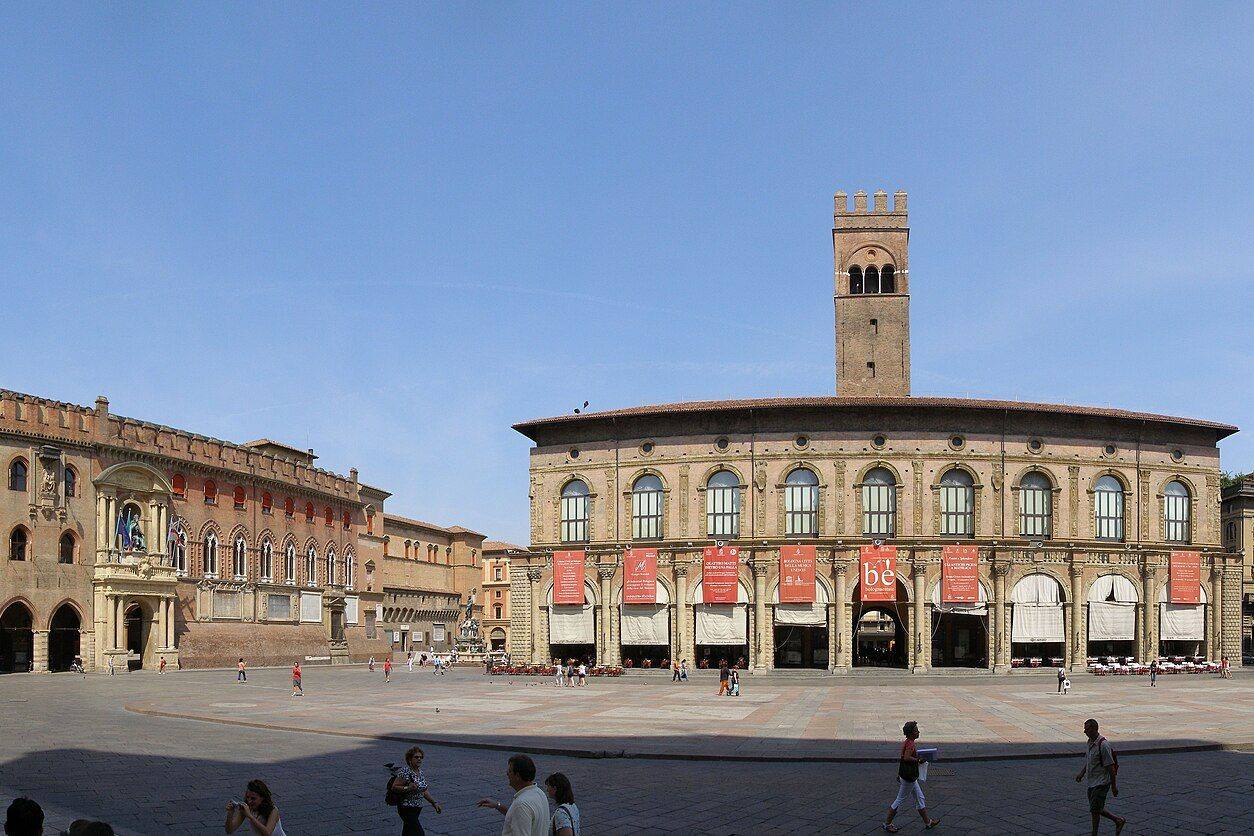
Emilia-Romagna: Bologna, Modena, Parma and Ravenna
The land of Parmigiano Reggiano, prosciutto and balsamic vinegar: Bologna and its porticoes, Modena with its Romanesque cathedral, Parma and the cheese dairies, Ferrara of the Este family and the Byzantine mosaics of Ravenna.
 7 daysEasy
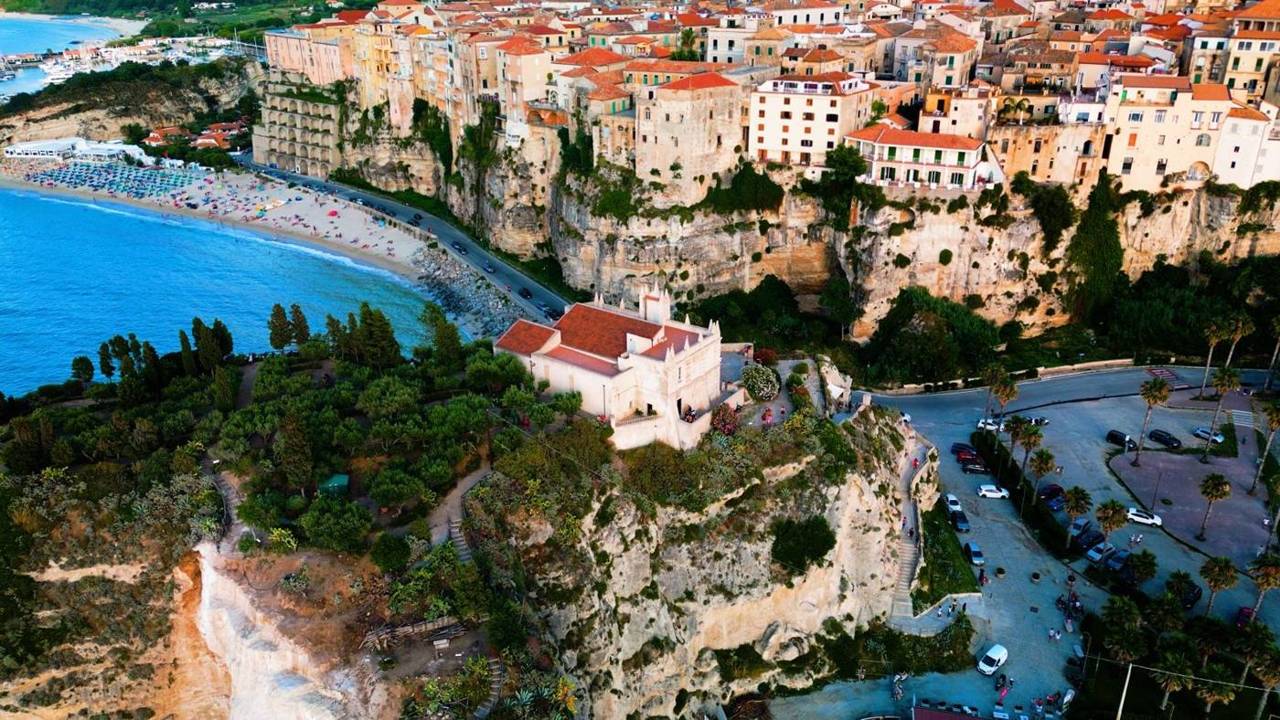
Calabria: Tropea, Scilla and the Sila
The Coast of the Gods with Tropea and Capo Vaticano, the fishing quarter of Chianalea in Scilla, the Riace Bronzes in Reggio Calabria and the wooded plateaus of the Sila with their lakes and larch pines.
 7 daysModerate
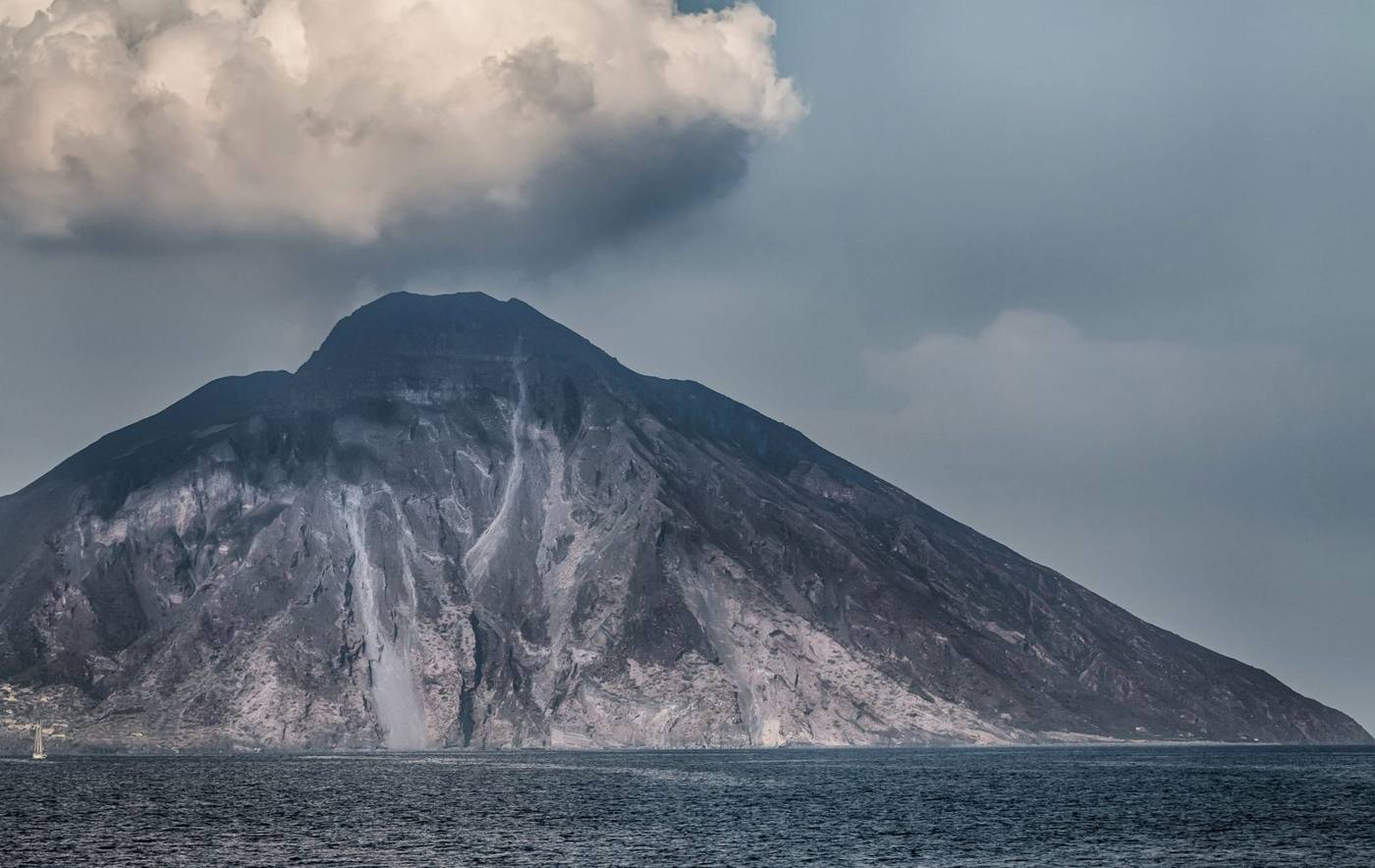
Aeolian Islands: Lipari, Salina and Stromboli
Seven volcanic islands in the Tyrrhenian Sea, a UNESCO World Heritage site: the pumice quarries of Lipari, the mud baths and crater of Vulcano, the Malvasia vineyards of Salina, Panarea and the eruptions of Stromboli seen at sunset.