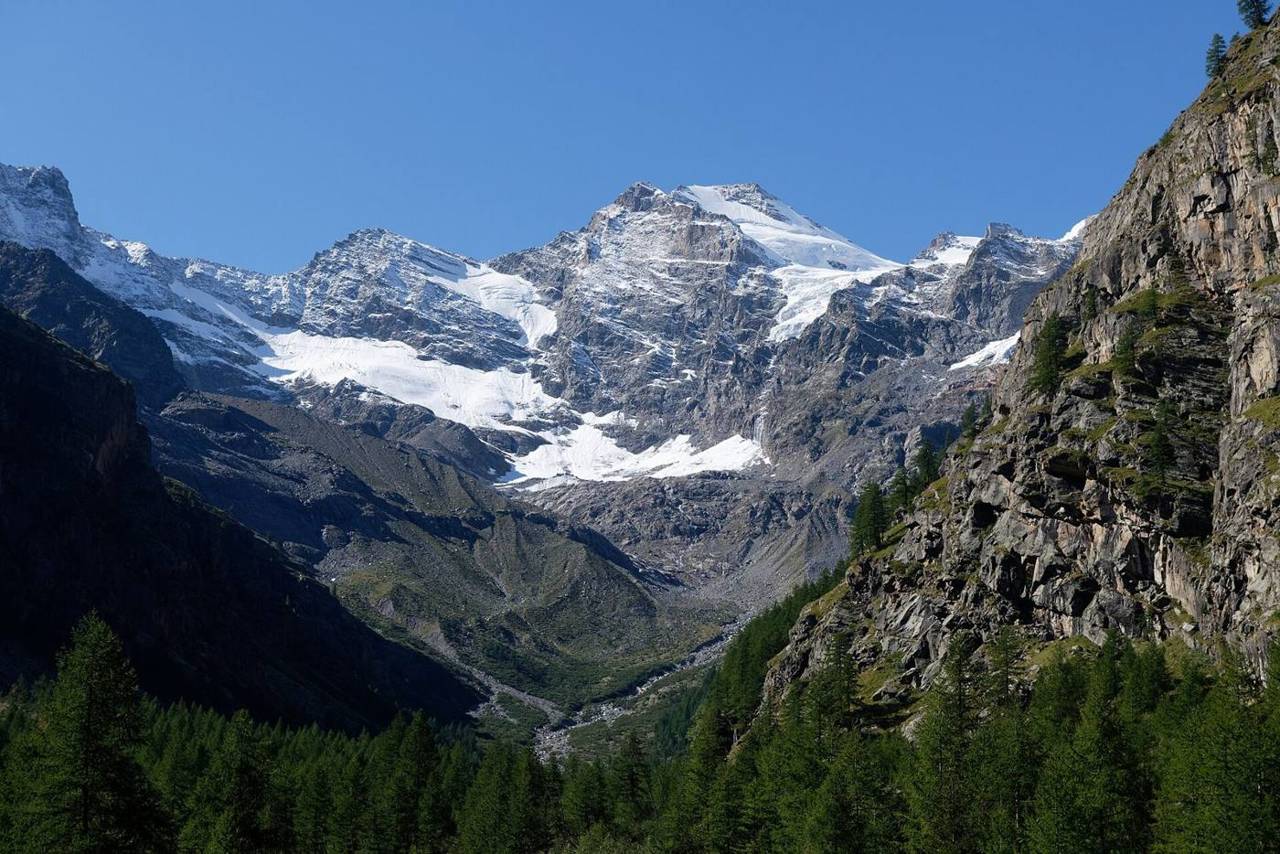
Aosta Valley: Mont Blanc and Gran Paradiso
Italy's smallest region and its highest mountains: the Skyway cable car on Mont Blanc, the Cogne and Valsavarenche valleys in Gran Paradiso National Park with ibex and chamois, Roman Aosta and the castles along the Dora.
- Aosta
- Fénis
- Cogne
- Valnontey
- Valsavarenche
- Courmayeur
- Punta Helbronner
Day by day
- Day 1
Roman Aosta, the Arch of Augustus and the theatre, then Fénis Castle
The Aosta Valley, Italy's smallest region in the far north-west, is enclosed by the highest mountains in Europe: Mont Blanc, Monte Rosa, the Matterhorn and Gran Paradiso. Italy is in the Schengen area; EU citizens can use a valid identity card or passport. It is a bilingual region where Italian and French are spoken, as well as Valdostan patois, with medieval castles, stone villages, pastures and glaciers. By car it is about an hour and a half from Turin and two hours from Milan; trains to Aosta are slow, so a car is far more convenient for this trip.
In the morning visit Aosta, founded by the Romans in 25 BC as Augusta Praetoria, which keeps one of the best-preserved Roman walled circuits in Italy. At the entrance to the town stands the Arch of Augustus, built to celebrate its founding, and a little further on the Praetorian Gate, the old main gate, with two rows of arches. The most spectacular monument is the façade of the Roman theatre, a wall about twenty-two metres tall with great arched windows, rising above the houses. Visit too the cryptoporticus, an underground vaulted gallery that surrounded the forum temple, and the Sant'Orso complex, with its twelfth-century Romanesque cloister, decorated with capitals carved with scenes from the Bible and the saint's life.
In the afternoon reach Fénis Castle, about a quarter of an hour east, one of the valley's finest castles, with towers, double crenellated walls and, in the courtyard, a semicircular staircase and a wooden balcony decorated with fifteenth-century frescoes of saints and sages holding scrolls with proverbs in old French.
In the evening taste fontina fondue and Arnad lard.
Practical tip: the valley's castles are visited on guided tours at set times; check times in advance.
- Day 2
Cogne, the Sant'Orso meadows and the Lillaz waterfalls
In the morning drive up to Cogne, about half an hour south of Aosta, in one of the valleys of Gran Paradiso National Park. The park, born in 1922 from the Savoy royal hunting reserve, is Italy's oldest national park, created above all to protect the ibex, which had almost disappeared by the early twentieth century: today there are thousands in the park's mountains.
Cogne is a quiet mountain village at about 1,500 metres, with stone and wood houses and flower-filled balconies, famous for bobbin lace made by hand by the village women for centuries. In front of the village stretch the Sant'Orso meadows, a great green meadow crossed by paths, with views of the Gran Paradiso range and its glaciers. In winter the meadows become cross-country ski trails.
In the afternoon walk to the Lillaz waterfalls, about three kilometres from Cogne, on an easy path along the stream. The falls drop in three successive leaps for about a hundred and fifty metres among rocks and woods; a path climbs beside them to the upper part. The walk is suitable for families. In the village of Lillaz, at the start of the path, there is also a small geological garden explaining the valley's rocks.
In the evening try seupa à la vapelenentse, a baked soup of bread, cabbage, fontina and broth, and mountain sweets such as tegole biscuits.
Practical tip: in winter the Lillaz falls freeze and become an ice-climbing site; paths can be slippery.
- Day 3
A hike in Valnontey to the Vittorio Sella refuge, with ibex
Early in the morning reach Valnontey, a small village a few kilometres from Cogne, at the start of one of Gran Paradiso's finest valleys, dominated by glaciers. At the village entrance is the Paradisia alpine botanical garden, with more than a thousand plant species from the Alps and other mountains of the world, open in summer.
From Valnontey the path leads to the Vittorio Sella refuge, at about 2,580 metres, one of the park's classic hikes: about a thousand metres of ascent in roughly two and a half to three hours, first through larch woods and then across meadows and rocks, with many switchbacks. The refuge stands in a hollow called Lauson, once the site of a hunting lodge of King Victor Emmanuel II. Here you are almost certain to see ibex up close, with their great curved horns, and chamois grazing around the refuge, especially early in the morning and in the evening. You also see marmots, which whistle to warn each other of danger, and sometimes golden eagles.
From the refuge you see the valley and the north face of Gran Paradiso. If you still have energy you can continue to the lakes above the refuge.
In the afternoon descend the same path to Valnontey and return to Cogne.
Practical tip: bring mountain boots, a jacket and water; do not get too close to the animals or feed them. The refuge is usually open from June to September.
- Day 4
The Valsavarenche and a walk to the Chabod refuge below Gran Paradiso
In the morning drive to the Valsavarenche, the parallel valley west of Cogne, about an hour via the main valley. It is a narrow, wild valley with larch and fir woods, small stone villages and the Savara stream. At its head rises Gran Paradiso, at 4,061 metres, the only mountain over four thousand metres entirely in Italian territory.
From Pravieux the path leads to the Federico Chabod refuge, at about 2,750 metres, below the great glacier-covered north-west face of Gran Paradiso. The well-kept path climbs in about two and a half hours through the woods and then meadows, with about nine hundred metres of ascent. From the refuge the view over glaciers and peaks is spectacular. The refuge is one of the starting points for climbers heading to the summit of Gran Paradiso, which is done with a mountain guide, ice equipment and a night in the refuge.
Along the path you often see ibex and chamois, and in summer the meadows bloom with gentians, edelweiss and lilies.
In the afternoon descend and visit the village of Degioz, the centre of the valley, with the park's visitor centre devoted to wildlife, then continue to Courmayeur, about an hour away, for the night.
In the evening, in Courmayeur, try caffè alla valdostana, served hot with grappa and orange peel in the coppa dell'amicizia, a wooden bowl with several spouts, drunk in company.
Practical tip: the weather changes quickly in the mountains; check the forecast and start early.
- Day 5
Courmayeur and the Skyway to Punta Helbronner on Mont Blanc
In the morning, in Courmayeur at the foot of Mont Blanc, take the Skyway Monte Bianco, the cable car from Pontal d'Entrèves that climbs in two sections to Punta Helbronner, at 3,466 metres, on the border with France. The cabins rotate as they rise, giving a three-hundred-and-sixty-degree view of the walls of rock and ice. The intermediate station, the Pavillon at 2,173 metres, has an alpine botanical garden and a small museum of Mont Blanc crystals.
From the circular terrace at Punta Helbronner, on clear days, you see Mont Blanc, at 4,806 metres the highest mountain in the Alps, a few kilometres away, the Dent du Géant, a sharp granite spire, the Grandes Jorasses and, in the distance, the Matterhorn, Monte Rosa and Gran Paradiso. You also see the great Géant glacier, crossed by climbers heading to France.
At this altitude the air is thinner and cold even in summer: move slowly and bring a warm jacket, sunglasses and sunscreen.
In the afternoon go back down to Courmayeur and stroll along the main street, with stone houses, shops and the church, and visit the mountain guides' museum, which tells the history of mountaineering on Mont Blanc.
From Courmayeur, Aosta is about half an hour away and Turin about two hours; the Mont Blanc tunnel leads to Chamonix in France.
Things to take home: fontina PDO, Arnad lard, mocetta, tegole biscuits, génépi and carved wooden objects.
Practical tip: check the weather and the cable car status before going up, as it stops in strong wind.
For walkers with some fitness: hikes last 4-6 hours with 700-900 metres of ascent. The Skyway closes for a few weeks in autumn for maintenance, and it is cold up there even in summer: bring a jacket. Dogs are not allowed on many trails in the park.
Before you go
- Documents and visa
- EU citizens only need a valid identity card or passport; hotels and guesthouses must register it on arrival. Other nationalities should check the visa rules for the Schengen area.
- Health and vaccines
- No vaccines required. EU citizens should bring their European Health Insurance Card (EHIC). Emergency number: 112.
- Money and payments
- Euro. Cards are accepted almost everywhere; many cities charge a tourist tax per night, paid directly at your accommodation.
- Power sockets
- Types C, F and L, 230 volts.
- Time zone
- Central European Time (UTC+1), summer time (UTC+2) from the last Sunday of March to the last Sunday of October.
- Safety
- A safe country. In big cities and on crowded public transport watch out for pickpockets. Emergencies: 112. Official advice: GOV.UK.
Information checked in November 2026 for Italian and EU citizens. Rules change: always check before you travel.
Variations
In 3 days: Aosta and Fénis on day one, Cogne and Lillaz on day two, the Skyway on Mont Blanc on day three.
In 8 days: add the Gressoney valley and Monte Rosa, or Cervinia and the Matterhorn valley.
Frequently asked questions
Do I need a car in the Aosta Valley?
It is much easier: trains are few and slow, and buses to the side valleys are rare.
When is the best time to go?
Late June to September for hiking and refuges; winter for skiing, though many trails are closed.
Will I definitely see ibex?
It is not guaranteed, but at the Vittorio Sella refuge and on the path to the Chabod refuge it is very likely, especially early in the morning.
Indicative itinerary written by World Atlas. Before booking, check timetables, seasonal openings, documents and safety.
 7 daysEasy
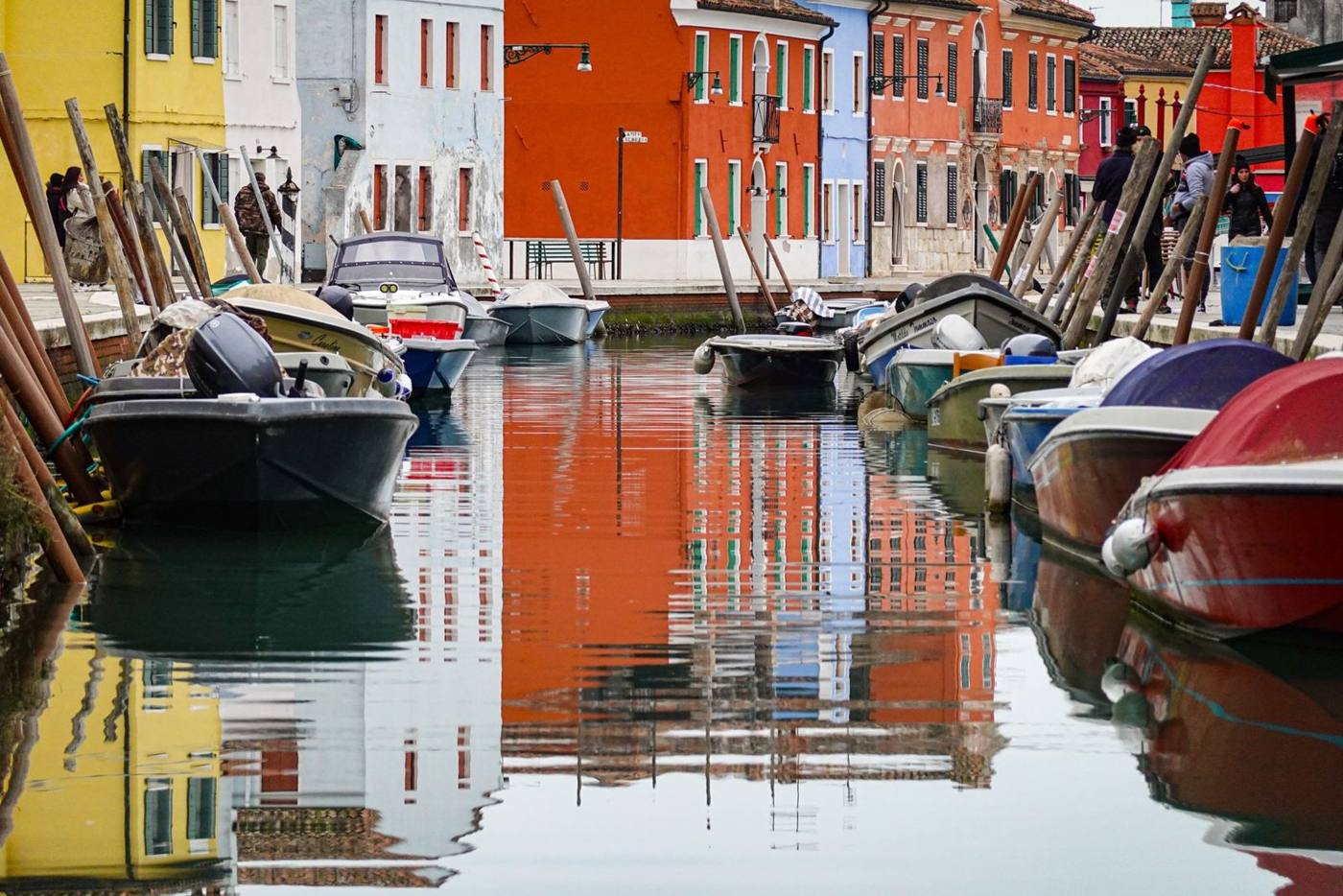
Veneto: Venice lagoon, Padua, Vicenza and Verona
Venice at a slow pace, with the islands of Murano, Burano and Torcello, then the art cities on the mainland: Giotto's frescoes in the Scrovegni Chapel in Padua, Palladio's villas and Teatro Olimpico in Vicenza, and the Verona Arena.
 6 daysEasy
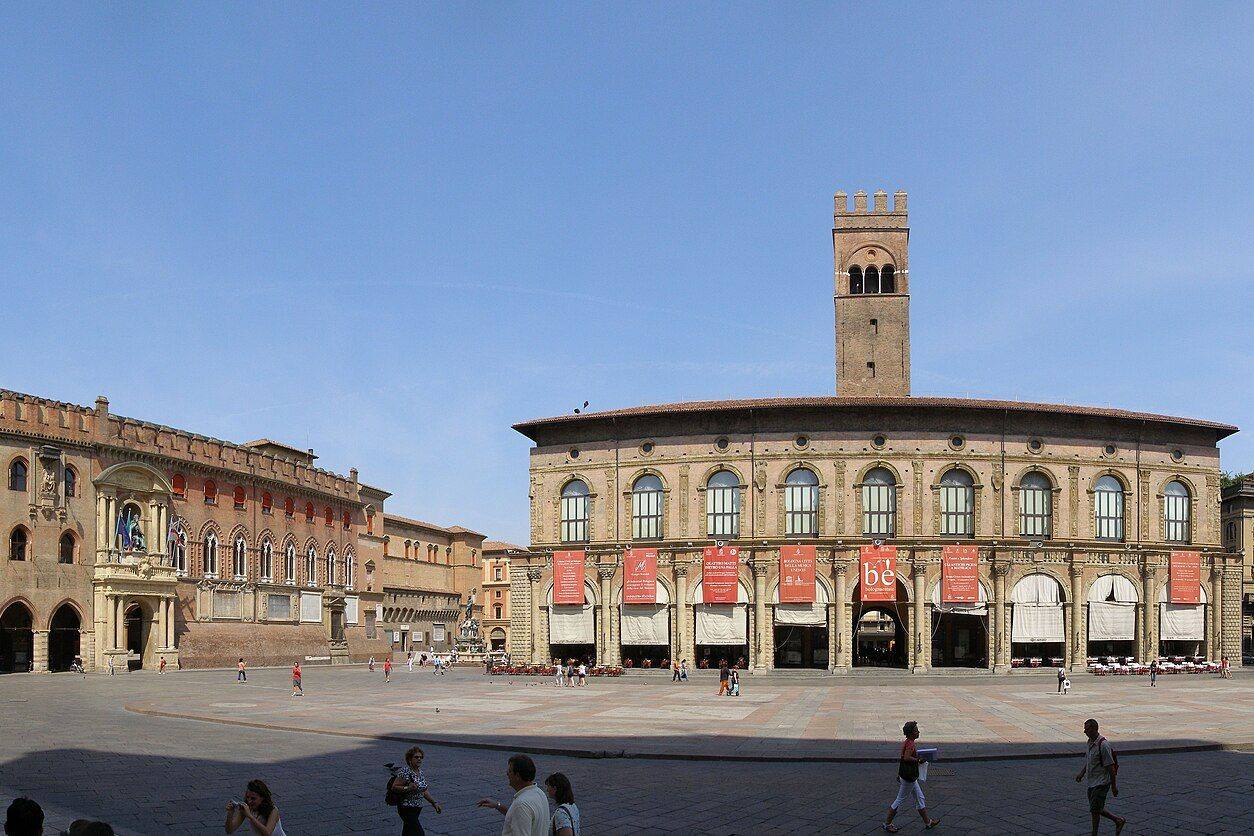
Emilia-Romagna: Bologna, Modena, Parma and Ravenna
The land of Parmigiano Reggiano, prosciutto and balsamic vinegar: Bologna and its porticoes, Modena with its Romanesque cathedral, Parma and the cheese dairies, Ferrara of the Este family and the Byzantine mosaics of Ravenna.
 7 daysEasy
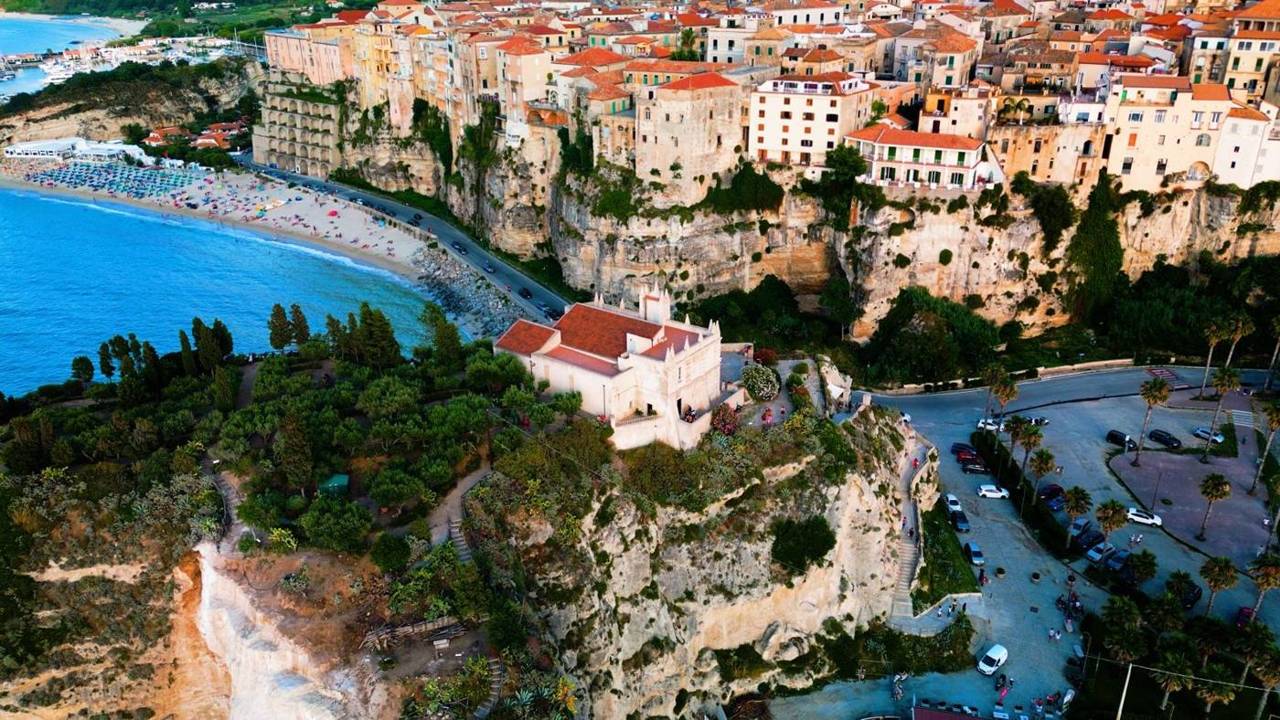
Calabria: Tropea, Scilla and the Sila
The Coast of the Gods with Tropea and Capo Vaticano, the fishing quarter of Chianalea in Scilla, the Riace Bronzes in Reggio Calabria and the wooded plateaus of the Sila with their lakes and larch pines.