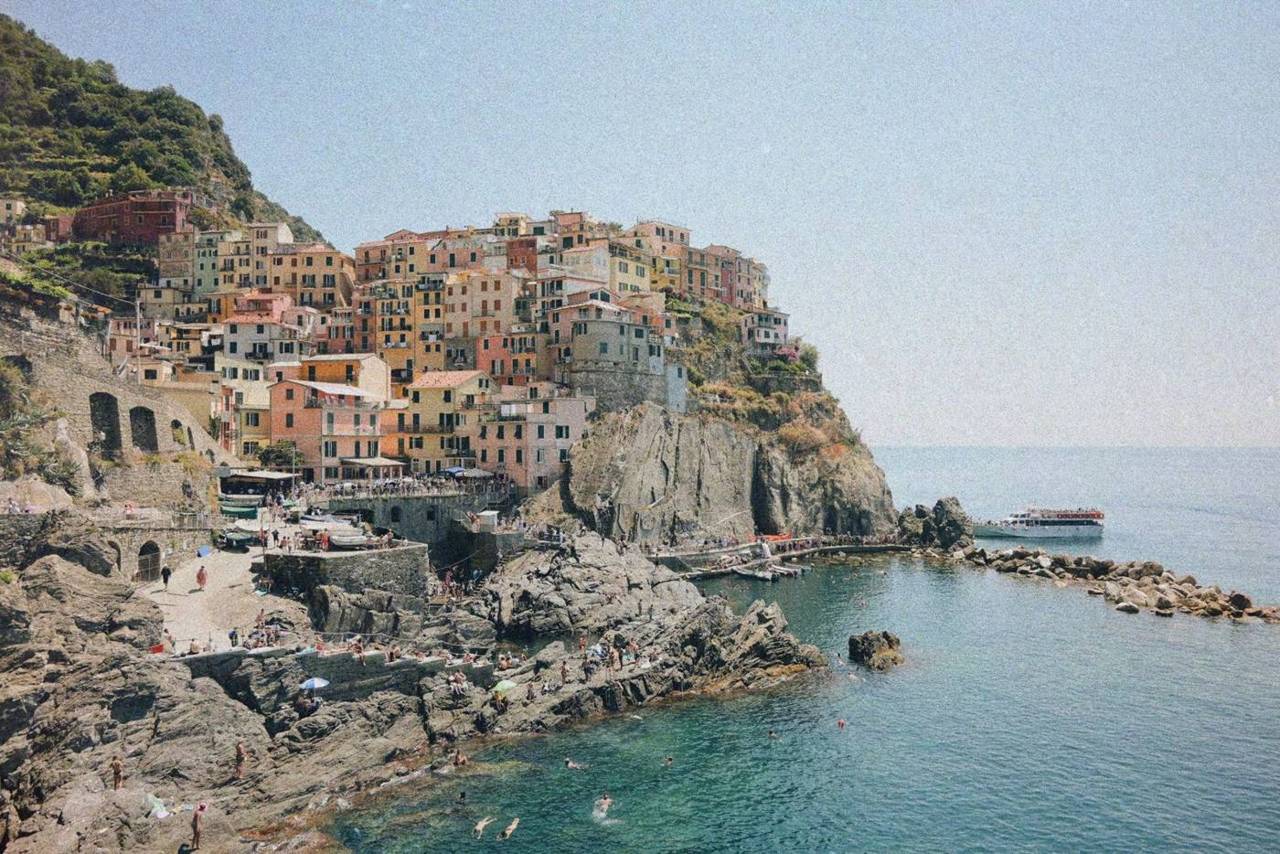
Cinque Terre and Portofino
Five cliff-top villages linked by train and footpaths, Portovenere, the Gulf of Poets and Portofino with San Fruttuoso.
- La Spezia
- Riomaggiore
- Manarola
- Corniglia
- Vernazza
- Monterosso
- Portovenere
- Portofino
Day by day
- Day 1
La Spezia, Riomaggiore and sunset at Manarola
Arrive at La Spezia Centrale station, the gateway to the Cinque Terre: from here regional trains stop at all five villages within minutes. From 14 March to 1 November 2026 these trains require a Cinque Terre fare ticket, priced differently according to the day, or the Cinque Terre Card Treno, which also covers the park's trains, trails and buses. Buy it online or at the station before boarding.
The first village is Riomaggiore, seven minutes by train: tall, narrow houses above the sea, the main street running down to the tiny harbour and boats pulled up on the slipway. Climb to the castle and the church of San Giovanni Battista for a view over the village. If you have booked, walk the Via dell'Amore to Manarola: it is the most famous stretch of the Sentiero Azzurro, about a kilometre cut into the rock, reopened in 2024 after twelve years. It runs only from Riomaggiore to Manarola, in a thirty-minute time slot booked on the Park website.
At sunset stay in Manarola: the best view is from the path climbing to the Punta Bonfiglio viewpoint, above the cemetery. Sleep in one of the villages rather than in La Spezia: in the evening, when the day visitors leave, the Cinque Terre become quiet again. For dinner try Monterosso anchovies, trofie with pesto and vegetable pie.
- Day 2
The Sentiero Azzurro: Corniglia, Vernazza and Monterosso
Today you walk the Sentiero Azzurro, the coastal trail number 2 linking the villages. The stretch between Manarola and Corniglia has been closed for years because of landslides, so take the train to Corniglia, the only village perched on a headland rather than at sea level. From the station you climb the 382 steps of the Lardarina stairway or take the park bus. Half an hour is enough to see the village and the Santa Maria terrace.
From Corniglia to Vernazza the trail runs through olive groves and vineyards above the sea: about an hour and a half. In season the coastal trails are paid, with the Cinque Terre Card Trekking or Treno, checked at the start of each stretch; from 2026 the price varies by day. Vernazza, with its harbour and the tower of the Doria castle, is the most photographed village: stop for lunch.
In the afternoon continue to Monterosso, the most tiring stretch, about two hours, with many steps uphill and the widest view of the coast. Monterosso has the only real sandy beach in the Cinque Terre and a newer part, Fegina, for a swim before taking the train back. Practical tip: start early in the morning, carry water and wear hiking shoes, never sandals. Trails close in heavy rain or weather alerts: check their status on the Park website before setting off.
- Day 3
High trails among vineyards and sanctuaries, and Sciacchetrà
To see the Cinque Terre without crowds, climb to the high trails, almost always no-cost and little used. The Cinque Terre are a man-made landscape: thousands of kilometres of dry-stone walls hold up the terraces of vines and olives, and this is what UNESCO recognised. Each village has its sanctuary on the hillside, linked by old mule tracks.
A classic route leaves Vernazza and climbs to the sanctuary of the Madonna di Reggio, about forty minutes past chapels and ancient holm oaks; from there the ridge path continues to the sanctuary of San Bernardino, above Corniglia, with a view of all five villages. Allow three or four hours in total, coming down to Corniglia or Vernazza. Alternatively, from Manarola climb to Volastra and follow the vineyard path to Corniglia, among rows of vines high above the sea: about two hours.
In the afternoon visit a local winery. The most famous wine is Sciacchetrà, a sweet passito made from grapes left to dry after the harvest, produced in small quantities and therefore expensive. You can also taste the dry white Cinque Terre DOC. In the evening return to the sea at Manarola or Riomaggiore. Tip: the high trails are well marked but have few water sources; in September and October, during the harvest, you will see the little monorails used to carry crates up and down the slopes.
- Day 4
By boat to Portovenere
Today you see the coast from the sea. In season, boats leave La Spezia and the Cinque Terre villages and shuttle along the coast to Portovenere: the trip shows the villages from an angle impossible on foot, with coloured houses above the cliffs and terraced vineyards. Sailings depend on the sea: in rough weather they are suspended, and there are none in winter.
Portovenere, a UNESCO site together with the Cinque Terre and the islands, is a village of tower houses lined up along the harbour. Walk the lane of Via Capellini, climb to the black-and-white church of San Pietro on its rocky point, and to Byron's Grotto, where tradition says the poet used to dive. The Doria castle at the top of the village looks over the Gulf of Poets and the island of Palmaria opposite.
In the afternoon take the short ferry to Palmaria: trails through pines and Mediterranean scrub, small coves and old quarries of black Portoro marble. Return to La Spezia by boat or bus, or stay in Portovenere. For dinner try muscoli ripieni, stuffed mussels typical of La Spezia, and farinata, a chickpea flatbread. Practical tip: buy a return boat ticket only if you are sure of the timetable; always keep the train as an alternative, as it remains the most reliable option.
- Day 5
Portofino and San Fruttuoso, then departure from Genoa
Leave the Cinque Terre by train heading north to Santa Margherita Ligure, about an hour and a quarter, direct or with a change at Sestri Levante depending on the timetable. From Santa Margherita to Portofino there is the bus, the boat and a walk along the coast road, about an hour. A car is not advisable: the road is narrow and the Portofino car park is small and expensive.
Portofino is a fishing village turned luxury harbour: the little square on the port, the church of San Giorgio and, higher up, Castello Brown, with its gardens and views over the headland. From the lighthouse, half an hour on foot, you see the whole coast. The headland is a marine protected area.
Around midday reach San Fruttuoso, a medieval abbey in a bay accessible only on foot or by sea. The path from Portofino runs through woodland and takes about two hours, with ups and downs; by boat it is half an hour. In the bay, about seventeen metres down, stands the statue of Christ of the Abyss. In the afternoon return to Santa Margherita and take the train to Genoa, about forty minutes; Genoa airport is linked to the centre by a shuttle bus. Tip: in Santa Margherita buy some Ligurian focaccia to eat on the train.
Landscapes unique in the world, but among the most overcrowded places in Italy. Come outside summer and sleep in one of the villages to enjoy the quiet evenings. The trails between villages require the paid Cinque Terre Card and some stretches are often closed by landslides. A car is useless: use the local train.
Before you go
- Documents and visa
- EU citizens only need a valid identity card or passport; hotels and guesthouses must register it on arrival. Other nationalities should check the visa rules for the Schengen area.
- Health and vaccines
- No vaccines required. EU citizens should bring their European Health Insurance Card (EHIC). Emergency number: 112.
- Money and payments
- Euro. Cards are accepted almost everywhere; many cities charge a tourist tax per night, paid directly at your accommodation.
- Power sockets
- Types C, F and L, 230 volts.
- Time zone
- Central European Time (UTC+1), summer time (UTC+2) from the last Sunday of March to the last Sunday of October.
- Safety
- A safe country. In big cities and on crowded public transport watch out for pickpockets. Emergencies: 112. Official advice: GOV.UK.
Information checked in November 2026 for Italian and EU citizens. Rules change: always check before you travel.
Variations
In 3 days: Riomaggiore and the Via dell'Amore on day one, the Sentiero Azzurro from Corniglia to Monterosso on day two, Portofino on day three. You skip the high trails and Portovenere.
In 8 days: add Lerici, Tellaro and the Gulf of Poets, a day in Genoa with its old town and aquarium, and a day at Camogli and walking the Portofino headland.
Frequently asked questions
Do I need the Cinque Terre Card?
In season yes, if you want to walk the coastal trails, which are paid. The Trekking version gives access to the trails; the Treno version adds regional trains between Levanto and La Spezia. The Via dell'Amore always needs a time slot booked on the Park website; 2026 sources disagree on whether it is included in the Card or needs a supplement: check when you buy. Out of season the trails, except the Via dell'Amore, are at no cost.
Can I go by car?
It is not advisable. Roads are narrow, parking in the villages is scarce and expensive, and some villages are closed to cars. The regional train runs every few minutes and links all the villages.
When is the best time?
April, May, September and October: mild weather, fewer crowds and open trails. In summer the villages are packed and the trails hot; in winter many places close and the sea is often rough.
Indicative itinerary written by World Atlas. Before booking, check timetables, seasonal openings, documents and safety.
 6 daysEasy
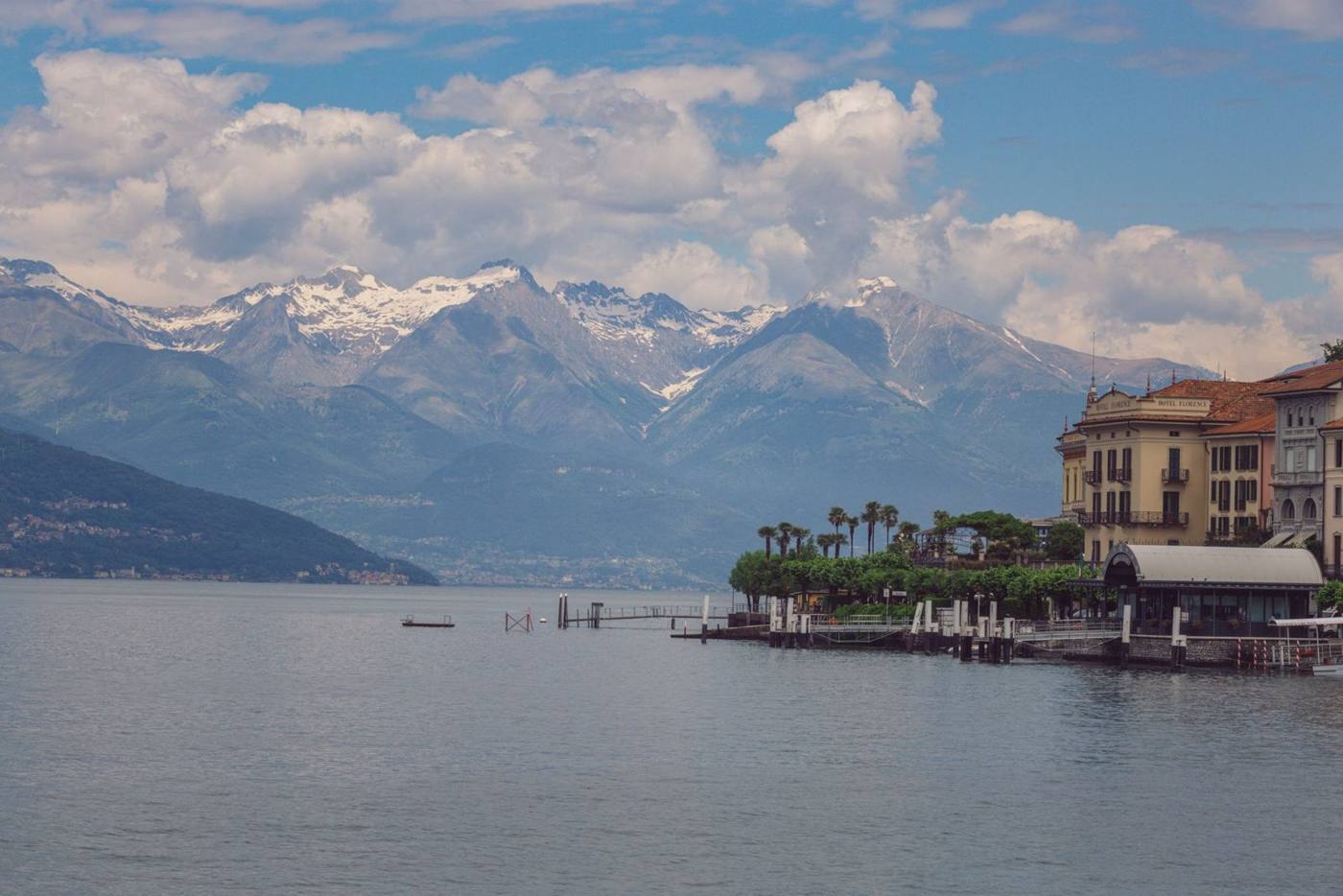
The great lakes: Como, Maggiore and Garda
The villas of Lake Como with Bellagio and Varenna, the Borromean Islands on Lake Maggiore, Sirmione and the Trentino shore of Lake Garda.
 5 daysEasy
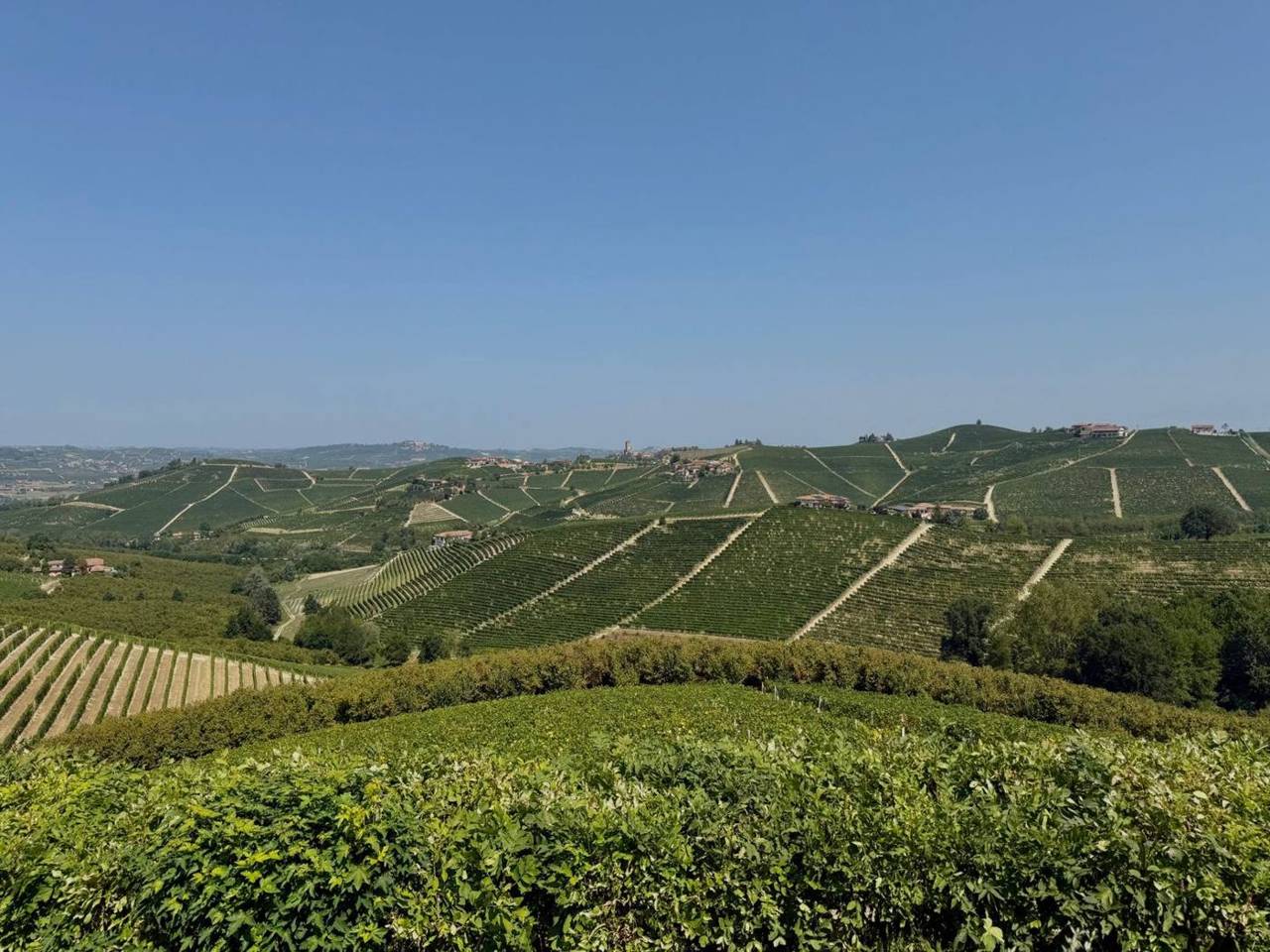
Piedmont: Turin and the Langhe
Turin with the Egyptian Museum and its historic cafés, then the UNESCO-listed hills of the Langhe and Roero among Barolo, Barbaresco, Alba and white truffles.
 8 daysEasy
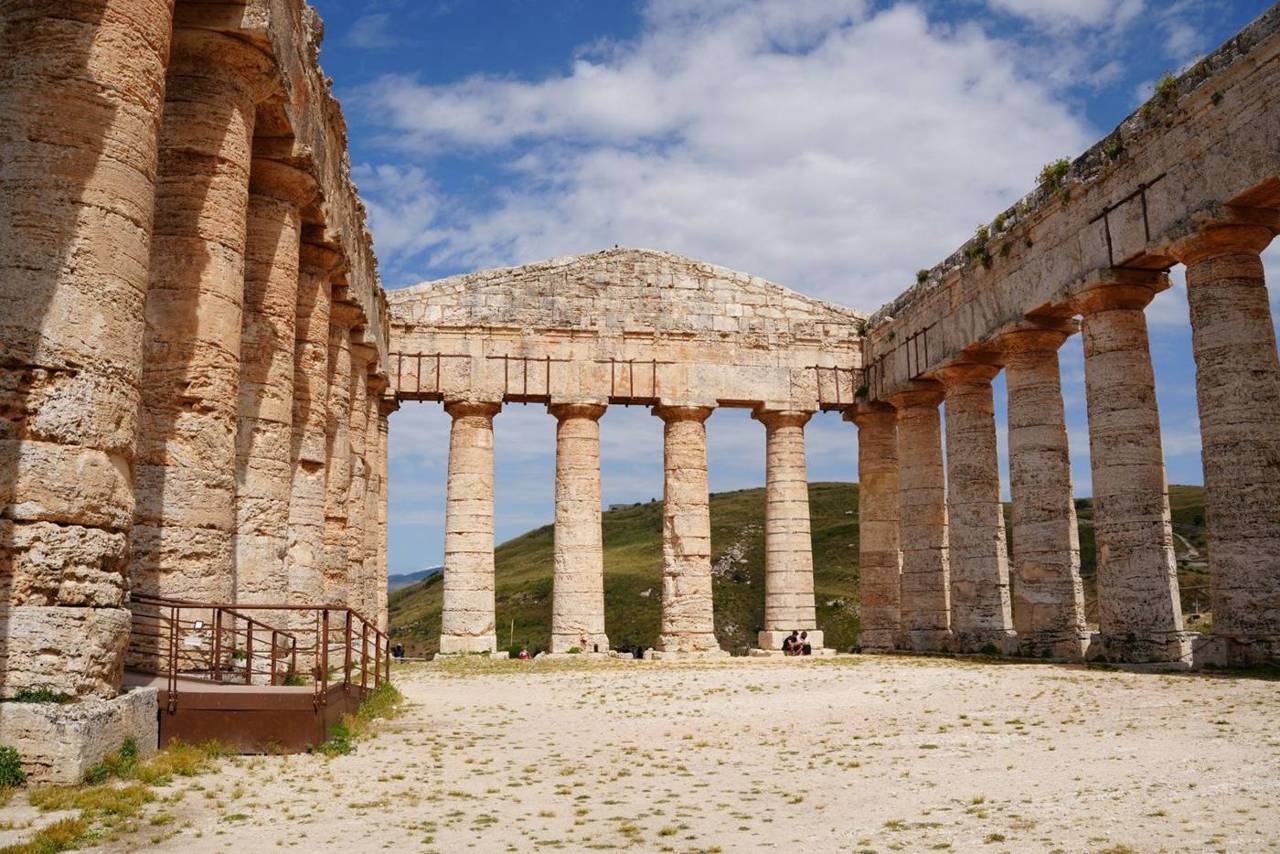
Western Sicily: Palermo, Trapani and Agrigento
From the Arab-Norman mosaics of Palermo and Monreale to the temple of Segesta, from the medieval village of Erice to the salt pans of Trapani and Marsala, ending at Selinunte and the Valley of the Temples in Agrigento.