 Croatia
A thousand islands, crystal-clear water, Roman and Venetian towns and parks of lakes and waterfalls.
Places not to miss
Dubrovnik
Medieval walls above the sea.
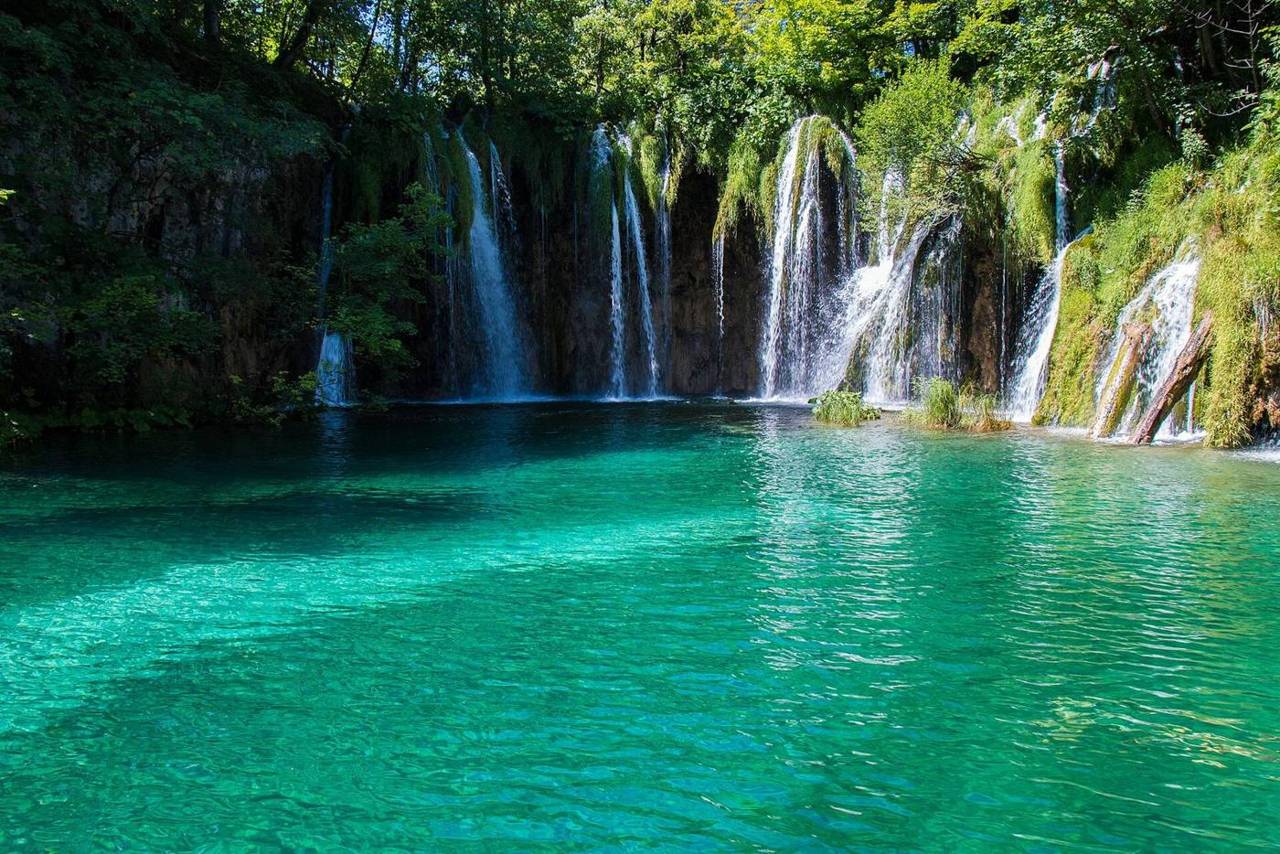
Plitvice Lakes
16 terraced lakes linked by waterfalls.
Split
Diocletian's Palace.
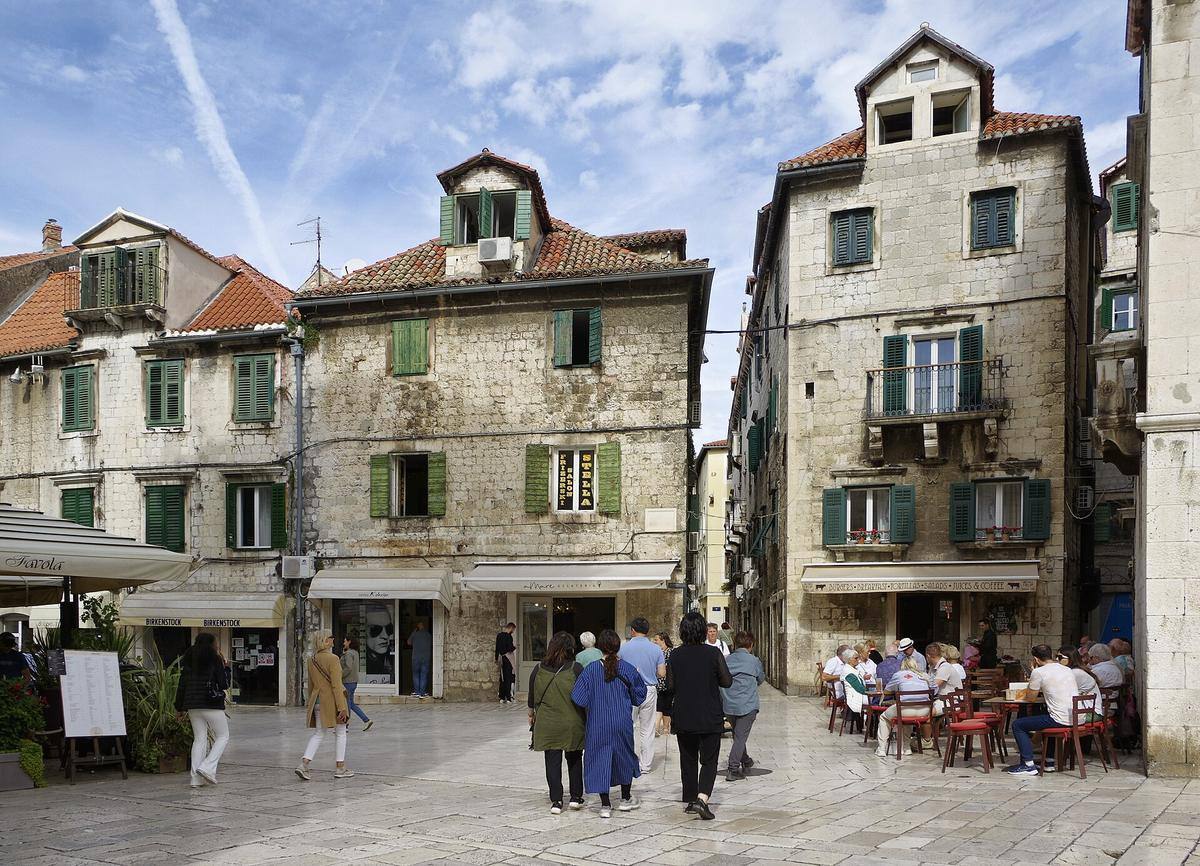
Photo: Berthold Werner, CC BY-SA 4.0 Hvar and Brač
Lavender islands and Zlatni Rat beach.
Krka Waterfalls
A national park near Šibenik.
Rovinj
Venetian Istria.
Nature and wildlife
Dolphins in the Adriatic, bears at Plitvice, griffon vultures on Cres.
Food and drink
Fish, peka, Istrian prosciutto, truffles.
When to go
May-June and September.
Did you know?
The necktie comes from the scarves of Croatian soldiers in the 17th century.
Itineraries in Croatia
Dalmatia from Split to Dubrovnik
Diocletian's Palace in Split, the islands of Hvar and Korčula by ferry, Pelješac wines and the walls of Dubrovnik.
Plitvice Lakes and Krka National Park
From Zagreb to Split via the sixteen terraced lakes of Plitvice, the town of Šibenik and the Krka waterfalls.
Istria: Rovinj, Poreč and Motovun
The Venetian coast of Rovinj and Poreč, the Roman arena of Pula, hilltop villages with truffles, olive oil and Malvasia.
The Kornati islands by boat
A week by sailing boat or gulet among the 89 bare islands of Kornati park, the salt lake of Telašćica and bays with konoba taverns.
Dubrovnik and the Bay of Kotor
Dubrovnik at a gentle pace, Lokrum and the Elafiti islands, then across the border to Kotor and Perast in Montenegro, and Mostar in Bosnia.
Zagreb and Slavonia
The continental Croatia few people see: Zagreb, the castles of Zagorje, Osijek, the Kopački rit wetlands and Vukovar.
The Kvarner islands: Krk, Cres and Lošinj
Rijeka and Opatija, the island of Krk with Baška, the griffon vultures of Cres, Lošinj with its dolphins and the medieval villages of Lubenice and Veli Lošinj.
Velebit and Paklenica
The mountain above the sea: the canyons of Paklenica, the refuges of northern Velebit and the Premužić trail with views over the islands.
The complete Croatia
From Zagreb to Dubrovnik in two weeks: Plitvice, Istria, Zadar, Krka, Split, Hvar and Korčula.
The far islands: Vis and Lastovo
Dalmatia's most remote islands, closed to foreigners until 1989: the Blue Cave of Biševo, Stiniva cove and the dark skies of Lastovo.
Hvar and Brač
The islands off Split: Zlatni Rat beach at Bol, Blaca hermitage and the stone quarries of Pučišća on Brač, then Hvar with the fortress above the harbour, lavender fields, the Stari Grad Plain (UNESCO) and the Pakleni islands by boat.
Korčula and Mljet National Park
Two islands in southern Dalmatia: Korčula, a fishbone-plan walled town on the sea, with its pošip wineries and sword dance, and Mljet, a national park with two saltwater lakes in the pine forest and the Benedictine monastery on St Mary's islet.
Split, Trogir and the Cetina canyon
A city inside a Roman palace: Diocletian's Palace (UNESCO) and Marjan hill, medieval Trogir on its islet, then Omiš and the Cetina river canyon by raft or canoe.
Zadar, Nin and the island of Pag
Northern Dalmatia: Zadar with its Roman forum and Sun Salutation, Nin with its tiny church and lagoon mud baths, then Pag, an island of white, moon-like stone, with its sheep's cheese, lace and salt pans.
Practical guide to Croatia
- Documents
- EU citizens need a valid identity card or passport. Croatia has been in the Schengen area since 2023, so there are no fixed checks on the Slovenian border; checks remain towards Bosnia and Herzegovina and Montenegro, for example on the coast road to Dubrovnik if you do not use the Pelješac bridge.
- Safety
- One of the safest countries in Europe. In remote inland areas, in Lika, Slavonia and the Dalmatian hinterland, minefields from the 1990s war remain, marked with signs: never leave the paths. In summer there are wildfires and the bora, a strong wind that can stop ferries and close bridges. Emergencies: 112. Official advice: GOV.UK.
- Getting around
- Along the coast and between islands you travel by ferry and catamaran, to be booked in summer. Motorways have toll booths; buses link Zagreb, Plitvice, Zadar, Split and Dubrovnik well. Trains are slow and of little use to visitors, except the Zagreb-Split line.
- Verified costs
- We do not give a single daily figure. Certain costs in 2026: Plitvice Lakes National Park costs 23 euros in April, May and October, 40 euros from June to September until the afternoon and 25 euros after 4 pm (after 3 pm in September); the visitor's name must be on the ticket (source np-plitvicka-jezera.hr). In Dubrovnik the tourist tax is 2.65 euros per person per night from April to September and 1.86 euros the rest of the year, with children under 12 exempt (source ETOA); elsewhere each municipality sets the amount. Dubrovnik's walls cost 40 euros, the same as the one-day Dubrovnik Pass, which includes them.
Climate month by month
Average minimum and maximum temperatures in Zagreb (inland), Split and Dubrovnik (Dalmatian coast), and sea temperature at Split. Inland winters are cold, coastal winters mild and rainy.
- January
- Zagreb -2 / 5 °C · Split 6 / 11 °C · Dubrovnik 7 / 13 °C · sea at Split 14 °C
- February
- Zagreb -1 / 8 °C · Split 6 / 11 °C · Dubrovnik 7 / 13 °C · sea at Split 14 °C
- March
- Zagreb 2 / 13 °C · Split 8 / 14 °C · Dubrovnik 9 / 15 °C · sea at Split 14 °C
- April
- Zagreb 7 / 18 °C · Split 12 / 18 °C · Dubrovnik 12 / 18 °C · sea at Split 15 °C
- May
- Zagreb 11 / 22 °C · Split 16 / 24 °C · Dubrovnik 16 / 23 °C · sea at Split 18 °C
- June
- Zagreb 15 / 26 °C · Split 20 / 28 °C · Dubrovnik 20 / 27 °C · sea at Split 22 °C
- July
- Zagreb 16 / 28 °C · Split 23 / 31 °C · Dubrovnik 23 / 30 °C · sea at Split 25 °C
- August
- Zagreb 16 / 28 °C · Split 23 / 31 °C · Dubrovnik 23 / 30 °C · sea at Split 26 °C
- September
- Zagreb 12 / 22 °C · Split 18 / 25 °C · Dubrovnik 19 / 26 °C · sea at Split 23 °C
- October
- Zagreb 8 / 17 °C · Split 15 / 20 °C · Dubrovnik 16 / 22 °C · sea at Split 20 °C
- November
- Zagreb 4 / 11 °C · Split 11 / 16 °C · Dubrovnik 12 / 18 °C · sea at Split 18 °C
- December
- Zagreb -1 / 5 °C · Split 7 / 12 °C · Dubrovnik 8 / 14 °C · sea at Split 16 °C
Source: Climats et Voyages (Zagreb 1996-2020, Split and Dubrovnik 1991-2018). Data and prices checked in November 2026.
Where to go and where not to
There are no particular warnings beyond normal precautions; before booking, always check up-to-date official travel advice, because the situation can change.