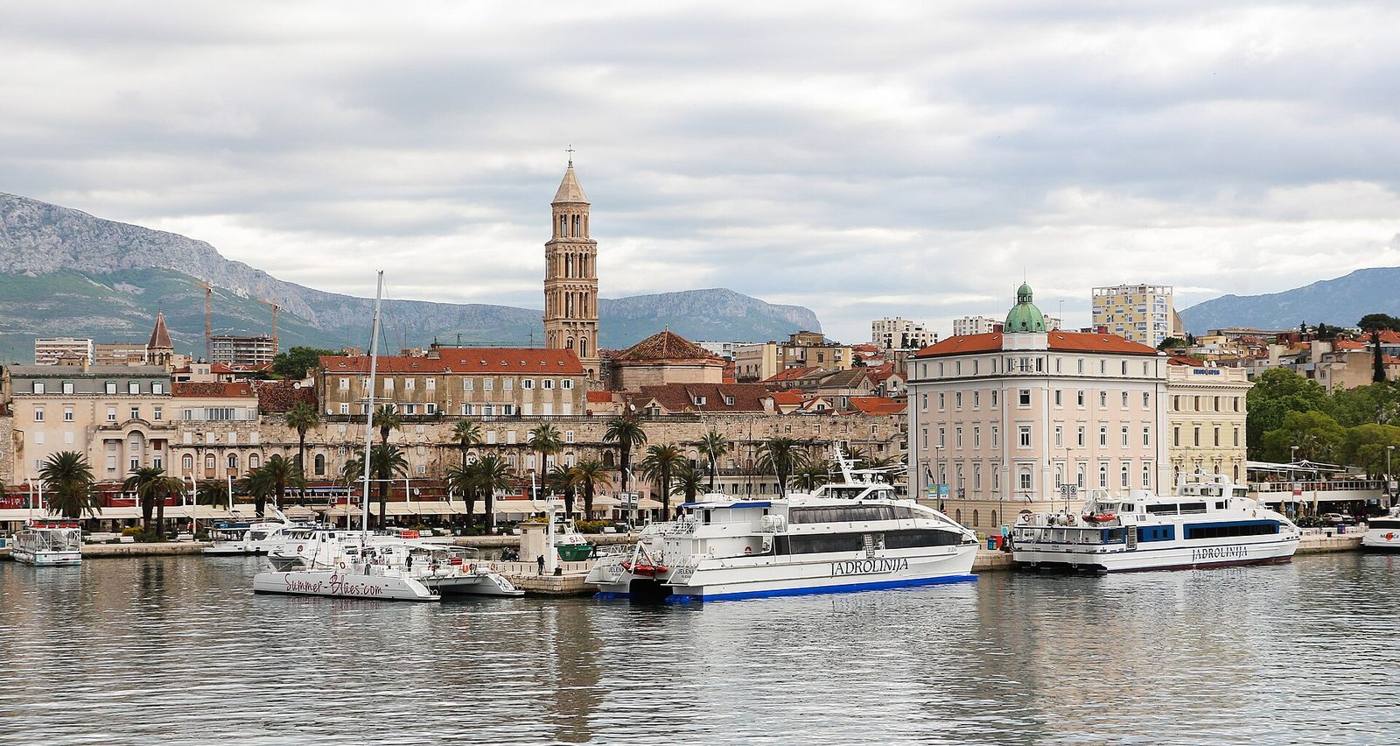
Split, Trogir and the Cetina canyon
A city inside a Roman palace: Diocletian's Palace (UNESCO) and Marjan hill, medieval Trogir on its islet, then Omiš and the Cetina river canyon by raft or canoe.
- Split
- Trogir
- Omiš
- Cetina
Day by day
- Day 1
Diocletian's Palace and the substructures
To enter Croatia EU citizens can use a valid identity card or passport; since 2023 Croatia has been in the Schengen area and uses the euro. Check the rules for your nationality.
Split, Croatia's second city on the Dalmatian coast, was born inside a palace: the one Roman Emperor Diocletian had built around the year 300 for his retirement after giving up power. When in the seventh century the people of nearby Salona fled invasions, they took refuge inside the palace walls, and the city has lived there ever since: houses, shops, churches and squares are built among the Roman walls. The palace and old town are a UNESCO World Heritage site.
In the morning enter by the Bronze Gate on the seafront and visit the palace substructures, the great vaulted halls that supported the emperor's apartments, almost intact because for centuries they were filled with rubbish. Then go up to the Peristyle, the central square with granite columns, the heart of the palace, where the emperor showed himself to his subjects.
Next to it is the Cathedral of Saint Domnius, once the mausoleum of Diocletian, persecutor of Christians, turned into a church dedicated to a martyr killed during his persecutions. Climb the Romanesque bell tower for the view over the roofs, the harbour and the islands. Visit too the Temple of Jupiter, now a baptistery.
In the afternoon leave by the Golden Gate, where the great statue of Gregory of Nin by sculptor Ivan Meštrović stands: touching his big toe brings luck.
Practical tip: in summer visit the palace early in the morning, before the cruise ships arrive.
- Day 2
Marjan hill in the morning and Trogir in the afternoon
Early in the morning climb Marjan, the pine-covered hill occupying the whole western tip of the Split peninsula, a nature park loved by locals for running, walking and swimming. From the centre a stairway climbs to the first viewpoint, overlooking the palace, the harbour and the islands of Brač, Šolta and Hvar. Higher up is the Telegrin summit, at about a hundred and seventy-eight metres, with the Croatian flag. On the slopes there are small medieval churches and hermitages cut into the rock. Lower down towards the sea there are pebble beaches among the pines, such as Kašjuni, and the Meštrović Gallery, the sculptor's villa with his works and garden.
In the afternoon take the bus or boat to Trogir, about thirty kilometres west of Split, a small medieval town built on an islet linked to the mainland and to Čiovo island by two bridges. Trogir is a UNESCO site for its old town, with stone streets, Romanesque and Renaissance palaces and churches showing many eras, from the Greeks to the Venetians.
Visit the Cathedral of Saint Lawrence, with the great Romanesque portal carved by Master Radovan in 1240, with Adam and Eve, lions and scenes of the months, and the Chapel of Blessed John, a Renaissance masterpiece. Then walk along the waterfront to the Venetian Kamerlengo fortress, overlooking the harbour.
In the evening return to Split.
Practical tip: on Marjan carry water, as there are few fountains.
- Day 3
Omiš and rafting in the Cetina canyon
In the morning drive or take the bus south along the coast to Omiš, about twenty-five kilometres from Split, a small town at the mouth of the River Cetina, squeezed between the sea and the high rock walls of the canyon. In the Middle Ages Omiš was a pirates' lair: with their light boats they attacked Venetian ships and then vanished up the river; on the rocks above town you still see the Mirabella and Starigrad fortresses, reached by a steep path.
The Cetina flows down from the inland mountains through a deep canyon of clear green water, waterfalls, rapids and caves. It is Dalmatia's most famous rafting spot, suitable for beginners too: guided trips last about three or four hours, with calm stretches where you swim and jump from rocks, and small rapids. Spring and summer are best; when the water is low the rapids are easy. Agencies provide wetsuit, helmet, life jacket and transport. Alternatively you can kayak, go canyoning or ride the zipline over the canyon.
In the afternoon drive up the canyon to the village of Radmanove Mlinice, with an old mill on the river, and walk along the water. Then return to Omiš for a swim on the sandy beach at the river mouth, one of the few sand beaches in the area.
In the evening head back to Split.
Practical tip: bring shoes that can get wet and a swimsuit; leave your phone on shore or in a waterproof case.
- Day 4
Departure from Split
In the morning, before leaving, visit the green market, called Pazar, just outside the palace's eastern walls, where Dalmatian farmers sell fruit, vegetables, dried figs, cheeses, olive oil and island lavender. Then stop at the fish market, called Peškarija, in the centre, where freshly caught fish is sold every morning; tradition says there are no flies because a sulphur spring runs nearby.
Finally stroll along the Riva, the great palm-lined promenade in front of the palace's south façade, the city's living room, where locals drink coffee and walk in the evening. If you have time, visit the Archaeological Museum, the oldest in Croatia, or the City Museum in the Gothic Papalić Palace.
In the afternoon, if your flight is late, take a last swim at Bačvice, the sandy beach closest to the centre, where locals play picigin, a traditional game with a small ball hit with the palm of the hand in shallow water, trying never to let it drop.
Split airport is about twenty-five kilometres away, near Trogir, served by shuttle buses. Ferries leave the port for the islands and for Ancona in Italy.
Things to take home: olive oil, Hvar lavender, dried figs, Dalmatian wine, maraschino and carob products.
Practical tip: check your government's travel advice before leaving.
Rafting on the Cetina is easy in summer, when water is low. Split's centre is packed with cruise visitors in August: visit early in the morning. A valid identity card is enough for EU citizens.
Before you go
- Documents and visa
- EU citizens need a valid identity card or passport: Croatia has been in the Schengen area since 2023. Other nationalities should check the Schengen rules.
- Health and vaccines
- No vaccines required. EU citizens should bring their EHIC. Emergencies: 112.
- Money and payments
- Euro since 2023. Cards are accepted almost everywhere, but carry some cash on small islands. Every accommodation charges a tourist tax per person per night.
- Power sockets
- Types C and F, 230 volts.
- Time zone
- Central European Time (UTC+1, summer UTC+2).
- Safety
- A very safe country. In remote inland areas some minefields from the 1990s war remain, marked with signs: stay on the paths. Official advice: GOV.UK.
Information checked in November 2026 for Italian and EU citizens. Rules change: always check before you travel.
Variations
In 2 days: Diocletian's Palace and Marjan on day one, Trogir or rafting at Omiš on day two.
In 7 days: add the islands of Brač, with Zlatni Rat beach, and Hvar, or Krka National Park.
Frequently asked questions
Which document do I need for Croatia?
A valid identity card or passport for EU citizens; Croatia is in Schengen and uses the euro.
Is rafting on the Cetina difficult?
No, it suits beginners with guides; the water is lower and calmer in summer.
When is the best time for Split?
Spring and early autumn, when the sea is already or still warm and the city is less crowded.
Indicative itinerary written by World Atlas. Before booking, check timetables, seasonal openings, documents and safety.
 4 daysEasy
Zadar, Nin and the island of Pag
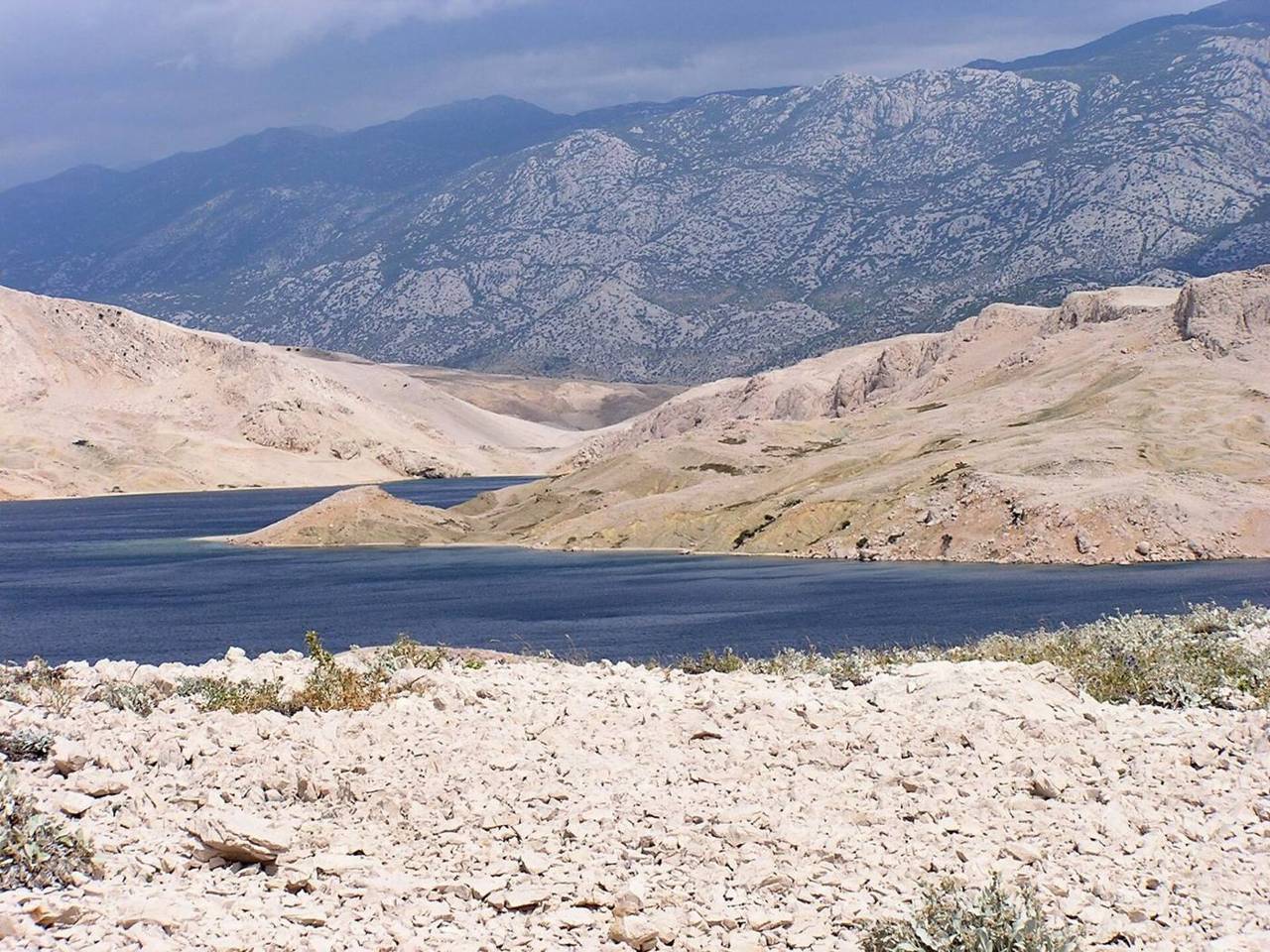
Northern Dalmatia: Zadar with its Roman forum and Sun Salutation, Nin with its tiny church and lagoon mud baths, then Pag, an island of white, moon-like stone, with its sheep's cheese, lace and salt pans.
 10 daysEasy
Dalmatia from Split to Dubrovnik
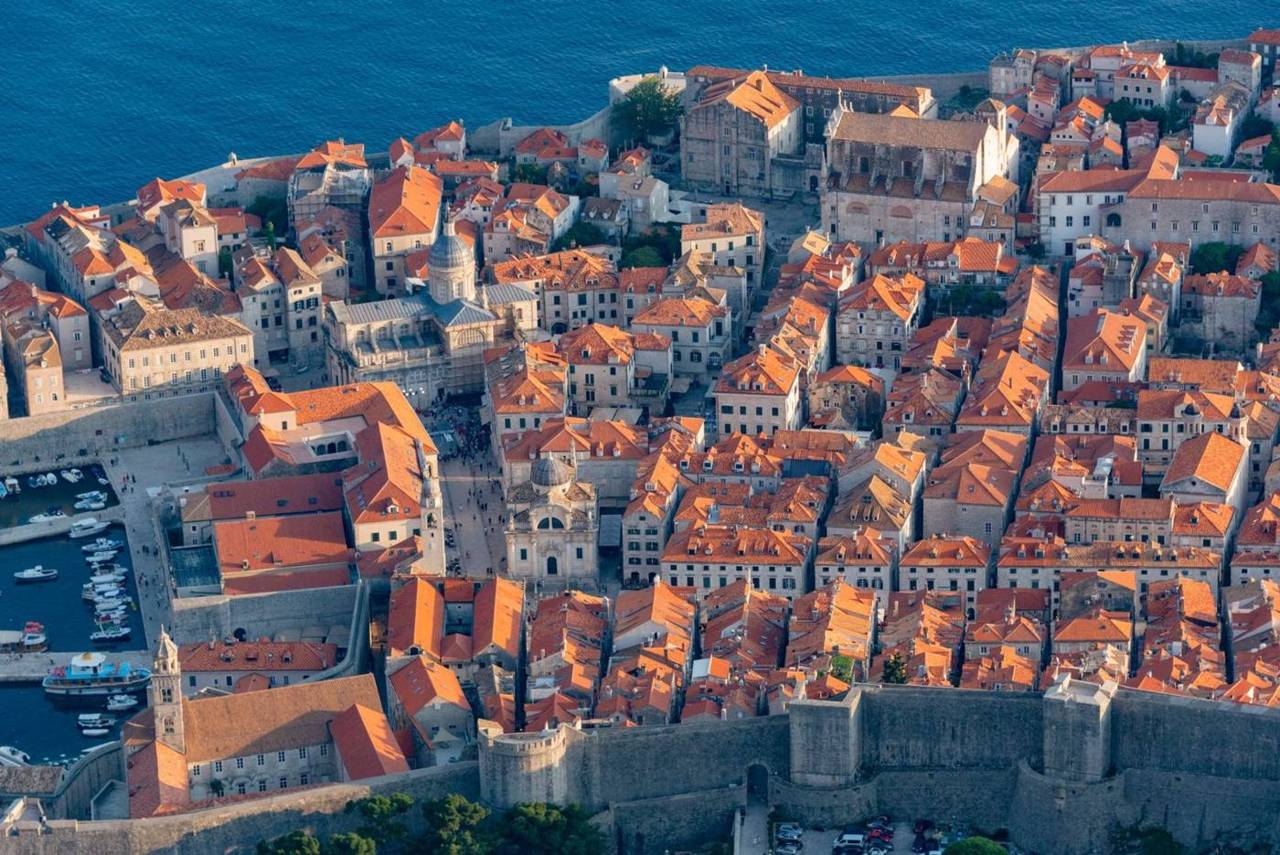
Diocletian's Palace in Split, the islands of Hvar and Korčula by ferry, Pelješac wines and the walls of Dubrovnik.
 5 daysEasy
Plitvice Lakes and Krka National Park
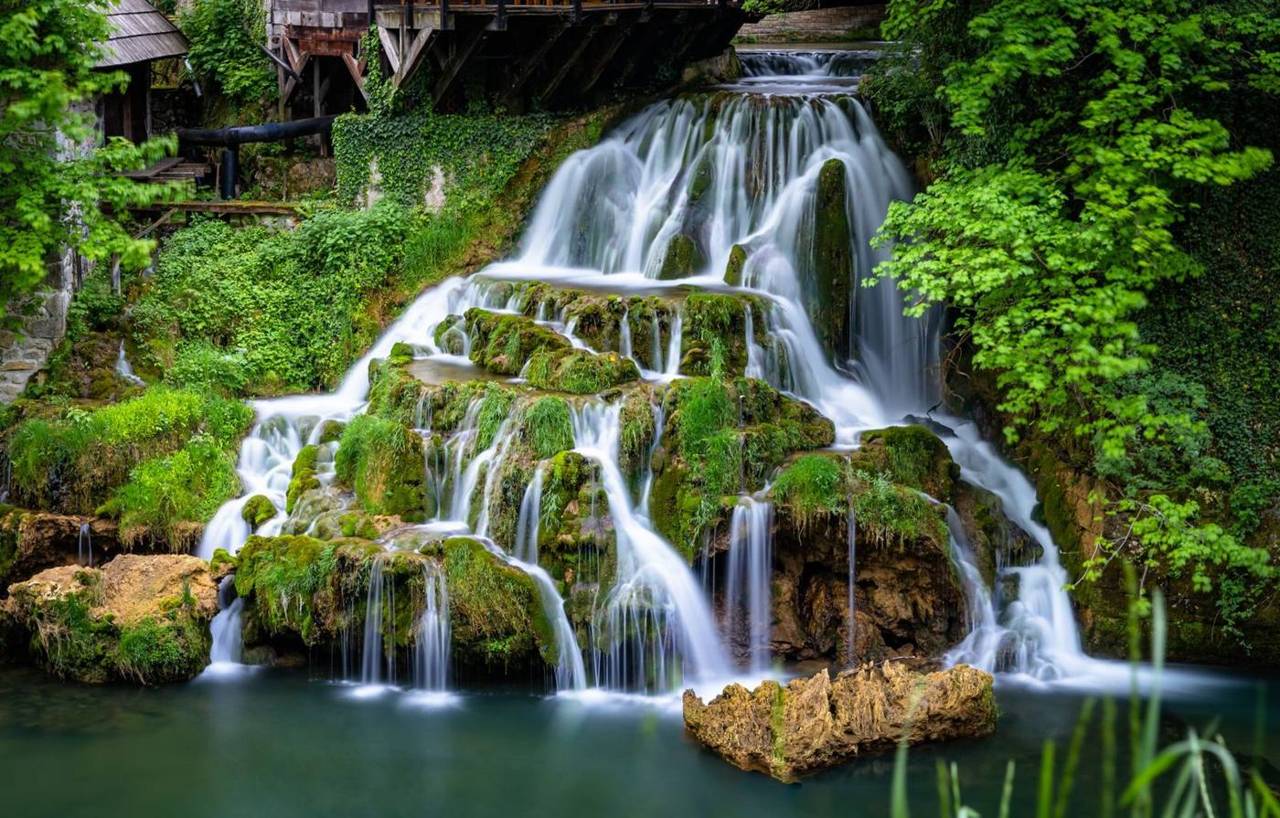
From Zagreb to Split via the sixteen terraced lakes of Plitvice, the town of Šibenik and the Krka waterfalls.