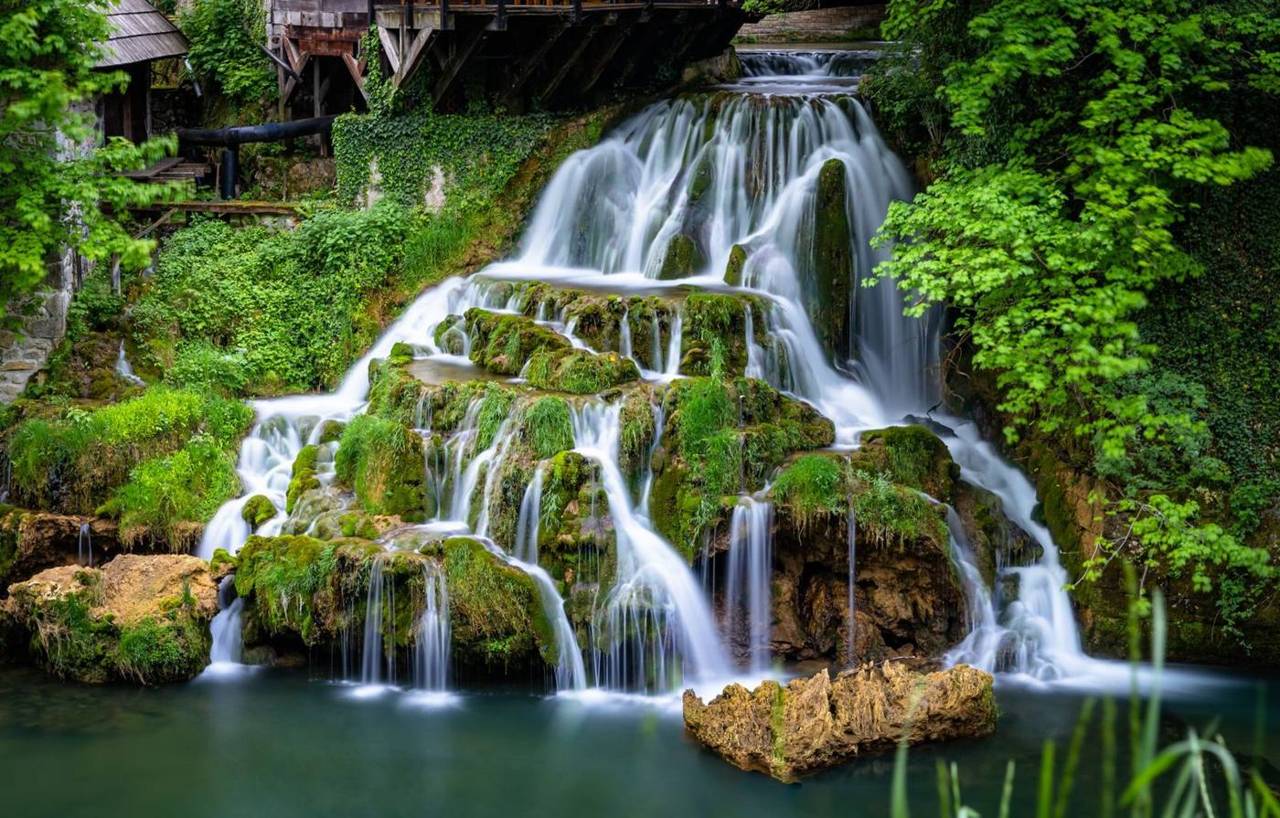
Plitvice Lakes and Krka National Park
From Zagreb to Split via the sixteen terraced lakes of Plitvice, the town of Šibenik and the Krka waterfalls.
- Zagreb
- Plitvice
- Zadar
- Šibenik
- Krka
- Split
Day by day
- Day 1
Zagreb: the Upper Town, Dolac market and the Museum of Broken Relationships
From Zagreb airport a shuttle runs to the bus station in about half an hour. This trip needs a car from the second day: pick it up the next morning, so you explore the city on foot on the first day. Stay in the Lower Town, around Ban Jelačić Square.
In the morning go to Dolac market, above the main square, with its red umbrellas and farmers selling fresh cheese with cream, fruit and flowers; beneath is the covered meat and fish market. Then walk or take the funicular, one of the shortest in the world, up to Gornji Grad, the Upper Town.
Here is St Mark's church, whose roof tiles form the coats of arms of Croatia and Zagreb, and the Lotrščak tower, from which a small cannon fires every day at noon. Walk under the Stone Gate, the last of the medieval gates, with a chapel where people stop to pray before an image of the Virgin that survived a fire.
In the afternoon visit the Museum of Broken Relationships, born from an idea of two artists: it displays objects donated by people around the world after the end of a love affair, each with its short story. It is moving and ironic at once. In the evening go down to Tkalčićeva street, lined with bars and outdoor cafés. For dinner try štrukli, pastry filled with fresh cheese, baked or boiled. Practical tip: book your Plitvice ticket online today, with each visitor's name.
- Day 2
To Plitvice and the Lower Lakes circuit
In the morning drive from Zagreb to Plitvice Lakes National Park, about two and a half hours on the motorway and then main roads. Stay two nights near the park, in the villages around the entrances: it is the key to seeing the lakes without crowds, entering at opening and leaving in the evening.
Plitvice is a chain of sixteen terraced lakes, joined by hundreds of waterfalls and surrounded by beech and fir forests, a World Heritage site. The water changes from green to turquoise with the light and dissolved minerals. You walk on wooden boardwalks just above the water. Swimming is banned everywhere. In 2026 the ticket costs 23 euros in April, May and October, 40 euros from June to September until 4 pm (3 pm in September) and 25 euros after that; the visitor's name must be on the ticket.
In the afternoon, with the cheaper afternoon ticket in summer, enter at Entrance 1 and walk down to the Lower Lakes, in the narrowest canyon. Here is Veliki slap, the Great Waterfall, 78 metres high, the tallest in Croatia. The viewpoint above Entrance 1 gives the classic photo of the lakes from above.
The Lower Lakes circuit takes two to three hours. Practical tip: keep your ticket, as it also covers the electric boat on Lake Kozjak and the panoramic train, which link the different parts of the park.
- Day 3
The Upper Lakes from opening time
Today is the finest day of the trip: enter at opening time, when there is almost no one on the boardwalks and mist rises from the water. The ticket is valid for one day; there is also a two-day ticket, useful if you want to split the visit as in this plan.
From Entrance 2 take the electric boat across Lake Kozjak, the largest, or walk along the shore. Then climb to the Upper Lakes, wider and more open, in a bowl of forest: Gradinsko, Galovac with its fan-shaped falls, Okrugljak, up to Prošćansko jezero, the highest. The panoramic train brings you back down from the last station. With stops allow four or five hours; marked routes have different letters according to length.
The park is one of Croatia's most visited places: between ten and four in summer, you walk the boardwalks in single file. So aim to finish the main circuit before noon. In the afternoon rest or walk around the nearby villages, such as Rastoke, half an hour to the north, where the Slunjčica river tumbles in small falls among old watermills.
For dinner the local restaurants serve grilled meat, spit-roast lamb and Lika cheese. Practical tip: in spring and autumn the boardwalks can be wet and slippery, while in winter parts of the Upper Lakes may be closed by snow and ice.
- Day 4
Zadar with its Sea Organ and Šibenik with St James's Cathedral
In the morning head down to the coast: Plitvice to Zadar is about an hour and a half's drive. Zadar is a Roman and Venetian town on a peninsula, with walls and gates still standing. In the centre the Roman forum keeps its original columns, next to the tall round 9th-century church of St Donatus and the cathedral of St Anastasia.
At the tip of the peninsula are the two best-known works of the modern city: the Sea Organ, a set of pipes under marble steps on the waterfront that play with the movement of the waves, and the Greeting to the Sun, a large circle of solar panels in the paving that lights up in colours at night. At sunset they are the busiest spot in town.
In the afternoon continue to Šibenik, about an hour south. The old town climbs from the sea in lanes and stairways to St James's Cathedral, a World Heritage site, built entirely of stone with no brick or wood. The frieze around the apse shows seventy-one carved heads, portraits of the townspeople of the time. Above the town, St Michael's fortress gives a view over the roofs and the channel.
Sleep in or near Šibenik. For dinner try grilled fish with chard and potatoes, and Zadar's maraschino, the city's sour cherry liqueur. Practical tip: Šibenik's centre is pedestrian and uphill, so leave the car in the waterfront car parks.
- Day 5
Krka National Park and the Skradinski buk falls; on to Split
In the morning go to Krka National Park, about twenty minutes from Šibenik. The Krka river descends towards the sea through a series of travertine lakes and falls, like Plitvice but more compact. You enter at Lozovac, with a shuttle to the falls, or at Skradin, with a boat up the river through the reeds: from spring to autumn the finest way to arrive.
The heart of the park is Skradinski buk, the largest waterfall, with seventeen steps of water over almost half a kilometre. A loop of wooden boardwalks circles the falls and the restored watermills, where you see how grain was ground. Since 2021 swimming has been banned in the park, including under the great waterfall, where it was once allowed.
If you have time, in summer boats run inside the park to the island of Visovac, with a Franciscan monastery in the middle of the lake, and to the Roški slap falls, further upstream and quieter. Allow at least three hours for the main part.
In the afternoon drive to Split, about an hour on the motorway, where this itinerary ends and the Dalmatian one can begin. Practical tip: in summer arrive at Krka at opening time, as car parks and boardwalks fill early, and buy your ticket online.
Croatia's easiest nature trip, perfect before a few beach days in Dalmatia. Plitvice is beautiful but very busy, and in summer tickets are sold online by time slot. Swimming beneath the Krka falls is no longer allowed. Autumn colours are superb and there are fewer people.
Before you go
- Documents and visa
- EU citizens need a valid identity card or passport: Croatia has been in the Schengen area since 2023. Other nationalities should check the Schengen rules.
- Health and vaccines
- No vaccines required. EU citizens should bring their EHIC. Emergencies: 112.
- Money and payments
- Euro since 2023. Cards are accepted almost everywhere, but carry some cash on small islands. Every accommodation charges a tourist tax per person per night.
- Power sockets
- Types C and F, 230 volts.
- Time zone
- Central European Time (UTC+1, summer UTC+2).
- Safety
- A very safe country. In remote inland areas some minefields from the 1990s war remain, marked with signs: stay on the paths. Official advice: GOV.UK.
Information checked in November 2026 for Italian and EU citizens. Rules change: always check before you travel.
Variations
In 3 days: Zagreb on the first morning and Plitvice in the afternoon, the whole of Plitvice on the second day, Krka on the third with arrival in Split. You give up Zadar and Šibenik.
In 8 days: add a day in Paklenica National Park or on the Velebit, walking in the mountains above the sea, and three days on the islands of Hvar and Brač from Split.
Frequently asked questions
How much is Plitvice and do I need to book?
In 2026 the ticket costs 23 euros in April, May and October, 40 euros from June to September until the afternoon and 25 euros after 4 pm (after 3 pm in September); it is cheaper in winter. Each visitor's name must be on the ticket. Buy it online on the park's official website a few days ahead, especially in summer.
Can I swim at Plitvice or Krka?
No. It has always been banned at Plitvice, and at Krka since 2021, including under the Skradinski buk falls. For freshwater swimming there are some river stretches outside the parks, or the sea at Šibenik and Split.
When is the best time to go?
May, June, September and October. In spring the falls carry more water, in autumn the forests turn red and gold. In July and August the parks are very crowded: enter at opening. In winter Plitvice under snow is beautiful, but some paths and the boat may be closed.
Indicative itinerary written by World Atlas. Before booking, check timetables, seasonal openings, documents and safety.
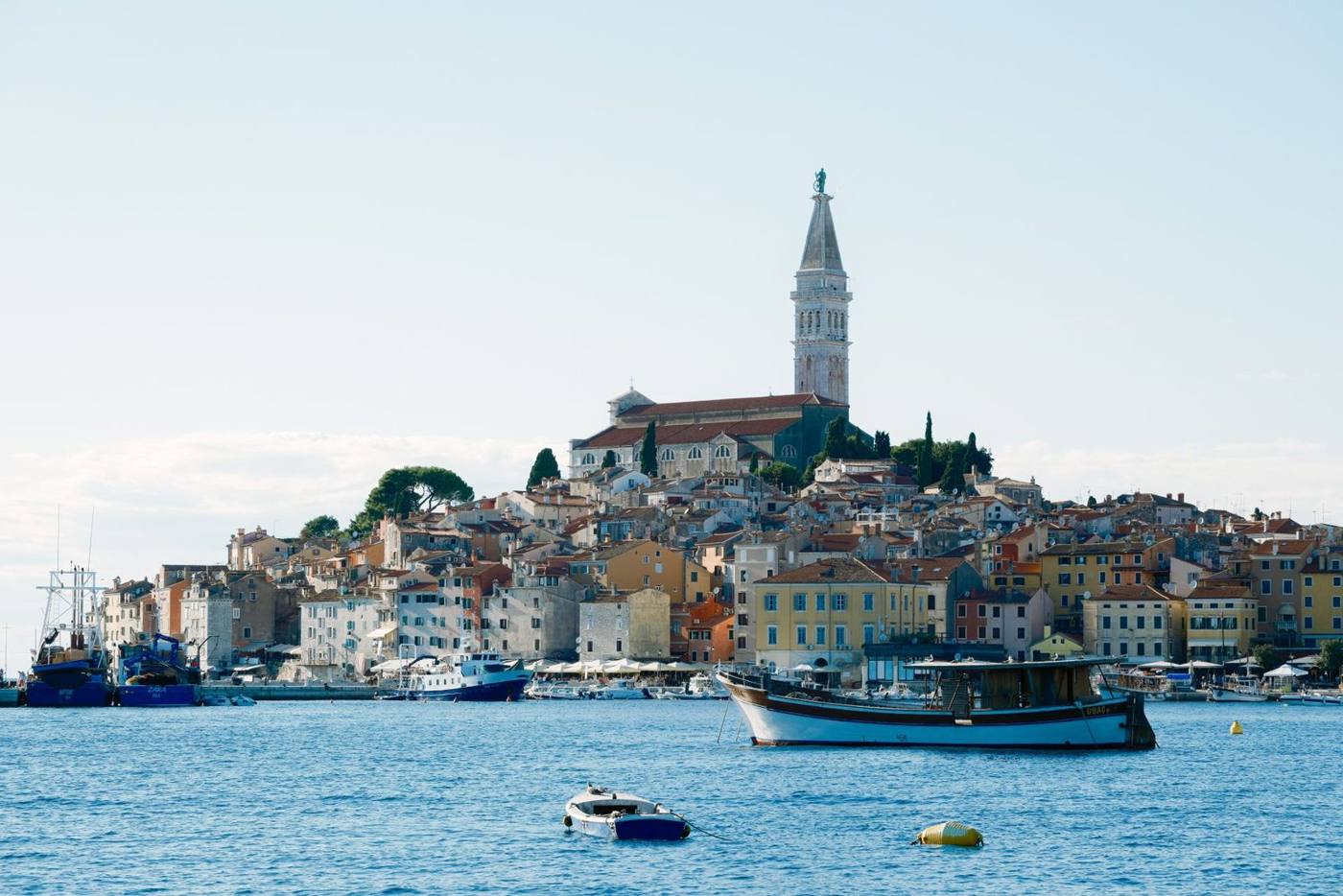 6 daysEasy
Istria: Rovinj, Poreč and Motovun
The Venetian coast of Rovinj and Poreč, the Roman arena of Pula, hilltop villages with truffles, olive oil and Malvasia.
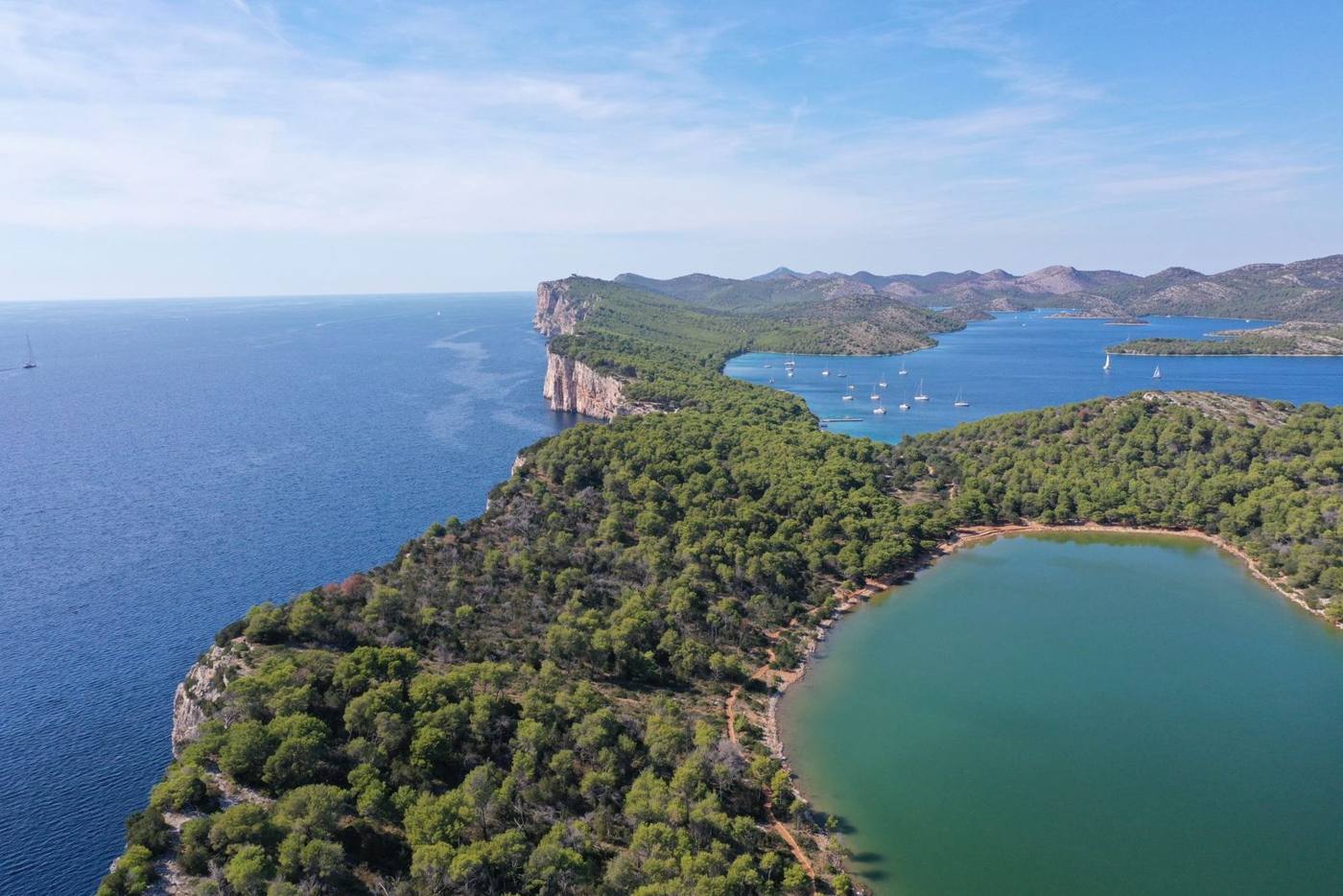 7 daysEasy
The Kornati islands by boat
A week by sailing boat or gulet among the 89 bare islands of Kornati park, the salt lake of Telašćica and bays with konoba taverns.
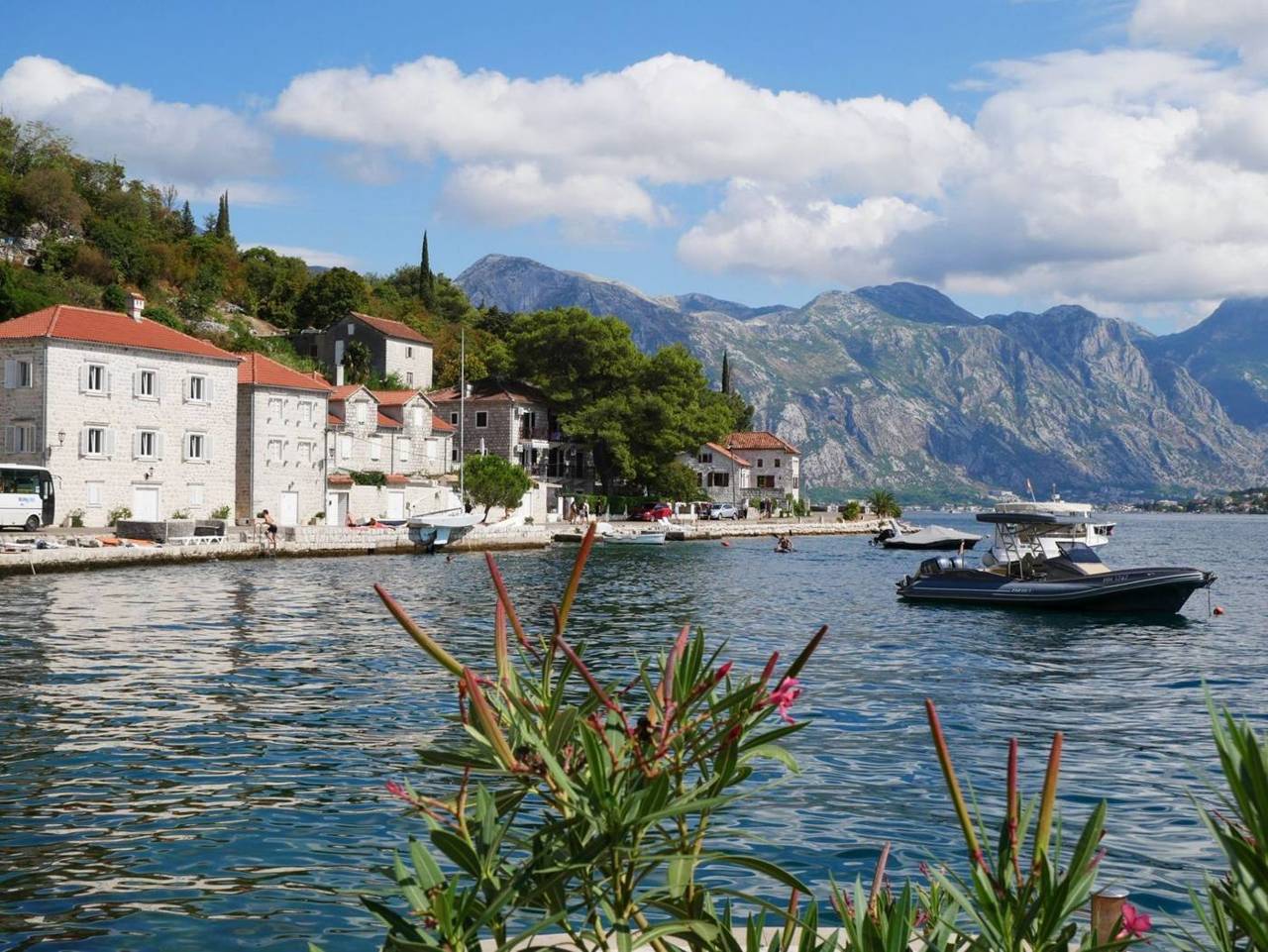 7 daysEasy
Dubrovnik and the Bay of Kotor
Dubrovnik at a gentle pace, Lokrum and the Elafiti islands, then across the border to Kotor and Perast in Montenegro, and Mostar in Bosnia.