The Kornati islands by boat
A week by sailing boat or gulet among the 89 bare islands of Kornati park, the salt lake of Telašćica and bays with konoba taverns.
- Zadar
- Dugi Otok
- Telašćica
- Kornati
- Murter
- Šibenik
Day by day
- Day 1
Boarding at Zadar or Biograd
This trip is a week by boat in the Kornati archipelago and nearby islands in northern Dalmatia. The Kornati are a group of about ninety islands, islets and reefs of white limestone, almost treeless, in a blue, transparent sea. The Irish writer George Bernard Shaw wrote that on the last day of creation the gods wished to crown their work and created the Kornati from tears, stars and breath. Today much of the archipelago is a national park.
You reach Zadar by air or ferry, or Split. Croatia is in the Schengen area and uses the euro.
On the first day you board at the port of Zadar or Biograd na Moru, about thirty kilometres south. You can hire a sailing or motor boat with or without a skipper, or join a gulet cruise with other people.
If you have time before boarding, walk around central Zadar: the Roman forum, the round church of Saint Donatus and, on the seafront, the Sea Organ, stone steps with pipes beneath them where the waves make organ like sounds. At sunset, next to it, the Greeting to the Sun, a large glass circle that lights up at night.
In the evening shop for provisions, stow your bags in the cabins and have dinner in port.
Spend the night on board.
Practical tip: to skipper a boat yourself in Croatia you need a recognised boating licence and, for sailing, a radio certificate. If you do not have them, hire with a skipper. Check the rules with the charter company.
- Day 2
Dugi Otok and Sakarun beach
In the morning you sail north west across the channel to Dugi Otok, the long island, the largest of the islands off Zadar, long and narrow, with cliffs on the open sea and quiet bays on the inner side.
The first stop is Sakarun bay, at the island's northern tip. It is one of Croatia's most beautiful beaches: a wide bay with fine white sand, rare in Dalmatia, and shallow turquoise water reminiscent of the Caribbean. You anchor off the beach and go ashore by swimming or in the tender.
In the afternoon you sail along the coast to the small harbour of Božava or Sali, the island's largest village, with stone houses, a fishing port and a few tavernas by the sea. Near Veli Rat, at the northern tip, there is also a tall nineteenth century lighthouse, one of the highest in the Adriatic, surrounded by pine woods.
In the evening moor in a harbour or a sheltered bay.
Spend the night on board.
Practical tip: in summer Sakarun is very busy with boats. Arrive early in the morning. Anchor only on sand, not on seagrass meadows, the marine plants that protect the sea. The most common summer wind is the maestral, usually in the afternoon.
- Day 3
Telašćica park: the cliffs and the salt lake Mir
Today you sail south to Telašćica nature park, at the southern end of Dugi Otok. The park is a large, deep, sheltered bay with many small coves and islets, one of the safest natural harbours in the Adriatic.
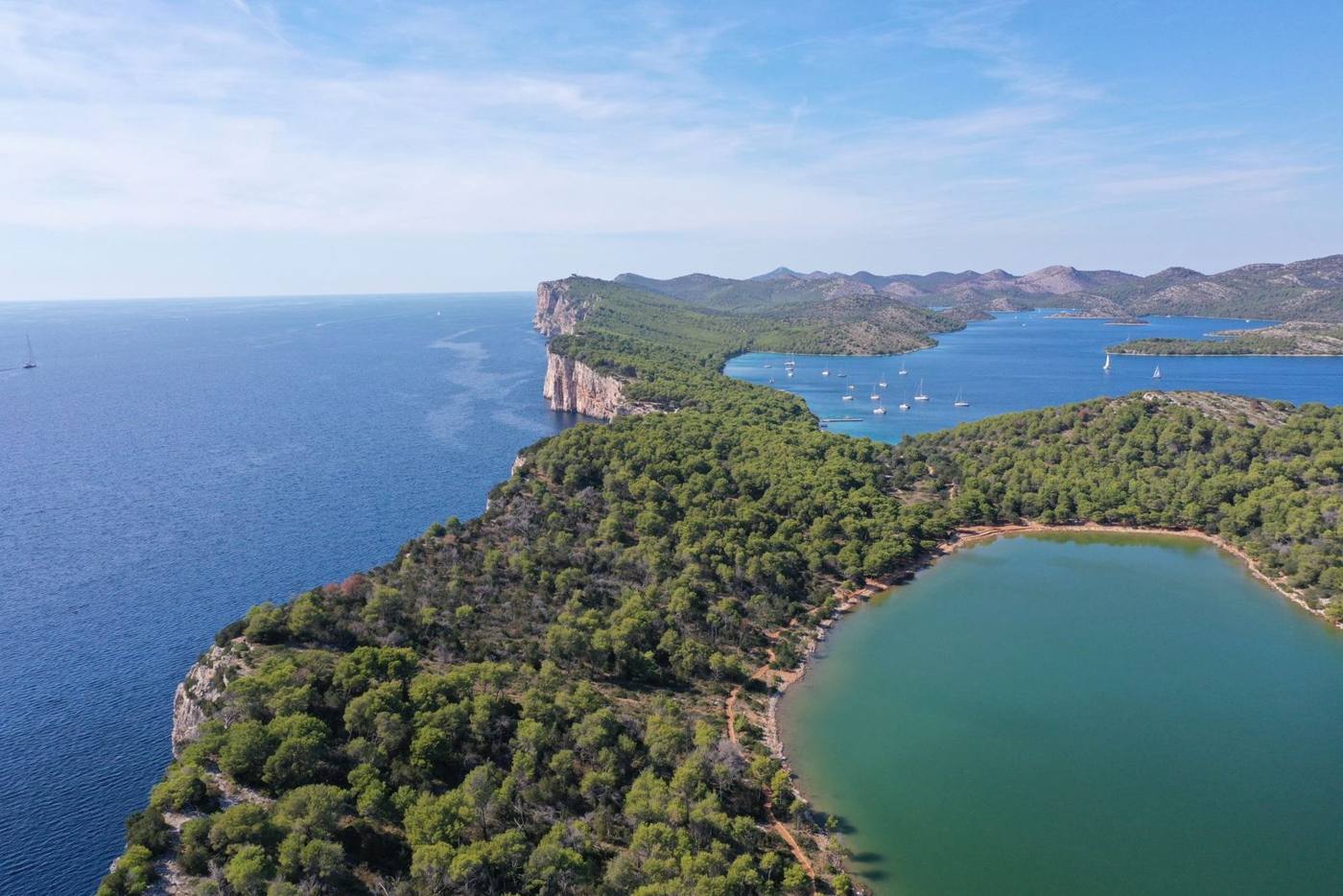
You anchor in one of the park's bays and go ashore. A short path leads to the cliffs on the open sea side, which rise vertically for more than a hundred metres. From the edge the view over the open sea is dizzying: below, waves break against the rocks, and on clear days the Italian islands are visible on the horizon.
Nearby is Lake Mir, a saltwater lake in the pine wood, connected to the sea through cracks in the rock. The water is warmer than the sea and very salty. You can swim in the lake, and around its edges there is mud that some people use on their skin.
Wild donkeys also live in the park and sometimes approach people.
In the afternoon swim in the park's sheltered bays and snorkel near the rocks.
In the evening sleep at anchor in a park bay or at one of the moorings.
Spend the night on board.
Practical tip: to enter Telašćica park by boat you pay a ticket, usually cheaper if bought in advance: check the fees. Do not feed the donkeys. At the cliffs do not go too close to the edge: there are no barriers.
- Day 4
The Kornati: anchoring in empty bays and views from above
Today you enter Kornati National Park, just south of Telašćica. The landscape changes: low, bare islands of white rock, with a few shrubs and dry stone walls, stretching one after another in parallel rows separated by channels of blue sea. From the water they look like a lunar landscape.
The islands have no permanent residents. Many belong to families from Murter, a nearby island, who once came here to graze sheep and grow olives. Today some old stone houses are used in summer, and a few tavernas open in the bays for sailors.
You sail between the islands along the channels, stopping in empty bays to swim. The water is crystal clear and the seabed rich in fish, sea urchins and corals.
In the afternoon you anchor in a bay and walk up one of the islands, on a path among the rocks, to a high point. From the top the view of the rows of islands, the channels and the open sea is the symbol of the Kornati. The side facing the open sea has vertical cliffs called krune, the crowns.
In the evening moor in a bay with a small taverna, called a konoba, and have grilled fish, octopus and island olive oil.
Spend the night on board.
Practical tip: to sail in Kornati park you pay a boat ticket, usually bought in advance or at sales points: check fees and rules. Fishing is restricted in the park and some areas are off limits.
- Day 5
Another day among the Kornati islands
Today you stay in the Kornati, exploring the southern part of the archipelago.
Early in the morning, when the sea is calm and the wind has not yet risen, swim in the bay where you slept, with the sun rising over the islands.
Then sail among the smaller islets, stopping to snorkel. Underwater you see rock walls covered in colourful sponges, gorgonians, octopus hiding in cracks, damselfish, bream and sometimes a moray eel. In some places there are remains of ancient amphorae and ships.
In the afternoon, if there is a taverna in the bay, try peka, a traditional Dalmatian dish: meat or octopus with potatoes, slow cooked under an iron bell covered in embers. It must be ordered a few hours in advance.
At sunset the islands turn pink and orange, and the silence is almost total, broken only by waves and gulls. Far from city lights, the night sky is full of stars.
Spend the night on board in a Kornati bay.
Practical tip: in the Kornati there is no fresh water and no shops. Stock up on water, food and fuel before entering the park. Phone signal is weak in many areas. Always check the weather forecast for wind, especially the bora, which arrives strong and suddenly.
- Day 6
Murter and Zlarin, the coral island
Today you leave the Kornati and sail south east to the island of Murter, linked to the mainland by a small bridge. This is home to the families who own many of the Kornati islands. Murter village has a harbour, stone houses, churches and olive groves. A short walk leads to a hill overlooking the archipelago. Once a year Murter harbour hosts a regatta of old lateen sailing boats, the gajeta, restored by local families: ask about the dates.
In the afternoon continue to Zlarin, a small car no-cost island off Šibenik. Zlarin is known as the coral island: for centuries its people harvested red coral from the surrounding sea and worked it into jewellery. The village has a small coral centre telling this story with jewellery, tools and photographs.
Walk around the village, with its harbour, church, stone houses and gardens, and swim at one of the nearby beaches.
In the evening moor at Zlarin or in a nearby bay and have fresh fish for dinner.
Spend the night on board.
Practical tip: red coral is protected and its harvest regulated. If you buy coral jewellery, ask about its origin and certificate. In small harbours berths are scarce in summer: arrive early or book a mooring.
- Day 7
Disembarking in Šibenik and departure
On the last day you sail a short way from Zlarin to Šibenik, entering through the Saint Anthony channel, a narrow passage between rocks guarded by the Venetian fortress of Saint Nicholas, built on an islet at the channel's entrance in the sixteenth century.
Šibenik is a town built on a hill above its harbour, with a stone historic centre, lanes, stairways and squares. The Cathedral of Saint James, a UNESCO World Heritage Site, was built entirely of stone, without bricks or wood, in the fifteenth and sixteenth centuries. Around the apse, on the outside, are more than seventy carved heads of men and women of the time, each with a different expression. Saint Nicholas fortress is also a UNESCO site, together with other Venetian fortresses in the Adriatic.
Climb to Saint Michael's fortress above the town for a view over the roofs, the harbour and the islands.
You disembark in Šibenik harbour or a nearby marina and return the boat. If you have time before your flight, Krka National Park, with its waterfalls, is less than an hour away by road.
The nearest airports are Split, about an hour by road, and Zadar.
Practical tip: returning the boat involves a check of equipment and fuel. Allow time for disembarkation before heading to the airport.
The best way to see Croatia's wildest sea, with lunar landscapes and crystal-clear water. Without a sailing licence you hire a boat with a skipper or choose a gulet with cabins. The Kornati have almost no fresh water or shops, so stock up beforehand. The afternoon maestral and the bora can change plans.
Before you go
- Documents and visa
- EU citizens need a valid identity card or passport: Croatia has been in the Schengen area since 2023. Other nationalities should check the Schengen rules.
- Health and vaccines
- No vaccines required. EU citizens should bring their EHIC. Emergencies: 112.
- Money and payments
- Euro since 2023. Cards are accepted almost everywhere, but carry some cash on small islands. Every accommodation charges a tourist tax per person per night.
- Power sockets
- Types C and F, 230 volts.
- Time zone
- Central European Time (UTC+1, summer UTC+2).
- Safety
- A very safe country. In remote inland areas some minefields from the 1990s war remain, marked with signs: stay on the paths. Official advice: GOV.UK.
Information checked in November 2026 for Italian and EU citizens. Rules change: always check before you travel.
Variations
In 4 days: a day trip to the Kornati from Murter and an outing to Telašćica.
In 10 days: add the islands of Silba and Olib to the north, and Krka National Park.
Frequently asked questions
Do I need a boating licence?
Yes, to skipper a boat yourself. Otherwise hire with a skipper or join a group cruise.
When is the best time to go?
June and September, with warm sea, steady winds and fewer boats. July and August are busier.
Do you pay to enter the parks?
Yes, both the Kornati and Telašćica charge a boat ticket. Check the current fees.
Indicative itinerary written by World Atlas. Before booking, check timetables, seasonal openings, documents and safety.
 7 daysEasy
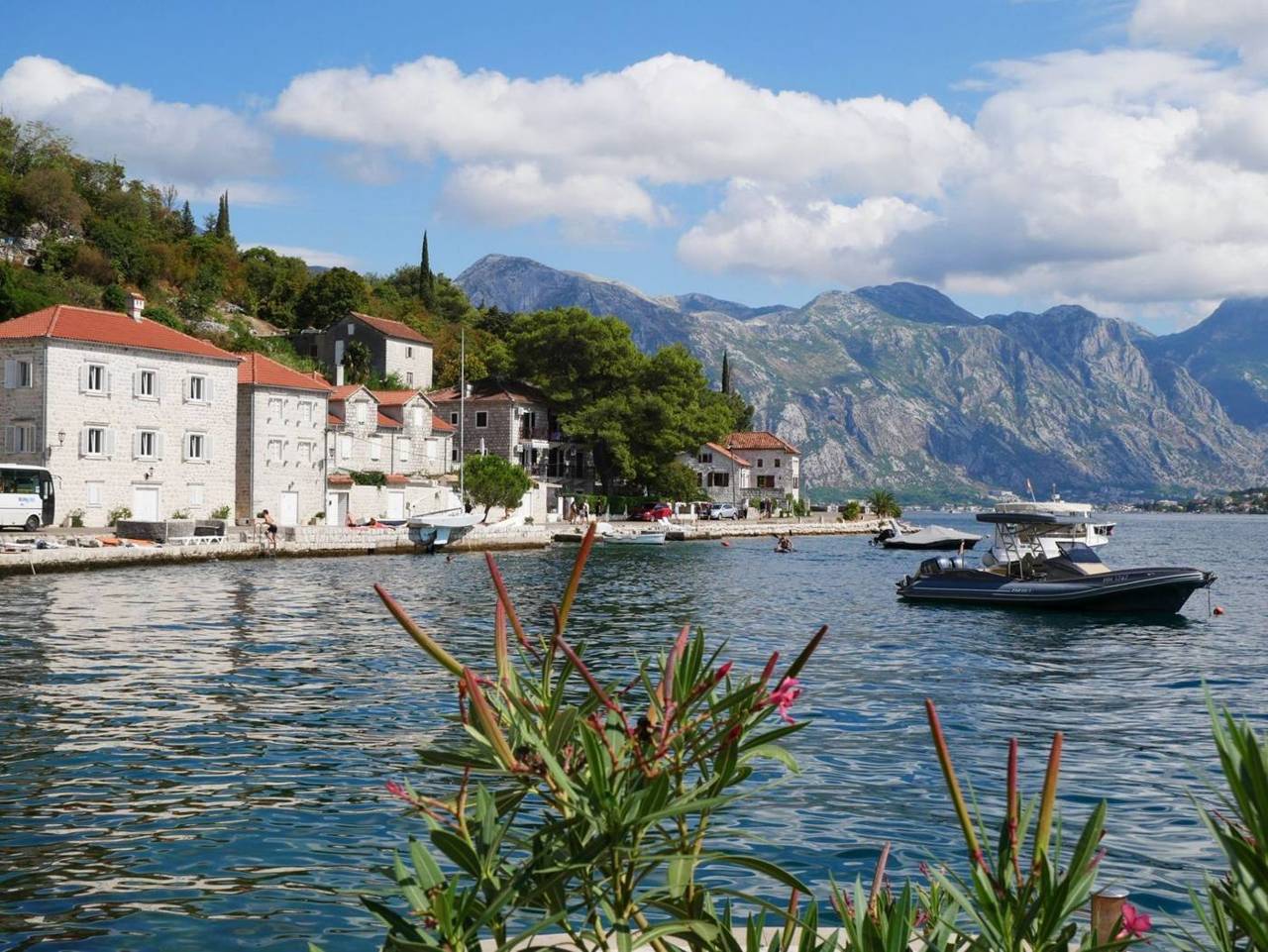
Dubrovnik and the Bay of Kotor
Dubrovnik at a gentle pace, Lokrum and the Elafiti islands, then across the border to Kotor and Perast in Montenegro, and Mostar in Bosnia.
 6 daysEasy
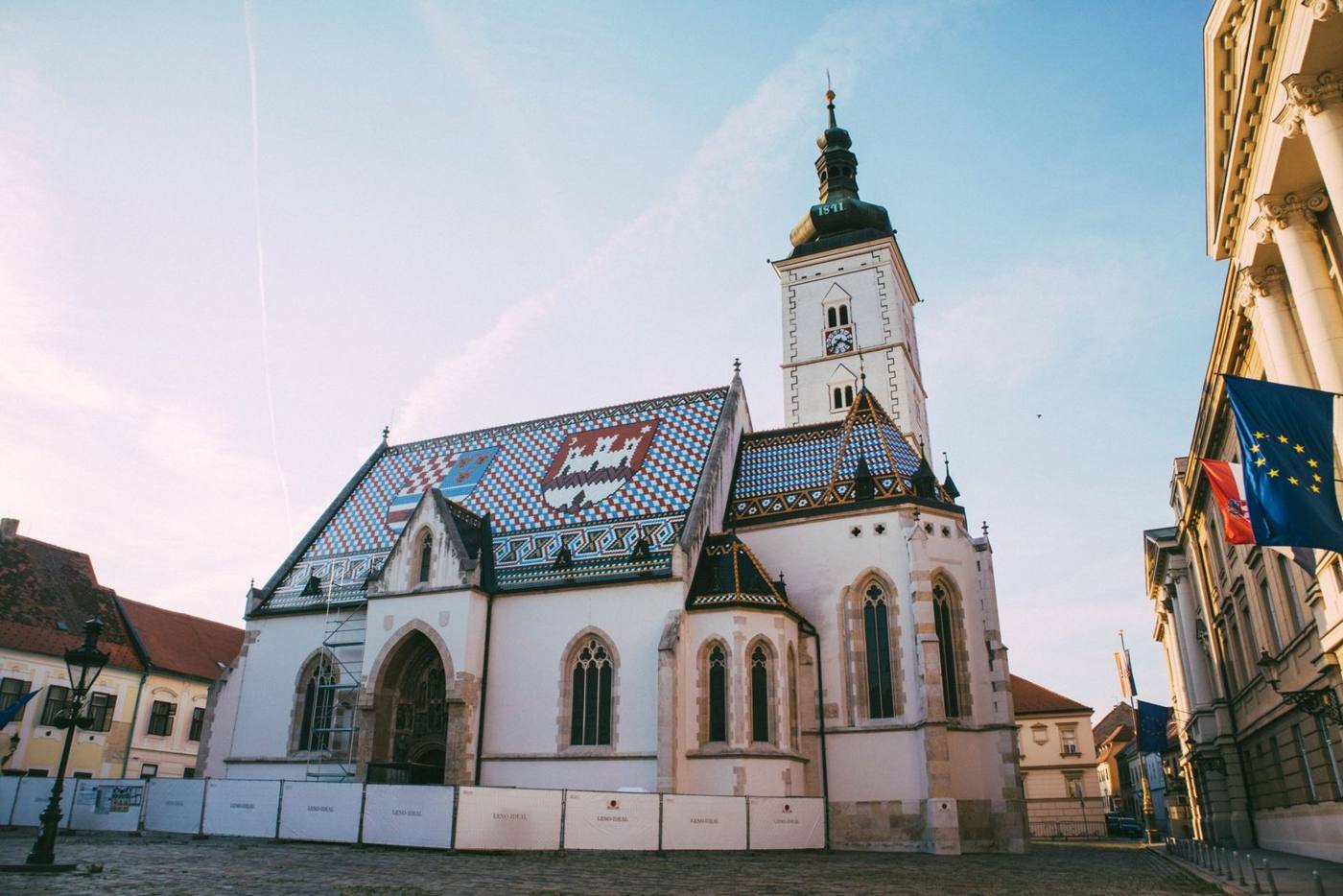
Zagreb and Slavonia
The continental Croatia few people see: Zagreb, the castles of Zagorje, Osijek, the Kopački rit wetlands and Vukovar.
 7 daysEasy
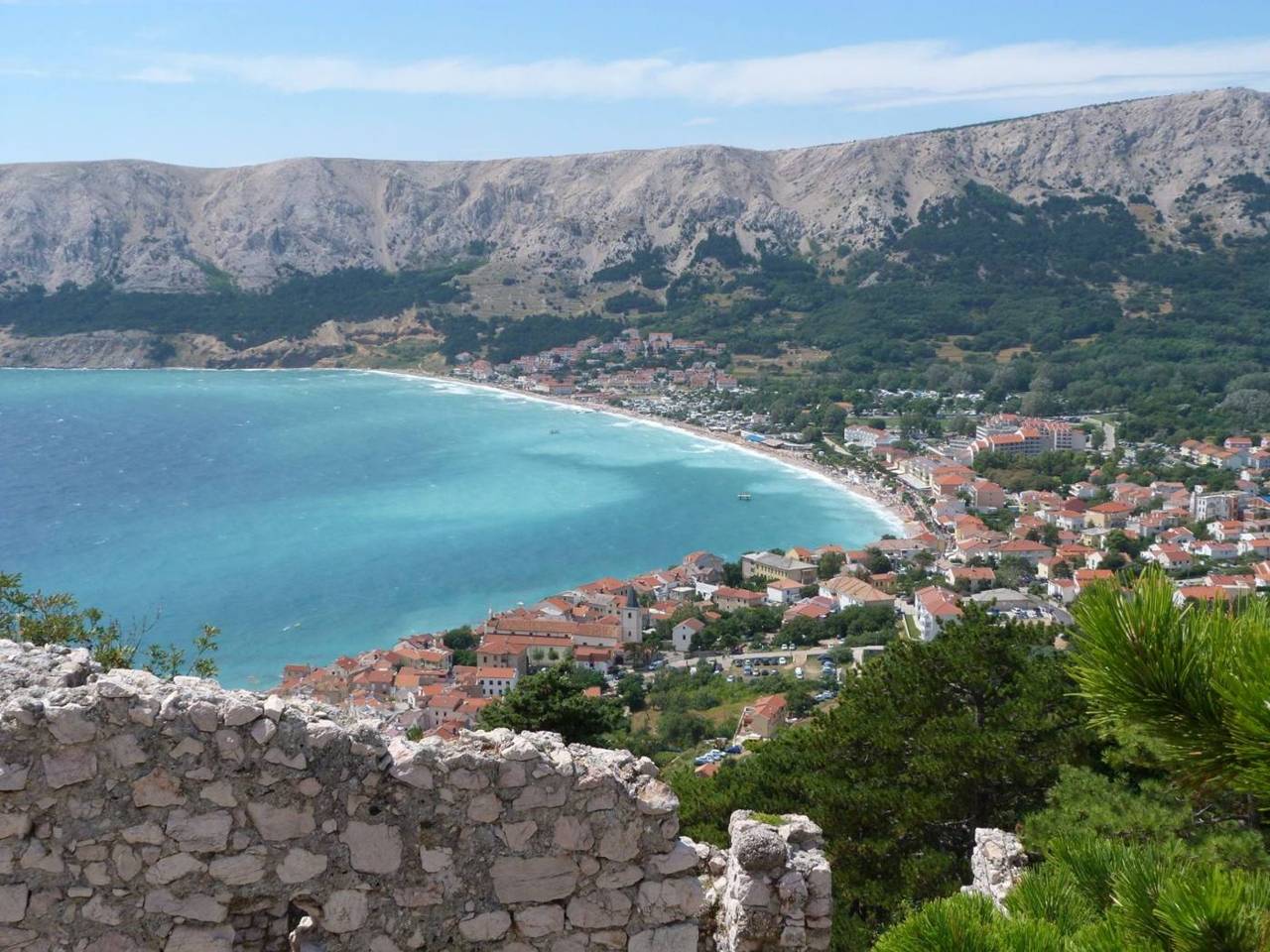
The Kvarner islands: Krk, Cres and Lošinj
Rijeka and Opatija, the island of Krk with Baška, the griffon vultures of Cres, Lošinj with its dolphins and the medieval villages of Lubenice and Veli Lošinj.