Hvar and Brač
The islands off Split: Zlatni Rat beach at Bol, Blaca hermitage and the stone quarries of Pučišća on Brač, then Hvar with the fortress above the harbour, lavender fields, the Stari Grad Plain (UNESCO) and the Pakleni islands by boat.
- Split
- Supetar
- Bol
- Stari Grad
- Hvar
Day by day
- Day 1
The ferry from Split to Supetar and Pučišća
To enter Croatia EU citizens can use a valid identity card or passport; Croatia is in the Schengen area and uses the euro. Check the rules for your nationality.
Brač and Hvar are two of the most beautiful islands of central Dalmatia, opposite Split. Brač is the largest, famous for its white stone and for Zlatni Rat beach; Hvar is the sunniest, with its elegant town, lavender fields and a plain farmed since ancient Greek times. Ferries and catamarans link the islands and the mainland.
In the morning take the ferry from Split harbour to Supetar, Brač's main port, about fifty minutes; you can take a car, useful for exploring the island. Supetar is a quiet town with a waterfront, beaches and a cemetery on the peninsula, with mausoleums carved by sculptor Ivan Rendić.
In the afternoon cross the island to Pučišća on the north coast, one of Dalmatia's prettiest villages, with white stone houses around a deep bay. Brač has been famous for two thousand years for its white limestone, used to build Diocletian's Palace in Split and many buildings in Europe. Pučišća has the stonemasons' school, the only one of its kind in Croatia, where young people learn to work stone by hand: you can see the workshops and their works. Along the road you see quarries and dry-stone walls dividing olive groves.
In the evening try vitalac, lamb offal skewers wrapped in caul fat, or Brač lamb cooked under an iron bell, the peka.
Practical tip: in high season book the ferry online, especially if travelling with a car.
- Day 2
Bol, Zlatni Rat and the climb to Vidova Gora
In the morning drive to the south coast of Brač to Bol, a small fishing village at the foot of the mountain, with a little harbour, stone houses and a fifteenth-century Dominican monastery on a point, with a small museum and an altarpiece attributed to Tintoretto.
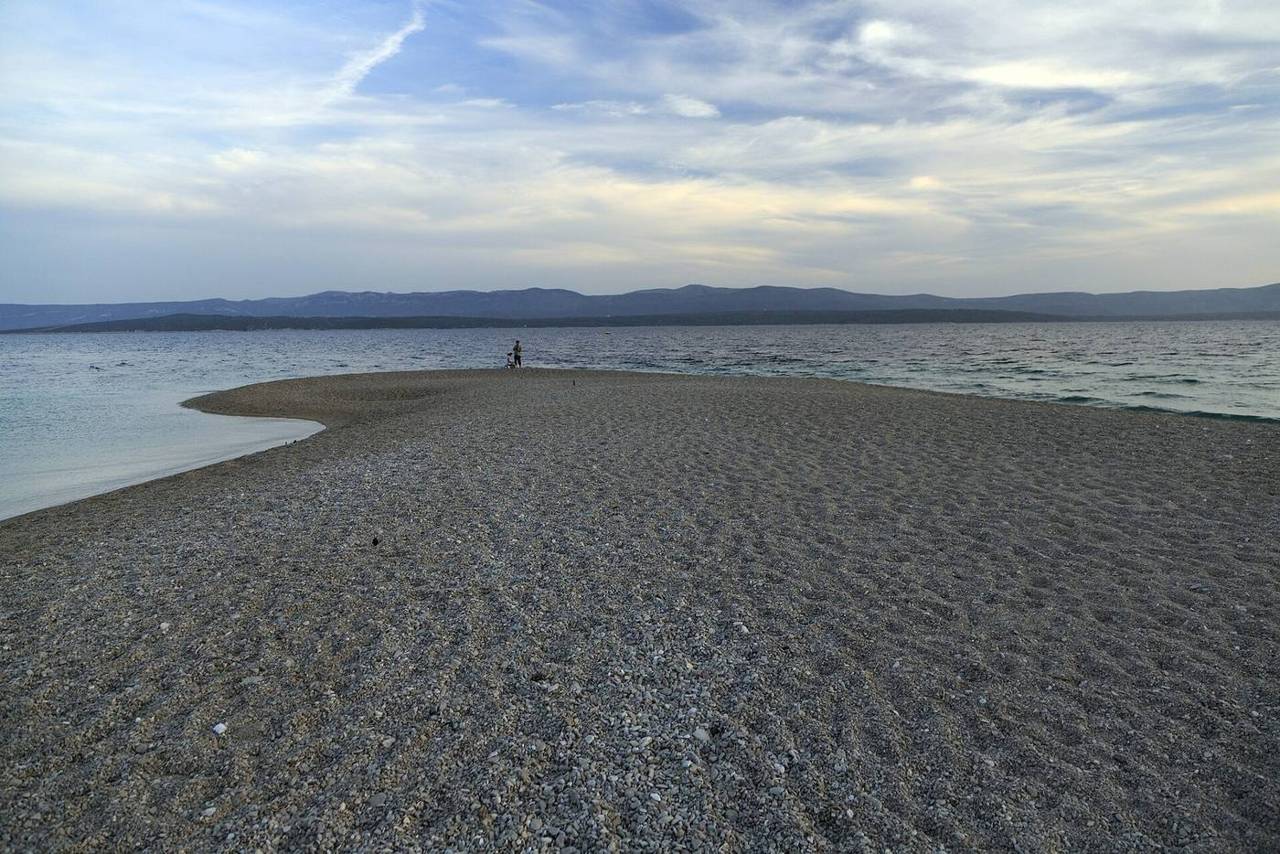
From Bol a walk of about twenty minutes along the sea in the shade of pines leads to Zlatni Rat, the Golden Horn, one of the Adriatic's most famous beaches: a tongue of fine pale shingle stretching about five hundred metres into the sea. The tip changes shape and direction with the wind and currents, turning right or left. Thanks to the maestral, the wind that blows regularly on summer afternoons in the channel between Brač and Hvar, Bol is one of Europe's best spots for windsurfing and kitesurfing.
In the afternoon go up Vidova Gora, at 778 metres the highest peak of all the Adriatic islands, by car on a narrow road or on foot from Bol on a steep path of about two or three hours. From the top you see Zlatni Rat from above, like a white arrow in the turquoise sea, Hvar opposite and, on clear days, Vis and Korčula.
If you have time, visit the Blaca hermitage, a monastery built in the sixteenth century inside a rocky gorge, reached only on foot, now a museum.
In the evening return to Bol for dinner by the harbour.
Practical tip: there is little shade at Zlatni Rat; bring an umbrella or go early in the morning.
- Day 3
The catamaran to Hvar and the fortress at sunset
In the morning take the catamaran from Bol to Jelsa or Hvar town, which in summer links the two islands in under an hour. Alternatively return to Split and take the ferry to Stari Grad.
Hvar town is one of Dalmatia's most elegant resorts, with a harbour full of sailing boats and yachts, palms and a promenade. Its heart is the great Saint Stephen's Square, one of the largest in Dalmatia, paved in white stone, with the Renaissance cathedral and its bell tower. On the square stands the Venetian arsenal, where the fleet's galleys were repaired, with a theatre above it from 1612, one of Europe's oldest public theatres, open to all social classes. Wander the stone lanes climbing from the square, with Gothic and Renaissance palaces, and visit the Franciscan monastery by the sea, with its cloister and a Last Supper painted in the refectory.
In the afternoon, towards sunset, climb to the Fortica fortress, also called Spanjola, built on the hill above town in the sixteenth century, with walls and prisons. The path, among pines and agaves, takes about twenty minutes. From the walls you see the whole town, the harbour and the Pakleni islands, which turn orange at sunset.
In the evening the town comes alive: Hvar is famous for its nightlife, but the old town stays quiet in its upper lanes.
Practical tip: in July and August Hvar is very crowded and expensive; May, June and September are more pleasant.
- Day 4
The Pakleni islands by boat
In the morning take one of the taxi boats from Hvar harbour to the Pakleni islands, a small archipelago of green islets covered in pines and Mediterranean scrub, a few minutes from town. The name seems to mean hell's islands, but actually comes from pine resin, called paklina, once used to waterproof boats.
The islands have no roads or cars: you walk on paths among the pines leading to small coves with clear turquoise water, perfect for swimming and snorkelling. Jerolim is a small island with rocky beaches; Marinkovac has a few coves with beach facilities; Palmižana, on Sveti Klement, the largest island, has a botanical garden of exotic plants planted by a family in the nineteenth century and several sand and pebble beaches among the pines. Some coves are popular with naturists.
An alternative is to hire a small motorboat, which for low-powered engines often requires no licence, to tour the islands on your own and stop in the quietest coves, or to go kayaking.
In the afternoon return to Hvar and rest, or walk along the coast west of town towards the nearby coves.
In the evening dine by the harbour on the catch of the day, or gregada, a fish and potato stew typical of Hvar.
Practical tip: taxi boats leave the harbour several times a day; check the time of the last boat back.
- Day 5
Stari Grad and its plain, then back to Split
In the morning cross the island to Stari Grad on the north coast, about half an hour. Stari Grad, meaning old town, is one of Europe's oldest towns: it was founded by Greeks from the island of Paros in 384 BC under the name Pharos. Today it is a quiet town at the end of a long, narrow bay, with stone houses, lanes, churches and art galleries. Visit Tvrdalj, the fortified sixteenth-century house of poet Petar Hektorović, with a fishpond in the courtyard and Latin and Croatian inscriptions on the walls.
Then explore the Stari Grad Plain, a UNESCO World Heritage site, the countryside around the town that still keeps the division of fields laid out by the Greek colonists more than two thousand years ago, with dry-stone walls, stone tracks and stone shelters called trim. The fields are still planted with vines and olives as in antiquity. In June and July lavender blooms on the surrounding hills, one of the island's traditional crops; in inland villages such as Velo Grablje you see the fields and can buy the essential oil.
In the afternoon take the ferry from Stari Grad to Split, about two hours. From Split there are flights and ferries to Italy.
Things to take home: Hvar lavender oil and sachets, Brač stone objects, olive oil, Plavac Mali red wine, honey and herbal liqueurs.
Practical tip: check your government's travel advice before leaving.
In July and August Hvar is crowded and pricey: June or September is better. Hvar town fines people walking around in swimwear away from the beaches. A valid identity card is enough for EU citizens.
Before you go
- Documents and visa
- EU citizens need a valid identity card or passport: Croatia has been in the Schengen area since 2023. Other nationalities should check the Schengen rules.
- Health and vaccines
- No vaccines required. EU citizens should bring their EHIC. Emergencies: 112.
- Money and payments
- Euro since 2023. Cards are accepted almost everywhere, but carry some cash on small islands. Every accommodation charges a tourist tax per person per night.
- Power sockets
- Types C and F, 230 volts.
- Time zone
- Central European Time (UTC+1, summer UTC+2).
- Safety
- A very safe country. In remote inland areas some minefields from the 1990s war remain, marked with signs: stay on the paths. Official advice: GOV.UK.
Information checked in November 2026 for Italian and EU citizens. Rules change: always check before you travel.
Variations
In 3 days: Bol and Zlatni Rat on day one, Hvar on day two, the Pakleni islands on day three.
In 8 days: add Vis and the Blue Cave of Biševo, or Korčula and the Pelješac peninsula.
Frequently asked questions
Which document do I need for Croatia?
A valid identity card or passport for EU citizens; Croatia is in Schengen and uses the euro.
How do I get between the islands?
By ferry and catamaran from Split; in summer there are direct connections between Bol and Hvar, few out of season.
When does lavender bloom on Hvar?
Usually between June and July, depending on the weather.
Indicative itinerary written by World Atlas. Before booking, check timetables, seasonal openings, documents and safety.
 5 daysEasy
Korčula and Mljet National Park
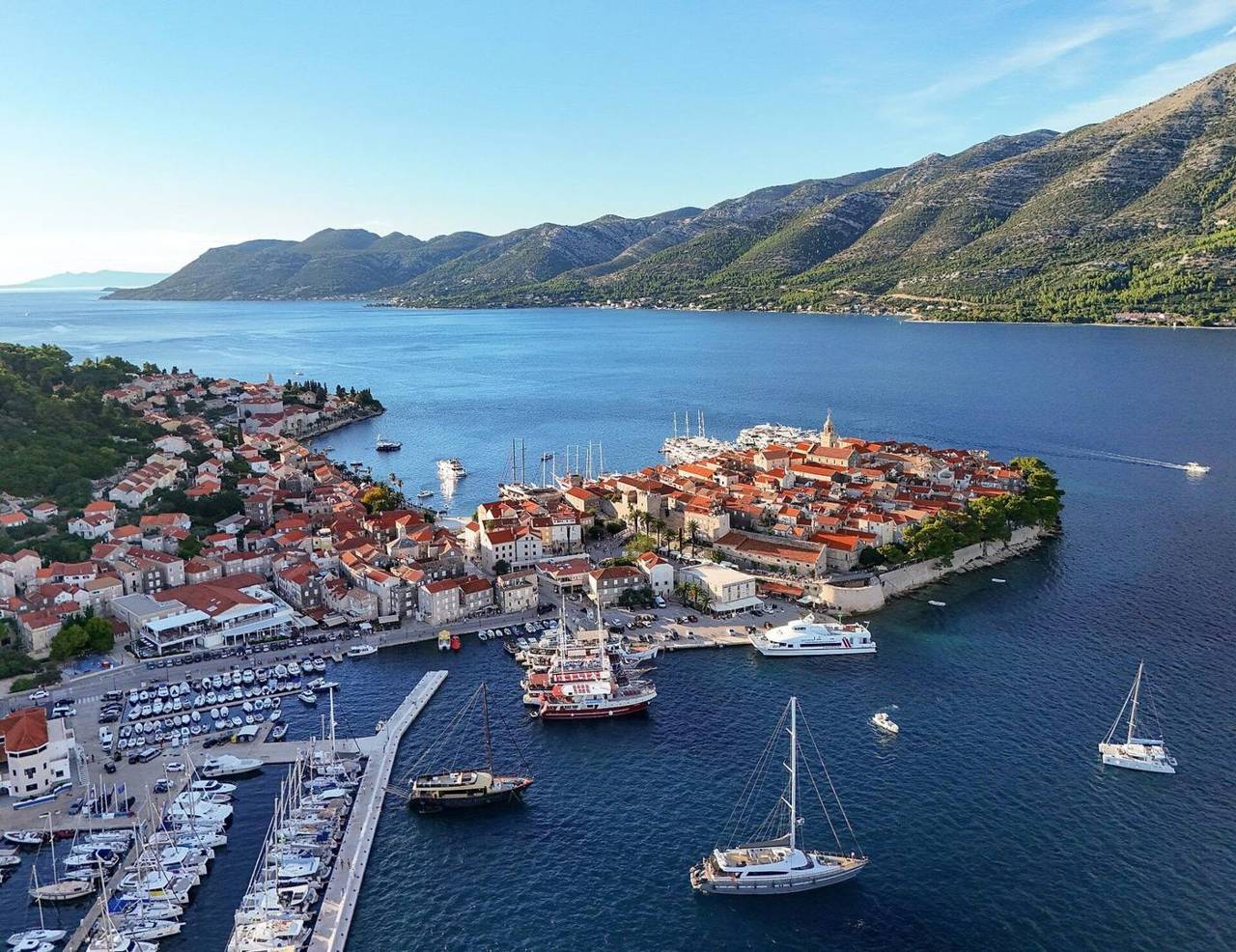
Two islands in southern Dalmatia: Korčula, a fishbone-plan walled town on the sea, with its pošip wineries and sword dance, and Mljet, a national park with two saltwater lakes in the pine forest and the Benedictine monastery on St Mary's islet.
 4 daysEasy
Split, Trogir and the Cetina canyon
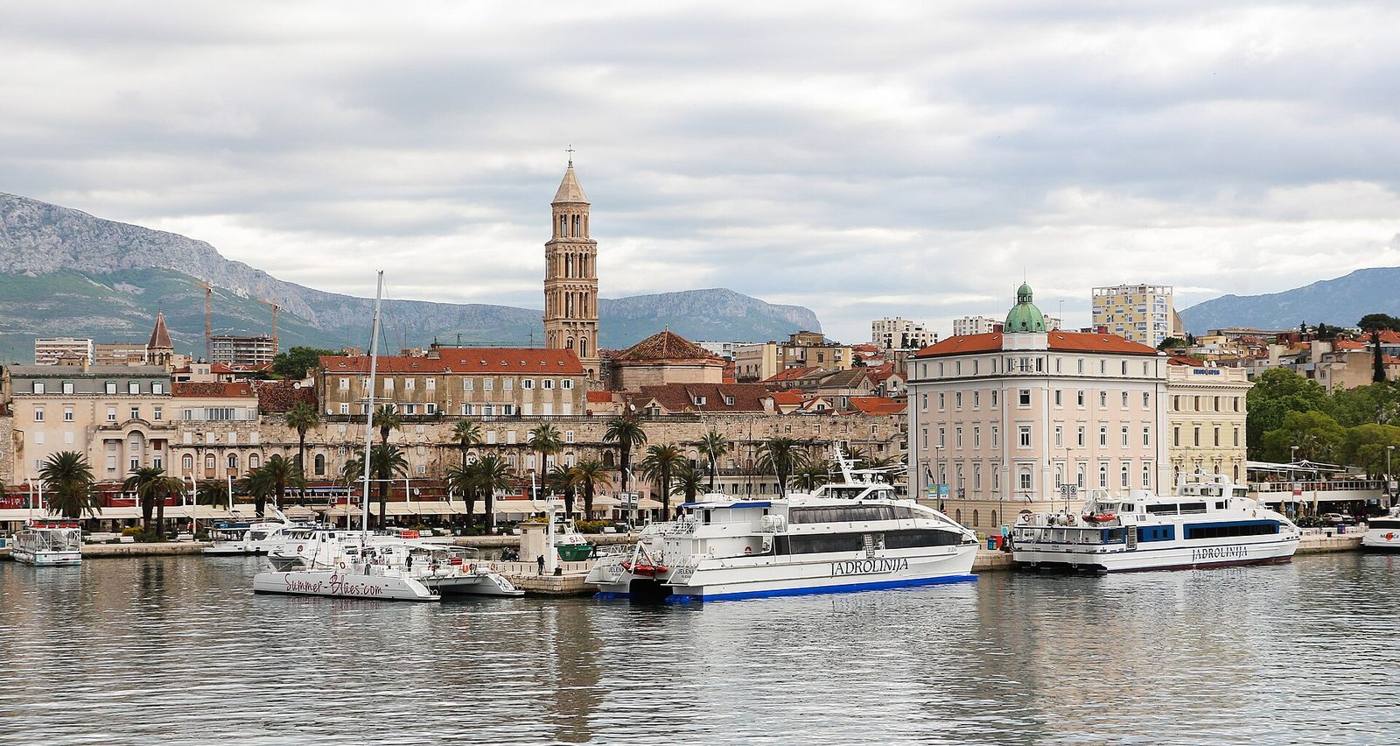
A city inside a Roman palace: Diocletian's Palace (UNESCO) and Marjan hill, medieval Trogir on its islet, then Omiš and the Cetina river canyon by raft or canoe.
 4 daysEasy
Zadar, Nin and the island of Pag
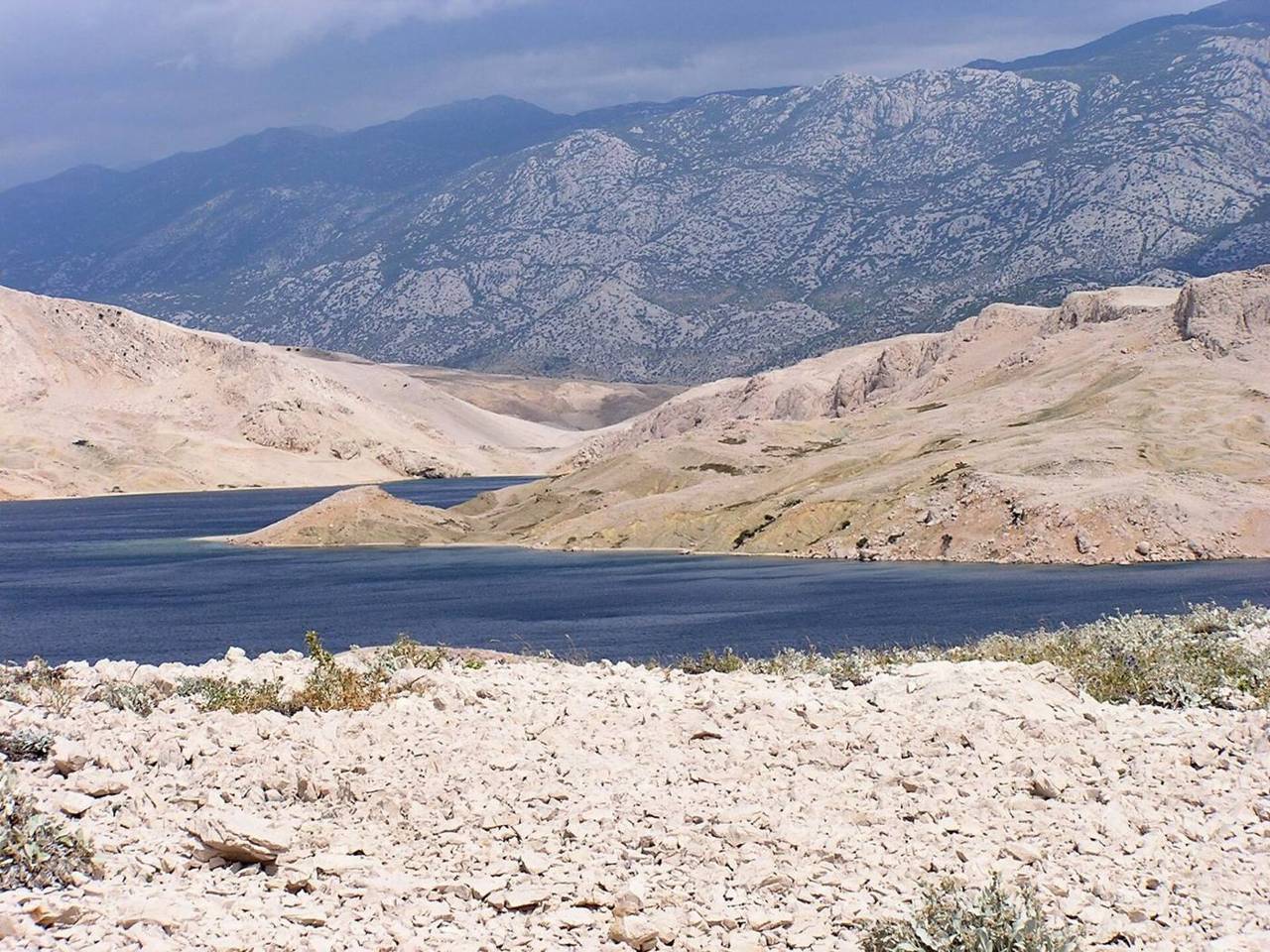
Northern Dalmatia: Zadar with its Roman forum and Sun Salutation, Nin with its tiny church and lagoon mud baths, then Pag, an island of white, moon-like stone, with its sheep's cheese, lace and salt pans.