 Kenya
The home of the safari: the Great Migration in the Masai Mara, elephants beneath Kilimanjaro and the Swahili coast.
Places not to miss
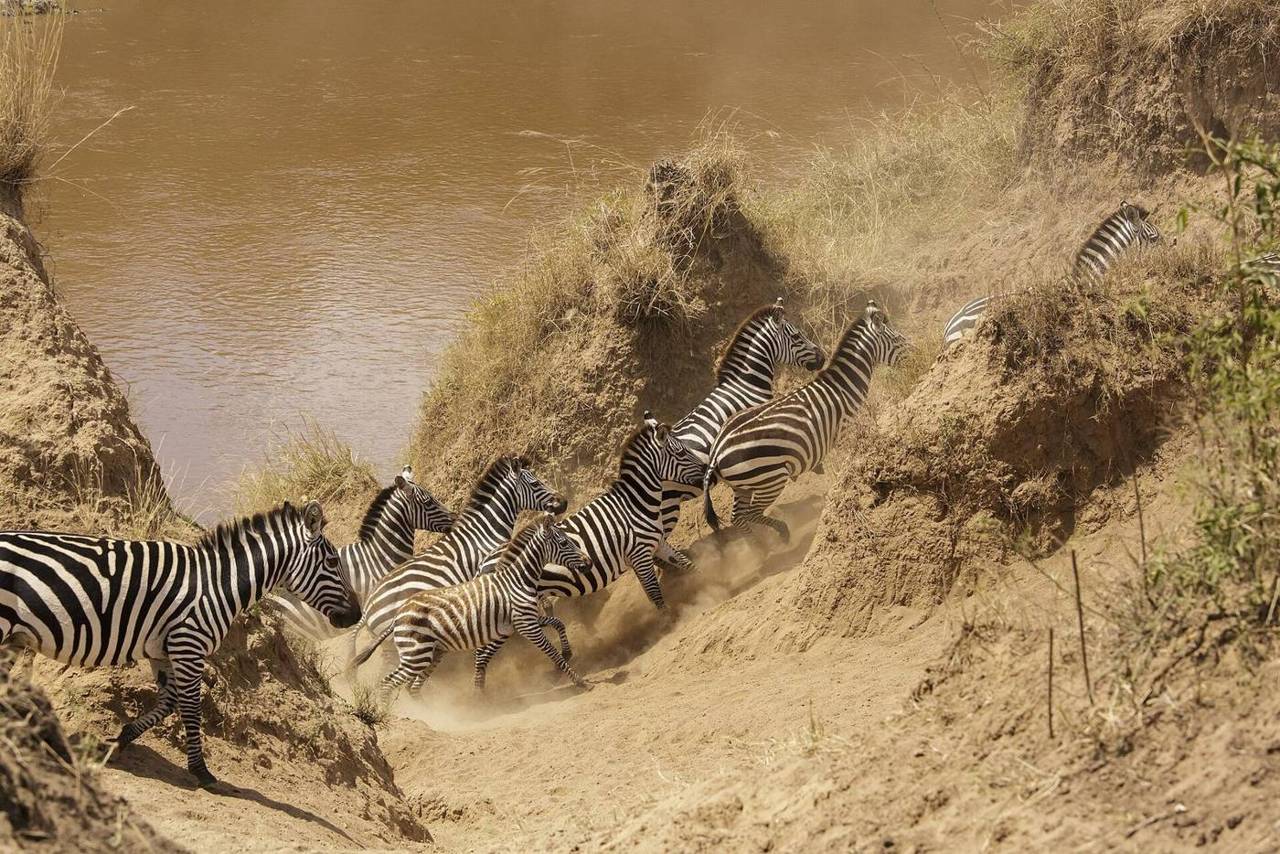
Masai Mara
The Great Migration (July-October).
Amboseli
Elephants and Kilimanjaro.
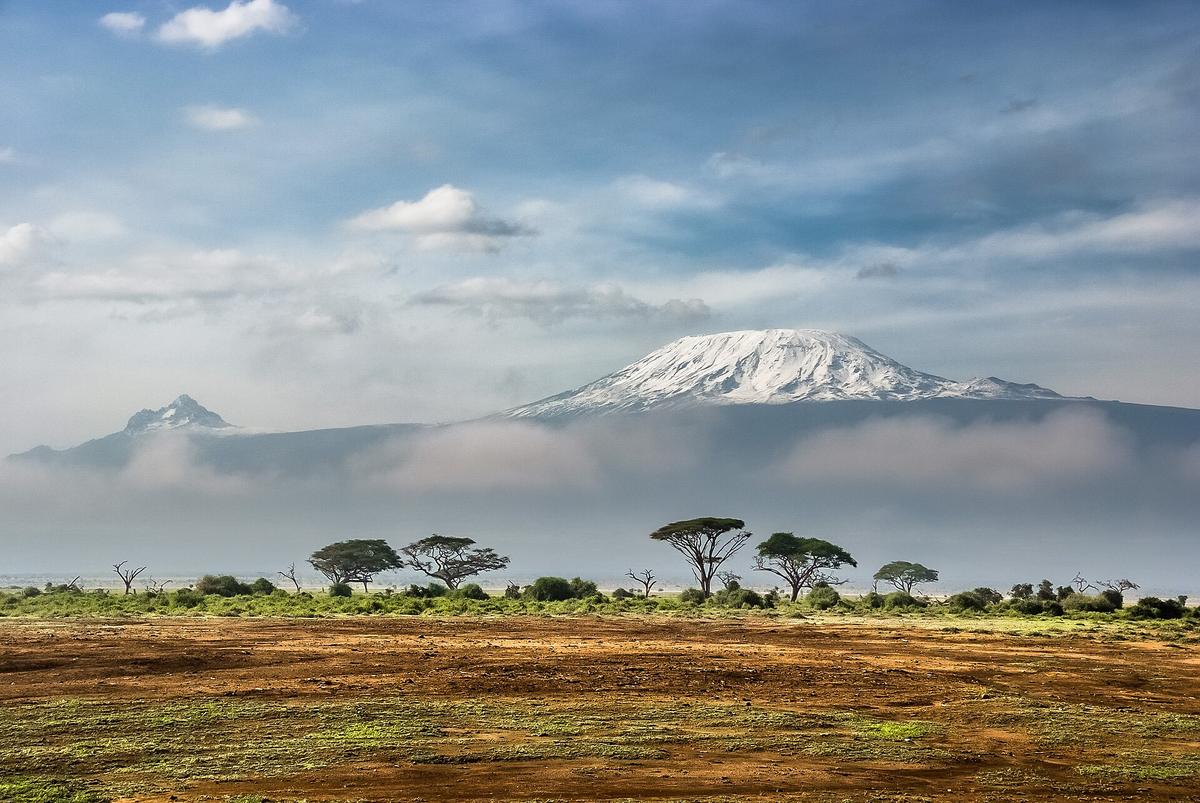
Photo: Sergey Pesterev, CC BY-SA 4.0 Samburu
Northern species.
Lake Nakuru
Rhinos.
Lamu
A Swahili town.
Diani
The beach.
Nature and wildlife
The Big Five, cheetahs, reticulated giraffes.
Food and drink
Nyama choma, ugali.
When to go
July-October and January-February.
Did you know?
The word safari comes from Swahili and means journey.
Itineraries in Kenya
Masai Mara and Lake Nakuru
Africa's most famous safari in one week: rhinos at Nakuru, hippos at Naivasha and three days in the Masai Mara.
Samburu, Masai Mara, Amboseli and the coast
The fullest Kenya: rare northern species, the great savannah, elephants below Kilimanjaro and a finale in Diani.
Magical Kenya: Samburu, the Rift Valley lakes and the Maasai Mara
From Mount Kenya to the dry savannahs of the north, then down the Rift Valley lakes to the Maasai Mara: complete Kenya in under two weeks.
Mount Kenya: trekking to Point Lenana
A circuit of Africa's second mountain, with glacial lakes, giant lobelias and the trekking summit of Point Lenana at 4,985 metres, then the Rift Valley parks.
East Africa by truck and tent: Kenya, Uganda, Rwanda, Tanzania
The great overland: the Maasai Mara, the source of the Nile, mountain gorillas and chimpanzees, the Serengeti and Ngorongoro.
Amboseli, Tsavo and Diani beach
Elephants beneath Kilimanjaro, the red earth of Tsavo and then the Indian Ocean: safari and sea with no internal flights.
Lamu and the Swahili coast
Lamu's old closed to cars town, its donkeys and dhows, the ruins of Gede and the Watamu marine park.
Northern Kenya: Samburu and Lake Turkana
An expedition to the Jade Sea: lava deserts, the Samburu, Rendille and Turkana peoples, and the world's largest desert lake.
Laikipia and Ol Pejeta: rhinos and walking safaris
The private conservancies of central Kenya: the last northern white rhinos, wild dogs, walking, horseback and night safaris.
Tsavo East and Watamu
Two days in the park closest to the sea and a week of Indian Ocean: coral reef, turtles and the Mida Creek lagoon.
Nairobi in depth
The only capital with a national park on its doorstep: a dawn game drive in Nairobi National Park, with rhinos and lions in front of the skyscrapers, the Giraffe Centre, the orphaned baby elephants of the Sheldrick Trust, Karen Blixen's house, the National Museum and the Maasai market.
Kakamega and Lake Victoria
Western Kenya, which few see: Kakamega Forest, the last fragment of Congo rainforest in Kenya, with monkeys, butterflies and hundreds of bird species, then Kisumu on Lake Victoria and Rusinga Island with its fishing beaches.
Aberdare National Park
The green mountains of central Kenya: bamboo forests and high moorland, the Karuru and Gura waterfalls, elephants, buffalo and bongo in the forest, and a night in a tree lodge overlooking a floodlit waterhole, where animals come to drink after dark.
The Masai Mara conservancies
The Mara with fewer vehicles: the private conservancies around the reserve, such as Naboisho, Olare Motorogi and Mara North, run with Maasai communities, with limited vehicle numbers, walking safaris with Maasai guides, night drives and small camps, then a day in the reserve.
Shimba Hills and Kisite Marine Park
The south coast towards Tanzania: the wooded Shimba Hills with sable antelope and Sheldrick Falls, then from Shimoni the dhow to Kisite-Mpunguti Marine Park, with dolphins and snorkelling, Wasini Island and its boardwalk among raised coral formations.
Longonot, Hell's Gate and Suswa on foot
The Rift Valley on foot: the crater-rim circuit of Longonot volcano, Hell's Gate gorge by bike among zebras and giraffes, with a descent into the canyon, and the double crater of Suswa with its lava caves full of bats, on Maasai land.
Lake Magadi and Olorgesailie
The southern Rift Valley, hot and wild: the prehistoric site of Olorgesailie with hundreds of stone hand-axes left where they were used, then the pink and white soda lake of Magadi, with flamingos, hot springs and the Maasai area of Shompole towards the border.
Meru National Park
Elsa the lioness's park, little visited today: palm-fringed rivers, rhinos in a fenced sanctuary, elephants, reticulated giraffes, Grevy's zebras and oryx, with very few vehicles and camps overlooking the river.
Mount Elgon and the elephant caves
An extinct volcano on the Ugandan border: cedar and podocarp forests, Kitum Cave, where elephants walk in at night to lick salt from the walls, waterfalls and high moorland up to Koitobos, the Kenyan summit.
The Chyulu Hills and Tsavo West
The green hills Hemingway wrote about, between Amboseli and Tsavo: walks and horse rides among grassland and volcanic cones with Kilimanjaro behind, the Leviathan lava cave from outside, then Tsavo West with the Mzima Springs and the Ngulia rhino sanctuary.
Practical guide to Kenya
- Documents
- You need a valid passport and an eTA, applied for online on the official Kenyan government website before leaving. From 5 October 2026 Kenya also requires visitors to have compulsory government travel health insurance: check the current rules on the official website.
- Safety
- The United States has rated Kenya level 3 since 19 October 2026 (Ebola, crime, kidnapping, terrorism, unrest). Do not travel: Garissa, Wajir, Mandera, Lamu, Tana River (except Tsavo), Kilifi north of the C103 road, the coast north of Malindi, Marsabit and Turkana within 50 km of Ethiopia. In Nairobi do not walk alone at night. Official advice: GOV.UK.
- Getting around
- Safaris are done in 4x4s with licensed guides. Small planes link Nairobi with the Masai Mara and the coast; the Madaraka Express train links Nairobi and Mombasa in about six hours. Avoid road travel at night.
- Verified costs
- Masai Mara, run by Narok County, for non-resident adults: 100 US dollars per day from January to June and 200 dollars from July to December. Kenya Wildlife Service marine parks, such as Kisite and Diani, for non-resident adults: 25 dollars. Check whether entry fees are included in your safari price.
Climate month by month
Average minimum and maximum temperatures in Nairobi, Mombasa and Kisumu, plus rainfall in Nairobi. The long rains fall between March and May, the short rains between October and December. Nairobi, at altitude, has cool mornings; the coast is hot and humid all year.
- January
- Nairobi 14 / 27 °C · Mombasa 23 / 32 °C · Kisumu 17 / 30 °C · Nairobi rain 40 mm
- February
- Nairobi 14 / 28 °C · Mombasa 24 / 33 °C · Kisumu 18 / 32 °C · Nairobi rain 50 mm
- March
- Nairobi 15 / 28 °C · Mombasa 24 / 33 °C · Kisumu 18 / 31 °C · Nairobi rain 70 mm
- April
- Nairobi 15 / 26 °C · Mombasa 24 / 32 °C · Kisumu 18 / 29 °C · Nairobi rain 155 mm
- May
- Nairobi 15 / 25 °C · Mombasa 23 / 30 °C · Kisumu 18 / 29 °C · Nairobi rain 110 mm
- June
- Nairobi 13 / 24 °C · Mombasa 21 / 29 °C · Kisumu 17 / 28 °C · Nairobi rain 25 mm
- July
- Nairobi 12 / 23 °C · Mombasa 20 / 28 °C · Kisumu 17 / 28 °C · Nairobi rain 10 mm
- August
- Nairobi 12 / 24 °C · Mombasa 20 / 28 °C · Kisumu 17 / 29 °C · Nairobi rain 15 mm
- September
- Nairobi 13 / 26 °C · Mombasa 21 / 29 °C · Kisumu 17 / 30 °C · Nairobi rain 25 mm
- October
- Nairobi 14 / 27 °C · Mombasa 22 / 30 °C · Kisumu 18 / 30 °C · Nairobi rain 45 mm
- November
- Nairobi 15 / 25 °C · Mombasa 23 / 31 °C · Kisumu 18 / 29 °C · Nairobi rain 120 mm
- December
- Nairobi 15 / 26 °C · Mombasa 23 / 32 °C · Kisumu 18 / 30 °C · Nairobi rain 80 mm
Source: Climats et Voyages (Nairobi and Kisumu 1991-2020; for Mombasa and rainfall the period is not stated). Data and prices checked in November 2026.
Where to go and where not to
Avoid the areas listed above and before booking, always check up-to-date official travel advice, because the situation can change.