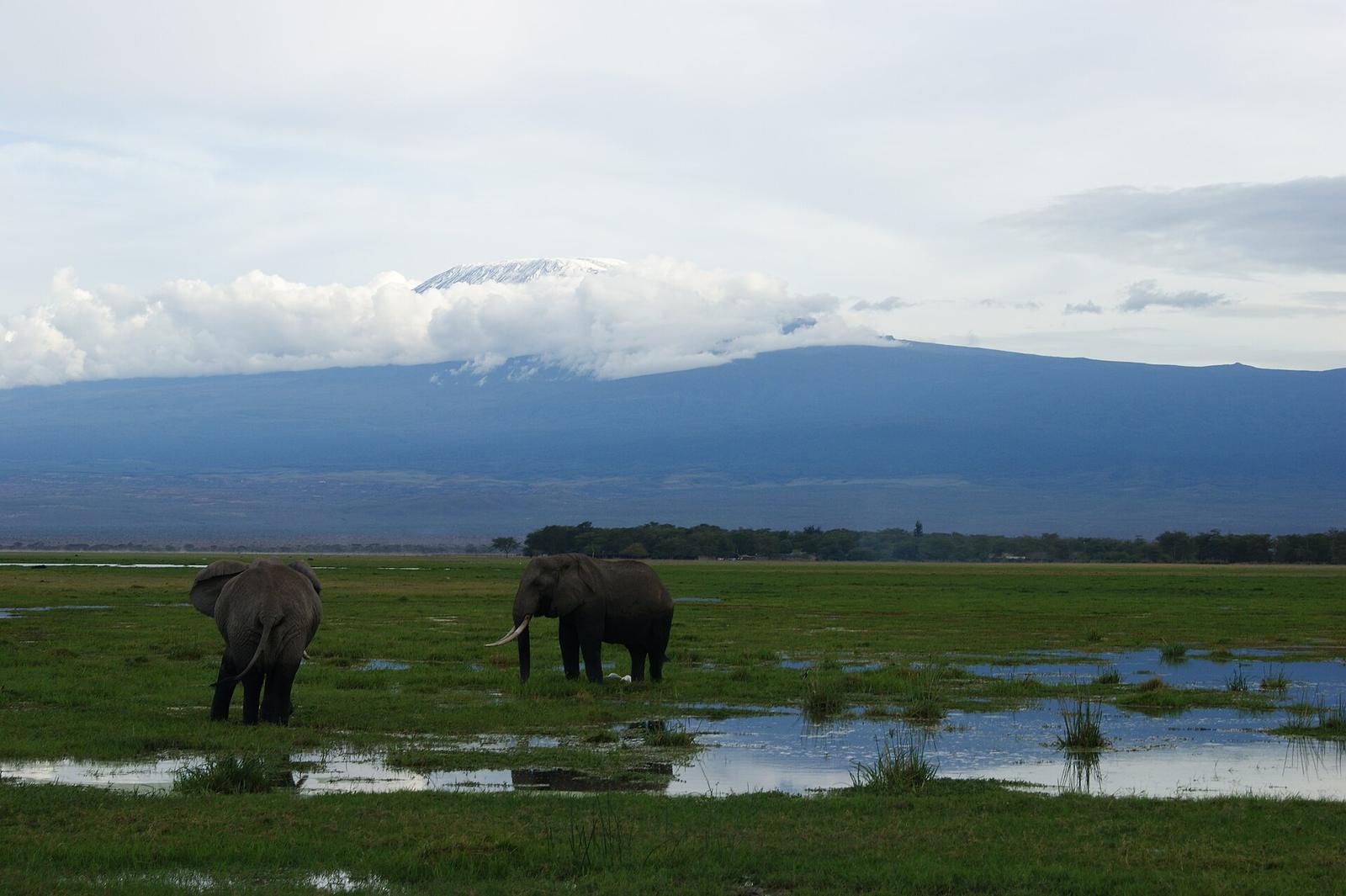
Amboseli, Tsavo and Diani beach
Elephants beneath Kilimanjaro, the red earth of Tsavo and then the Indian Ocean: safari and sea with no internal flights.
- Nairobi
- Amboseli
- Tsavo West
- Tsavo East
- Diani
Day by day
- Day 1
Arrival in Nairobi
To enter Kenya EU citizens must apply online for the eTA, the electronic travel authorisation, on the official Kenyan government website. From 5 October 2026 compulsory government travel health insurance is also required: check the current rules before leaving. The US State Department raised Kenya to level 3, reconsider travel, on 19 October 2026, partly because of an Ebola outbreak in the region: check your government's travel advice.
Your flight lands at Nairobi's Jomo Kenyatta airport. Kenya's capital lies at about 1,700 metres, with cool mornings and evenings despite being close to the equator. Nairobi is the only capital in the world with a national park on its edge, where lions, giraffes and rhinos live with skyscrapers in the background.
In the afternoon, if you have time, visit the Sheldrick Wildlife Trust elephant orphanage or the Giraffe Centre in Langata, where you feed Rothschild's giraffes from a raised platform. Otherwise rest after the flight.
In the evening meet your safari guide and pack your bag: neutral-coloured clothes, a jacket for cool mornings, a hat, sunscreen, binoculars and a soft bag.
Practical tip: see your doctor before leaving about malaria prevention and recommended vaccines, including yellow fever. In Nairobi do not walk alone at night and use taxis booked through apps or hotels.
- Day 2
Amboseli National Park
Early in the morning head south to Amboseli National Park, about four and a half hours from Nairobi, near the Tanzanian border. Amboseli is famous for one of Africa's best-known images: great elephants walking across the savannah with Kilimanjaro behind, Africa's highest mountain, its snowy summit at almost six thousand metres. Kilimanjaro is in Tanzania, but the best view is from here.
The mountain is seen mainly at dawn and dusk, when the clouds lift; during the day it is often hidden.
Amboseli has one of the most studied elephant populations in the world: for more than fifty years researchers have followed the families, know individuals by name and tell their stories. Amboseli's elephants have long tusks and are used to vehicles, so you can watch them up close.
In the afternoon, the first game drive across the savannah and the swamps fed by water that flows underground from Kilimanjaro. Here elephants wade belly-deep to eat the grass, while zebras, wildebeest and buffalo graze around them and hippos stay in the water.
In the evening stay in a lodge or tented camp near the park. Practical tip: Amboseli is dry and dusty in the dry season; protect your camera with a bag and bring a scarf for your face.
- Day 3
Amboseli and Kilimanjaro at dawn
The alarm goes off early for the dawn game drive, when Kilimanjaro appears cloudless, pink and gold above the savannah. It is the best moment for photos of elephants with the mountain.
During the morning climb Observation Hill, a hill in the park from which you see the whole Amboseli plain, the swamps and elephants moving in single file. It is one of the few places where you can leave the vehicle.
Amboseli is also home to lions, cheetahs, hyenas, Maasai giraffes and a great many birds, including pelicans, herons, crowned cranes and flamingos on the seasonal Lake Amboseli, which in the dry season turns into a white expanse of salt and dust, with mirages on the horizon. The name Amboseli comes from the Maasai language and means salty dust.
In the afternoon, if you wish, visit a Maasai village near the park, organised with the community so that payment goes to the village. The Maasai here have lived alongside wildlife for centuries.
The last game drive of the day is at sunset, with Kilimanjaro again clear of clouds.
Practical tip: in the rainy seasons, March to May and November to December, some park tracks become muddy; the dry seasons, June to October and January to February, are best for views of the mountain.
- Day 4
Tsavo West and the Mzima Springs
In the morning head east to Tsavo West National Park, about three hours from Amboseli. Tsavo, divided into West and East by the road and railway between Nairobi and Mombasa, is Kenya's largest park, the size of a small country, with very varied landscapes: savannahs, volcanic hills, black lava flows, rivers and springs.
On the way you cross the Shetani lava flow, a field of black rock formed by a volcanic eruption a few hundred years ago: the name means devil in Swahili, because the Maasai associated it with an evil spirit.
In the afternoon visit the Mzima Springs, where crystal-clear water from the Chyulu Hills, filtered through volcanic rock, wells up into clear pools surrounded by palms and fig trees. An underwater observation tank with glass windows lets you watch hippos walking on the bottom and the fish that follow them. Crocodiles and monkeys live on the banks. A walk with an armed ranger follows the shores.
Tsavo West also has a fenced, protected black rhino sanctuary at Ngulia.
In the evening stay in a lodge in the park, often with a waterhole in front where animals come to drink at night. Practical tip: Tsavo is huge and distances are long; leave early and respect the park's exit times, as it closes at sunset.
- Day 5
Tsavo East and the red elephants
In the morning cross the main road into Tsavo East National Park, flatter and wilder, with great open savannahs, thorn bush and the Galana River running through it.
Tsavo East is famous for its red elephants: in fact they are as grey as any others, but they cover themselves in dust and mud from the park's iron-rich red earth to protect themselves from sun and insects. Seen on the orange savannah, they look painted.
Aruba Dam and the banks of the Galana River are the best places to see animals coming to drink: elephants, buffalo, zebras, reticulated giraffes and gazelles, as well as lions and cheetahs. Tsavo's lions are known for maneless or short-maned males and for the story of the man-eating lions that in the late nineteenth century attacked the workers building the railway.
Stop at Mudanda Rock, a long stone ridge above a natural pool from which you watch elephants drinking. Lugard Falls on the Galana River are narrow rapids between rocks, home to crocodiles.
In the evening stay near the park. Practical tip: Tsavo has tsetse flies, which bite through dark clothing; wear light colours and use repellent, and keep the vehicle windows closed in wooded areas.
- Day 6
To the coast and Diani
In the morning leave Tsavo and descend to the Indian Ocean coast, about three or four hours by road to Diani, south of Mombasa. The landscape changes: from dry savannah to palm groves, mango and cashew plantations and coastal villages.
Diani is one of Kenya's finest beaches, about seventeen kilometres long, with fine white sand, turquoise sea protected by the coral reef, and palms. The climate is hot and humid all year.
In the afternoon relax on the beach after the days of safari. At low tide you can walk across the lagoon to the reef, where pools hold starfish and fish.
Diani is home to Angolan colobus monkeys, black and white with long tails, protected by a local conservation centre that has installed rope bridges over the main road so the monkeys can cross without being hit. You visit the centre with a guide.
In the evening dine on Swahili coastal cooking: fish in coconut, spiced pilau rice and chapati, the flatbread.
Practical tip: on the beach many sellers, known as beach boys, offer trips and souvenirs; a polite no is enough. Do not leave belongings unattended on the sand. The coast is mostly Muslim: in villages cover shoulders and knees.
- Day 7
Diani: sea, reef and relaxation
A whole day at Diani, to the rhythm of the tides. In the morning, with the sea calm, snorkel on the reef off the beach with local fishermen's boats or a licensed centre: you see tropical fish, starfish and corals. With luck you meet sea turtles.
If you enjoy sport, Diani is one of Kenya's best places for kitesurfing, especially from December to March and from July to September, when the monsoon winds blow. Certified schools offer lessons for beginners.
In the afternoon visit the Kongo Mosque at the southern end of the beach, a small fifteenth-century coral-stone mosque, one of the oldest on the coast, beneath a great baobab at the mouth of the Mwachema River. The site is sacred: enter only with permission and covered clothing.
At sunset walk along the beach or board a dhow, the traditional sailing boat.
In the evening Diani has many places for dinner on the beach, with freshly caught fish. Practical tip: the equatorial sun is extremely strong; use high-factor, reef-safe sunscreen and drink only bottled water. Against mosquitoes, wear long clothing in the evening and use repellent, because the area is a malaria risk zone. Keep your valuables in the room safe while you are on the beach.
- Day 8
Kisite Marine Park and the dolphins
Today is a trip to Kisite-Mpunguti Marine Park, about an hour and a half south of Diani near the Tanzanian border. Boats leave from the village of Shimoni, in the channel between the coast and Wasini Island.
The park, run by the Kenya Wildlife Service, is one of Kenya's finest marine protected areas, with intact coral reefs, coral islets and clear water. Entry costs 25 US dollars for a non-resident adult.
In the channel you often see dolphins, especially bottlenose and spinner dolphins, swimming near the boats; between August and October humpback whales also pass on their migration. Reputable operators do not chase the dolphins and let them approach.
In the park you snorkel among tropical fish, rays, moray eels and, with luck, sea turtles.
In the afternoon visit Wasini Island, with a fishing closed to cars village and a coral garden, a raised platform of fossil coral with rock pools and mangroves, crossed on a wooden boardwalk.
In Shimoni you can also visit the slave caves, used in the nineteenth century to hold slaves before shipping them. In the evening return to Diani. Practical tip: do not touch the corals or feed the fish, and carry cash for the boat crew's tip.
- Day 9
The Shimba Hills
In the morning go to the Shimba Hills National Reserve, about an hour inland from Diani. It is a small reserve of coastal forest and grassland on the hills at about four hundred metres, with a cooler climate than the coast and views of the Indian Ocean on clear days.
Shimba is the only place in Kenya where the sable antelope lives, with long horns curving backwards, very rare. The reserve is also home to elephants, buffalo, giraffes, leopards and a great many forest butterflies and birds.
With a park ranger walk to Sheldrick Falls, about an hour and a half there and back through the forest, to a waterfall that drops into a natural pool where you can swim. The trail is steep in the last stretch.
Near the reserve, the Mwaluganje Elephant Sanctuary is a community project in which villagers pooled their land to create a corridor for elephants, receiving tourism income in return.
In the afternoon return to Diani for a last swim in the ocean and sunset on the beach.
Practical tip: Shimba's forest is humid and has mosquitoes; bring hiking shoes, long trousers and repellent. Walks are done only with armed rangers, because of elephants and buffalo.
- Day 10
Mombasa and departure
The last day is for the journey back. From Diani you reach Mombasa airport in about an hour and a half, crossing the Likoni channel by ferry, or by the new bridge if it is open. Flights leave Mombasa's Moi airport for Nairobi and some international destinations. Alternatively the modern Madaraka Express train links Mombasa and Nairobi in about six hours, crossing the Tsavo savannah.
If you have time, visit Mombasa's Old Town, with narrow lanes, carved wooden doors, balconies and mosques, and Fort Jesus, the fortress built by the Portuguese at the end of the sixteenth century to control the port, a UNESCO World Heritage site. The fort museum tells the history of the Swahili coast, between the Portuguese, the Omani Arabs and the British.
In Mombasa you also see the giant aluminium tusks on Moi Avenue, arches shaped like elephant tusks built for Queen Elizabeth's visit in 1952.
Things to take home: Kenyan tea and coffee, coastal cashew nuts, kikoi and kanga fabrics, Maasai beaded jewellery bought directly from the women who make it, and carvings in wood and soapstone. Do not buy shells, coral, ivory or turtle items: they are forbidden.
Practical tip: Kenya has banned plastic bags, which can be confiscated at the airport. Reach the airport at least three hours before international flights.
Kenya's simplest safari-and-beach combination, ideal with children or for a first safari. Amboseli gives the best photos with Kilimanjaro, but only early in the morning. The Madaraka train between Nairobi and Mombasa is a comfortable alternative to the road. Avoid April and May, the long rains.
Before you go
- Documents and visa
- Valid passport and an eTA, applied for online on the official Kenyan government website before leaving. From 5 October 2026 compulsory government travel health insurance is also required.
- Health and vaccines
- Malaria prevention and the yellow fever vaccine are recommended. Drink only bottled water. Emergencies: 999 or 112.
- Money and payments
- Kenyan shilling. Mobile payment, M-Pesa, is everywhere; cards work in cities and lodges.
- Power sockets
- Type G, 240 volts: you need an adapter for British plugs.
- Time zone
- UTC+3 all year.
- Safety
- The United States has rated Kenya level 3 since 19 October 2026 (Ebola, crime, kidnapping, terrorism, unrest). Do not travel: Garissa, Wajir, Mandera, Lamu, Tana River (except Tsavo), Kilifi north of the C103 road, the coast north of Malindi, Marsabit and Turkana within 50 km of Ethiopia. Official advice: GOV.UK.
Information checked in November 2026 for Italian and EU citizens. Rules change: always check before you travel.
Variations
In 7 days: two days in Amboseli, one in Tsavo West and four at Diani, skipping Tsavo East and the Shimba Hills.
In 14 days: before Amboseli add Lake Naivasha and three days in the Masai Mara for the Great Migration.
Frequently asked questions
What do I need to enter Kenya?
EU citizens must apply online for the eTA on the official Kenyan government website. From 5 October 2026 compulsory government travel health insurance is also required: check the current rules.
How much is Kisite Marine Park?
Entry to Kisite-Mpunguti Marine Park, run by the Kenya Wildlife Service, costs 25 US dollars for a non-resident adult. Boat trips from Shimoni are paid separately.
When can you see Kilimanjaro from Amboseli?
Mainly at dawn and dusk, when the clouds lift; during the day the mountain is often hidden. The dry season is best for the view.
Indicative itinerary written by World Atlas. Before booking, check timetables, seasonal openings, documents and safety.
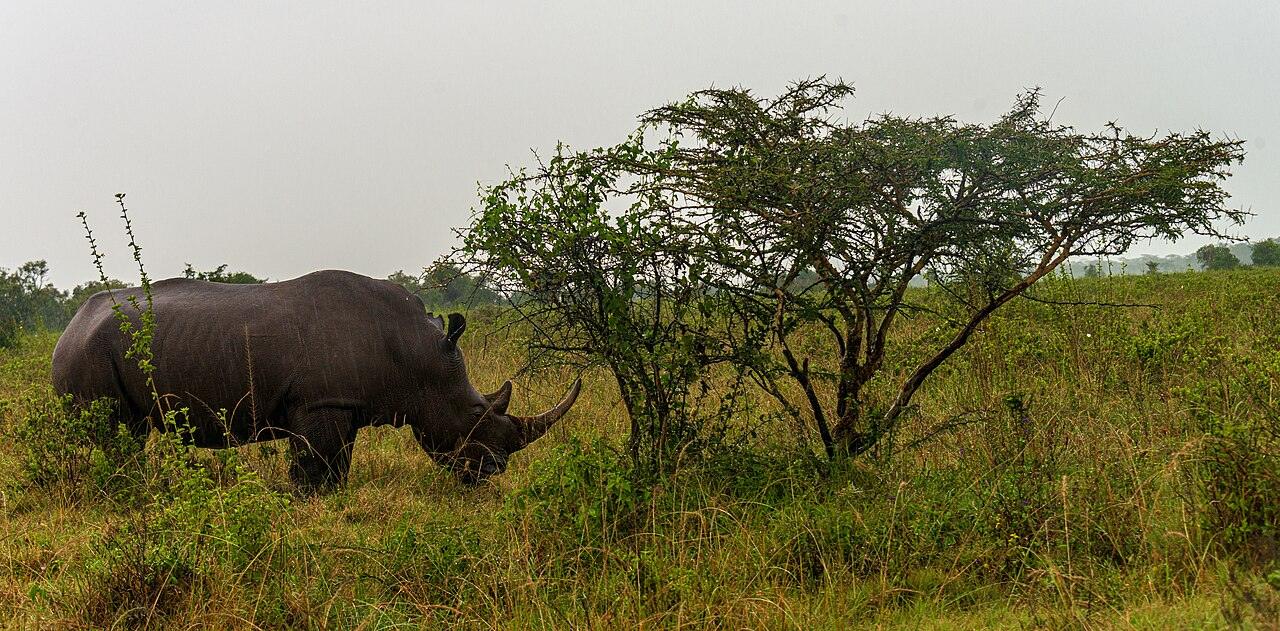 7 daysModerate
Masai Mara and Lake Nakuru
Africa's most famous safari in one week: rhinos at Nakuru, hippos at Naivasha and three days in the Masai Mara.
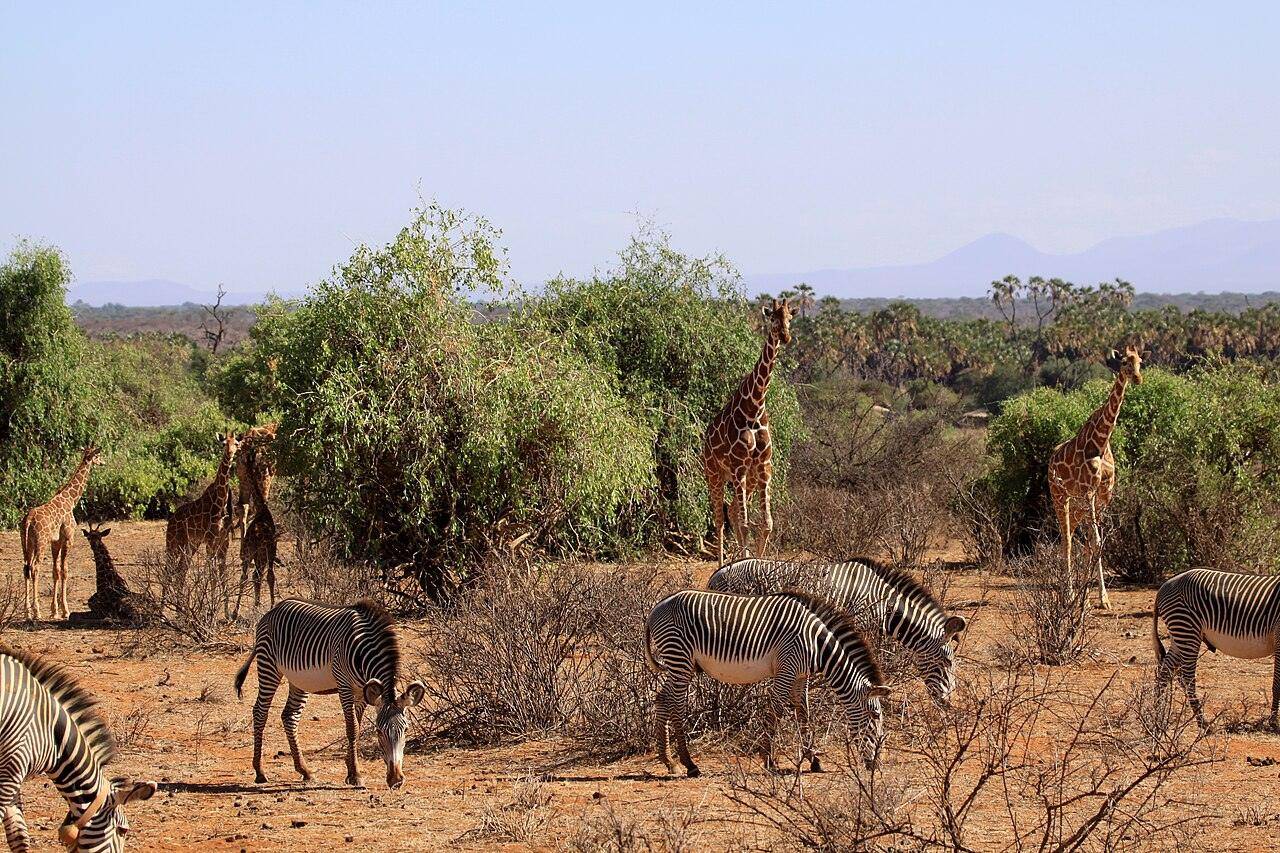 15 daysModerate
Samburu, Masai Mara, Amboseli and the coast
The fullest Kenya: rare northern species, the great savannah, elephants below Kilimanjaro and a finale in Diani.
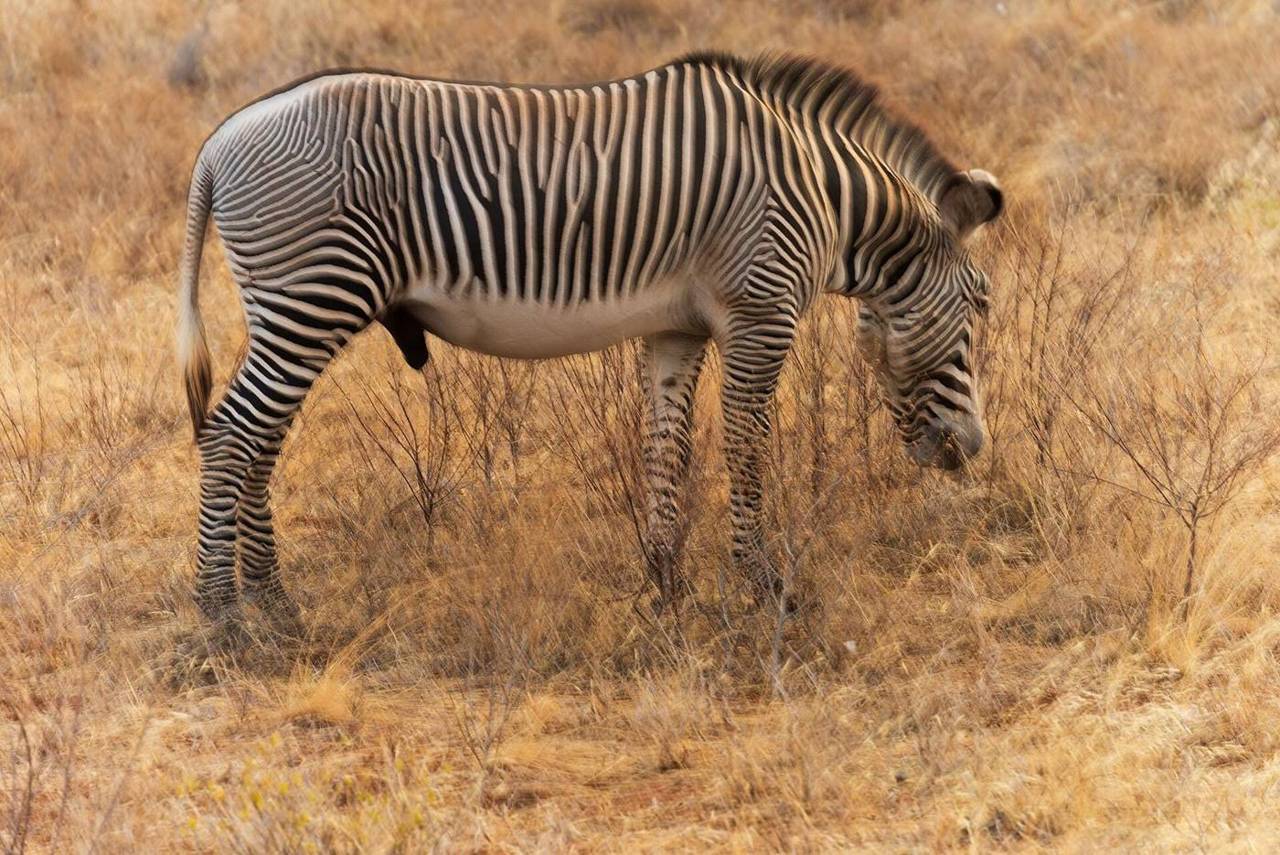 12 daysModerate
Magical Kenya: Samburu, the Rift Valley lakes and the Maasai Mara
From Mount Kenya to the dry savannahs of the north, then down the Rift Valley lakes to the Maasai Mara: complete Kenya in under two weeks.