The Fergana Valley
The country's craft heartland: Rishton ceramics, Margilan silk, Khudayar Khan's palace in Kokand and the train over the Kamchik pass.
- Tashkent
- Kamchik Pass
- Kokand
- Rishton
- Margilan
- Fergana
Day by day
- Day 1
By train from Tashkent to Kokand through the mountains
This five-day trip takes you to the Fergana Valley, the craft heartland of Uzbekistan: the train through the Kamchik pass, the palace of Khudayar Khan and the Juma mosque in Kokand, the pottery workshops of Rishton, and the silk and bazaar of Margilan.
Before you go: Italian citizens enter Uzbekistan without a visa for short stays, currently up to 30 days: check the length before you leave. You need a passport with at least three months' remaining validity. Temporary registration is compulsory within three working days of arrival: hotels do it for you, and you keep the slips. Other nationalities should check their own rules. Some areas on this trip are close to borders or places where the situation changes often: check your government's travel advice before booking and again before you leave. In the valley checks are frequent: always carry your passport and do not go near the borders with Kyrgyzstan and Tajikistan.
In the morning take the train from Tashkent towards the valley. The line crosses the plain, then climbs into the Kurama mountains and passes under the Kamchik pass in a long tunnel. From the window you see narrow valleys, pastures, villages and bare peaks.
In the afternoon you reach Kokand, the old capital of a khanate that in the nineteenth century ruled much of the valley.
Walk in the centre, with its tree-lined avenues and low houses, and have dinner with lagman, hand-pulled noodles, much loved in the valley.
Sleep in Kokand, for two nights.
Practical tip: book the train in advance on the official railway website and choose a window seat for the mountains.
- Day 2
Kokand, the palace of Khudayar Khan and the Juma mosque
Today you visit the monuments of the valley's last khanate.
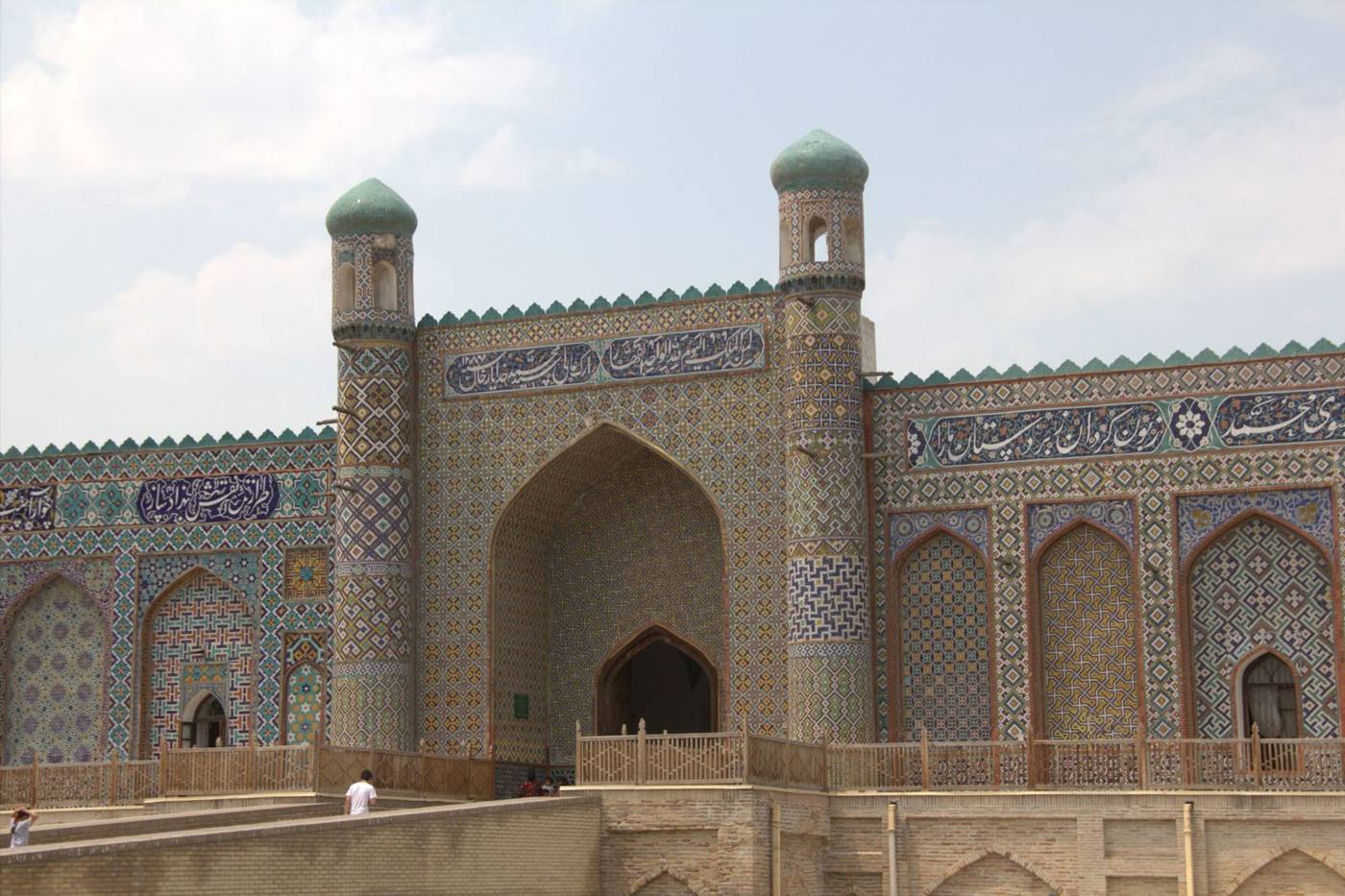
In the morning go into the palace of Khudayar Khan, built in the 1870s, shortly before the Russian conquest. The long facade is covered in green, blue and yellow tiles, and inside the rooms have painted wooden ceilings, stucco and coloured glass windows. Today it is a local history museum, with objects, weapons and costumes of the khanate. Check prices and times.
Then go to the Juma mosque, from the early nineteenth century, with a large portico of carved wooden columns, almost a hundred, and a brick minaret. Under the portico the light filters between the columns and the painted ceiling. Dress modestly.
In the afternoon visit the Narbutabey madrasa, still in use, and the royal cemetery of Dakhma-i-Shakhon, with the decorated tombs of the rulers. Then go to the Modari Khan complex, with the mausoleum of the khan's mother. Kokand was also a city of poets: your guide will tell you about Nodira, a nineteenth-century poet and queen who is still much loved.
In the evening pass through the city bazaar, where you find bread, dried fruit, sweets and mountains of grapes and pomegranates in autumn.
Sleep in Kokand.
Practical tip: ask your hotel for an official taxi to move between the monuments: the distances are short but the city is large.
- Day 3
The pottery workshops of Rishton
Today you visit Rishton, the capital of blue pottery in Uzbekistan.
In the morning drive south. In less than an hour you reach Rishton, a small town of potters where the local red clay is perfect for ceramics. Families have worked here for centuries, and their plates and bowls are recognisable by their colours: cobalt blue, turquoise and green, on a white background, with patterns of pomegranates, birds and flowers.
Go into a family workshop and watch the whole process: preparing the clay, the wheel, hand decoration with fine brushes, and the traditional glaze called ishkor, made with the ash of desert plants. Then see the kilns, where the pieces fire for a long time. There is often a small room with the finest and oldest pieces. Check prices and times for visits.
At lunch, if the visit includes it, eat with the potters' family: plov, salads, bread and fruit.
In the afternoon continue to Fergana, the modern city of the valley, founded by the Russians at the end of the nineteenth century with wide avenues and parks.
Sleep in Fergana, for two nights.
Practical tip: buy ceramics directly from the potters and have each piece well wrapped in paper and cloth.
- Day 4
Silk and the Margilan bazaar
Today you discover the silk of the Fergana Valley, famous since the days of the Silk Road.
In the morning go to Margilan, a few kilometres from Fergana. Visit a traditional silk factory, where you see every stage of the work: cocoons boiled in large pots, the thread pulled by hand, dyeing with natural colours and weaving on wooden looms. This is where ikat fabrics are made, called atlas when they are silk and adras when mixed with cotton, with their blurred patterns, created by dyeing the thread before weaving. Check prices and times for visits.
Then go into the Margilan bazaar, one of the liveliest in Central Asia. The market is at its busiest on Thursdays and Sundays, when farmers and traders come from all over the valley: fruit, vegetables, bread, spices, fabrics, hats and tools.
Stop for tea in one of the market teahouses, where old men play chess and talk.
In the afternoon, if you have time, visit a small workshop making knives or doppi, the traditional embroidered skullcaps.
In the evening, in Fergana, walk in the central parks, popular with families.
Sleep in Fergana.
Practical tip: plan your trip so you are in Margilan on a Thursday or Sunday, to see the market at its best.
- Day 5
Back to Tashkent
On the last day you return to the capital.
In the morning, if time allows, take a last walk in Fergana or go back to Margilan to see the Said Ahmad Khoja mosque, with its portico of wooden columns.
Then take the train or the flight to Tashkent. The train goes back through the tunnel under the Kamchik pass and the mountain valleys, while the flight is very short and shows you from above the green valley enclosed by mountains.
In the afternoon, in Tashkent, if you have time, visit Chorsu bazaar under its great blue dome.
In five days you have seen the mountain train and the Kamchik pass, Kokand with the palace of Khudayar Khan and the Juma mosque, the blue pottery of Rishton, the silk and bazaar of Margilan and the city of Fergana. It is the most authentic and least touristy part of Uzbekistan: you come here above all for the people and their crafts, more than for the monuments.
When to go: from April to June, with the valley green and the silk cocoons, or in September and October, with the fruit. July and August are very hot.
This trip can be combined with Tashkent and the Chimgan mountains, or with Zaamin park.
Practical tip: keep your registration slips for every night ready: in the valley checks are more frequent than in the rest of the country.
Uzbekistan's most authentic and least touristy region, perfect for craft lovers. Monuments are less spectacular than Samarkand: you come for the people and their trades. Margilan's bazaar is busiest on Thursdays and Sundays.
Before you go
- Documents and visa
- Passport with at least three months' remaining validity. British citizens should check their own entry rules; Italian citizens enter without a visa for up to 30 days. Temporary registration is compulsory within three working days of arrival: hotels and guesthouses do it for you, keep the slips until you leave. You must carry your passport at all times.
- Health and vaccines
- No compulsory vaccinations; ask your doctor about recommended ones. Drink only bottled water. Take insurance covering medical costs and repatriation. Emergencies: police 102, ambulance 103, fire 101.
- Money and payments
- Uzbek som (UZS). Visa and Mastercard cards and cash machines are common in big cities and hotels; in markets and rural areas you need cash. Bring dollars or euros in perfect notes and change money only at banks or licensed offices: street exchange is a crime.
- Power sockets
- Types C and F, 220 volts: you need an adapter for British plugs.
- Time zone
- UTC+5 all year: five hours ahead of the UK in winter, four in summer.
- Safety
- The country is generally calm for visitors. Governments advise against the areas along the Afghan border and urge caution near the borders with Kyrgyzstan and Tajikistan: cross only at official checkpoints. In the Fergana, Andijan, Namangan and Surkhandarya regions checks are more frequent. Check before taking photos near military or police sites and ask before photographing people. Official advice: GOV.UK.
Information checked in November 2026 for Italian and EU citizens. Rules change: always check before you travel.
Variations
In three days you take the train to Kokand and the next day see Rishton and Margilan, flying back from Fergana in the evening.
In seven days you add Andijan and Namangan, with their bazaars and mosques, to see the whole valley.
Frequently asked questions
How do you get to the Fergana Valley?
By train from Tashkent, through the tunnel under the Kamchik pass, or by flight to Fergana. The train should be booked in advance.
What is the best day for the Margilan bazaar?
Thursday and Sunday, when the market is at its busiest. Plan your trip so you are in Margilan on one of these days.
Are there checks in the valley?
Yes, in the Fergana Valley checks are more frequent, even in hotels. Always carry your passport and registration slips and do not go near the borders.
Indicative itinerary written by World Atlas. Before booking, check timetables, seasonal openings, documents and safety.
 6 daysModerate
Desert and the Aral Sea
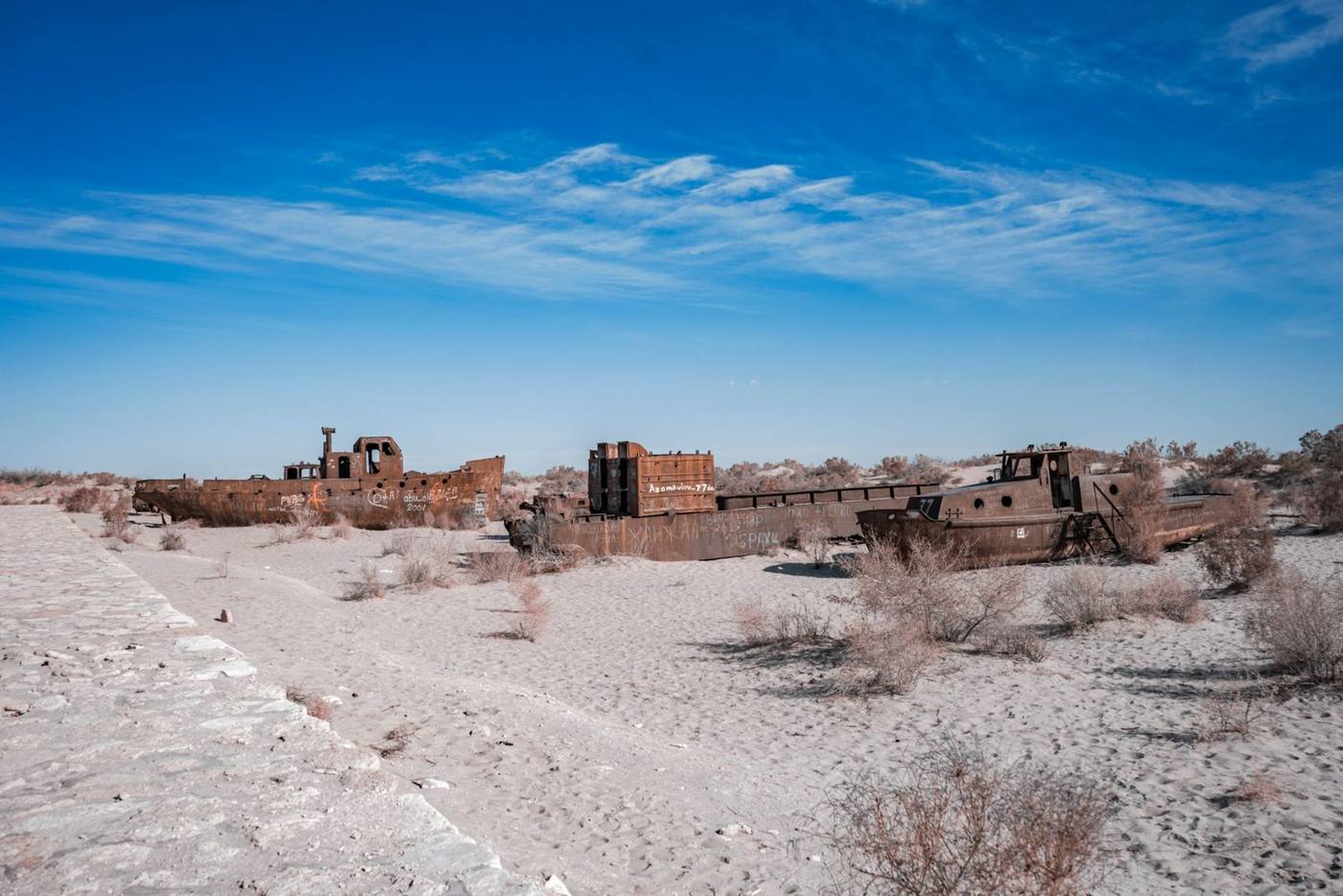
The Savitsky Museum in Nukus and its banned avant-garde art, the Khorezm fortresses, the ship graveyard of Moynaq and a night in a desert yurt.
 4 daysEasy
Samarkand and Shahrisabz
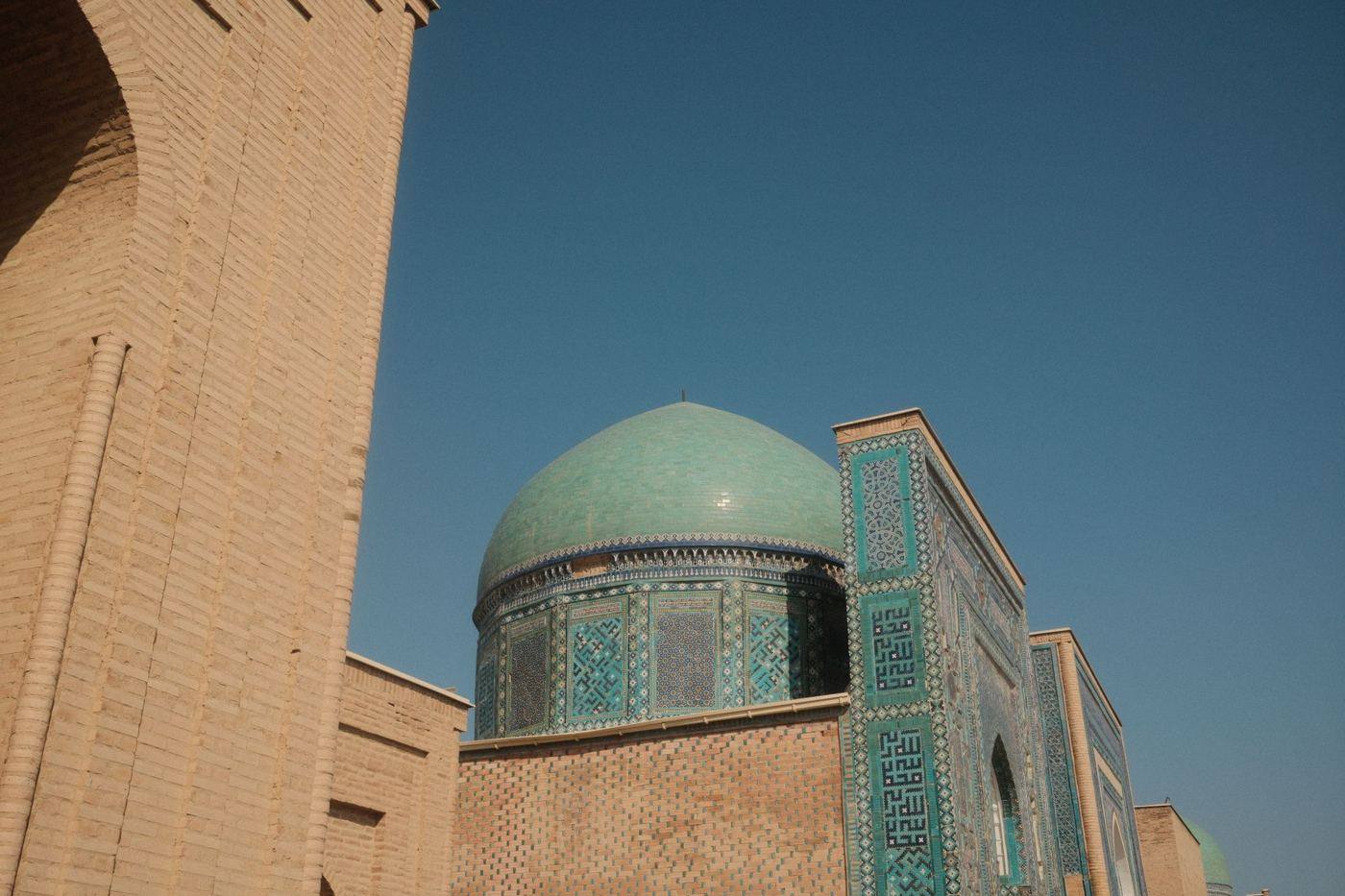
Samarkand at a slower pace: the Registan at night, the Shah-i-Zinda necropolis, Ulugh Beg's observatory, the Konigil paper mill, then Shahrisabz, Tamerlane's birthplace.
 3 daysEasy
Bukhara and its surroundings
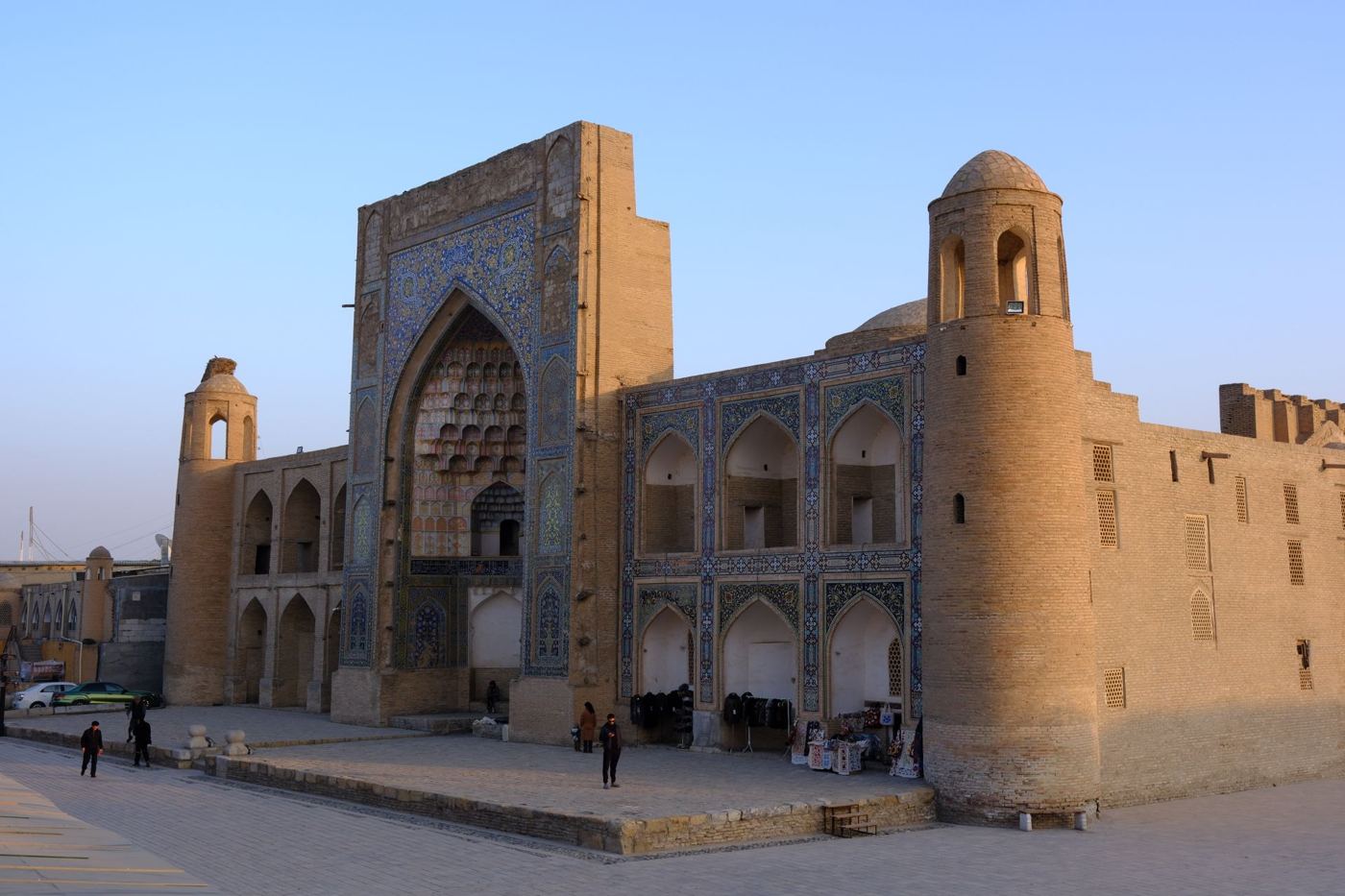
Bukhara beyond the centre: the emir's summer palace Sitorai Mohi Hosa, Chor Minor, the Sufi shrine of Bahauddin Naqshband and the pottery of Gijduvan.