Samarkand and Shahrisabz
Samarkand at a slower pace: the Registan at night, the Shah-i-Zinda necropolis, Ulugh Beg's observatory, the Konigil paper mill, then Shahrisabz, Tamerlane's birthplace.
- Samarkand
- Shah-i-Zinda
- Konigil
- Shahrisabz
Day by day
- Day 1
The Registan and the Gur-e-Amir mausoleum
This four-day trip shows Samarkand at a gentle pace: the Registan by day and by night, the Bibi-Khanym mosque, the Shah-i-Zinda necropolis, the Ulugh Beg observatory, the Konigil paper mill and Siab bazaar, and finally Shahrisabz, the birthplace of Tamerlane, over a mountain pass.
Before you go: Italian citizens enter Uzbekistan without a visa for short stays, currently up to 30 days: check the length before you leave. You need a passport with at least three months' remaining validity. Temporary registration is compulsory within three working days of arrival: hotels do it for you, and you keep the slips. Other nationalities should check their own rules.
Samarkand, a UNESCO World Heritage Site, is one of the oldest cities in Central Asia. At the end of the fourteenth century Tamerlane made it the capital of his empire and filled it with monuments.
In the morning visit the Gur-e-Amir mausoleum, where Tamerlane is buried with his descendants, including his grandson Ulugh Beg. The ribbed turquoise dome can be seen from afar, and inside the walls are covered in gold and onyx. Check prices and times.
Then go to the Registan, the great square with three madrasas facing each other: that of Ulugh Beg, from the fifteenth century, and those of Sher-Dor and Tilya-Kori, from the seventeenth. Enter the courtyards, look at the tiles, the lions chasing deer on the facade of Sher-Dor and the gilded hall of Tilya-Kori. Check prices and times.
In the evening go back to the Registan to see it lit up, when the square fills with families.
Sleep in Samarkand, for three nights.
Practical tip: buy your Registan ticket only once and ask whether it is also valid in the evening.
- Day 2
Bibi-Khanym, Shah-i-Zinda and the Ulugh Beg observatory
Today you see Tamerlane's great monuments and his grandson's science.
In the morning go into the Bibi-Khanym mosque, built by Tamerlane at the beginning of the fifteenth century after his campaign in India. It was one of the largest mosques in the Islamic world, so large that the dome began to give way a few years later. Today it is partly restored, with its huge portal and great courtyard. Check prices and times.
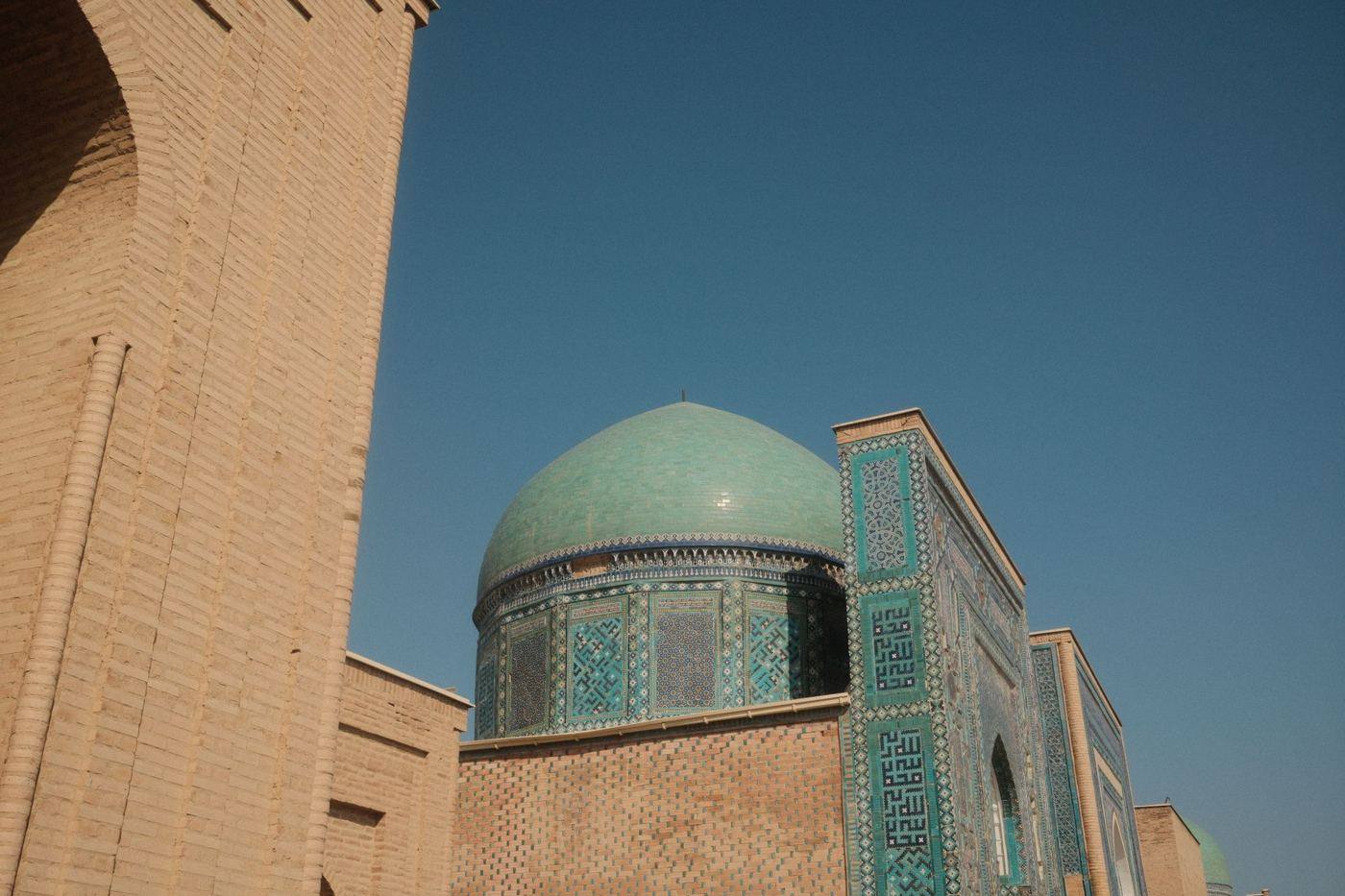
Then climb to the Shah-i-Zinda necropolis, the most moving place in the city. A narrow lane, with flights of steps, runs between mausoleums built mostly in the fourteenth and fifteenth centuries, covered in blue and turquoise tiles with floral patterns and inscriptions. At the end is the tomb of Qusam ibn Abbas, cousin of the Prophet Muhammad, who gives the place its name, the living king. It is a place of pilgrimage: move quietly and dress modestly.
In the afternoon visit the Ulugh Beg observatory, on the hill to the north-east. Ulugh Beg, ruler and astronomer, had it built in the fifteenth century: what remains is the underground part of a huge sextant, with which he calculated the length of the year with great precision. The small museum describes his studies. Check prices and times.
If you have time, visit the Afrasiyab museum, with seventh-century frescoes from the oldest city.
Sleep in Samarkand.
Practical tip: go to Shah-i-Zinda early in the morning: the light is better and there are fewer groups.
- Day 3
The Konigil paper mill and Siab bazaar
Today you discover the crafts and daily life of Samarkand.
In the morning go to Konigil, a village a few kilometres from the city, along a canal lined with mulberry trees. Here a workshop of craftsmen has revived Samarkand paper, famous in the Middle Ages throughout the Islamic world. You see how the mulberry bark is stripped, boiled, pounded by the water mill and spread into sheets smoothed with a stone. Potters and weavers also work in the workshop. Check prices and times.
Spend a little time in the shade of the mulberries, by the canal, with a tea.
In the afternoon go back to the city and visit Siab bazaar, next to the Bibi-Khanym mosque. It is Samarkand's great market: round bread stamped with a pattern in the middle, dried fruit, nuts, grapes, melons, spices, cheese and sweets. Samarkand bread is famous throughout the country, and people say it stays good for days.
Taste the dried fruit and do some shopping. The market is full of life, with traders calling out and families doing their shopping.
In the evening have dinner with Samarkand plov, where the meat and carrots are laid on top of the rice, and a tomato salad.
Sleep in Samarkand.
Practical tip: at the bazaar haggle calmly and with a smile: it is part of the game, but respect the final price you agree.
- Day 4
Shahrisabz and the Ak-Saray palace
On the last day you go to Shahrisabz, the birthplace of Tamerlane.
In the morning drive south. The road climbs the Takhtakaracha pass, through the Zeravshan mountains, with bends, pastures and fruit sellers along the way. In about an hour and a half you reach Shahrisabz, the green city, a UNESCO World Heritage Site.
Visit the remains of the Ak-Saray palace, the white palace that Tamerlane had built at the end of the fourteenth century. Two enormous pillars of the portal survive, covered in blue, white and gold tiles, which give an idea of how big it was. In front stands the statue of Tamerlane.
Then see the Dorut Tilovat complex, with the Kok Gumbaz mosque commissioned by Ulugh Beg, and the Dorus Siyadat complex, with the mausoleum of Jahangir, Tamerlane's favourite son, and the crypt prepared for Tamerlane himself, who was instead buried in Samarkand. Check prices and times.
In the afternoon return to Samarkand.
In four days you have seen the Registan, Gur-e-Amir, Bibi-Khanym, Shah-i-Zinda, the Ulugh Beg observatory, the Konigil mill, Siab bazaar and Shahrisabz.
When to go: April and May or September and October. In summer it is very hot and in winter the pass can be snowbound.
Practical tip: check the weather before you leave: in snow or heavy rain take the longer road that goes around the mountains.
For those who want to see Samarkand without rushing. Shahrisabz lies over a mountain pass, an hour and a half away. Many Europeans enter Uzbekistan without a visa.
Before you go
- Documents and visa
- Passport with at least three months' remaining validity. British citizens should check their own entry rules; Italian citizens enter without a visa for up to 30 days. Temporary registration is compulsory within three working days of arrival: hotels and guesthouses do it for you, keep the slips until you leave. You must carry your passport at all times.
- Health and vaccines
- No compulsory vaccinations; ask your doctor about recommended ones. Drink only bottled water. Take insurance covering medical costs and repatriation. Emergencies: police 102, ambulance 103, fire 101.
- Money and payments
- Uzbek som (UZS). Visa and Mastercard cards and cash machines are common in big cities and hotels; in markets and rural areas you need cash. Bring dollars or euros in perfect notes and change money only at banks or licensed offices: street exchange is a crime.
- Power sockets
- Types C and F, 220 volts: you need an adapter for British plugs.
- Time zone
- UTC+5 all year: five hours ahead of the UK in winter, four in summer.
- Safety
- The country is generally calm for visitors. Governments advise against the areas along the Afghan border and urge caution near the borders with Kyrgyzstan and Tajikistan: cross only at official checkpoints. In the Fergana, Andijan, Namangan and Surkhandarya regions checks are more frequent. Check before taking photos near military or police sites and ask before photographing people. Official advice: GOV.UK.
Information checked in November 2026 for Italian and EU citizens. Rules change: always check before you travel.
Variations
In three days you add Konigil and Siab bazaar to the second day of sightseeing and go to Shahrisabz on the third.
In five days you add an evening of traditional music and a trip to the mausoleum of Imam al-Bukhari, north of the city.
Frequently asked questions
How long do you need to see Samarkand?
At least two full days for the main monuments. With three days you can also see Konigil and the bazaar without rushing.
How do you get to Shahrisabz?
By car, over the Takhtakaracha pass, in about an hour and a half. In bad weather a longer road around the mountains is used.
Can you see the Registan in the evening?
Yes, the square is lit up and very popular with families. Check prices and times to enter the courtyards and whether there are light shows.
Indicative itinerary written by World Atlas. Before booking, check timetables, seasonal openings, documents and safety.
 3 daysEasy
Bukhara and its surroundings
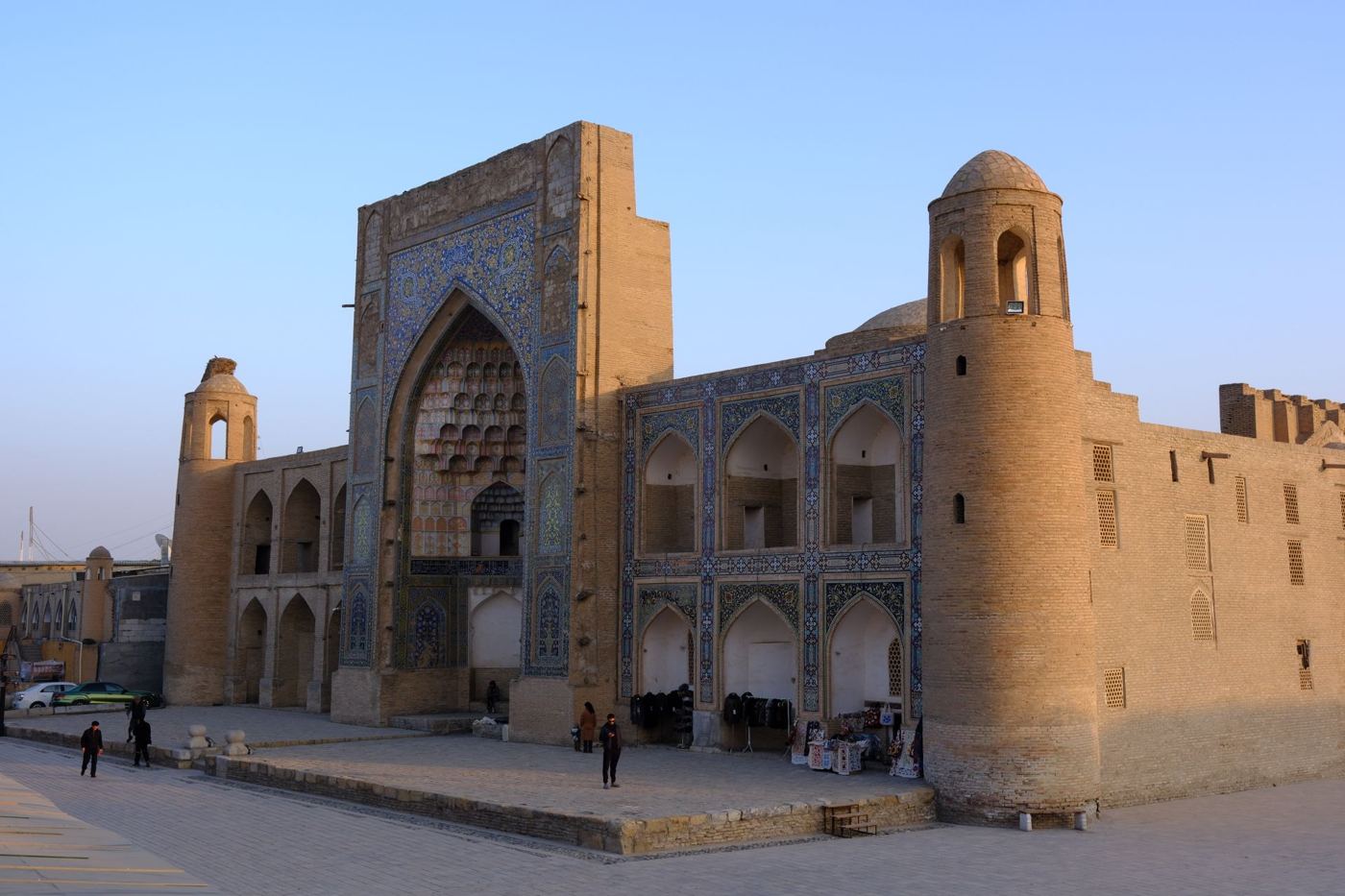
Bukhara beyond the centre: the emir's summer palace Sitorai Mohi Hosa, Chor Minor, the Sufi shrine of Bahauddin Naqshband and the pottery of Gijduvan.
 3 daysEasy
Tashkent and the Chimgan mountains
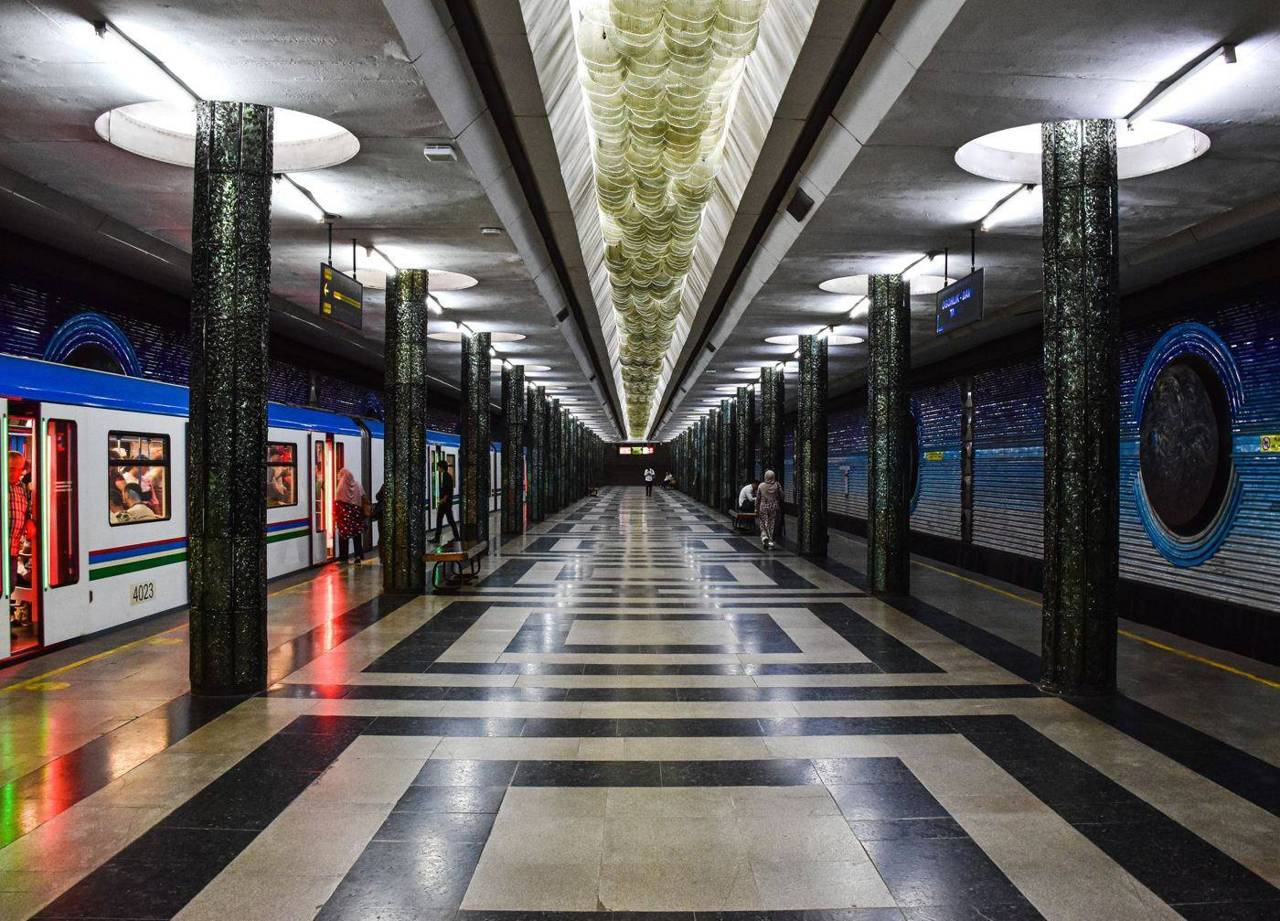
The capital with its decorated metro, Chorsu bazaar and the plov centre, then the Chimgan mountains and Lake Charvak two hours away.
 3 daysEasy
Aydarkul and Nurata
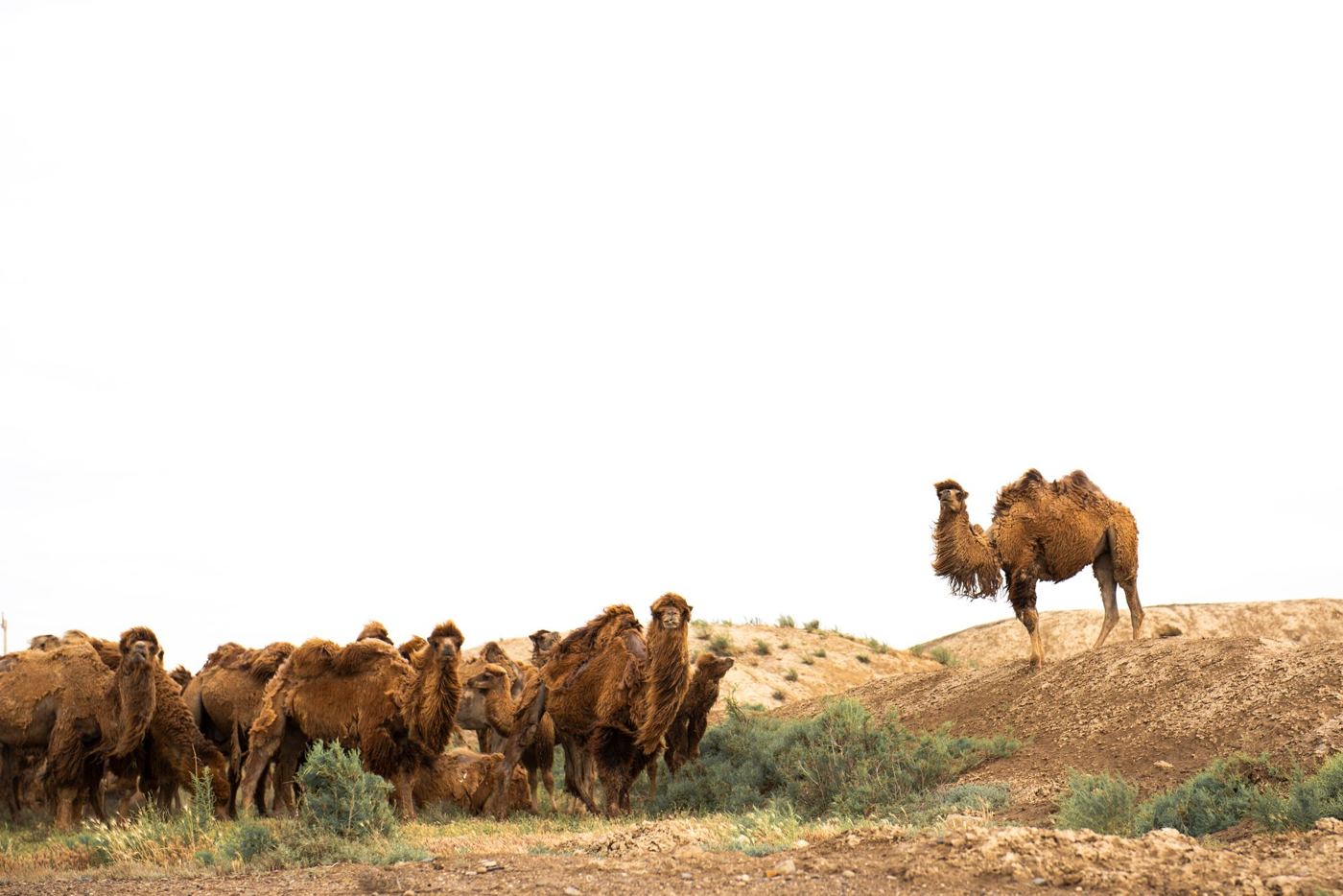
A night in a yurt camp in the Kyzylkum desert, a camel ride, a swim in Lake Aydarkul and the town of Nurata with Alexander the Great's fortress.