The Sahara and the oases
El Jem amphitheatre, Kairouan, the troglodyte houses of Matmata, the Chott el-Jerid salt lake, the mountain oases of Chebika and Tamerza and the dunes of Douz.
- Tunis
- Kairouan
- El Jem
- Matmata
- Douz
- Chott el-Jerid
- Tozeur
- Chebika
Day by day
- Day 1
Kairouan, the holy city, and the Great Mosque
This seven-day trip takes you from Tunis to the Sahara: the holy city of Kairouan, the Roman amphitheatre of El Jem, the underground houses of Matmata, the dunes of Douz, the salt lake of Chott el-Jerid, Tozeur and the mountain oases of Chebika and Tamerza. You travel with a driver or a local agency, and in the desert by 4x4.
Before you go: Italian citizens can enter Tunisia only with a passport, with at least three months' remaining validity: an identity card is no longer enough. Tourist stays of up to 90 days need no visa. The Tunisian dinar cannot be exported: change a little at a time and keep the receipts. Other nationalities should check their own rules. Some areas on this trip are close to borders or places where the situation changes often: check your government's travel advice before booking and again before you leave.
In the morning you leave Tunis heading south and in about two and a half hours reach Kairouan, founded in the seventh century by the Arabs and considered one of the holiest cities of Islam. The Great Mosque, also called the Mosque of Uqba, has a huge marble courtyard surrounded by arcades and a massive minaret, among the oldest in the world. The prayer hall is closed to non-Muslims, but from the courtyard you can look inside through the doors. Cover your shoulders and legs.
In the afternoon walk around the medina, with its sand-coloured walls, painted doors and carpet shops, a speciality of the city. Taste makroudh, the semolina pastry filled with dates.
Sleep in Kairouan.
Practical tip: buy the combined ticket for Kairouan's monuments and check prices and times; the mosque closes to visitors during prayers.
- Day 2
The Aghlabid basins and the amphitheatre of El Jem
Today you finish your visit to Kairouan and reach the Roman amphitheatre of El Jem.
In the morning go to the Aghlabid basins, two large round pools built in the ninth century to collect the water brought to the city. Then visit the zaouia of Sidi Sahbi, known as the Barber's Mosque, the mausoleum of a companion of the Prophet Muhammad, with courtyards decorated with coloured tiles and very fine stucco. If you have time, stop at the Bir Barouta well, where a camel still turns the wheel that draws up the water.
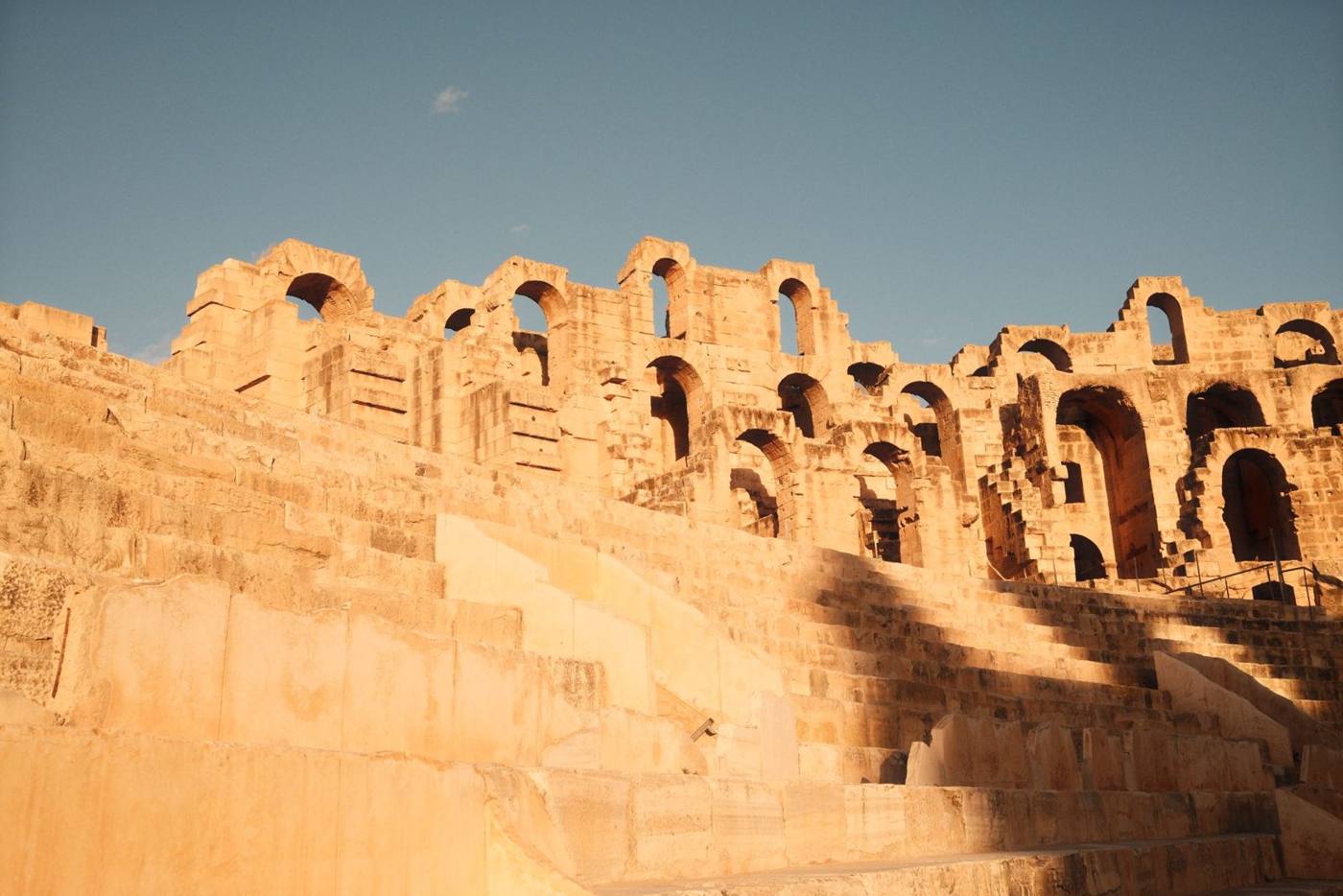
After lunch you head south-east and in about an hour and a half reach El Jem, a small town on the plain dominated by a huge Roman amphitheatre. Built in the third century AD, it could hold about 35,000 spectators and is one of the best preserved in the world. It is a UNESCO World Heritage Site. You can walk on the tiers, climb to the upper levels and go down into the underground passages where gladiators and wild animals waited. At sunset the stone turns golden.
Nearby is the archaeological museum, with beautiful mosaics found in the villas of the ancient city. Check prices and times for both sites.
In the evening have chorba, the spiced soup, and a couscous.
Sleep in El Jem or in Sfax, further south.
Practical tip: at the amphitheatre climb to the highest levels for the best view, but be careful: some stairs have no railings. Go late in the afternoon for softer light and fewer groups.
- Day 3
Matmata and the underground houses
Today you head south along the coast and then climb into the hills of Matmata.
In the morning follow the road towards Sfax and Gabès, among olive groves as far as the eye can see: this is one of the regions with the most olive trees in the Mediterranean. In Gabès stop for lunch and, if you like, take a short walk in its oasis near the sea.
In the afternoon you climb towards Matmata, in the dry hills to the west. Here the Berbers lived for centuries in houses dug underground: a large round pit acts as a courtyard and the rooms open into the rock around it, cool in summer and mild in winter. Visit a house that is still lived in: families often open their doors to visitors, show the rooms, millstones and granaries and offer warm bread baked in the earth oven with olive oil. Leaving a small offering is an appreciated gesture.
One of these houses, now a place to stay, was used as Luke Skywalker's home in the first Star Wars film, and many visitors stop by for a photo.
At sunset climb one of the hills around the village to see the craters of the houses and the ochre mountains.
Sleep in Matmata, if possible in a troglodyte house.
Practical tip: bring a jumper or jacket even in the warm seasons; in the south the temperature drops a lot at night. Pack a small torch for the dim underground rooms.
- Day 4
Douz and a night among the dunes
Today you reach the gateway to the Sahara and spend the night in a tented camp among the dunes.
In the morning you leave Matmata and cross an increasingly dry plateau, with few villages and large empty spaces. In about two hours you reach Douz, a small town surrounded by palm groves, known as the gateway to the Sahara. Here begins the Grand Erg Oriental, the sea of dunes that stretches south. Every winter Douz holds a Sahara festival with camel races, music and poetry.
Visit the market, where dates, leather sandals, fabrics and nomads' turbans are sold, then have lunch in town.
In the afternoon, with a local agency, get into a 4x4 or onto a camel and reach the dunes outside town. The sand is golden and fine, and the silence is complete. Climb a dune to watch the sunset, when the sky turns orange and the shadows stretch over the sand.
In the evening you reach the tented camp, with nomad tents. Dinner is cooked over the fire: try bread baked under the hot sand, grilled meat and mint tea. After dinner look at the stars, which in the desert are countless.
Sleep in a tented camp among the dunes.
Practical tip: go into the desert only with organised agencies, by 4x4 and with a guide, and never wander away from the camp alone, not even at night. Bring a scarf to protect your face if the wind lifts the sand.
- Day 5
Crossing the Chott el-Jerid to Tozeur
Today you cross the largest salt lake in North Africa and reach Tozeur.
Get up early to see the sunrise over the dunes, then return to Douz and take the road west. After Kebili the road enters the Chott el-Jerid, an immense expanse of white salt and clay crust, often dry, which in winter can be covered by a thin film of water. The road runs straight on a raised embankment across the lake for dozens of kilometres. In the heat you see mirages that look like lakes of water on the horizon. Stop at one of the rest points to walk on the edge of the salt, with its pink and white crystal formations.
By midday you reach Tozeur, an oasis town famous for deglet nour dates and for its architecture. In the old quarter of Ouled el Hadef the houses are built of yellow bricks laid to form geometric patterns.
In the afternoon visit the palm grove, where thousands of palms shade fruit trees and vegetable gardens, watered by channels that share the water among families according to ancient rules. You can explore it on foot, by bicycle or in a horse-drawn carriage.
Sleep in Tozeur, for two nights.
Practical tip: never leave the road on the Chott el-Jerid: the salt looks solid, but underneath it can be mud, and vehicles get stuck. Wear sunglasses, as the glare from the white salt is very strong.
- Day 6
Chebika, Tamerza and the Mides canyon
Today you visit the mountain oases, in the hills north-west of Tozeur, close to the border with Algeria. Go only with a local guide and follow the route without detours.
In the morning you reach Chebika, an oasis at the foot of a rocky mountain. The old stone village, now abandoned, lies above the palm grove. Follow the path among the rocks to a spring that falls in small cascades into a gorge, among the palms. It is a rare sight in the middle of the desert.
Then continue to Tamerza, the largest mountain oasis in the area. The old village was abandoned after the great floods of the late 1960s, and the ruined clay and stone houses can still be seen on the hill. Nearby a waterfall tumbles between the rocks, where local people come to cool off.
In the afternoon, still with the guide, go to the Mides canyon, a deep, narrow gorge carved by the river, with sheer walls and a small village on the edge. From the rim the view over the gorge and the palms at the bottom is spectacular.
In the late afternoon return to Tozeur before dark and have dinner with a lamb dish and a date dessert.
Sleep in Tozeur.
Practical tip: carry your passport for checks along the road, always stay with the guide and do not go near the border line to take photos. Bring water and a hat, as there is little shade on the paths.
- Day 7
Flight from Tozeur or return to Tunis
Today is the last day of the trip.
If you are flying, Tozeur-Nefta airport is a few minutes from the town: check the flights carefully, as they do not run every day. If instead you are returning to Tunis by car, leave very early: the road is long, takes most of the day and crosses the interior of the country northwards. Travel with a driver and arrive before dark.
If you have a few hours in the morning, buy fresh dates at Tozeur market, or take a last walk in the palm grove at dawn, when the air is cool and birds sing among the palms.
In seven days you have crossed Tunisia from the Mediterranean to the Sahara: the Great Mosque and the medina of Kairouan, the amphitheatre of El Jem, the underground houses of Matmata, the night among the dunes of Douz, the salt of the Chott el-Jerid, the palm grove of Tozeur and the mountain oases of Chebika and Tamerza. It is the Sahara that is easiest to reach from Europe, with plenty of history along the way.
When to go: the best period is from October to April, with warm days and cool nights, sometimes cold in the desert. From May to September the heat in the south is very strong and excursions become tiring. Around Christmas and New Year there are many visitors: book in advance.
Practical tip: before leaving the country spend the dinars you have left or change them at the airport with your receipts; they cannot be exported.
The most easily reached Sahara from Europe, with plenty of history along the way. The mountain oases are near the Algerian border: go with a local guide and don't stray. There are also Star Wars sets around Tozeur.
Before you go
- Documents and visa
- You need a passport with at least three months' remaining validity: an identity card is no longer enough. Tourist stays of up to 90 days need no visa for Italian citizens; other nationalities should check their own rules.
- Health and vaccines
- No compulsory vaccinations for travellers arriving from Europe. Rabies is increasing: keep away from stray dogs and cats and see a doctor at once if you are bitten or scratched. Drink bottled water. Emergencies: 190 ambulance, 197 police, 198 fire brigade.
- Money and payments
- Tunisian dinar, which cannot be exported: change a little at a time and keep your exchange receipts. Cards work in cities and large hotels; in souks and villages you need cash.
- Power sockets
- Type C and E, 230 volts: you need an adapter for British plugs.
- Time zone
- UTC+1 all year.
- Safety
- The UK and Italy advise against the areas close to the borders with Algeria and Libya, the mountain areas of Kasserine, El Kef and Sidi Bouzid governorates, where there are military operations, and the military zone in the southern Sahara. In the desert, go only on organised trips, with a 4x4 and a guide. Official advice: GOV.UK.
Information checked in November 2026 for Italian and EU citizens. Rules change: always check before you travel.
Variations
In five days you can skip Kairouan and El Jem and fly to Tozeur, with Douz, the Chott el-Jerid and the mountain oases.
In ten days you can add Tataouine, Chenini and a few days by the sea on Djerba.
Frequently asked questions
Can I enter the Great Mosque of Kairouan?
You can visit the courtyard, with shoulders and legs covered. The prayer hall is closed to non-Muslims, but you can see it from the doors.
What is the night in the tented camp like?
Simple but comfortable: nomad tents, dinner over the fire and a starry sky. At night it is cool, sometimes cold: bring a jumper.
Do I need a guide for the mountain oases?
Yes. Chebika, Tamerza and Mides are close to the Algerian border: go only with a local guide, by day and without leaving the route.
Indicative itinerary written by World Atlas. Before booking, check timetables, seasonal openings, documents and safety.
 5 daysEasy
Djerba and the south
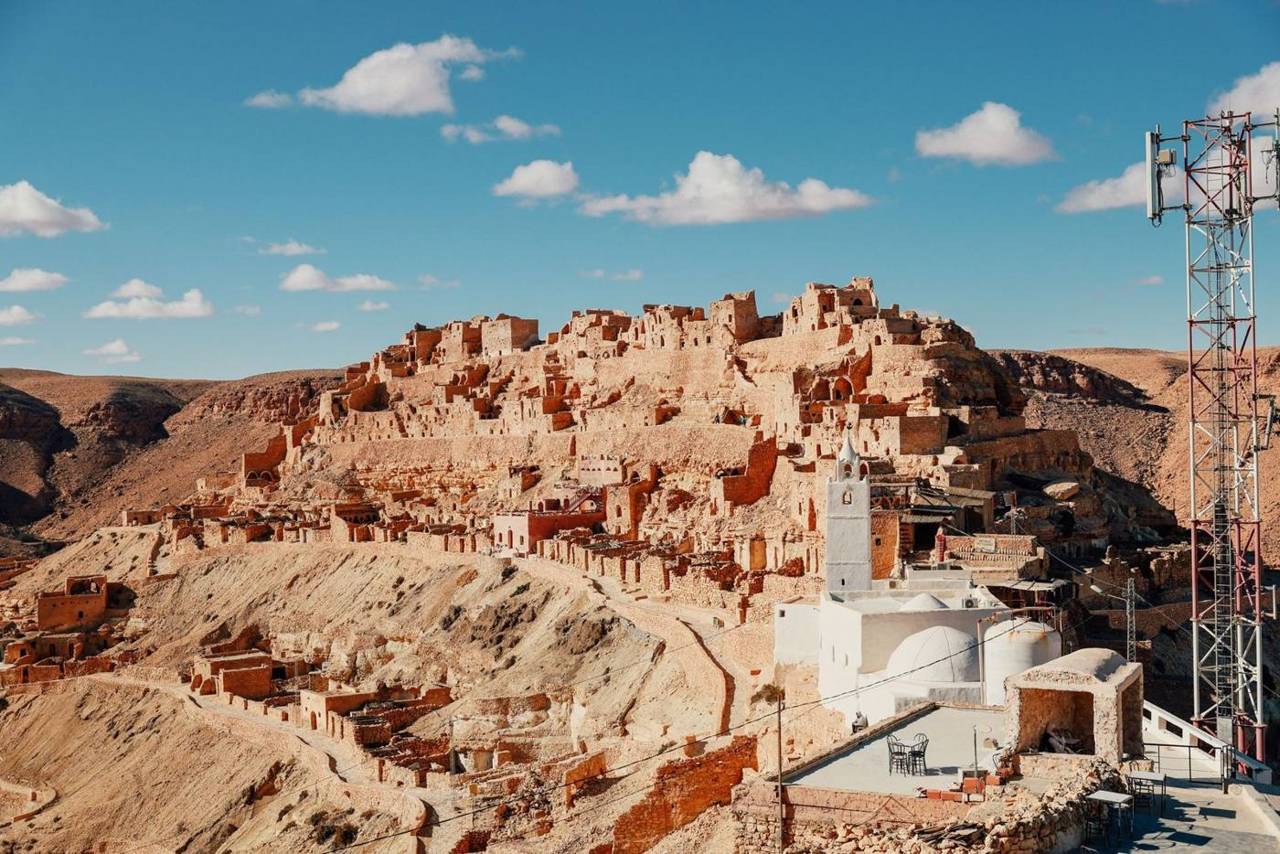
Djerba island with the El Ghriba synagogue, the murals of Erriadh and its beaches, and the fortified ksour of Tataouine.
 3 daysEasy
Kairouan and El Jem
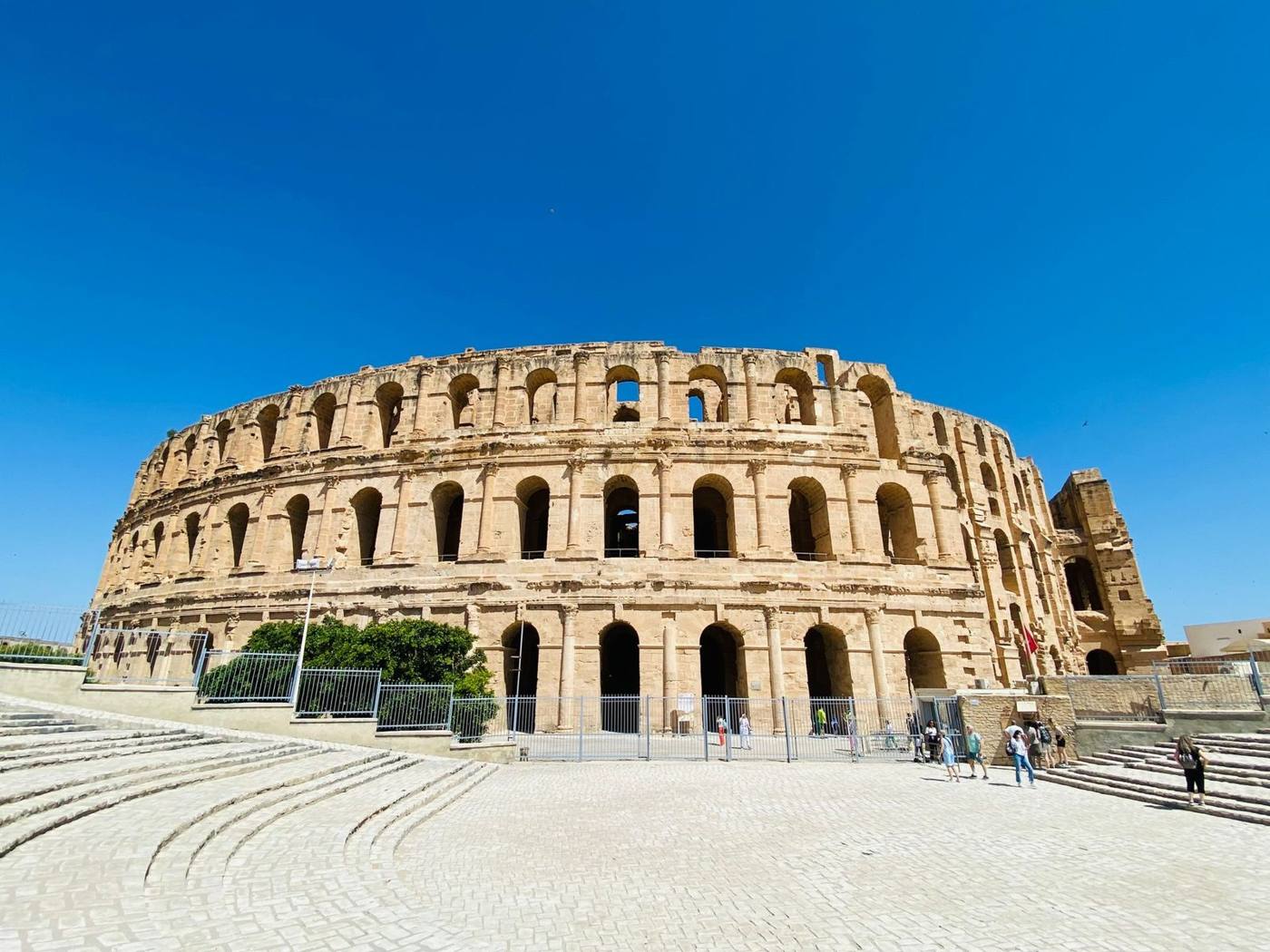
Islam's fourth holy city with its Great Mosque and Aghlabid basins, and the Roman amphitheatre of El Jem, one of the best preserved in the world.
 3 daysEasy
Dougga and Bulla Regia
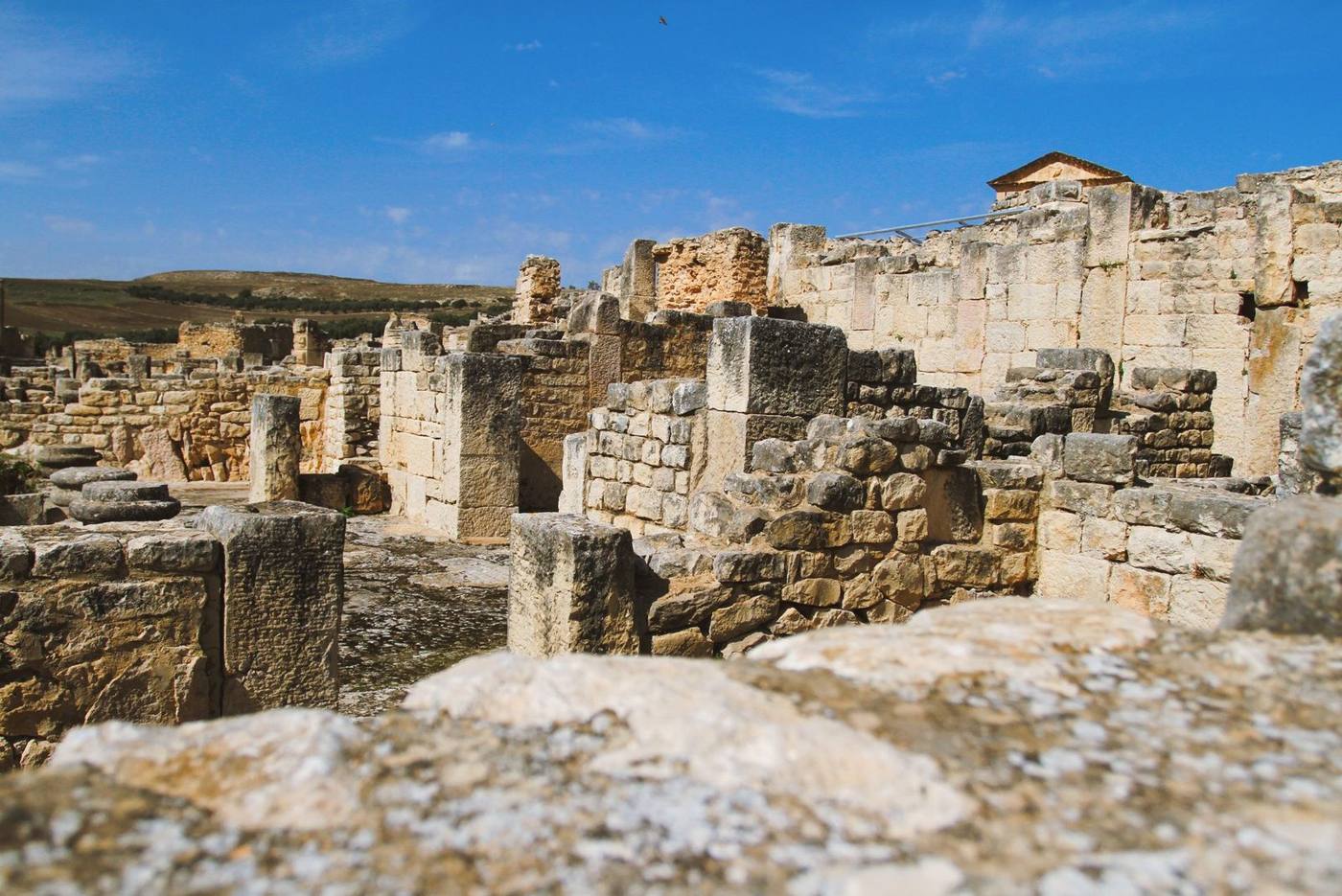
The Roman towns of the north-west among olive groves: Dougga's Capitolium and theatre on the hill, and the underground villas of Bulla Regia with mosaics still in place.