Kairouan and El Jem
Islam's fourth holy city with its Great Mosque and Aghlabid basins, and the Roman amphitheatre of El Jem, one of the best preserved in the world.
- Sousse
- Kairouan
- El Jem
Day by day
- Day 1
From Sousse to Kairouan and the medina
This three-day trip takes you to two UNESCO World Heritage Sites in central Tunisia: Kairouan, considered one of the holiest cities of Islam, with its Great Mosque and Aghlabid basins, and El Jem, with its Roman amphitheatre, one of the best preserved in the world. You travel by car, with a driver or a hire car, starting from Sousse.
Before you go: Italian citizens can enter Tunisia only with a passport, with at least three months' remaining validity: an identity card is no longer enough. Tourist stays of up to 90 days need no visa. The Tunisian dinar cannot be exported: change a little at a time and keep the receipts. Other nationalities should check their own rules. Official advice warns against the areas near the borders with Algeria and Libya, far from this route.
In the morning you leave Sousse and take the road west, across a plain planted with olive trees. In about an hour you reach Kairouan, founded in the seventh century by the Arabs as a base for the conquest of North Africa.
Start with the medina, enclosed by long sand-coloured walls with great gates. Enter by the main gate and walk along the central street, among shops selling carpets, copper and sweets. In the side lanes look at the wooden doors painted blue, green and yellow, decorated with black studs. Stop at a pastry shop for makroudh, the semolina pastry filled with date paste, fried and dipped in honey.
In the afternoon visit the Bir Barouta well, where a blindfolded camel still turns the wheel that draws up the water, following a very old tradition.
Sleep in Kairouan.
Practical tip: buy the combined ticket for Kairouan's monuments and check prices and times; it covers several sites in the city. Keep it with you, as it is checked at each one.
- Day 2
The Great Mosque, carpets and the road to El Jem
Today you visit Kairouan's great monuments and then reach El Jem.
Early in the morning enter the Great Mosque, also called the Mosque of Uqba. It has a huge marble courtyard surrounded by arcades with ancient columns, taken from Roman and Byzantine buildings, and a massive three-storey minaret, among the oldest in the world. The prayer hall is closed to non-Muslims, but from the courtyard you can look inside through the doors and see the forest of columns. Cover your shoulders and legs and check the times, because the mosque closes to visitors during prayers.
Then visit the Aghlabid basins, two large round pools from the ninth century that collected water for the city, and the zaouia of Sidi Sahbi, known as the Barber's Mosque, with courtyards decorated with tiles and stucco.
Kairouan is famous for its hand-knotted carpets. Go into a workshop to see women at the loom and learn the difference between knotted carpets and woven kilims. Do not feel obliged to buy.
In the afternoon you head south-east. In about an hour and a half you reach El Jem, a small town where the amphitheatre is visible from afar, huge above the low houses. At sunset the stone turns golden: look at it from outside, before tomorrow's visit.
Sleep in El Jem.
Practical tip: if you buy a carpet, ask for the certificate of authenticity with the official stamp and bargain calmly. Check that the price includes shipping if you do not want to carry it home.
- Day 3
The amphitheatre and the mosaic museum
Today you visit the Roman amphitheatre of El Jem and its museum, then return towards the coast.
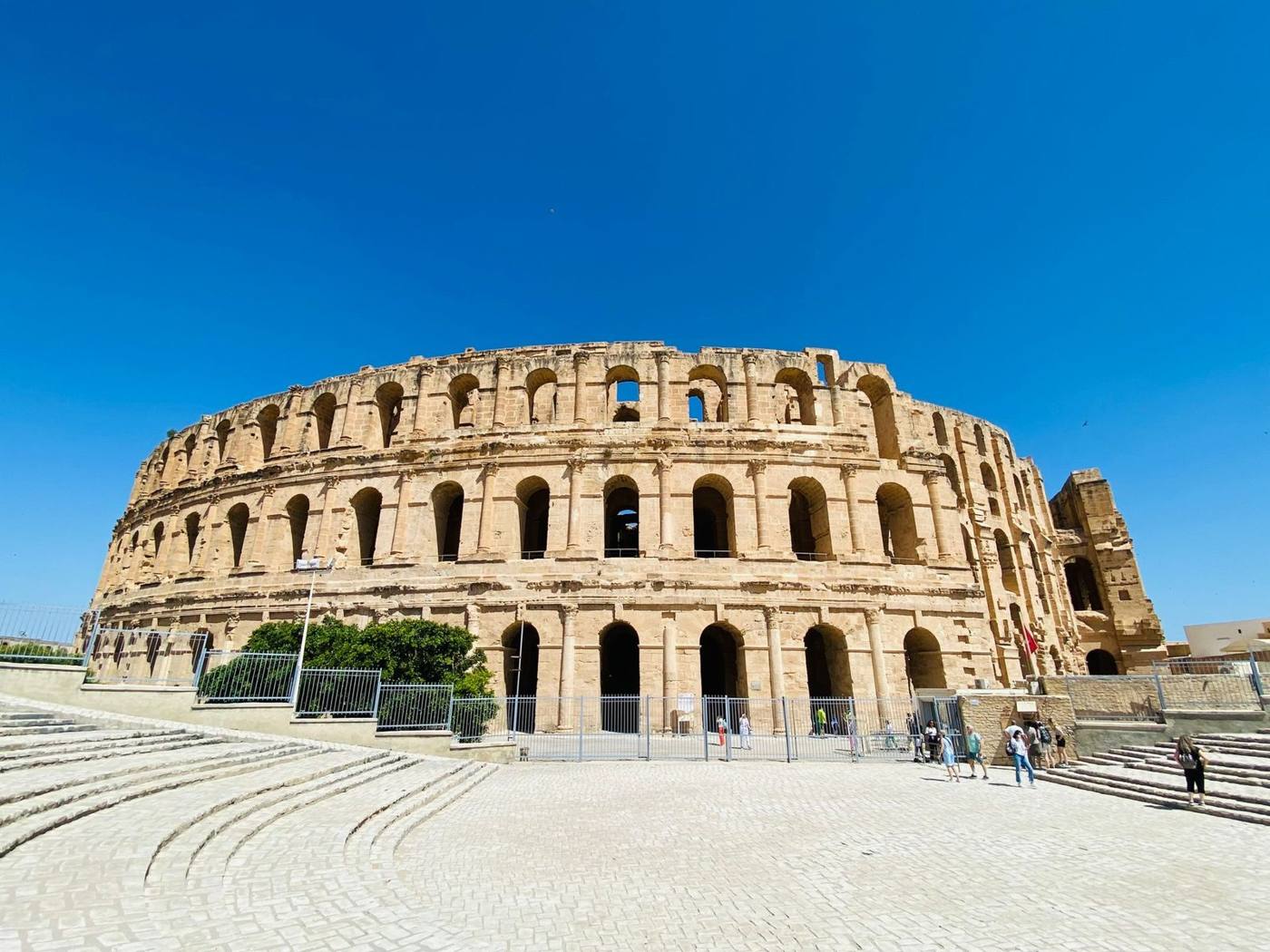
In the morning enter the amphitheatre at opening time, when the light is soft and there are few visitors. It was built in the third century AD in ancient Thysdrus, then a wealthy city thanks to the olive oil trade, and could hold about 35,000 spectators. It is one of the largest and best preserved in the Roman world, and a UNESCO World Heritage Site. Walk on the tiers, climb to the upper levels for the view over the town and the plain and go down into the underground passages, where gladiators and animals waited before entering the arena.
Then visit the archaeological museum, a short distance away, with mosaics found in the villas of the ancient city: animals, hunting scenes, gods and seasons, with colours still bright. Next to it you see the remains of some Roman houses and a reconstructed villa. Check prices and times for both sites.
In the early afternoon head back towards Sousse or Monastir, about an hour away by road.
In three days you have seen two masterpieces of Tunisia: the Great Mosque and medina of Kairouan and the amphitheatre of El Jem. They are perfect to combine with a beach holiday in Sousse or Monastir.
When to go: the best periods are from March to May and from October to November, with pleasant temperatures. In summer it is very hot, especially at midday.
Practical tip: in the amphitheatre be careful on the highest stairs, which do not all have railings, and bring water and a hat. Allow at least two hours for the two sites together.
Two UNESCO sites an hour apart, perfect to combine with a beach holiday in Sousse or Monastir. The mosque's prayer hall is closed to non-Muslims. Very hot in summer.
Before you go
- Documents and visa
- You need a passport with at least three months' remaining validity: an identity card is no longer enough. Tourist stays of up to 90 days need no visa for Italian citizens; other nationalities should check their own rules.
- Health and vaccines
- No compulsory vaccinations for travellers arriving from Europe. Rabies is increasing: keep away from stray dogs and cats and see a doctor at once if you are bitten or scratched. Drink bottled water. Emergencies: 190 ambulance, 197 police, 198 fire brigade.
- Money and payments
- Tunisian dinar, which cannot be exported: change a little at a time and keep your exchange receipts. Cards work in cities and large hotels; in souks and villages you need cash.
- Power sockets
- Type C and E, 230 volts: you need an adapter for British plugs.
- Time zone
- UTC+1 all year.
- Safety
- The UK and Italy advise against the areas close to the borders with Algeria and Libya, the mountain areas of Kasserine, El Kef and Sidi Bouzid governorates, where there are military operations, and the military zone in the southern Sahara. In the desert, go only on organised trips, with a 4x4 and a guide. Official advice: GOV.UK.
Information checked in November 2026 for Italian and EU citizens. Rules change: always check before you travel.
Variations
In two days you can do Kairouan and El Jem with a single night in Kairouan, visiting the amphitheatre on the second afternoon.
In five days you can add the medina and ribat of Sousse and the town of Monastir.
Frequently asked questions
Can I enter the Great Mosque of Kairouan?
You can visit the courtyard, with shoulders and legs covered. The prayer hall is closed to non-Muslims, but you can see it from the doors.
How far is El Jem from Kairouan?
About an hour and a half by road to the south-east. From El Jem to Sousse or Monastir takes about an hour.
When is it too hot?
In July and August, especially at midday. In those months visit the sites early in the morning or late in the afternoon.
Indicative itinerary written by World Atlas. Before booking, check timetables, seasonal openings, documents and safety.
 3 daysEasy
Dougga and Bulla Regia
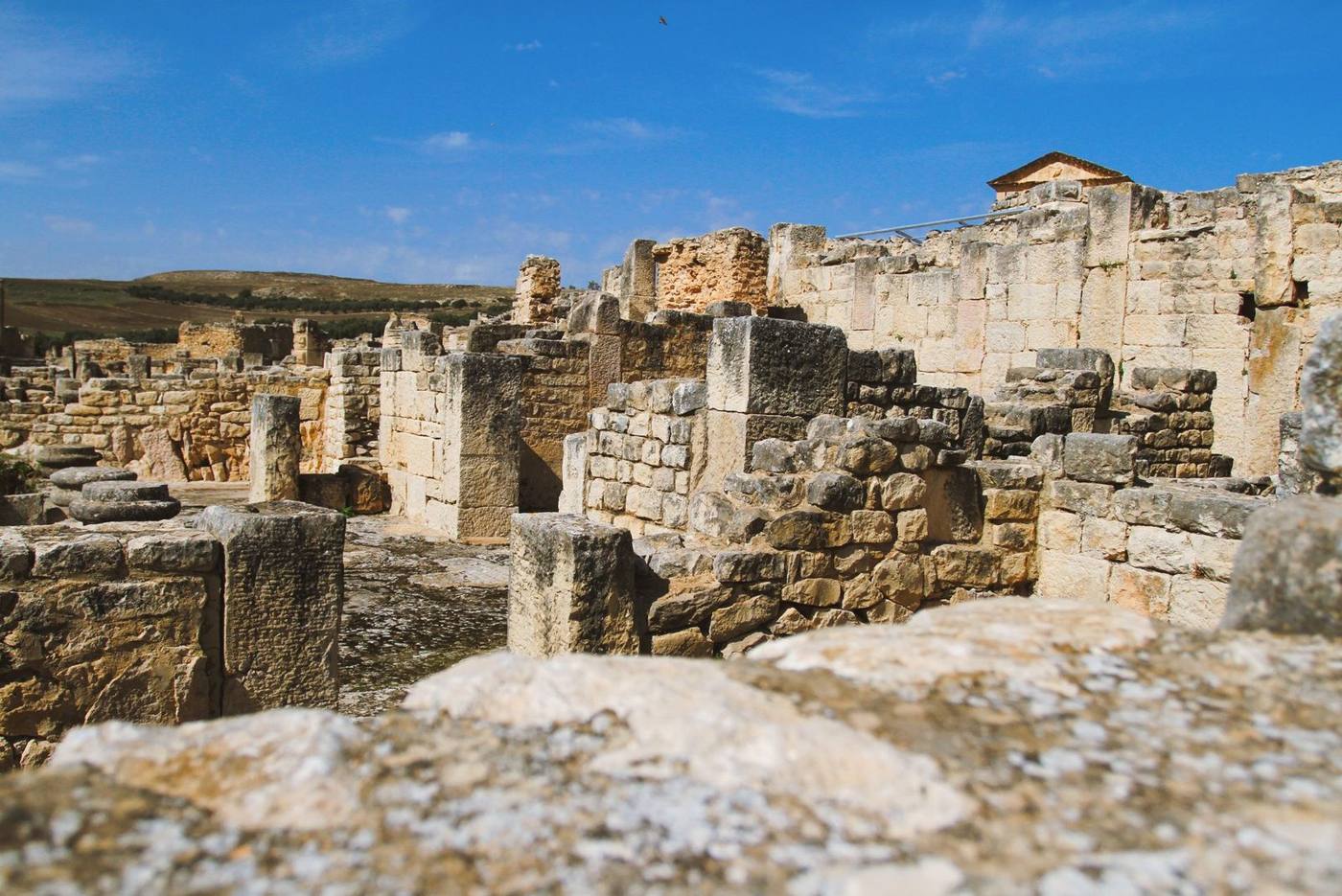
The Roman towns of the north-west among olive groves: Dougga's Capitolium and theatre on the hill, and the underground villas of Bulla Regia with mosaics still in place.
 3 daysEasy
Cap Bon
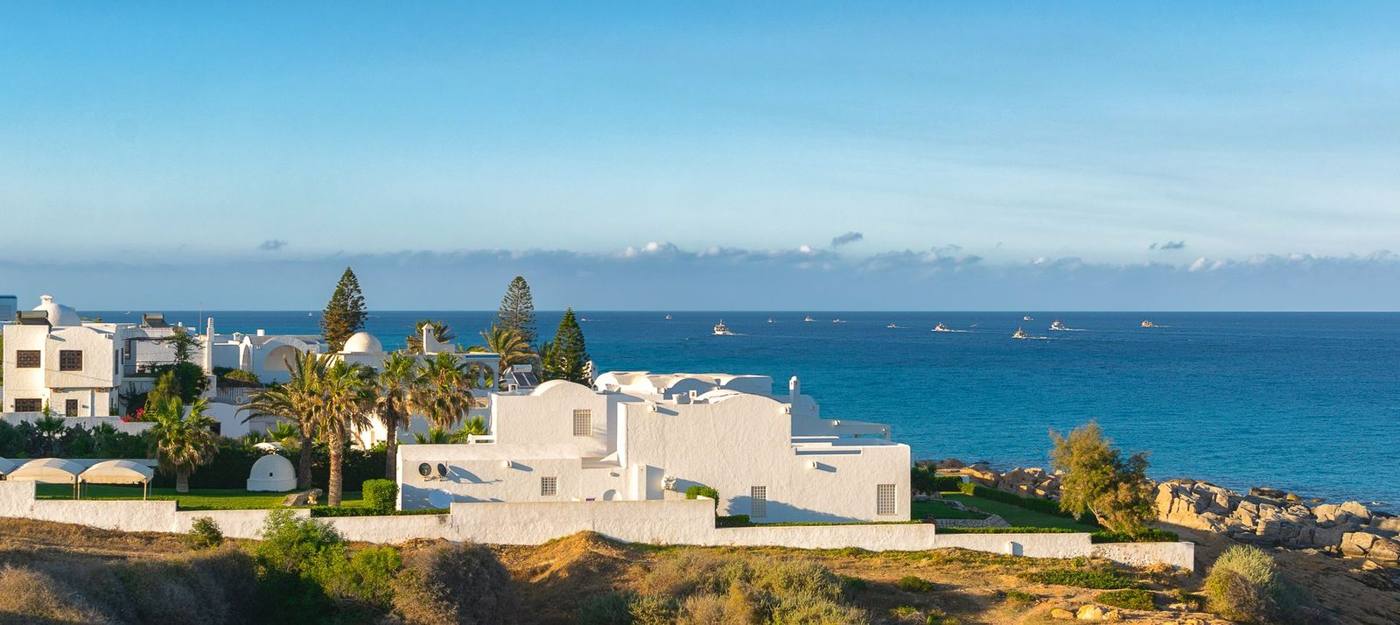
The green peninsula facing Sicily: the beaches of Kelibia below the fortress, the Punic town of Kerkouane, Nabeul with its ceramics and Hammamet with its seaside medina.
 3 daysEasy
Tabarka and Aïn Draham
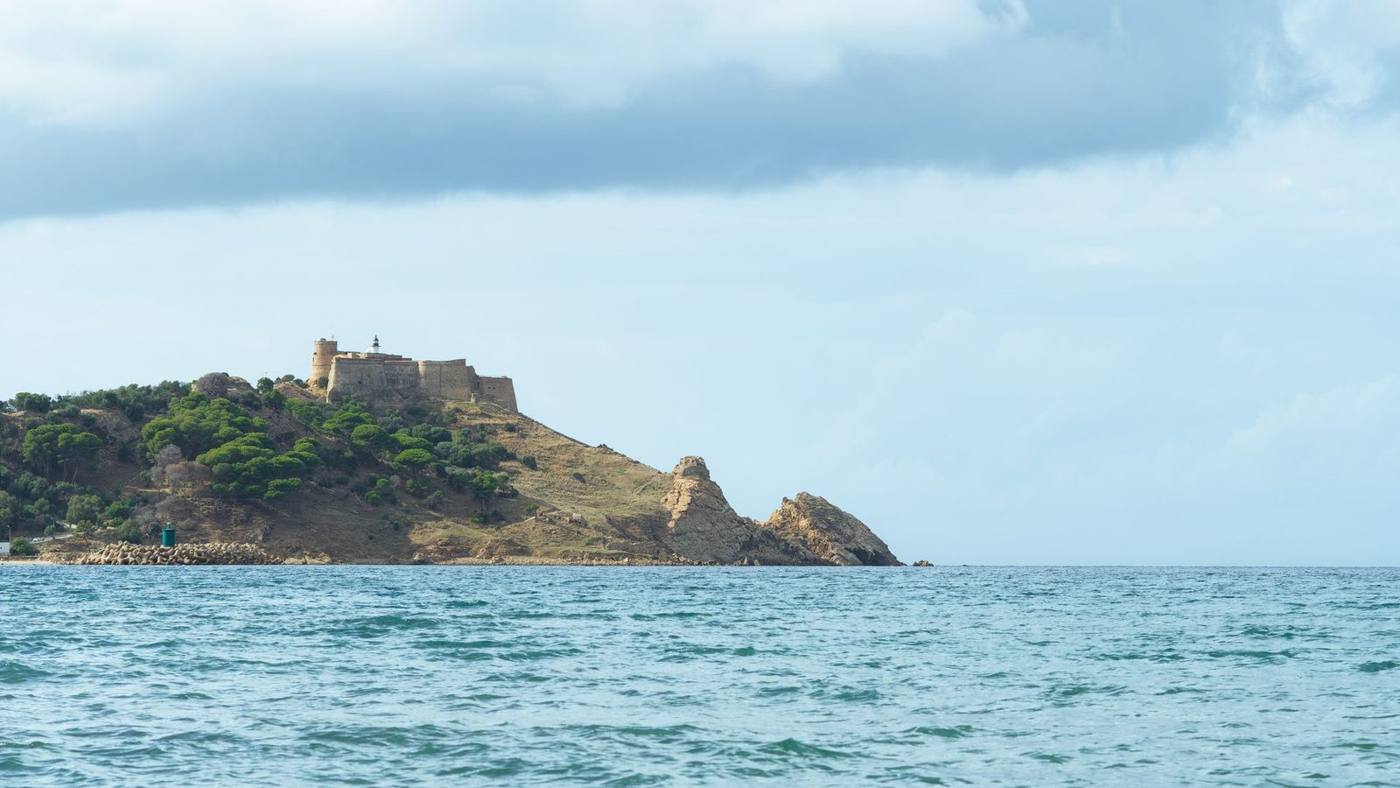
The coral coast and the cork-oak forests: the Genoese fort of Tabarka, diving among sea fans, the Aiguilles rocks and the cool of Aïn Draham in the hills.