Djerba and the south
Djerba island with the El Ghriba synagogue, the murals of Erriadh and its beaches, and the fortified ksour of Tataouine.
- Djerba
- Houmt Souk
- Erriadh
- Ghriba
- Tataouine
- Chenini
- Ksar Ouled Soltane
Day by day
- Day 1
Houmt Souk and the port
This five-day trip takes you to Djerba, the large flat island in southern Tunisia, and then into the Berber interior, among the fortified ksour of Tataouine. You will see the Ghriba synagogue, the murals of Erriadh, the villages of Chenini and Ksar Ouled Soltane and the island's beaches. You travel by car with a driver or a guide.
Before you go: Italian citizens can enter Tunisia only with a passport, with at least three months' remaining validity: an identity card is no longer enough. Tourist stays of up to 90 days need no visa. The Tunisian dinar cannot be exported: change a little at a time and keep the receipts. Other nationalities should check their own rules. Some areas on this trip are close to borders or places where the situation changes often: check your government's travel advice before booking and again before you leave.
You land at Djerba airport and head to Houmt Souk, the island's main town. The centre is a cluster of small squares and white lanes, with covered souks selling fabrics, silver jewellery, ceramics, carpets and spices.
In the afternoon walk to the port, where fishermen still use terracotta traps for octopus. Next to it stands the Borj el Kebir, the fortress by the sea built in the fifteenth century and strengthened by the Ottomans, with stone walls and views along the coast. Check prices and times.
In the evening, at the port, try grilled fish or riz djerbien, steamed rice with vegetables, meat or fish, typical of the island.
Sleep in Djerba, for four nights.
Practical tip: to feel the island's atmosphere choose a houch, a traditional Djerba house with a courtyard, rather than the large hotels of the tourist zone. Many are in quiet villages a short drive from Houmt Souk.
- Day 2
The Ghriba and the murals of Erriadh
Today you discover the historic and cultural heart of Djerba.
In the morning go to Erriadh, a village inland, home to the Ghriba synagogue. According to tradition it is one of the oldest in Africa, linked to a Jewish community that has lived on the island for many centuries. The present building is more recent, with an interior decorated with blue tiles, arches and coloured windows. Every year, in spring, it welcomes a deeply felt pilgrimage. At the entrance there are strict security checks: bring your passport, cover your shoulders and legs and take off your shoes if asked. Check prices and times.
Then walk the streets of Erriadh, where in 2014 more than a hundred artists from all over the world painted murals on the white walls of the houses. The project is called Djerbahood and turned the village into an open-air museum. Follow the lanes calmly, look at the works and respect the residents' daily life.
In the afternoon visit Guellala, in the south of the island, the potters' village, where clay has been worked for centuries. In the workshops you see the large jars and the traditional kilns.
Remember that Djerba is a UNESCO World Heritage Site for its unique way of organising the land, with scattered houses, isolated mosques, wells and gardens.
In the evening return to Houmt Souk for a walk in the souks.
Sleep in Djerba.
Practical tip: in Erriadh see the murals early in the morning, when the light is soft and the lanes are quiet. Some of the best works are on side streets, so take your time and wander.
- Day 3
Tataouine, Chenini and Ksar Ouled Soltane
Today you leave the island for a day in the Berber south, with a driver or a local guide.
Set off early in the morning and cross the causeway that links Djerba to the mainland. Then continue towards Tataouine across the plain and the first hills. The drive takes a few hours.
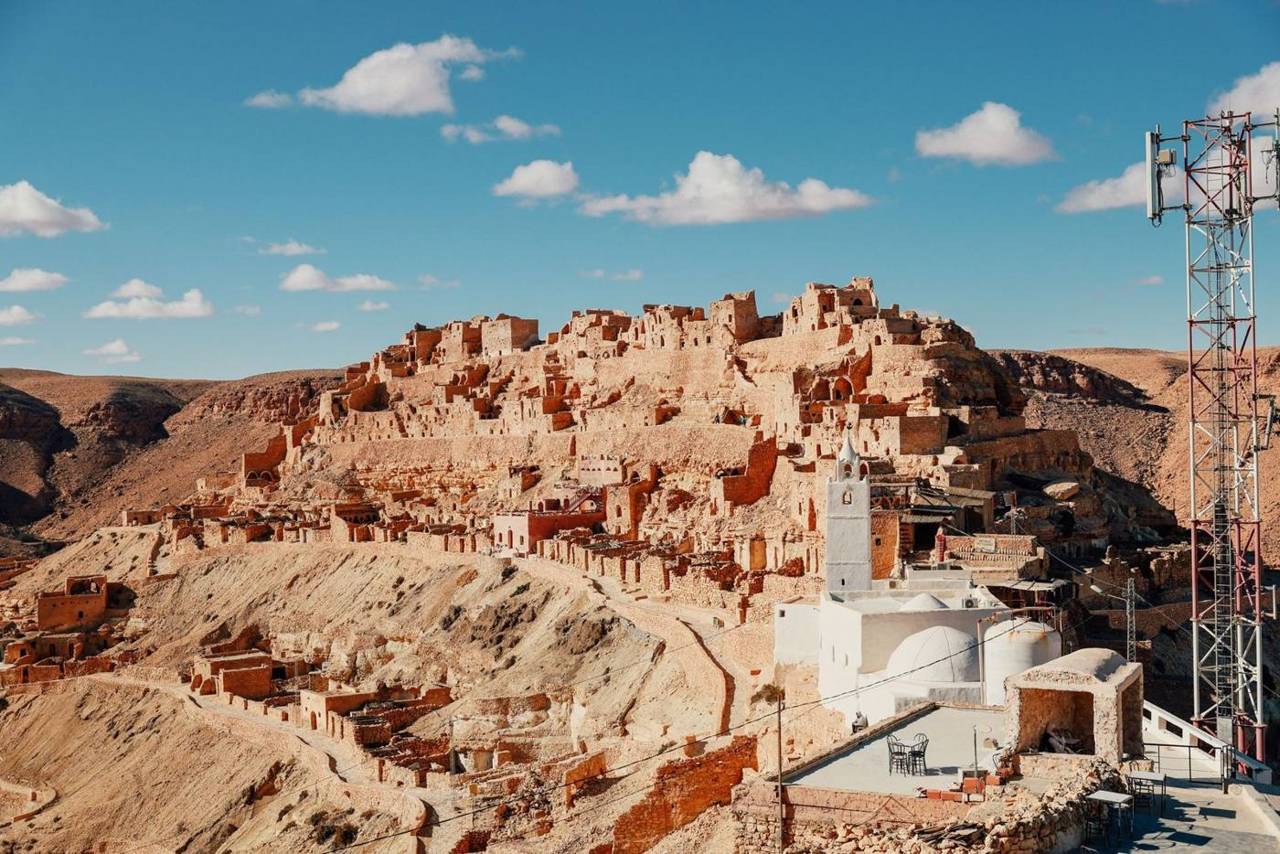
The first stop is Chenini, a Berber village built on the crest of a hill, with houses dug into the rock and granaries on several levels. At the top stands a small white mosque. Walk the paths between the houses with a village guide and enjoy the view over the valleys and other villages.
After lunch in Tataouine, the southern town that gave its name to the planet Tatooine in Star Wars, you reach Ksar Ouled Soltane. It is one of the best preserved fortified granaries in the region: the ghorfas, the vaulted rooms where tribes stored grain and oil, rise on several floors around two courtyards. Some scenes of The Phantom Menace, the first episode of the saga, were filmed right here.
In the late afternoon head back to Djerba so as to arrive before dark.
Sleep in Djerba.
Practical tip: do this day with a local guide or driver, stay on the main roads and do not travel at night; bring water and a hat, because the sun in the south is very strong. Wear sturdy shoes for the steep, uneven paths of Chenini, and keep some small notes for village guides and entry contributions.
- Day 4
Sidi Mahrez beach
Today is a day of rest by the sea, on the island's north-eastern coast.
Sidi Mahrez beach is long, with fine pale sand and shallow, calm water, perfect for children too. Along the beach there are quieter stretches and livelier ones, with umbrellas and sunbeds.
In the morning swim and sunbathe. If you like, walk along the shore towards the Ras Taguermess lighthouse, at the tip of the island, where the beach becomes wilder.
For lunch eat grilled fish or a brik, the thin crispy pastry filled with egg, tuna and parsley, eaten with your hands.
In the afternoon, if you prefer to move, hire a bicycle and ride through the olive groves and palms of the interior. You will see white mosques standing alone in the countryside, some very old, and menzels, traditional farmhouses with white walls. Djerba is flat and easy to explore by bike, but avoid the hottest hours.
At sunset watch the sky turn pink over the sea, then go back for dinner.
In the evening try mint tea with pine nuts, the typical drink Tunisians enjoy at any hour.
Sleep in Djerba.
Practical tip: in summer the sun is very strong even when it is windy: use high-factor sunscreen, wear a hat and drink plenty of water throughout the day. If you cycle, carry water and set off early or late in the afternoon.
- Day 5
Departure
Today is departure day.
If your flight is in the afternoon, take a last walk around Houmt Souk in the morning. It is the right moment for last purchases: wool rugs, blankets, ceramics from Guellala, spices and olive oil. Always bargain with a smile and without hurrying. Then stop at an open-air café for a mint tea.
Remember that the Tunisian dinar cannot be exported: before leaving spend what you have left or change it at the airport with your exchange receipts.
In five days you have seen two sides of southern Tunisia: Djerba, with Houmt Souk, the Ghriba, the murals of Erriadh, the potters of Guellala and Sidi Mahrez beach, and the Berber interior, with the village of Chenini on its ridge and the granaries of Ksar Ouled Soltane. It is an easy trip that combines the sea with an ancient culture and unique landscapes.
When to go: the best periods are from April to June and from September to October, with a warm sea, pleasant temperatures and fewer people. In July and August it is very hot, especially inland, and the island is crowded. In winter the climate is mild and perfect for sightseeing, but the sea is cool.
Practical tip: arrive at the airport early, especially in summer, when charter flights make the checks slower.
Sea and Berber culture in a few days. Djerba has a zone of large resort hotels: for atmosphere, sleep in a traditional houch. El Ghriba has strict security checks.
Before you go
- Documents and visa
- You need a passport with at least three months' remaining validity: an identity card is no longer enough. Tourist stays of up to 90 days need no visa for Italian citizens; other nationalities should check their own rules.
- Health and vaccines
- No compulsory vaccinations for travellers arriving from Europe. Rabies is increasing: keep away from stray dogs and cats and see a doctor at once if you are bitten or scratched. Drink bottled water. Emergencies: 190 ambulance, 197 police, 198 fire brigade.
- Money and payments
- Tunisian dinar, which cannot be exported: change a little at a time and keep your exchange receipts. Cards work in cities and large hotels; in souks and villages you need cash.
- Power sockets
- Type C and E, 230 volts: you need an adapter for British plugs.
- Time zone
- UTC+1 all year.
- Safety
- The UK and Italy advise against the areas close to the borders with Algeria and Libya, the mountain areas of Kasserine, El Kef and Sidi Bouzid governorates, where there are military operations, and the military zone in the southern Sahara. In the desert, go only on organised trips, with a 4x4 and a guide. Official advice: GOV.UK.
Information checked in November 2026 for Italian and EU citizens. Rules change: always check before you travel.
Variations
In three days you can stick to Djerba, with Houmt Souk, the Ghriba, Erriadh and a beach day, without the trip to the south.
In eight days you can add Matmata, Douz and the oases of Tozeur, with a local guide.
Frequently asked questions
Can I visit the Ghriba synagogue?
Yes, but there are strict security checks. Bring your passport, dress modestly and check prices and times before you go.
What is Djerbahood?
A 2014 project: more than a hundred artists from all over the world painted murals on the houses of the village of Erriadh, turning it into an open-air museum.
Can I go to Tataouine on my own?
It is better to go with a local guide or driver, staying on the main roads and travelling only by day.
Indicative itinerary written by World Atlas. Before booking, check timetables, seasonal openings, documents and safety.
 3 daysEasy
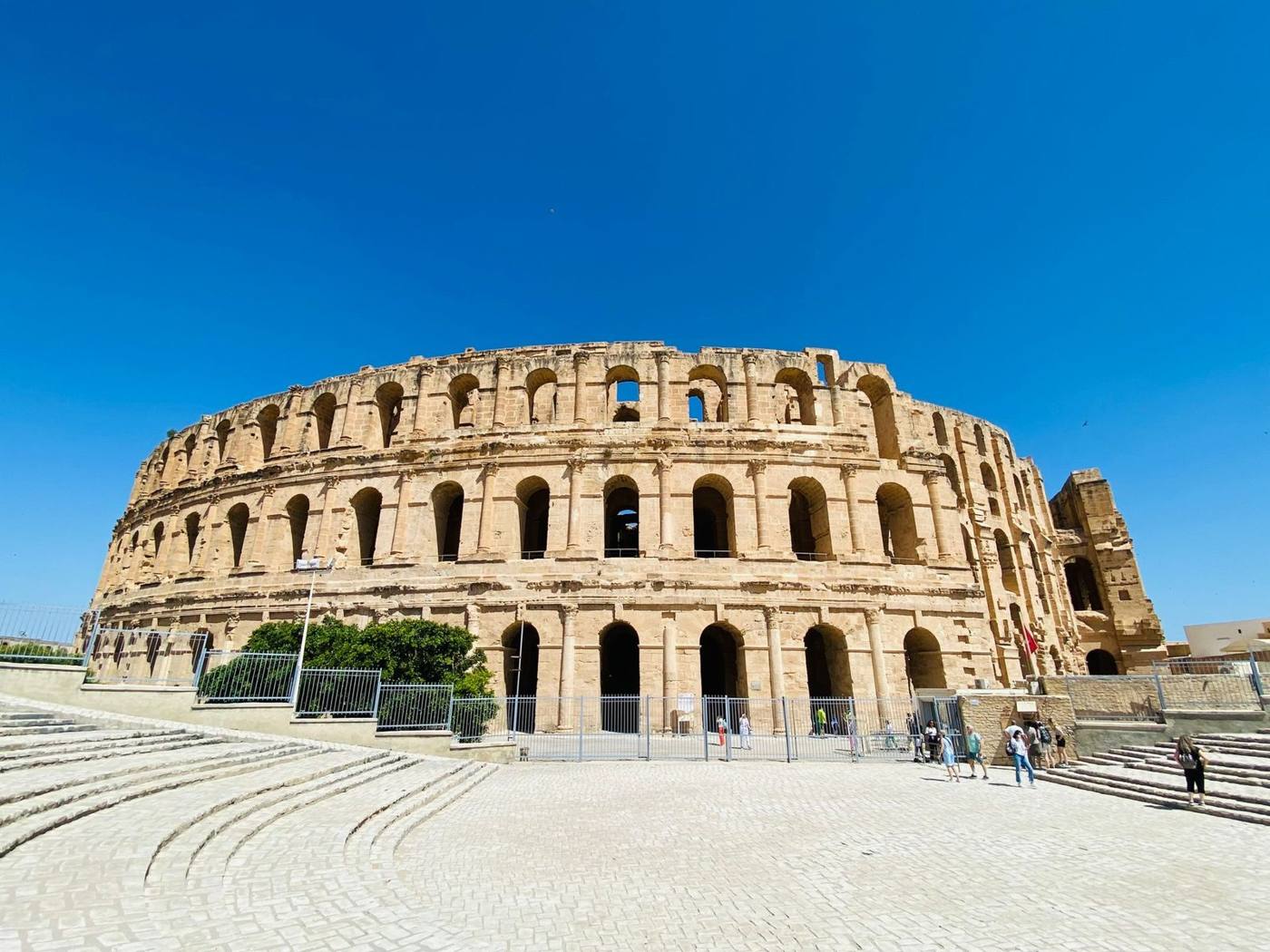
Kairouan and El Jem
Islam's fourth holy city with its Great Mosque and Aghlabid basins, and the Roman amphitheatre of El Jem, one of the best preserved in the world.
 3 daysEasy
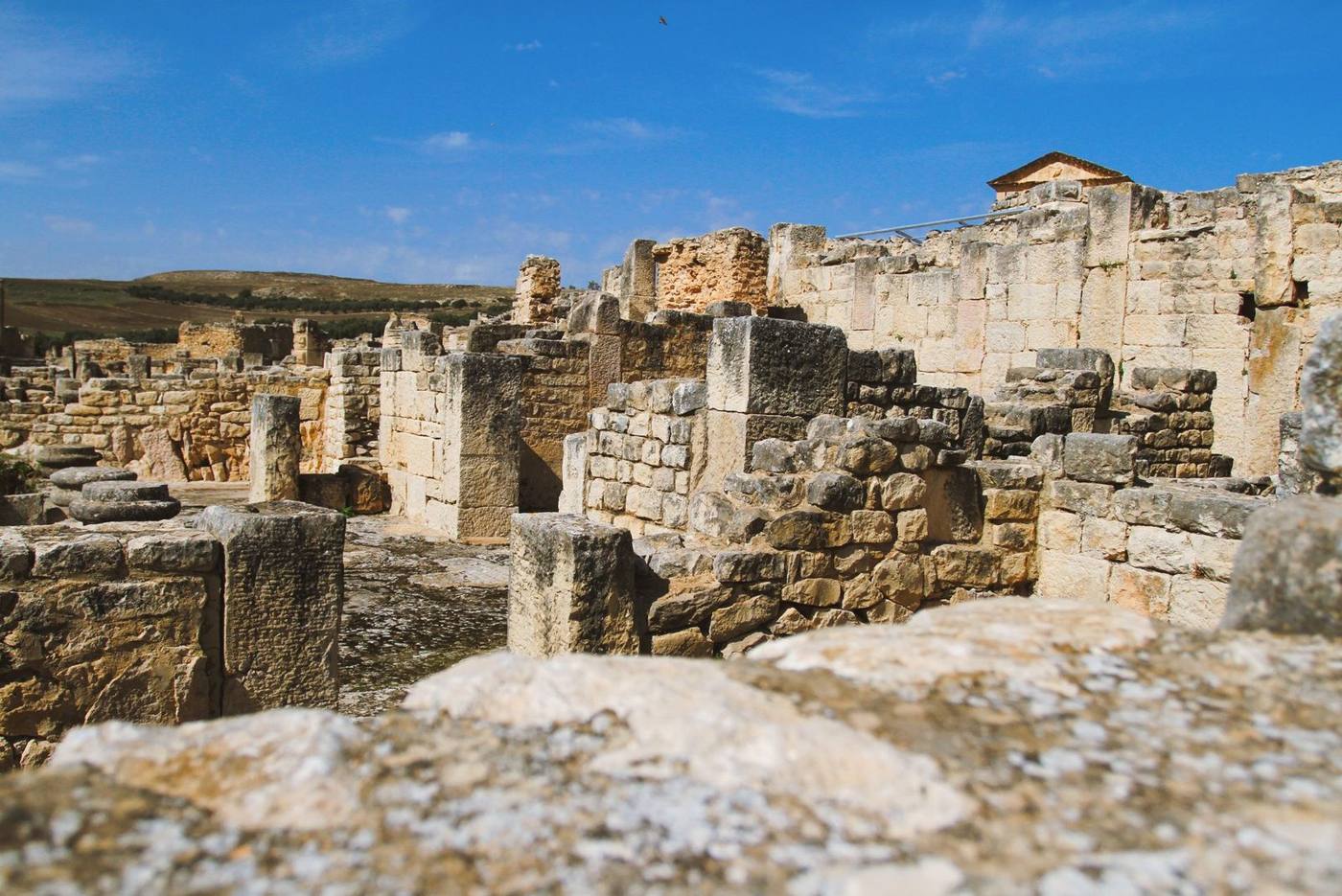
Dougga and Bulla Regia
The Roman towns of the north-west among olive groves: Dougga's Capitolium and theatre on the hill, and the underground villas of Bulla Regia with mosaics still in place.
 3 daysEasy
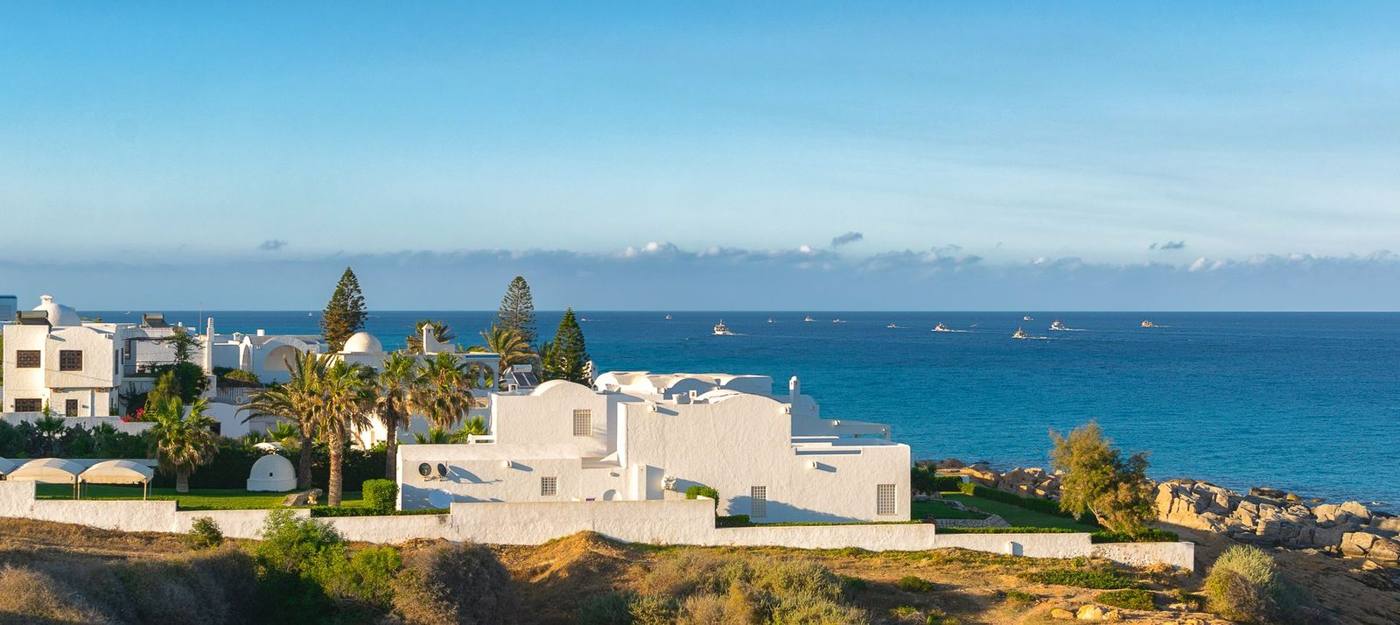
Cap Bon
The green peninsula facing Sicily: the beaches of Kelibia below the fortress, the Punic town of Kerkouane, Nabeul with its ceramics and Hammamet with its seaside medina.