Sukhothai, Si Satchanalai and Kamphaeng Phet
The first capitals of the Thai kingdom, a UNESCO World Heritage site: the historical parks of Sukhothai, to explore by bicycle among Buddhas and lotus ponds, Si Satchanalai among the trees and Kamphaeng Phet with laterite temples in the forest.
- Sukhothai
- Si Satchanalai
- Kamphaeng Phet
Day by day
- Day 1
Sukhothai Historical Park, the central zone by bike
To enter Thailand you need a passport valid for at least six months and must complete the online Thailand Digital Arrival Card, TDAC, in the three days before arrival; EU citizens need no visa for tourist stays of up to thirty days. Check the rules for your nationality.
Sukhothai, in north-central Thailand, was in the thirteenth century the capital of the first great Thai kingdom, whose name means the dawn of happiness. Here the Thai alphabet was born, traditionally invented by King Ramkhamhaeng, along with an elegant style of Buddhist art, with gently smiling Buddhas and the walking Buddha. The ruins of Sukhothai, together with those of Si Satchanalai and Kamphaeng Phet, are a UNESCO World Heritage site. It is about an hour and a quarter by air from Bangkok, or six or seven hours by bus.
In the morning rent a bicycle at the entrance to the Historical Park in the old city, about twelve kilometres from the new town, and ride through the central zone inside the ancient walls, among lotus ponds, lawns and trees. The main temple is Wat Mahathat, the temple of the great relic, with its central chedi shaped like a lotus bud, surrounded by rows of seated and standing Buddhas among ruined columns. Then visit Wat Sri Sawai, with three Khmer-style towers, and Wat Trapang Ngoen, on an island in a pond.
In the afternoon visit the Ramkhamhaeng National Museum at the park entrance, with bronze statues and a copy of King Ramkhamhaeng's stele, the oldest inscription in the Thai language.
In the evening try Sukhothai noodles, in broth with pork, green beans and peanuts.
Practical tip: visit the park at dawn or sunset, when the light is finest and it is cooler.
- Day 2
The northern and western zones of Sukhothai and Wat Si Chum
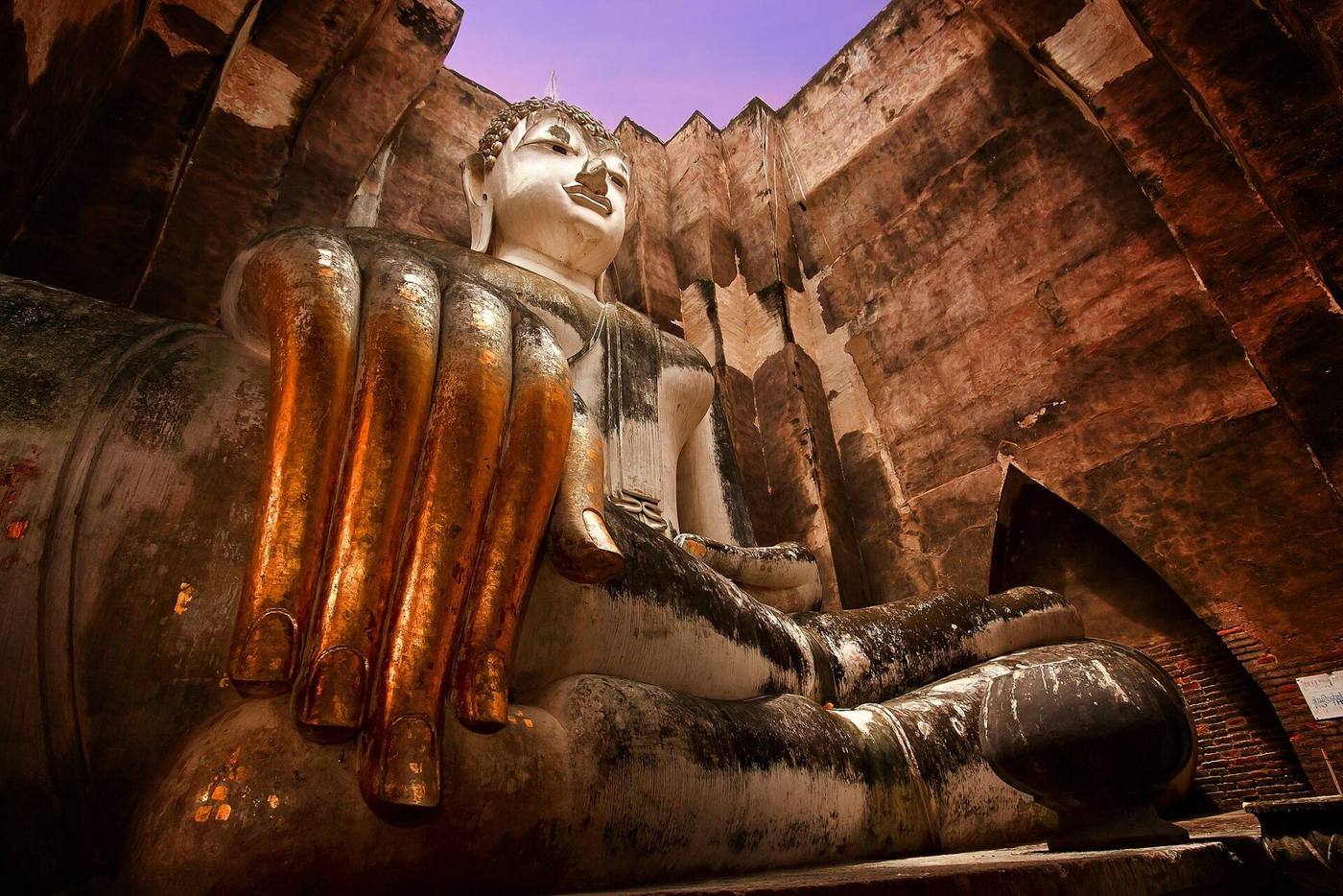
Early in the morning cycle to the northern zone of the park, outside the walls, among fields and ponds. The most spectacular temple is Wat Si Chum: inside a roofless square brick building sits an enormous Buddha about fifteen metres tall, called Phra Achana, who seems to look at visitors through a narrow vertical opening in the wall. His long golden fingers are worn by the gold leaf the faithful apply as an offering. Tradition says that in the past a man hidden on a staircase inside the wall spoke through a slit, making people believe the Buddha was speaking. Nearby is Wat Phra Phai Luang, one of the oldest temples, from the Khmer period.
In the afternoon reach the western zone, wilder, in the forest on the hills. Climb on foot along a path of stone slabs to Wat Saphan Hin, the temple of the stone bridge, on a hilltop, where a large standing Buddha about twelve metres tall looks towards the old city with a raised hand. From the hill you see the whole plain.
In the evening, if you travel in November at full moon, attend Loy Krathong, the festival of lights on water, which tradition says was born in Sukhothai: small boats of banana leaves with candles, incense and flowers are floated on the ponds, and the historical park lights up with lamps and fireworks.
Practical tip: in temples cover shoulders and knees, and do not climb on statues or ruins.
- Day 3
Si Satchanalai and the ceramic kilns
In the morning drive or take a bus north to Si Satchanalai, about fifty-five kilometres from Sukhothai, the kingdom's second city, often home to the crown prince. The historical park is far less visited than Sukhothai, set in greenery along the Yom River among huge trees and hills, with a peaceful and slightly mysterious atmosphere.
The most famous temple is Wat Chang Lom, the temple surrounded by elephants: a large bell-shaped chedi on a square base where thirty-nine stone elephants seem to carry the monument on their backs. Then visit Wat Chedi Chet Thaeo, with dozens of small chedis of different shapes that perhaps held the ashes of members of the royal family, and Wat Khao Phanom Phloeng, on a hilltop, reached by a laterite stairway.
In the afternoon visit the old ceramic kilns of Ban Ko Noi, a few kilometres away, where between the fourteenth and sixteenth centuries Sawankhalok ware was made, glazed in celadon green and exported all over Asia, as far as Japan, the Philippines and Indonesia. A small centre displays excavated kilns, with hundreds of plates and jars still inside, as they were left centuries ago.
In the evening return to Sukhothai.
Practical tip: Si Satchanalai too is easy to explore by bicycle, rented at the entrance; bring plenty of water.
- Day 4
Kamphaeng Phet and the return
In the morning drive south-west for about an hour and a half to Kamphaeng Phet, whose name means diamond wall, a fortified city on the Ping River that guarded the border of the Sukhothai kingdom and later of Ayutthaya. It is the least visited of the three historic cities, and you are often almost alone among the ruins.
The historical park has two zones. Inside the walls, along the river, are the main temples, such as Wat Phra Kaew, with Buddha statues in laterite, a red porous stone worn by time, which has given the faces a mysterious expression. The finest zone, however, is outside the walls, called Aranyik, the forest zone, where monks lived in meditation in the woods: the temples are scattered among huge trees, with moss-covered seated and standing Buddhas. The most famous is Wat Chang Rob, on a small hill, with a large chedi whose base is surrounded by sixty-eight elephants of laterite and stucco, some still decorated. There is also Wat Phra Non, with great laterite columns, and Wat Phra Si Iriyabot, with remains of Buddhas in the four postures: standing, seated, reclining and walking.
In the afternoon return to Sukhothai for the flight to Bangkok, or reach Phitsanulok, about an hour and a half from Sukhothai, for the train.
Things to take home: Sawankhalok ceramics, Si Satchanalai textiles woven with gold thread, and silver jewellery.
Practical tip: check your government's travel advice before leaving.
For history lovers; it combines well with Bangkok and Chiang Mai. Explore at dawn or sunset because of the heat. In November, during the Loy Krathong festival, Sukhothai is lit up and crowded. Since 15 September 2026 Italians can enter without a visa for tourism for up to 30 days (previously 60), and the Thailand Digital Arrival Card (TDAC) must be completed online before every arrival.
Before you go
- Documents and visa
- Passport valid for at least six months. Since 15 September 2026 many nationalities, including most EU citizens, enter without a visa for tourism for up to 30 days. Before each entry, within the three days beforehand, the no-cost Thailand Digital Arrival Card (TDAC) must be completed online on the official website.
- Health and vaccines
- No vaccines required arriving from Europe; ask your doctor about hepatitis A and typhoid. Dengue is present: use repellent. Do not drink tap water. Health insurance recommended. Emergencies: 191 police, 1669 ambulance, 1155 tourist police.
- Money and payments
- Baht. Cards accepted in cities and hotels; markets and small places need cash. ATMs charge a flat fee for withdrawals with foreign cards.
- Power sockets
- Types A, B, C and O, 220 volts: bring a universal adapter.
- Time zone
- UTC+7, no daylight saving time.
- Safety
- A safe country for travellers. Avoid the southernmost provinces near Malaysia and the border strip with Cambodia. Beware of tuk-tuk and gem scams, and of scooter traffic. Official advice: GOV.UK.
Information checked in November 2026 for Italian and EU citizens. Rules change: always check before you travel.
Variations
In 2 days: the central zone of Sukhothai on day one, Wat Si Chum and Si Satchanalai on day two.
In 8 days: combine with Ayutthaya and Bangkok, or continue to Lampang and Chiang Mai.
Frequently asked questions
What do I need to enter Thailand?
A passport valid for at least six months and the TDAC digital arrival card, completed online in the three days before arrival; EU citizens need no visa for up to thirty days. Check the rules for your nationality.
How do I get around Sukhothai Historical Park?
By bicycle, rented at the entrance: the park is large and the temples are far apart.
When is Loy Krathong celebrated?
On the full-moon night of the twelfth month of the Thai calendar, usually in November; in Sukhothai the festival lasts several days.
Indicative itinerary written by World Atlas. Before booking, check timetables, seasonal openings, documents and safety.
 8 daysEasy
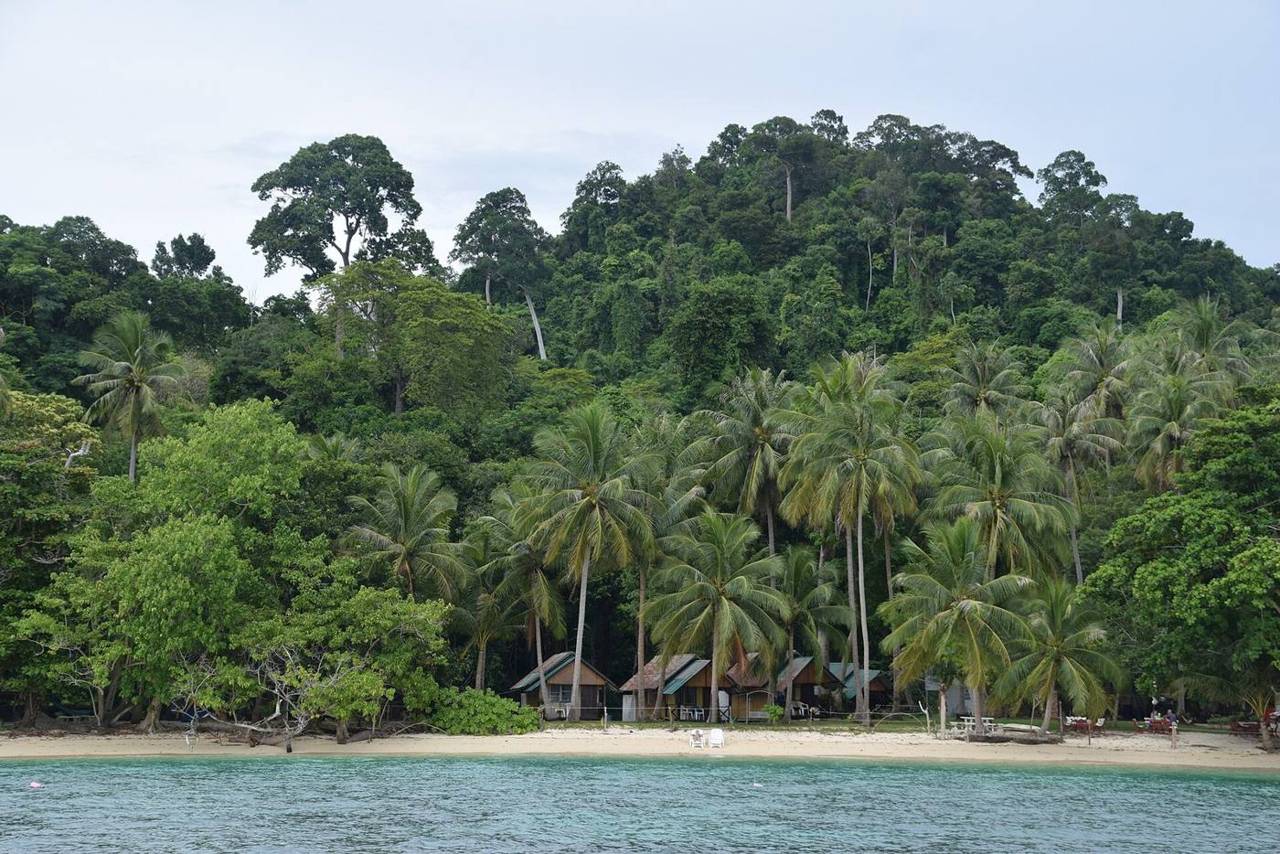
The Trang Islands and Koh Lipe
The quietest islands of the Andaman Sea: Koh Mook with the Emerald Cave reached by swimming, Koh Kradan with its white sand, Koh Libong and its dugongs, then Koh Lipe in Tarutao Marine Park with its coral reef.
 5 daysModerate
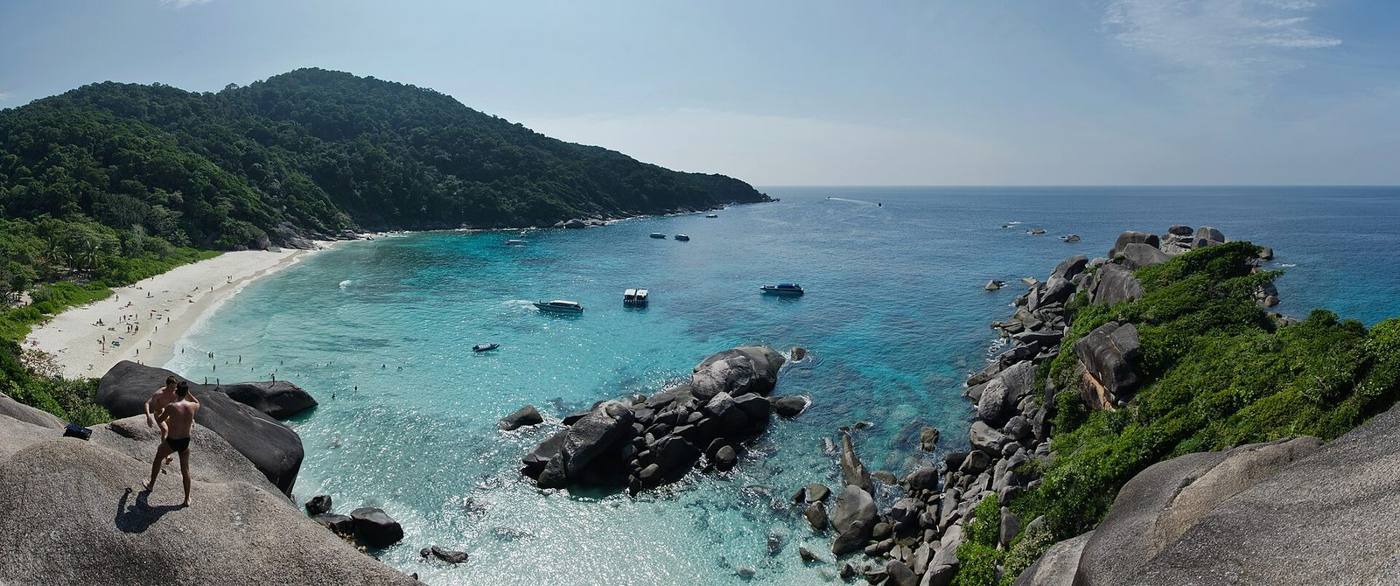
Diving the Similan Islands
A four-day liveaboard in the Similan Islands National Park and to Koh Bon and Koh Tachai: granite boulders, corals, manta rays and, with luck, whale sharks, with Richelieu Rock as the most famous dive.
 4 daysEasy
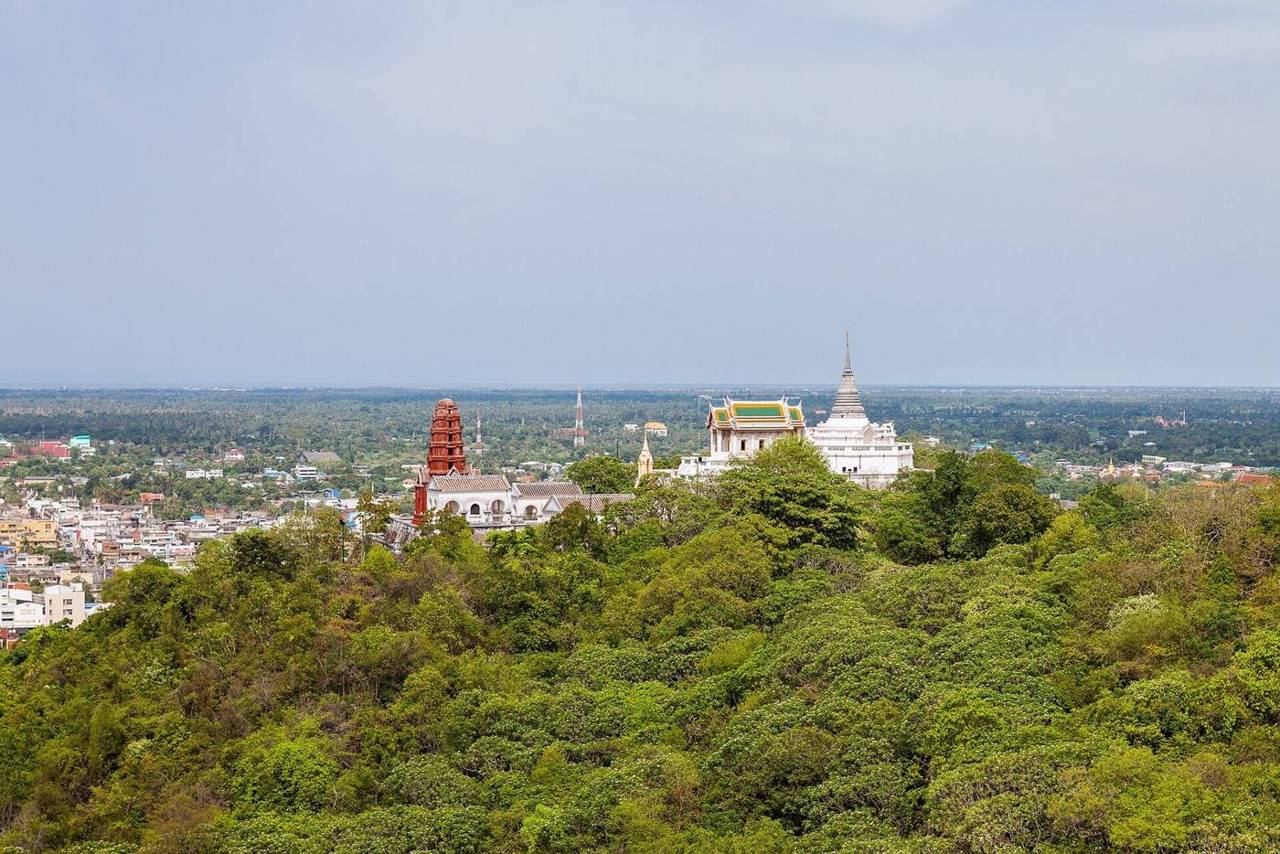
Hua Hin and Phetchaburi
The Thais' own seaside, three hours from Bangkok: Hua Hin with its wooden station and night market, Phetchaburi with the hilltop royal palace of Phra Nakhon Khiri and the Tham Khao Luang cave with Buddhas in the light.