Diving the Similan Islands
A four-day liveaboard in the Similan Islands National Park and to Koh Bon and Koh Tachai: granite boulders, corals, manta rays and, with luck, whale sharks, with Richelieu Rock as the most famous dive.
- Khao Lak
- Similan Islands
- Koh Bon
- Koh Tachai
- Richelieu Rock
Day by day
- Day 1
Khao Lak and boarding in the evening
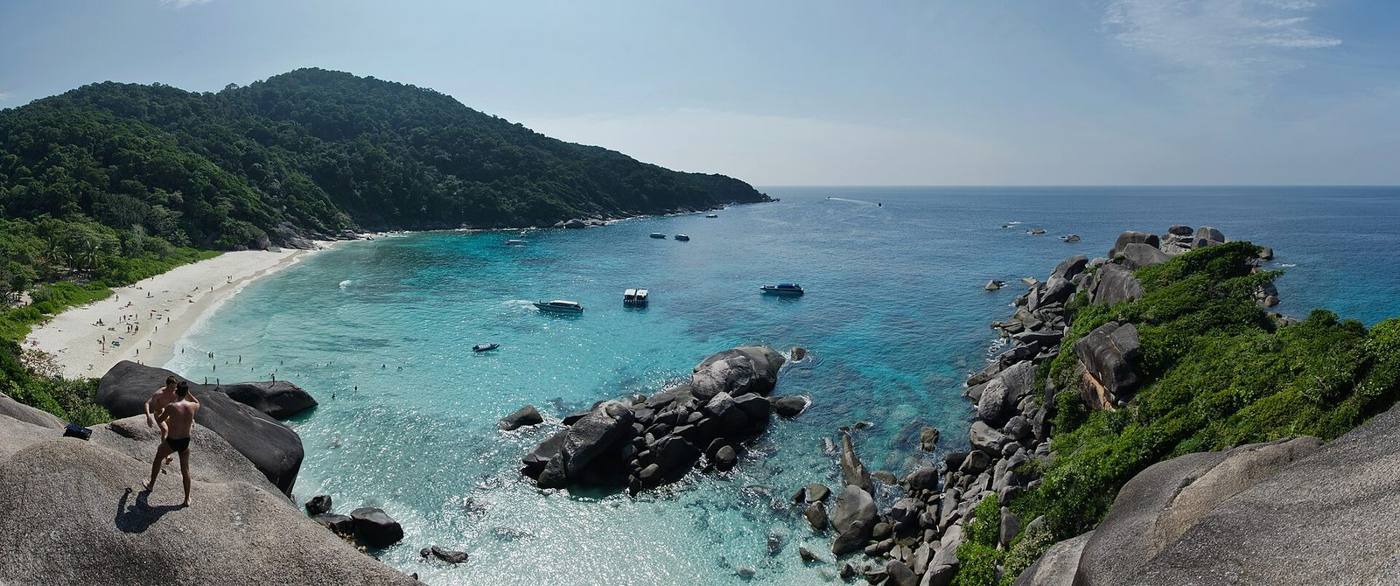
The Similan Islands are a small archipelago of granite islands in the Andaman Sea, about seventy kilometres off Thailand's west coast, protected as a marine national park. They are considered among the best diving spots in Southeast Asia: clear water, huge underwater granite boulders, hard and soft corals, walls of sea fans and a great variety of fish, with the chance to meet manta rays and whale sharks. The best way to see them is a four-night diving cruise, sleeping on board, called a liveaboard.
The starting point is Khao Lak, a resort on the coast of Phang Nga province, about an hour and a half north of Phuket airport. It is quiet, with long beaches and forest running down to the sea.
In 2004 the tsunami hit this coast hard, with thousands of victims. In town you can visit the police boat memorial, a patrol boat carried almost two kilometres inland by the wave, now left in place as a reminder, next to a small museum.
In the afternoon, stop at the dive centre to check documents, certification and equipment. Then, in the evening, board at the port. After the safety briefing and dinner, the boat sails for the islands and travels overnight.
Practical tip: bring your certification card, logbook and insurance that covers diving. Seasickness is possible: if you suffer from it, ask your doctor for a remedy before leaving.
- Day 2
Diving the Similans
At dawn the boat is already anchored among the Similan Islands. The day follows the rhythm of the cruise: early wake-up, briefing, dive, breakfast, rest, another dive, lunch, an afternoon dive and often one at sunset or at night. In total there are usually four dives a day.
The Similan sites are very varied. On the east side of the islands there are gentle slopes with hard coral gardens, clownfish in anemones, Napoleon wrasse, turtles and schools of colourful fish. On the west side, by contrast, you swim among huge granite boulders forming arches, canyons and swim-throughs, with sea fans and soft corals of every colour. Some of the most famous sites are Elephant Head Rock, a group of large boulders with passages between them, East of Eden, with walls covered in coral, and Christmas Point, with its rock arches.
Between dives the boat approaches one of the islands, where you can land on beaches of dazzling white sand, such as Donald Duck Bay on island number 8, and climb to the sail-shaped rock for the view over the archipelago.
In the evening, at sunset, relax on deck, with the sea all around and the islands on the horizon.
Practical tip: the park has strict rules: do not touch corals, do not feed fish, do not collect shells. Some sites close in rotation to protect the reefs.
- Day 3
Koh Bon and Koh Tachai
During the night the boat sails north to two isolated islands in the park, Koh Bon and Koh Tachai, famous for encounters with the large animals of the open sea.
Koh Bon is a rocky island with an underwater ridge dropping into the depths, swept by currents. Here, especially between February and April, giant manta rays pass by, coming to be cleaned by cleaner fish and to feed on plankton. Watching them glide overhead, with wings up to four or five metres wide, is one of the most thrilling moments of any dive. On the ridge you also see leopard sharks, rays and turtles.
Koh Tachai, further north, has an underwater pinnacle surrounded by large schools of trevally, barracuda and fusiliers, and whale sharks sometimes pass. Koh Tachai's white sand beach is one of the most beautiful in the Andaman Sea.
Today's dives are more demanding because of the currents: the guides explain how to descend, how to stay close to the bottom and how to ascend safely.
In the evening, on a night dive, you see octopus, lobsters, shrimps and parrotfish sleeping in their mucus cocoons.
Practical tip: at the Similans and Koh Bon the currents can be strong. Always follow the guide and use a surface marker buoy, usually provided by the boat.
- Day 4
Richelieu Rock
Today the boat reaches Richelieu Rock, in the nearby Surin Islands National Park, a horseshoe-shaped rock pinnacle rising almost to the surface in the open sea. It is considered the finest dive site in Thailand, and it was said to be the favourite of the famous underwater explorer Jacques Cousteau among the sites of the area.
The pinnacle is covered in purple and pink soft corals, anemones and sea fans. It is famous for small and rare life: seahorses, frogfish, harlequin shrimps, ghost pipefish and nudibranchs. But also for large animals: between February and April, with a little luck, whale sharks pass by, sometimes circling the rock for long minutes.
Usually two or three dives are made at Richelieu Rock, because each time you discover new corners. Between dives, from the boat, you sometimes see dolphins.
In the afternoon the boat starts the journey back towards the coast, with a last dive on the way, often at a calmer site.
In the evening, on deck, the group and the guides celebrate the last night of the cruise, watching the stars in the middle of the sea.
Practical tip: at Richelieu Rock visibility and currents change a lot from day to day. To photograph small life, bring a torch and move slowly, without touching.
- Day 5
Back to Khao Lak
On your last morning the boat reaches Khao Lak harbour in the late morning. After a last breakfast on board, you disembark and return to the dive centre to collect your logbook with the recorded dives.
Remember that after a series of dives you must not fly for at least eighteen to twenty-four hours. For this reason it is best to stay at least one night in Khao Lak before your flight.
In the afternoon, relax on one of Khao Lak's long, quiet beaches, or visit Khao Lak-Lam Ru National Park, on the hill above the coast, with a forest trail to a small hidden beach and a waterfall.
If you have a few more days, from Khao Lak you can visit Khao Sok National Park, about an hour and a half inland, with Thailand's oldest rainforest and Cheow Lan lake, surrounded by limestone mountains, where you sleep in floating houses. Or you can go to Phang Nga Bay, with its rock islands rising from the water.
In the evening, in Khao Lak, try southern Thai cooking, spicier than that of the centre, with yellow curry, fish and seafood.
Practical tip: the Similan park usually opens from mid-October to mid-May, with a limited number of visitors per day: out of season it is closed. Since 15 September 2026 Italian citizens can enter Thailand without a visa for up to 30 days, and before every arrival the TDAC must be completed online.
For certified divers with some experience. The park usually opens from mid-October to mid-May, with a limited number of visitors per day; out of season it is closed. Some sites close in rotation to protect the corals. Since 15 September 2026 Italians can enter without a visa for tourism for up to 30 days (previously 60), and the Thailand Digital Arrival Card (TDAC) must be completed online before every arrival.
Before you go
- Documents and visa
- Passport valid for at least six months. Since 15 September 2026 many nationalities, including most EU citizens, enter without a visa for tourism for up to 30 days. Before each entry, within the three days beforehand, the no-cost Thailand Digital Arrival Card (TDAC) must be completed online on the official website.
- Health and vaccines
- No vaccines required arriving from Europe; ask your doctor about hepatitis A and typhoid. Dengue is present: use repellent. Do not drink tap water. Health insurance recommended. Emergencies: 191 police, 1669 ambulance, 1155 tourist police.
- Money and payments
- Baht. Cards accepted in cities and hotels; markets and small places need cash. ATMs charge a flat fee for withdrawals with foreign cards.
- Power sockets
- Types A, B, C and O, 220 volts: bring a universal adapter.
- Time zone
- UTC+7, no daylight saving time.
- Safety
- A safe country for travellers. Avoid the southernmost provinces near Malaysia and the border strip with Cambodia. Beware of tuk-tuk and gem scams, and of scooter traffic. Official advice: GOV.UK.
Information checked in November 2026 for Italian and EU citizens. Rules change: always check before you travel.
Variations
In 3 days: two day trips by speedboat from Khao Lak to the Similans, also for snorkelling.
In 9 days: after the cruise, add Khao Sok and Cheow Lan lake, then Phang Nga Bay.
Frequently asked questions
Do I need a certification?
Yes: the cruise requires at least an entry-level certification and some experience, because some sites have currents. Non-divers can take day trips for snorkelling.
When can you see mantas and whale sharks?
Most often between February and April, especially at Koh Bon, Koh Tachai and Richelieu Rock. Encounters are never guaranteed.
When is the park open?
Usually from mid-October to mid-May, with a limited number of visitors per day. Out of season it is closed because of the monsoon and to protect the environment.
Indicative itinerary written by World Atlas. Before booking, check timetables, seasonal openings, documents and safety.
 4 daysEasy
Hua Hin and Phetchaburi
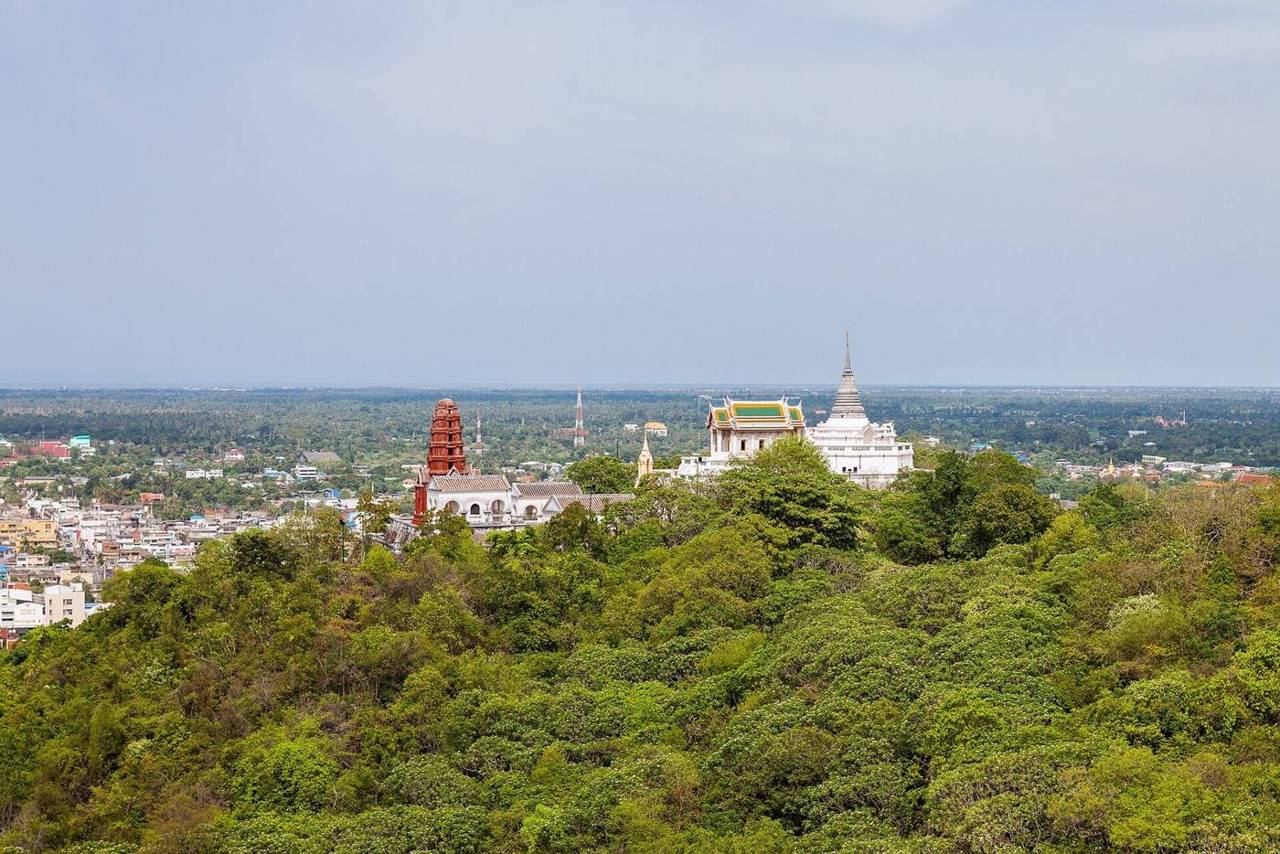
The Thais' own seaside, three hours from Bangkok: Hua Hin with its wooden station and night market, Phetchaburi with the hilltop royal palace of Phra Nakhon Khiri and the Tham Khao Luang cave with Buddhas in the light.
 5 daysModerate
Loei, Chiang Khan and Phu Kradueng
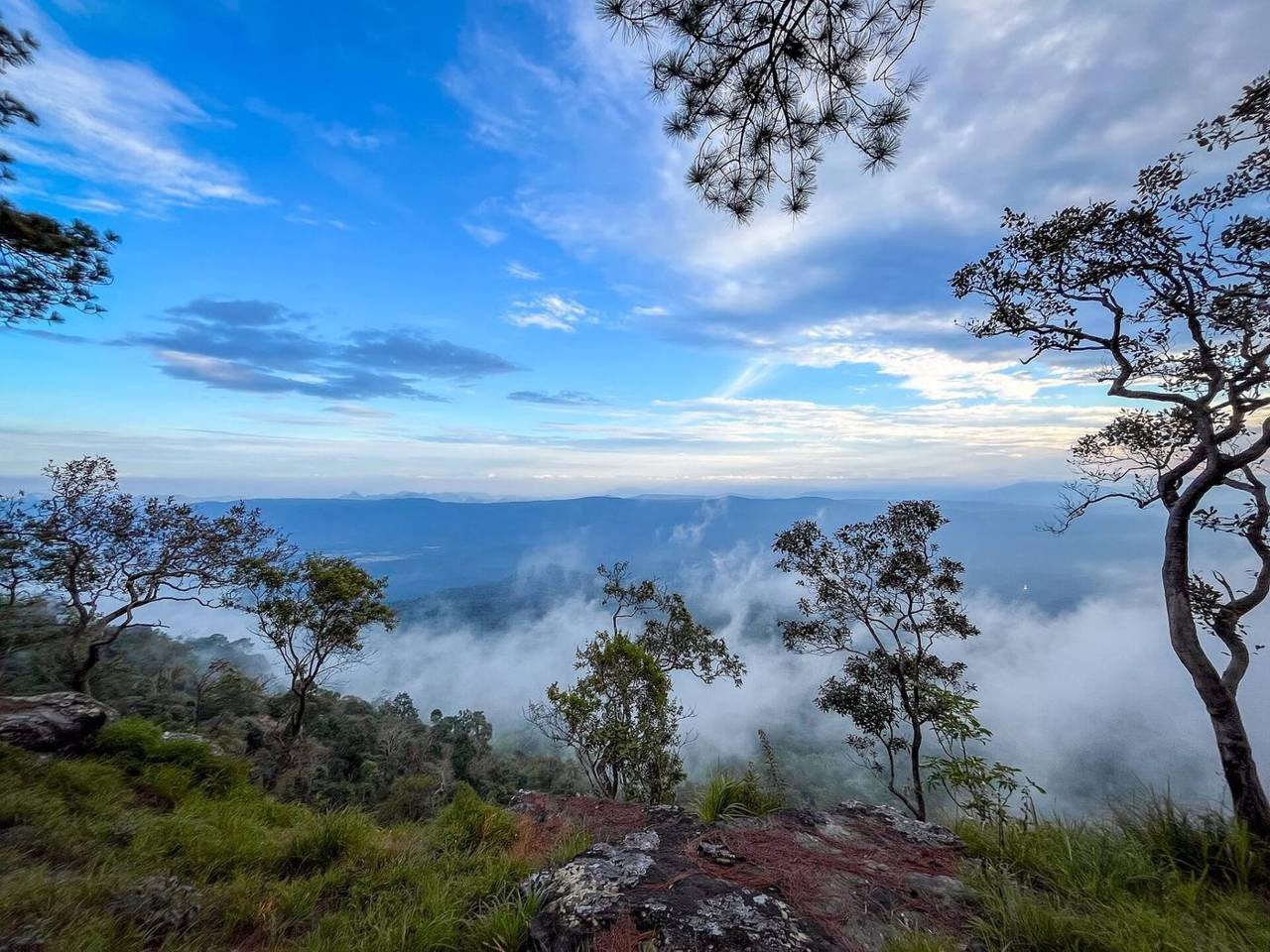
Mountain Isan: the walk up to the Phu Kradueng plateau among pines and waterfalls, Chiang Khan with wooden houses on the Mekong and morning mist, and Phu Ruea park with its seas of clouds.
 4 daysEasy
Koh Samet and Chanthaburi
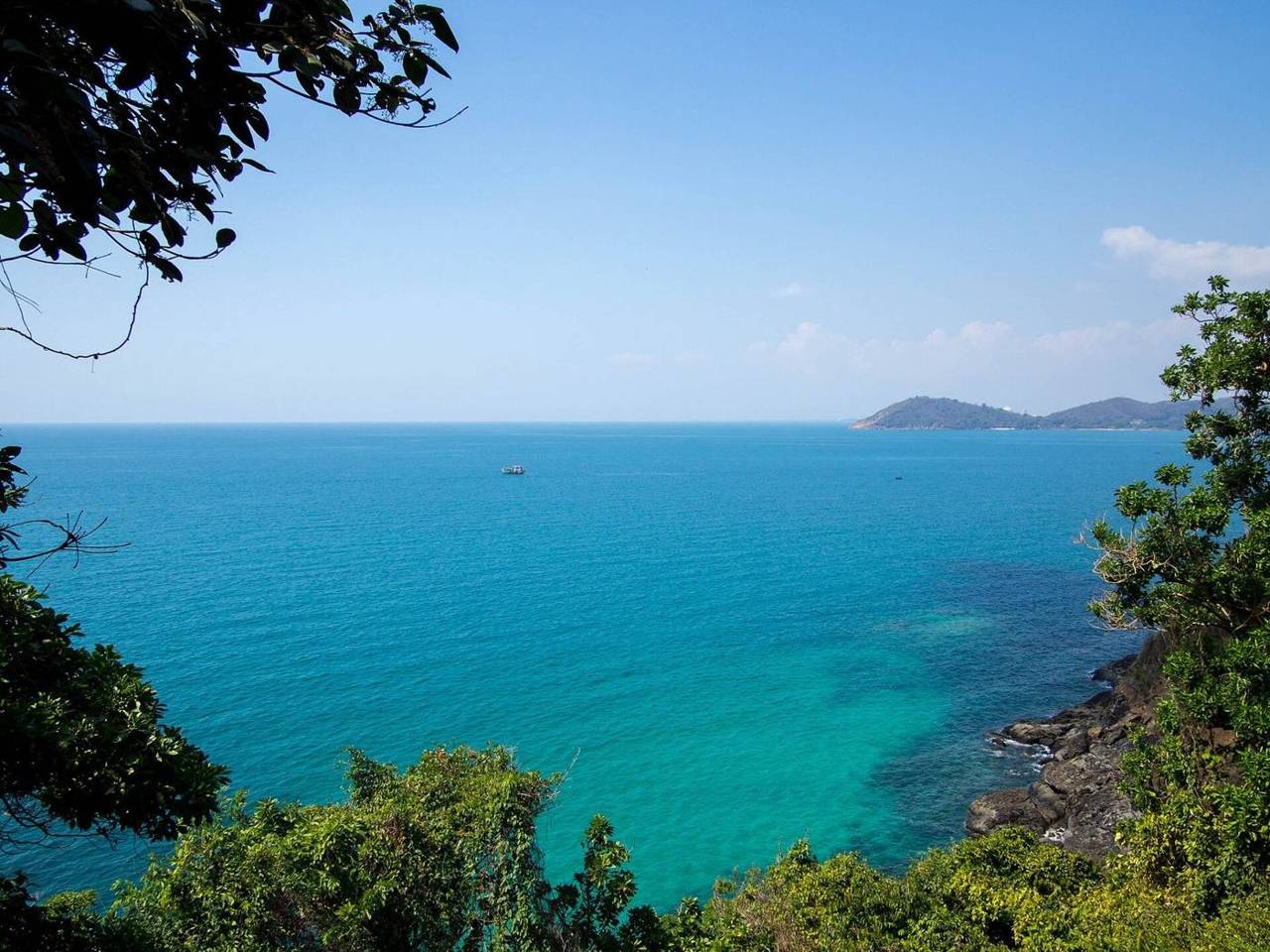
Sea and history east of Bangkok: Koh Samet, a national park with white beaches a few hours from the capital, and Chanthaburi with its riverside quarter, French cathedral and weekend gem market.