The Trang Islands and Koh Lipe
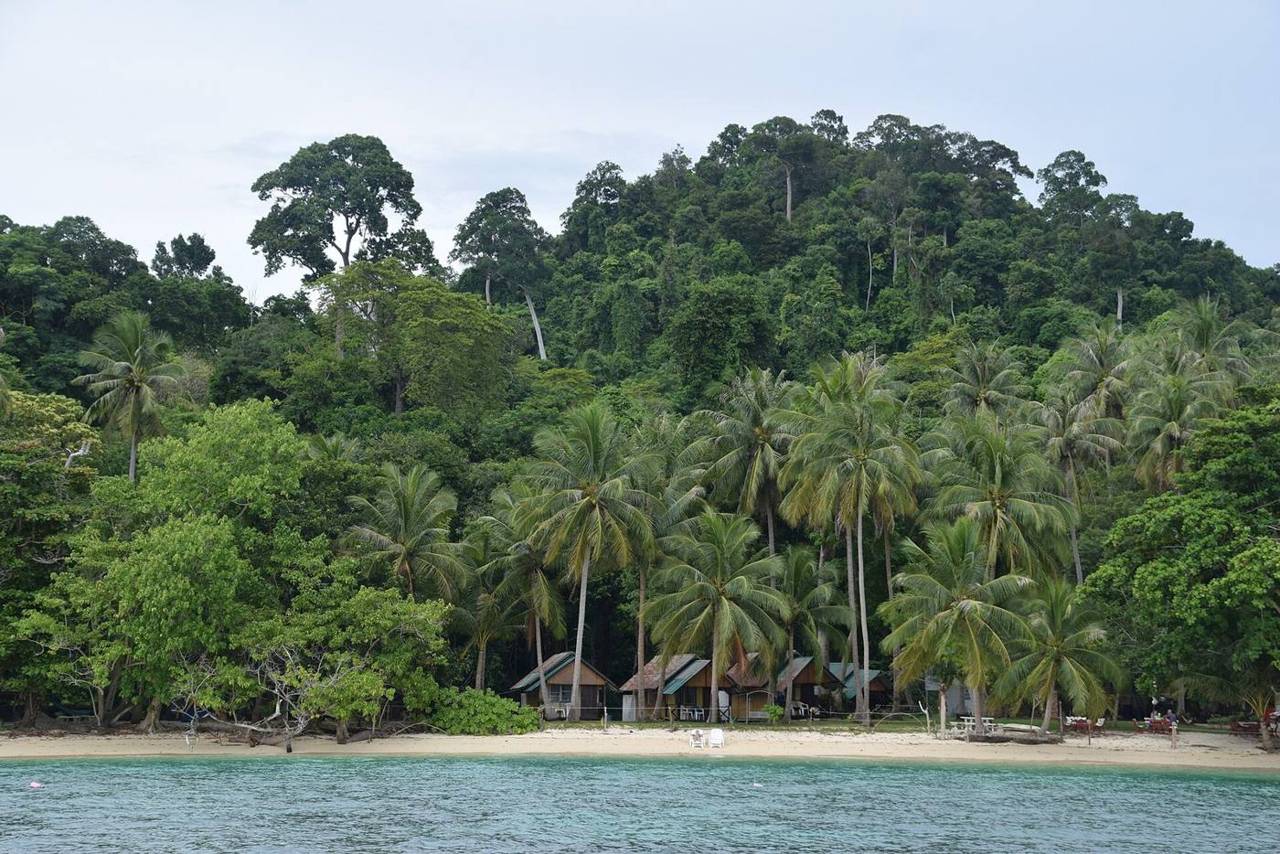
The quietest islands of the Andaman Sea: Koh Mook with the Emerald Cave reached by swimming, Koh Kradan with its white sand, Koh Libong and its dugongs, then Koh Lipe in Tarutao Marine Park with its coral reef.
- Trang
- Koh Mook
- Koh Kradan
- Koh Libong
- Koh Lipe
Day by day
- Day 1
Flight to Trang and the boat to Koh Mook
EU citizens, including Italians, need no visa for Thailand for tourist stays of up to 30 days, with a passport valid for at least six months; in the three days before arrival you must fill in the Thailand Digital Arrival Card, called TDAC, online. Check the rules for your own nationality.
The Trang islands are a small archipelago in the Andaman Sea in the south of the country, much quieter than Phuket or Koh Phi Phi: no big hotels, few roads, almost empty beaches and clear water. The best season is November to April; from May to October the monsoon brings rough seas and many boats stop running.
From Bangkok you fly to Trang in about an hour and a half. From the airport a minibus takes you to Kuan Tung Ku or Hat Yao pier in about an hour, and from there a longtail boat, the typical Thai wooden boat with an outboard engine, reaches Koh Mook in about half an hour. Many transfers are sold together on a single ticket at airport agencies or online.
Koh Mook is an island of Muslim fishing families, with stilt-house villages, a single concrete road used by scooters and small beaches. Stay near Farang beach on the west side, where the sun sets straight into the sea.
In the evening try southern Thai dishes, spicier than those of the north, such as fish curry with rice.
Practical tip: there are few cash machines on the islands, often none; bring enough baht in cash for your whole stay.
- Day 2
The Emerald Cave and the island tour
Today is the longtail boat tour of the islands, the classic Koh Mook trip, booked the evening before on the beach or at your accommodation.
The first stop is the Emerald Cave, Tham Morakot, the area's most famous sight. You swim in, with a life jacket and a torch, through a rock tunnel about eighty metres long, almost completely dark, which opens into a small hidden lagoon enclosed by tall rock walls covered in vegetation, with a little white sand beach and light falling from above. The green colour of the water at the tunnel's exit gives the cave its name. You can only enter at low tide and with the boat's guide.
Then the boat continues to nearby islands: Koh Cheuk and Koh Waen, small limestone islets with coral around them, ideal for snorkelling among clownfish, parrotfish and soft corals. Lunch is on a beach, often on Koh Kradan.
In the afternoon return to Koh Mook and walk to the fishing village on the east side, with colourful boats and children playing on the jetties.
Practical tip: in high season, many boats arrive at the Emerald Cave from Koh Lanta around midday; set off early in the morning with the first low tide to find it almost empty.
- Day 3
Koh Kradan: the long beach and the coral garden
In the morning take the boat to Koh Kradan, about twenty minutes from Koh Mook, one of the most beautiful islands in Thailand. Most of the island belongs to Hat Chao Mai Marine National Park, covered in forest, with very few places to stay and a long beach of fine white sand on its east side, turquoise water and views of the limestone mountains rising from the sea.
Stay for two nights and enjoy the beach. A few metres from the shore a coral reef begins, which you explore with mask and snorkel straight from the beach: hard and soft corals, butterflyfish, surgeonfish, sometimes turtles and harmless small reef sharks.
In the afternoon walk the path through the forest to Sunset beach on the west side, a small sandy cove between rocks where the sun sets over the open sea. The path is short, about fifteen minutes, but uphill and rooty: wear closed shoes.
In the evening, on Koh Kradan, electricity often comes only from generators for a few hours; the starry sky is spectacular.
Practical tip: do not touch or stand on the coral, and use a reef-safe sun cream. An entrance fee is charged for the national park, often included in boat tours.
- Day 4
A day of sea and snorkelling on Koh Kradan
Today is a whole day by the sea, with no travel. Early in the morning, when the water is calmest and clearest, snorkel along the reef off the beach, moving north where the coral is richer.
Then, if you like, take a short kayak trip along the coast, renting one at your accommodation, to the small nearby beaches reachable only from the sea.
At midday, when the sun is strongest, rest in the shade. Many travellers also come to Koh Kradan for the wreck: about a kilometre offshore lies an old warship deliberately sunk to create an artificial reef, at a depth of about thirty metres, reachable only on a scuba dive with an instructor. Some dive centres on Koh Mook and Koh Lanta run trips.
Every year on Valentine's Day an underwater mass wedding takes place at Koh Kradan: dozens of couples marry in front of an official, wearing scuba gear, an event famous throughout Thailand.
In the evening watch the sunset from the west beach and the moon rising over the sea on the east side.
Practical tip: between November and April jellyfish sometimes appear near the shore at Koh Kradan; ask at your accommodation, and if in doubt swim in a long-sleeved top.
- Day 5
Koh Libong: mangroves and dugongs
In the morning take the boat to Koh Libong, the largest of the Trang islands, about an hour away, with little tourism, home to Muslim communities of fishermen and rubber farmers, with villages, mangroves and long beaches on the west coast.
Koh Libong is famous because one of Thailand's last groups of dugongs lives in the seagrass meadows around the island, large plant-eating marine mammals related to manatees, up to three metres long. They are protected and very shy. On a local fisherman's boat, in the morning at low tide, you go slowly to the area where they graze; sometimes you see them surface to breathe, but sightings are not guaranteed. Alternatively climb the observation tower on the east coast.
In the afternoon explore the mangroves by kayak or boat, through narrow channels between the roots, with crabs, birds and monkeys. In winter many migratory birds arrive on the coast.
In the evening stay on Koh Libong, on the west beach, with the sunset over the sea.
Practical tip: boats are not allowed to chase or get too close to the dugongs; choose a village boatman who follows the rules and cuts the engine near the animals. Koh Libong is a conservative Muslim community: in the villages cover shoulders and knees and do not carry alcohol around.
- Day 6
The speedboat to Koh Lipe
In the morning take the speedboat linking the Trang islands with Koh Lipe to the south, almost on the Malaysian border. The journey, with stops at several islands, takes about two to three hours. Boats usually run only from November to April; check the timetable, which changes every season.
Koh Lipe is a small island about two kilometres long, much livelier than the Trang islands, with a pedestrian street full of bars and shops, Walking Street, and three main beaches. It lies within the area of Tarutao National Park and is surrounded by its islands. The original community is the chao lay, the sea gypsies, a seafaring people who have lived on these islands for centuries.
On arrival stay near Sunrise beach to the east, with white sand and views of the park's islands, or near Pattaya beach to the south, the liveliest, with the harbour and boats.
In the afternoon swim and snorkel straight from Sunrise beach. In the evening watch the sunset from Sunset beach to the west, reached by a forest path, then have dinner on Walking Street with fresh grilled fish.
Practical tip: on arrival at Koh Lipe a national park entrance fee is collected at the floating pier, because the island lies within the protected area; keep cash at hand.
- Day 7
Snorkelling in Tarutao Marine National Park
Today is a day by boat among the islands of Tarutao Marine National Park, one of Thailand's most beautiful, with about fifty uninhabited forested islands and some of the country's best-preserved coral reefs.
Trips leave from Pattaya or Sunrise beach by longtail boat in the morning and last all day. The usual stops are Koh Adang, the large mountainous island opposite Koh Lipe, with a beach and a steep path up to the Chado Cliff viewpoint overlooking the archipelago; Koh Rawi, with white sand beaches; and the islets of Koh Hin Ngam, with its beach of smooth black pebbles, and Koh Yang.
Between islands you stop at snorkelling spots such as Stonehenge, a group of submerged rocks covered in colourful soft corals, and the coral gardens around Koh Kra, with clownfish, triggerfish and sometimes turtles.
According to legend, anyone who takes a black stone from Koh Hin Ngam is struck by bad luck: the pebbles must stay on the beach, and taking anything from the park is forbidden anyway.
In the evening, your last night on Koh Lipe, have dinner on the beach.
Practical tip: bring a long-sleeved top for snorkelling to protect you from the sun, and plenty of water: you spend many hours in the sun on the boat.
- Day 8
Back via Pak Bara or Langkawi
The last day is for the journey back. From Koh Lipe there are two options.
The first is the speedboat to Pak Bara on the Thai coast, in about an hour and a half, then a minibus to Hat Yai airport, in about two hours, or to Trang, and a flight to Bangkok. You reach Bangkok in the late afternoon in a single day.
The second is the boat to Langkawi in Malaysia, in about an hour and a half, a large island with an international airport, flights to Kuala Lumpur and other cities, beaches and a scenic cable car up the mountain. In this case you clear Thai exit formalities at the immigration office on Koh Lipe before leaving, and Malaysian entry on arrival. EU citizens need no visa for Malaysia for short tourist stays.
In the morning, before the boat, take a last swim at Sunrise beach and have a last coffee on Walking Street.
Things to take home: coconut products, sarongs and cotton T-shirts, chao lay handicrafts and Thai spices.
Practical tip: boats to Pak Bara and Langkawi can be delayed in rough seas; do not book an international flight on the same day, and keep a spare night in Bangkok or Kuala Lumpur. Check your government's travel advice before leaving: the southernmost mainland provinces have specific warnings.
Superb sea and fewer crowds than Phuket. From May to October the sea is rough and many boats do not run. Tarutao park partly closes during the monsoon. Trang and Satun are not among the advised-against areas of the deep south. Since 15 September 2026 Italians can enter without a visa for tourism for up to 30 days (previously 60), and the Thailand Digital Arrival Card (TDAC) must be completed online before every arrival.
Before you go
- Documents and visa
- Passport valid for at least six months. Since 15 September 2026 many nationalities, including most EU citizens, enter without a visa for tourism for up to 30 days. Before each entry, within the three days beforehand, the no-cost Thailand Digital Arrival Card (TDAC) must be completed online on the official website.
- Health and vaccines
- No vaccines required arriving from Europe; ask your doctor about hepatitis A and typhoid. Dengue is present: use repellent. Do not drink tap water. Health insurance recommended. Emergencies: 191 police, 1669 ambulance, 1155 tourist police.
- Money and payments
- Baht. Cards accepted in cities and hotels; markets and small places need cash. ATMs charge a flat fee for withdrawals with foreign cards.
- Power sockets
- Types A, B, C and O, 220 volts: bring a universal adapter.
- Time zone
- UTC+7, no daylight saving time.
- Safety
- A safe country for travellers. Avoid the southernmost provinces near Malaysia and the border strip with Cambodia. Beware of tuk-tuk and gem scams, and of scooter traffic. Official advice: GOV.UK.
Information checked in November 2026 for Italian and EU citizens. Rules change: always check before you travel.
Variations
In 5 days: Koh Mook with the Emerald Cave, two nights on Koh Kradan and back to Trang, skipping Koh Libong and Koh Lipe.
In 12 days: add Koh Lanta before the Trang islands, or a few days on Langkawi in Malaysia after Koh Lipe.
Frequently asked questions
When is the best time for the Trang islands?
From November to April, with calm seas. From May to October the monsoon arrives: many boats stop and some places to stay close.
Do I need a visa for Thailand?
EU citizens need no visa for tourist stays of up to 30 days, with a passport valid for at least six months. In the three days before arrival you must fill in the Thailand Digital Arrival Card online.
Can you really see dugongs at Koh Libong?
Sometimes, at morning low tide on a local boat, but sightings are not guaranteed: they are rare, shy animals and boats must keep their distance.
Indicative itinerary written by World Atlas. Before booking, check timetables, seasonal openings, documents and safety.
 5 daysModerate
Diving the Similan Islands
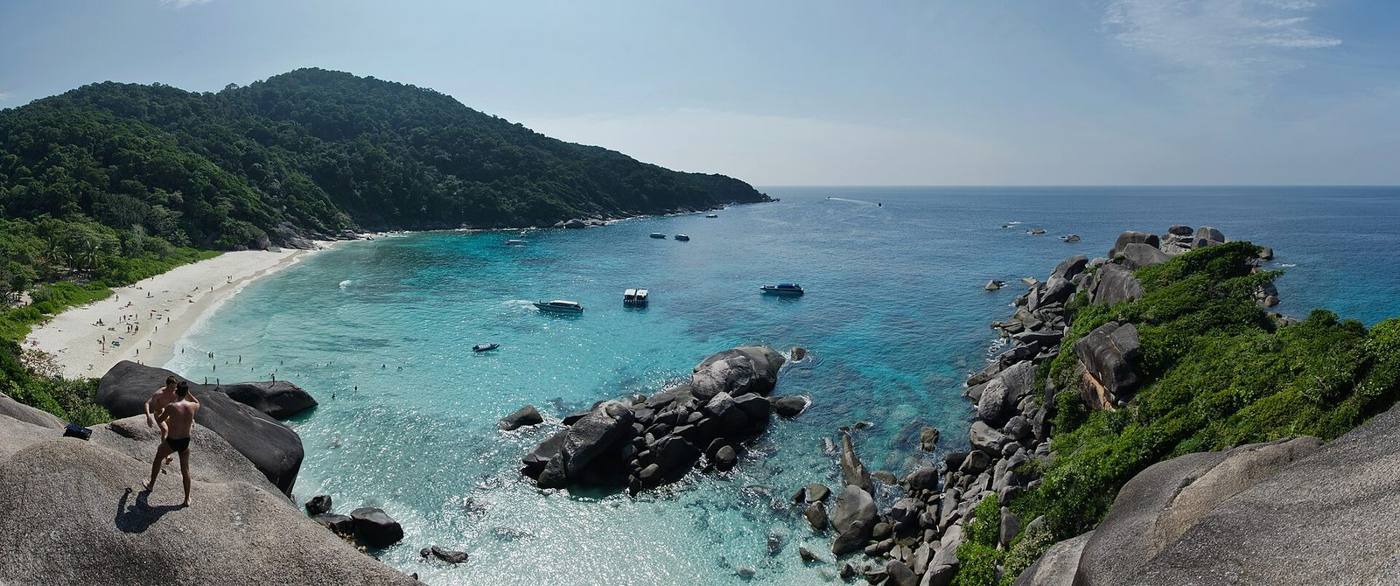
A four-day liveaboard in the Similan Islands National Park and to Koh Bon and Koh Tachai: granite boulders, corals, manta rays and, with luck, whale sharks, with Richelieu Rock as the most famous dive.
 4 daysEasy
Hua Hin and Phetchaburi
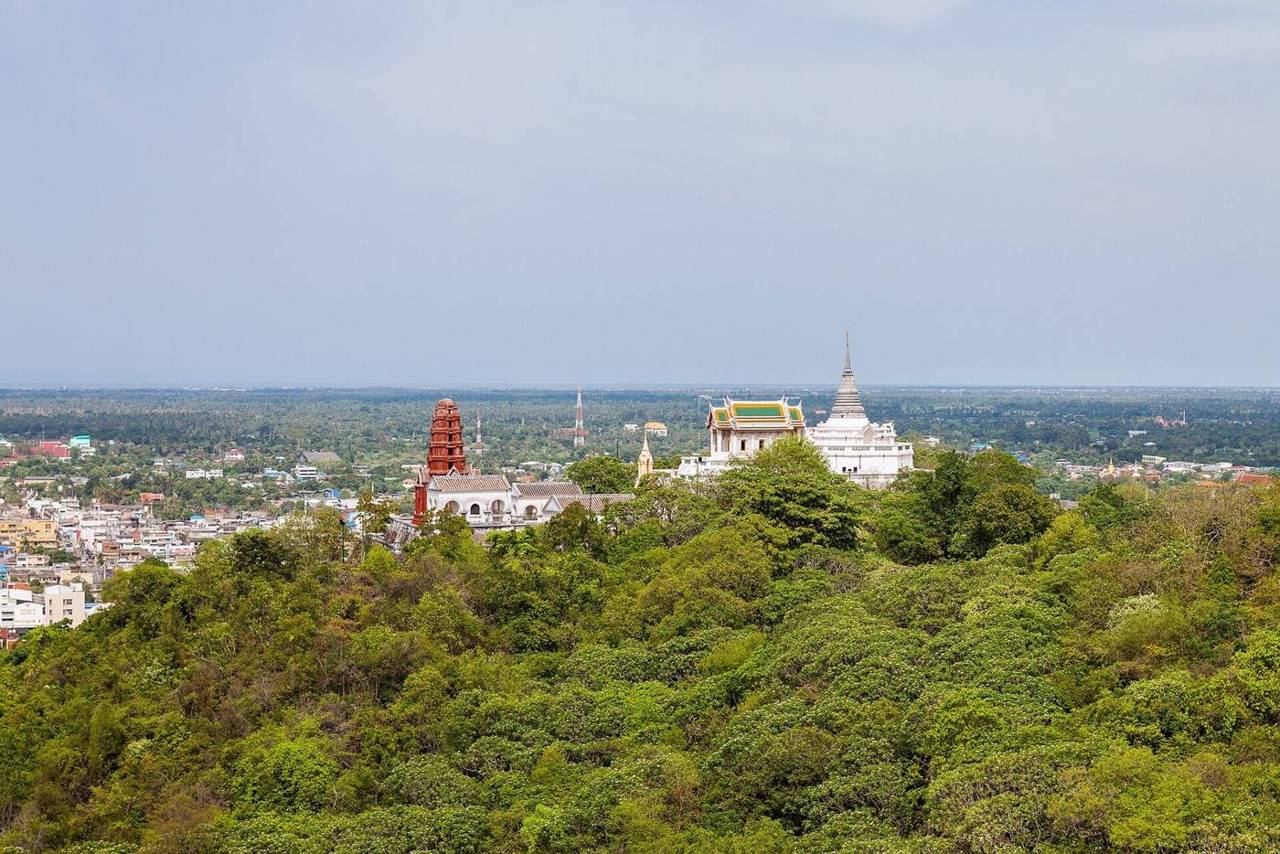
The Thais' own seaside, three hours from Bangkok: Hua Hin with its wooden station and night market, Phetchaburi with the hilltop royal palace of Phra Nakhon Khiri and the Tham Khao Luang cave with Buddhas in the light.
 5 daysModerate
Loei, Chiang Khan and Phu Kradueng
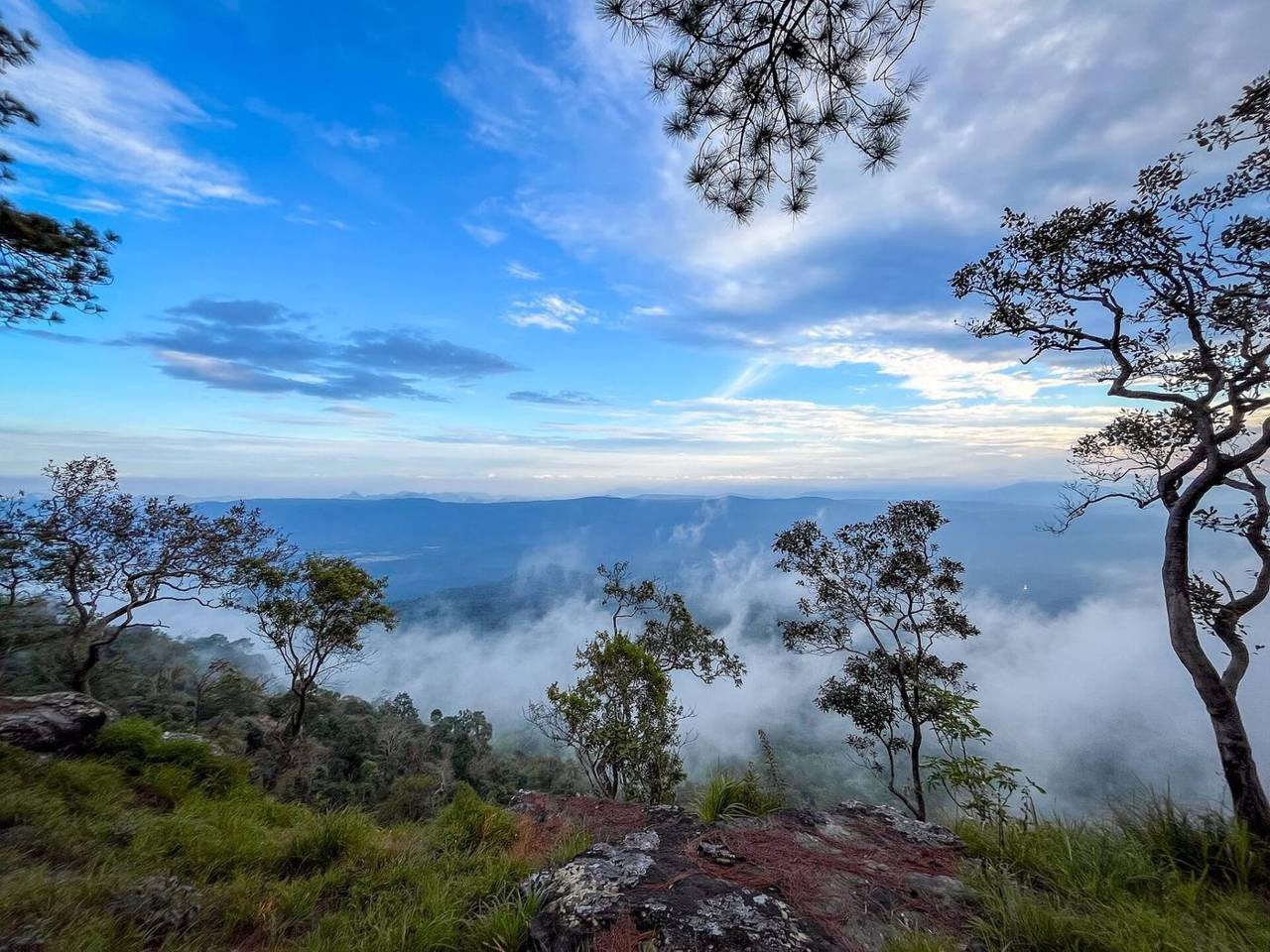
Mountain Isan: the walk up to the Phu Kradueng plateau among pines and waterfalls, Chiang Khan with wooden houses on the Mekong and morning mist, and Phu Ruea park with its seas of clouds.