Bangkok, Ayutthaya and the North
Golden temples, the ancient capital, Chiang Mai and an ethical elephant sanctuary.
- Bangkok
- Ayutthaya
- Sukhothai
- Chiang Mai
- Chiang Rai
Day by day
- Day 1
Arrival in Bangkok
From Europe you reach Bangkok on a flight with one stop, usually in the Gulf or in Europe, in thirteen to fifteen hours. The main airport is Suvarnabhumi; regional budget flights use Don Mueang. Before leaving, complete the no-cost Thailand Digital Arrival Card online within the three days before arrival: without it you cannot pass immigration. Since 15 September 2026 many nationalities, including most EU citizens, enter without a visa for tourism for up to 30 days.
From Suvarnabhumi to the centre take the Airport Rail Link to Phaya Thai and then the Skytrain, or a metered taxi from the official queue on the lower floor. For three nights stay near the Chao Phraya river or along the Skytrain line, in Silom or Sukhumvit: Bangkok traffic is slow and it pays to travel by rail.
Buy a local SIM or eSIM on arrival and withdraw some baht: ATMs charge a flat fee on foreign-card withdrawals, so it is better to take larger sums a few times.
Keep the first evening light: a walk around the neighbourhood and a simple dinner at an evening market or a shopping-mall food court, where food is good, clean and clearly priced. Try a green curry, pad kra pao, pork or chicken stir-fried with holy basil, and a fresh fruit shake. Practical tip: drink only bottled water and ease into the spice by asking for mai phet, not spicy, in the first days.
- Day 2
The Grand Palace, Wat Pho, Wat Arun and the canals
In the morning go to the Grand Palace at opening time, 8.30: the foreigners' ticket costs 500 baht and includes Wat Phra Kaew, with the Emerald Buddha, the country's most sacred statue. The dress code is strict: shoulders and knees covered. Outside the gates ignore anyone who says the palace is closed and offers a tuk-tuk ride: it is Bangkok's best-known scam.
Walk to Wat Pho, with the gold-covered 46-metre Reclining Buddha and its mother-of-pearl inlaid feet, and the historic school of Thai massage, where after the morning heat a traditional massage is a good way to rest.
From Tha Tien pier cross the river by the little ferry to Wat Arun, the Temple of Dawn, with its tower decorated in coloured porcelain. Then hire a long-tail boat for an hour among the Thonburi khlongs, the west bank canals, with wooden stilt houses and small temples: agree price and duration before boarding.
In the late afternoon take the orange-flag public boat towards Saphan Taksin, watching the city from the river. In the evening dine in Chinatown, on Yaowarat Road, among street-food stalls under the neon signs. Practical tip: always carry a scarf or sarong for temples and take off your shoes before entering the halls.
- Day 3
Ayutthaya by bicycle among the ruins
In the morning take the train from the new central station, Krung Thep Aphiwat, to Ayutthaya, about an hour and a half, or a minibus. Ayutthaya was the capital of the Siamese kingdom for more than four centuries, one of the richest cities in Asia, until the Burmese destroyed it in 1767. The ruins, a World Heritage site, lie on an island ringed by three rivers.
From the station cross the river by the little ferry and hire a bicycle: distances between temples are short and the road flat. Wat Mahathat is the most famous, with a sandstone Buddha head wrapped in the roots of a fig tree; to photograph it you must crouch, as no one stands higher than the Buddha's head. Wat Phra Si Sanphet, with its three great chedis in a row, was the royal palace temple.
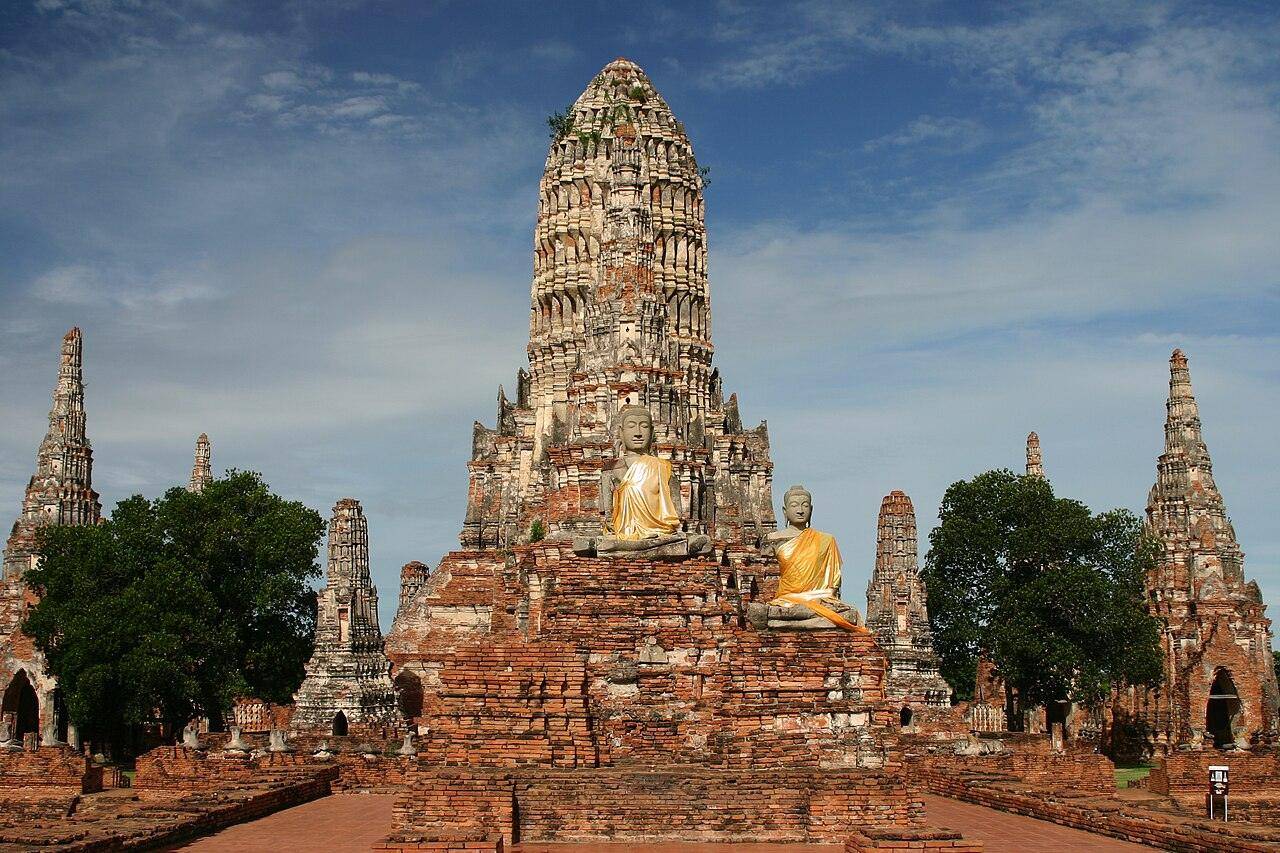
In the afternoon cycle or take a tuk-tuk to Wat Chaiwatthanaram on the riverbank, modelled on Angkor, the most beautiful at sunset. Many temples close around six, but some are lit at night.
For the night you can stay in Ayutthaya, in one of the small riverside guesthouses, or return to Bangkok and leave from there tomorrow. For dinner try kuay teow reua, boat noodles in dark broth, born on the city's canals. Practical tip: bring water and a hat, as there is little shade among the ruins and the midday heat is strong.
- Day 4
The journey to Sukhothai
Today you head north. The most comfortable way is the train from Ayutthaya or Bangkok to Phitsanulok, about five or six hours, then a bus to New Sukhothai, an hour; alternatively there are direct buses from Bangkok, six or seven hours, or a flight to Sukhothai airport. The train crosses the central plain among rice fields, villages and temples, a good way to see rural Thailand.
On the train buy a second-class air-conditioned seat and bring food, although vendors come by with rice, fruit and drinks. At Phitsanulok, if you have time, visit Wat Phra Si Rattana Mahathat, with the Phra Phuttha Chinnarat, a bronze Buddha considered among the most beautiful in the country.
For two nights stay in the old city area of Sukhothai, near the historical park, a dozen kilometres from the new town: there are quiet guesthouses among the fields and you can enter the park at dawn.
In the evening go to the night market or dine at your guesthouse. Try kuay teow Sukhothai, the local noodles with pork, green beans, peanuts and a touch of sugar and lime. Practical tip: buy train tickets online or at the station a day ahead; on long weekends and holidays trains fill up.
- Day 5
Sukhothai Historical Park and on to Chiang Mai
Sukhothai was the first capital of the Thai kingdom, in the 13th century, and is considered the cradle of Thai art and writing. The historical park, a World Heritage site, is a large green space with ponds, moats and dozens of ruined temples, far quieter than Ayutthaya.
Enter at dawn by bicycle, hired at the entrance: morning light on the Buddhas and ponds is the finest moment and it is still cool. In the central zone is Wat Mahathat, with its lotus-bud chedi and rows of seated Buddhas among the columns. Then Wat Sa Si, on an islet in the pond, and Wat Si Sawai, with its Khmer-style towers. In the northern zone, Wat Si Chum holds a huge seated Buddha fifteen metres tall, glimpsed through a narrow opening in the wall.
Around midday return the bike and take a bus to Chiang Mai, about five or six hours through the hills, or go back to Phitsanulok for a flight. You reach Chiang Mai in the late afternoon.
For three nights stay inside the walls of Chiang Mai's old city or just outside: everything is reachable on foot or by songthaew, the red pick-ups with benches that work as shared taxis. Practical tip: in the historical park respect the Buddhas, do not climb on statues or pose disrespectfully with your back to them.
- Day 6
Chiang Mai: old city temples and the night market
Chiang Mai, the capital of the north, is cooler and calmer than Bangkok, ringed by mountains. The old city is a square enclosed by a moat and stretches of wall, with more than thirty temples.
In the morning visit Wat Phra Singh, with its wooden chapel decorated with murals and the city's most revered Buddha, and Wat Chedi Luang, with the ruins of a huge chedi damaged by an earthquake in the 16th century. In many temples you can join a monk chat: a conversation in English with young monks who want to practise and answer questions about Buddhism.
In the afternoon take a songthaew up to Wat Phra That Doi Suthep, on the mountain overlooking the city: you climb a stairway of more than three hundred steps with balustrades shaped like naga, the sacred serpents, or take a small funicular. From the terrace with its golden chedi you see the whole valley.
In the evening go to the night market: every night around the Night Bazaar, and on Sunday evening the Sunday Walking Street, which fills the old city streets with crafts and food. Try khao soi, the north's coconut curry noodle soup, and sai oua, herb sausage. Practical tip: between February and April the north is often covered in smoke from agricultural fires, with poor air quality: check the index before you go.
- Day 7
A day at an ethical elephant sanctuary
Elephants are Thailand's symbol, but many tourist camps offer rides or train them for shows with harsh methods. Choose a sanctuary that offers neither riding nor shows: you watch the elephants eat, walk and bathe in the river, feed them fruit, and learn their stories, often of animals rescued from logging or street work.
The sanctuaries lie in the valleys around Chiang Mai, one or two hours' drive away, and arrange hotel transport. Visits last half a day or a full day, with lunch. Book ahead and read the programme carefully: be wary of the words ethical or sanctuary if the photos show people riding the animals or elephants in chains.
In the afternoon, back in town, you can take a Thai cooking class: you go to the market to buy ingredients, then prepare curries, soups and salads. Many schools have their kitchen on a farm outside town, with a vegetable garden where you pick the herbs yourself.
In the evening explore the Nimman district, with cafés, galleries and bars popular with university students. Practical tip: at a sanctuary wear clothes that can get dirty and shoes that can get wet, and always follow the instructions of the mahouts, the elephant keepers.
- Day 8
Chiang Rai: the White Temple, the Blue Temple and the Black House
Early in the morning take the bus to Chiang Rai, about three hours through the mountains, or hire a car with driver to stop along the way. For one night stay in central Chiang Rai, near the clock tower.
Wat Rong Khun, the White Temple, lies just before the city: a contemporary work by artist Chalermchai Kositpipat, still under construction, all white and covered in mirrors. You enter by a bridge over a sea of hands rising from below, symbol of earthly desires; inside, murals mix Buddhism with pop culture figures. Arrive at opening time, as groups arrive by mid-morning.
In the afternoon visit Wat Rong Suea Ten, the Blue Temple, with deep blue interiors and a large white Buddha, and Baan Dam, the Black House, a group of dark buildings by artist Thawan Duchanee, with animal skins, horns and bones: a deliberate contrast with the White Temple.
In the evening visit Chiang Rai's night market and watch the clock tower, which lights up in colours every evening at set times, designed by the same artist as the White Temple. Practical tip: contemporary temples follow the same rules as traditional ones: shoulders and knees covered and shoes off in the halls.
- Day 9
The flight to Bangkok and the last evening
In the morning, if there is time before your flight, visit Singha Park, a large park with tea plantations and lakes on the edge of Chiang Rai, or the city's Wat Phra Kaew, where tradition says the Emerald Buddha now in Bangkok was found.
Chiang Rai airport has direct flights to Bangkok, to both Don Mueang and Suvarnabhumi, in just over an hour. If your flight home leaves from Suvarnabhumi, choose a domestic flight landing at the same airport to avoid changing. Alternatively, those with time can return from Chiang Mai to Bangkok on the overnight sleeper train, an experience in itself.
For the last night stay by the river or along the Skytrain. In the afternoon do your last shopping: silk, northern tea, curry paste, celadon ceramics, herbal soaps. The house of Jim Thompson, the American who revived Thai silk after the war, is a fine one-hour visit in the centre, cool and quiet.
In the evening go up to a rooftop bar to see the city lights, or return to Chinatown for a last street-food dinner. Practical tip: between a domestic flight and your long-haul flight always leave a wide margin, ideally a night, as regional flight delays are frequent.
- Day 10
Departure
The last day depends on your flight time. If it leaves in the evening, you still have the morning in Bangkok: Chatuchak market if it is Saturday or Sunday, one of the largest in the world, with thousands of stalls; Lumphini Park, where monitor lizards swim; or a last Thai massage, to face the long flight more rested.
Alternatively visit Wat Saket, the Golden Mount temple, on an artificial hill in the old city: a spiral stairway climbs among bells and small waterfalls to a terrace with a golden chedi and views over the old town. It is less known than the Grand Palace and quiet in the morning.
For Suvarnabhumi airport allow at least an hour by train or taxi, more at rush hour, and arrive three hours before an international flight: security can be slow. At the airport you can reclaim VAT on purchases made in shops displaying the VAT Refund sign, presenting the forms and receipts before check-in.
Remember the baggage rules: no meat products or undeclared plants into Europe, and beware of counterfeit branded goods, which European customs may seize. Practical tip: keep some baht for the taxi or train, and change the rest at the airport or spend it in the shops before security.
Cultural Thailand in ten days, at an easy pace and low cost. For elephants, choose only sanctuaries with no riding and no shows. From February to April, smoke from agricultural burning spoils the air and views in the north.
Before you go
- Documents and visa
- Passport valid for at least six months. Since 15 September 2026 many nationalities, including most EU citizens, enter without a visa for tourism for up to 30 days. Before each entry, within the three days beforehand, the no-cost Thailand Digital Arrival Card (TDAC) must be completed online on the official website.
- Health and vaccines
- No vaccines required arriving from Europe; ask your doctor about hepatitis A and typhoid. Dengue is present: use repellent. Do not drink tap water. Health insurance recommended. Emergencies: 191 police, 1669 ambulance, 1155 tourist police.
- Money and payments
- Baht. Cards accepted in cities and hotels; markets and small places need cash. ATMs charge a flat fee for withdrawals with foreign cards.
- Power sockets
- Types A, B, C and O, 220 volts: bring a universal adapter.
- Time zone
- UTC+7, no daylight saving time.
- Safety
- A safe country for travellers. Avoid the southernmost provinces near Malaysia and the border strip with Cambodia. Beware of tuk-tuk and gem scams, and of scooter traffic. Official advice: GOV.UK.
Information checked in November 2026 for Italian and EU citizens. Rules change: always check before you travel.
Variations
In 7 days: Bangkok on the first and second days, Ayutthaya on the third, a flight to Chiang Mai and three days in the north with an elephant sanctuary, then home. You give up Sukhothai and Chiang Rai.
In 14 days: add the Mae Hong Son loop with Pai and the mountains on the Myanmar border, or four days at the sea, on the gulf or Andaman islands, before going home.
Frequently asked questions
Do I need a visa and what must I fill in?
Since 15 September 2026 many nationalities, including most EU citizens, enter without a visa for tourism for up to 30 days, with a passport valid for at least six months. Before every entry the no-cost Thailand Digital Arrival Card must be completed online within the three days before arrival. A 300-baht entry fee has been announced several times: check whether it has come into force before you go.
How do I choose a genuine elephant sanctuary?
Avoid places where elephants are ridden or perform shows, paintings or games. A genuine sanctuary limits visitor numbers, gives animals no-cost space and explains where they come from. Read recent reviews and look at the photos: if they show people riding or animals tied up, choose elsewhere.
When is the best time to go?
From November to February, the coolest and driest period, perfect for the north. Between February and April the north is often shrouded in smoke from agricultural fires, with poor air quality. From May to October is the rainy season: the landscape is lush but storms are daily.
Indicative itinerary written by World Atlas. Before booking, check timetables, seasonal openings, documents and safety.
 15 daysEasy
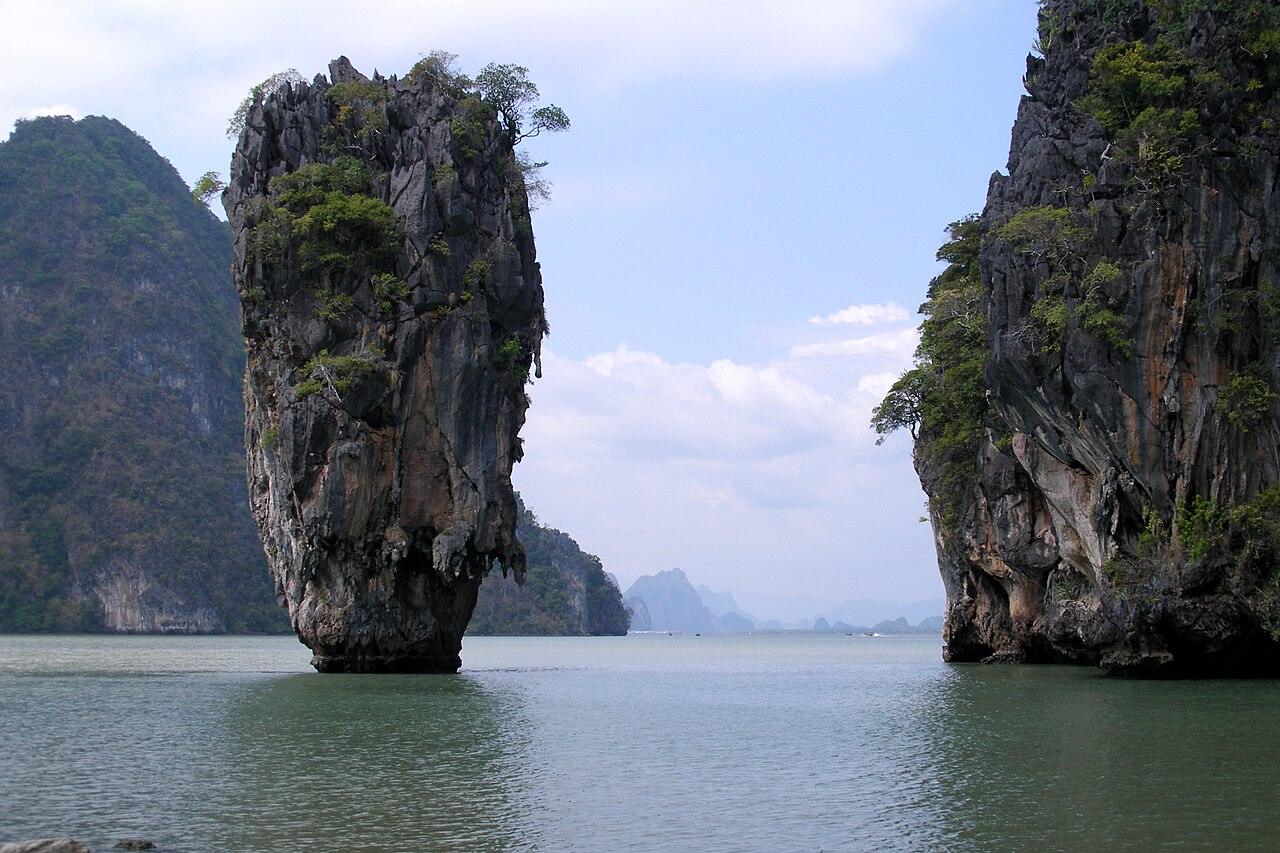
Bangkok and the Andaman Sea islands
A few days in the city and the rest among Krabi, Phi Phi, Koh Lanta and Koh Lipe.
 7 daysEasy
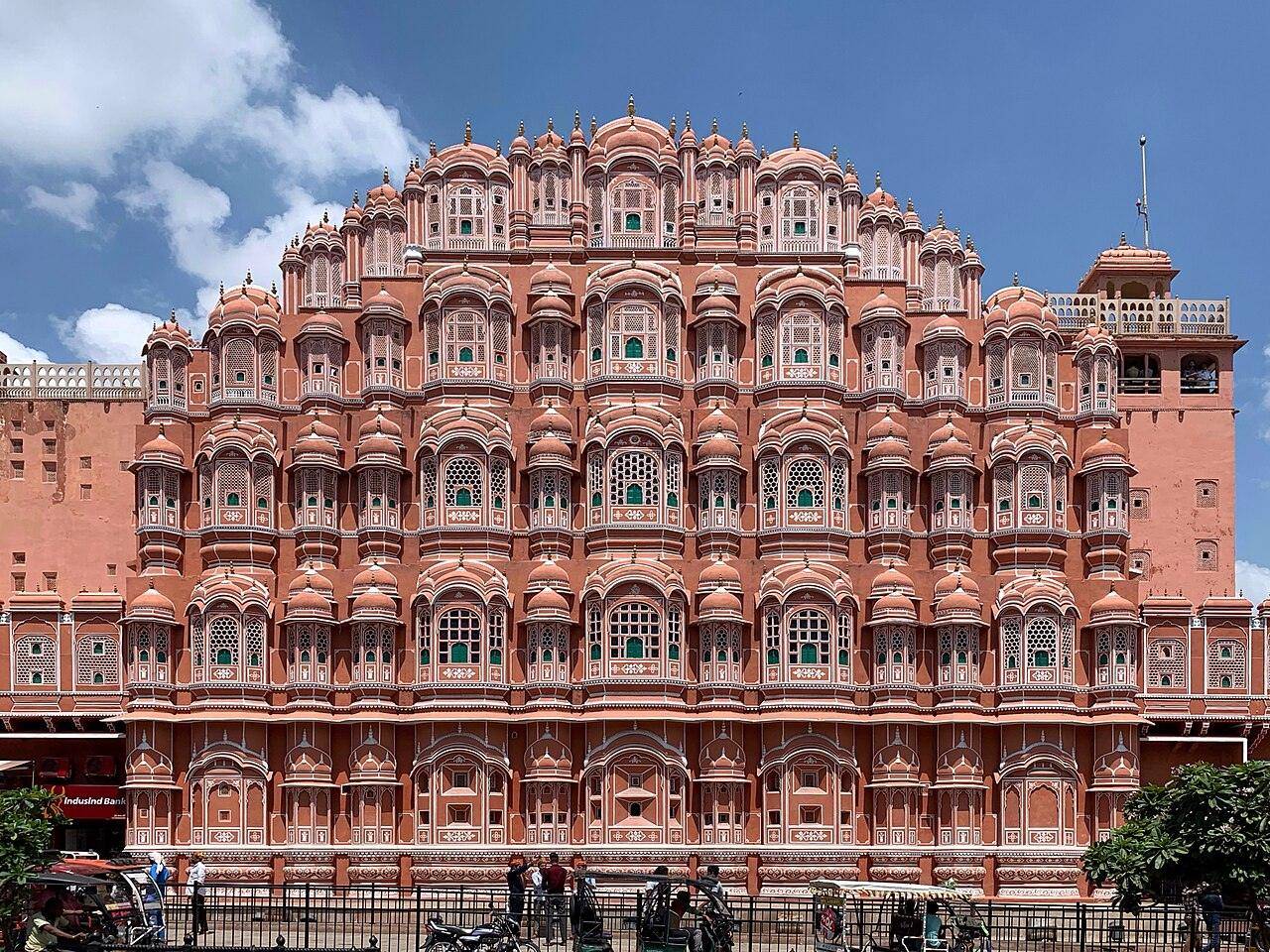
The Golden Triangle: Delhi, Agra and Jaipur
A first time in India: the Taj Mahal at dawn, the forts of Rajasthan and the life of Old Delhi, in one week.
 15 daysModerate
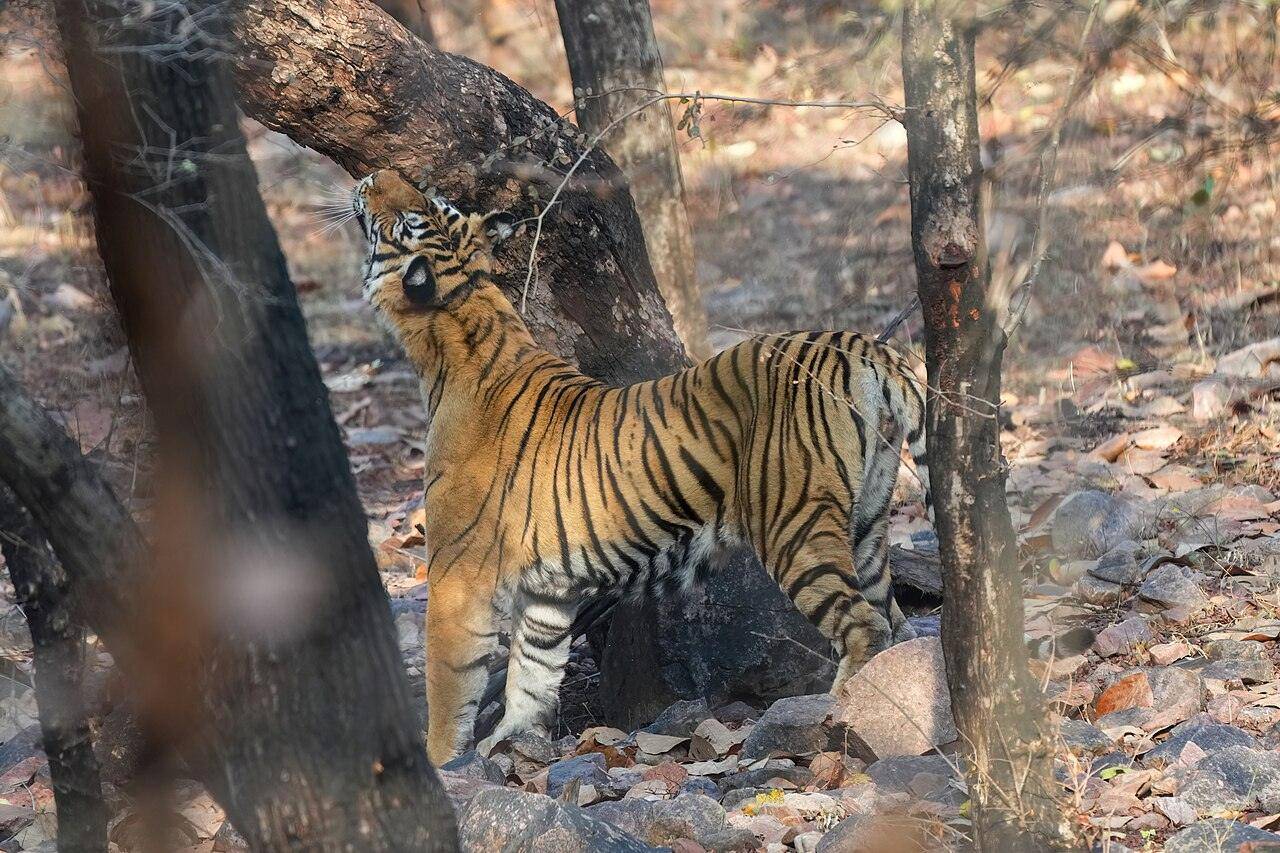
Rajasthan and the tigers of Ranthambore
Palaces, desert and safari: from the Taj Mahal to the blue and golden cities of Rajasthan, with two days in tiger country.