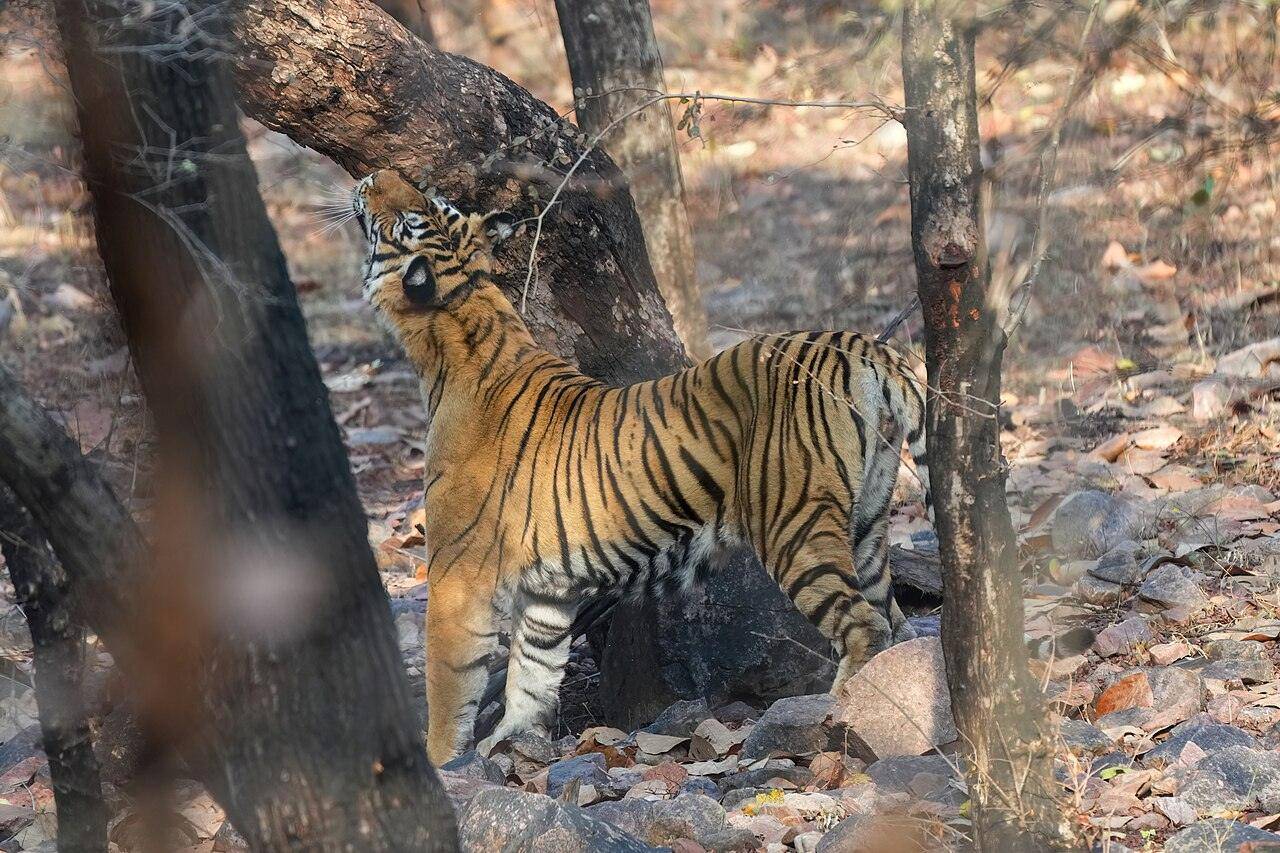
Rajasthan and the tigers of Ranthambore
Palaces, desert and safari: from the Taj Mahal to the blue and golden cities of Rajasthan, with two days in tiger country.
- Delhi
- Agra
- Ranthambore
- Jaipur
- Pushkar
- Jodhpur
- Jaisalmer
- Udaipur
Day by day
- Day 1
Arrival in Delhi
This trip is the great tour of northern India: Delhi, the Taj Mahal at Agra, the tigers of Ranthambore park and Rajasthan, the land of the maharajas, with Jaipur, the pink city, the sacred lake of Pushkar, Jodhpur, the blue city, the golden fortress of Jaisalmer among the dunes of the Thar, the marble temple of Ranakpur and the lake palaces of Udaipur. You travel by car with a driver, by train and with a final flight.
Before you go: Italian citizens need an electronic visa for India. The 30 day tourist visa costs 25 dollars from July to March and 10 dollars from April to June; it is applied for online before departure. Other nationalities should check their own rules. Check your government's travel advice before leaving.
You land at Indira Gandhi international airport in Delhi, the capital, a huge city of over twenty million people, noisy and full of life, with monuments from a thousand years of history.
In the afternoon, rest, then visit Humayun's Tomb, a UNESCO World Heritage Site, built in the sixteenth century for a Mughal emperor, with a white marble dome, red sandstone walls and a garden divided into four parts by water channels. It was a model for the Taj Mahal. Check prices and times.
At sunset, walk in the Lodi Gardens, with the tombs of the sultans among the trees, where local people jog and stroll.
In the evening, have northern Indian food: butter chicken, born in Delhi itself, dal, lentils, and naan baked in a clay oven.
Overnight in Delhi, for two nights.
Practical tip: in India drink only sealed bottled water and do not put ice in your drinks. Eat cooked, hot dishes and fruit you can peel.
- Day 2
Old and New Delhi
Today you explore the two souls of the capital.
In the morning, go to Old Delhi, the Mughal city of the seventeenth century. Visit the Jama Masjid, the great mosque built by the emperor Shah Jahan, the same who built the Taj Mahal, with its enormous courtyard and minarets of red sandstone and white marble. Go in barefoot, with shoulders and legs covered. Then take a cycle rickshaw ride through the Chandni Chowk bazaar, among very narrow lanes full of shops selling spices, fabrics, silver and sweets, in a crush of people, carts and scooters.
Then pass the Red Fort, the great red sandstone fortress of the Mughals, a UNESCO World Heritage Site, where every year the prime minister addresses the nation on Independence Day. Check prices and times.
In the afternoon, go to New Delhi, built by the British at the start of the twentieth century, with its great avenues, India Gate, the arch dedicated to the Indian soldiers who died in the First World War, and the government buildings. Then visit the Qutub Minar, a UNESCO World Heritage Site, a red sandstone tower about 73 metres high, built from the end of the twelfth century, with carved inscriptions. Check prices and times.
In the evening, visit the Sikh temple of Bangla Sahib, where every day thousands of people are fed in the community kitchen. Go in with your head covered and barefoot.
Overnight in Delhi.
Practical tip: in places of worship in India always take off your shoes and cover your shoulders and legs. Carry a light scarf, also useful for covering your head in Sikh temples and some mosques.
- Day 3
Agra and the Taj Mahal
Today you see the most famous monument in India.
Early in the morning, leave Delhi for Agra, by fast train, about two hours, or by car along the expressway, about three or four hours. Check train times and prices.
The Taj Mahal, a UNESCO World Heritage Site, is a white marble mausoleum built between about 1632 and 1653 by the emperor Shah Jahan for his wife Mumtaz Mahal, who died giving birth to their fourteenth child. It is considered one of the most beautiful buildings in the world, with its great dome, four minarets, precious stones inlaid in the marble and a garden with channels, on the bank of the Yamuna River. The marble changes colour with the light, pink at dawn, white at midday and golden at sunset. The Taj Mahal is closed on Fridays. Buy your ticket online on the official website and check prices and times.
In the afternoon, visit Agra Fort, a UNESCO World Heritage Site, the great red sandstone fortress of the Mughals, with marble palaces inside. From one of the terraces you see the Taj Mahal along the river: it is said that Shah Jahan, imprisoned here by his son, spent his last years looking at his wife's tomb.
At sunset, go to the Mehtab Bagh garden, on the other bank of the river, to see the Taj Mahal from a distance in the evening light.
Overnight in Agra.
Practical tip: you can take very few items into the Taj Mahal: no food, no tripods, no electronic devices apart from your phone and camera. Leave your backpack in the car or at your hotel.
- Day 4
Fatehpur Sikri and Ranthambore
Today you reach the tiger park.
At dawn, if you wish, go back to the Taj Mahal to see it in the first light, when there are fewer people.
Then leave Agra heading west to Fatehpur Sikri, about an hour away, the city built at the end of the sixteenth century by the emperor Akbar as his capital and abandoned a few years later, perhaps for lack of water. It is a UNESCO World Heritage Site, with red sandstone palaces, courtyards, a great mosque and the monumental gate, the Buland Darwaza. Check prices and times.
Then continue to Ranthambore National Park, about four or five hours, in eastern Rajasthan, between the Aravalli and Vindhya hills. Alternatively, there is a train to Sawai Madhopur station, near the park.
Ranthambore is one of the best places in India to see Bengal tigers in the wild, in a special landscape, with ruined temples, pavilions and stone gateways among the dry forest and the lakes. Above the park stands Ranthambore Fort, a UNESCO World Heritage Site among the hill forts of Rajasthan.
In the evening, settle into a place near the park and rest.
Overnight near Ranthambore, for two nights.
Practical tip: safaris in Ranthambore are done by jeep or in a larger open truck called a canter, in assigned zones of the park. Places are limited and must be booked in advance on the official website of the Rajasthan forest department. Check prices, times and zones.
- Day 5
The tiger safaris
Today you look for tigers in Ranthambore.
At dawn, set off on your first safari, about three hours, in the park's dry forest, with dhok trees, giant banyans and rocks. The guide and driver follow the signs left by the tigers and listen for the alarm calls of the deer and monkeys, which warn when a predator is near.
Besides tigers, in the park you see sambar, India's largest deer, spotted deer, wild boar, langur monkeys, mugger crocodiles in the lakes, jungle cats, jackals, sloth bears and a great many birds, such as the peacock, the national bird. With a little luck you may also see a leopard, in the rockier areas.
The park's lakes, such as Padam Talao, with the red Jogi Mahal palace on its shore, are the centre of animal life. Seeing a tiger is never certain: that is why it is worth doing more than one safari.
Around midday, during the hot hours, rest at your accommodation.
In the afternoon, set off on your second safari, until sunset.
If you have time, visit Ranthambore Fort, from the tenth century, above the park, with its walls, temples and views over the forest. On the way up you often see monkeys and sometimes the park's animals too.
In the evening, have dinner and rest.
Overnight near Ranthambore.
Practical tip: it is cold on early morning safaris, especially from December to February. Bring a fleece and a hat. The park closes in the monsoon season, usually from July to September.
- Day 6
Jaipur, the pink city
Today you reach the capital of Rajasthan.
In the morning, if you wish, go on a last safari at dawn. Then leave for Jaipur, about three and a half hours.
Jaipur was founded in 1727 by the maharaja Jai Singh II, an astronomer king, with a grid plan that was very modern for its time. In 1876 the old city was painted pink, the colour of welcome, for the visit of the Prince of Wales, and it has been called the pink city ever since. The walled city is a UNESCO World Heritage Site.
In the afternoon, visit the City Palace, the palace of the maharajas, partly still lived in by the royal family, with its courtyards, gates decorated with peacocks and museums of costumes and weapons. Then visit the Jantar Mantar, a UNESCO World Heritage Site, an open-air astronomical observatory built by Jai Singh II, with enormous stone instruments for measuring time and observing the stars, including the largest sundial in the world. Check prices and times.
At sunset, look at the facade of the Hawa Mahal, the palace of the winds, with hundreds of small windows through which the women of the court could watch the street without being seen.
In the evening, walk through the bazaars of the old city, with jewellery, hand-printed fabrics and embroidered shoes, and have dal baati churma, the typical dish of Rajasthan: lentils, wheat rolls baked on embers and a sweet of wheat and sugar.
Overnight in Jaipur, for two nights.
Practical tip: in Jaipur many drivers and guides suggest stops at jewellery and carpet shops. If you do not want to buy, say so politely at the start.
- Day 7
Amber Fort
Today you visit the great fortress above Jaipur.
Early in the morning, go to Amber Fort, about half an hour from Jaipur, a UNESCO World Heritage Site among the hill forts of Rajasthan. It is a fortified palace of sandstone and marble, built from the end of the sixteenth century on a hill above Lake Maota, with walls that stretch along the ridges of the hills like a small great wall. Inside you visit the courtyards, the gardens, the hall of audience and the Sheesh Mahal, the palace of mirrors, with walls and ceilings covered in thousands of small mirrors, which reflect the light of a single candle like a sky full of stars. Check prices and times.
Go up to the fort on foot or by jeep: avoid elephant rides, because the animals' conditions are often very harsh.
Then go up to Jaigarh Fort, above Amber, with the great Jaivana cannon, one of the largest in the world on wheels, and to Nahargarh Fort, on the hills above the city, with views over all of Jaipur.
In the afternoon, stop at the Jal Mahal, the water palace, in the middle of a lake along the road, and visit a hand block-printing workshop in the village of Sanganer.
In the evening, if you wish, go to the Raj Mandir cinema, a 1970s cinema with a decorated hall, to see a Bollywood film with an audience that claps and sings.
Overnight in Jaipur.
Practical tip: many visitors arrive at Amber Fort from mid-morning. Go at opening time to visit it calmly.
- Day 8
Pushkar and the sacred lake
Today you visit one of the holiest towns in India.
In the morning, leave Jaipur heading west to Pushkar, about three hours. Pushkar is a small town built around a sacred lake, born, according to legend, where a lotus flower dropped by the god Brahma fell. Around the lake there are 52 ghats, the steps leading down into the water, where pilgrims take their holy bath, and hundreds of temples.
Visit the Brahma temple, one of the very few temples dedicated to the creator god in all of India, with its red tower and the peacock at the entrance. Then walk along the ghats, barefoot, respecting the people praying. Many men offer a prayer on the lake in exchange for a donation: if you do not want it, politely refuse before it begins.
In the afternoon, walk through the main bazaar, with colourful fabrics, silver and sweets, and climb to the Savitri temple, on a hill above the town, on foot or by cable car, for the view over the lake, the white town and the desert. Check times.
At sunset, return to the ghats for the evening ceremony, with fire lamps, bells and chanting on the lake.
In the evening, have Pushkar's vegetarian food, in a town where meat, fish, eggs and alcohol are forbidden out of respect for the holiness of the place.
Overnight in Pushkar.
Practical tip: in November Pushkar hosts the great camel fair, with thousands of animals, pilgrims and visitors. Accommodation must be booked months in advance and prices rise sharply.
- Day 9
Jodhpur, the blue city
Today you reach the blue city below the great fortress.
In the morning, leave Pushkar heading west to Jodhpur, about four and a half hours, through the dry countryside of Rajasthan, with its villages, women in colourful saris and camels pulling carts.
Jodhpur is the second city of Rajasthan, at the gateway to the Thar desert. It is called the blue city for the light blue houses of the old town, which from above look like a blue sea at the foot of the fortress.
In the afternoon, visit Mehrangarh Fort, one of the largest and most impressive fortresses in India, built from the fifteenth century on a cliff about 125 metres above the city. You enter through seven gates, some still bearing the marks of cannonballs, and visit palaces decorated with stone lacework, the museum with palanquins, weapons and paintings, and the ramparts with their cannons and views over the blue city. Check prices and times.
Then visit the Jaswant Thada, a white marble mausoleum by a small lake near the fort, built for a maharaja at the end of the nineteenth century.
At sunset, go down through the blue lanes of the old town to the clock tower and the Sardar market, with spices, vegetables, fabrics and bangles.
In the evening, try mirchi bada, a large chilli stuffed with potato and fried, a speciality of Jodhpur, and drink a makhaniya lassi, the saffron yoghurt drink.
Overnight in Jodhpur.
Practical tip: scooters and cows pass through the lanes of the old town. Walk carefully and keep your bag in front of you.
- Day 10
Jaisalmer, the golden fortress
Today you reach the city in the heart of the Thar desert.
In the morning, leave Jodhpur heading west to Jaisalmer, about five hours, across the Thar desert, with villages of earth houses, camels and, along the road, wind farms.
Jaisalmer is a city of yellow sandstone, called the golden city, founded in the twelfth century as a stop for the caravans carrying spices, silk and opium between India and Persia. At its centre, on a hill, stands Jaisalmer Fort, a UNESCO World Heritage Site among the hill forts of Rajasthan. It is one of the few fortresses in the world still lived in: thousands of people live inside the walls, with houses, temples, shops and hotels.
In the afternoon, walk inside the fortress, among the lanes, the carved stone houses, the maharaja's palace and the Jain temples, with pillars and statues of stone worked like lace. Check prices and times.
Then visit the havelis, the houses of rich merchants, with very fine carved stone facades and balconies, such as the Patwon ki Haveli, a group of five houses built at the start of the nineteenth century.
At sunset, climb the ramparts of the fortress or go to Gadisar Lake, an old water reservoir with pavilions and gates, to see the golden fortress in the evening light.
Overnight in Jaisalmer, or tomorrow in the desert camp.
Practical tip: Jaisalmer Fort is fragile, and the water used by so many people weakens its foundations. Many recommend sleeping outside the fortress to protect it.
- Day 11
A night among the Thar dunes
Today you experience the Thar desert.
In the morning, visit Lodurva, an ancient city about twenty minutes from Jaisalmer, with a Jain temple of yellow stone, or the abandoned village of Kuldhara, left by its inhabitants in a single night, according to legend, at the start of the nineteenth century. Check prices and times.
In the afternoon, leave for the dunes of Sam or Khuri, about an hour from Jaisalmer. Here you take a camel ride among the dunes, with a camel driver, to a viewpoint for sunset, when the sand turns orange and red and the sun goes down over the desert horizon.
In the evening, you arrive at a tented camp in the desert, with tents, a Rajasthani dinner and a show of traditional music and dance, with musicians from the Manganiyar and Langa communities, famous for their desert songs and dances. After dinner, walk away from the lights and look at the starry sky.
Overnight in a tented camp in the desert.
Practical tip: the Sam dunes are the most famous and crowded, with many camps and a lot of noise in the evening. If you want more peace, choose camps further away or the Khuri dunes.
The Thar desert is near the border with Pakistan, but the tourist dunes are far from the border zone, where access is forbidden. Never go near the border.
Winter nights in the desert are cold: ask the camp for extra blankets.
- Day 12
The marble temple of Ranakpur
Today you cross Rajasthan to the temple of Ranakpur.
Early in the morning, leave the desert camp heading south-east, a long day on the road, about eight or nine hours, passing near Jodhpur again. Stop in the villages along the road, with women carrying water on their heads and Rabari herders in red turbans with their flocks.
In the afternoon, you arrive in Ranakpur, in a valley of the Aravalli hills covered in forest. Here stands the great Jain temple of Ranakpur, built in the fifteenth century in white marble, one of the most beautiful temples in India. It has 29 halls and about 1,444 marble pillars, all carved and all different, creating a constant play of light and shade. The ceiling and domes are decorated like stone lace. The temple is open to non-Jain visitors only at certain hours of the day. You cannot go in with leather items, such as belts and bags, which must be left at the entrance. Check times, prices and rules.
In the evening, sleep near the temple, in a quiet area among the hills.
Overnight in Ranakpur.
Practical tip: the road from Jaisalmer to Ranakpur is very long. If you prefer, split it in two and sleep a night in Jodhpur, shortening your time in Udaipur by a day.
If you have time, on the way to Udaipur you can also visit Kumbhalgarh Fort, with walls over 30 kilometres long, among the longest in the world after those of China.
- Day 13
Udaipur, the city of lakes
Today you reach the most romantic city in Rajasthan.
In the morning, leave Ranakpur heading south to Udaipur, about two and a half hours, through forest-covered hills.
Udaipur, founded in the sixteenth century by the maharana Udai Singh II, is called the city of lakes. It is built around Lake Pichola and other artificial lakes, with white palaces that seem to float on the water and the Aravalli hills all around.
In the afternoon, visit the City Palace, the palace of the maharanas, a huge complex of palaces built over four hundred years on the shore of Lake Pichola, with courtyards, balconies, coloured glass mosaics of peacocks and views over the lake and the palaces on the water. Check prices and times.
Then visit the Jagdish temple, near the palace, a seventeenth-century Hindu temple dedicated to Vishnu, with stone sculptures.
At sunset, take a boat trip on Lake Pichola, with views of the City Palace, the Lake Palace, a white palace built on an island and now a hotel, and Jag Mandir island, with its gardens and pavilions. Check prices and times.
In the evening, go to Bagore ki Haveli, an old noble house on the lake, for the show of traditional Rajasthani dances, with women dancing with water pots balanced on their heads. Check prices and times.
Overnight in Udaipur, for two nights.
Practical tip: in Udaipur many restaurants have rooftop terraces overlooking the lake. Choose a sunset dinner on a terrace: it is one of the finest moments of the trip.
- Day 14
Udaipur at leisure
Today you discover Udaipur with more time.
In the morning, visit the Saheliyon ki Bari garden, the garden of the maidens, built in the eighteenth century for the women of the court, with fountains, lotus pools, marble elephants and lawns.
Then walk through the lanes of the old town, among the workshops of miniature painters, a Rajasthani tradition: small, very detailed paintings on paper or silk, with scenes of court life, hunting and love. Many painters work in front of customers and explain how they prepare their colours. If you wish, take a short painting or Indian cooking class. Check prices and times.
In the afternoon, visit the Vintage Car Museum, with the cars of the maharanas, or take a walk along Lake Fateh Sagar, further north, much loved by local families, with tea and snack sellers.
At sunset, go up to the Monsoon Palace, Sajjangarh, on a hilltop outside the city, built at the end of the nineteenth century to watch the monsoon clouds. From the terrace you see the city, the lakes and the hills at sunset. Check prices and times.
In the evening, have your last dinner in India with a Rajasthani thali, a large round platter with many small bowls of curry, vegetables, lentils, yoghurt, rice, bread and sweets.
Overnight in Udaipur.
Practical tip: in Udaipur you can buy miniature paintings, fabrics and silver. Always ask the price first and bargain calmly: in the workshops the first price is almost always high.
- Day 15
Flight to Delhi and home
Today you leave India.
In the morning, if your flight leaves late, take a last walk along Lake Pichola at dawn, when women wash clothes on the ghats and the lake is calm, with the palaces reflected in the water.
Then go to Udaipur airport, about half an hour from the city, and take the flight to Delhi, about an hour and a half. From Delhi the international flight leaves for Europe. Allow plenty of time between the two flights: the terminals in Delhi are large and security checks can be long.
In these fifteen days you have seen the best of northern India: the mosques and bazaars of Delhi, the Taj Mahal at dawn, the tigers of Ranthambore, the pink city of Jaipur and Amber Fort, the sacred lake of Pushkar, the blue city of Jodhpur, the golden fortress of Jaisalmer and the Thar dunes, the marble temple of Ranakpur and the lake palaces of Udaipur.
When to go: the best period is from October to March, with dry weather and pleasant daytime temperatures. December and January are the coolest months, with cold nights in the desert and sometimes fog in Delhi and Agra. From April to June it is very hot, often over 40 degrees, and from July to September the monsoon arrives and Ranthambore park closes.
Practical tip: in India tipping is a widespread habit for drivers, guides and hotel staff. Ask your organiser what the usual amounts are, and always keep a few small rupee notes.
The most complete Rajasthan trip, with the bonus of four safaris in Ranthambore, where tigers are seen fairly often. Distances between cities are long and the pace is intense. Jaisalmer and a night in the Thar desert are often the best memory.
Before you go
- Documents and visa
- Passport with at least six months' validity and two blank pages, plus an electronic tourist visa from the official Indian government website: 30 days for 25 dollars from July to March, 10 dollars from April to June.
- Health and vaccines
- No compulsory vaccines arriving from Europe; ask your doctor about hepatitis A, typhoid and malaria depending on the area. Drink only sealed bottled water. Emergencies: 112.
- Money and payments
- Indian rupee. Cards and digital payments are common in cities; markets, villages and rickshaws need cash.
- Power sockets
- Types C, D and M, 230 volts: a universal adapter is useful.
- Time zone
- UTC+5:30 all year: India does not use daylight saving time.
- Safety
- The United States rates India level 2, with level 4 for Jammu and Kashmir (except Ladakh), Manipur and the 10 km strip along the Pakistani border. Official advice: GOV.UK.
Information checked in November 2026 for Italian and EU citizens. Rules change: always check before you travel.
Variations
In 10 days: Delhi, Agra, Ranthambore, Jaipur and Udaipur, without Jodhpur and without Jaisalmer.
In 18 days: add Varanasi, the holy city on the Ganges, with its evening ceremonies on the ghats, and Khajuraho, with its carved temples, after Agra.
Frequently asked questions
What document do I need for India?
Italian citizens need an electronic visa. The 30 day tourist visa costs 25 dollars from July to March and 10 dollars from April to June, and is applied for online before departure. Other nationalities should check their own rules.
Is it safe to see tigers in Ranthambore?
Yes, safaris use authorised vehicles, with park guides and drivers, in assigned zones. Seeing a tiger is never certain: it is worth doing at least three or four safaris. The park closes in the monsoon season.
When is the best time to go?
From October to March, with dry weather and pleasant days. From April to June it is very hot, and from July to September there is the monsoon.
Indicative itinerary written by World Atlas. Before booking, check timetables, seasonal openings, documents and safety.
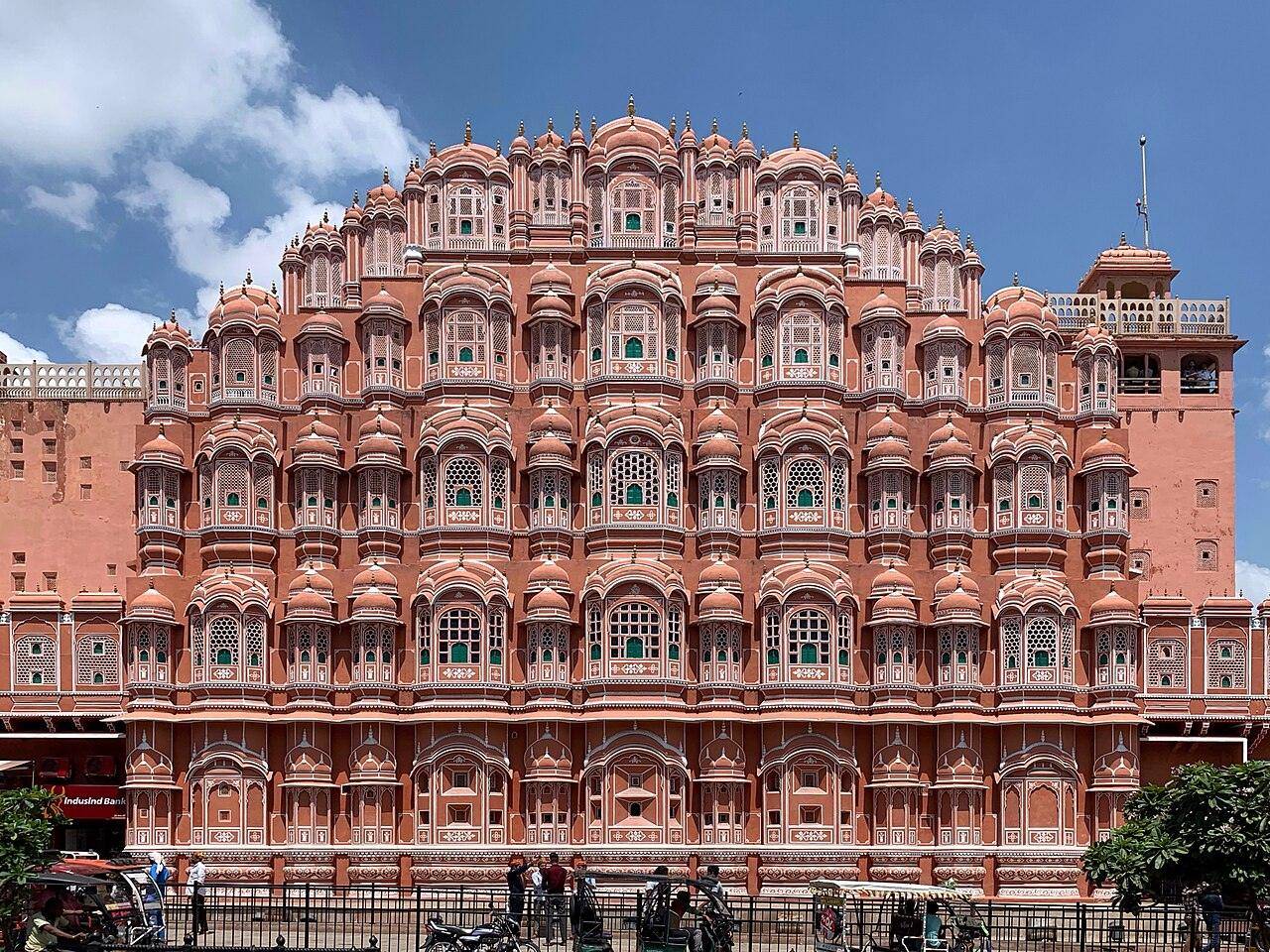 7 daysEasy
The Golden Triangle: Delhi, Agra and Jaipur
A first time in India: the Taj Mahal at dawn, the forts of Rajasthan and the life of Old Delhi, in one week.
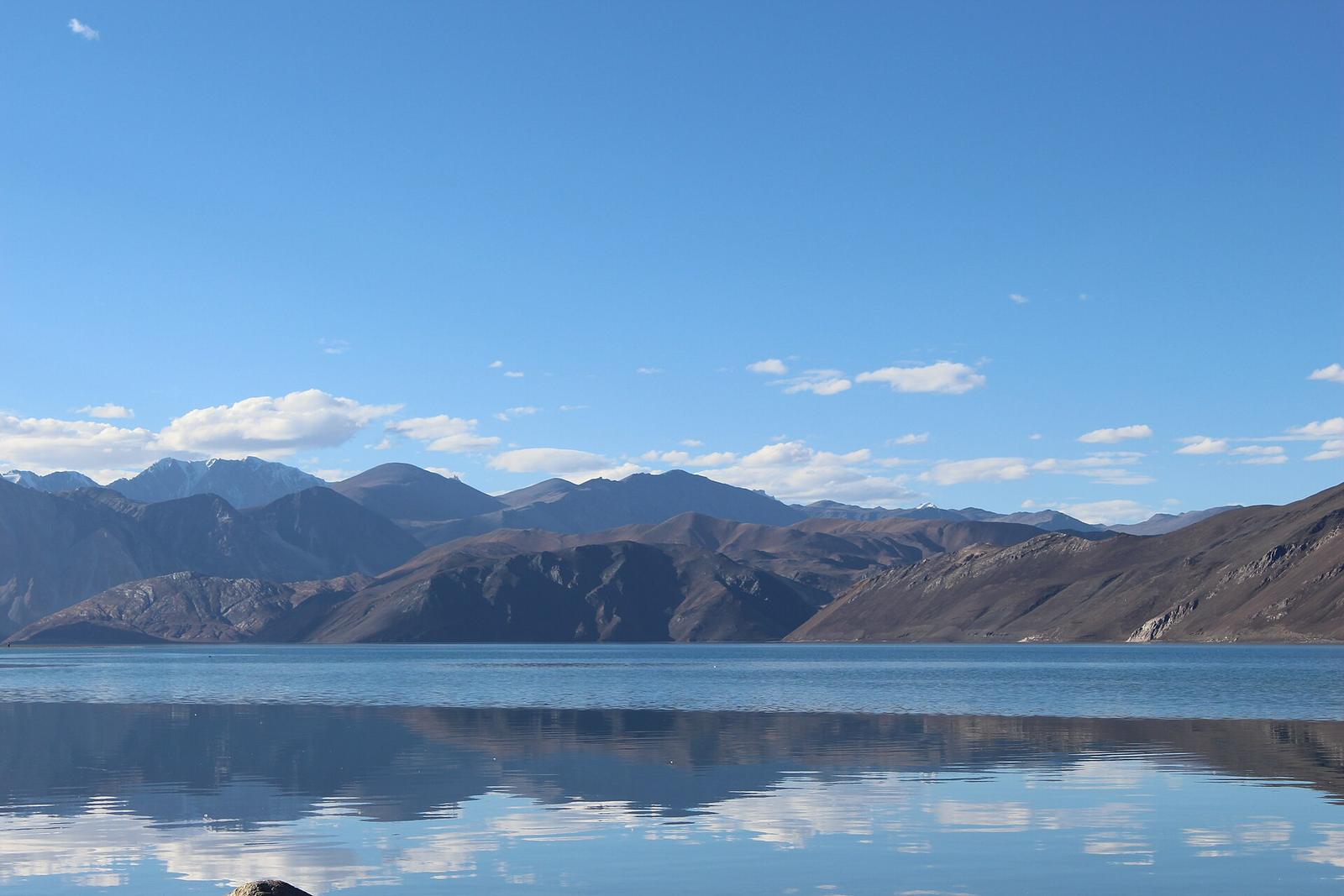 16 daysModerate
Ladakh, Little Tibet
Buddhist monasteries clinging to the rocks, the Nubra valley with its two-humped camels and Pangong lake at 4,300 metres.
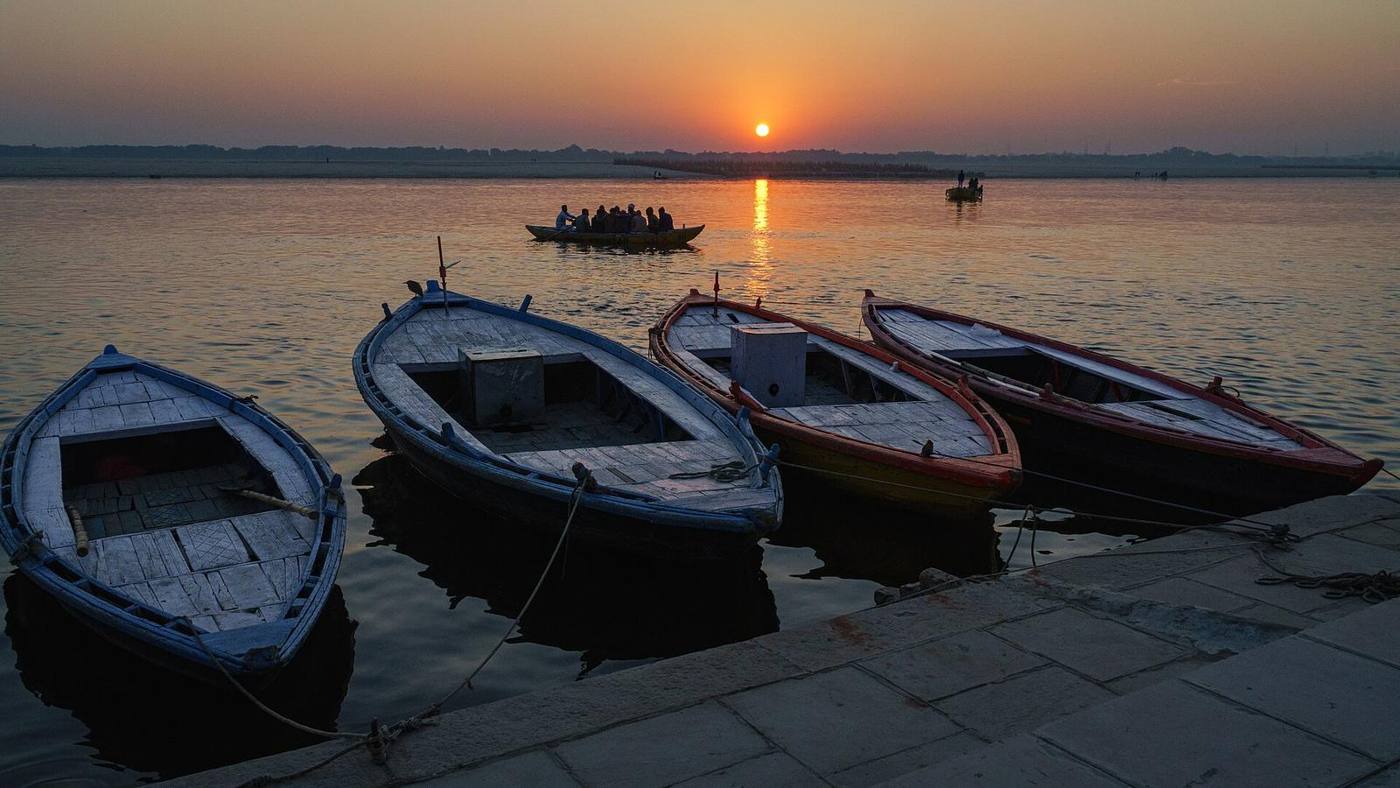 12 daysEasy
Delhi to Varanasi: the Taj Mahal, Khajuraho and the Ganges
The Taj Mahal, Amber fort, the forgotten town of Orchha, the temples of Khajuraho and the ghats of Varanasi at dawn.