Delhi to Varanasi: the Taj Mahal, Khajuraho and the Ganges
The Taj Mahal, Amber fort, the forgotten town of Orchha, the temples of Khajuraho and the ghats of Varanasi at dawn.
- Delhi
- Jaipur
- Amber
- Agra
- Orchha
- Khajuraho
- Varanasi
Day by day
- Day 1
Arrival in Delhi
This trip crosses northern India from Delhi to the Ganges: the capital and its Mughal monuments, Jaipur, the pink city of Rajasthan, Fatehpur Sikri and Agra with the Taj Mahal, the forgotten palaces of Orchha, the temples of Khajuraho with their sculptures, and finally Varanasi, the holy city on the Ganges, and Sarnath, where the Buddha gave his first sermon.
Before you leave: Italian citizens need an Indian visa, applied for online as an e-visa on the official Indian government website. The thirty day tourist e-visa costs 25 dollars from July to March and 10 dollars from April to June. The United States government rates India at level 2, meaning exercise increased caution: check the latest advice. Other nationalities should check their own rules.
You fly into Indira Gandhi International Airport in Delhi, about half an hour to an hour from the centre depending on traffic. Take a prepaid taxi from inside the airport, a car booked through an app or the airport express metro.
In the afternoon rest: the journey is long, and Delhi's heat, noise and traffic can be overwhelming on the first day.
At sunset, if you have the energy, walk around India Gate, the great arch in memory of Indian soldiers killed in the First World War, with the Kartavya Path avenue leading to the government buildings.
In the evening have northern Indian food: dal makhani, black lentils slow cooked with butter, tandoori chicken and naan bread baked in a clay oven.
Sleep in Delhi.
Practical tip: the best time is October to March. April to June is extremely hot, and July to September is the monsoon.
- Day 2
Old Delhi by rickshaw, Jama Masjid and Humayun's Tomb
Today you explore Delhi.
In the morning go to Old Delhi, the city built by the Mughal emperor Shah Jahan in the seventeenth century. Visit the Jama Masjid, the largest mosque in India, with a courtyard for tens of thousands of worshippers, three white marble domes and two minarets overlooking the whole old city. Take off your shoes and wear clothes covering arms and legs; robes can be hired at the entrance. It cannot be visited during prayers.
Then take a cycle rickshaw through Chandni Chowk, the market street, and the lanes around it, a maze of specialised bazaars: spices, textiles, silver, paper and dried fruit. The Khari Baoli spice market is one of the largest in Asia.
Pass the Red Fort, the great red sandstone Mughal fortress, a World Heritage Site. Check opening hours and prices.
In the afternoon visit Humayun's Tomb, a large sixteenth century mausoleum of red sandstone and white marble at the centre of a garden divided into four by water channels, the model that later inspired the Taj Mahal. It is a World Heritage Site. Check opening hours and prices.
At sunset visit the Sufi shrine of Nizamuddin, where on Thursday evenings qawwali, Sufi devotional songs, are sung.
Sleep in Delhi.
Practical tip: in Old Delhi keep your bag and phone in front of you. The crowds are dense and pickpocketing is common.
- Day 3
To Jaipur, the pink city
In the morning leave Delhi and travel south west to Jaipur, the capital of Rajasthan, about five hours by car with driver or four and a half hours by train. Check train times and book in advance.
Jaipur was founded in the eighteenth century by Maharaja Jai Singh II, an astronomer and town planner, on a grid plan. The old city was painted pink in 1876 to welcome the Prince of Wales, and has been called the pink city ever since. It is a World Heritage Site.
In the afternoon visit the City Palace, the royal palace where the maharaja's family still lives, with courtyards, gates decorated with painted peacocks and museums of textiles and weapons. Check opening hours and prices.
Next door is the Jantar Mantar, an open air astronomical observatory built by Jai Singh II, with huge stone instruments for measuring time and the position of the stars, including the largest sundial in the world, which tells the time to within a few seconds. It is a World Heritage Site. Check opening hours and prices.
At sunset look at the façade of the Hawa Mahal, the Palace of the Winds, with hundreds of small latticed windows from which the women of the court could watch the street without being seen.
Sleep in Jaipur.
Practical tip: in Jaipur's bazaars bargain calmly. Be wary of anyone who offers you a ride and takes you to a shop.
- Day 4
Amber Fort
Early in the morning go up to Amber Fort, about half an hour north of Jaipur, a fortress palace on a hill above Lake Maota, built of yellow and pink sandstone and white marble between the sixteenth and eighteenth centuries, a World Heritage Site among the hill forts of Rajasthan.
You go up on foot along the ramp or by jeep. The elephants that carry tourists to the top are criticised by many organisations for the animals' conditions: do not use them.
Inside visit the courtyards, the hall of public audience with its columns, the Ganesh gate decorated with paintings and above all the Sheesh Mahal, the mirror palace, with walls and ceilings covered in tiny mirrors and coloured glass: according to tradition, a single candle was enough to light the whole room like a starry sky. Check opening hours and prices.
From the fort you see walls following the ridges of the hills, linked to Jaigarh fort higher up.
In the afternoon return to Jaipur and walk through the bazaars of the old city: Johari Bazaar for jewellery, Bapu Bazaar for hand printed textiles and embroidered shoes. Also visit a woodblock printing workshop in Sanganer or in the city.
In the evening try Rajasthani food: dal bati churma, balls of bread baked in the fire with lentils and a sweet of wheat and ghee.
Sleep in Jaipur.
Practical tip: at Amber Fort arrive at opening time. Later the groups and the heat arrive.
- Day 5
Fatehpur Sikri and Agra
Today you travel east to Agra, about five hours by car, with a stop on the way.
On the way, if you like, stop at the Chand Baori stepwell at Abhaneri, one of the largest and deepest in India, with more than three thousand steps arranged in zigzags over thirteen levels, built to collect rainwater. Check opening hours and prices.
In the afternoon visit Fatehpur Sikri, about forty kilometres from Agra, the city built by the emperor Akbar in the sixteenth century as a new Mughal capital and abandoned after a few years, perhaps for lack of water. It is a World Heritage Site. You see red sandstone palaces, the hall of private audience with a carved central pillar, the five storey palace open to the winds and the great mosque with the victory gate, the Buland Darwaza, more than fifty metres high. In the mosque is the white marble tomb of the Sufi saint Salim Chishti, where the faithful tie red threads to the screens to make a wish. Check opening hours and prices.
In the evening you reach Agra.
At sunset, if you have time, go to Mehtab Bagh, a garden on the far bank of the Yamuna river, from which you see the Taj Mahal from behind, reflected in the river.
Sleep in Agra.
Practical tip: the Taj Mahal is closed on Fridays. Plan the trip so you do not arrive in Agra on a Thursday evening.
- Day 6
The Taj Mahal at dawn and Agra Fort
Today is Taj Mahal day.
Early in the morning, at opening time, enter the Taj Mahal, the white marble mausoleum built by the emperor Shah Jahan in the seventeenth century for his wife Mumtaz Mahal, who died giving birth to their fourteenth child. It is a World Heritage Site and one of the most famous buildings in the world. At dawn the marble changes colour from grey to pink to white, and there are fewer people.
For foreign visitors the ticket costs 1,100 rupees, plus 200 rupees to enter the main mausoleum. The Taj Mahal is closed on Fridays. There are strict rules on what you can bring: large bags, food and many objects are banned. Check before you go.
Walk along the garden channels and look closely at the inlaid precious stones in the marble, the carved flowers and the inscriptions from the Quran.
Then visit Agra Fort, the great Mughal fortress on the river, a World Heritage Site, with marble palaces overlooking the Taj Mahal. Here Shah Jahan spent his last years as his son's prisoner. Check opening hours and prices.
In the afternoon take the train from Agra to Jhansi, about two or three hours, and then a car to Orchha, about twenty minutes away.
Sleep in Orchha.
Practical tip: at the Taj Mahal bring only what you need. The cloakroom for banned items creates queues.
- Day 7
Orchha: palaces and cenotaphs on the Betwa river
Today you are in Orchha, a small town on the Betwa river, capital of a Bundela kingdom between the sixteenth and eighteenth centuries, now quiet and little visited compared with Agra, with palaces, temples and tombs among the vegetation.
In the morning visit the fort complex, on an island reached by a stone bridge: the Jahangir Mahal, a multi storey palace built for the visit of the Mughal emperor Jahangir, with terraces, domes and loggias, and the Raj Mahal, with walls painted with religious scenes. Check opening hours and prices.
Then visit the Ram Raja temple, the only one in India where Rama is worshipped as a king, with a ceremony accompanied by a guard of honour, and the Chaturbhuj temple, high on a platform, with an empty and very tall interior.
In the afternoon walk along the Betwa river to the chhatris, the cenotaphs of the Bundela kings, large domed and spired buildings lined up on the bank. At sunset they are reflected in the water, with vultures nesting on the domes.
In the evening, if you like, take a short boat or rafting trip on the river, or walk through the town's small bazaar.
Sleep in Orchha.
Practical tip: in Orchha the pace is slow. It is the right place to rest after Delhi, Jaipur and Agra.
- Day 8
Khajuraho: the temples of sculpture
In the morning travel from Orchha to Khajuraho, about four hours by car, through the Madhya Pradesh countryside, with villages, fields and small towns.
Khajuraho is a small town famous for its group of temples built by the Chandela dynasty between the tenth and eleventh centuries, a World Heritage Site. Of the roughly eighty five original temples about twenty remain, covered in sandstone sculptures of extraordinary refinement: gods, musicians, dancers, warriors, animals, scenes of daily life and, in a small part of the sculptures, the erotic scenes that made the place famous. Their meaning is debated: religious symbols, tantric teachings or simply a portrayal of life.
In the afternoon visit the western group, the largest and best preserved, with the Kandariya Mahadeva temple, the tallest, dedicated to Shiva, and the Lakshmana and Vishvanatha temples. Check opening hours and prices. A licensed guide helps to understand the sculptures.
At sunset visit the eastern group, with the Jain temples, still used for worship.
In the evening, if it is on, watch the sound and light show at the western group.
Sleep in Khajuraho.
Practical tip: in temples still in use take off your shoes and enter quietly. Leather is not allowed in Jain temples.
- Day 9
To Varanasi and the evening aarti
In the morning, if you have time, visit the southern group of Khajuraho temples or the small archaeological museum, with sculptures found in the area. Check opening hours and prices.
Then take the flight from Khajuraho to Varanasi, if there are flights on the right days, about an hour, or go by car, about eight or nine hours, or by night or day train. Check times and availability: flights from Khajuraho are few.
In the afternoon you arrive in Varanasi, also called Benares or Kashi, the holy city of the Hindus on the bank of the Ganges, inhabited for more than three thousand years and one of the oldest cities in the world. According to tradition, dying and being cremated here frees the soul from the cycle of rebirth.
At sunset go to Dashashwamedh Ghat, the main stairway on the river, to watch the aarti, the evening fire ceremony in honour of the Ganges: young priests in silk robes, standing in a row, move large multi flamed lamps, incense and conch shells to the rhythm of bells and chants. Thousands of people watch from the steps and from boats on the river.
Sleep in Varanasi.
Practical tip: the crowd at the aarti is huge. Arrive at least an hour early or watch it from a boat on the river.
- Day 10
Varanasi at dawn by boat and the old city
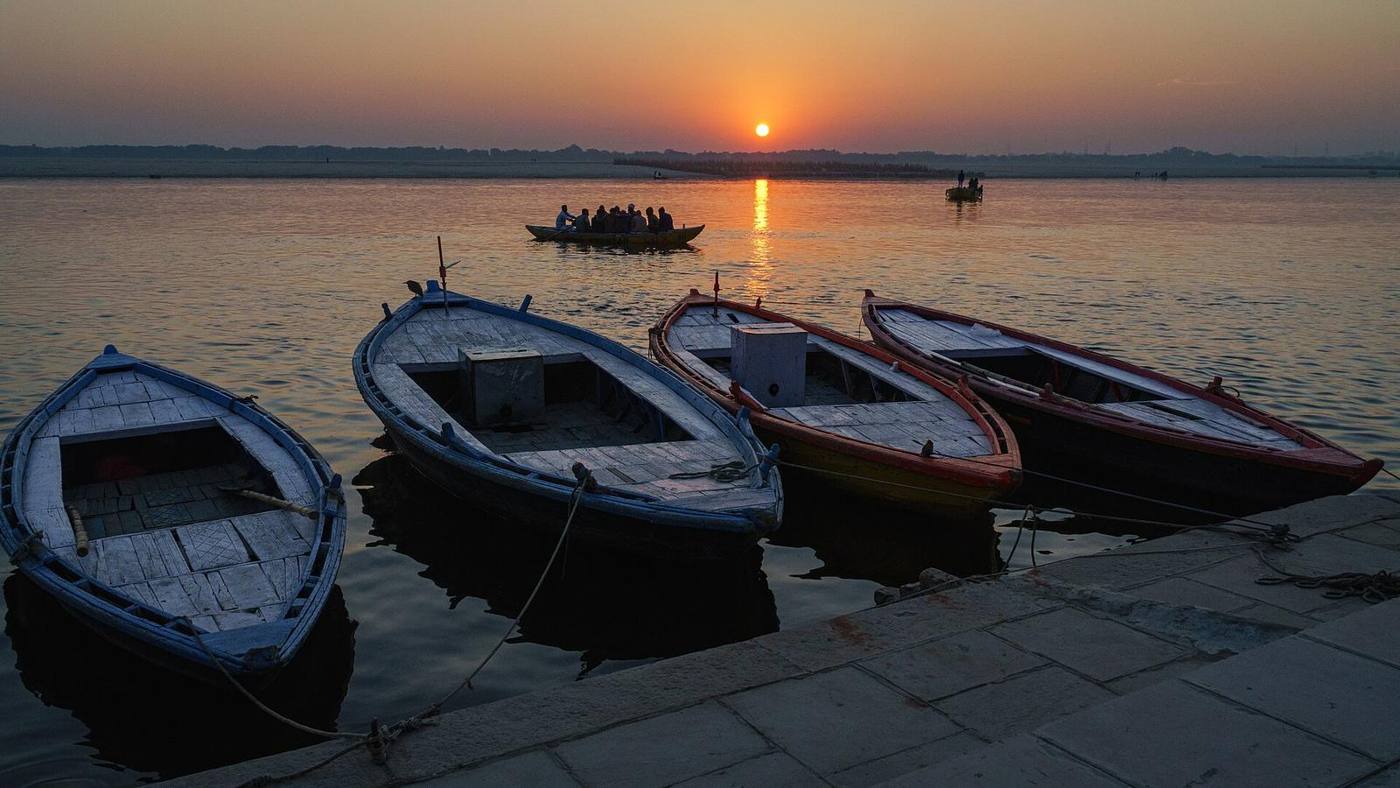
In the morning, before dawn, get into a rowing boat at Dashashwamedh Ghat or a nearby ghat and glide along the river as the sun rises over the far bank. On the ghats, the stone stairways leading into the water, thousands of people bathe in the Ganges to purify themselves, pray facing the sun, do their laundry and practise yoga. Priests light lamps and offer flowers.
Pass Manikarnika Ghat, the main cremation ghat, where pyres burn day and night. Do not photograph the cremations: it is considered offensive. Be wary of anyone who offers to take you near the pyres and then asks for money for wood.
After the boat, walk through the lanes of the old city, the galis, very narrow and full of small temples, shops, sacred cows and pilgrims. Nearby is the Kashi Vishwanath temple, the most important in Varanasi, dedicated to Shiva, with a large recently renovated courtyard; access for non Hindus has rules and checks: check.
In the afternoon visit a Benares silk weaving workshop, famous for saris brocaded with gold and silver.
At sunset walk along the ghats from south to north.
Sleep in Varanasi.
Practical tip: do not drink or bathe in the water of the Ganges. It is heavily polluted.
- Day 11
Sarnath and the flight to Delhi
In the morning visit Sarnath, about half an hour from Varanasi, where the Buddha, after reaching enlightenment at Bodh Gaya, gave his first sermon to five companions in the deer park, setting in motion the wheel of the Dharma. It is one of the four main Buddhist pilgrimage sites.
Walk through the archaeological park, among ruins of monasteries and temples and the great Dhamek stupa, over forty metres high, marking the place of the sermon. Around it pilgrims from all over Asia walk clockwise, pray and leave flowers. Check opening hours and prices.
Visit the Sarnath archaeological museum, which holds the Lion Capital of Ashoka, four lions back to back carved in the third century before Christ, which became India's official emblem and appears on banknotes and coins. The museum is closed one day a week: check.
Nearby are Buddhist temples built by different countries, such as Thailand, Japan, Tibet and Sri Lanka, each in its own style.
In the afternoon take the flight from Varanasi to Delhi, about an hour and a half.
In the evening have your last dinner in Delhi.
Sleep in Delhi.
Practical tip: for the Varanasi flight arrive at the airport early. Security checks in India take time.
- Day 12
Departure
On the last day leave from Delhi airport.
If your flight leaves in the evening, in the morning you can visit the Qutub Minar in south Delhi, a red sandstone minaret of the twelfth and thirteenth centuries, more than seventy metres high, decorated with Quranic inscriptions, a World Heritage Site, with the ruins of Delhi's first mosque and an ancient iron pillar that does not rust. Check opening hours and prices. Or visit the Lotus Temple, a Bahá'í house of worship shaped like a white lotus flower.
In the afternoon do your last shopping at Dilli Haat, a craft market where artisans from every Indian state sell their goods, or at Khan Market.
Before leaving buy something to take home: Darjeeling or Assam tea, spices, Benares silk scarves, block printed textiles from Jaipur and small inlaid marble objects from Agra, bought in reliable shops.
This trip shows the heart of northern India: the Mughal capitals, the mirror palace of Amber, the world's most famous monument to love, the carved temples of Khajuraho, and life and death on the banks of the Ganges at Varanasi.
Practical tip: for international flights from Delhi arrive at least three hours early. Security checks and traffic to the airport take time.
The best first trip to India after the Golden Triangle: it adds Varanasi, the country's most powerful experience. Orchha is a surprise, with hardly any tourists. Right months: October-March; in December and January northern mornings are foggy and trains run late.
Before you go
- Documents and visa
- Passport with at least six months' validity and two blank pages, plus an electronic tourist visa from the official Indian government website: 30 days for 25 dollars from July to March, 10 dollars from April to June.
- Health and vaccines
- No compulsory vaccines arriving from Europe; ask your doctor about hepatitis A, typhoid and malaria depending on the area. Drink only sealed bottled water. Emergencies: 112.
- Money and payments
- Indian rupee. Cards and digital payments are common in cities; markets, villages and rickshaws need cash.
- Power sockets
- Types C, D and M, 230 volts: a universal adapter is useful.
- Time zone
- UTC+5:30 all year: India does not use daylight saving time.
- Safety
- The United States rates India level 2, with level 4 for Jammu and Kashmir (except Ladakh), Manipur and the 10 km strip along the Pakistani border. Official advice: GOV.UK.
Information checked in November 2026 for Italian and EU citizens. Rules change: always check before you travel.
Variations
In 7 days: the golden triangle of Delhi, Jaipur and Agra, plus two days in Varanasi by air.
In 15 days: add Udaipur and Jodhpur in Rajasthan, or the tiger reserves of Madhya Pradesh near Khajuraho.
Frequently asked questions
Do I need a visa for India?
Yes: you apply online for an e-visa on the official Indian government website. The thirty day tourist e-visa costs 25 dollars from July to March and 10 dollars from April to June. Other nationalities should check their own rules.
How much does the Taj Mahal cost?
For foreign visitors the ticket costs 1,100 rupees, plus 200 rupees to enter the main mausoleum. The Taj Mahal is closed on Fridays.
When should I go?
October to March. From April to June northern India is extremely hot; July to September is the monsoon.
Indicative itinerary written by World Atlas. Before booking, check timetables, seasonal openings, documents and safety.
 7 daysEasy
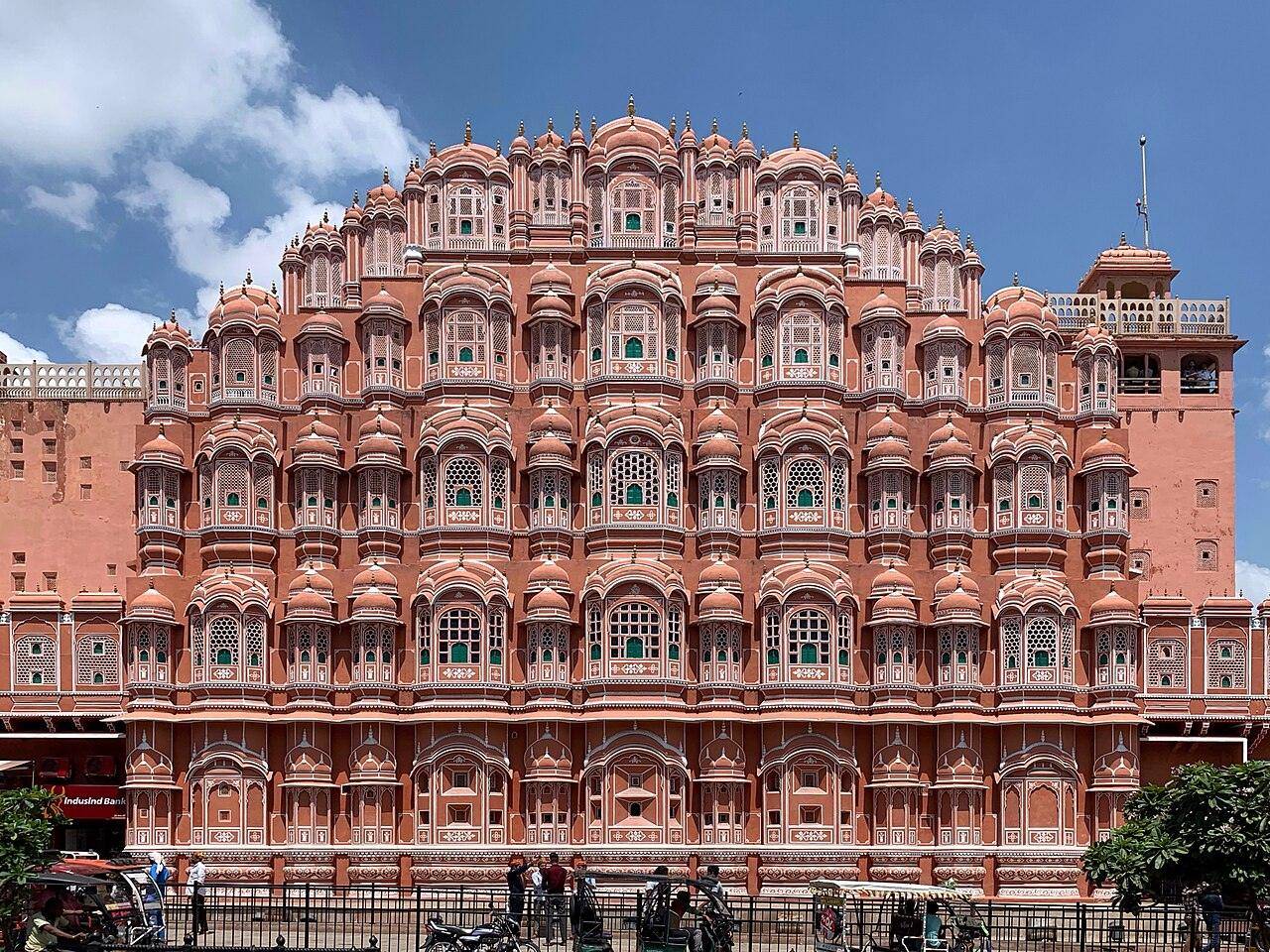
The Golden Triangle: Delhi, Agra and Jaipur
A first time in India: the Taj Mahal at dawn, the forts of Rajasthan and the life of Old Delhi, in one week.
 15 daysModerate
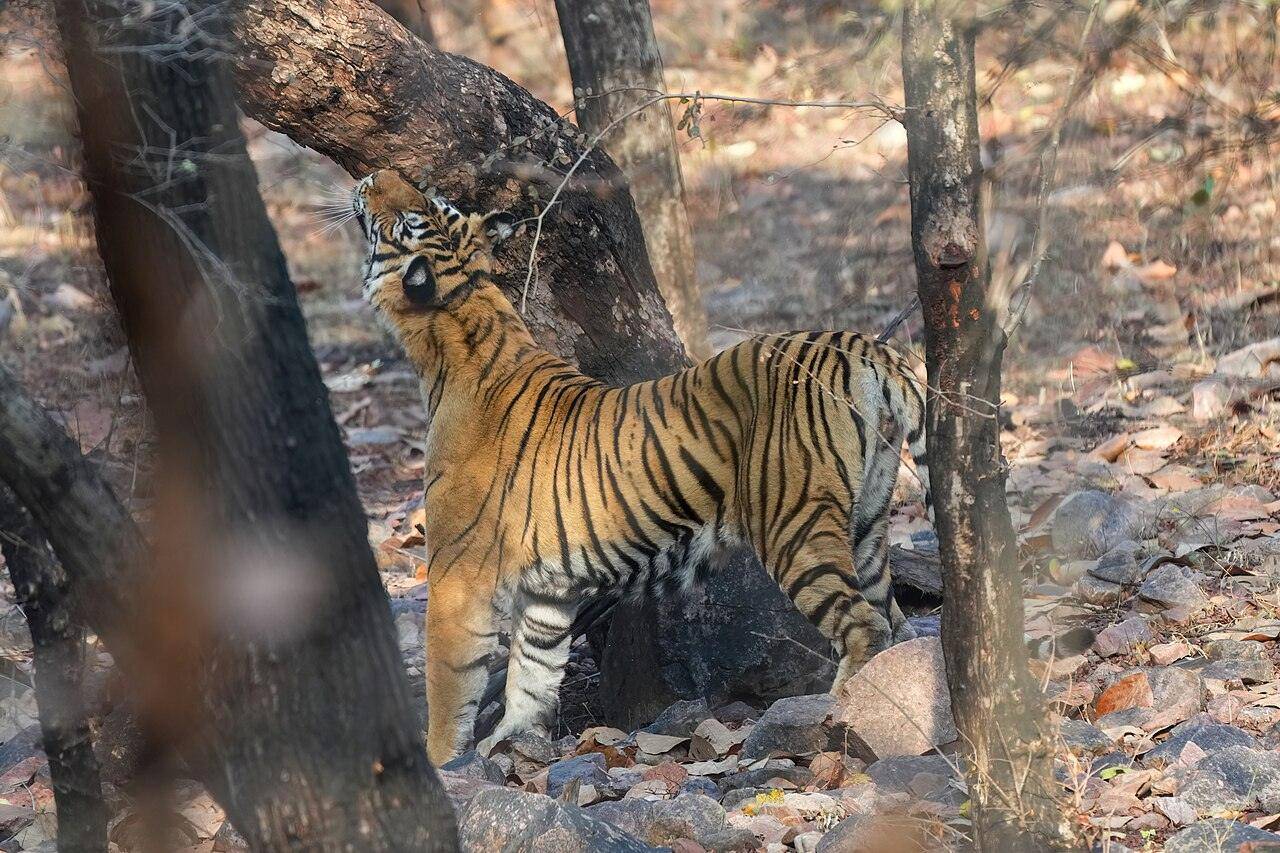
Rajasthan and the tigers of Ranthambore
Palaces, desert and safari: from the Taj Mahal to the blue and golden cities of Rajasthan, with two days in tiger country.
 16 daysModerate
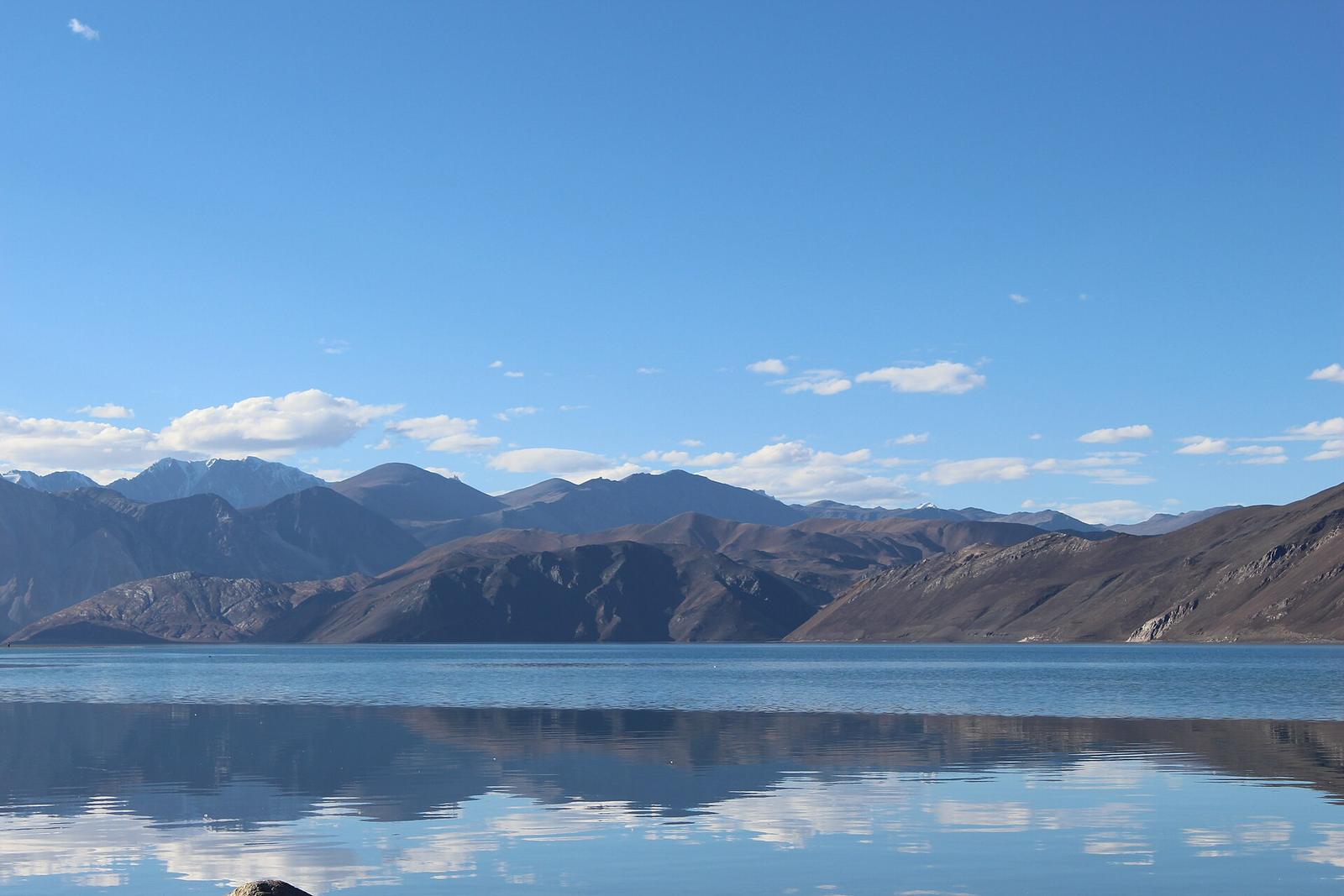
Ladakh, Little Tibet
Buddhist monasteries clinging to the rocks, the Nubra valley with its two-humped camels and Pangong lake at 4,300 metres.